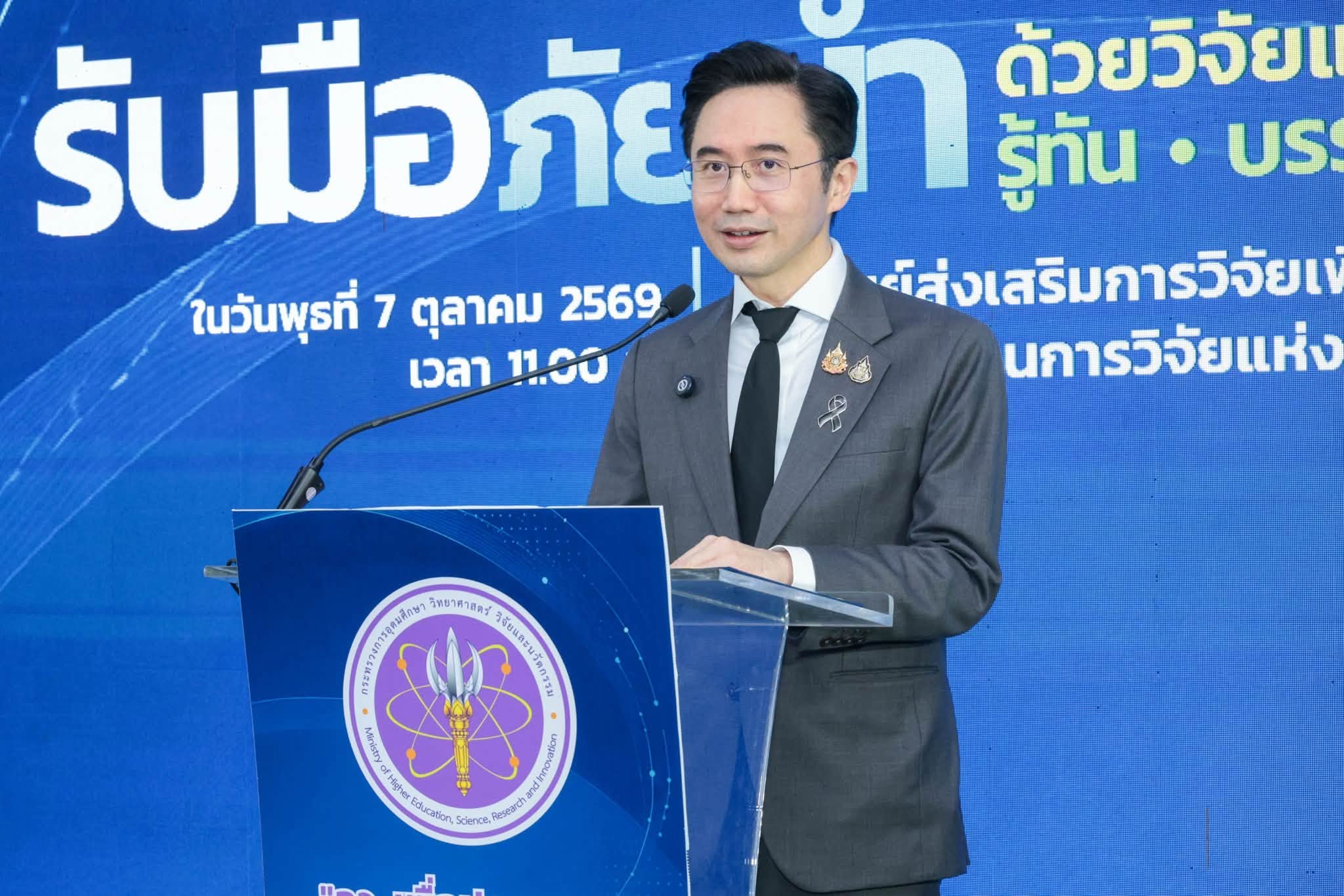
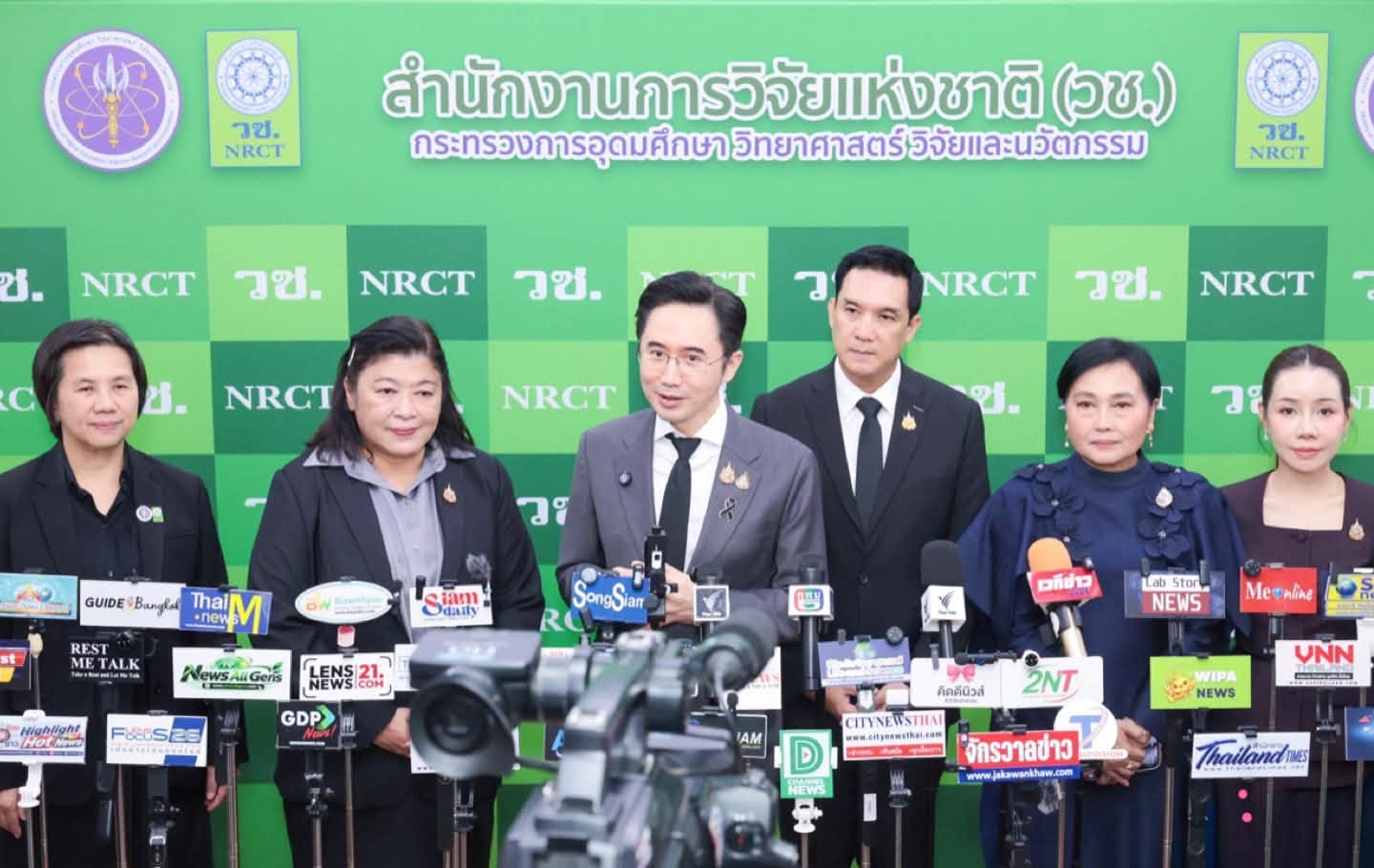
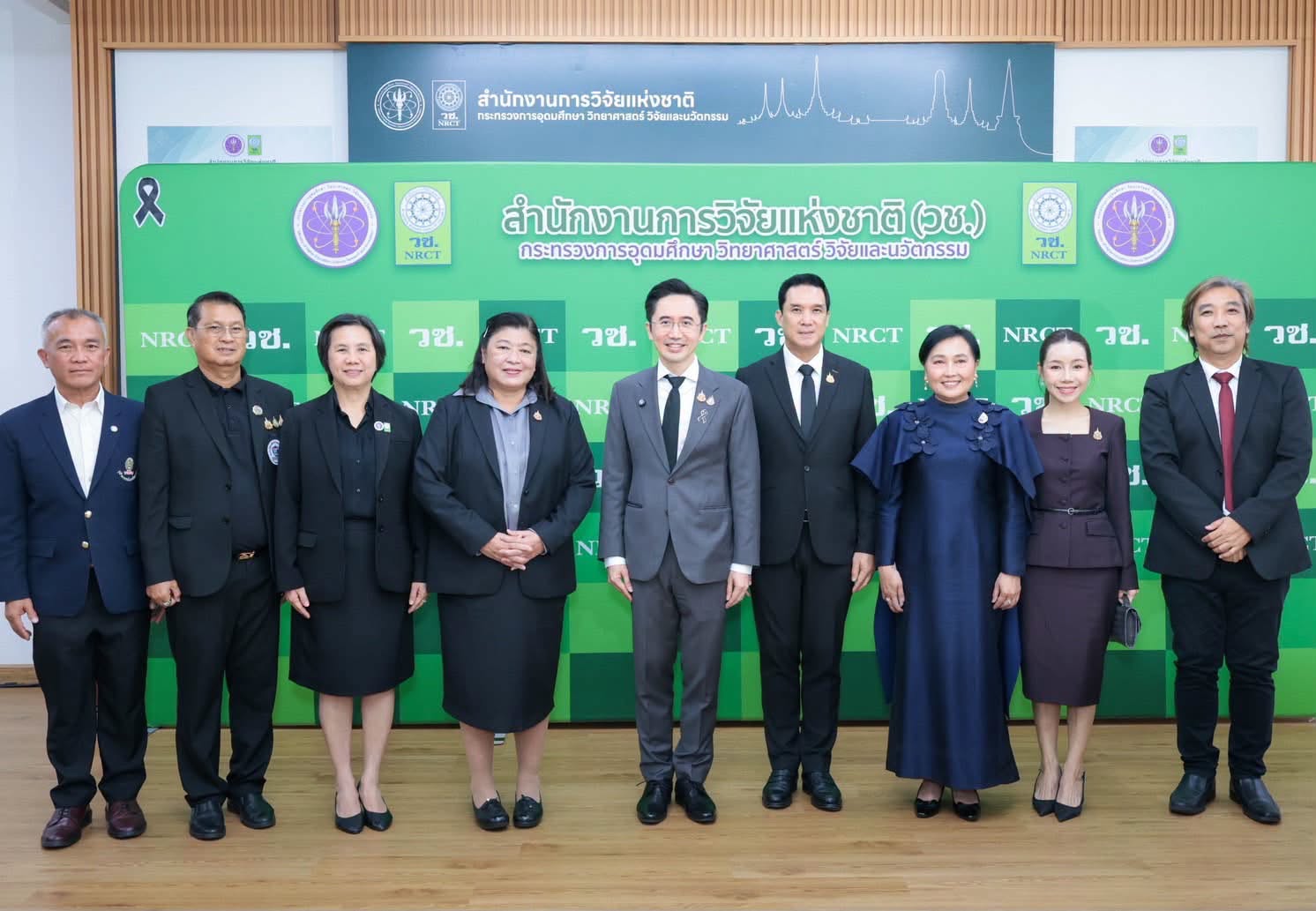
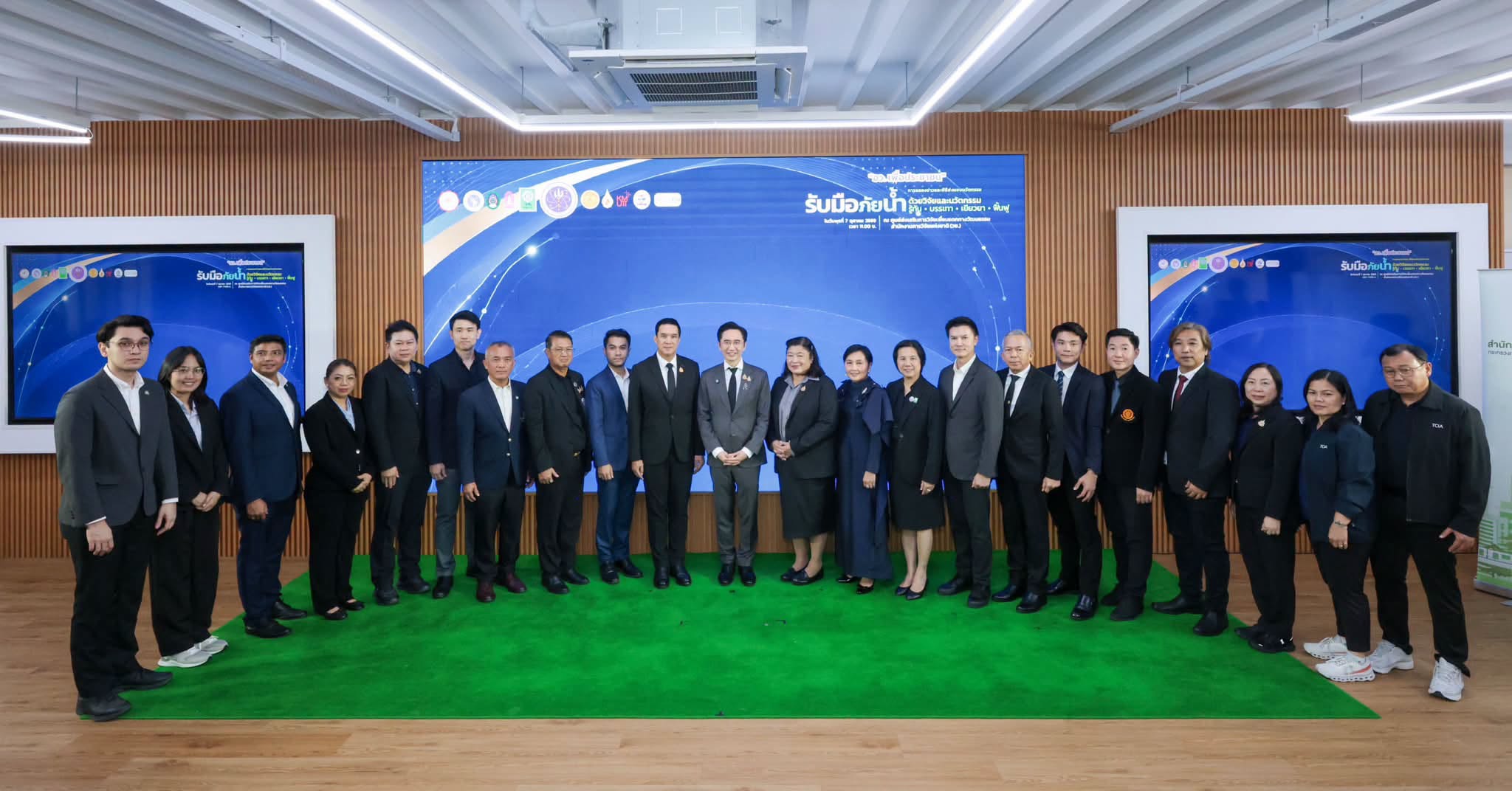
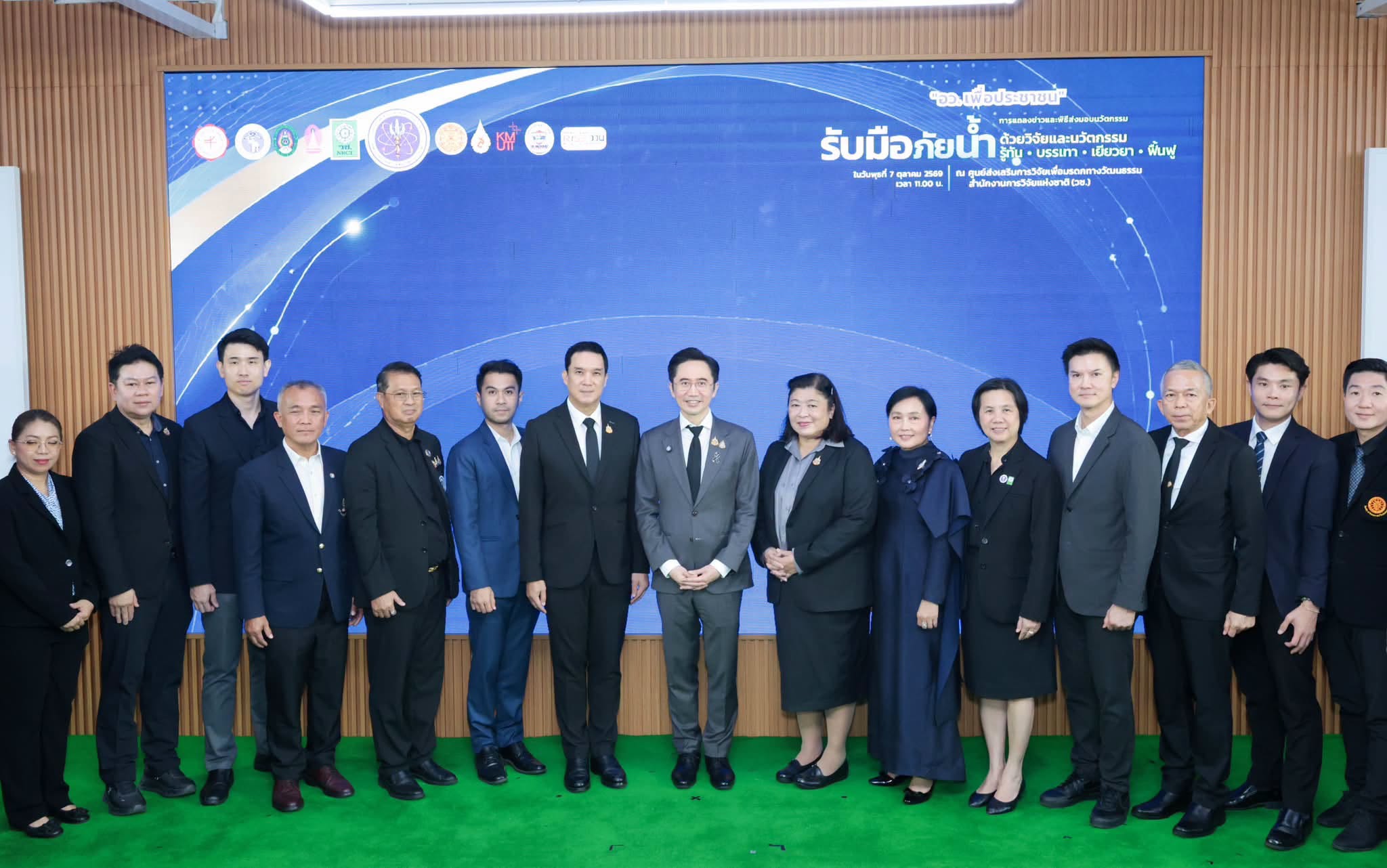
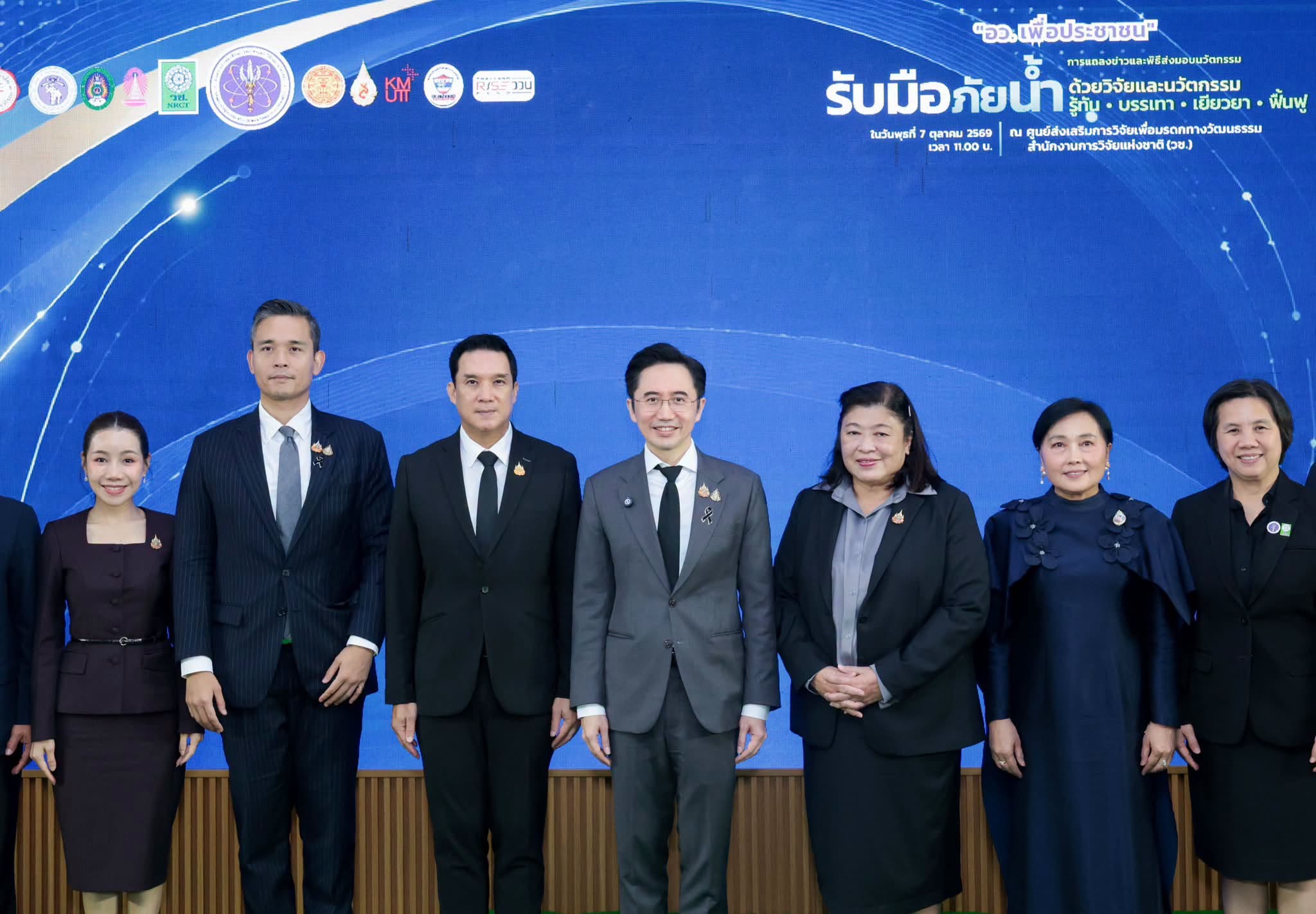
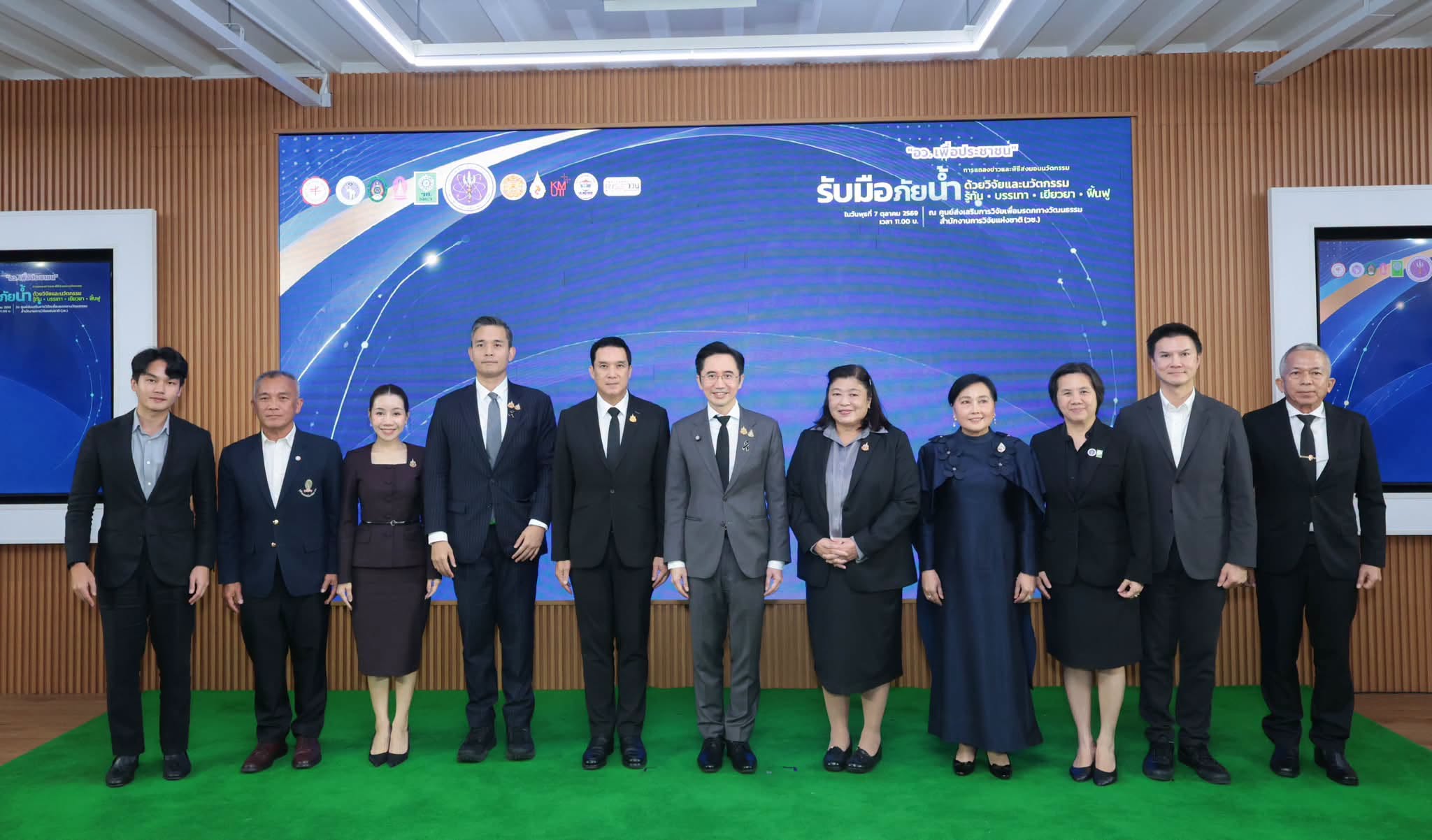
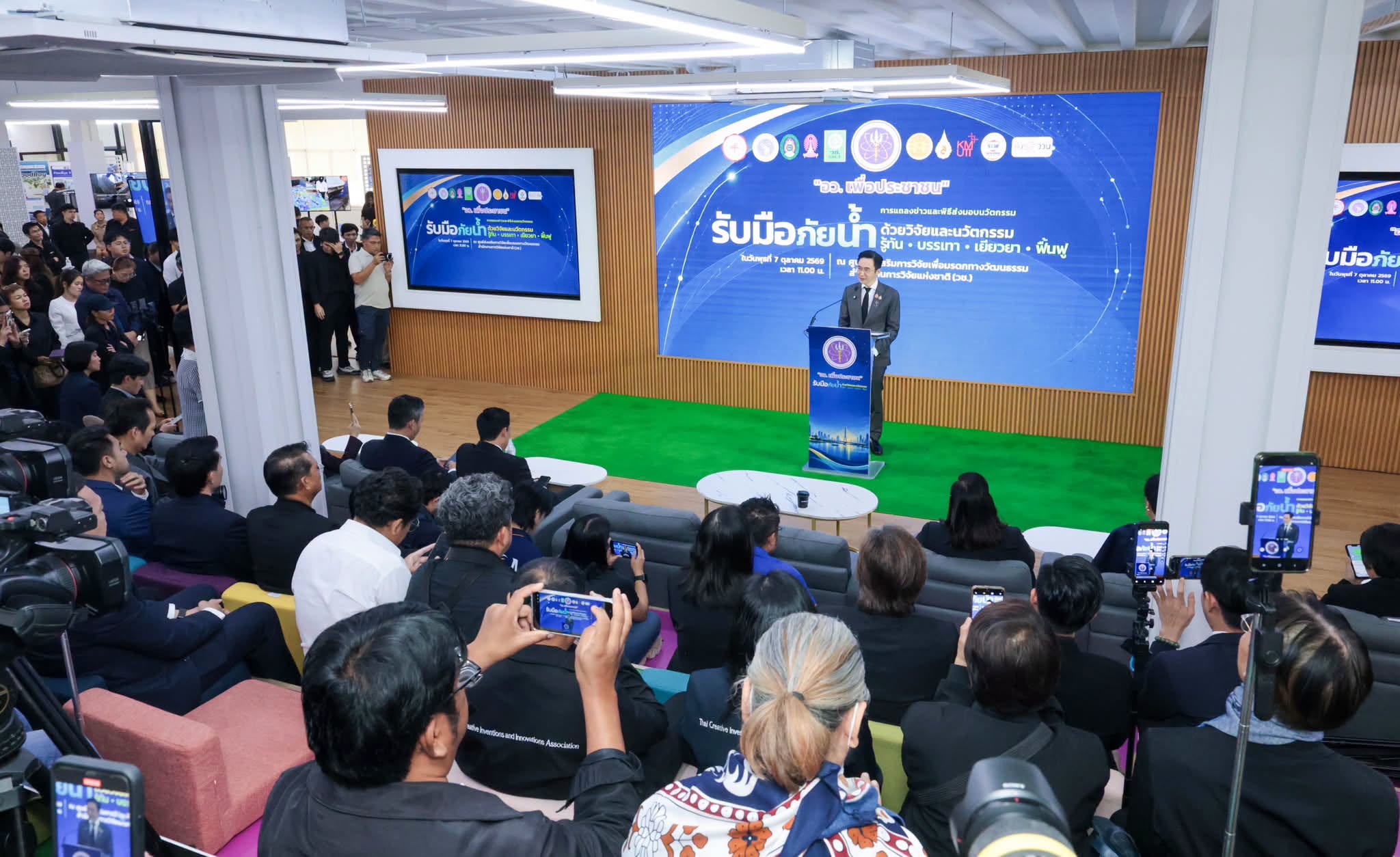
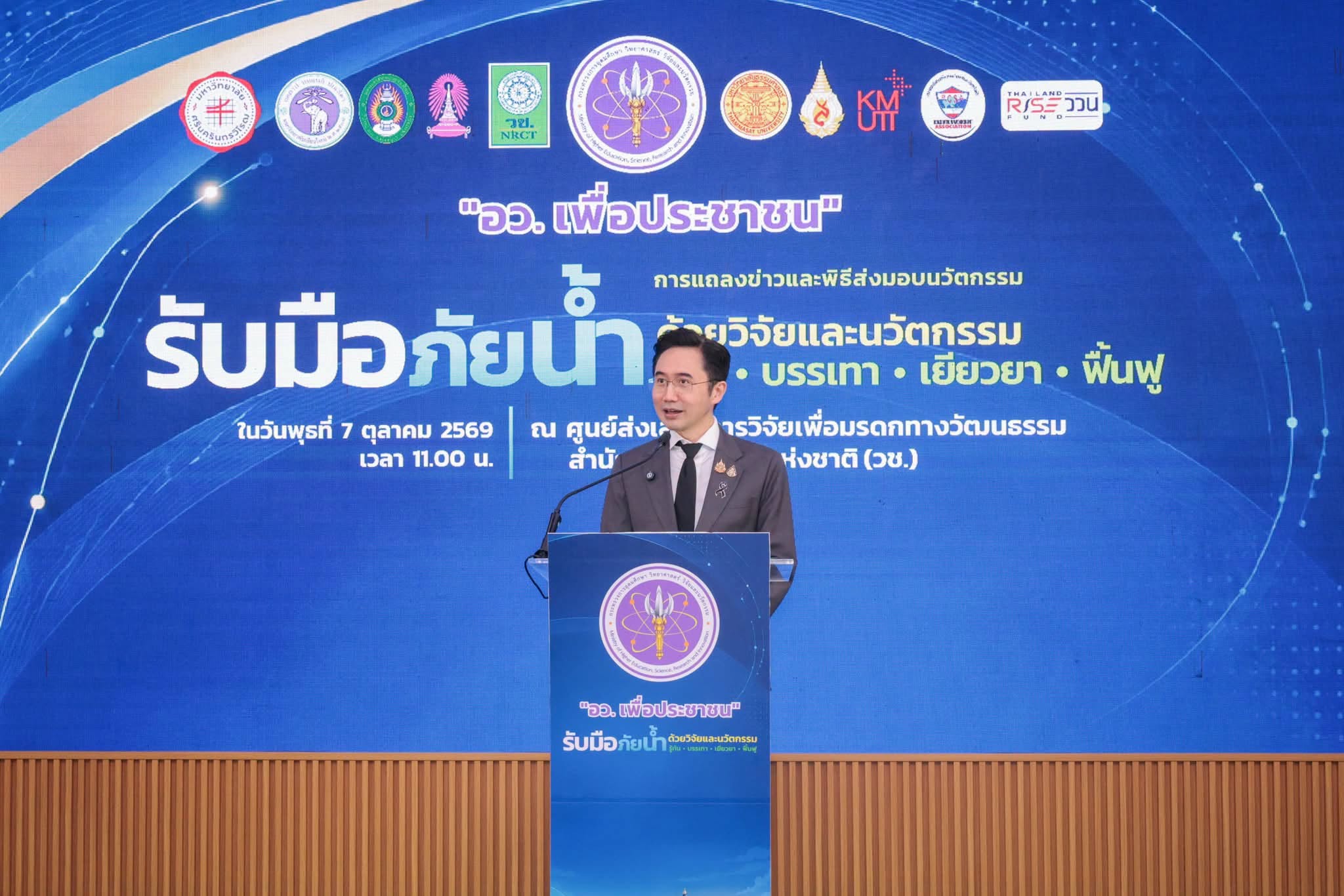
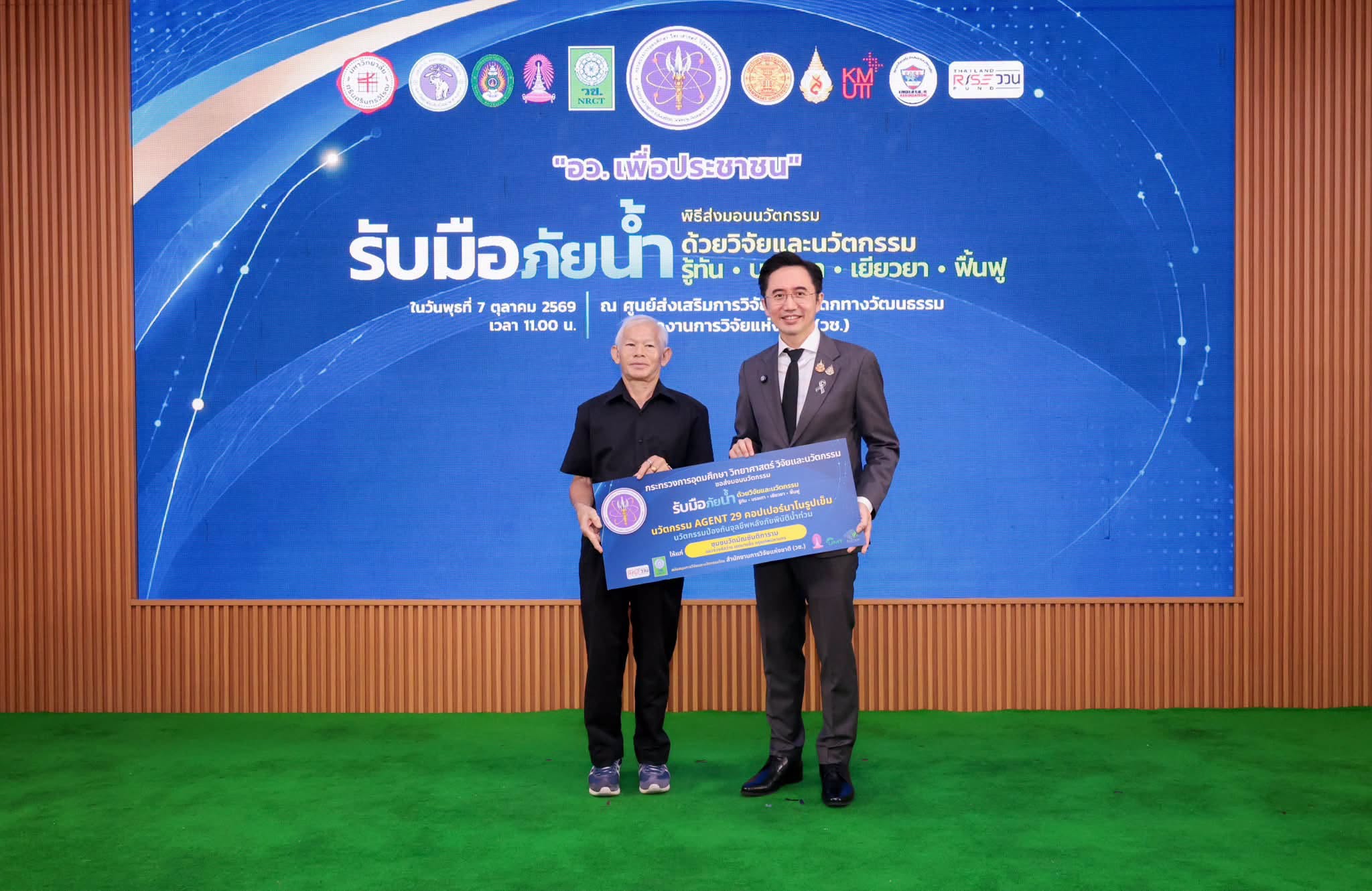
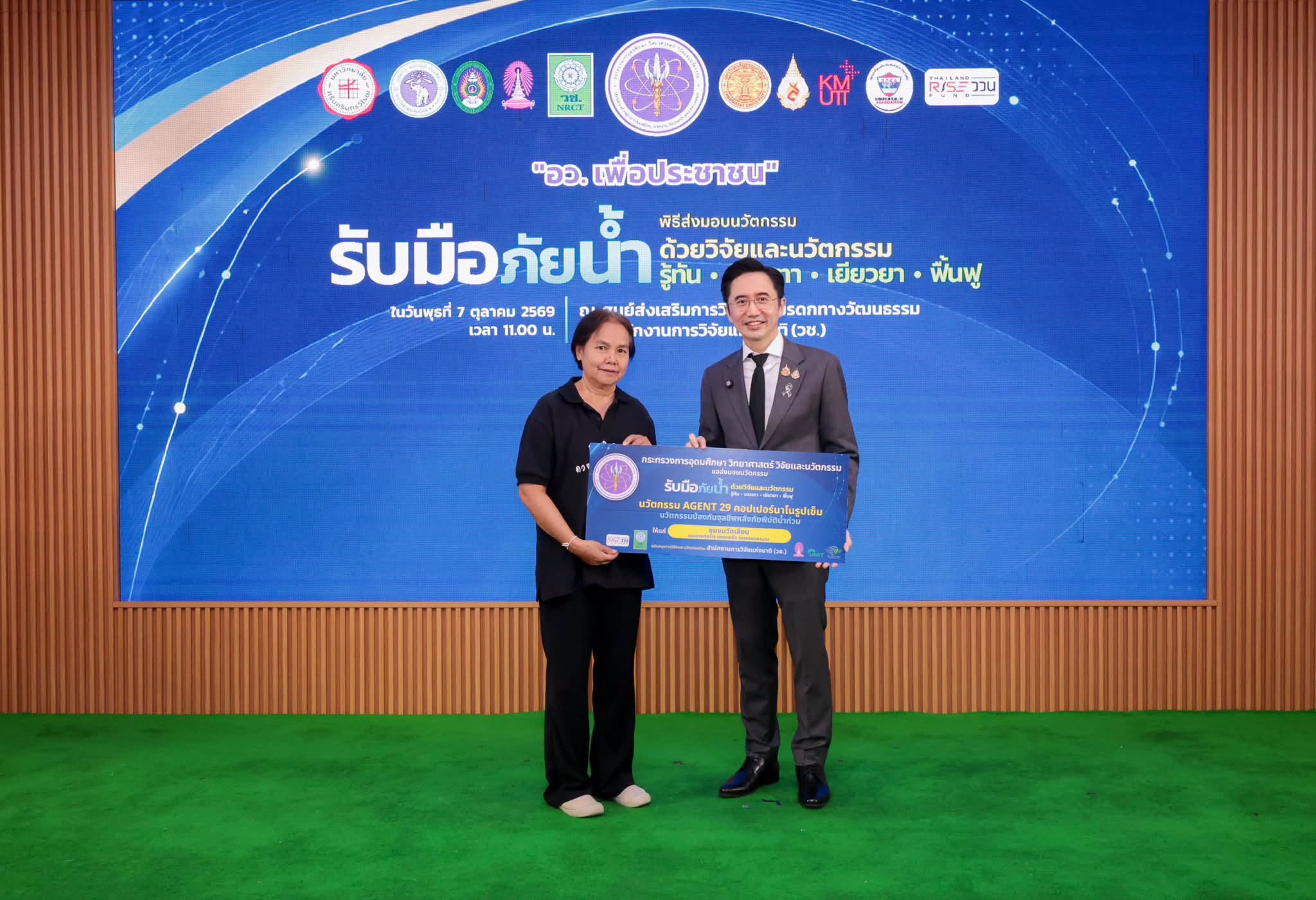
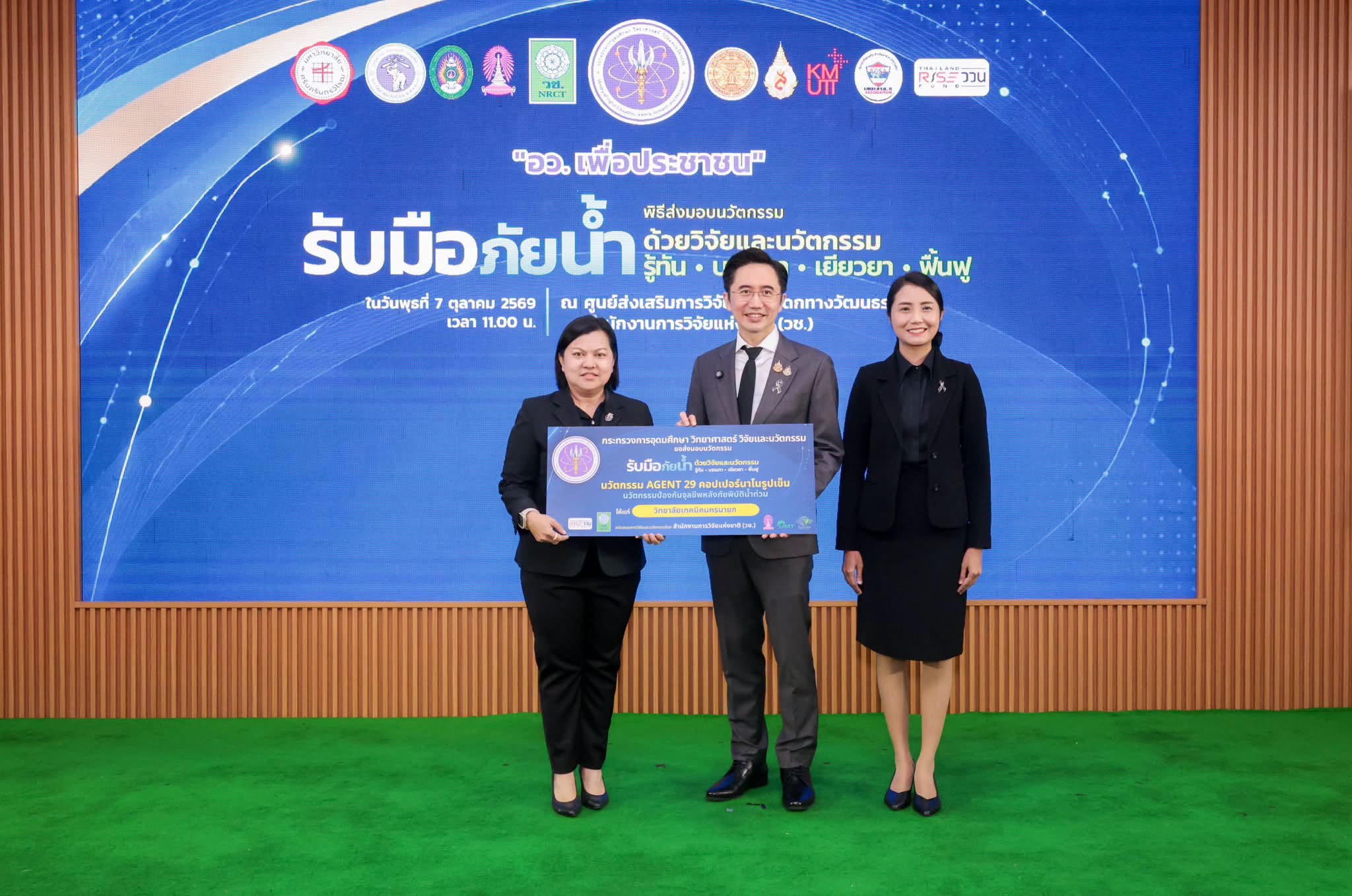
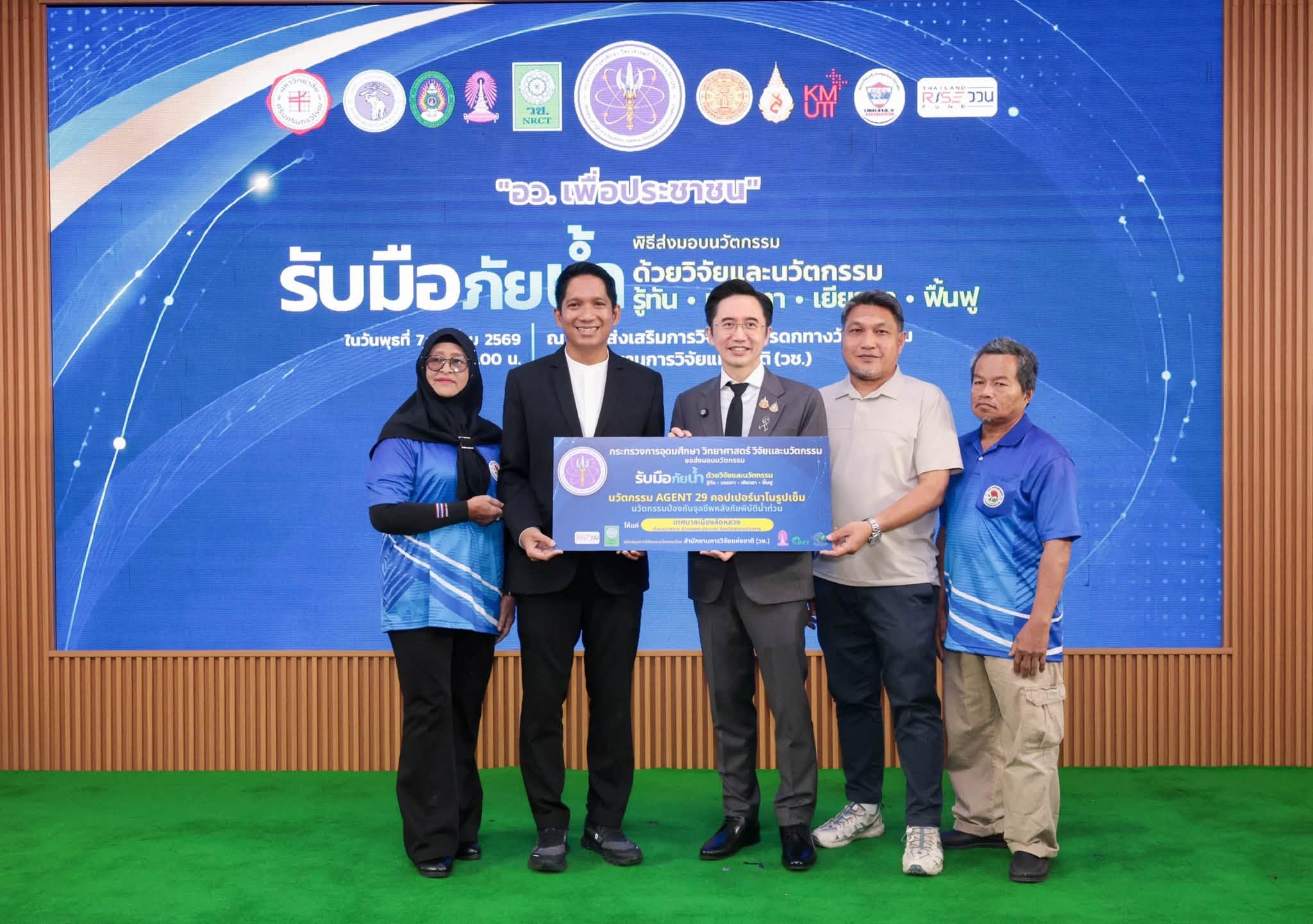
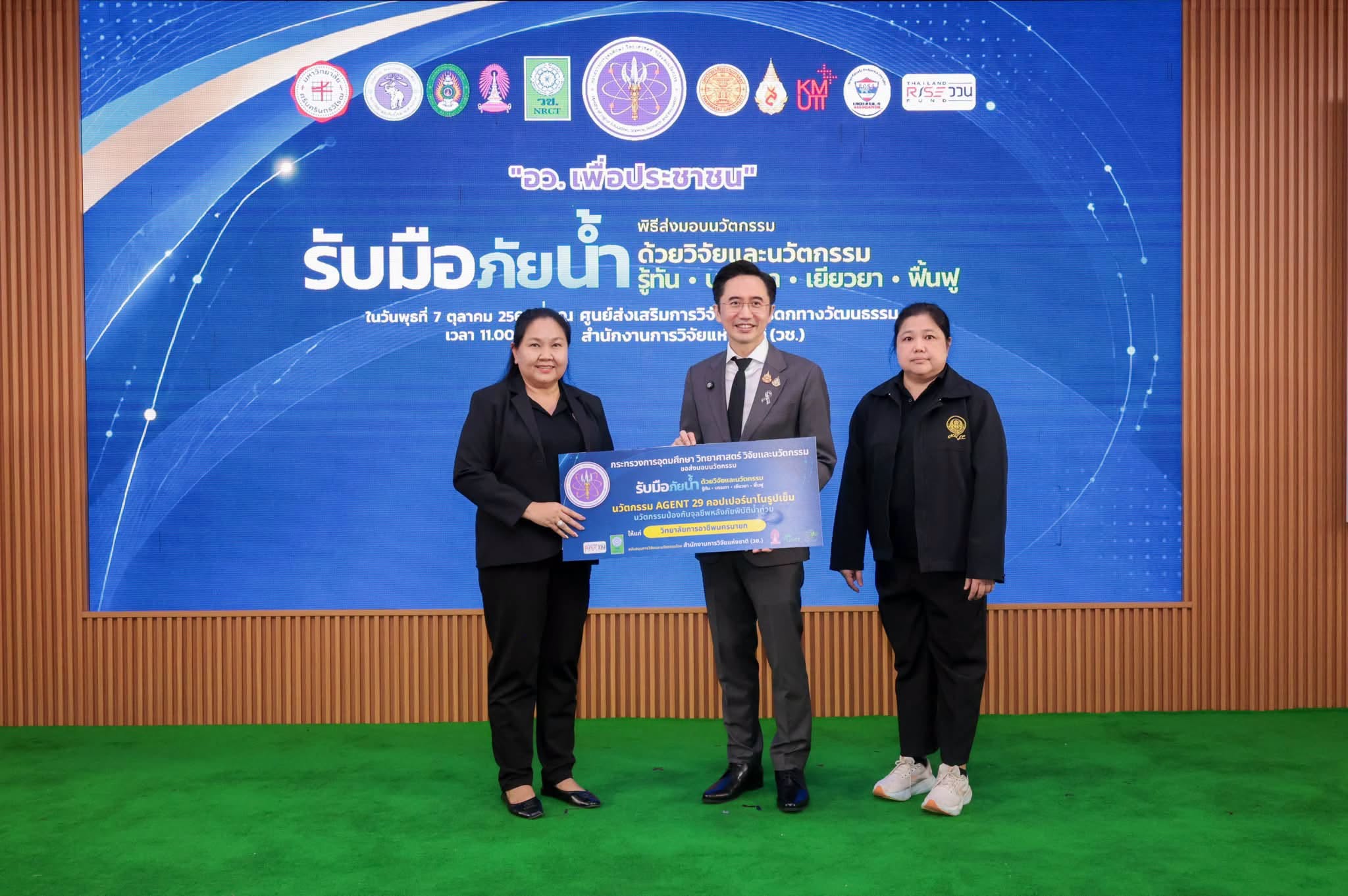
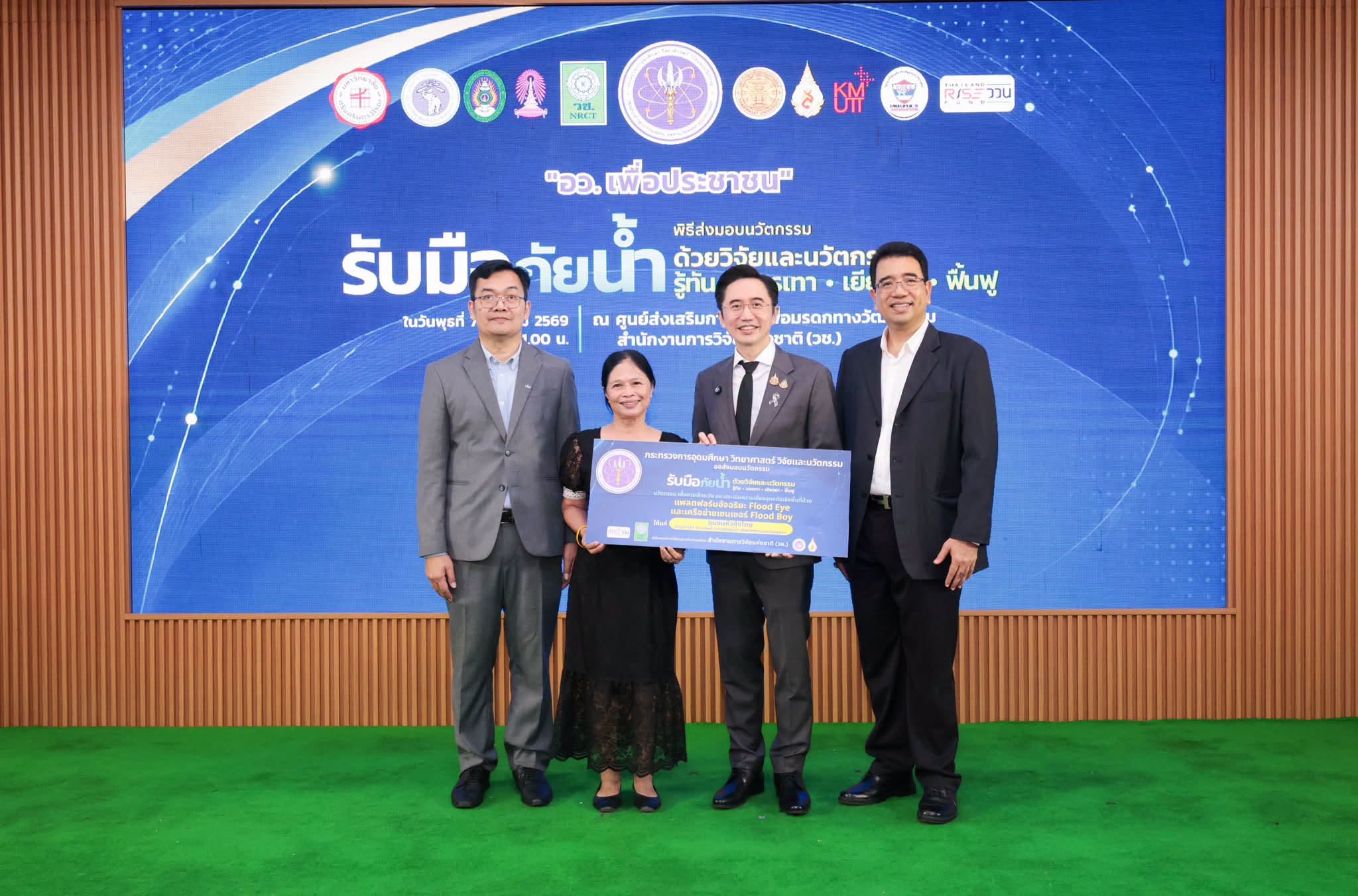
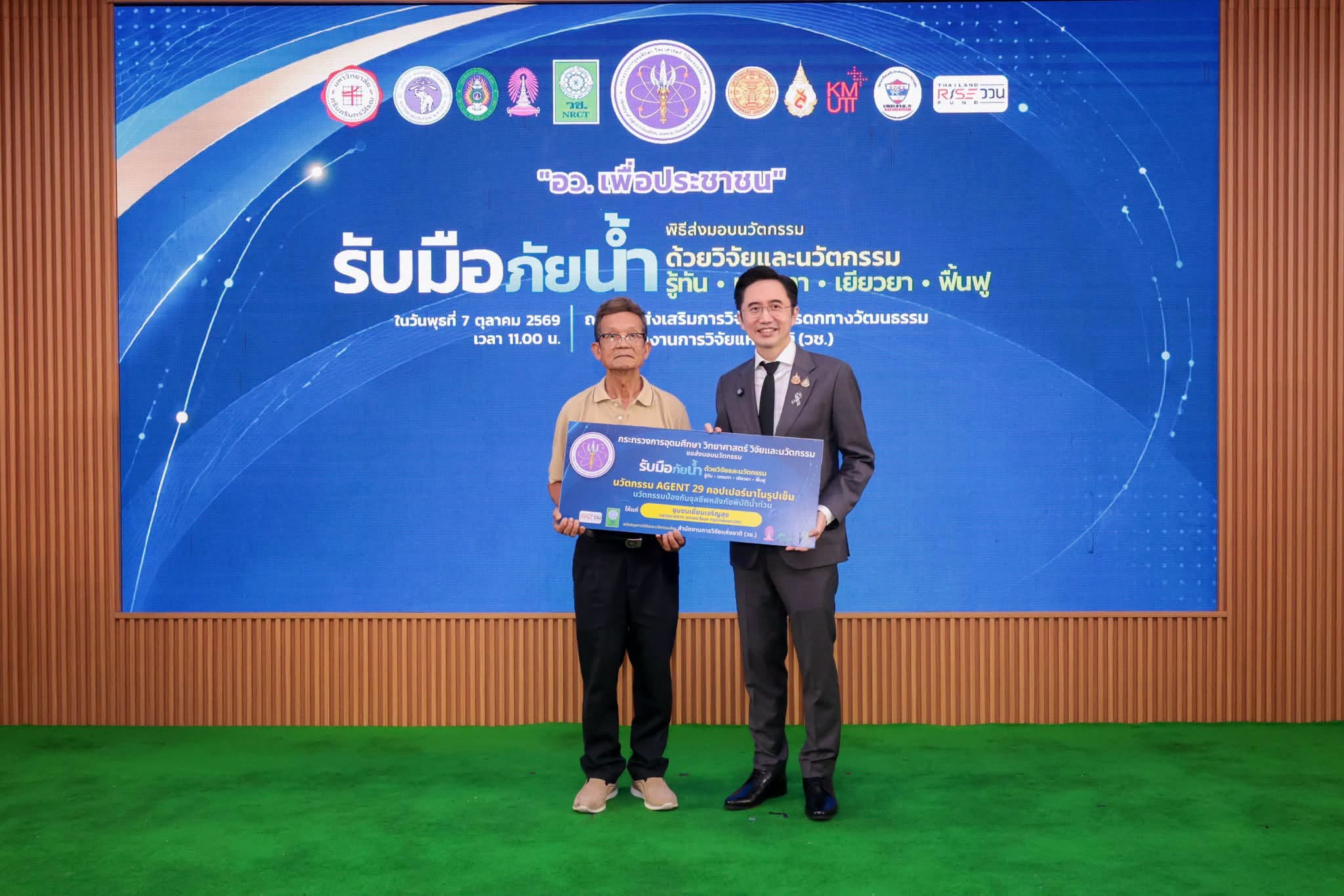
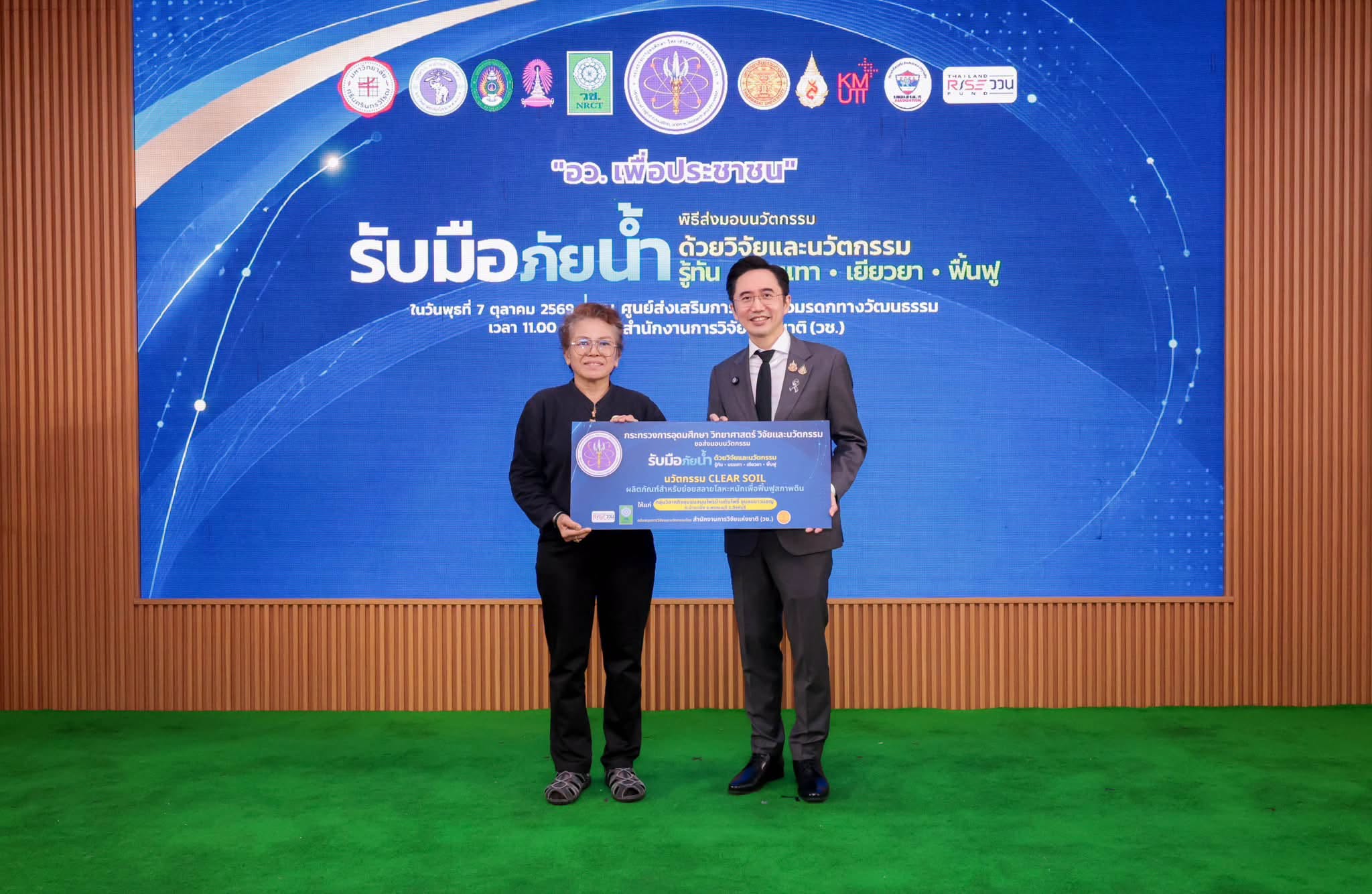
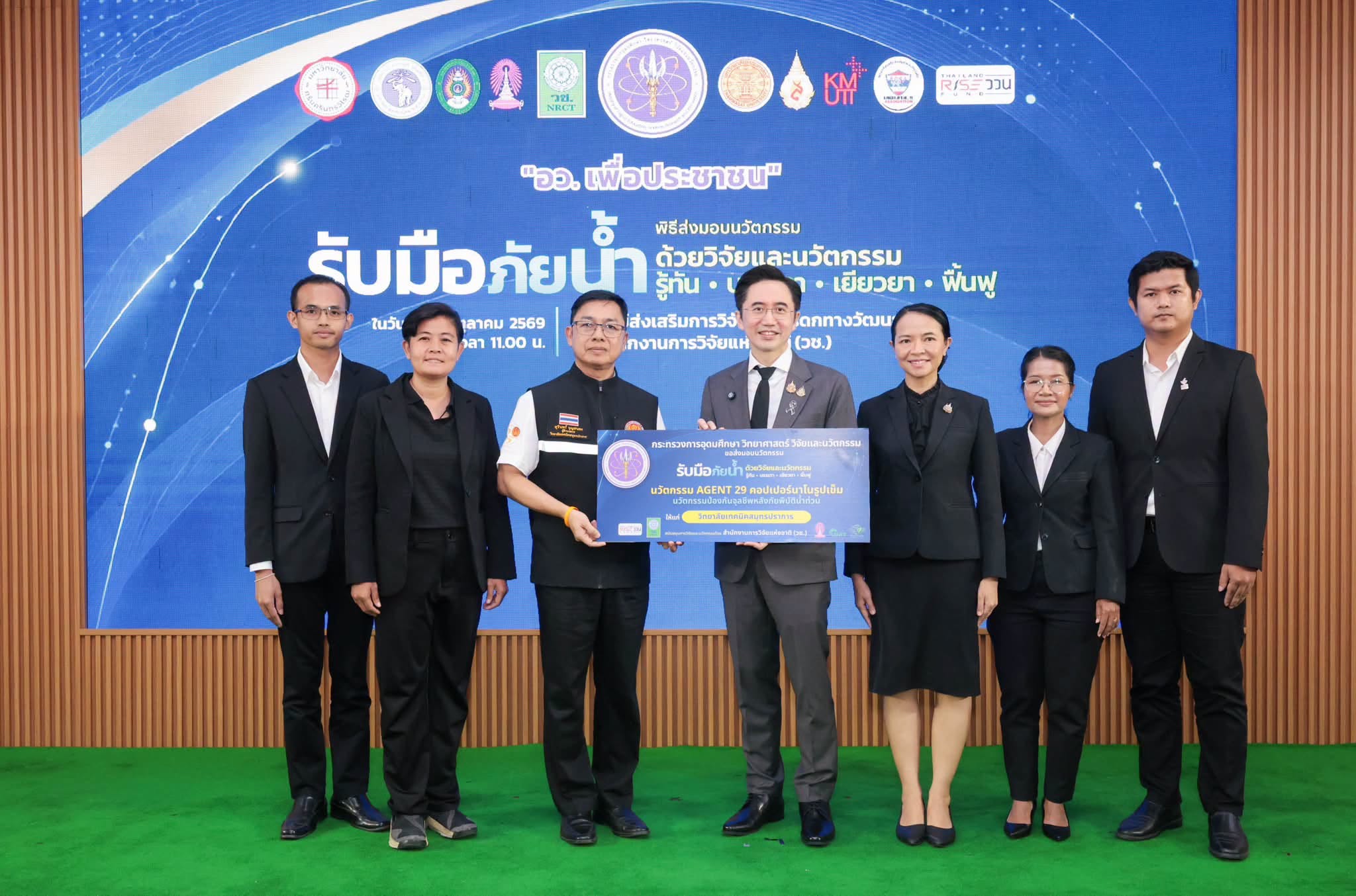
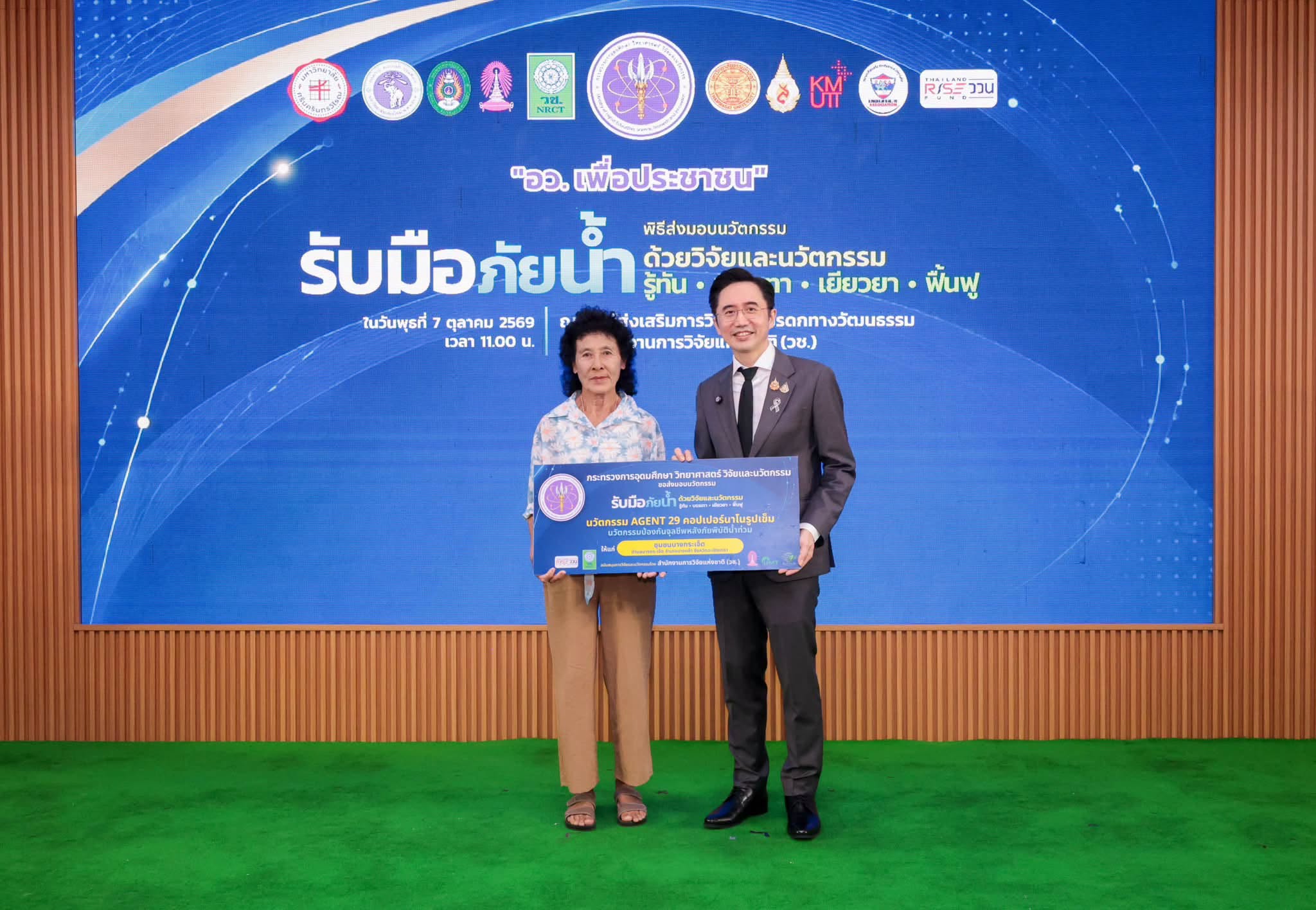
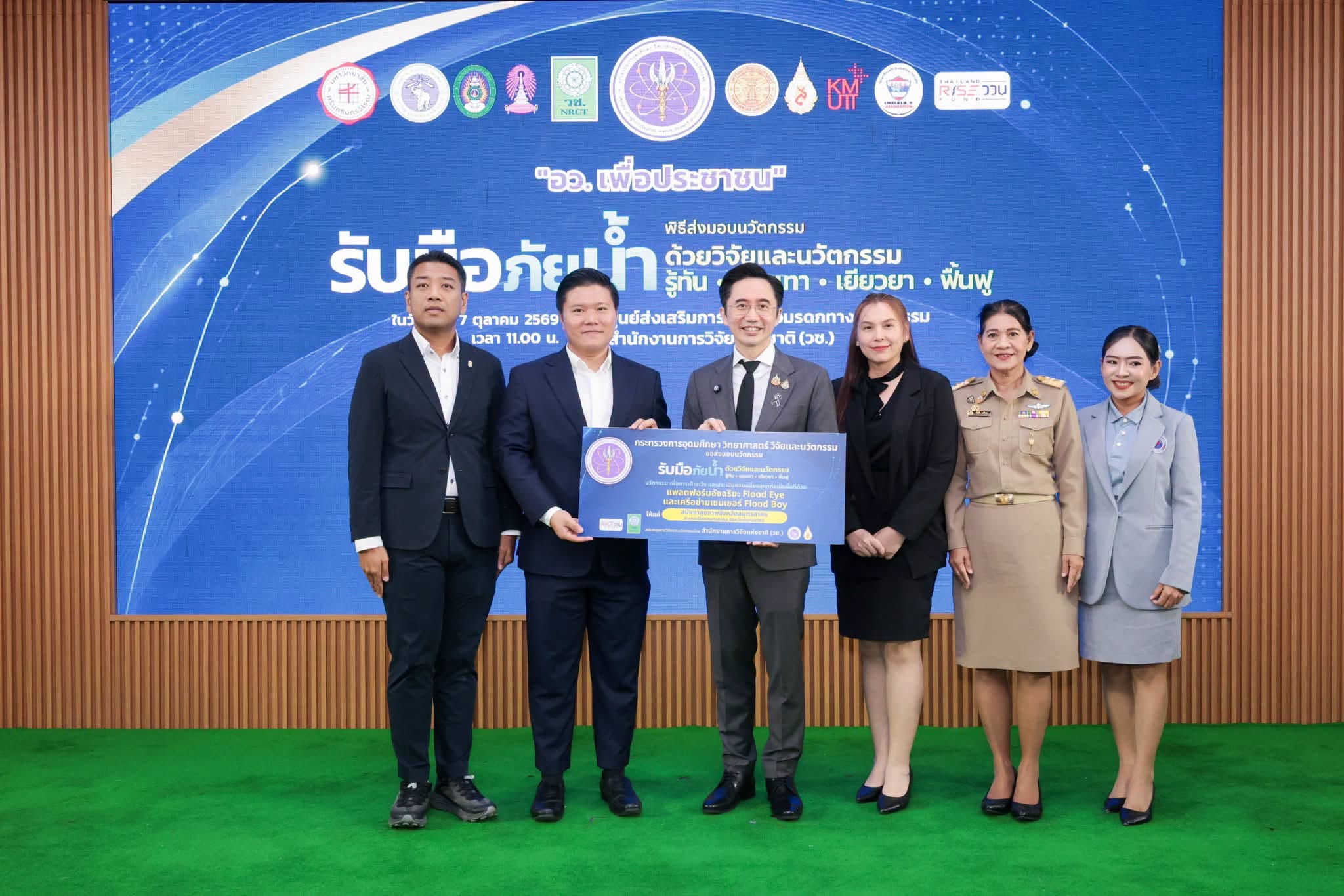
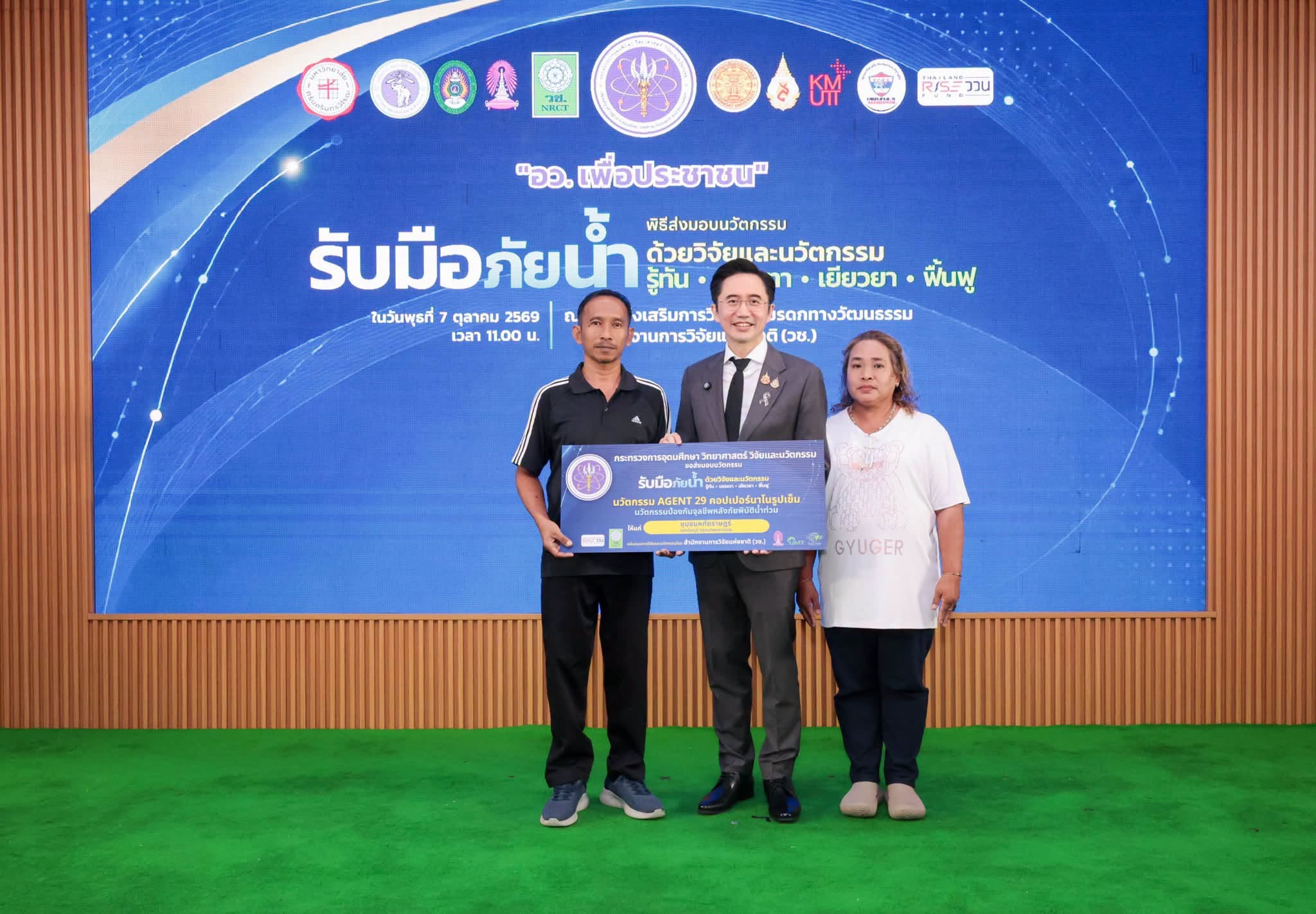
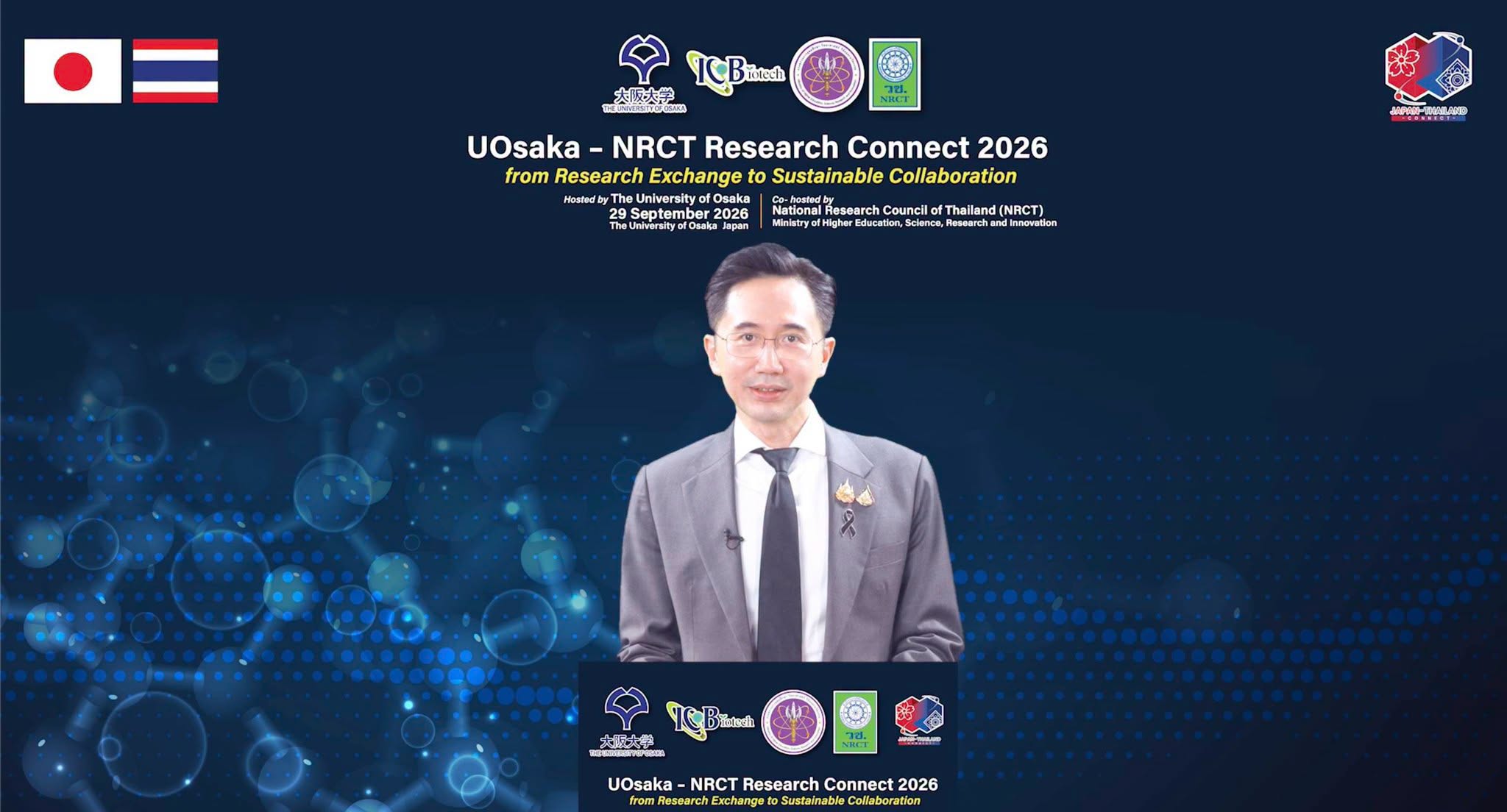
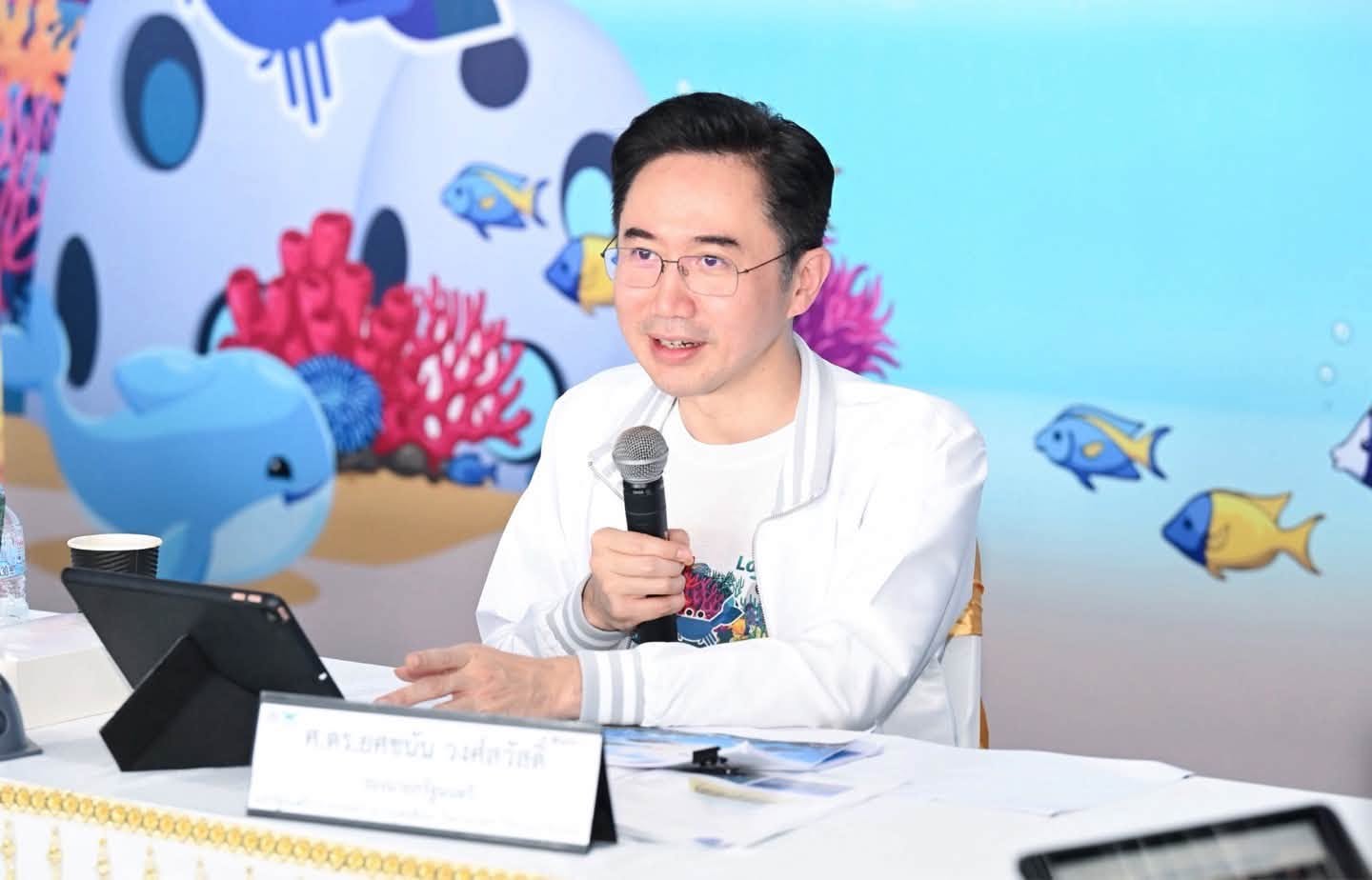
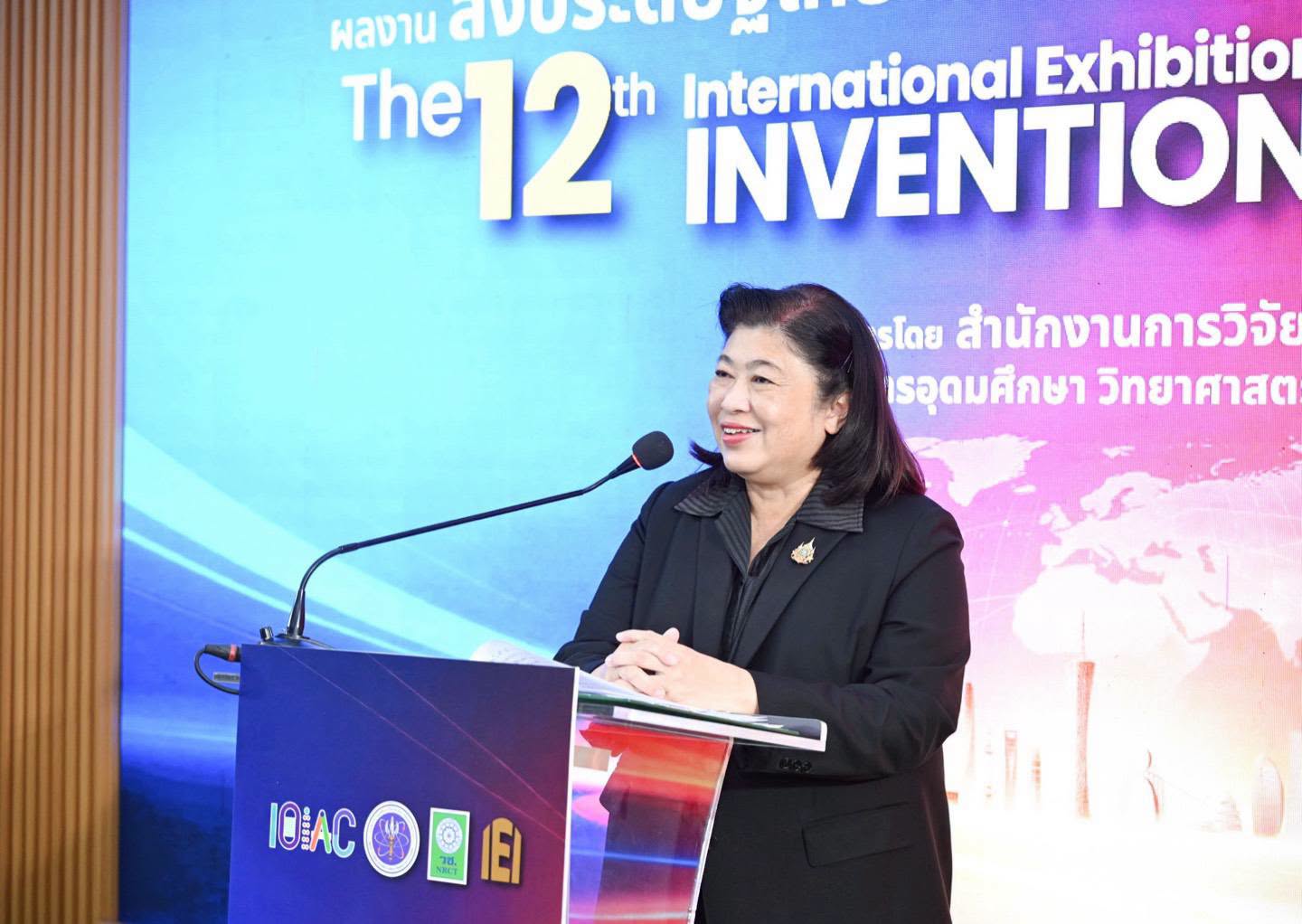
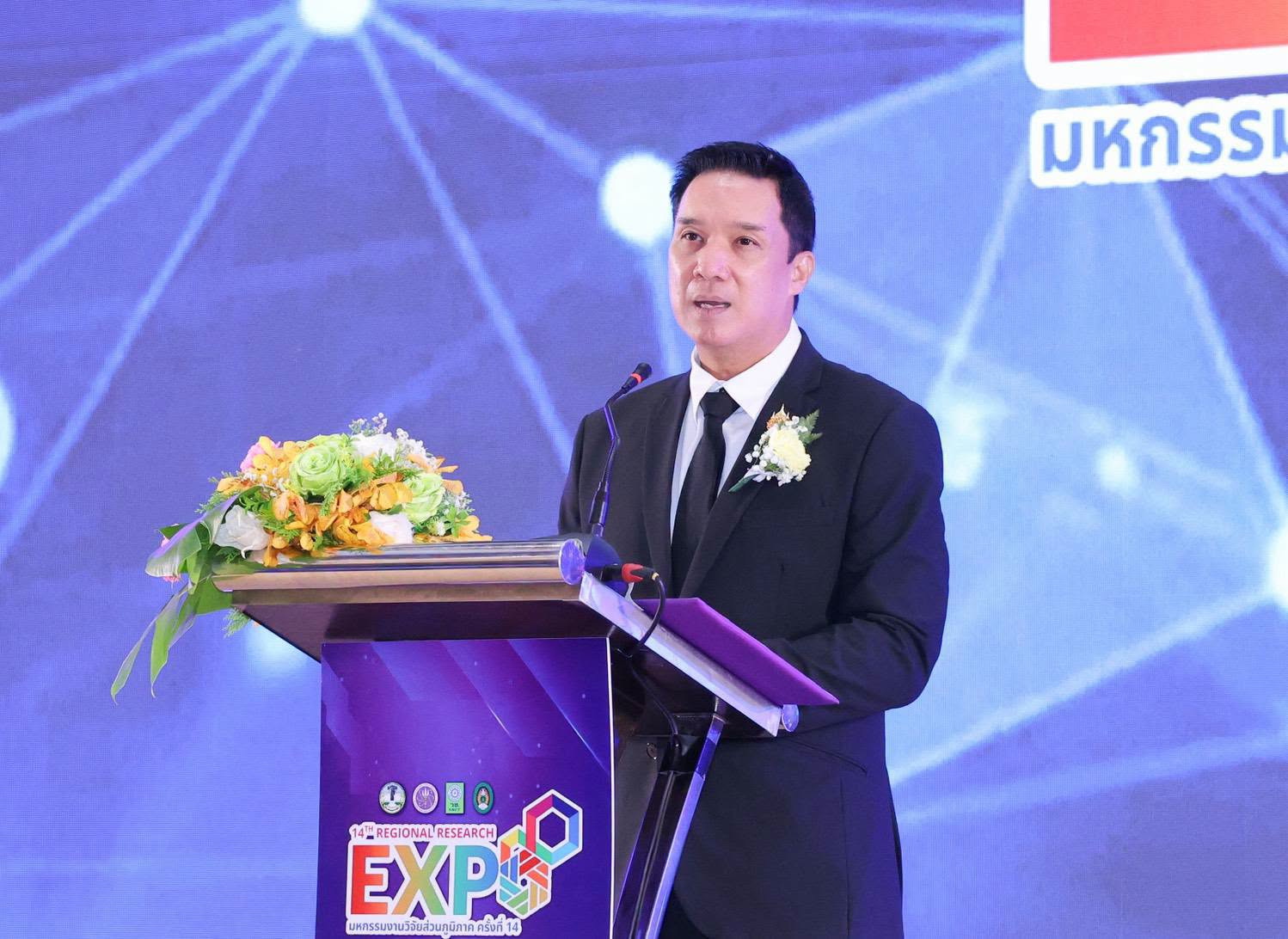
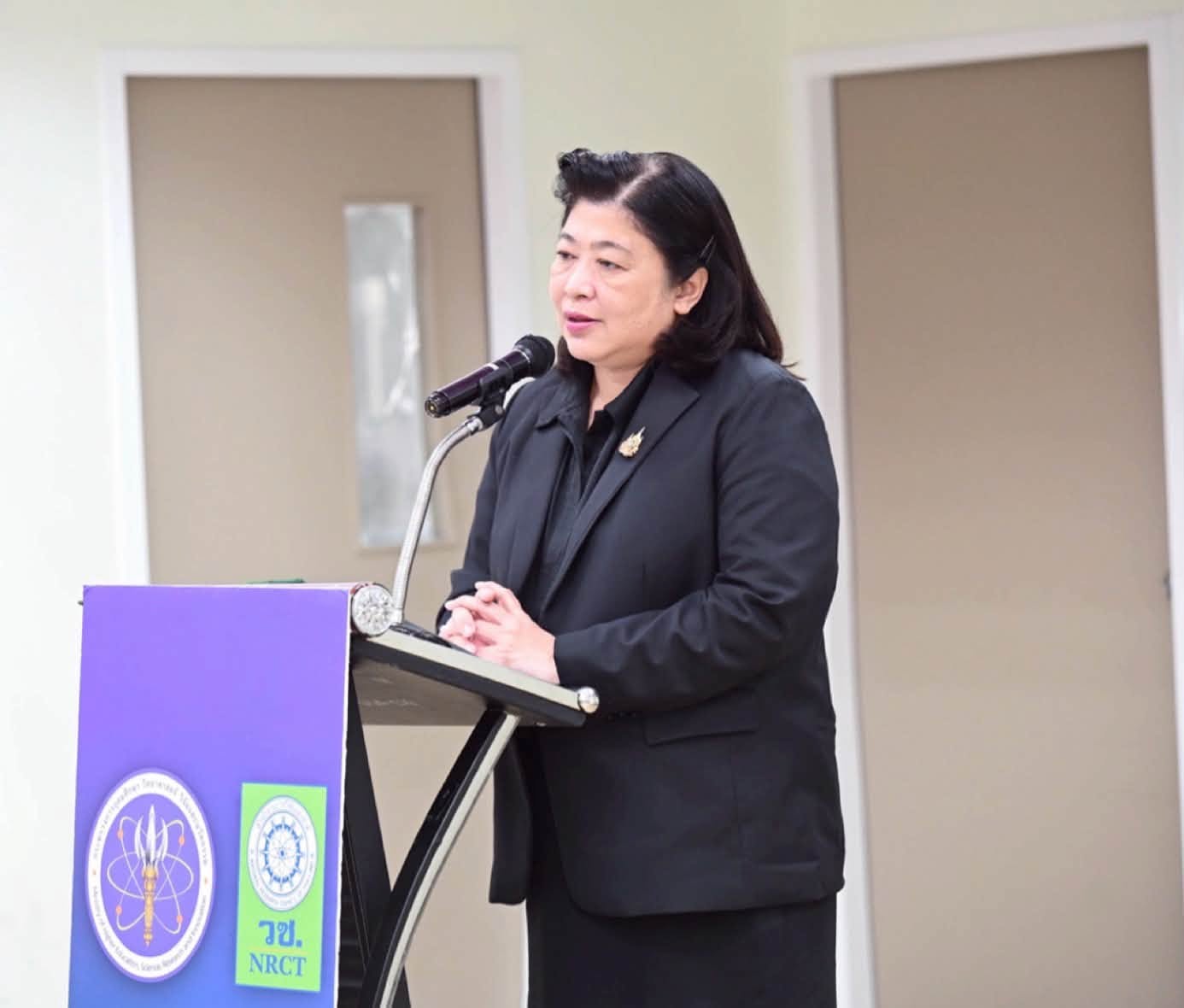
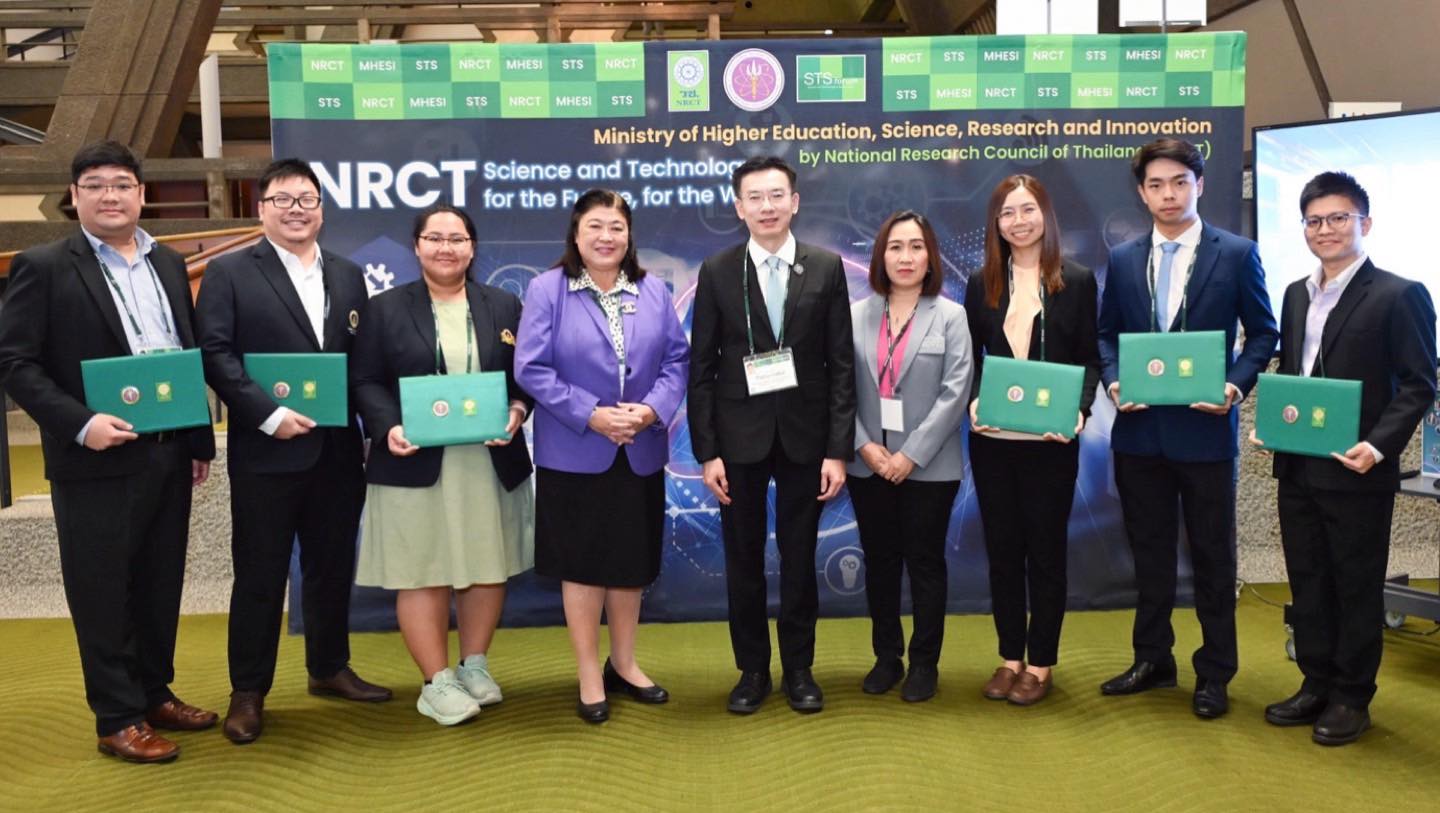
On 7 October 2026, Prof. Dr. Yodchanan Wongsawat, Deputy Prime Minister and Minister of Higher Education, Science, Research and Innovation (MHESI), presided over a ceremony to hand over seven research and innovation solutions to support flood preparedness, response, and recovery. The event was organized by the National Research Council of Thailand (NRCT), under MHESI, in collaboration with research and innovation partners.
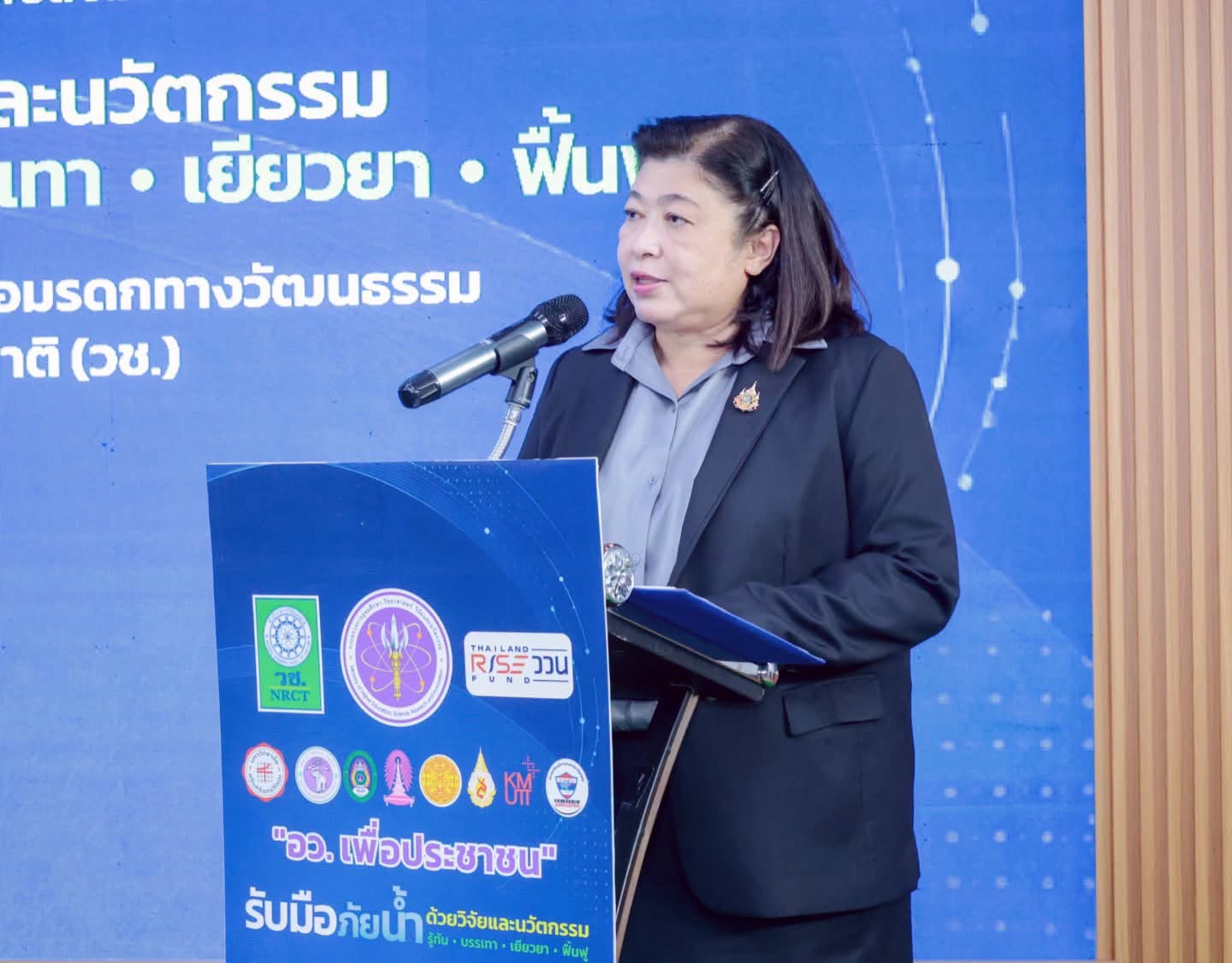
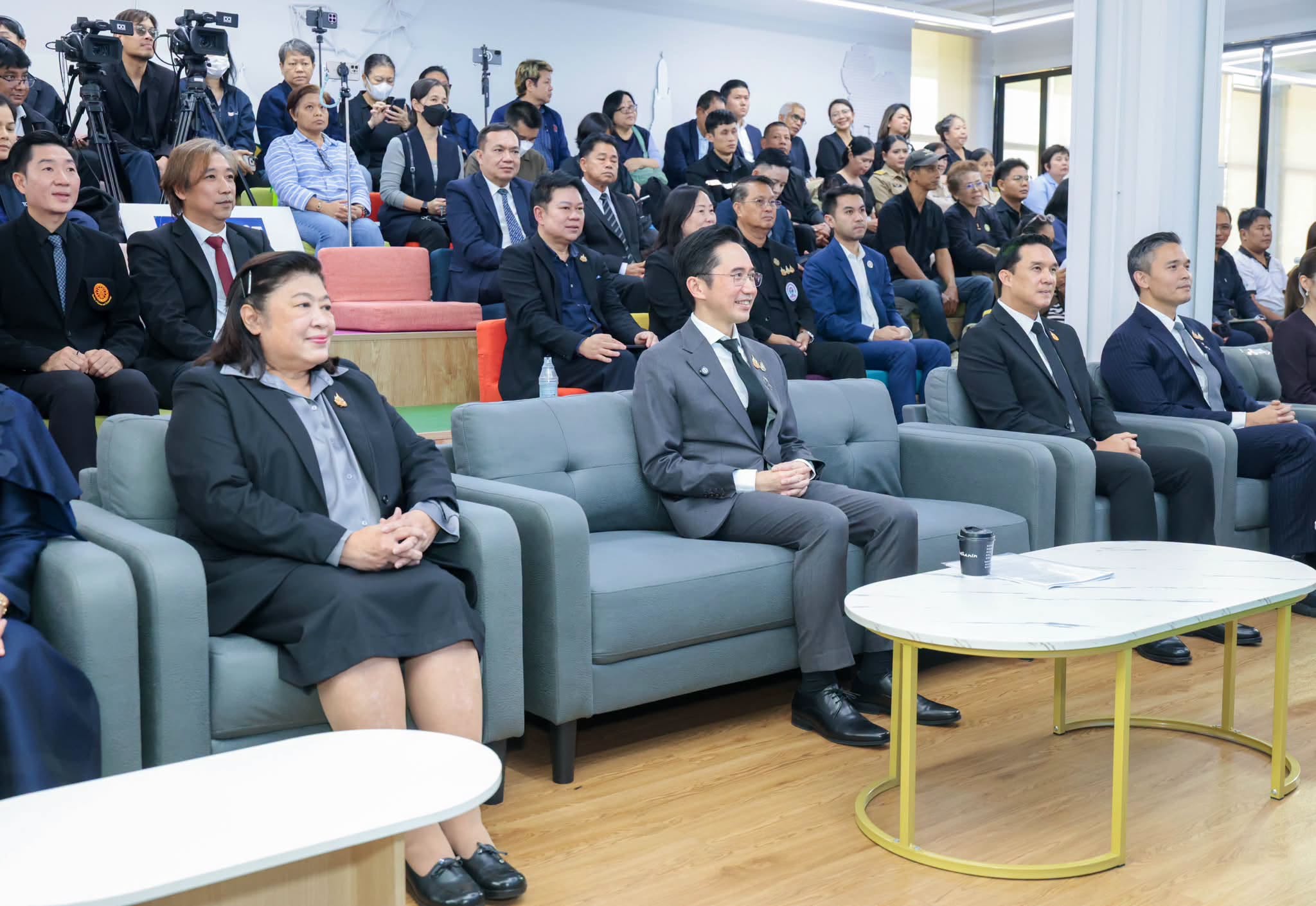
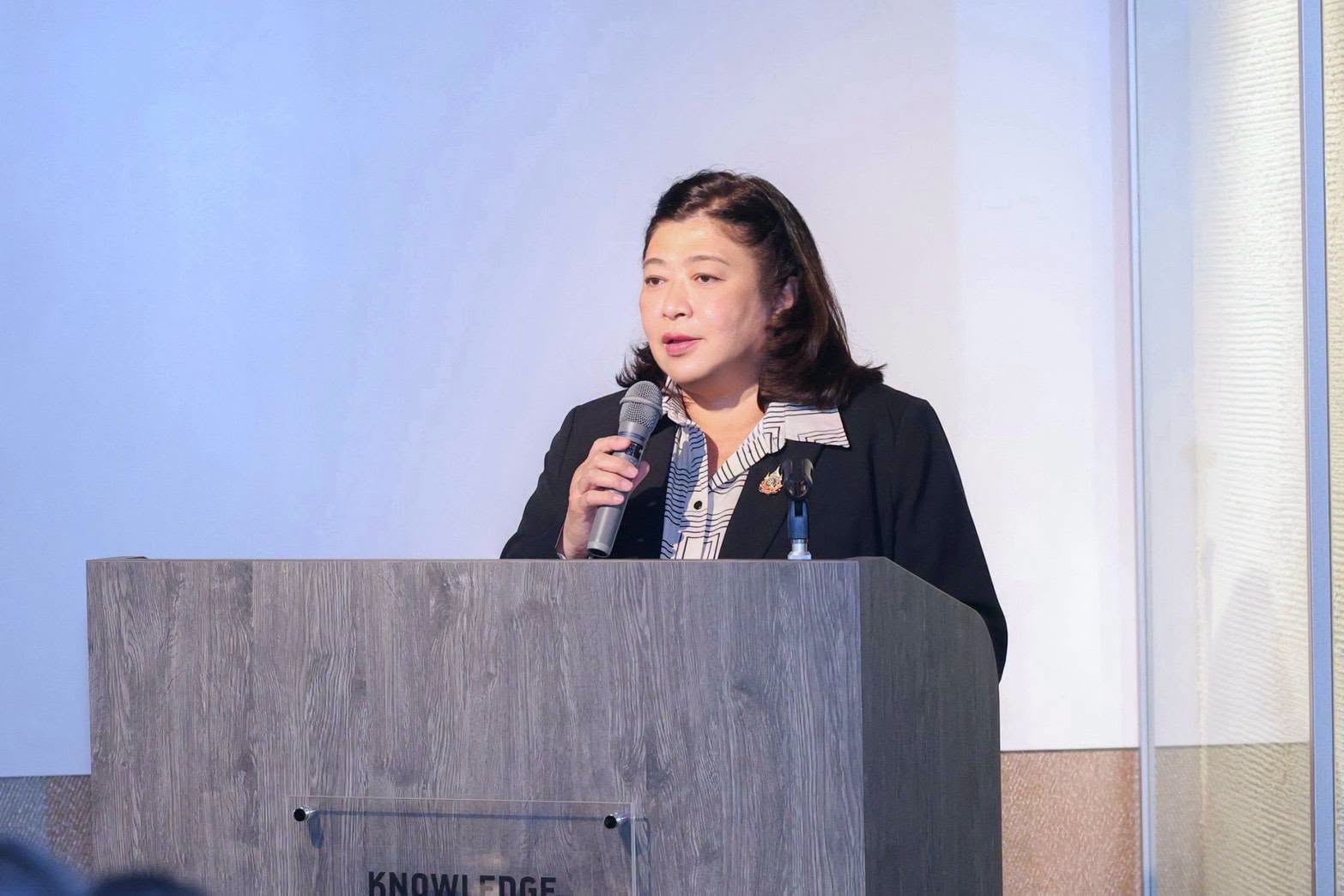
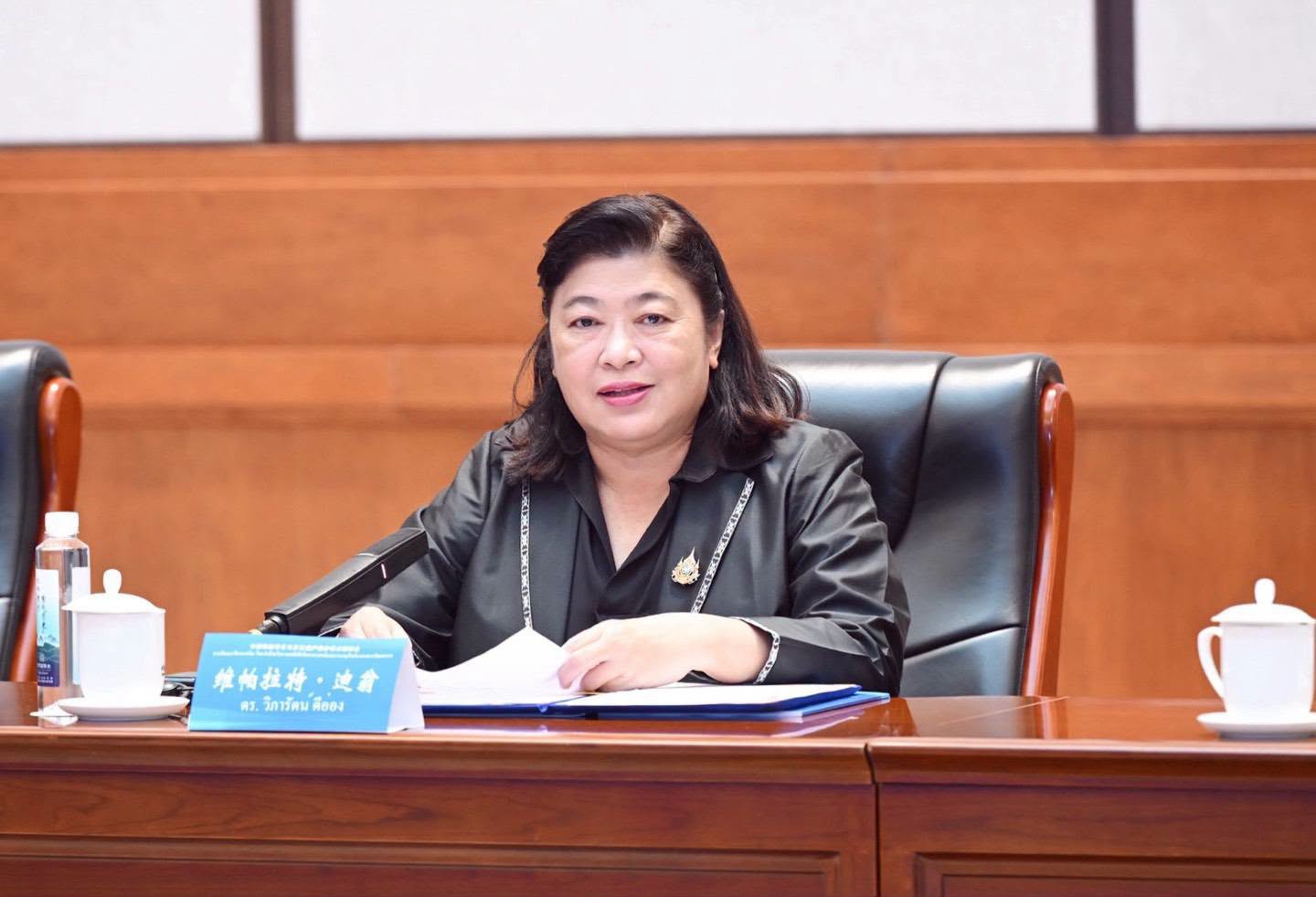
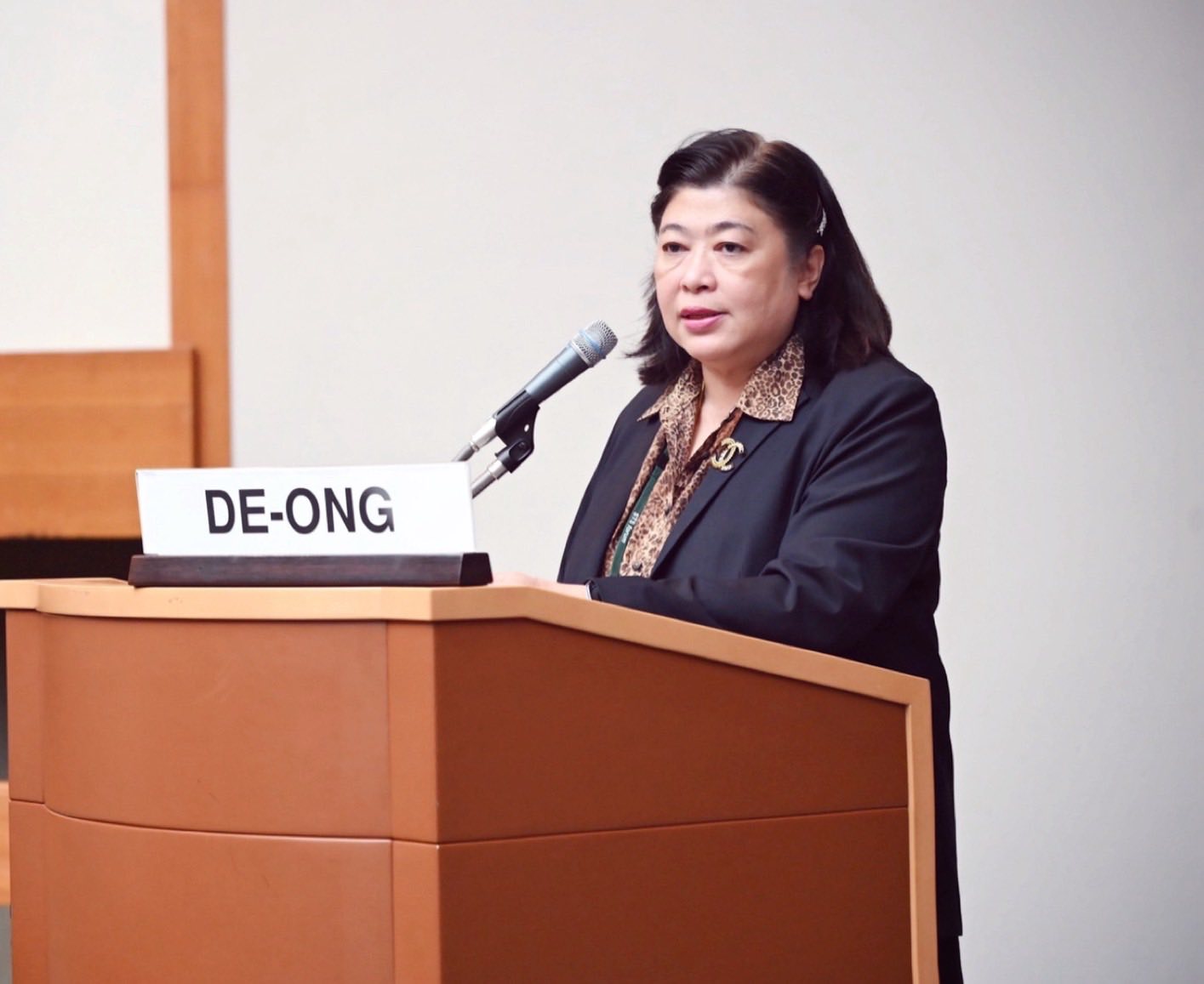
Mr. Danuphorn Punnakanta, Vice Minister for Higher Education, Science, Research and Innovation also attended the event, while Dr. Wiparat De-ong, Executive Director of NRCT, presented a report on the practical application of research and innovation in flood disaster management. Inventors, researchers, and representatives of beneficiary organizations participated in the ceremony at the NRCT Building 8, Bangkok.
Prof. Dr. Yodchanan Wongsawat emphasized the importance of applying research and innovation to strengthen disaster preparedness, emergency response, and recovery. He highlighted the need to integrate data, technology, and research knowledge to improve disaster management and provide timely assistance to affected communities. He also encouraged researchers and relevant agencies to test and apply innovations in real-world settings to ensure that research outcomes effectively address people's needs.
Dr. Wiparat De-ong stated that NRCT supports research and innovation covering all stages of disaster management, from early warning and risk assessment to emergency assistance and post-disaster recovery. Under the concept of “Early Warning, Mitigation, Relief, and Recovery,” NRCT aims to translate research outcomes into practical solutions that improve community safety and quality of life.
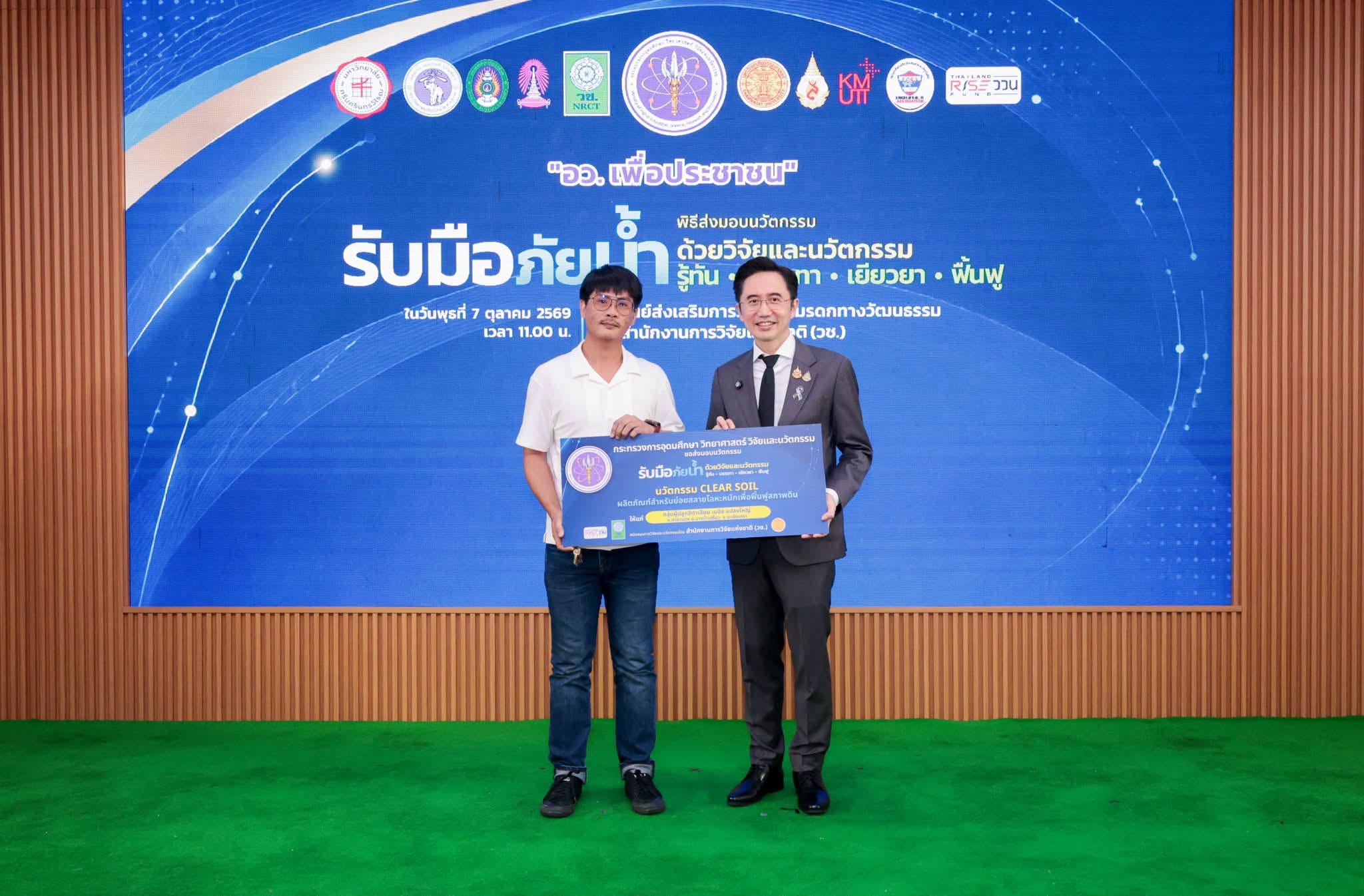
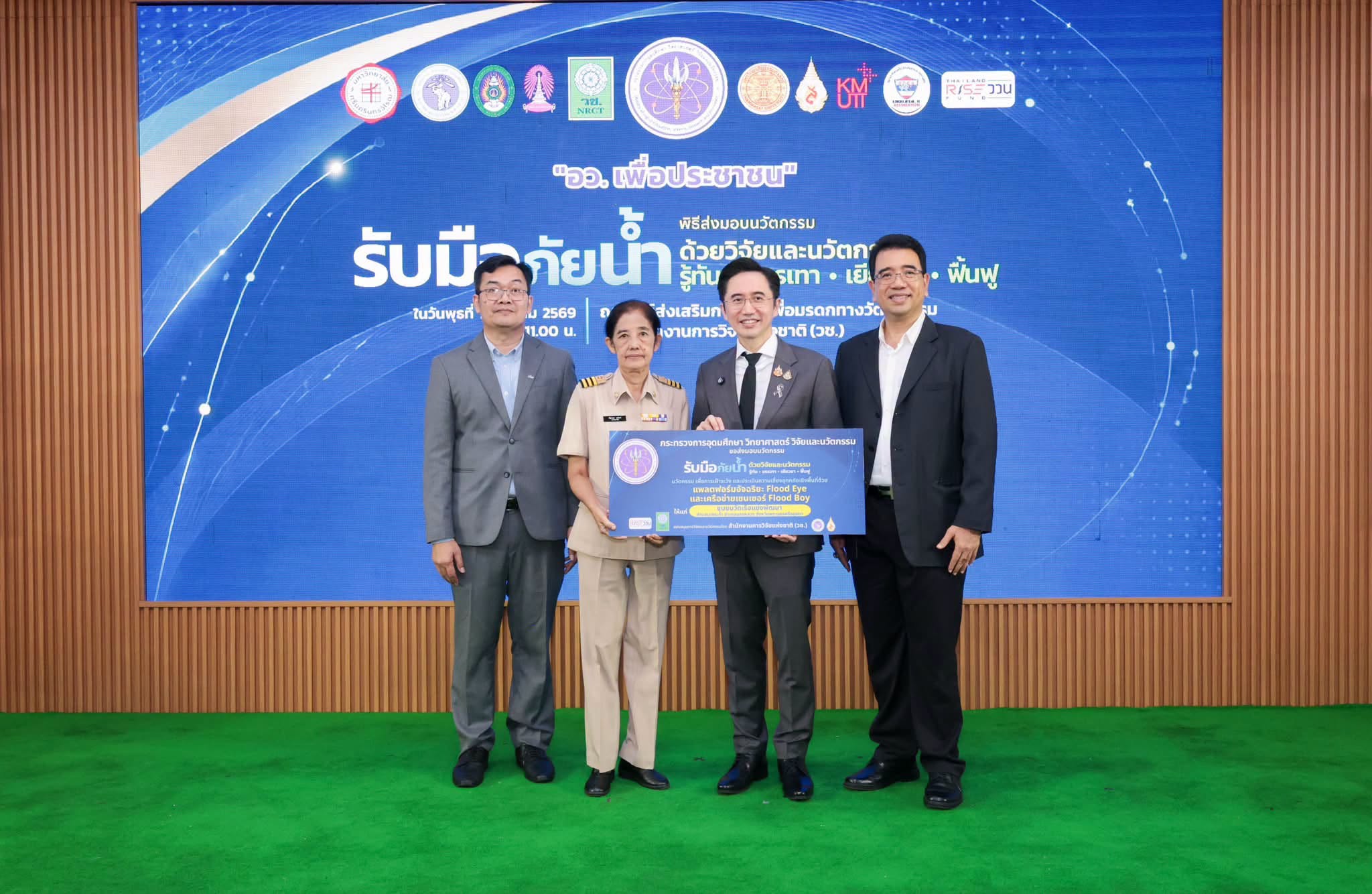
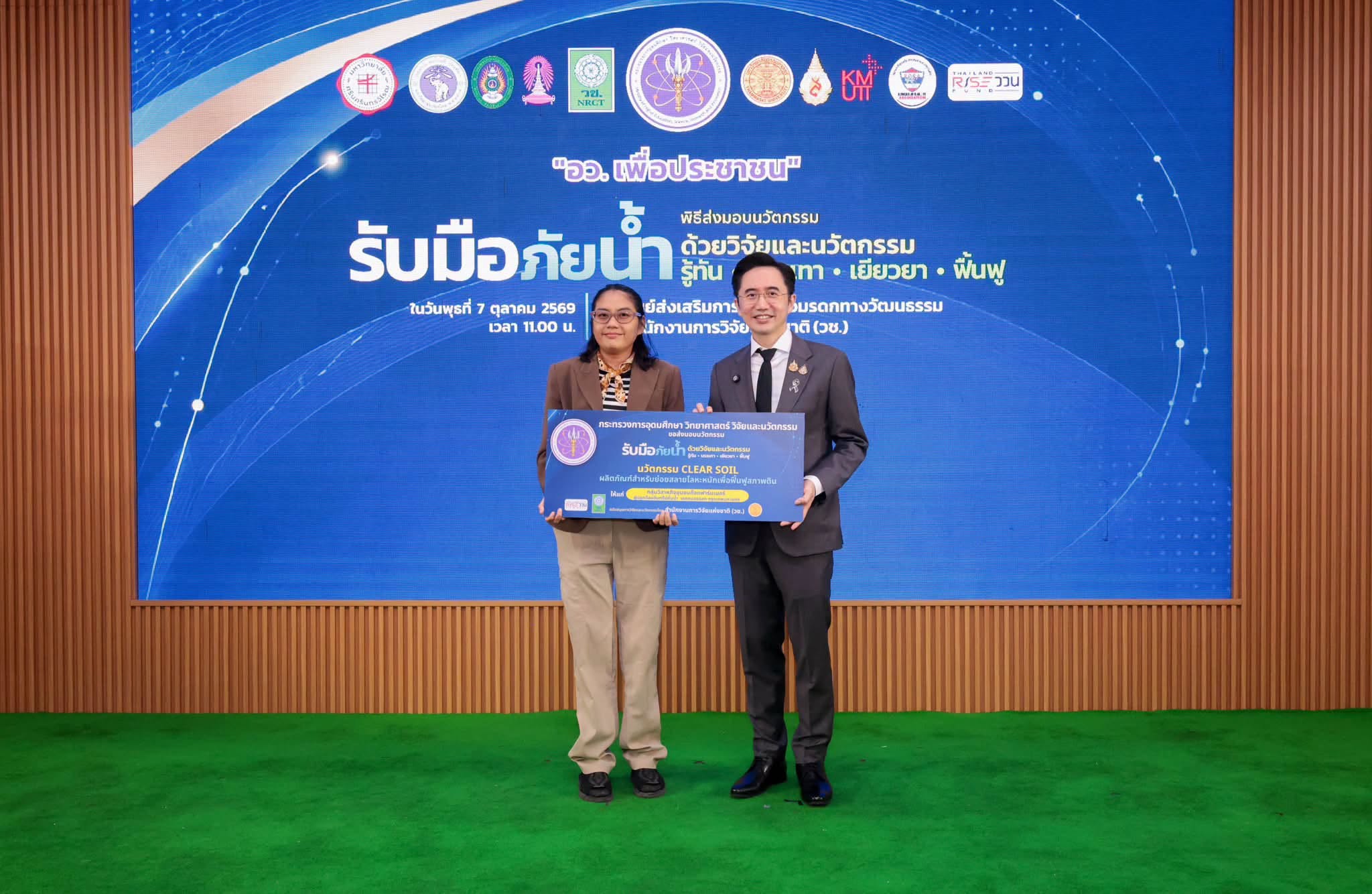
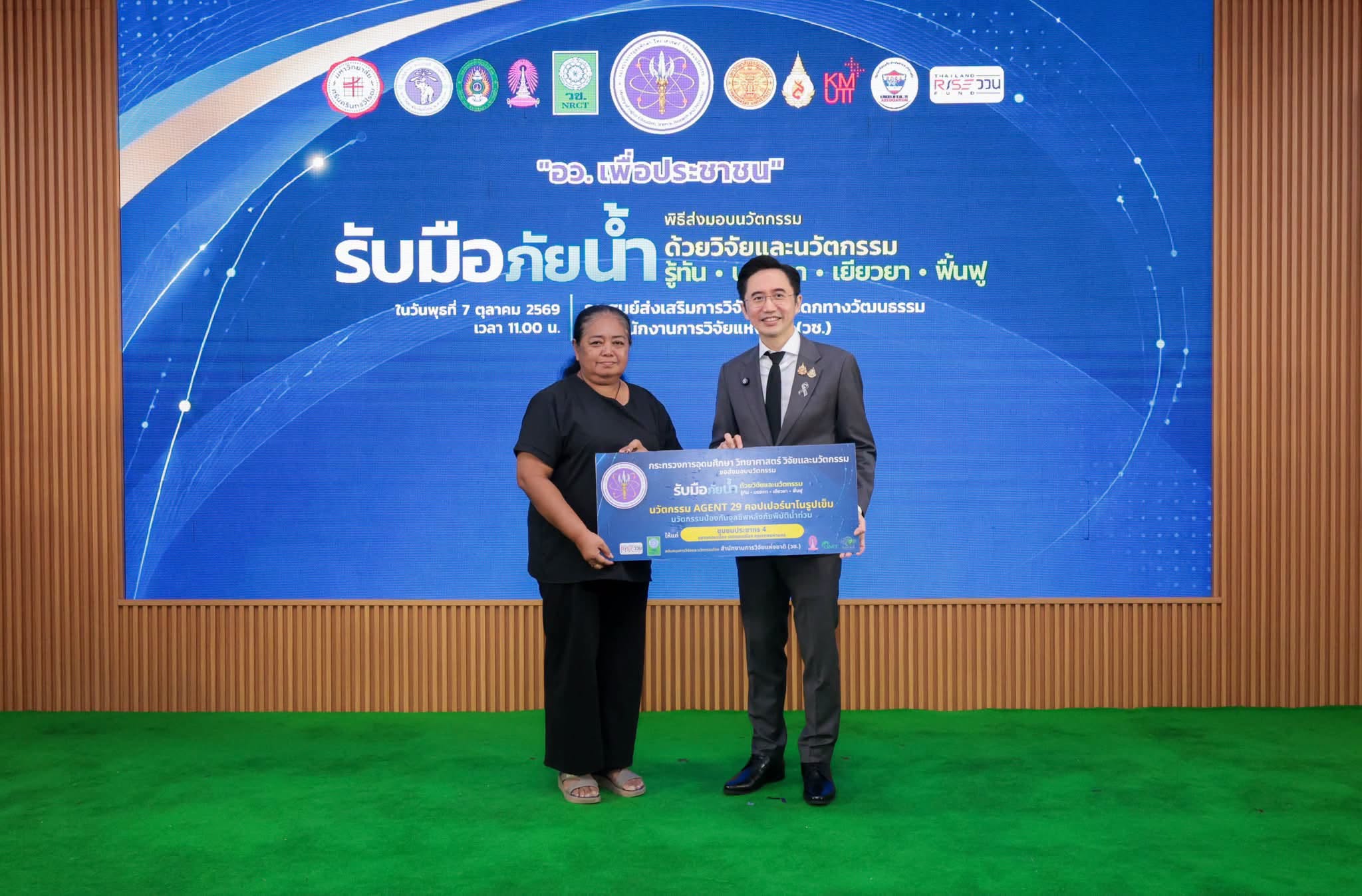
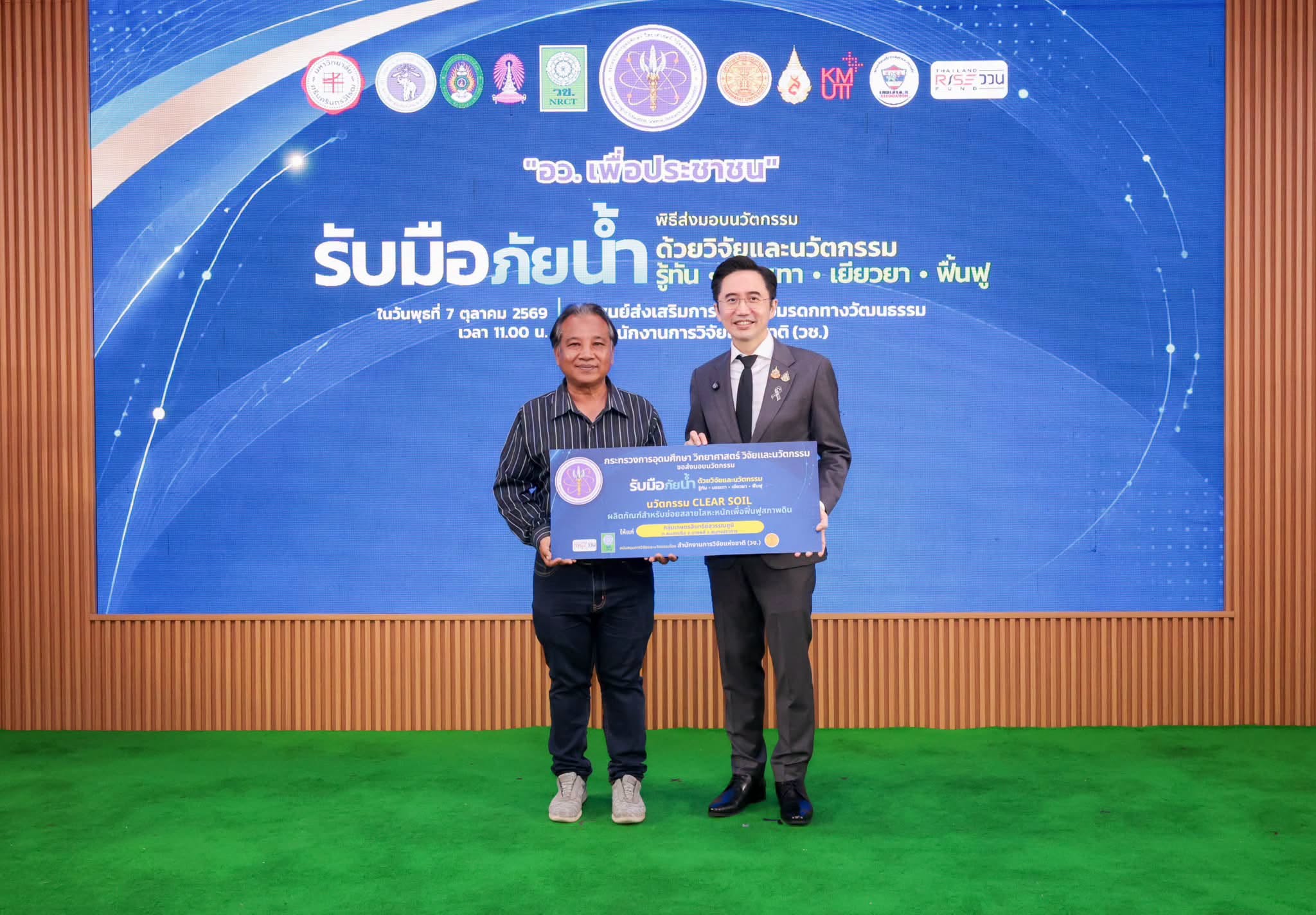
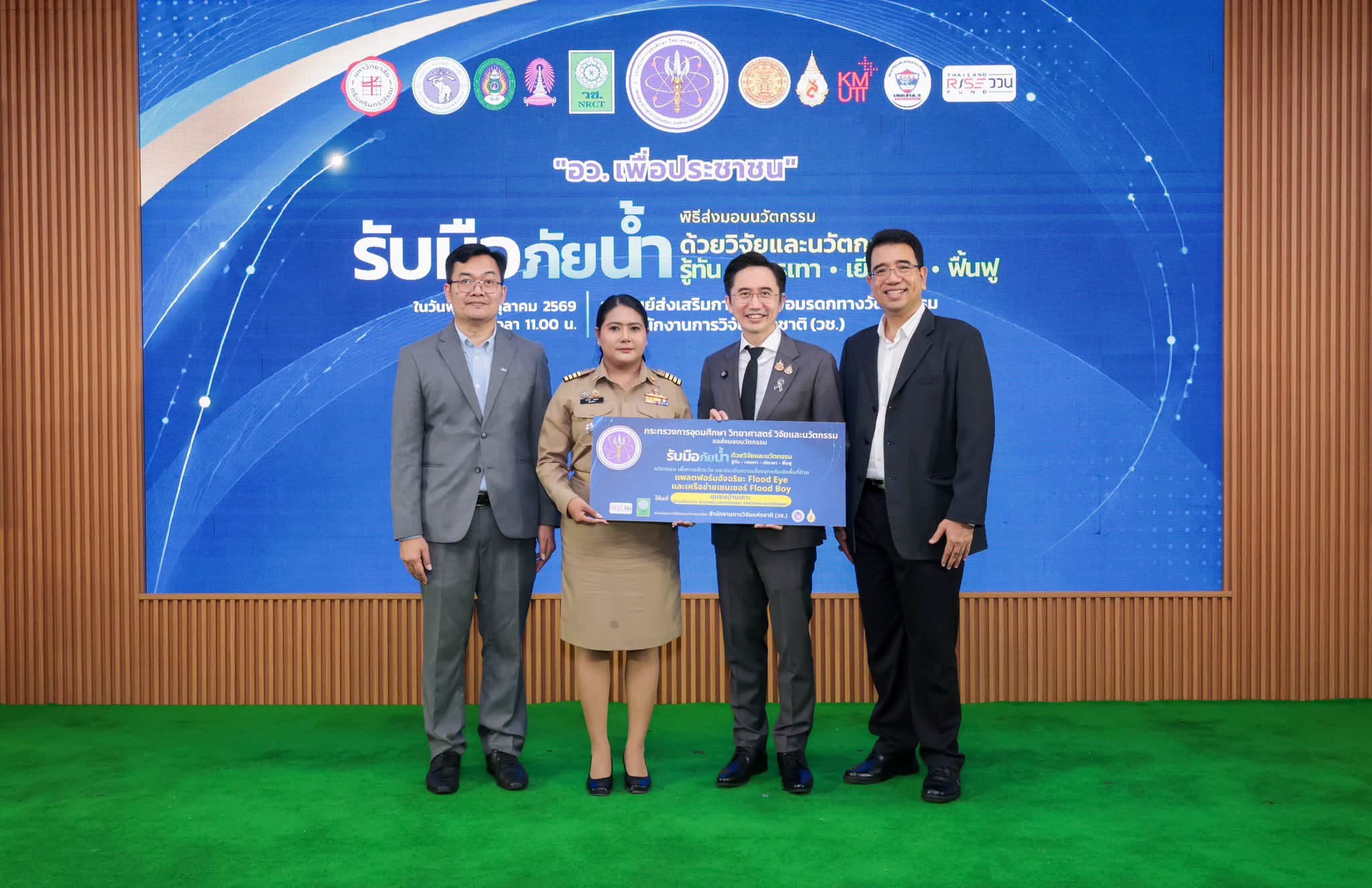
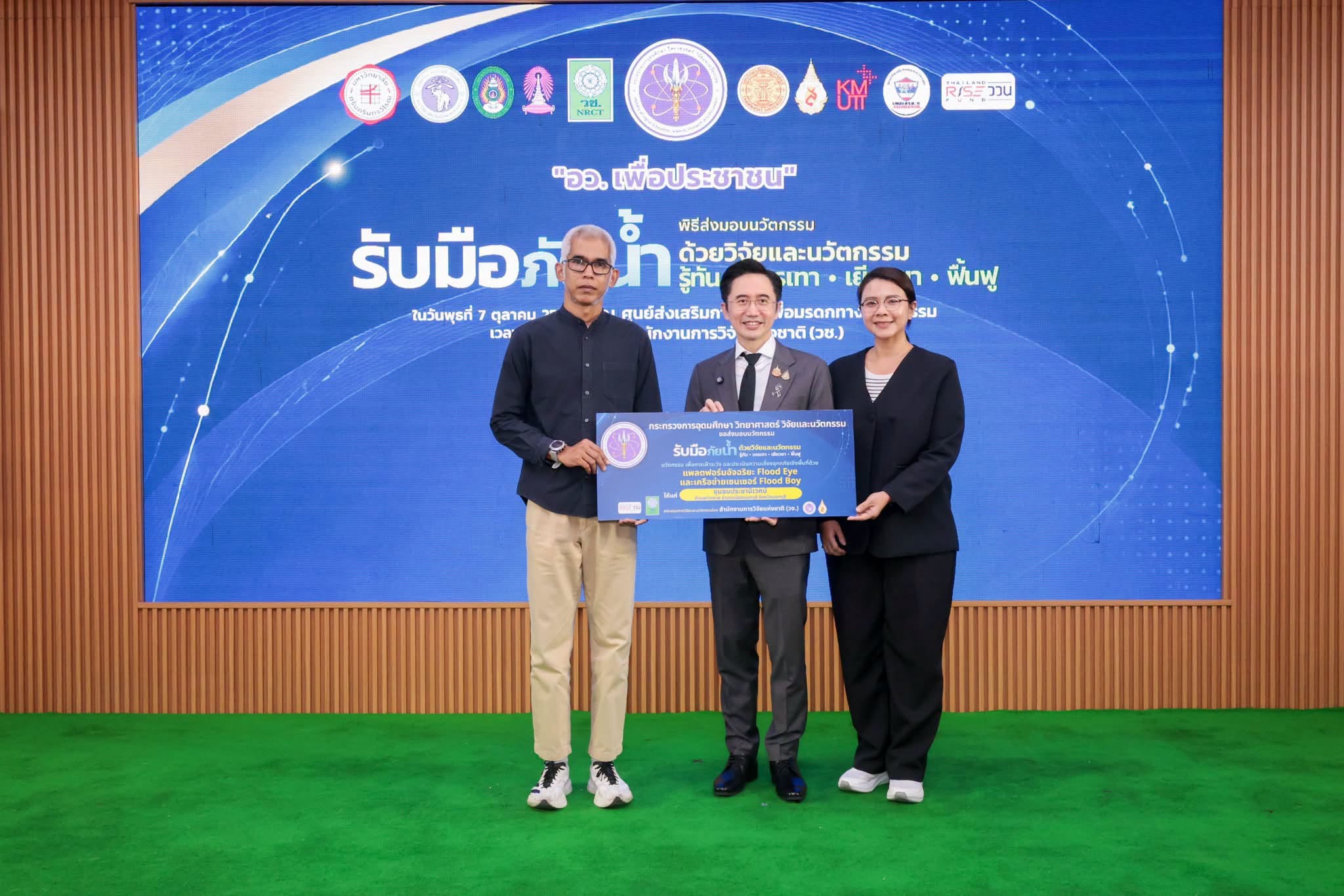
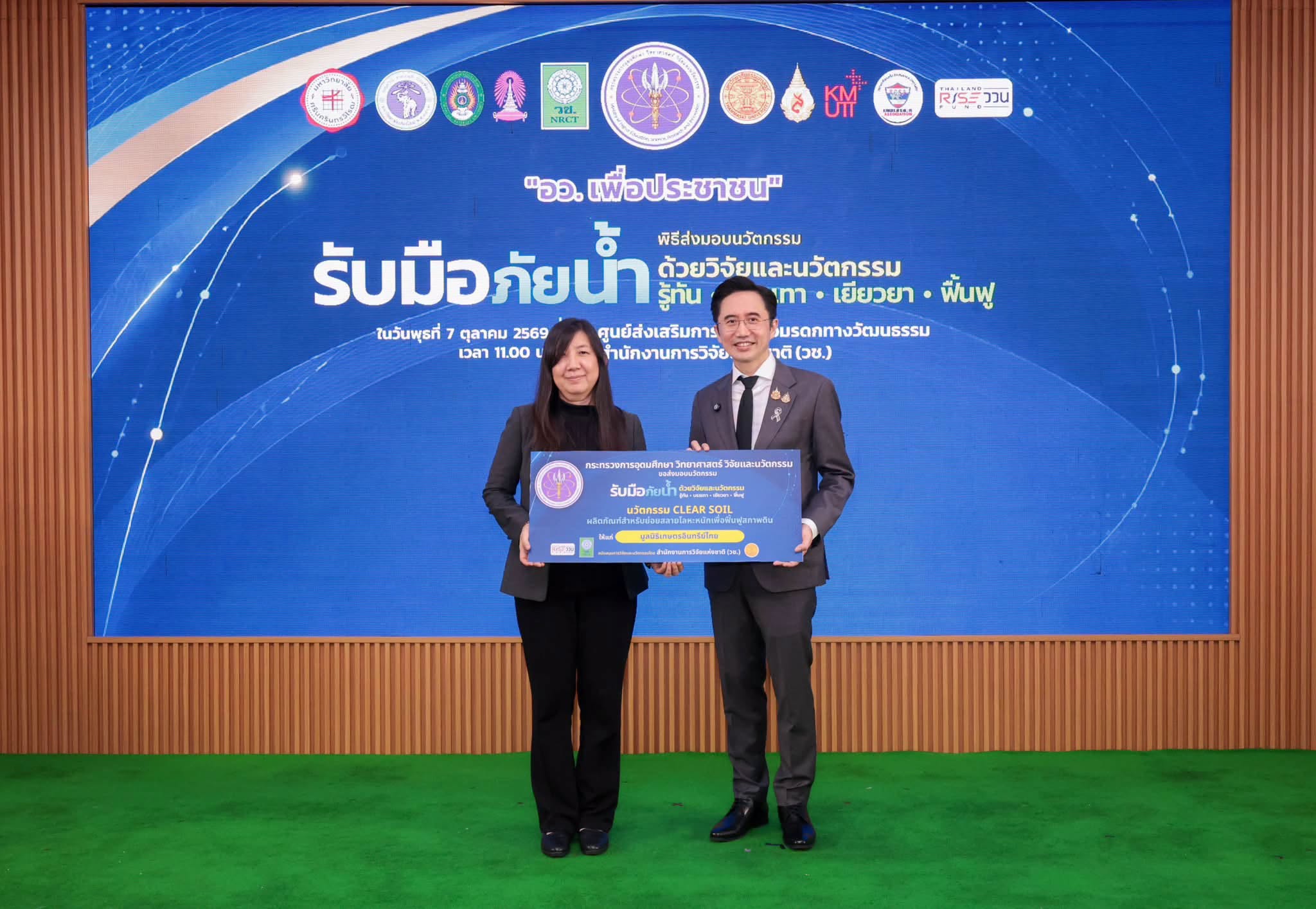
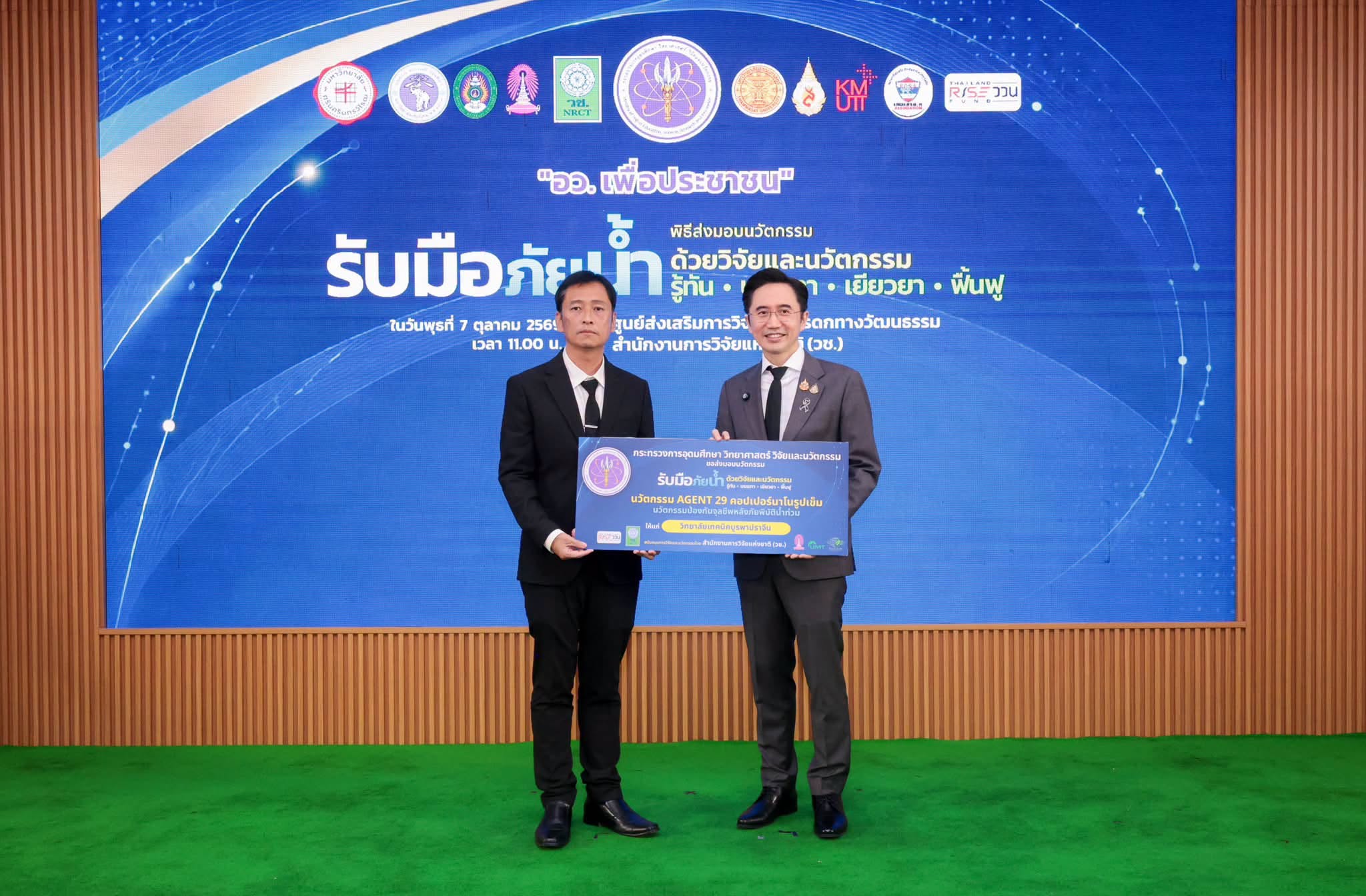
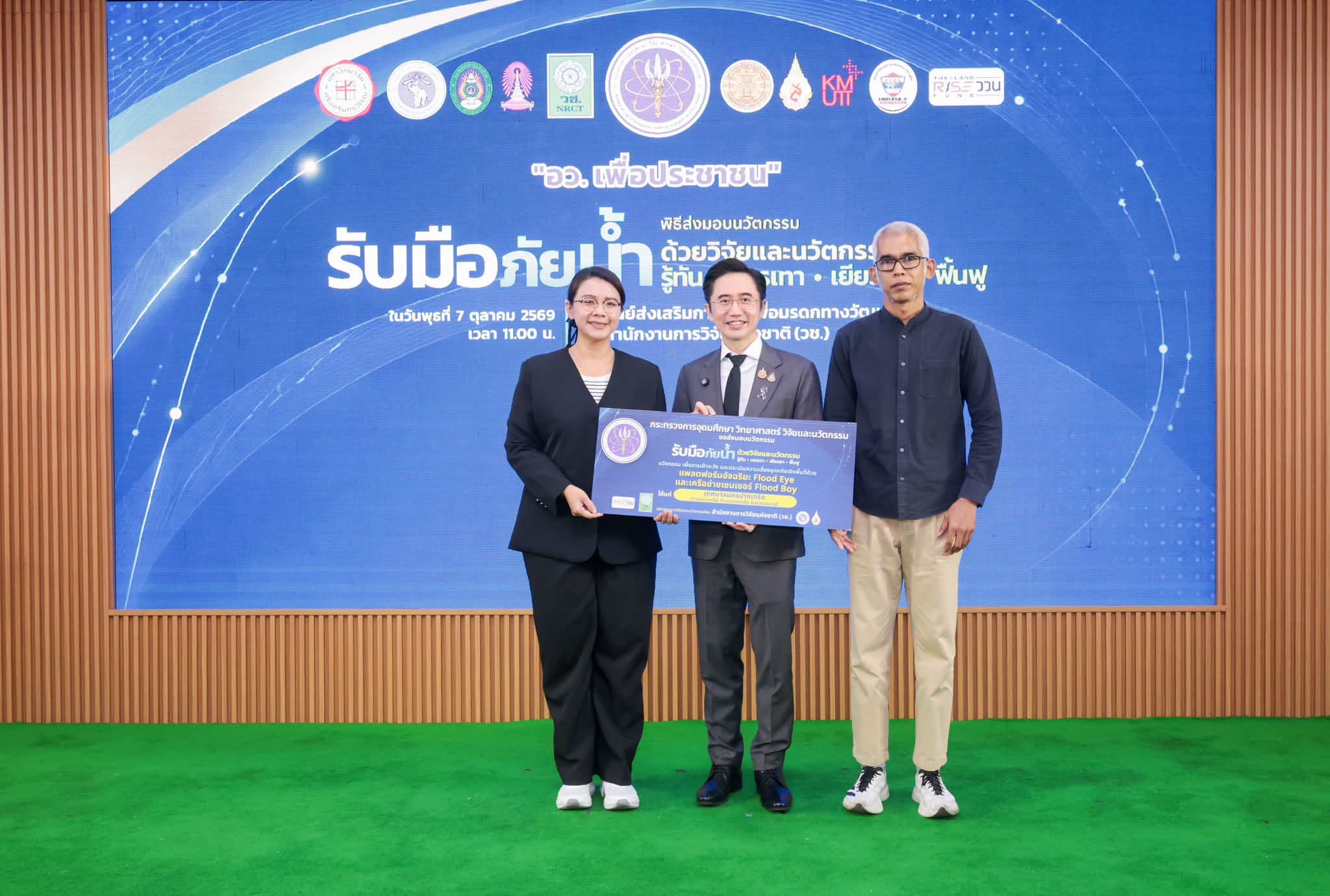
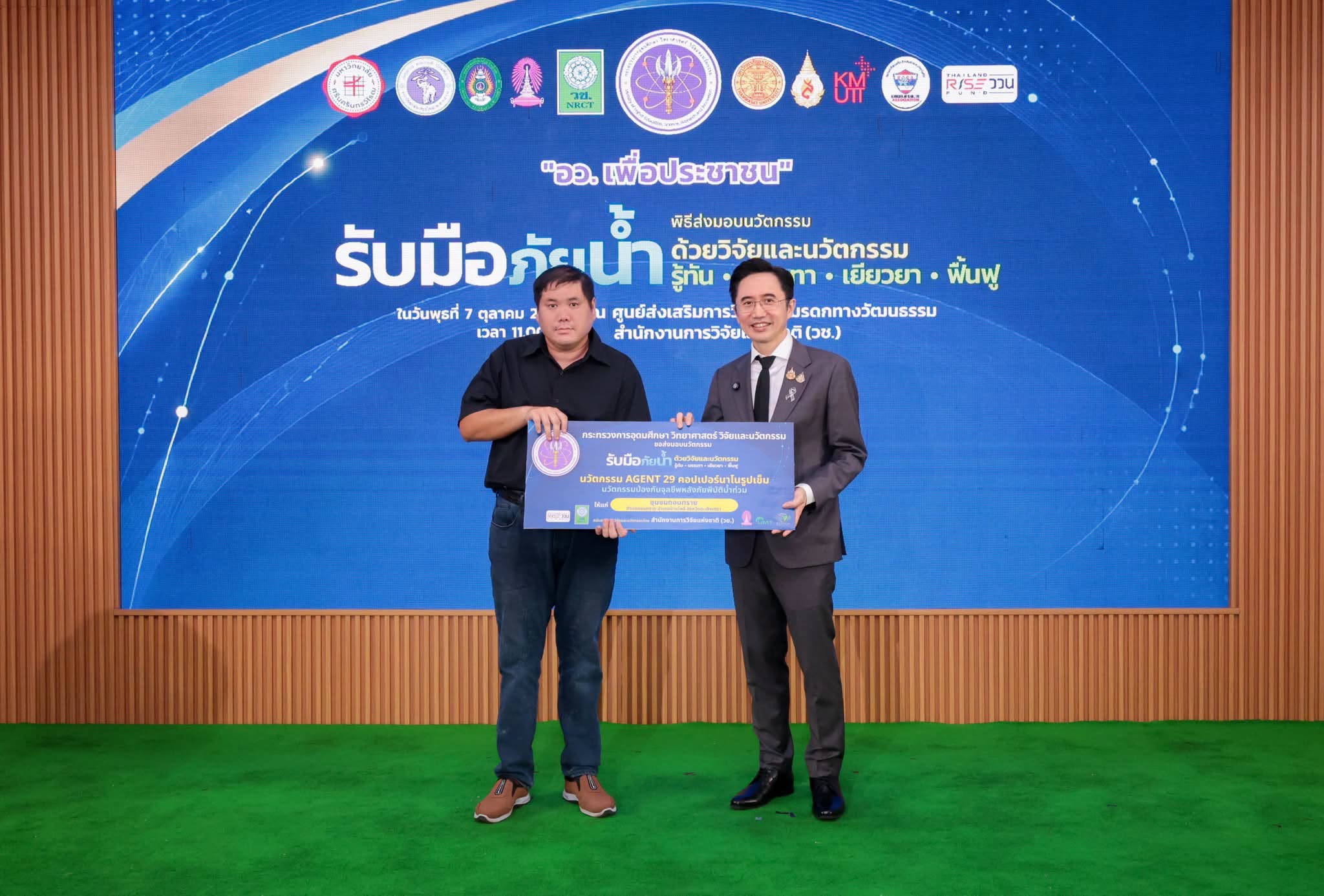
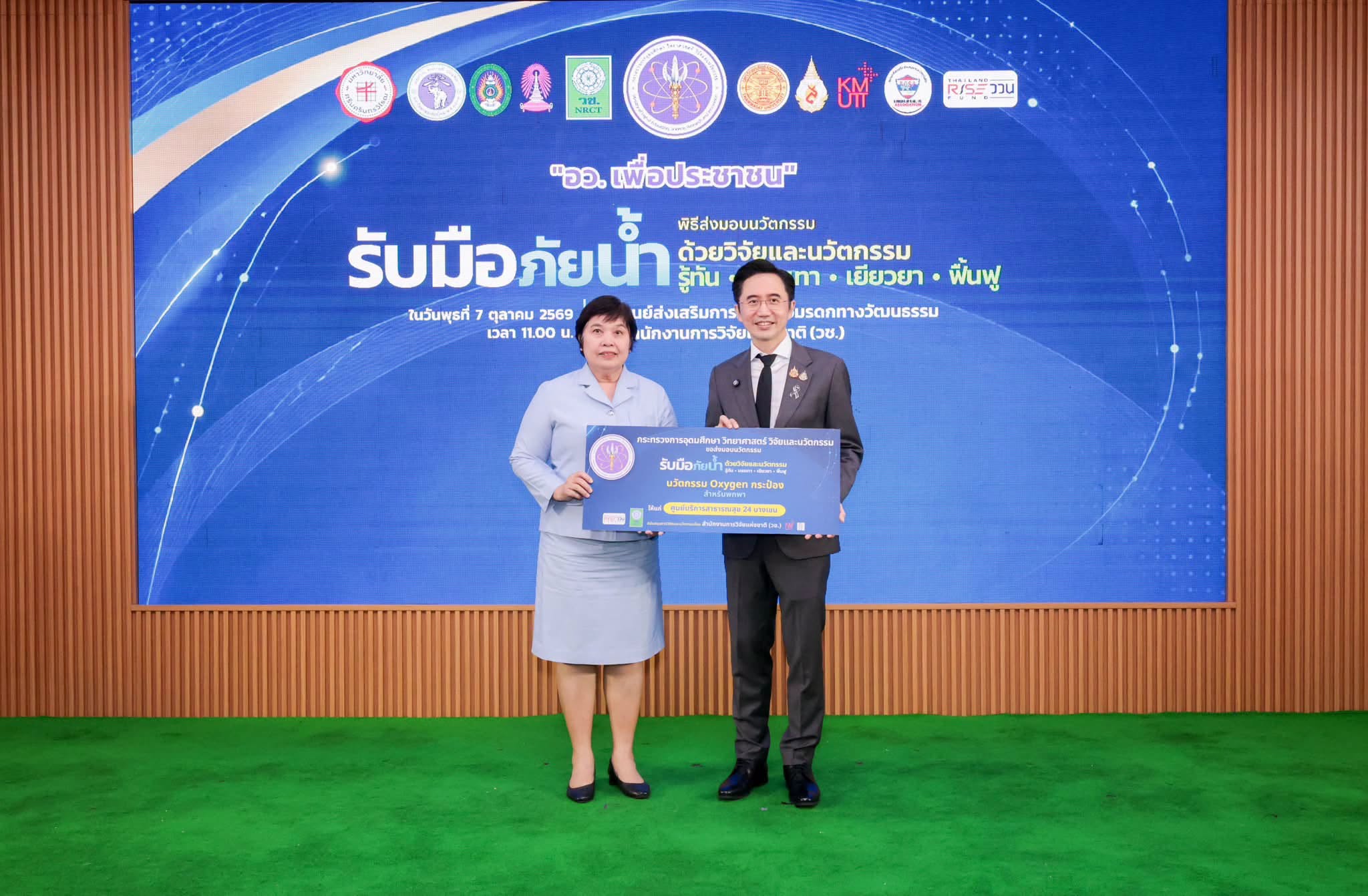
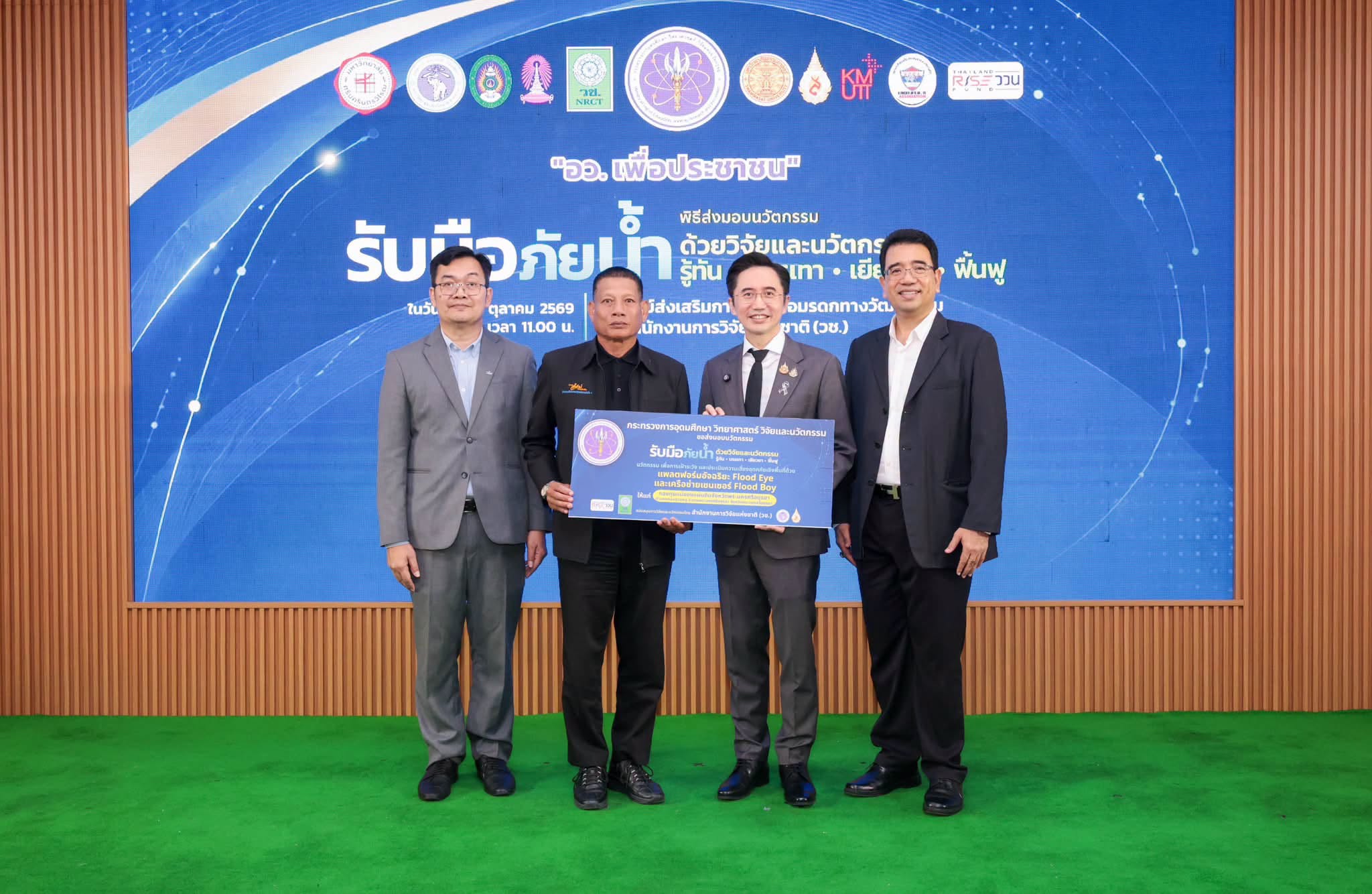
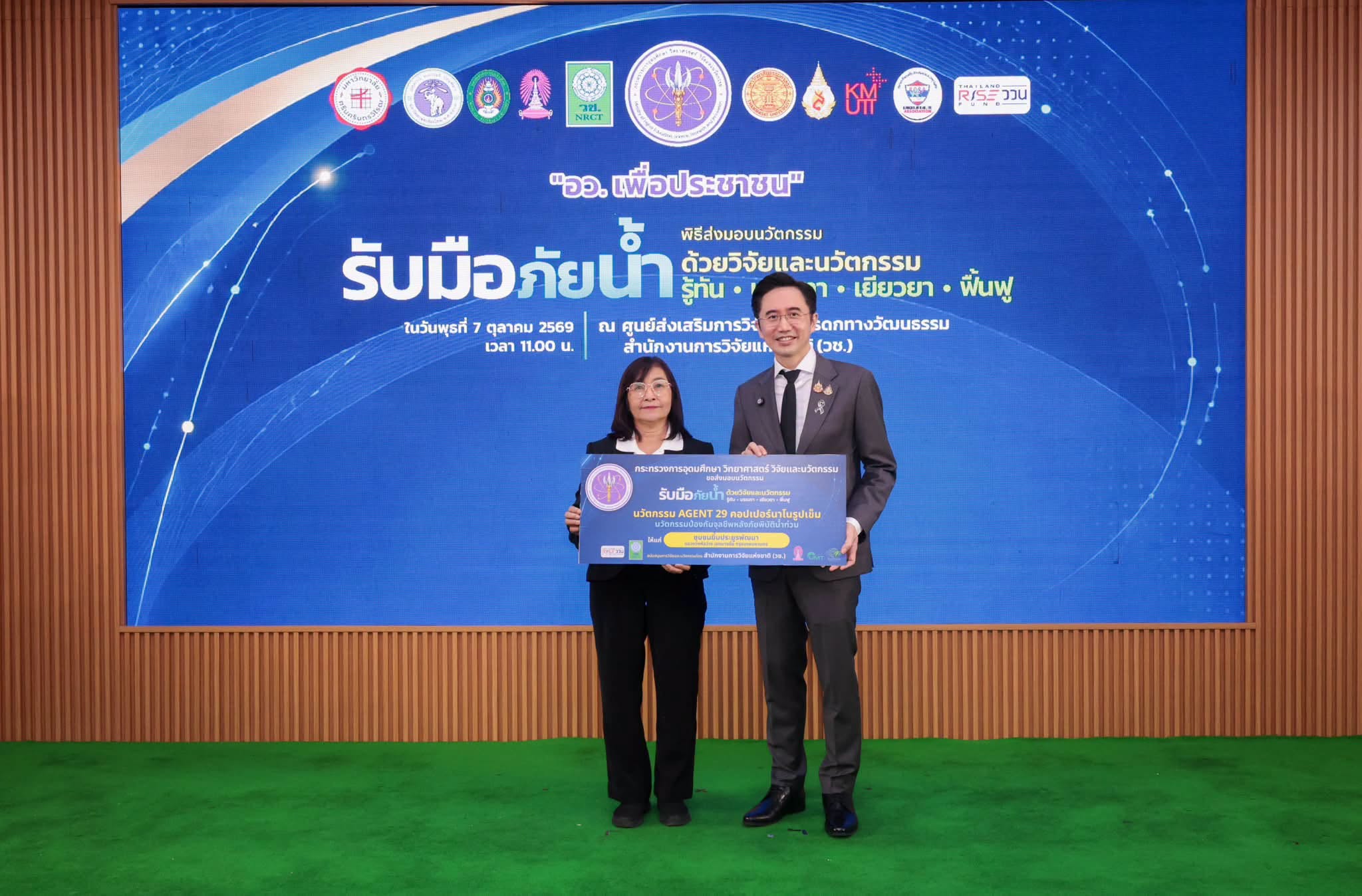
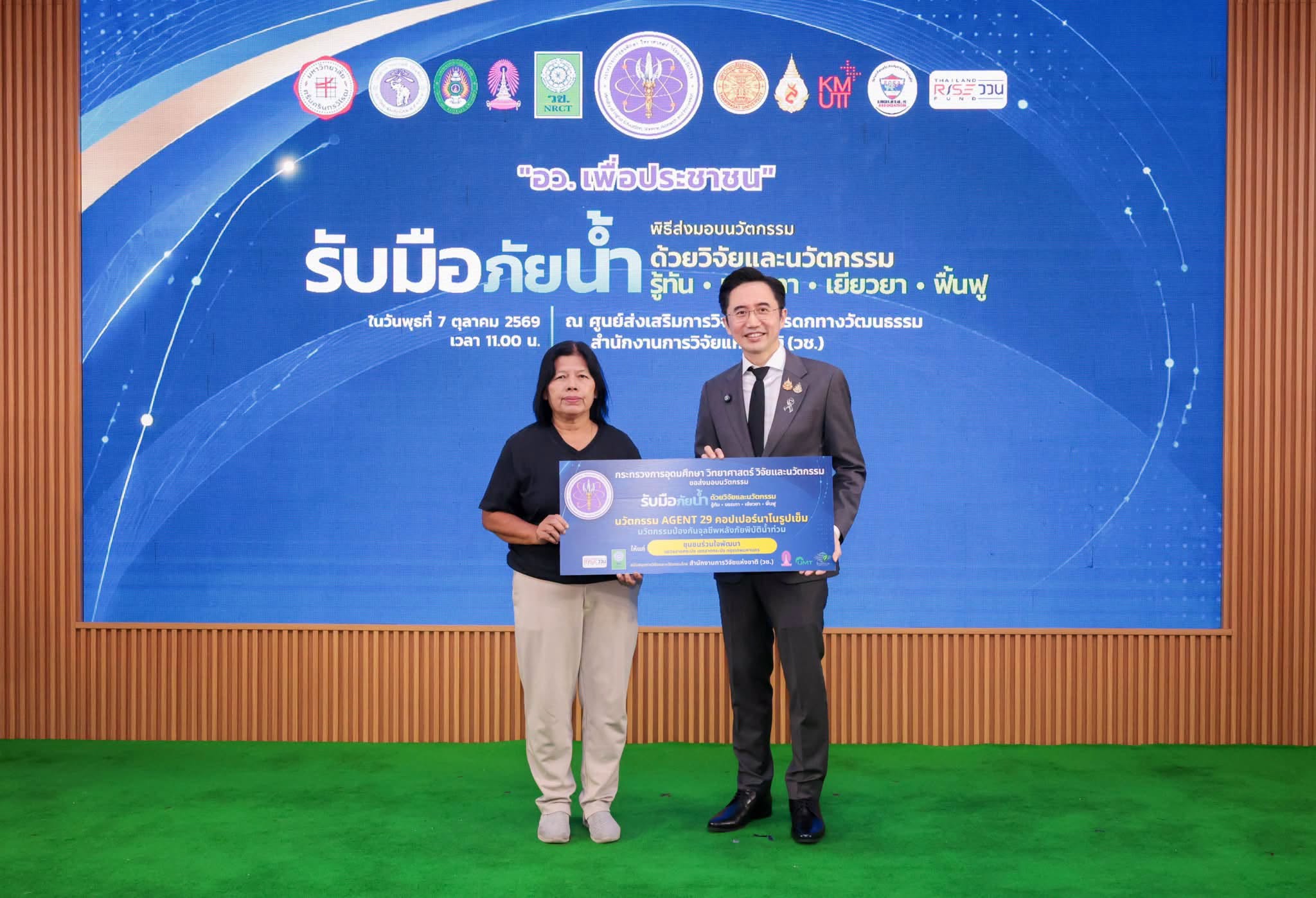
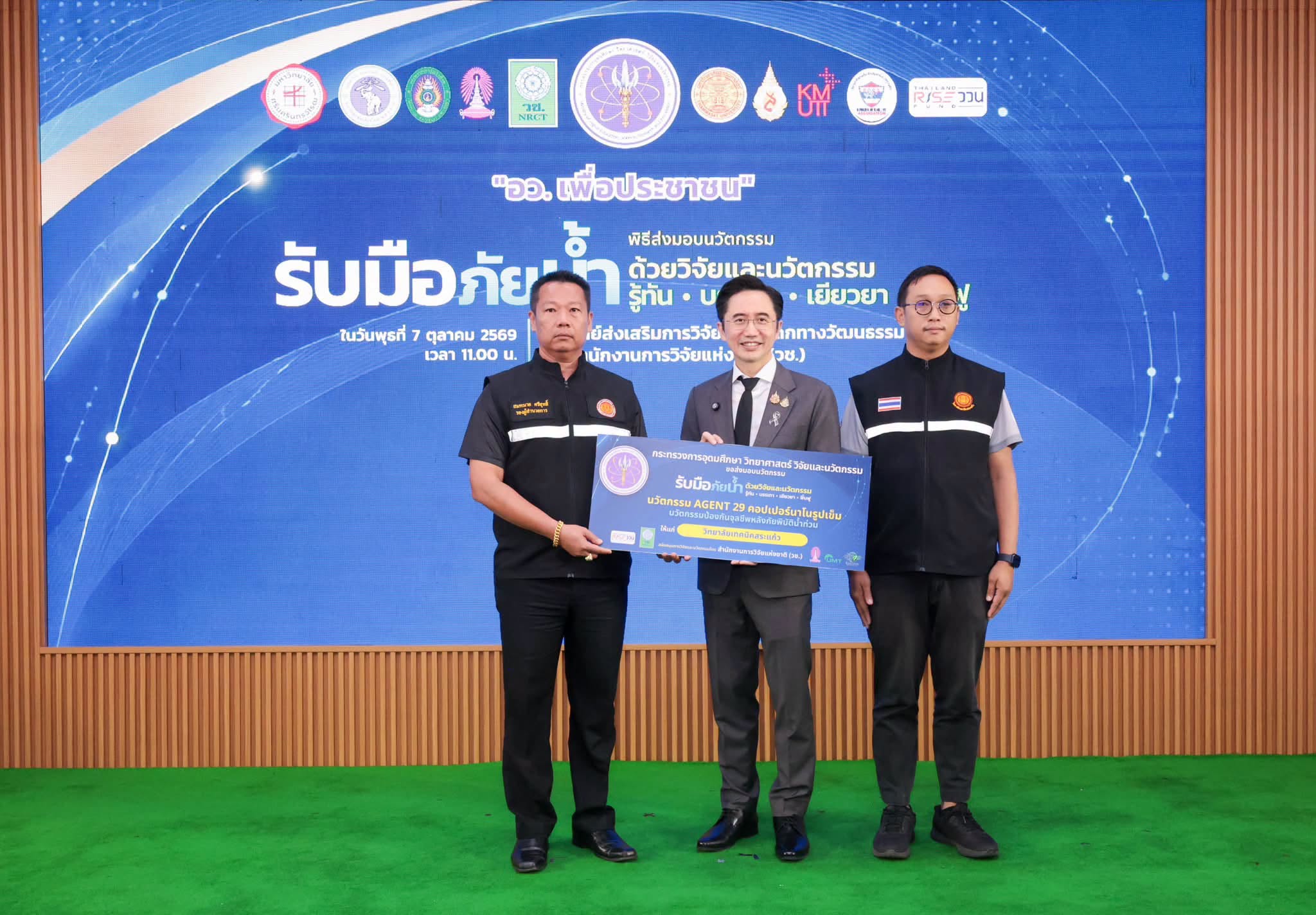
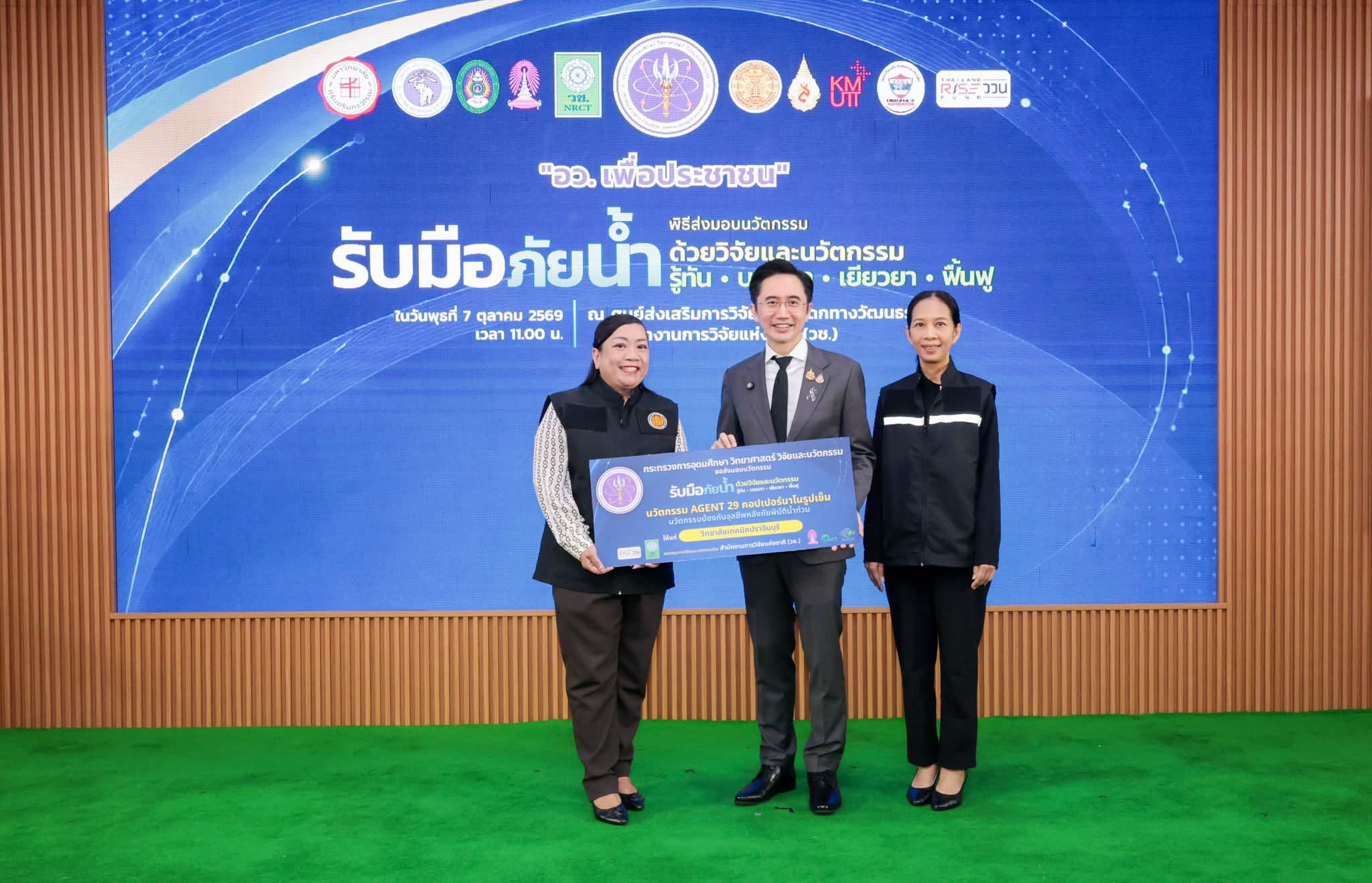
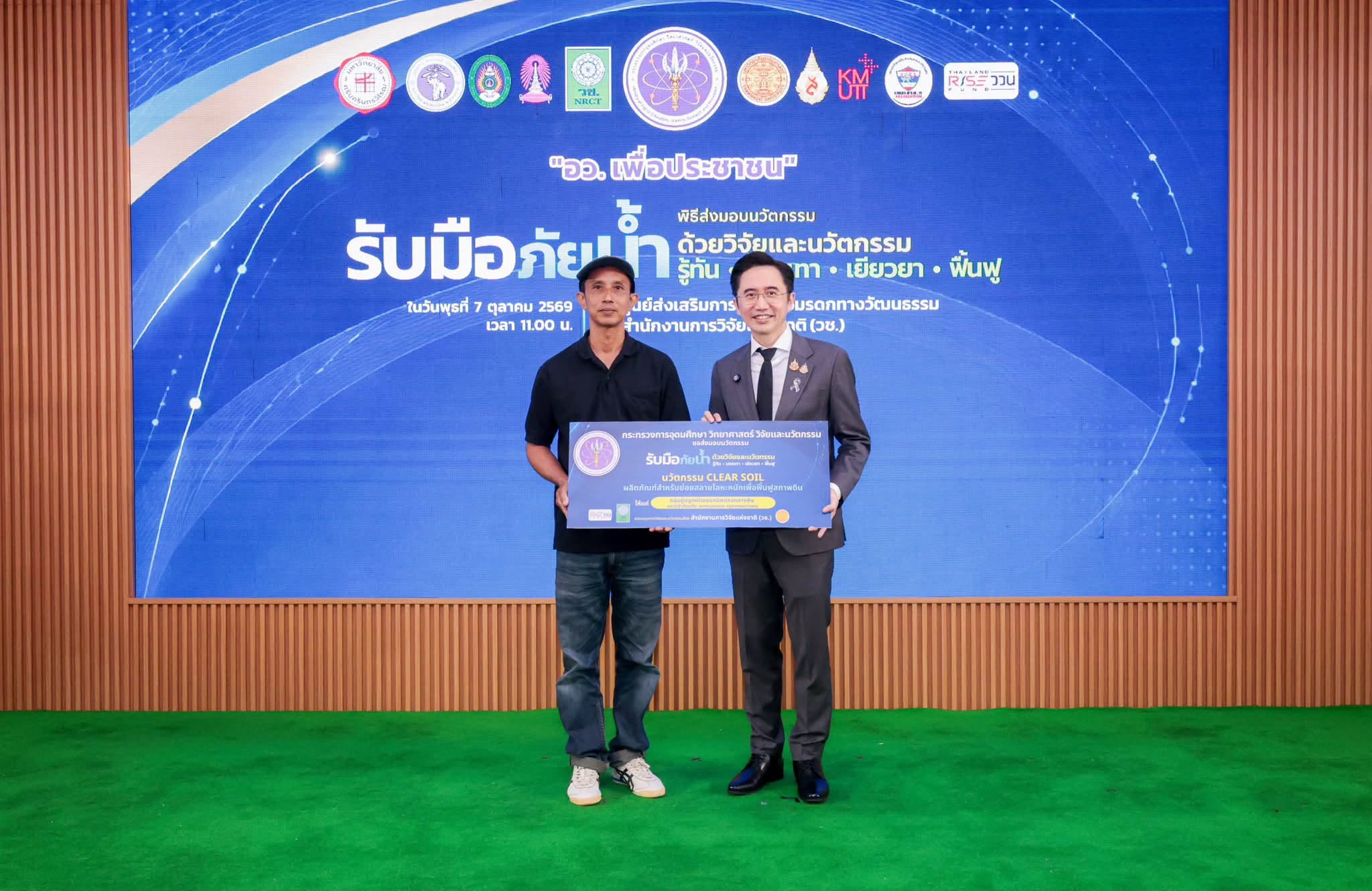
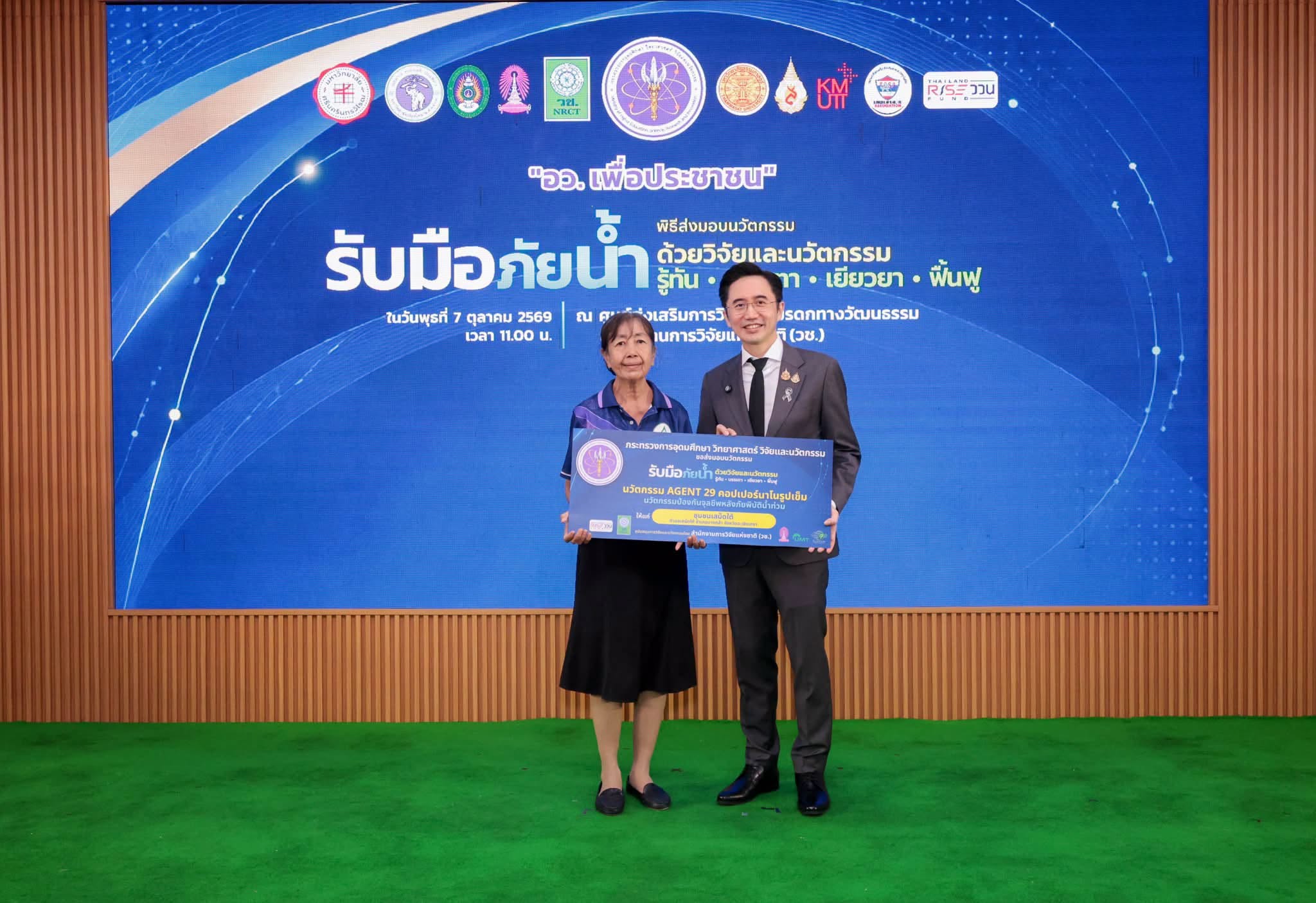
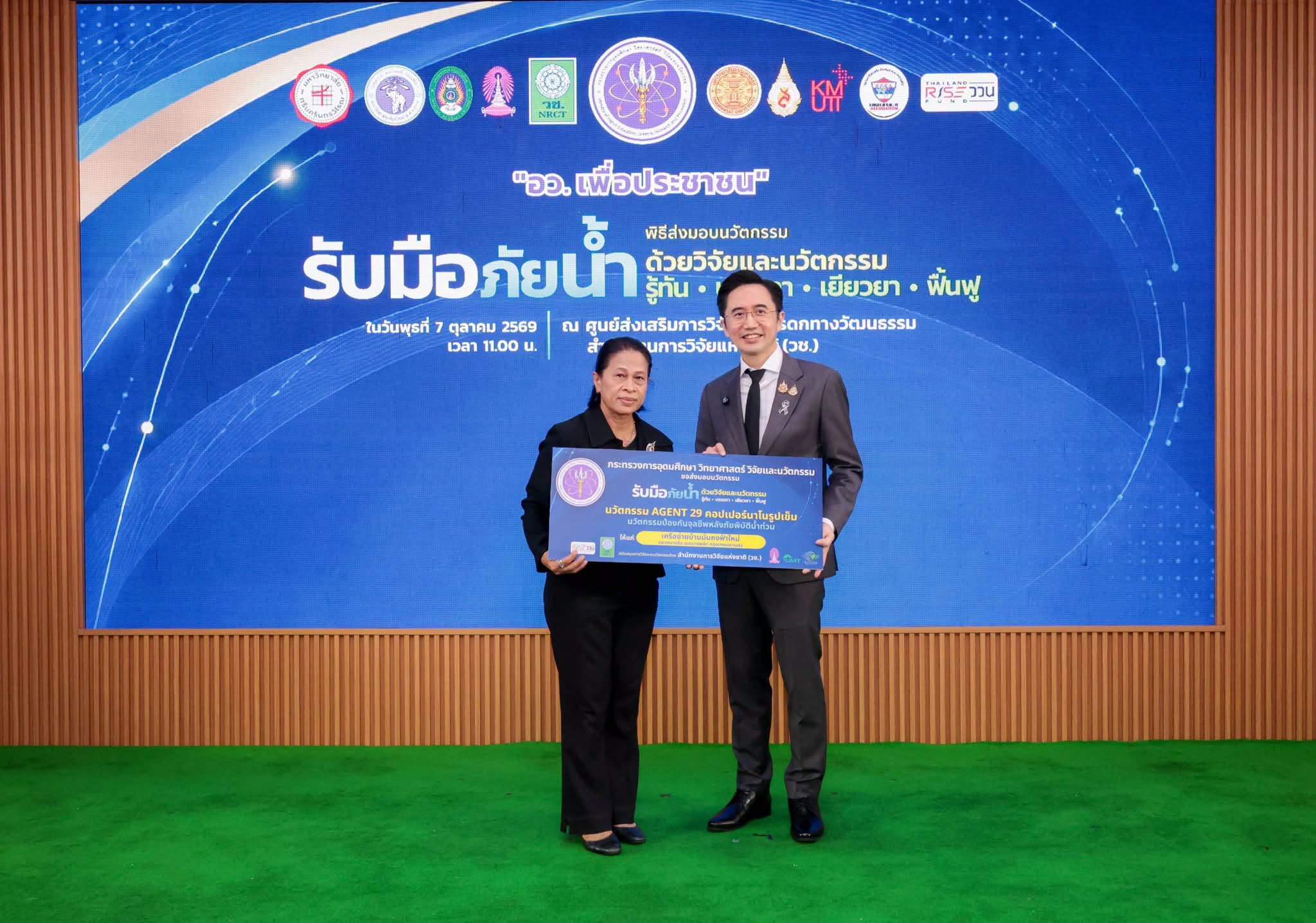
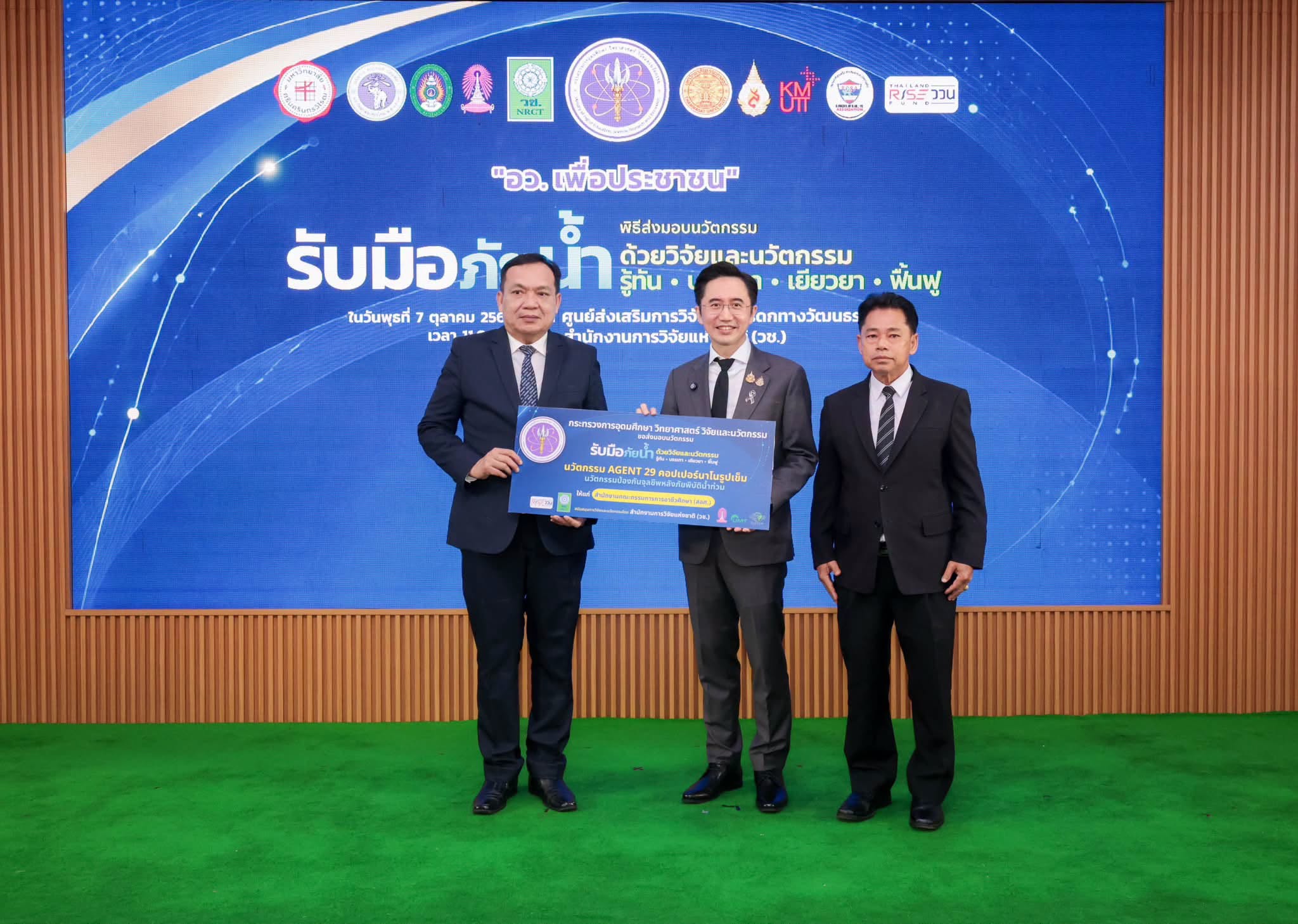
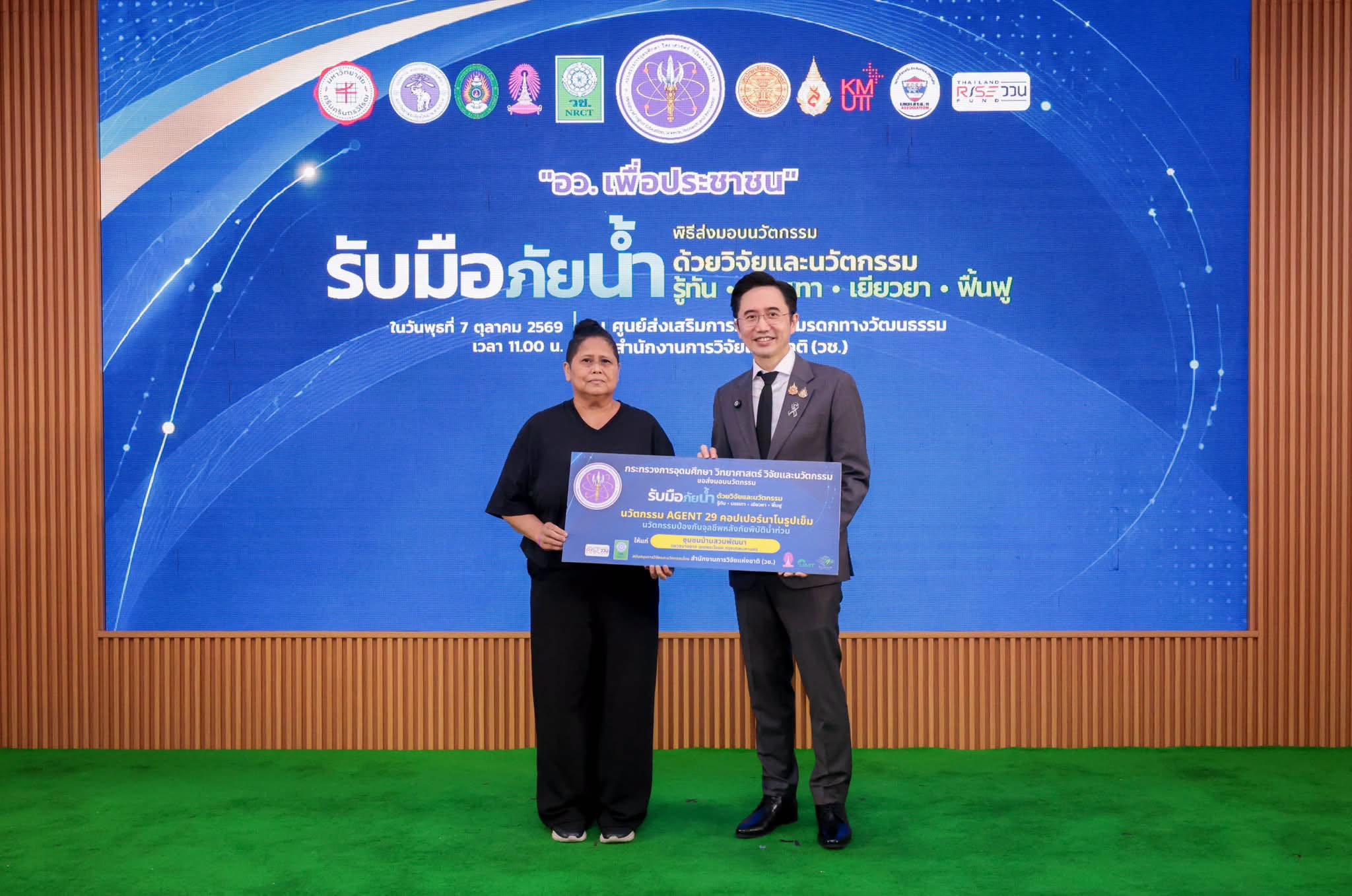
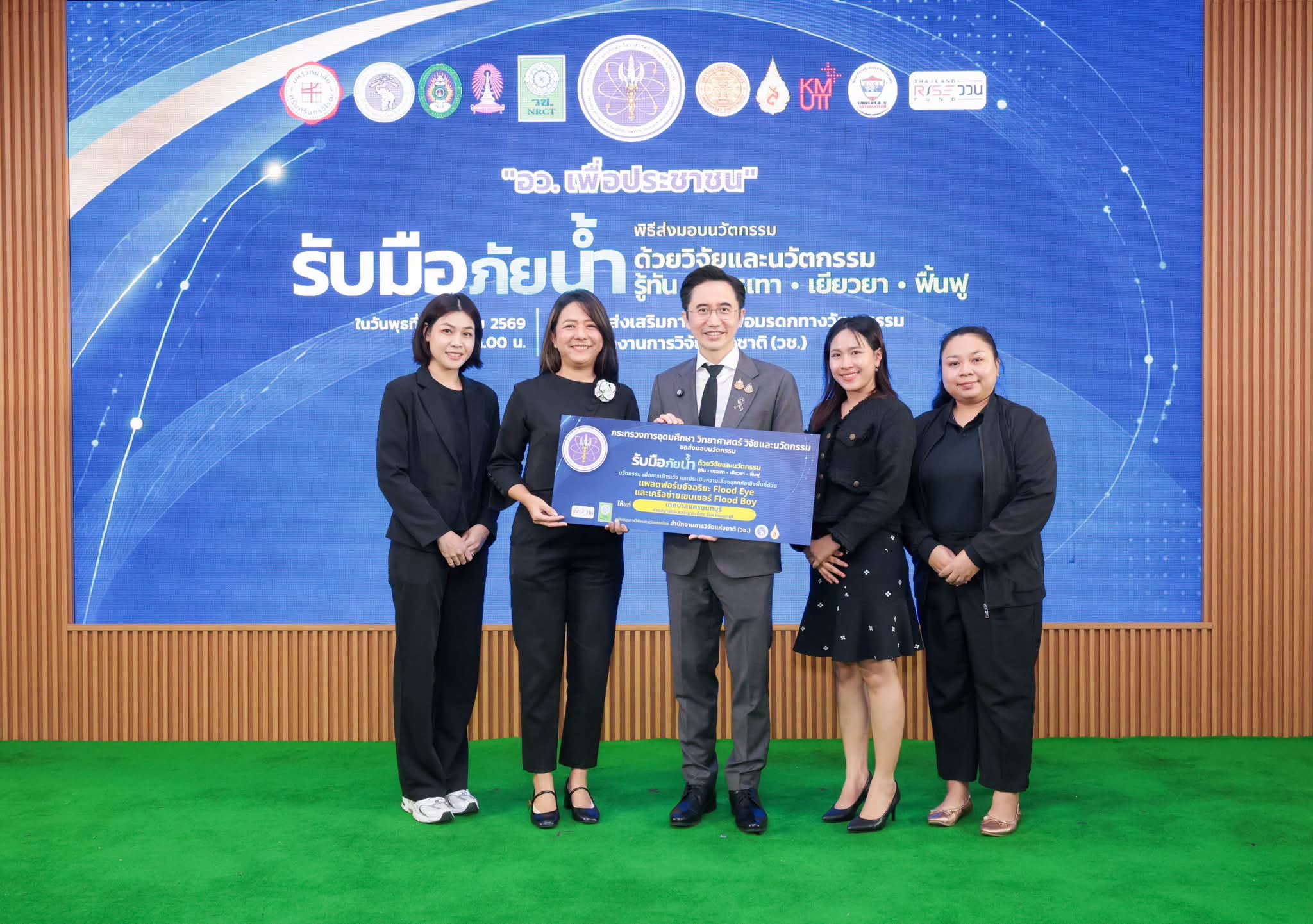
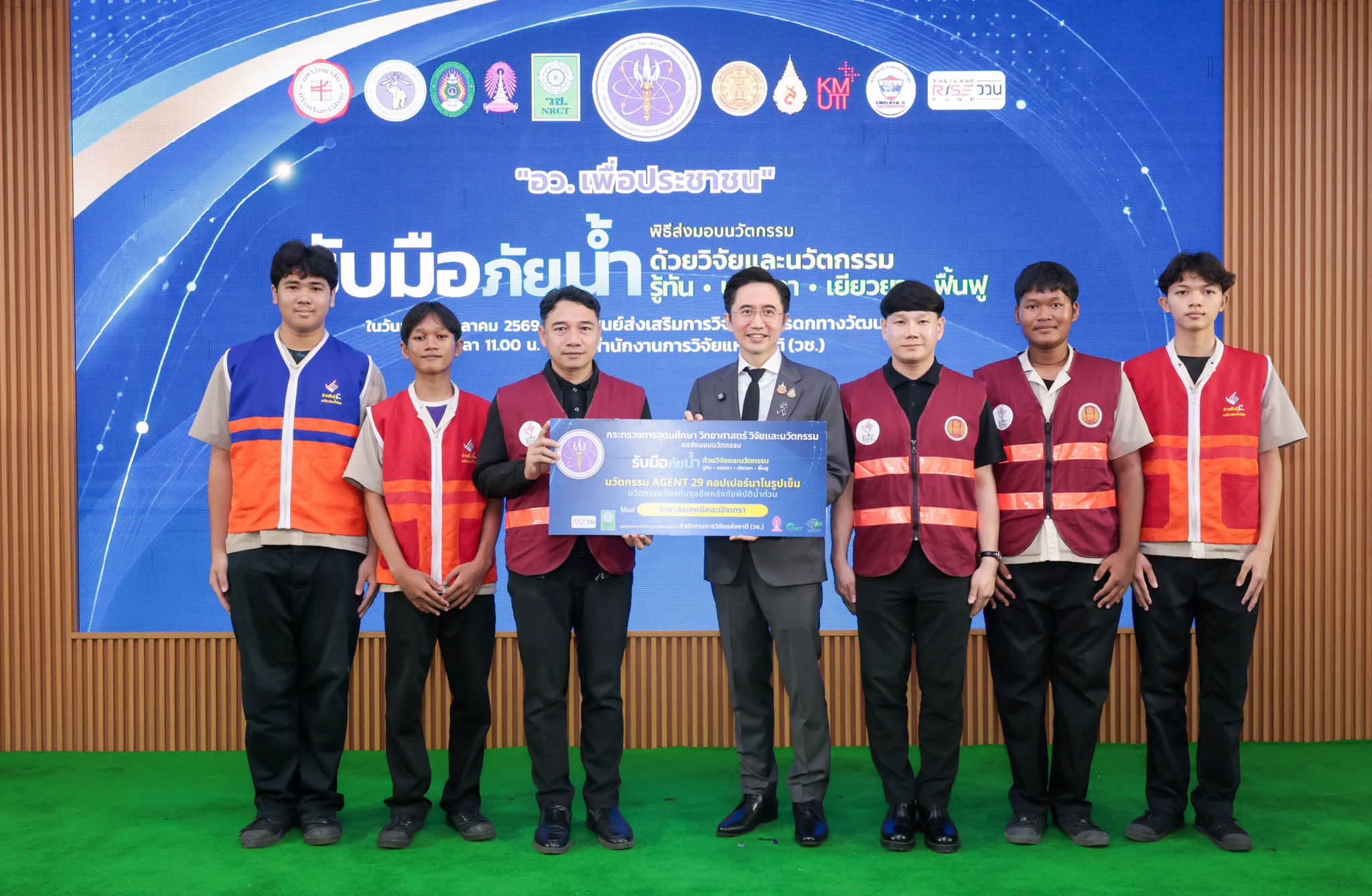
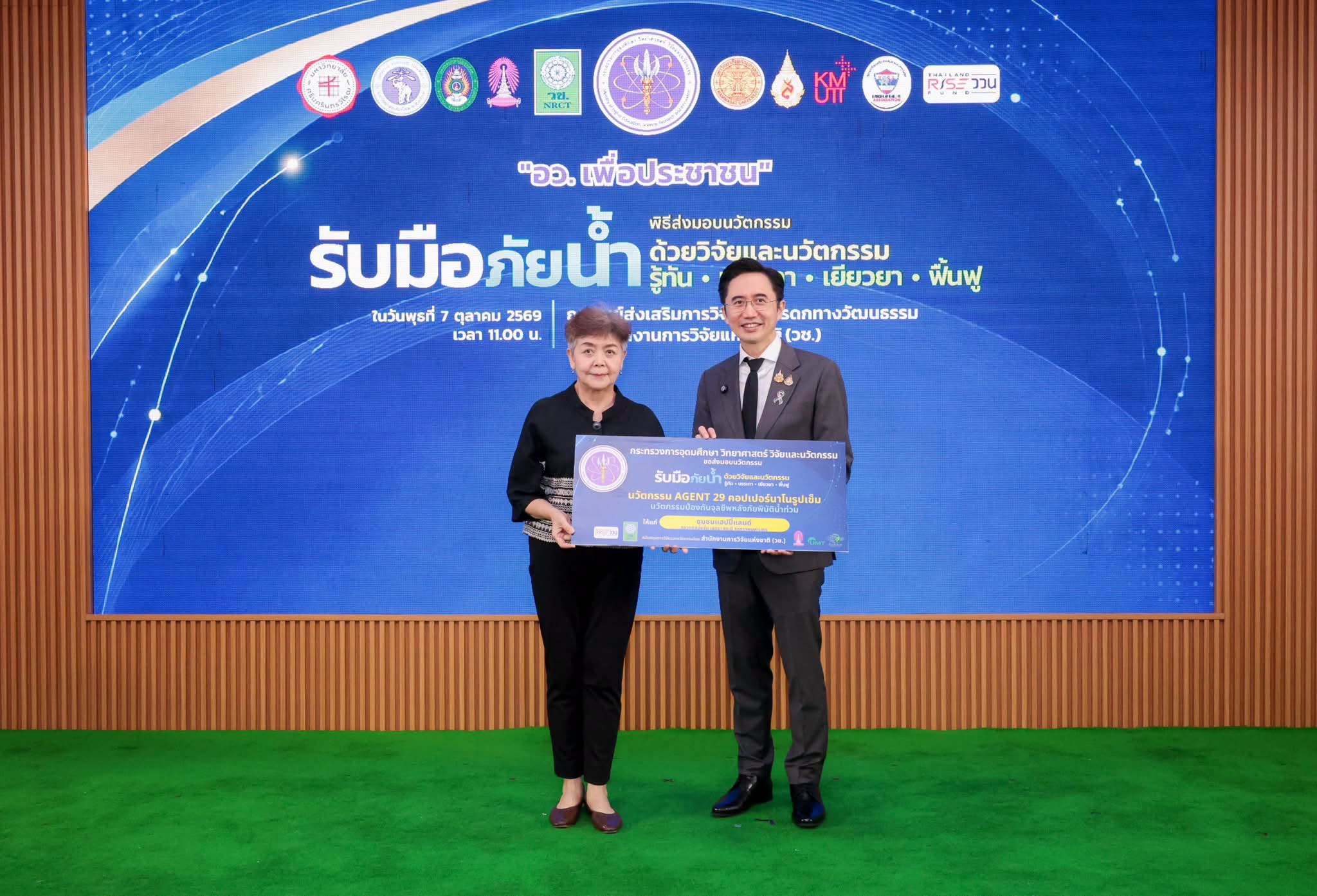
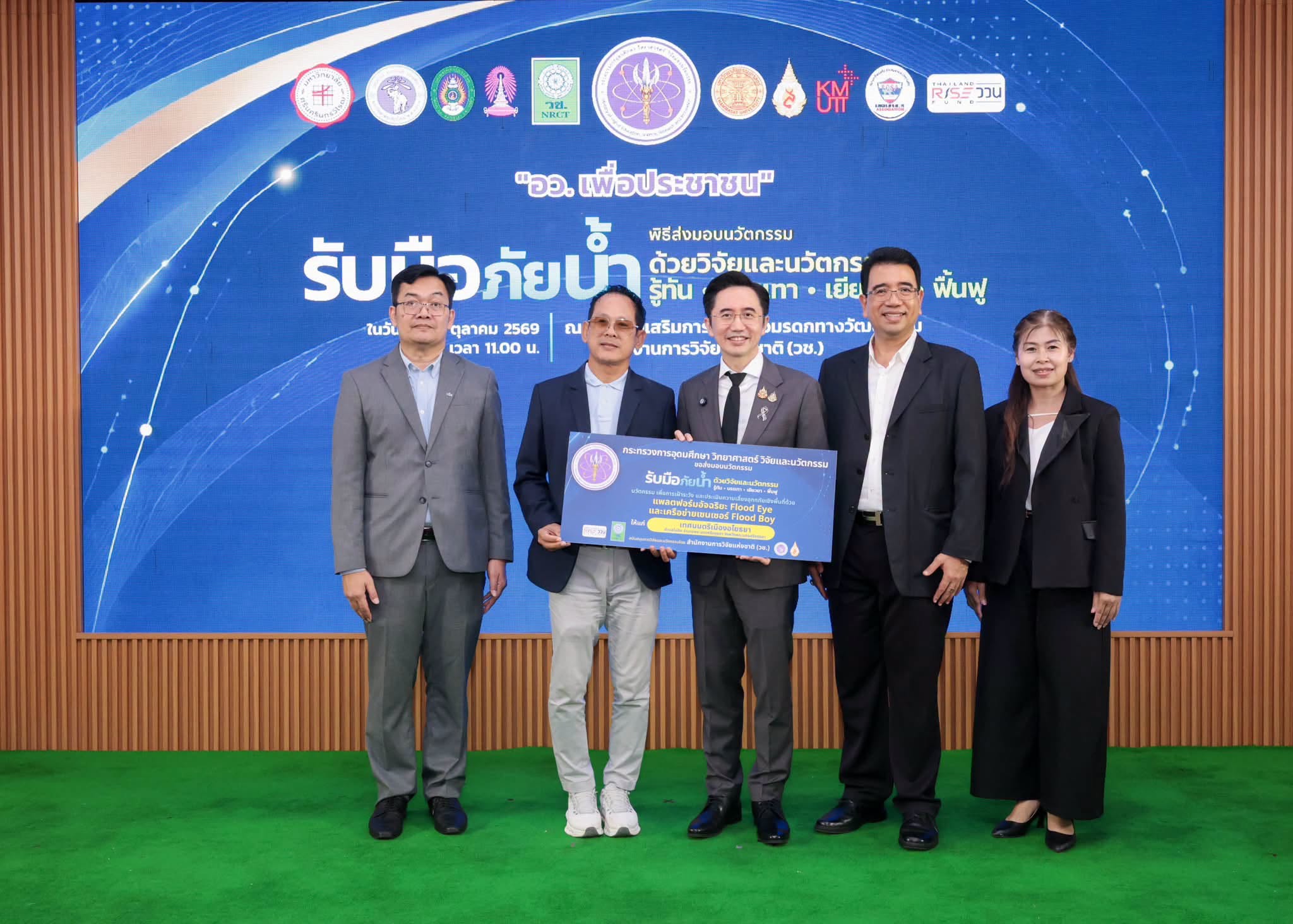
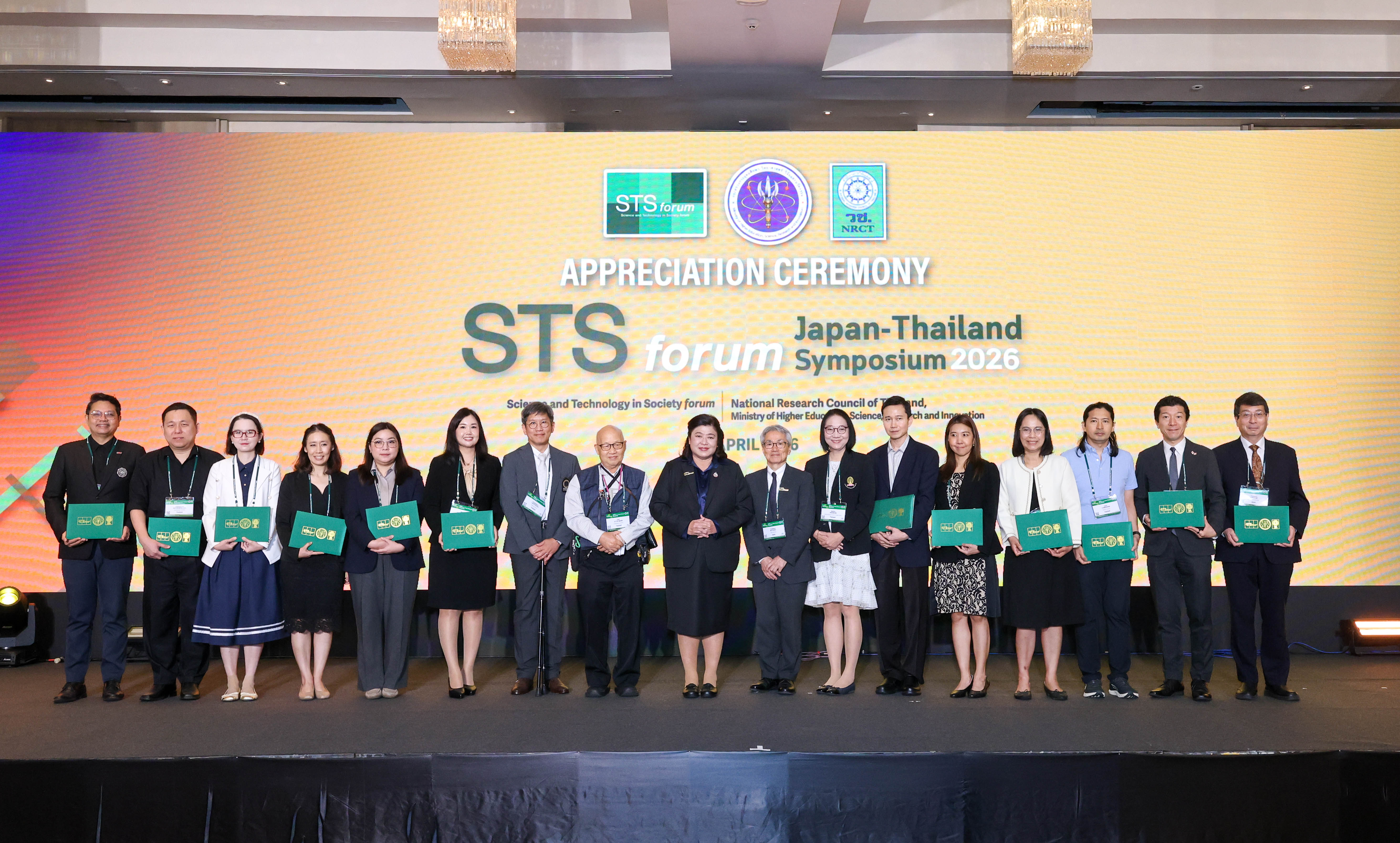
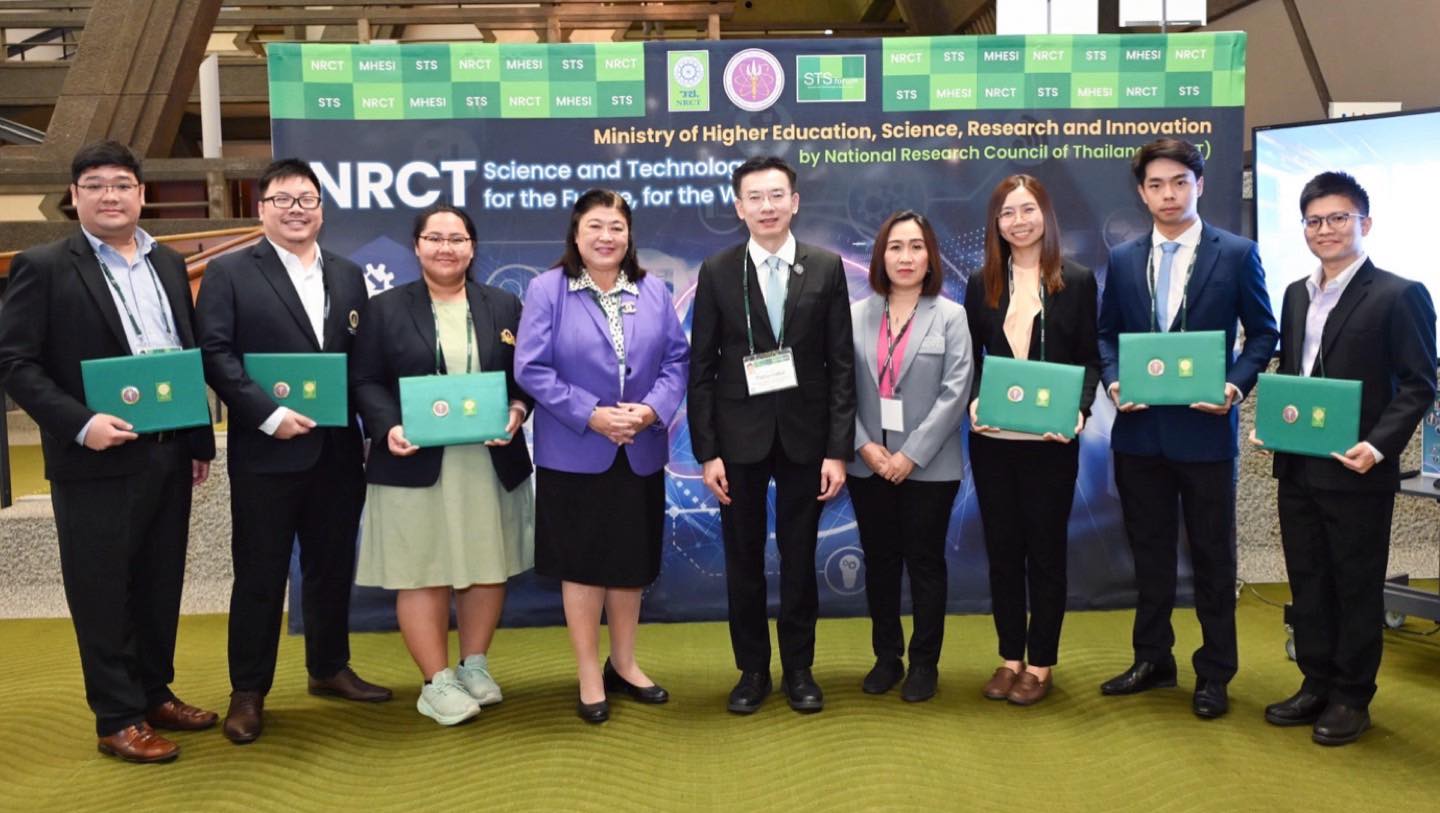
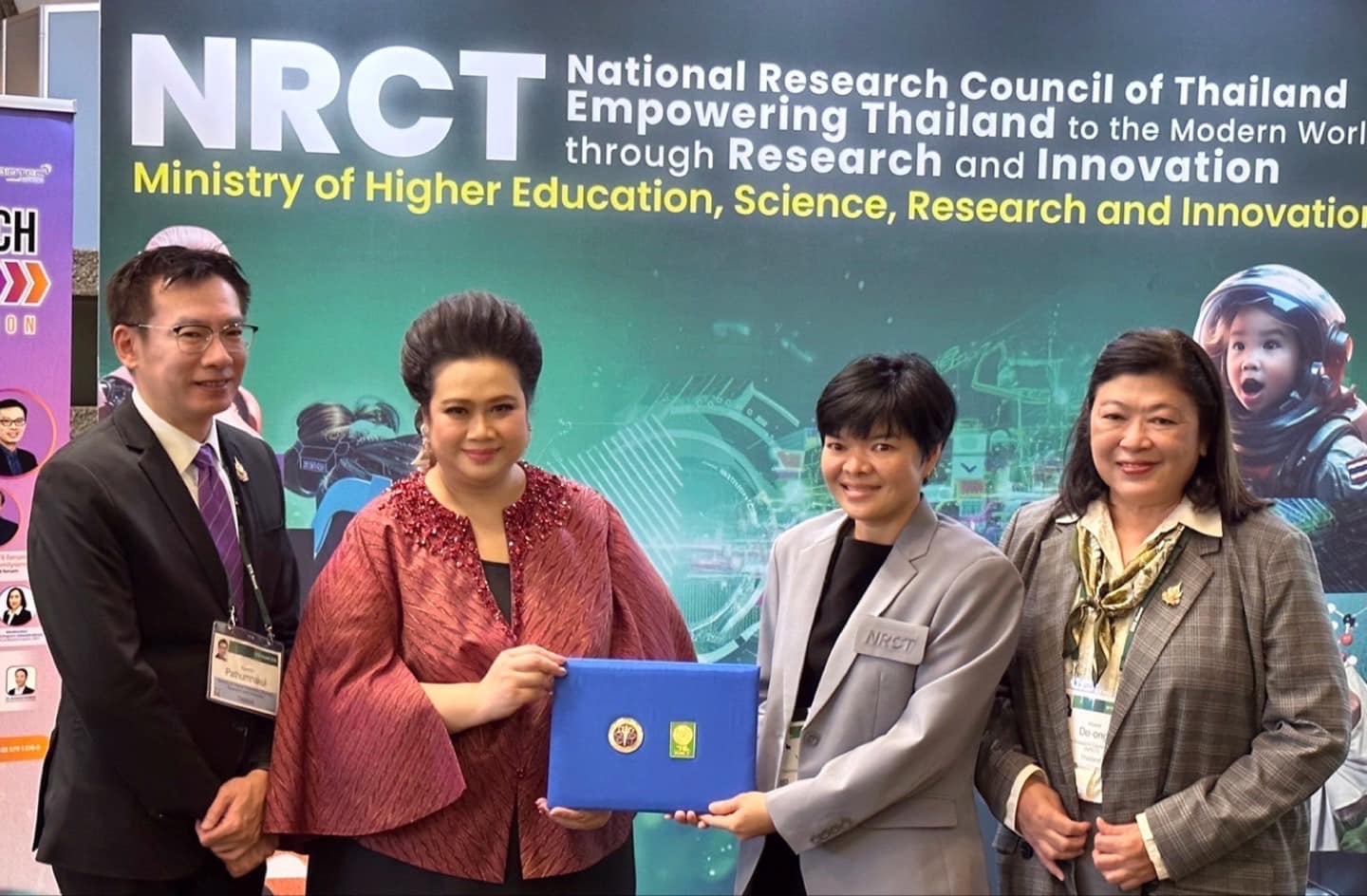
During the ceremony, Prof. Dr. Yodchanan Wongsawat officially handed over seven NRCT-funded innovations to beneficiary organizations, local agencies, and relevant stakeholders. The innovations included:
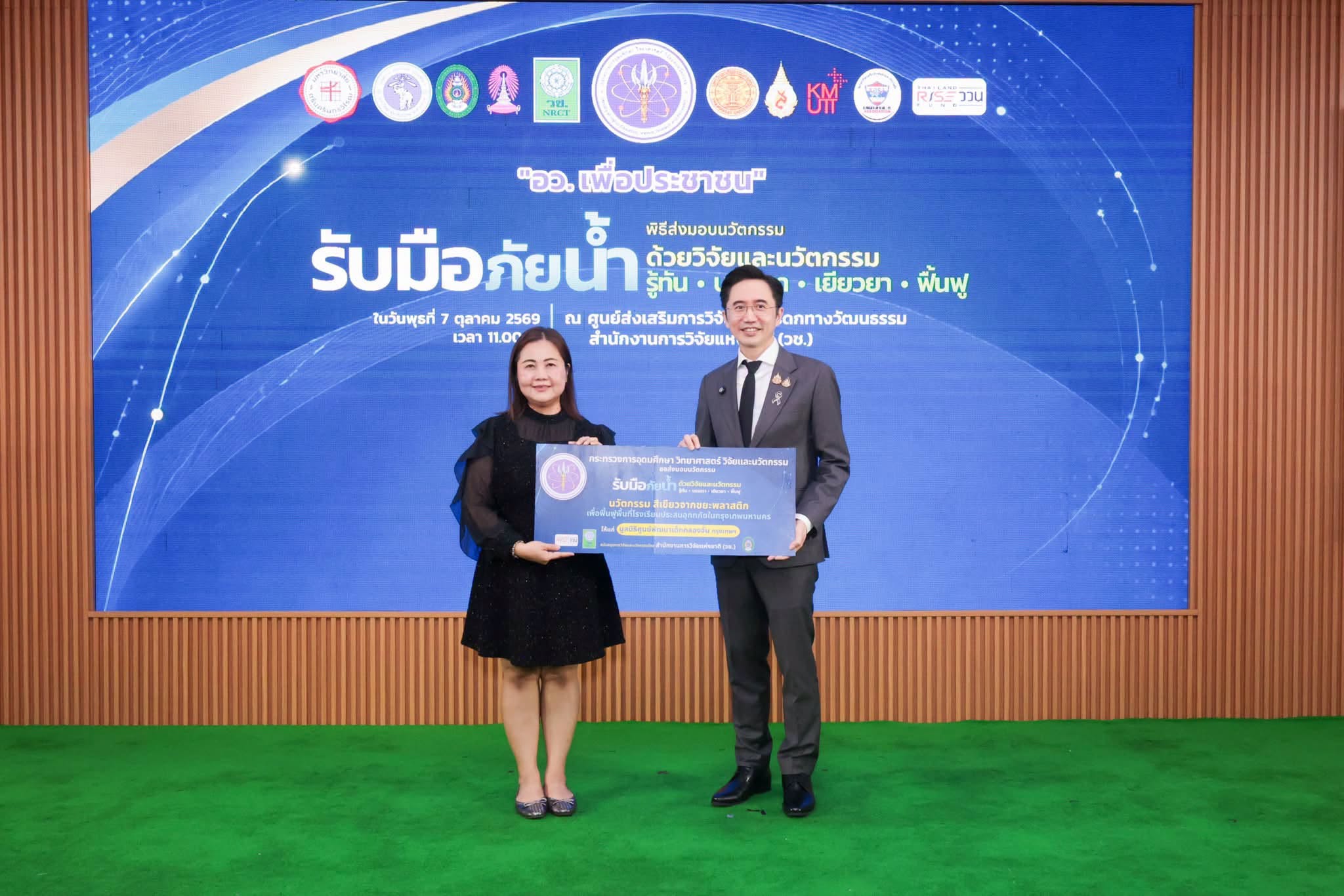
1. Green Innovation from Plastic Waste for Flood-Affected School Rehabilitation in Bangkok
An innovation that transforms plastic waste into materials for rehabilitating schools affected by flooding in Bangkok. A total of 38 sets were handed over to an organization supporting child development.
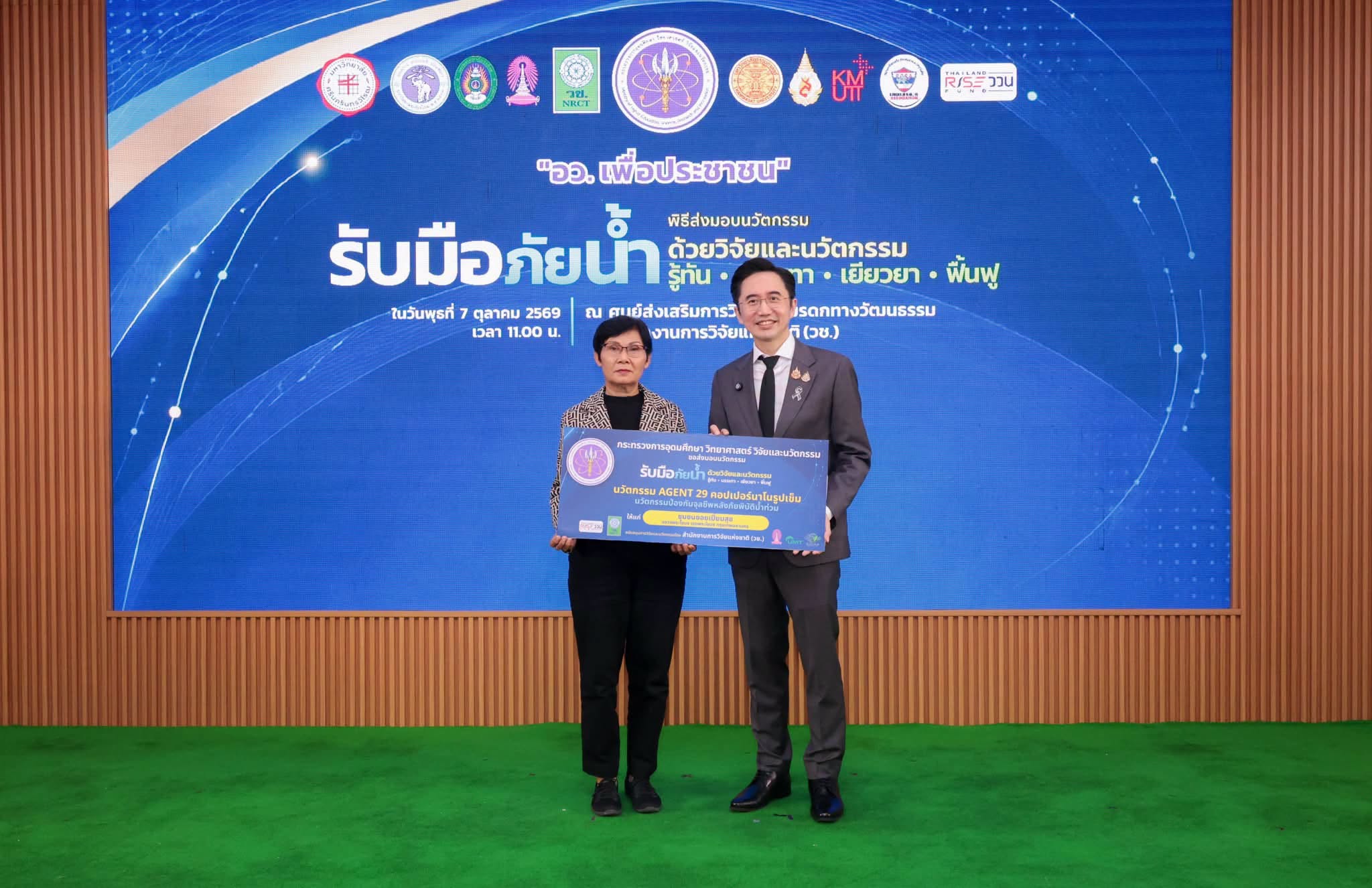
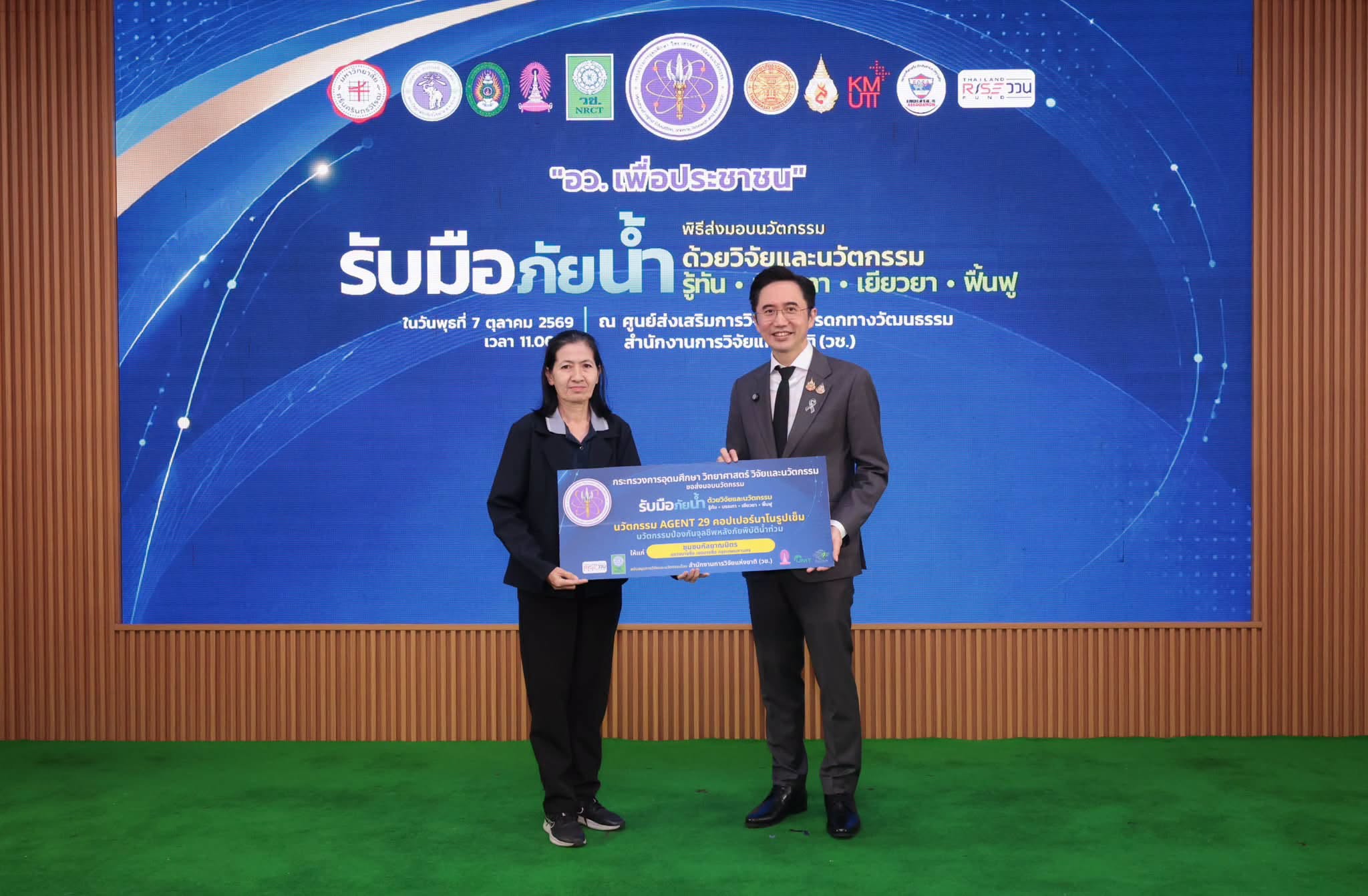
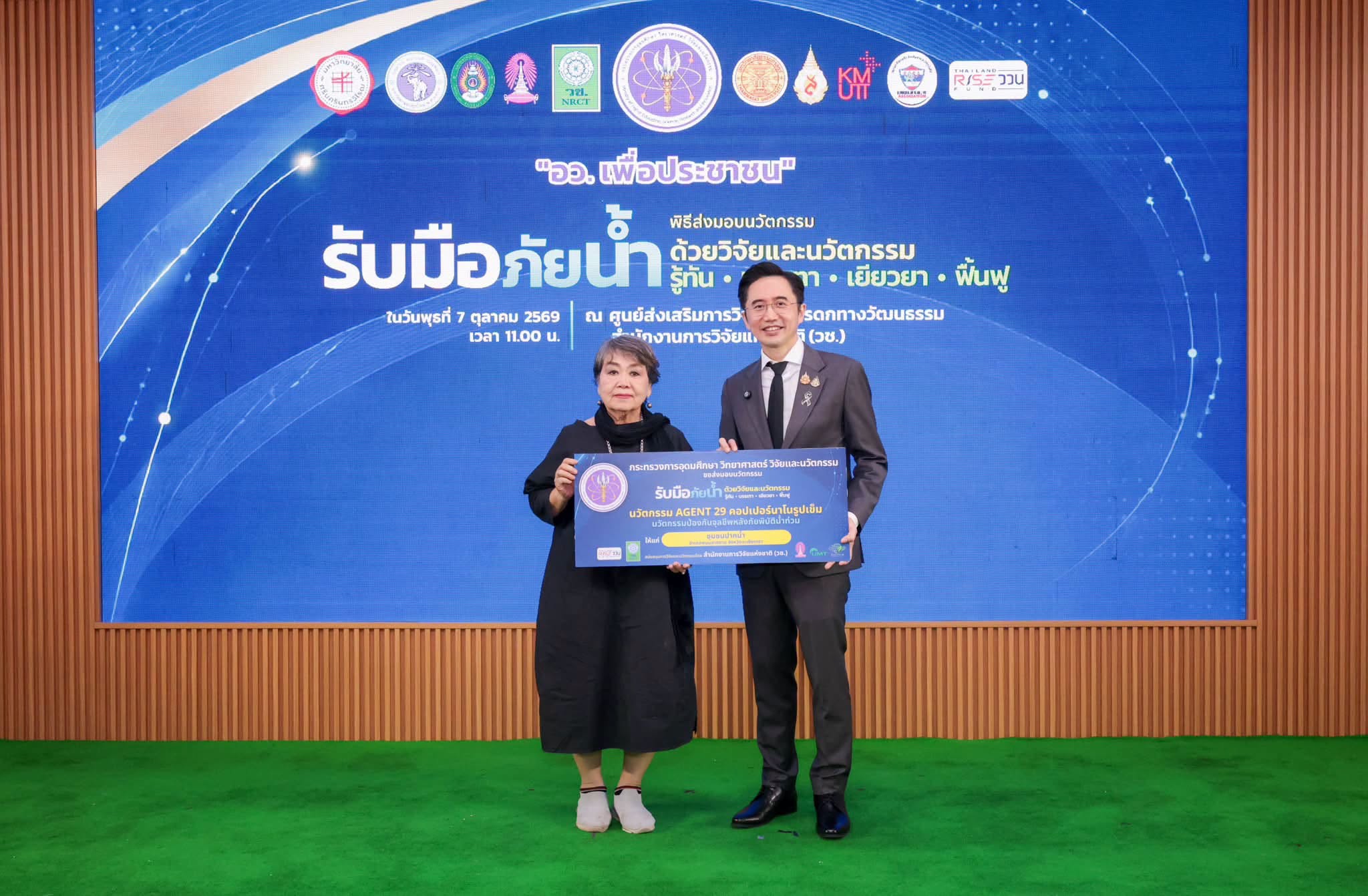
2. AGENT 29 Needle-Shaped Copper Nanoparticles
An antimicrobial innovation designed to improve safety and hygiene following flood disasters. A total of 700 gallons were provided to 33 vocational education institutions and communities.
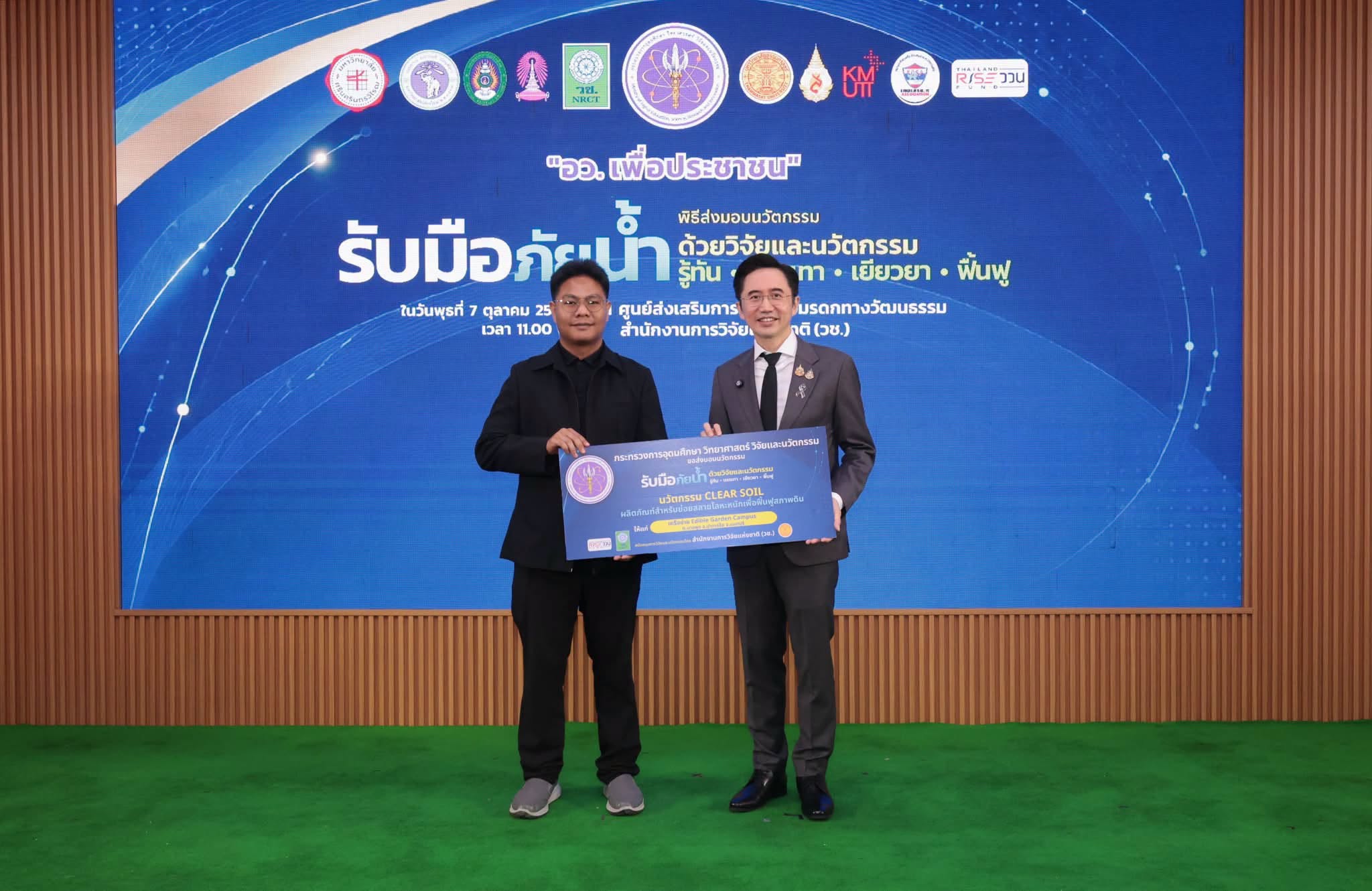
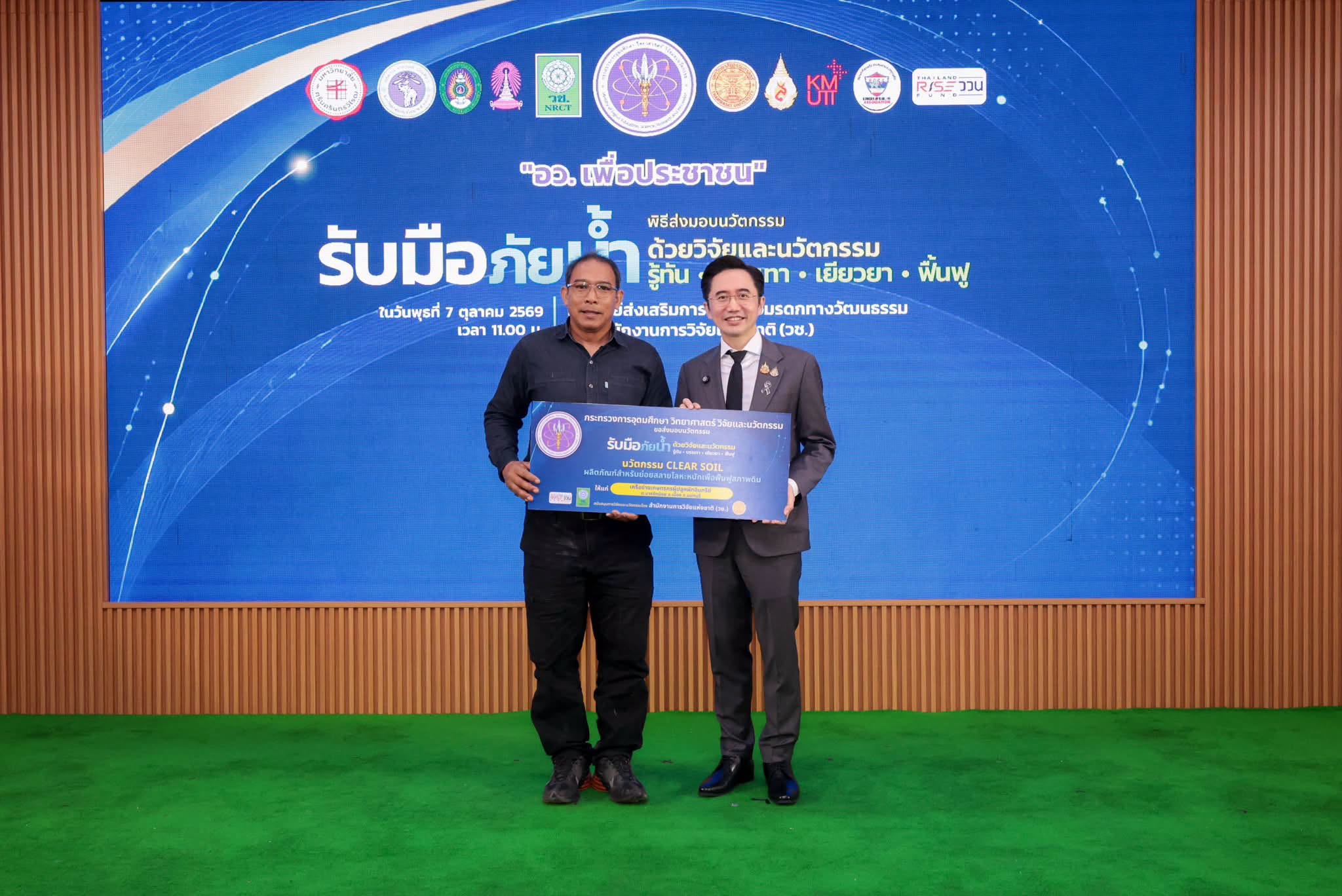
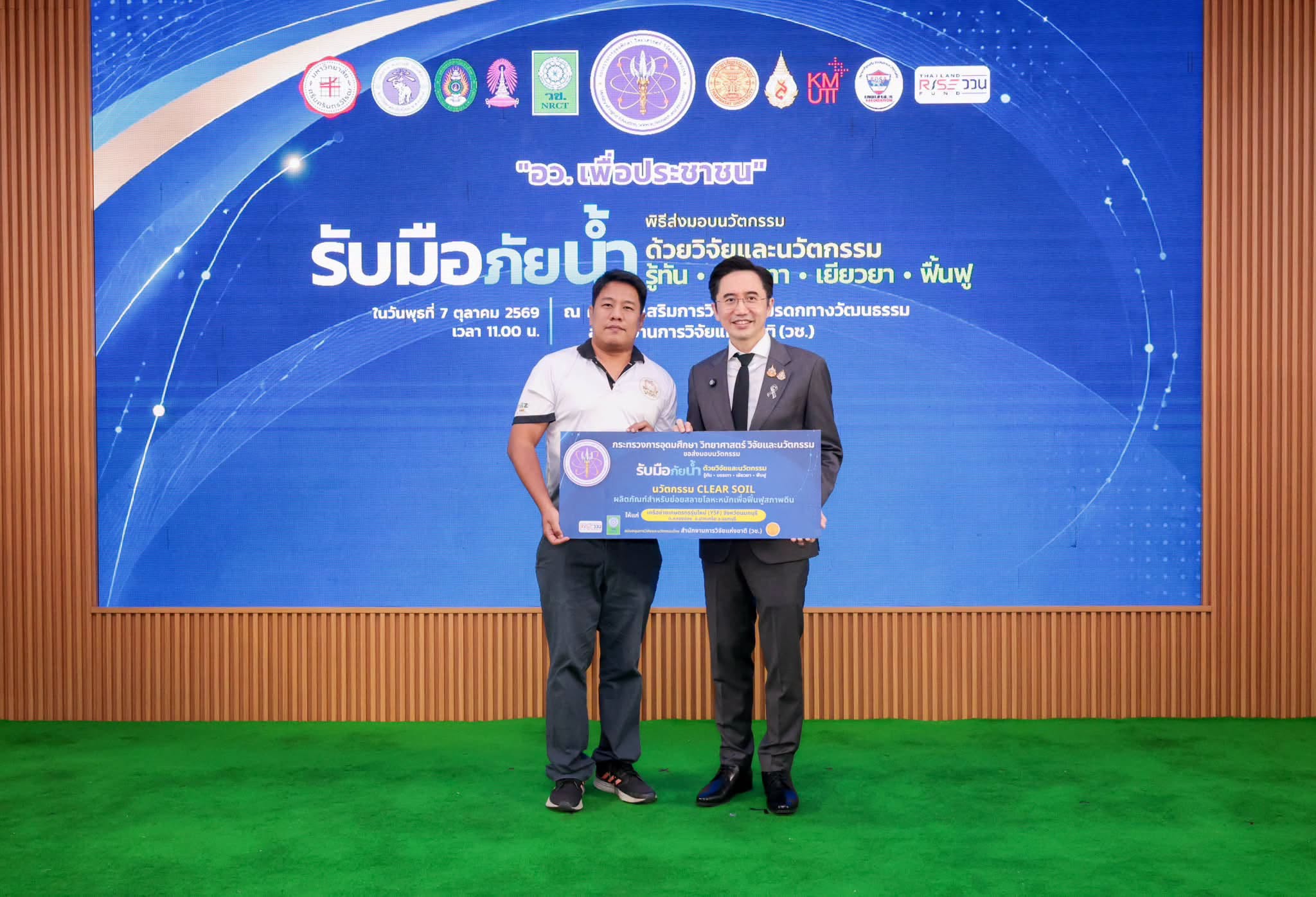
3. CLEAR SOIL Soil Restoration Product
A product designed to support the remediation of heavy metal contamination and restore soil conditions after disasters. A total of 1,000 bottles were distributed to 10 farmer networks and community enterprises.
4. Portable Canned Oxygen
A portable oxygen product designed to support people during emergency situations. A total of 250 cans were handed over to Pathum Thani Town Municipality and Public Health Service Center 24, Bang Khen.
5. Flood Eye Smart Platform and Flood Boy Sensor Network
A flood-monitoring platform and sensor network designed to support water-level monitoring, risk assessment, and community preparedness. The systems were provided to 10 communities in Phra Nakhon Si Ayutthaya, Samut Sakhon, and Nonthaburi.
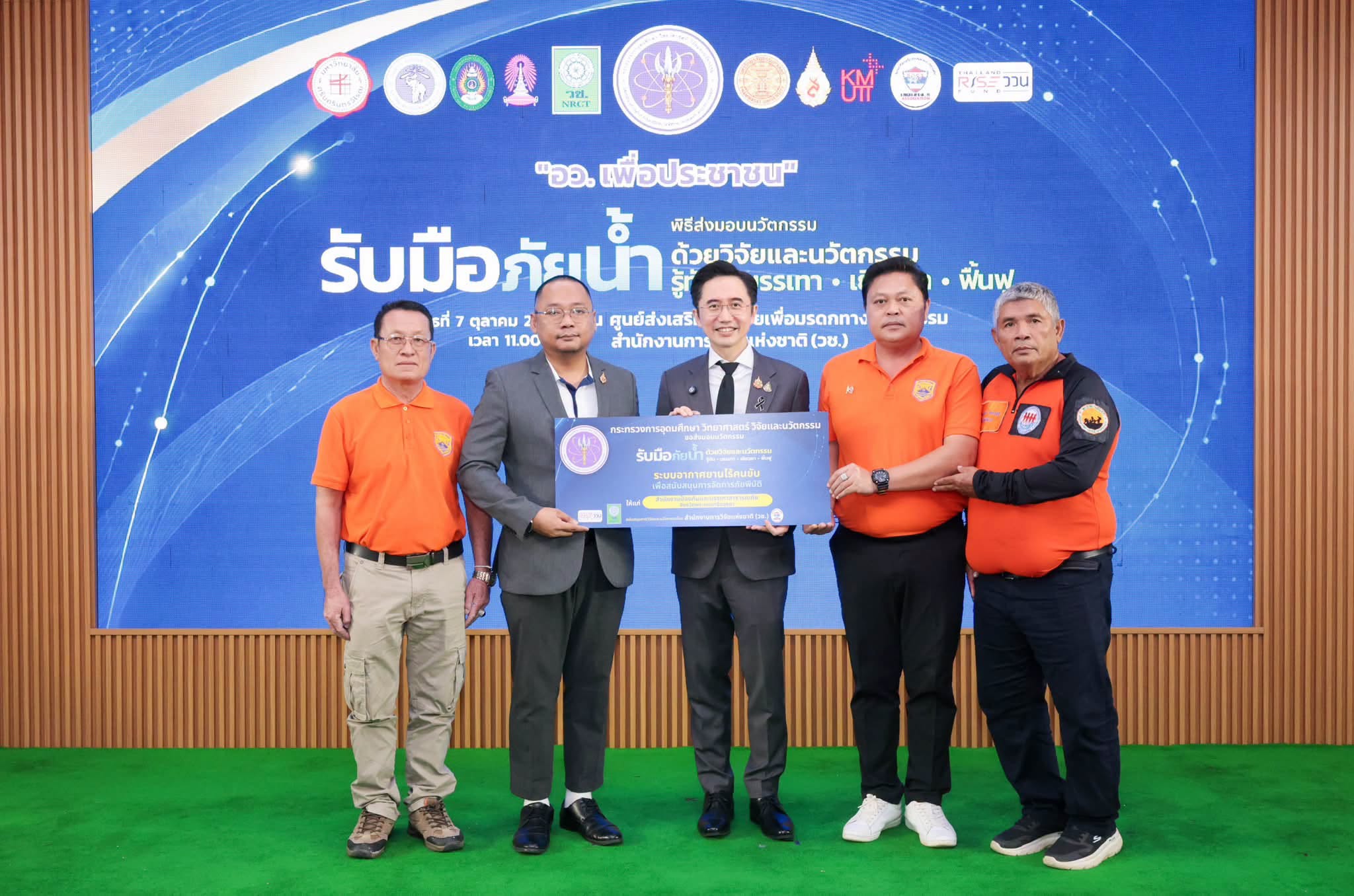
6. Unmanned Aerial Vehicle (UAV) System for Flood Disaster Surveys and Management
A drone-based system designed to support disaster monitoring, surveys, and emergency response operations. The system was handed over to the Phra Nakhon Si Ayutthaya Provincial Disaster Prevention and Mitigation Office.
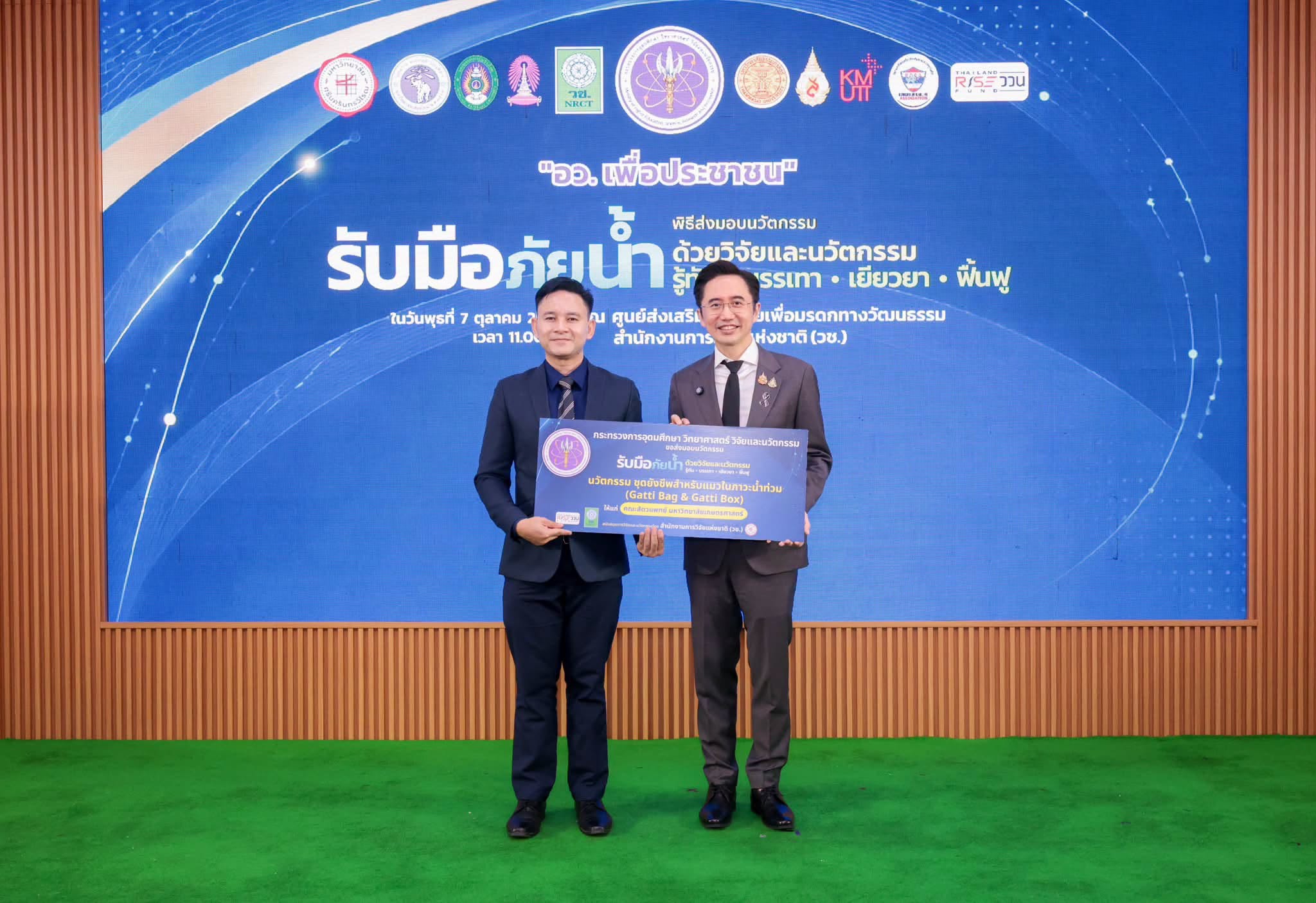
7. Gatti Bag and Gatti Box Emergency Kits for Cats
Emergency kits designed to support animal welfare and emergency care for cats affected by flooding. A total of 10 sets were handed over to the Faculty of Veterinary Medicine, Kasetsart University.
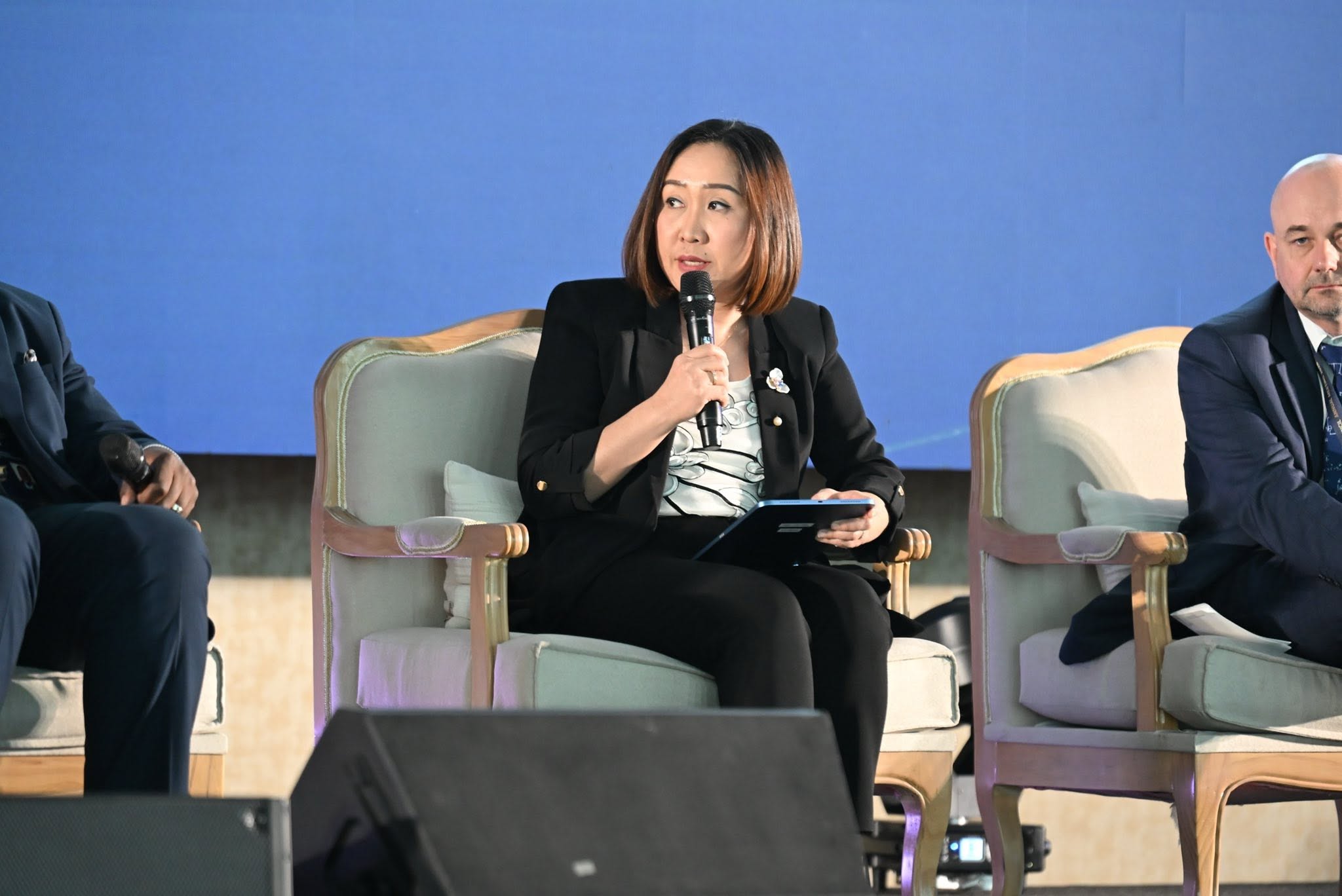
The event also featured a panel discussion on the application of research and innovation to disaster management. Topics included flood monitoring and early warning, portable oxygen, drone technology, the use of recycled plastic to restore flood-affected areas, nanotechnology for post-disaster safety, and soil and environmental restoration.
The discussions highlighted the role of research and innovation in supporting timely disaster response, restoring affected areas, and helping communities prepare for future floods. Through collaboration among researchers, government agencies, and local communities, NRCT aims to deliver practical, research-based solutions to those who need them.