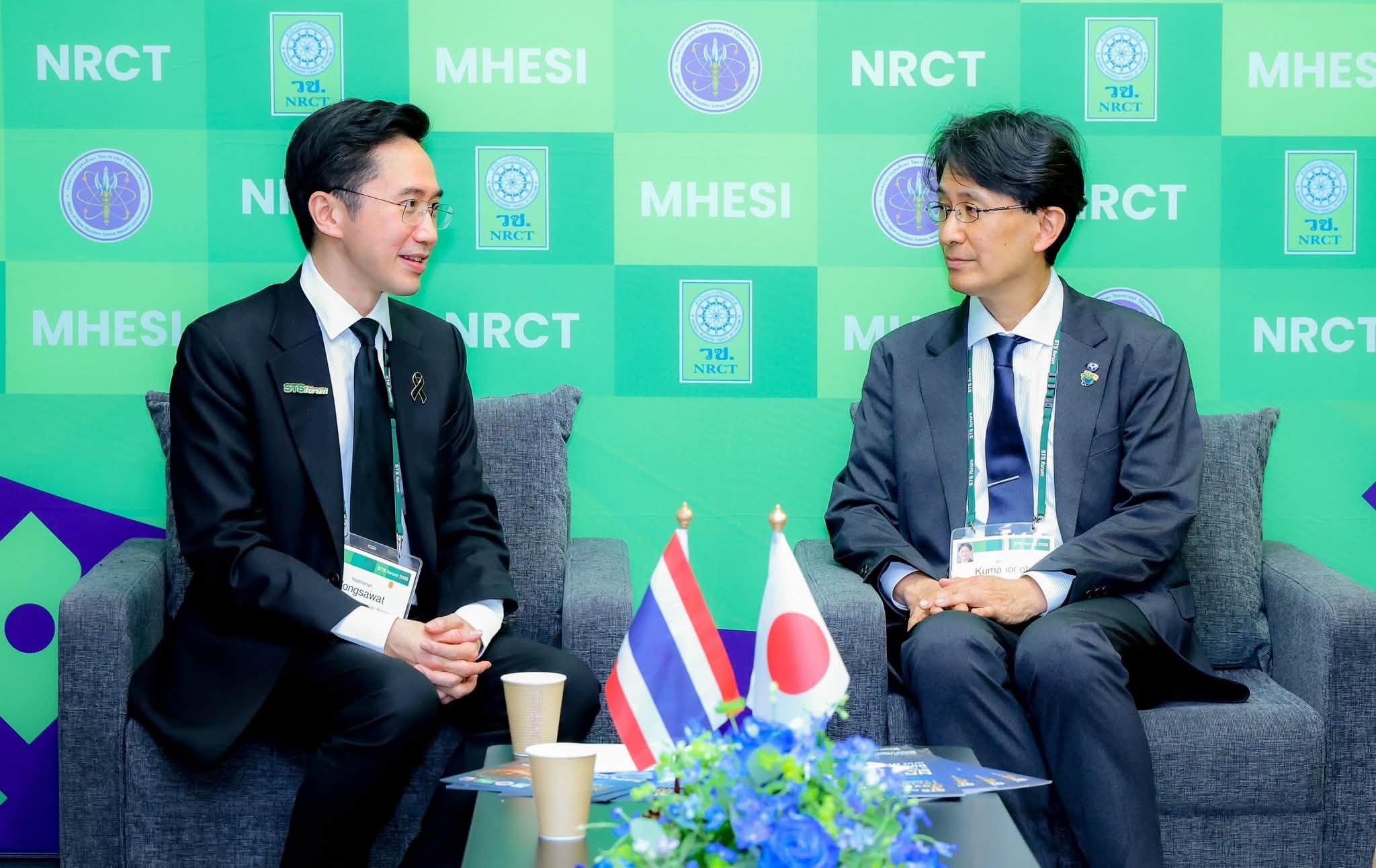
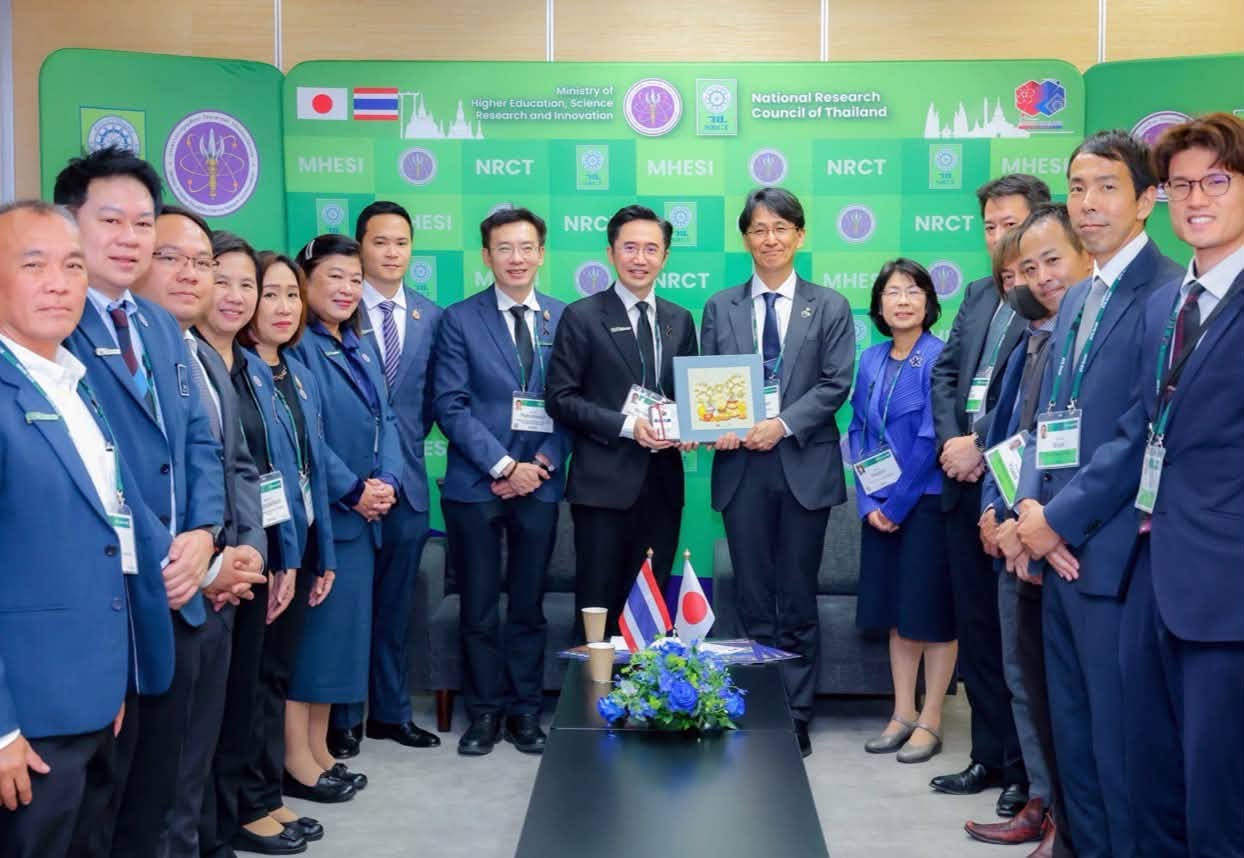
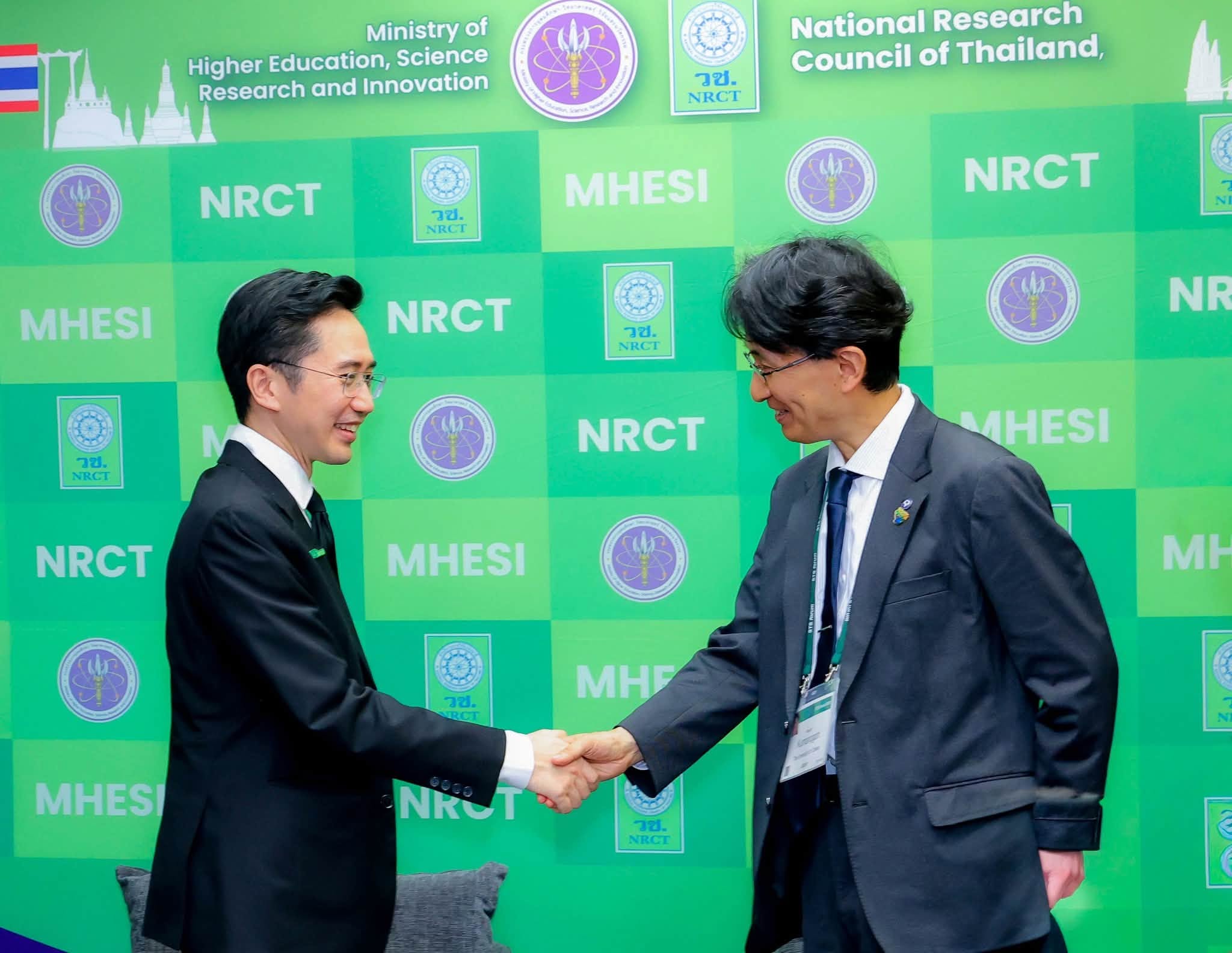
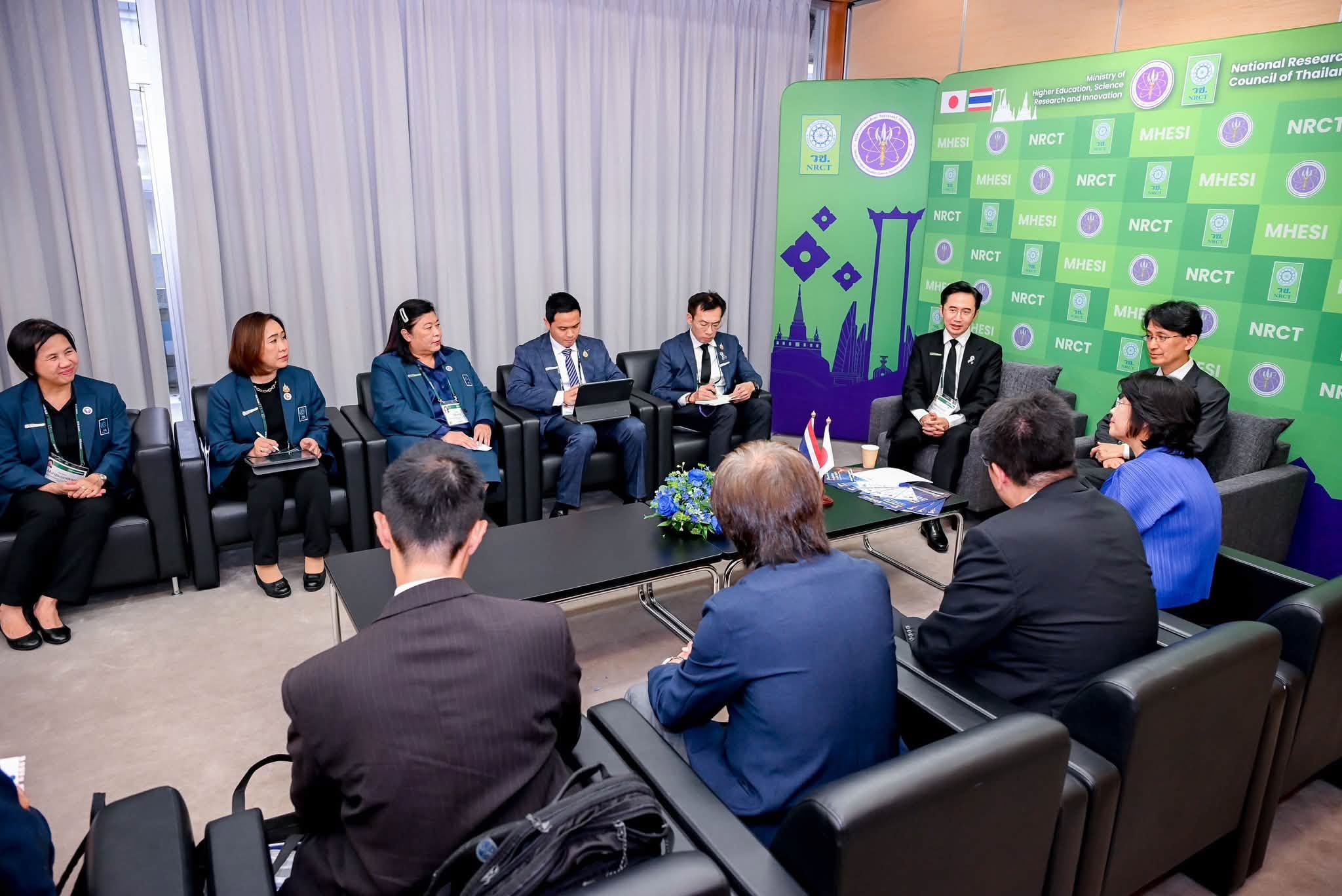
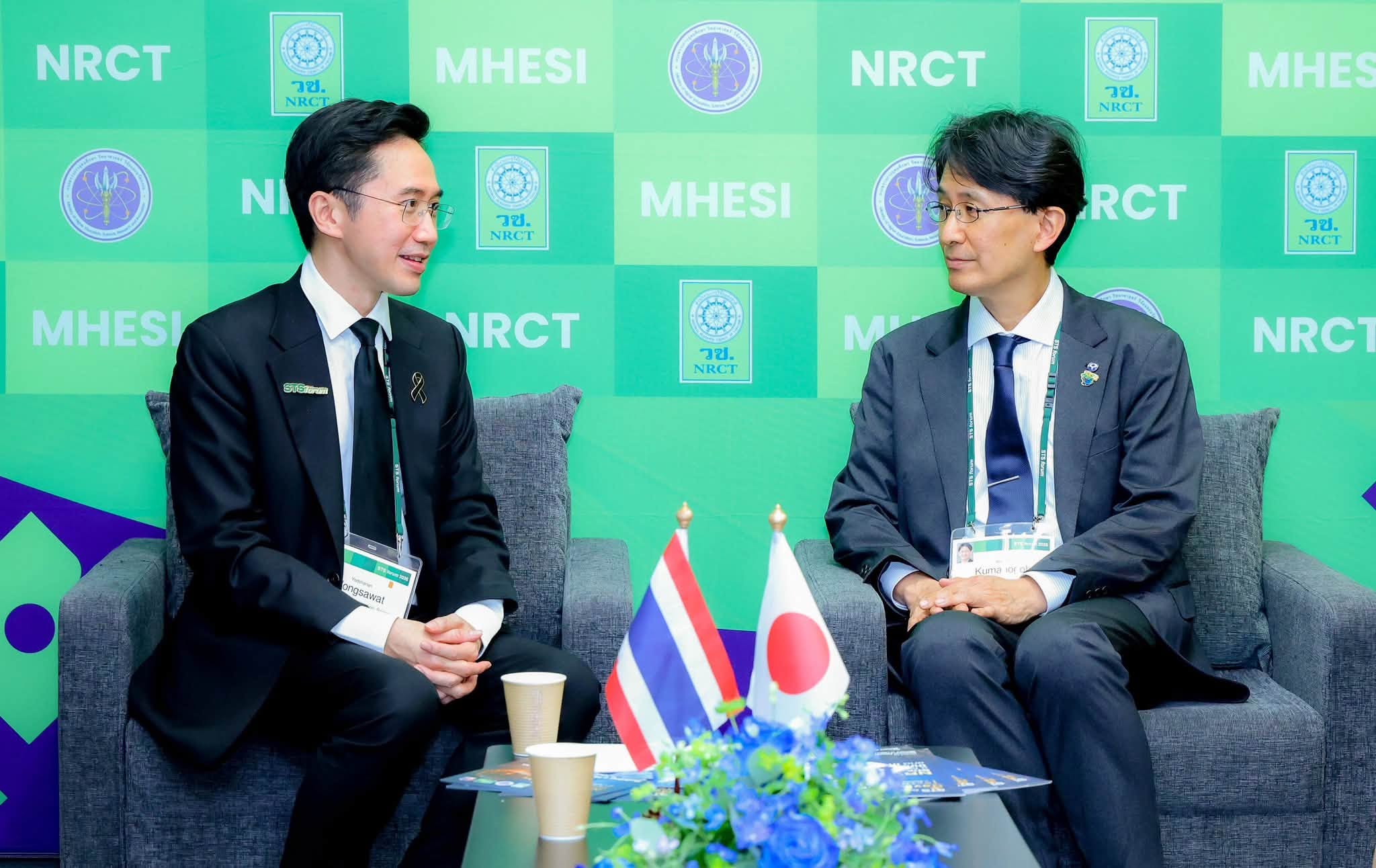
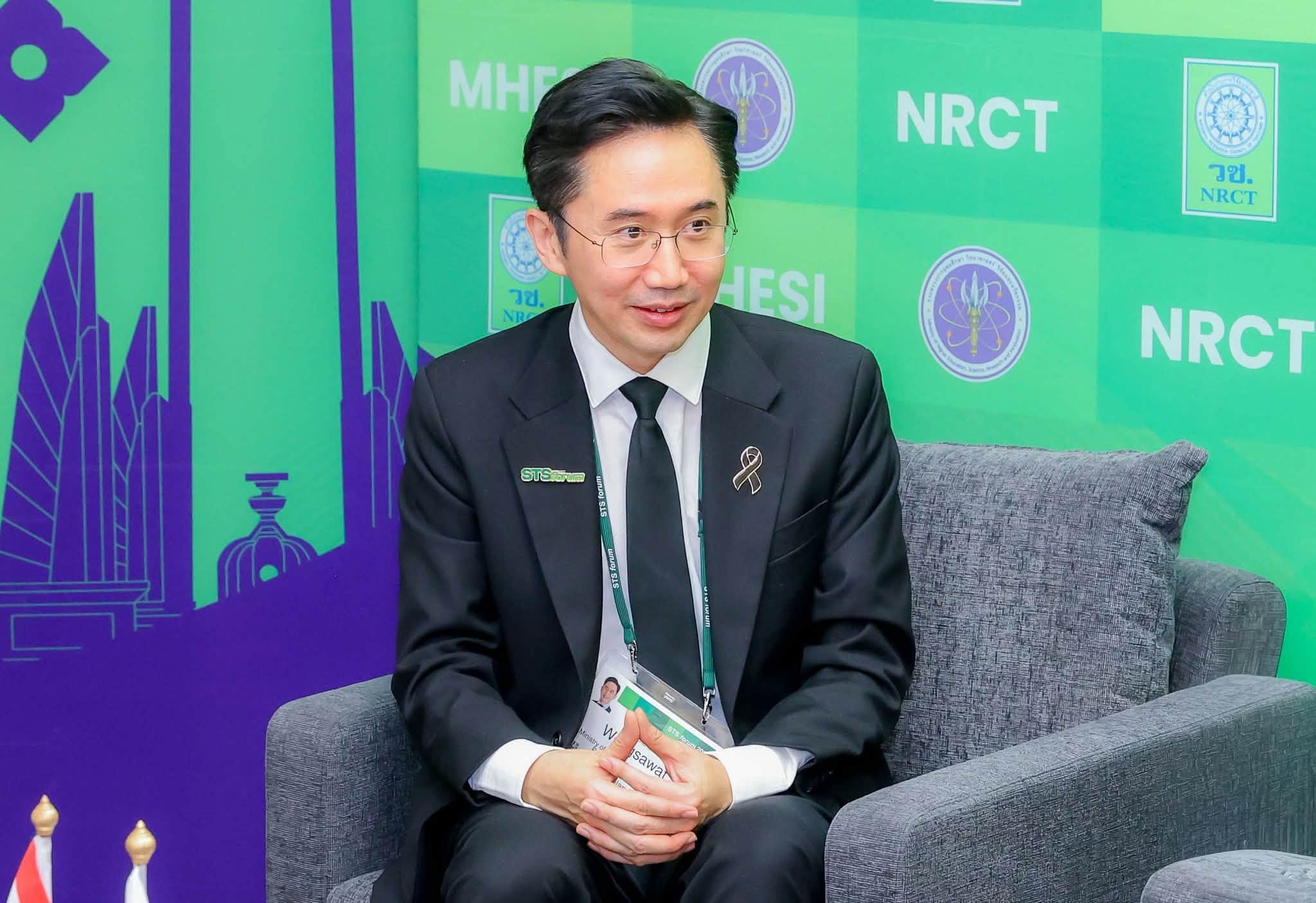
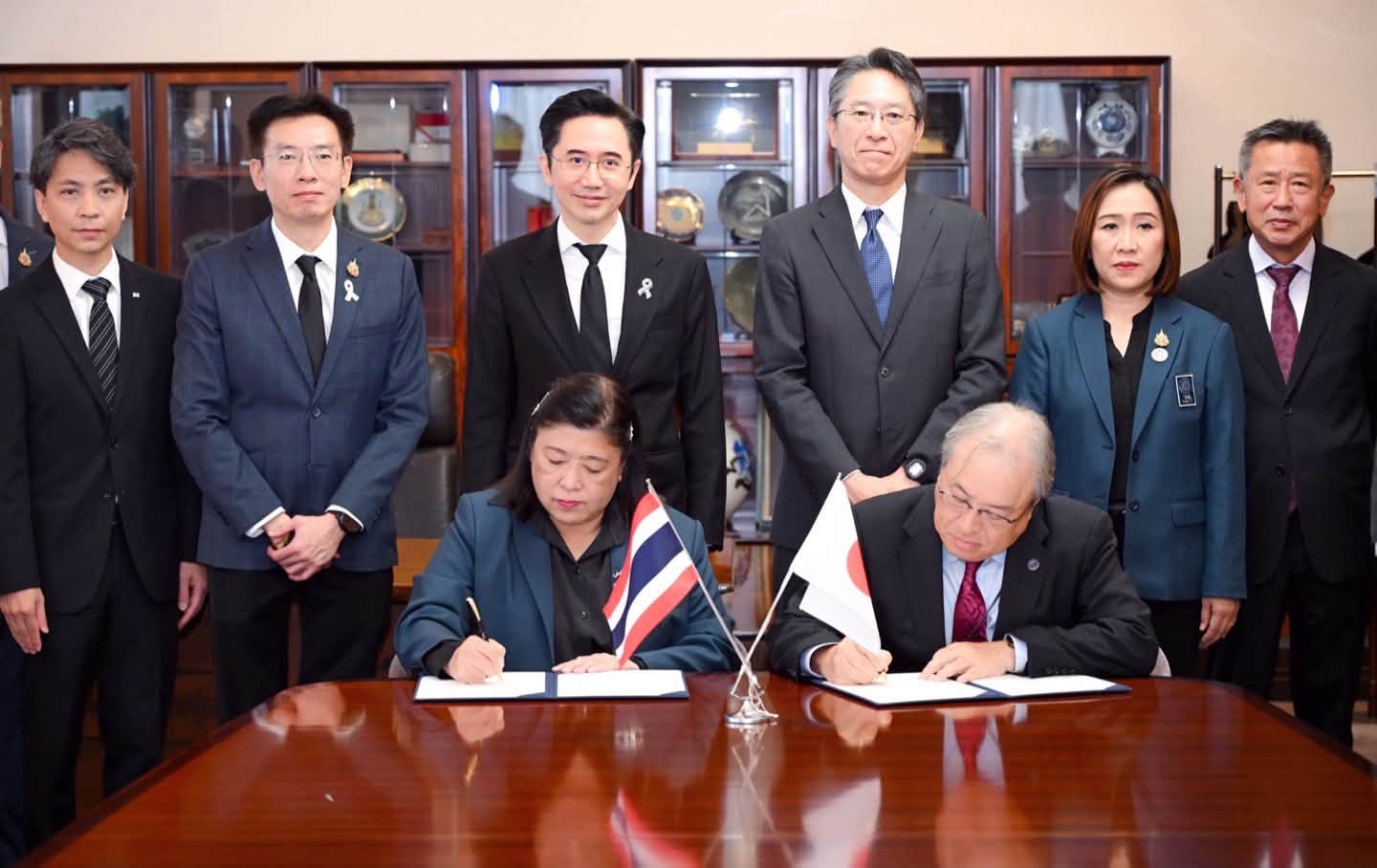
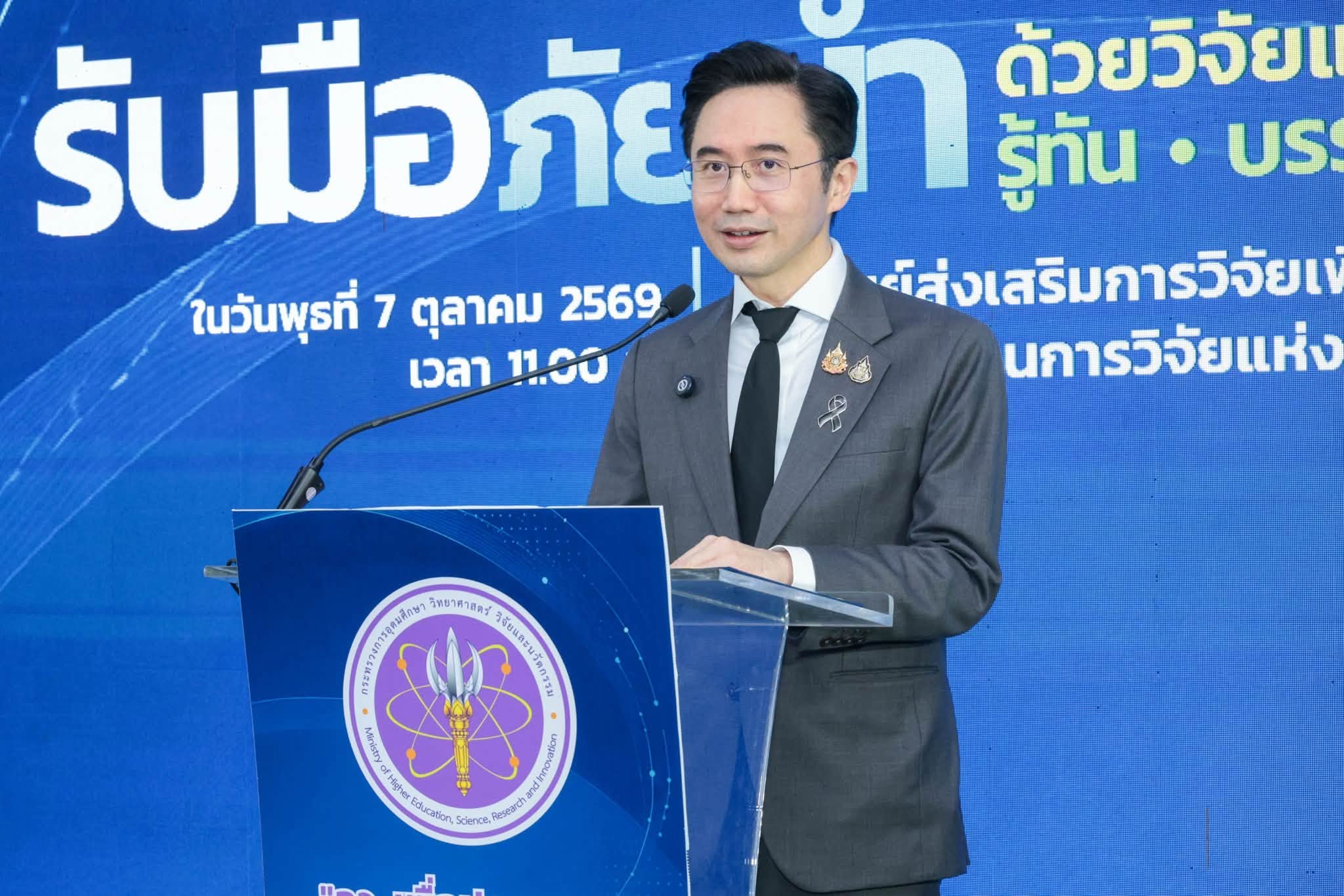
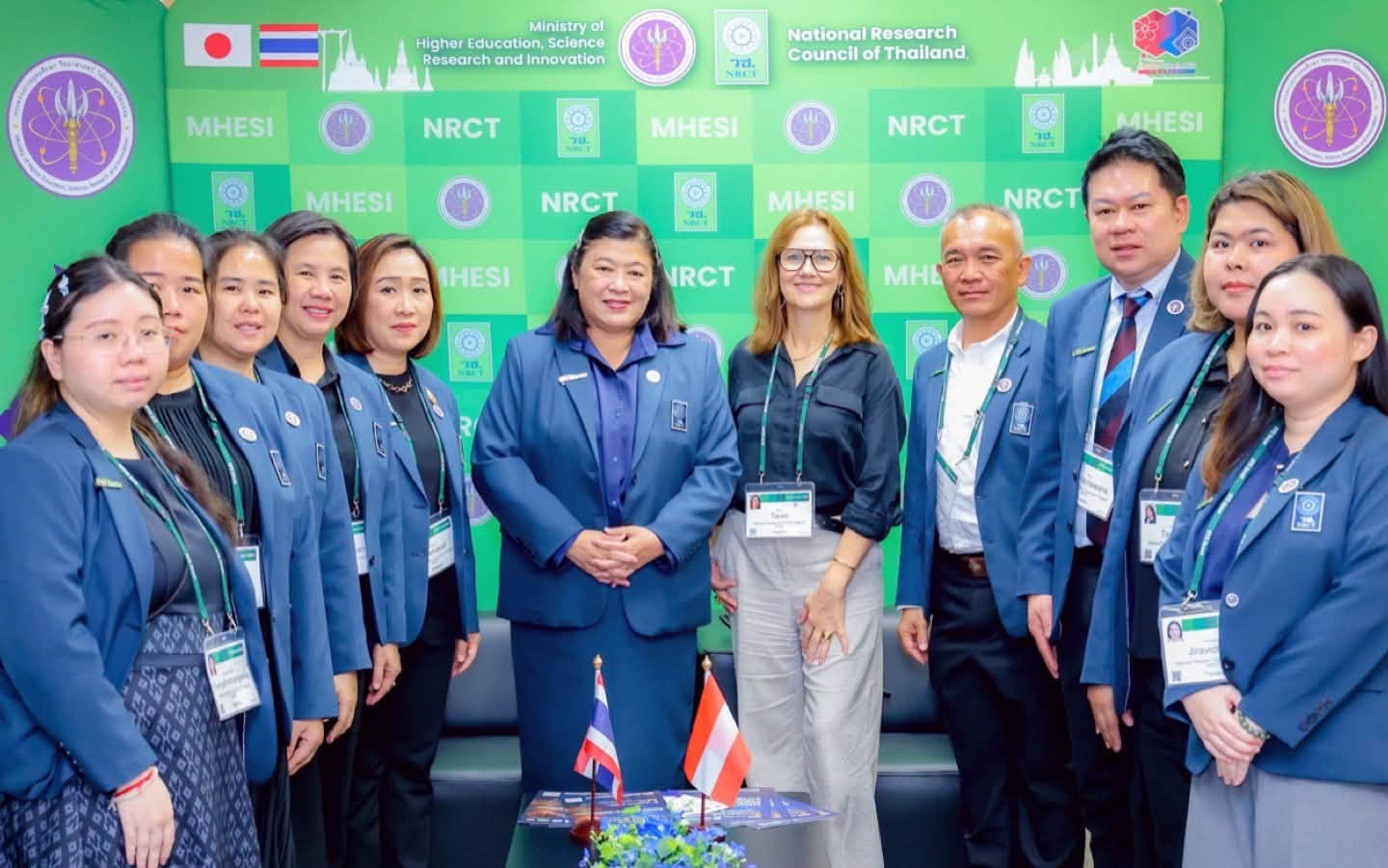
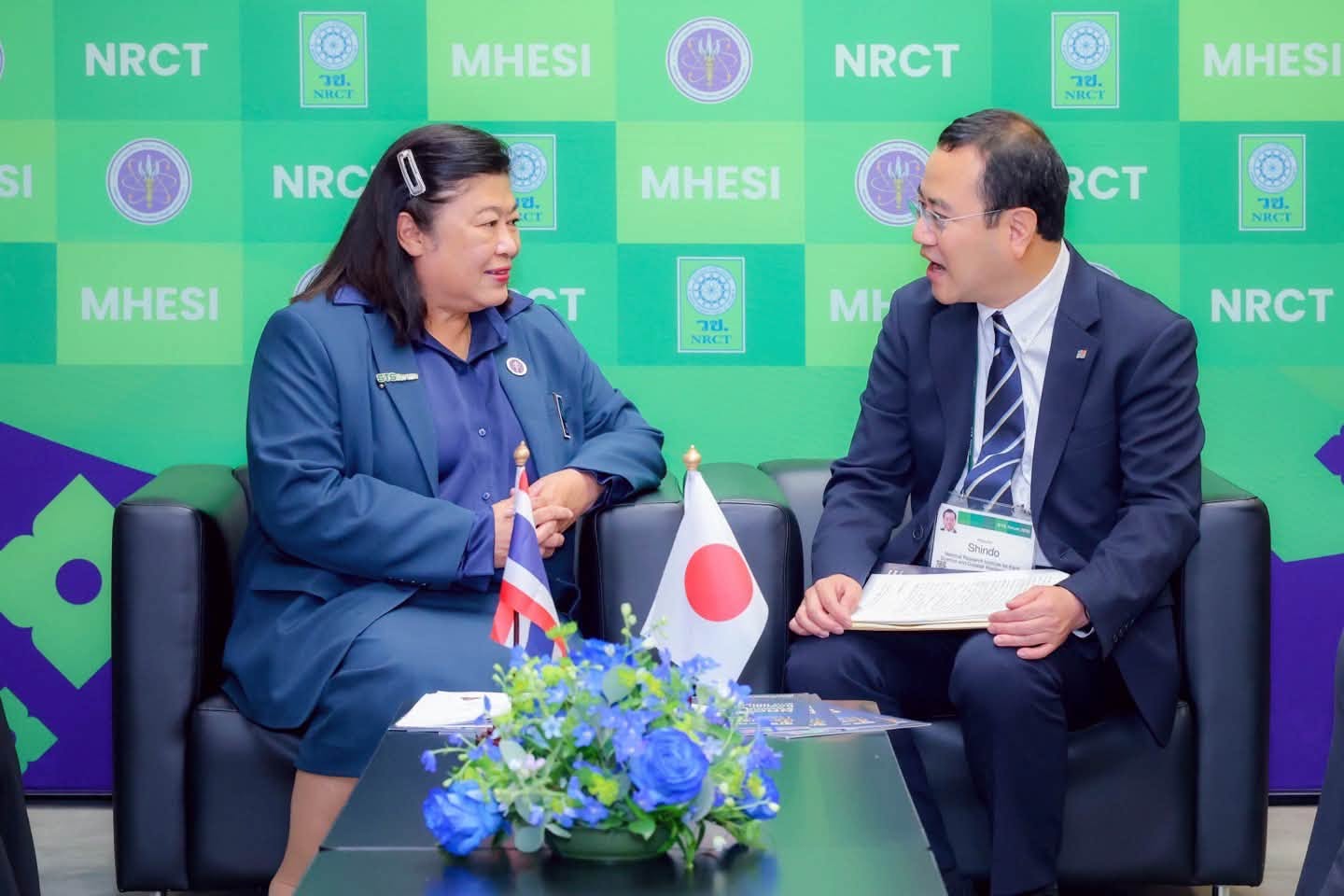
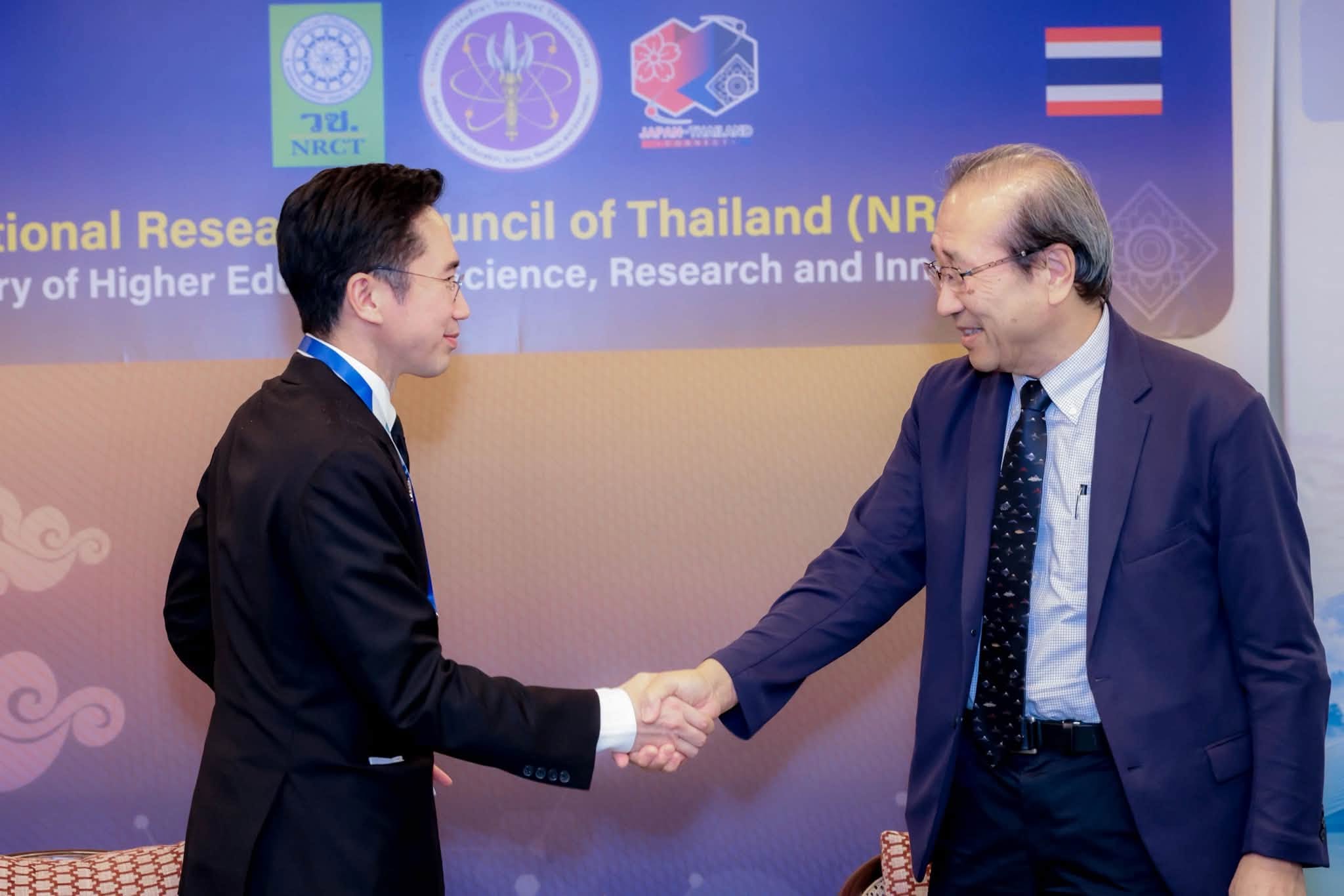
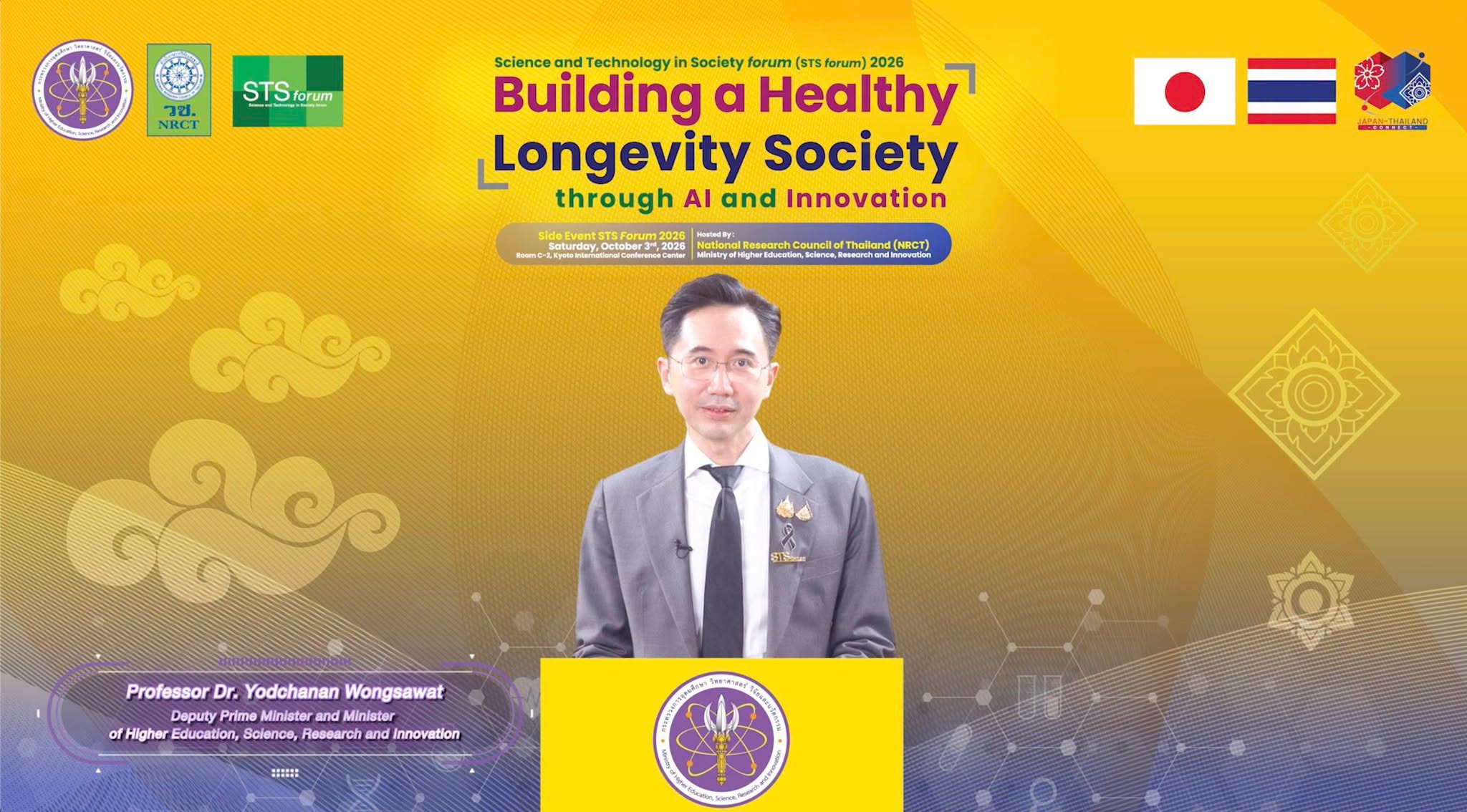
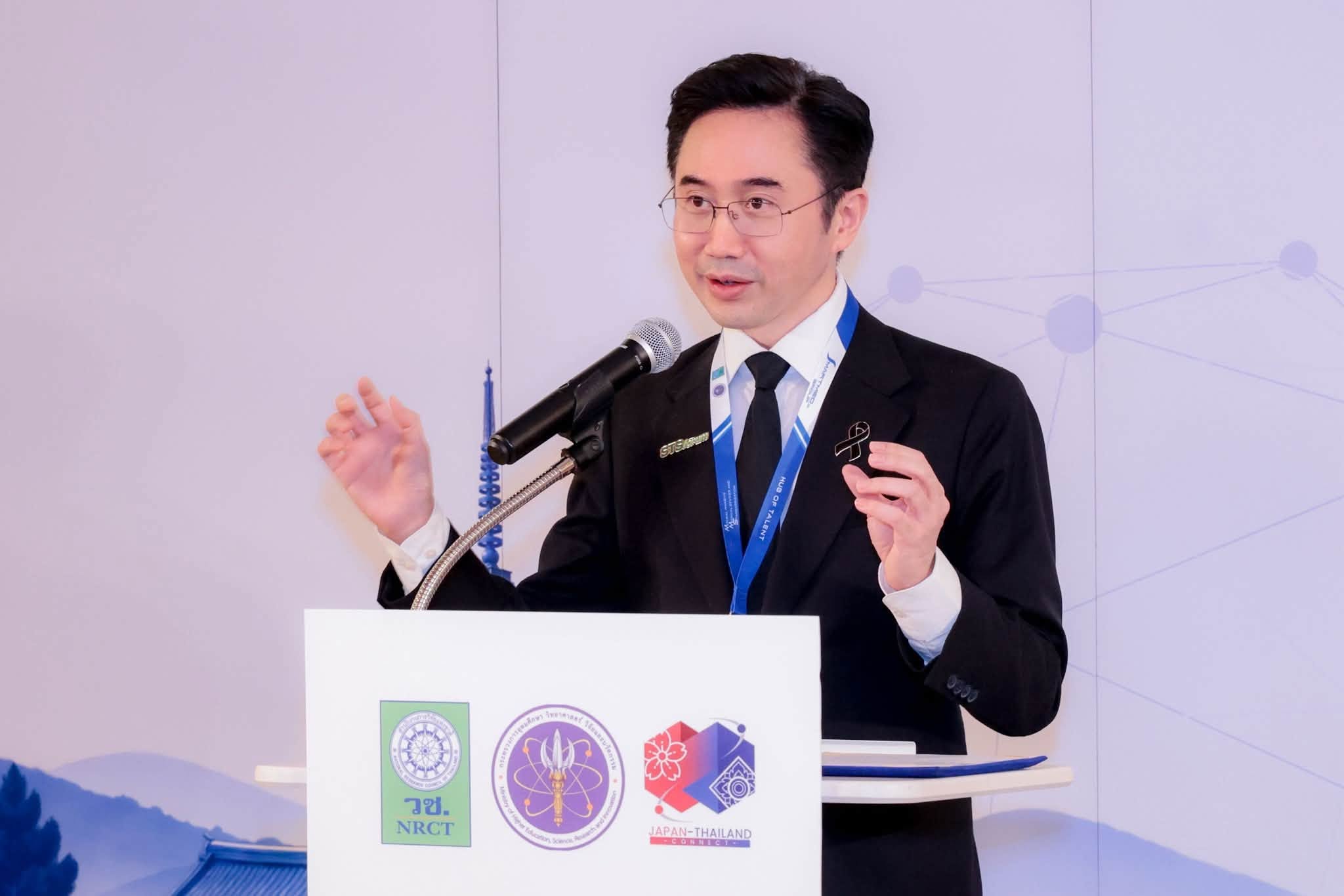
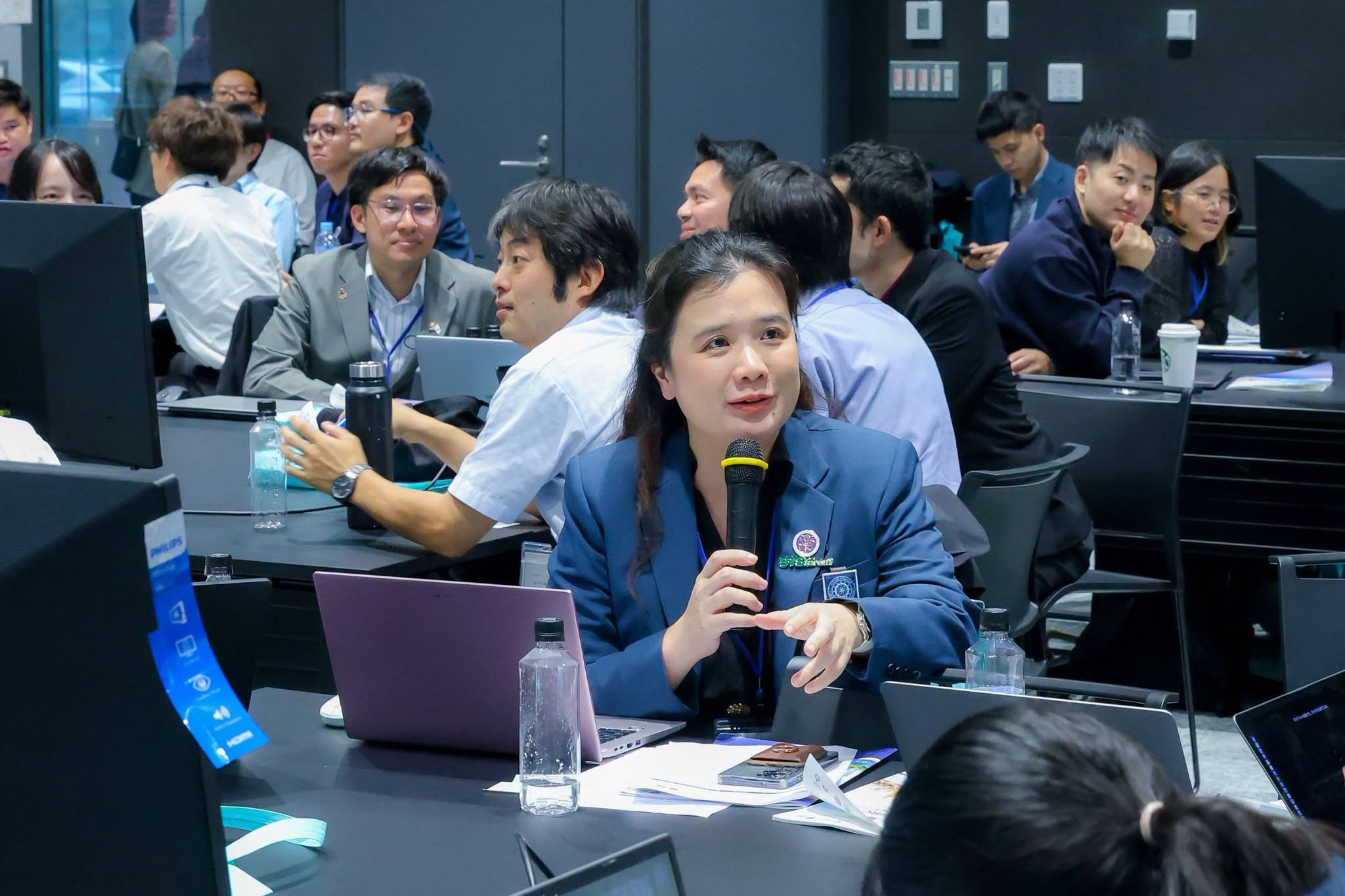
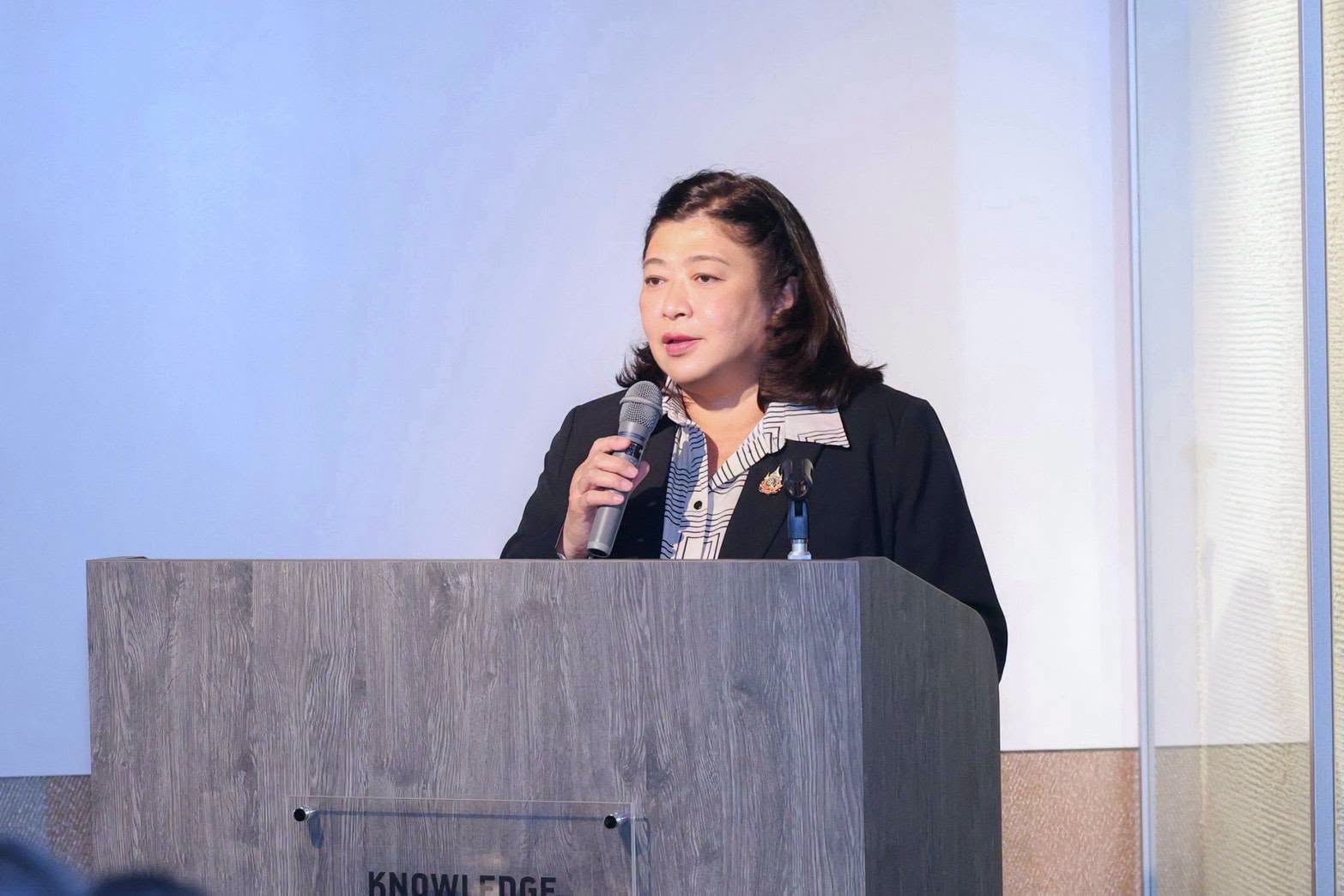
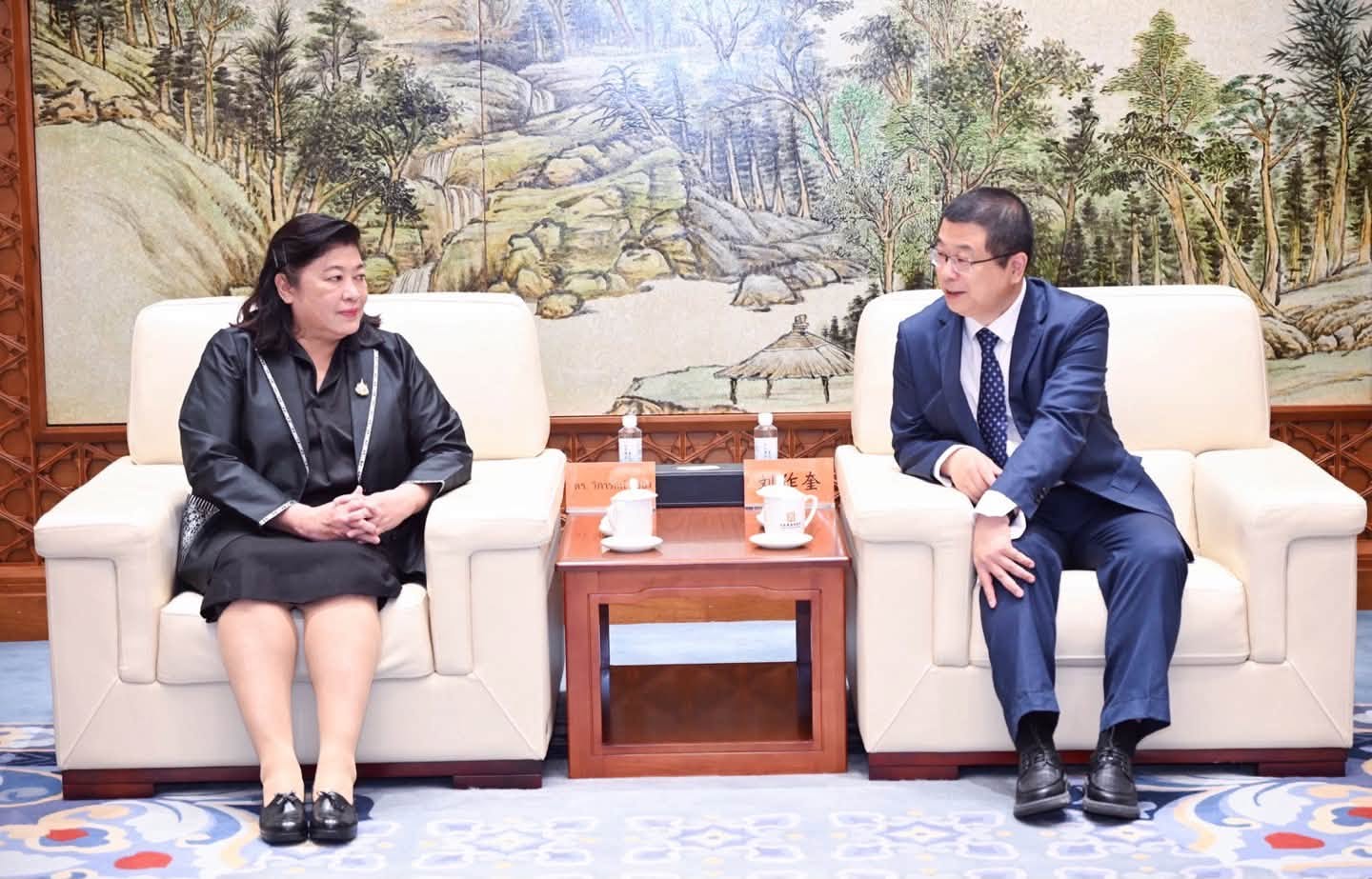
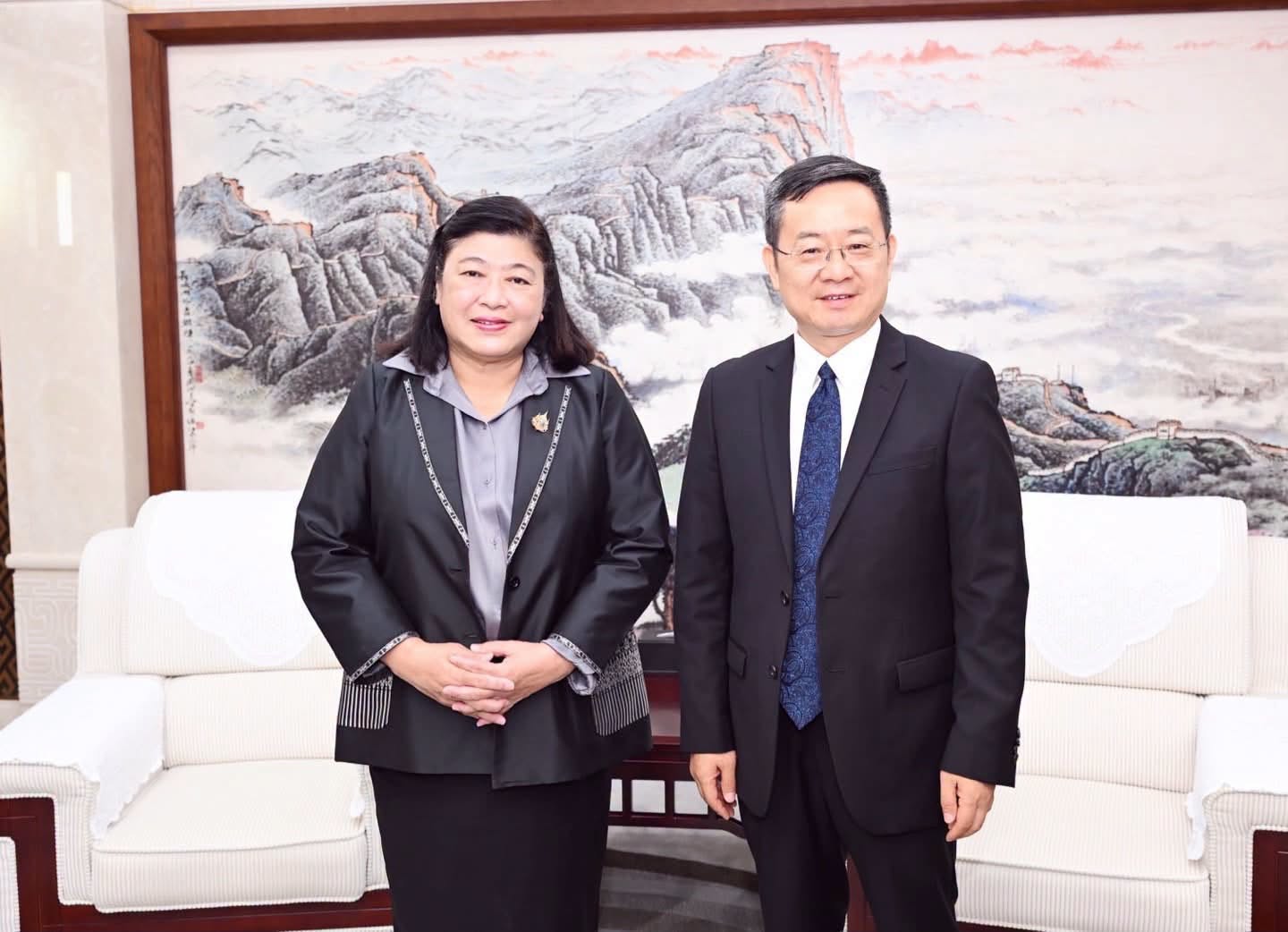
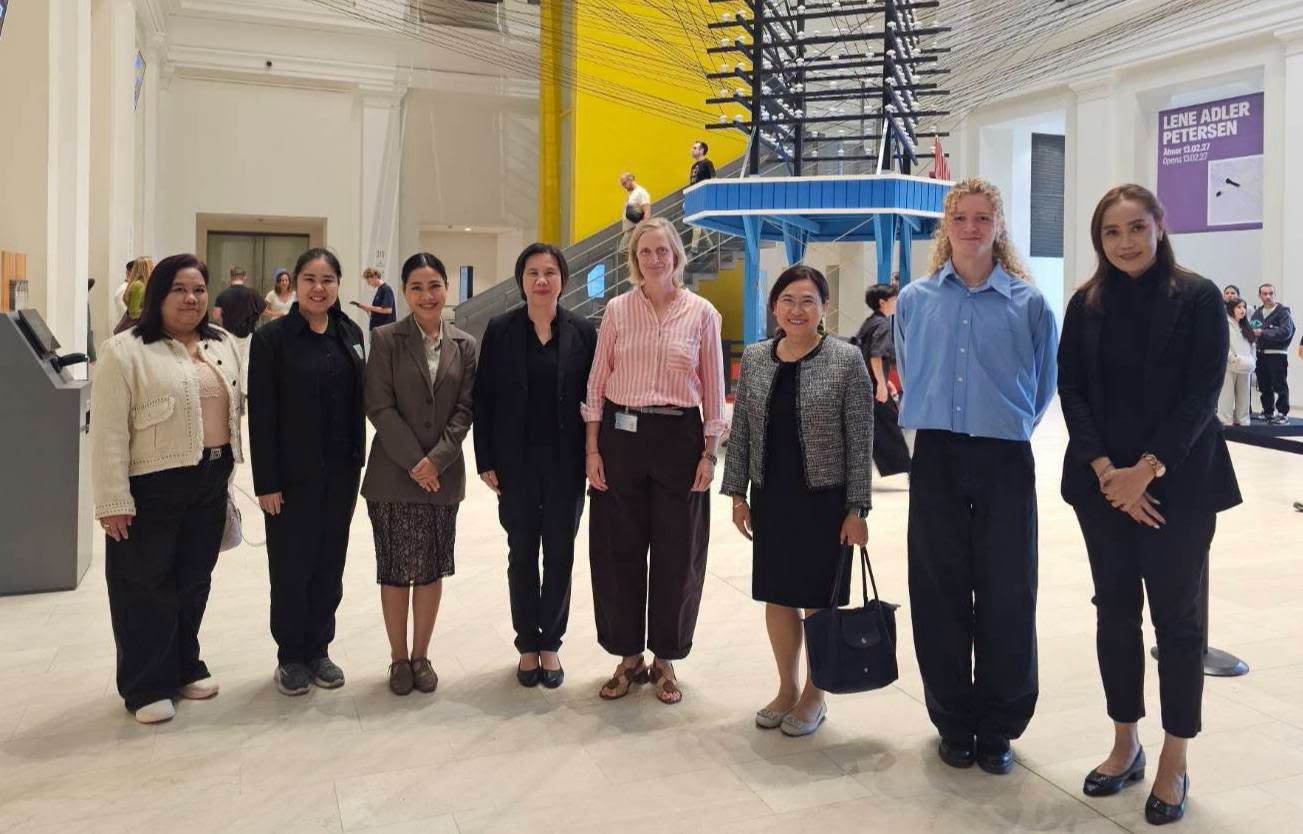
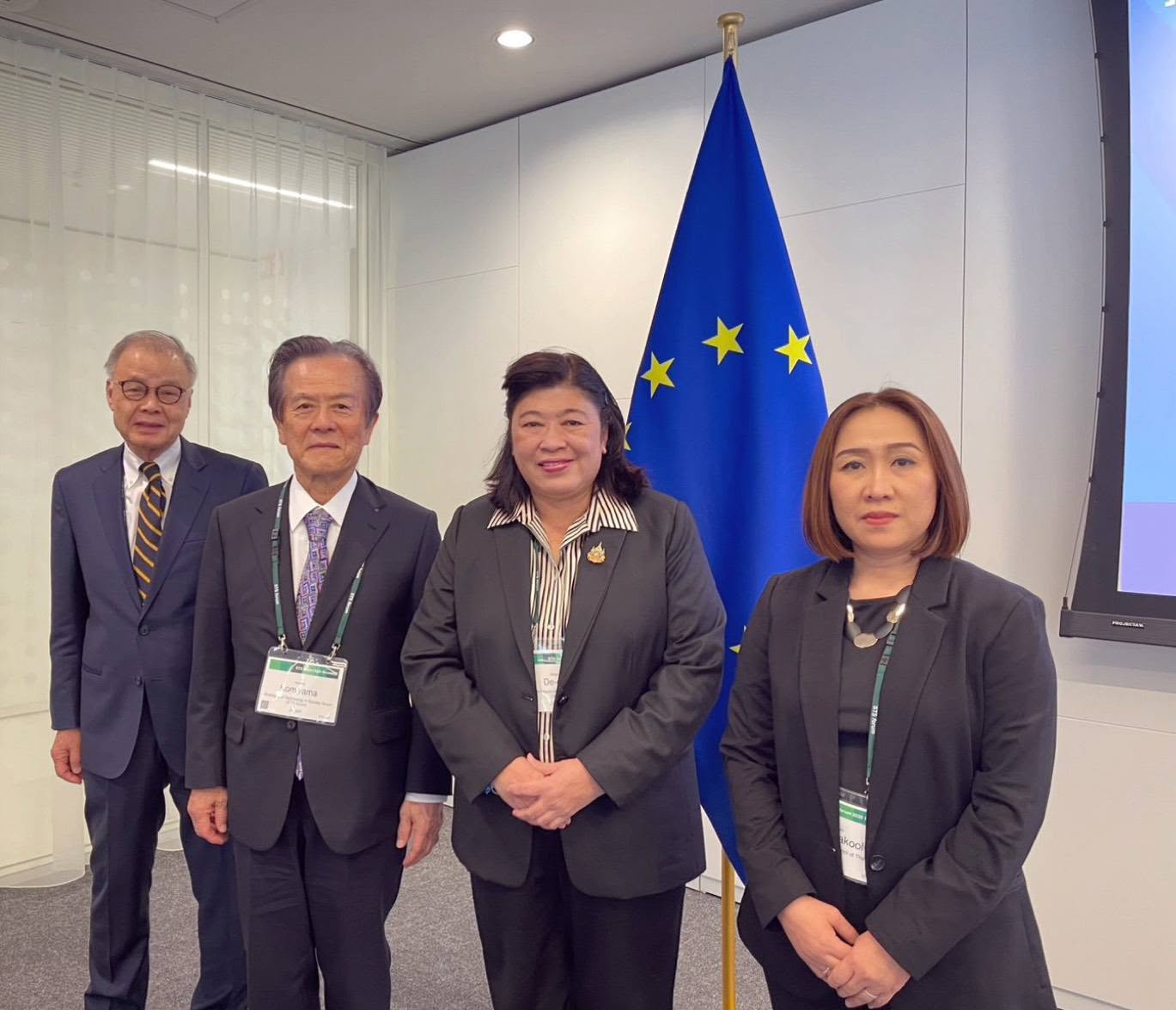
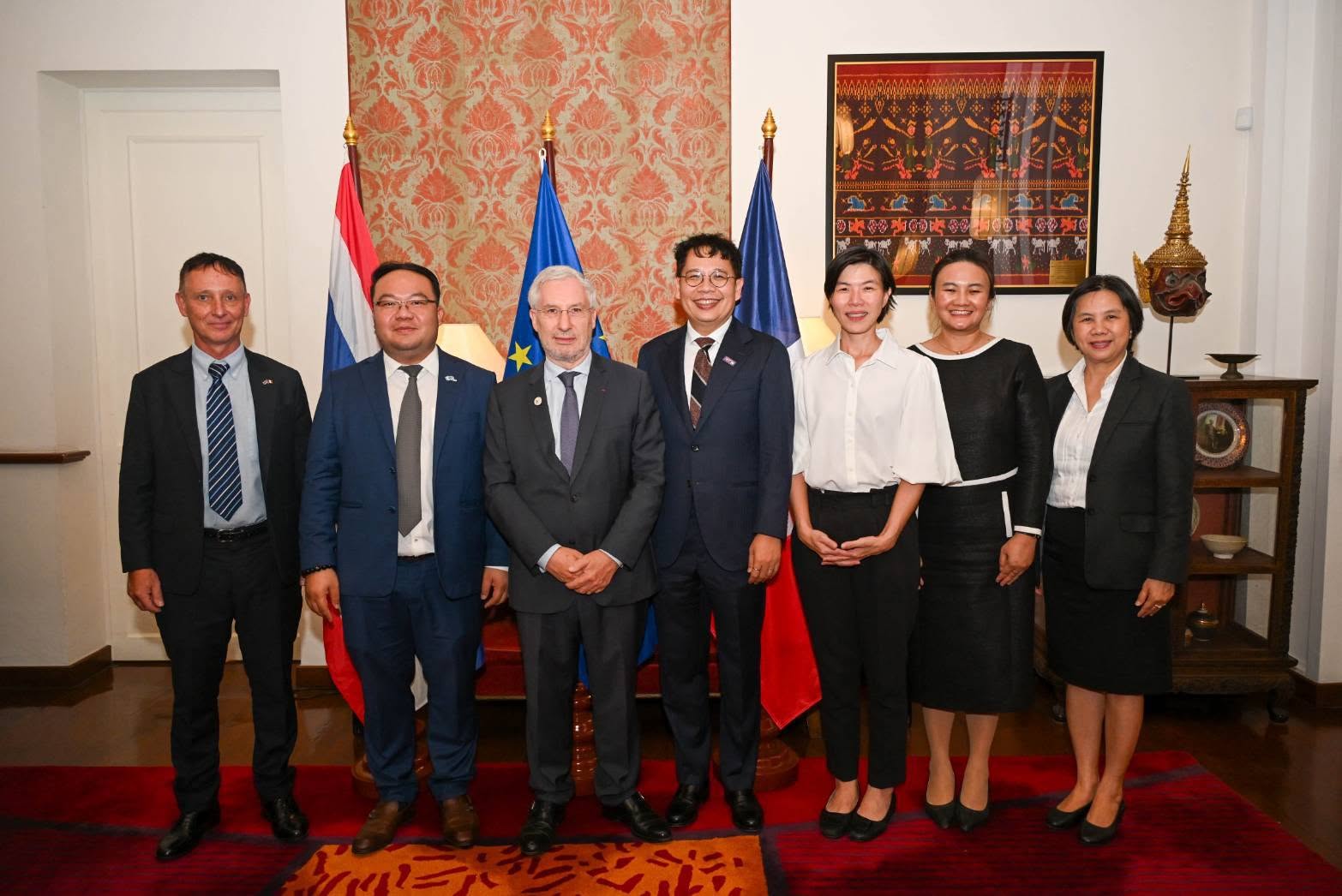
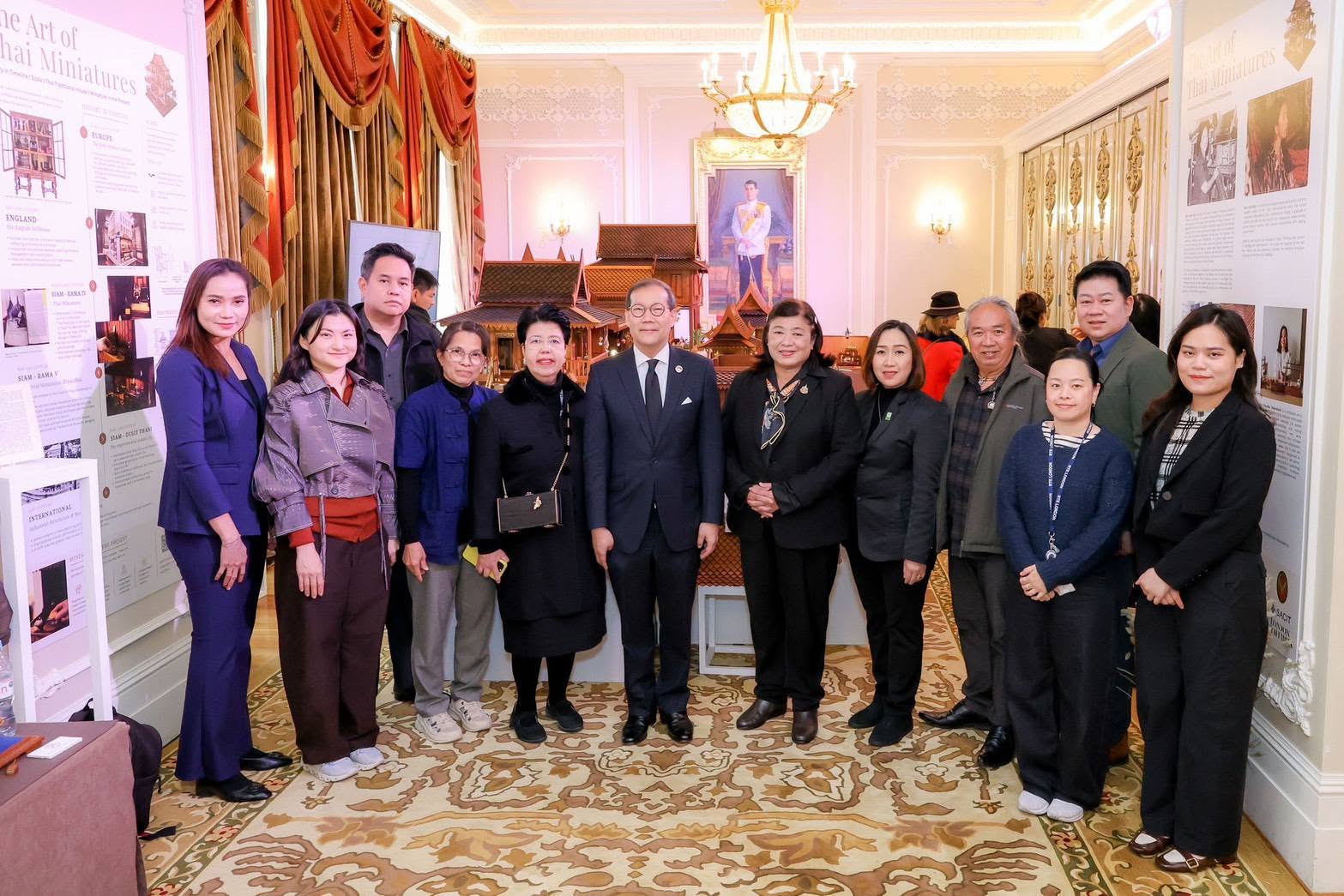
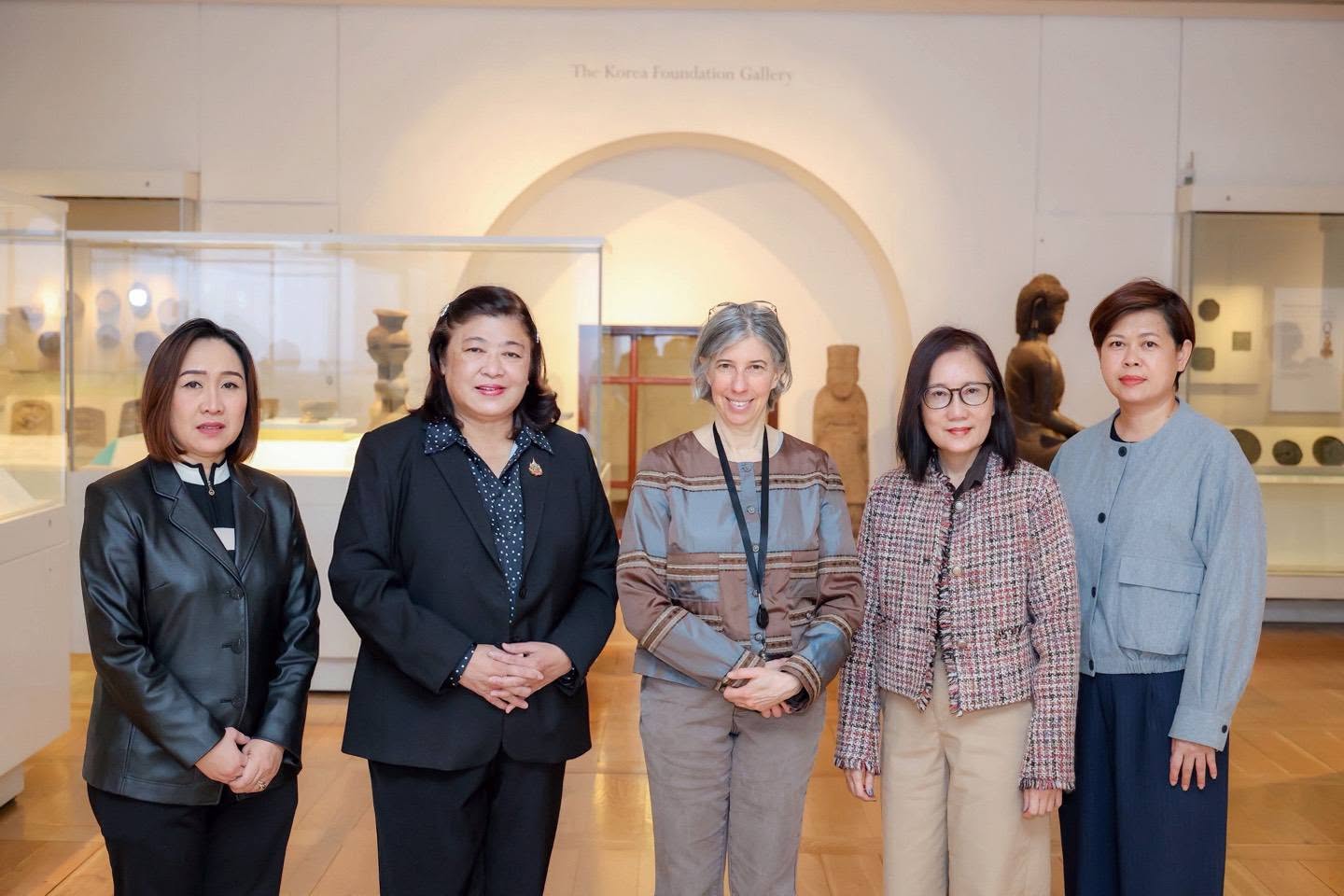
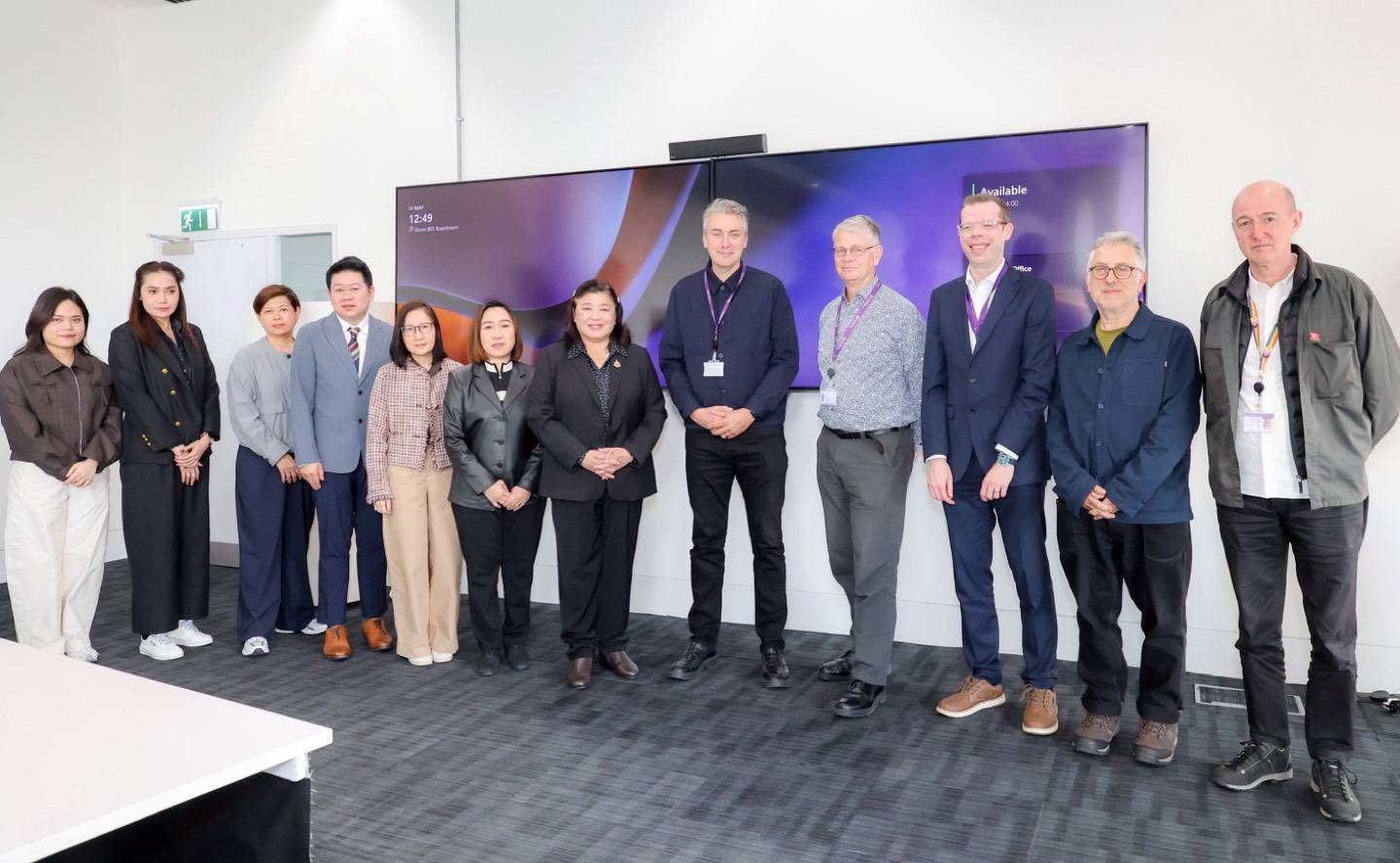
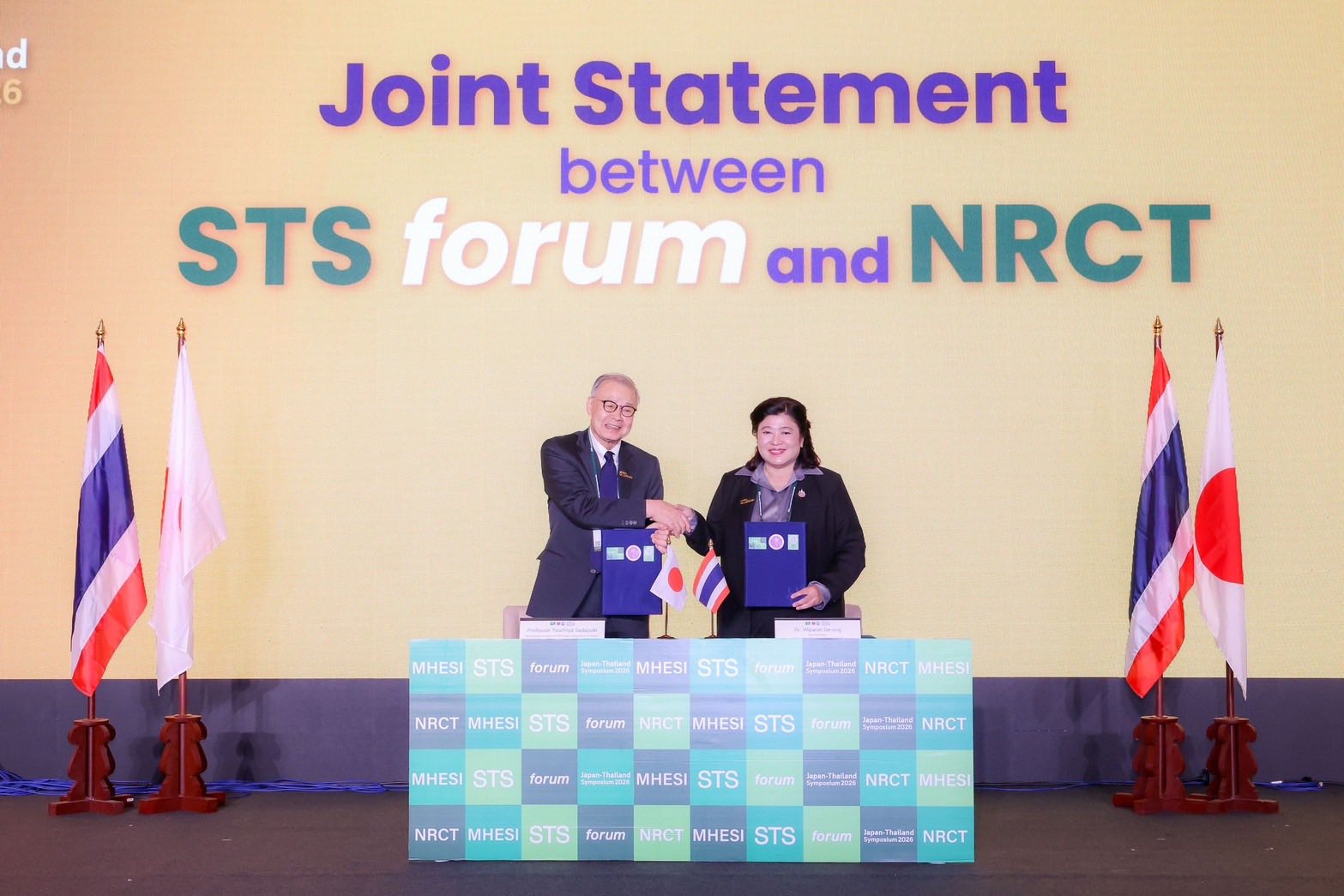
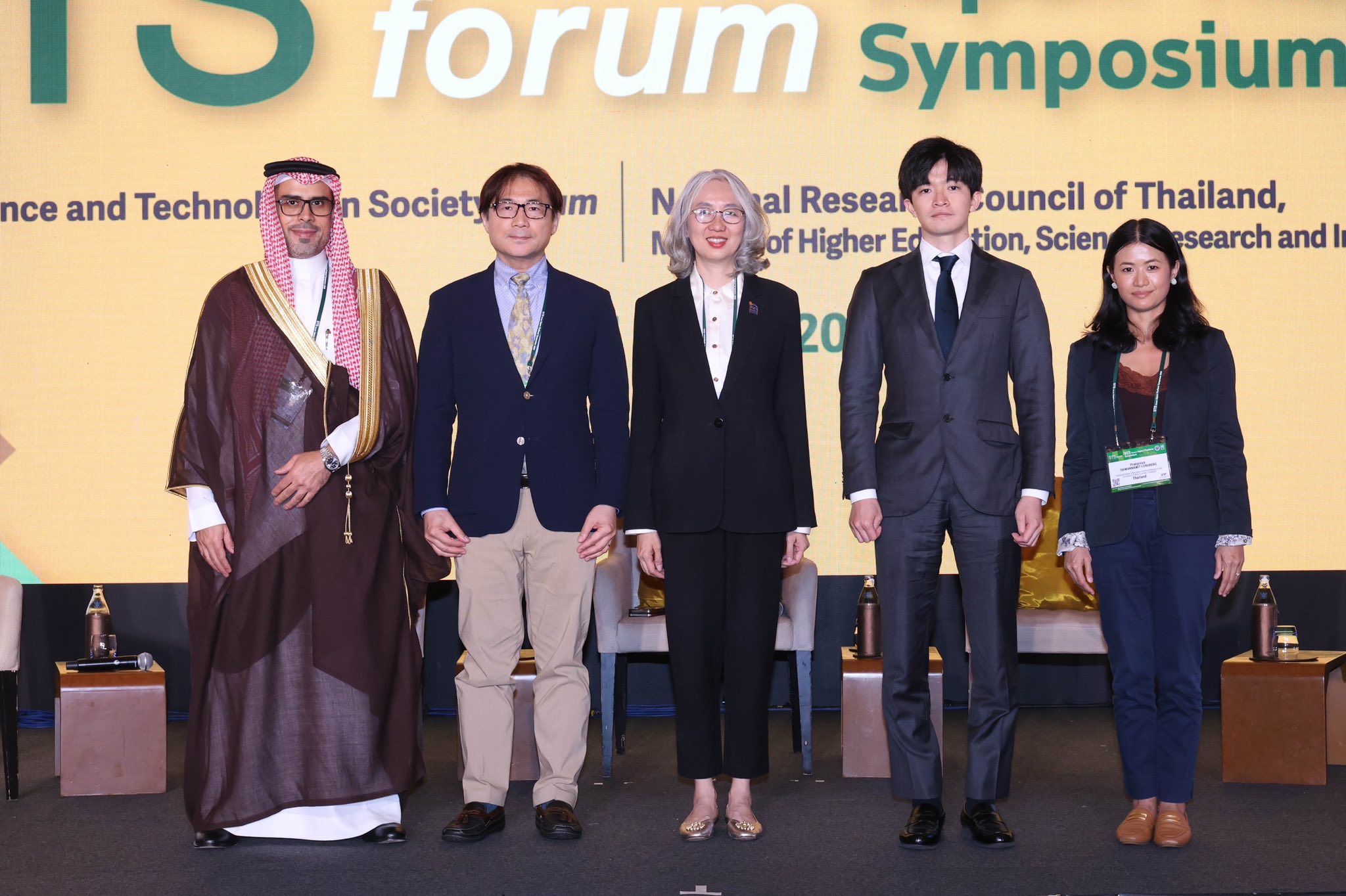
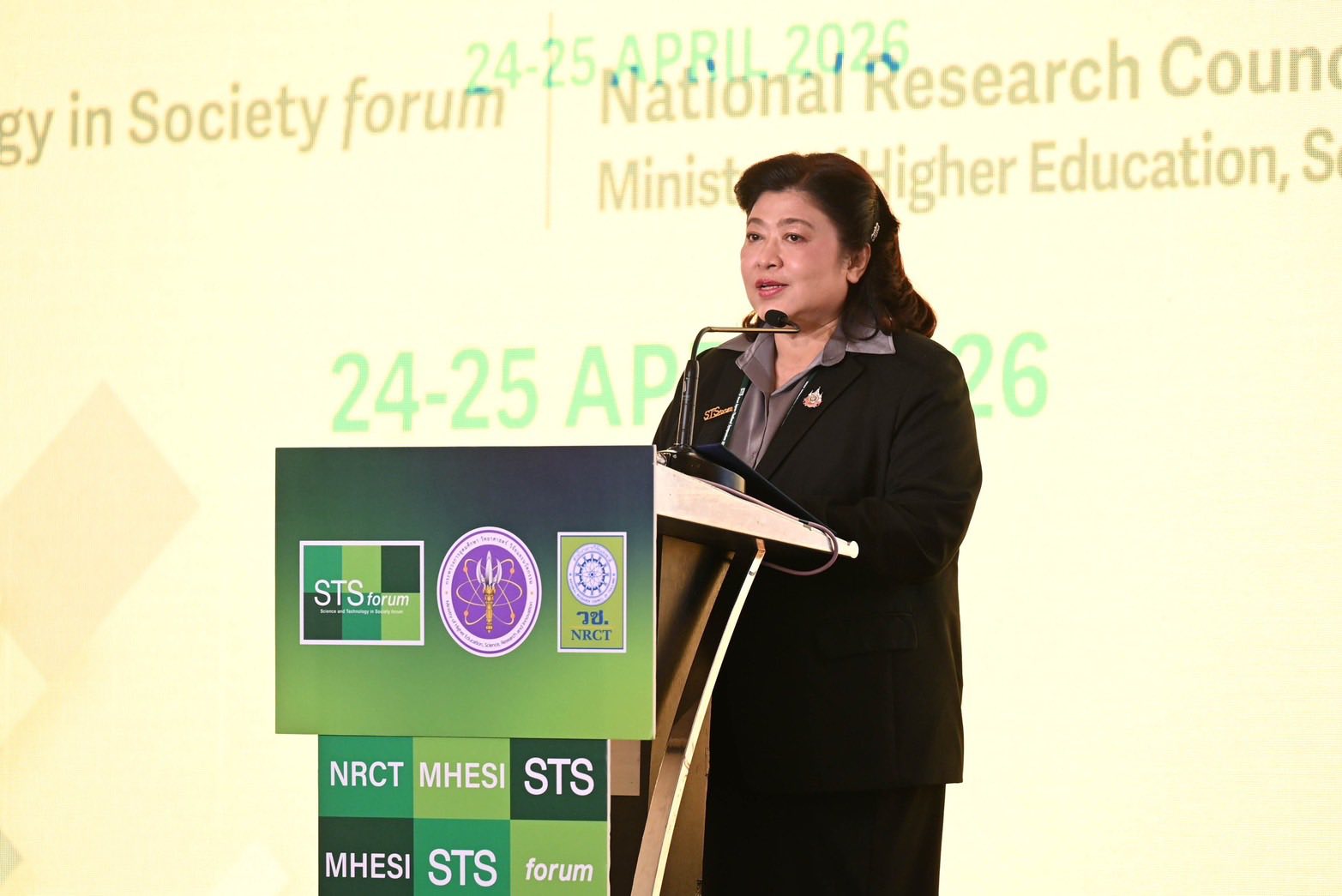
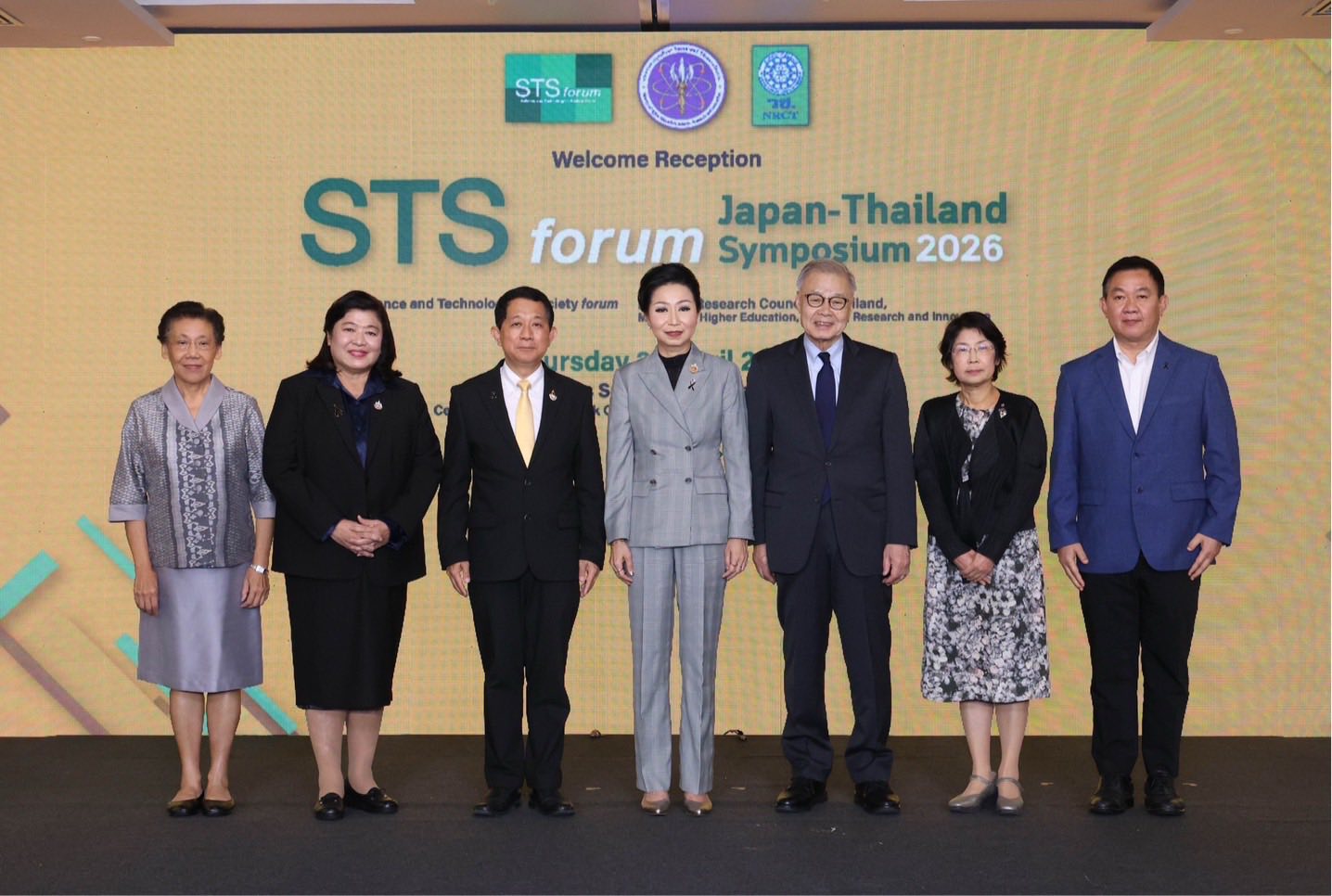
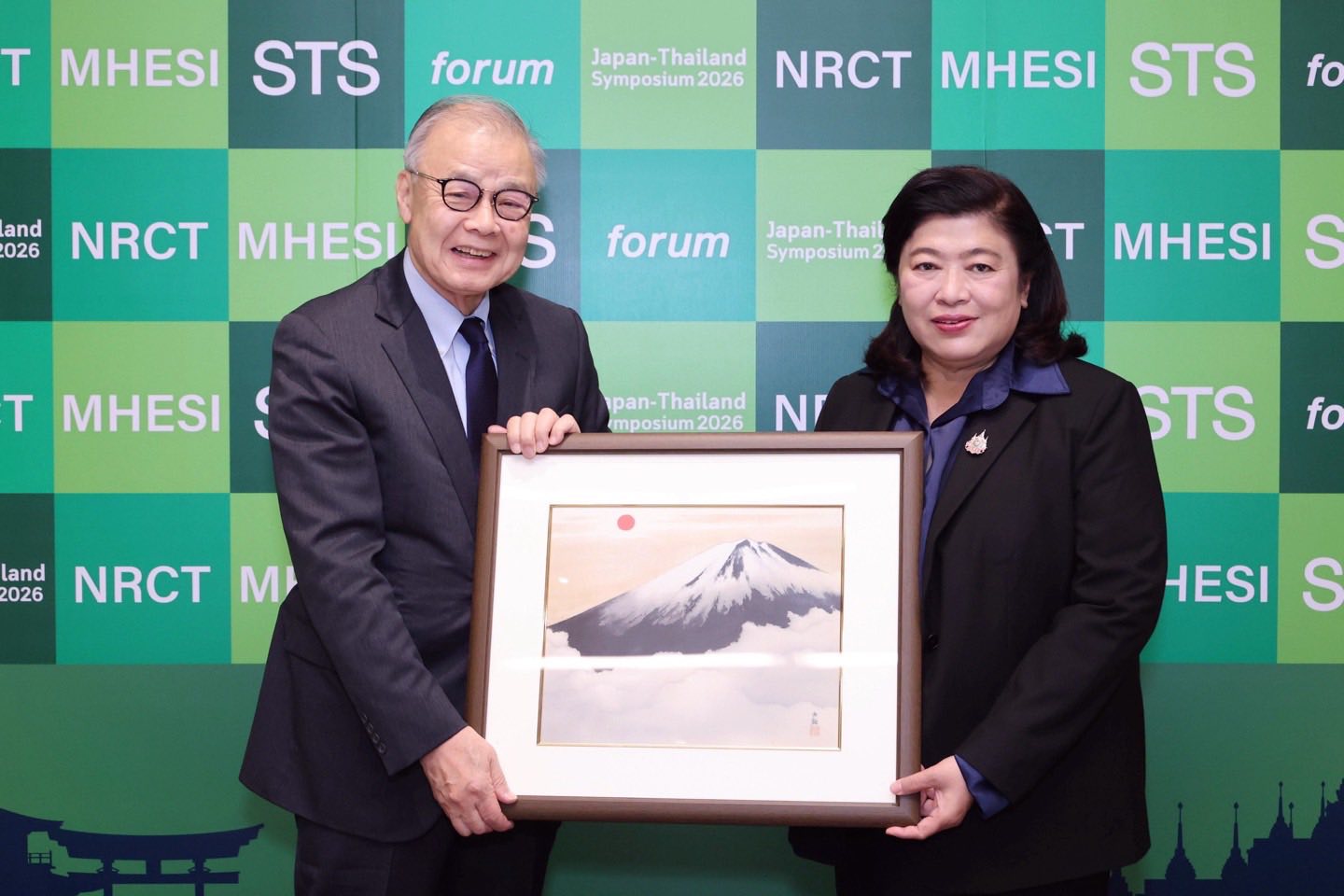
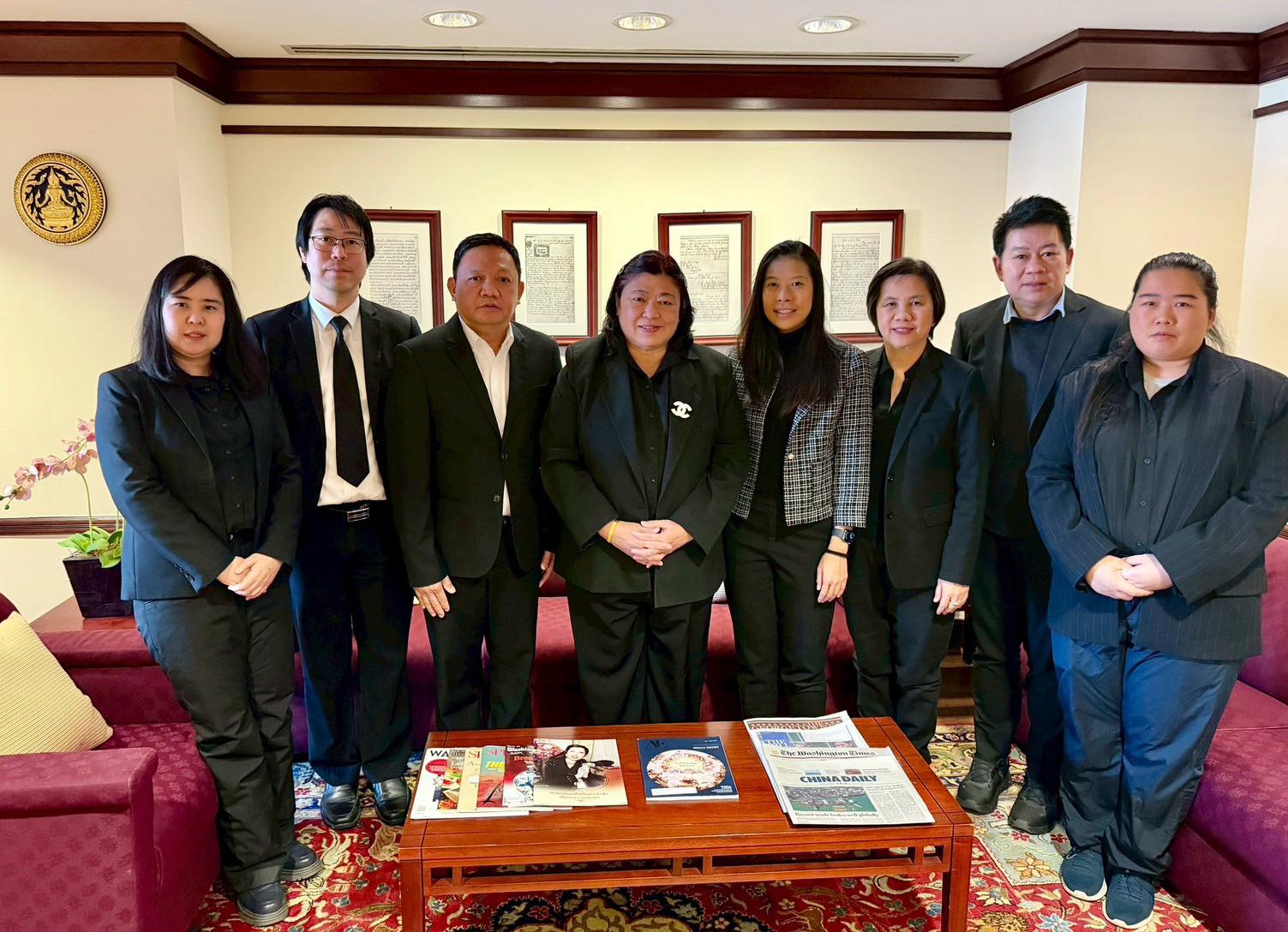
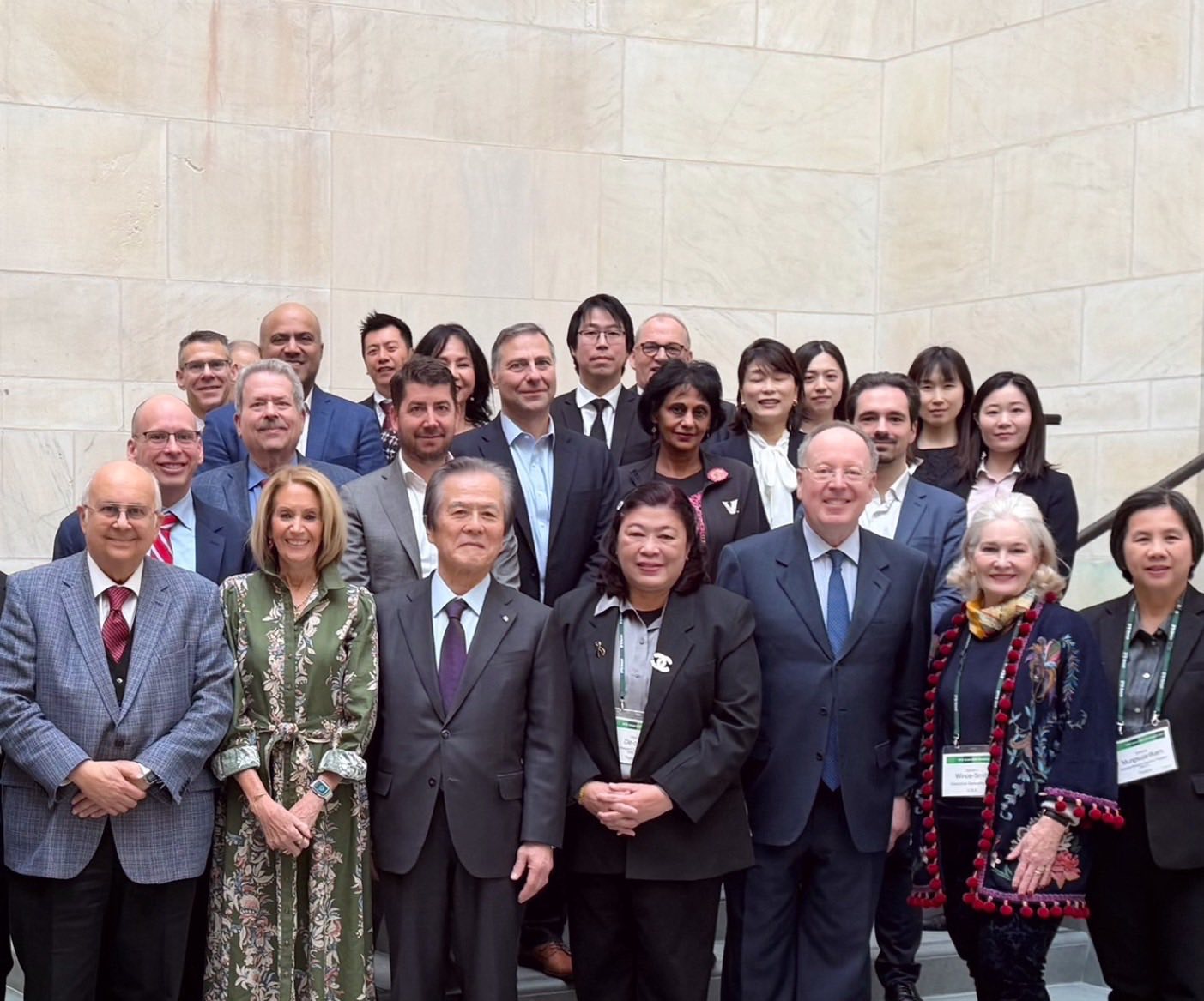
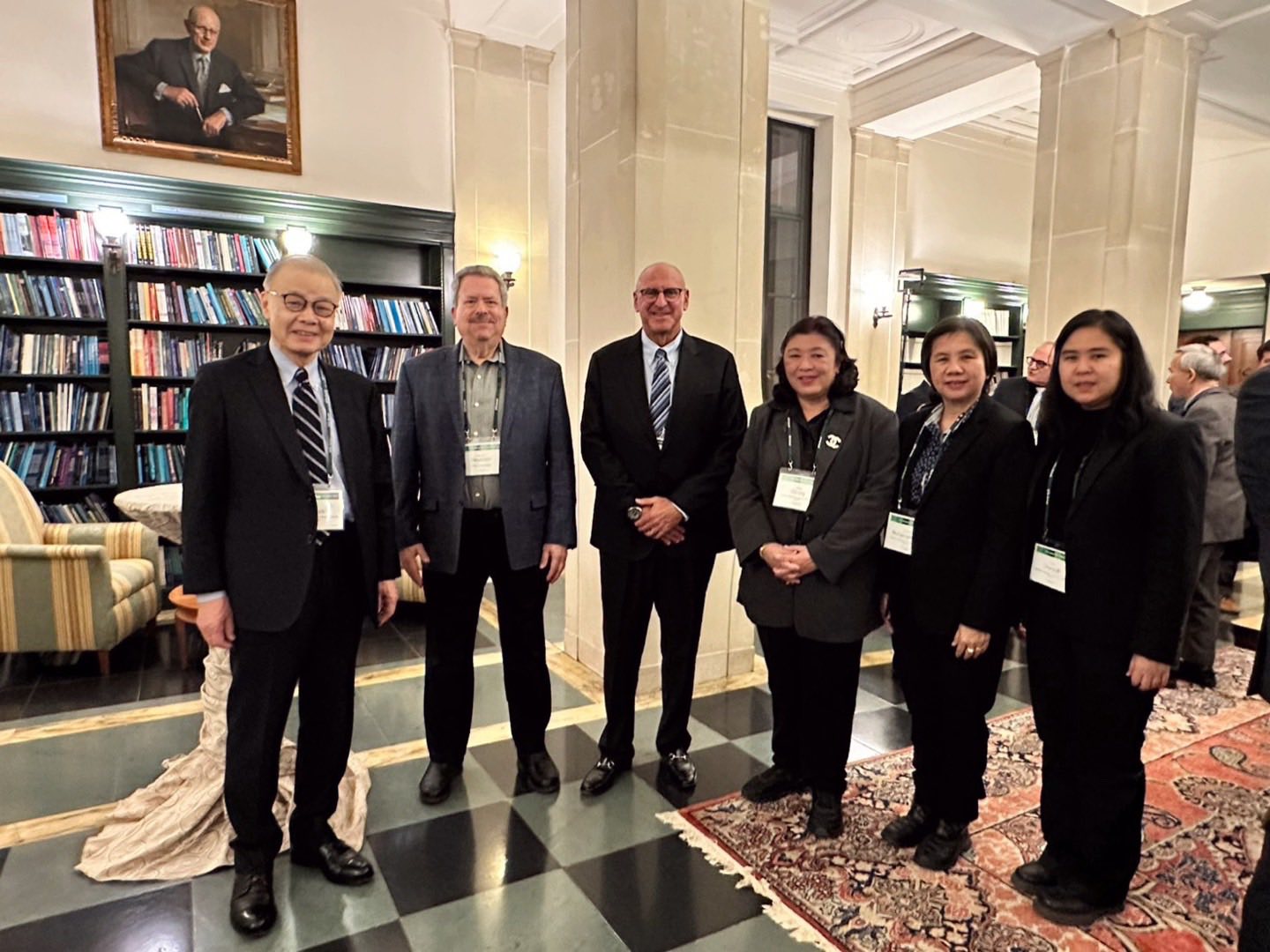
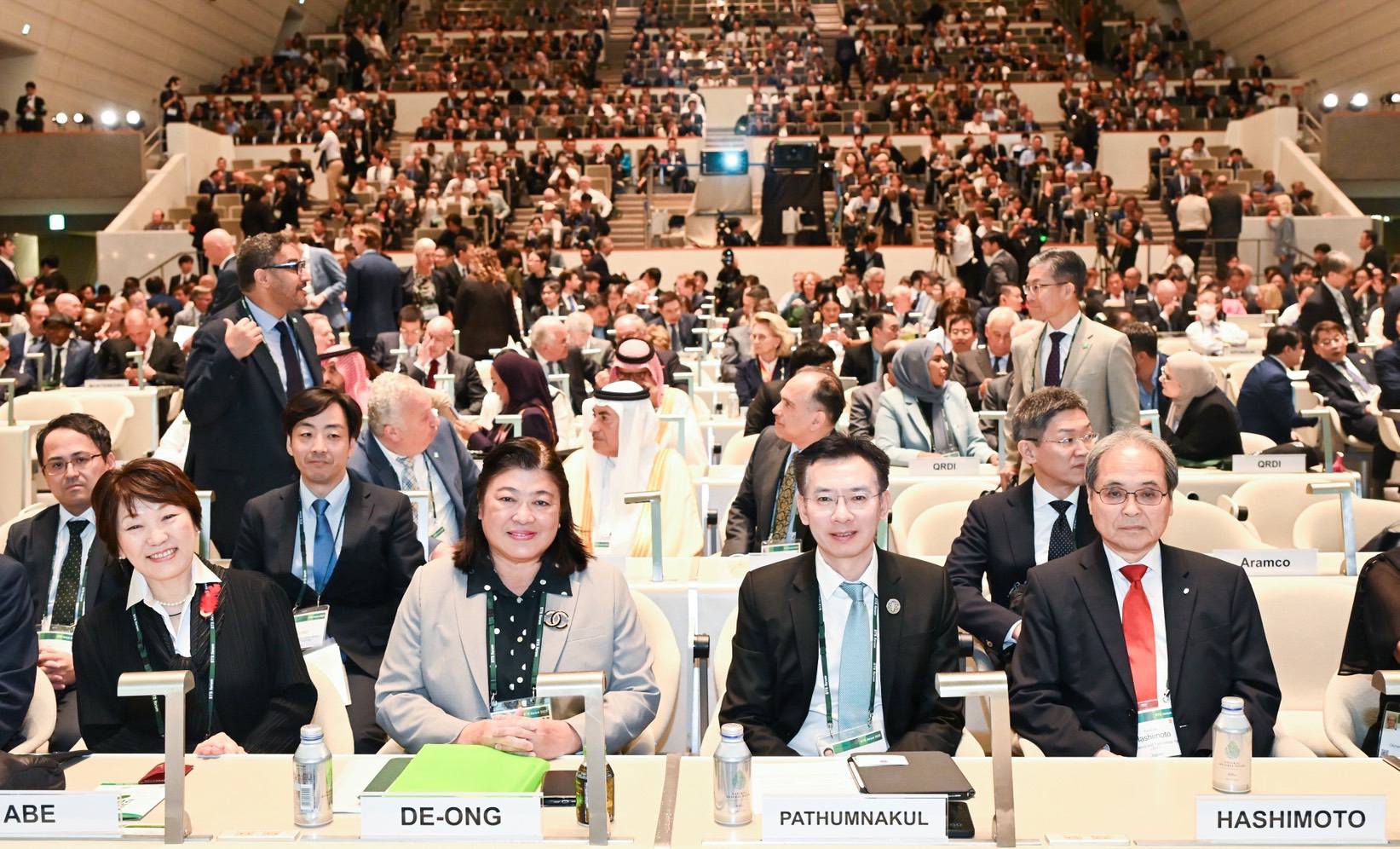
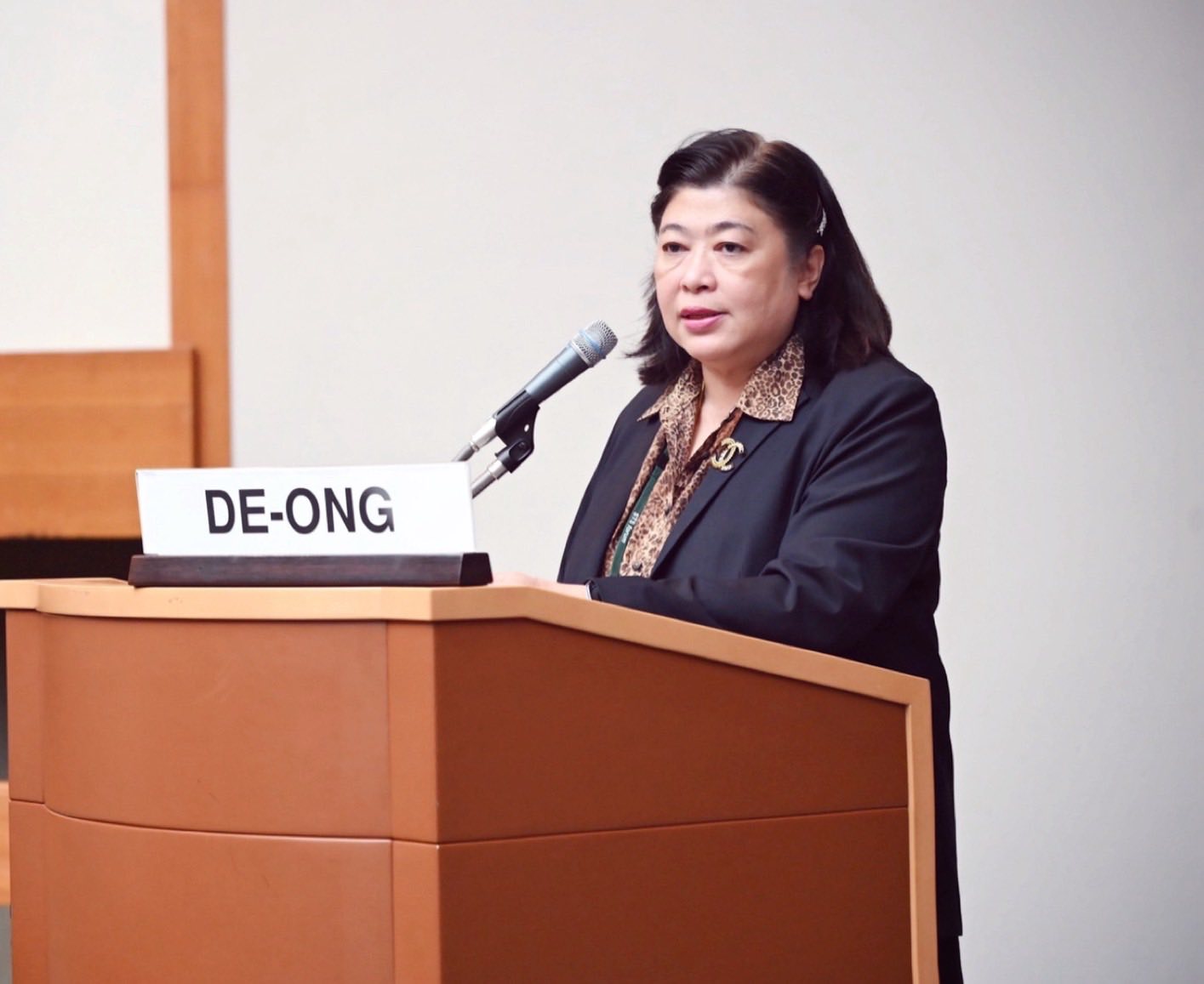
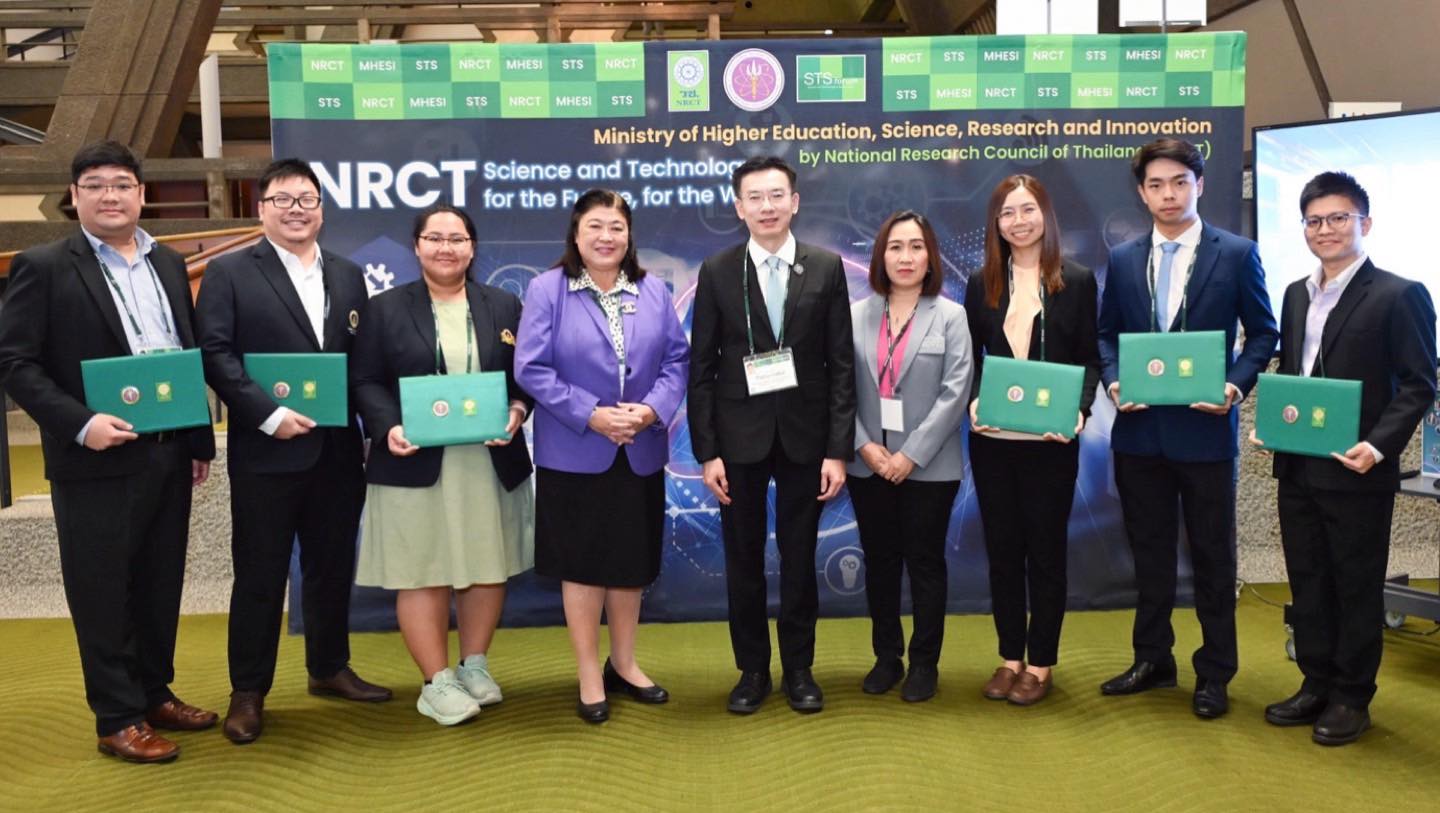
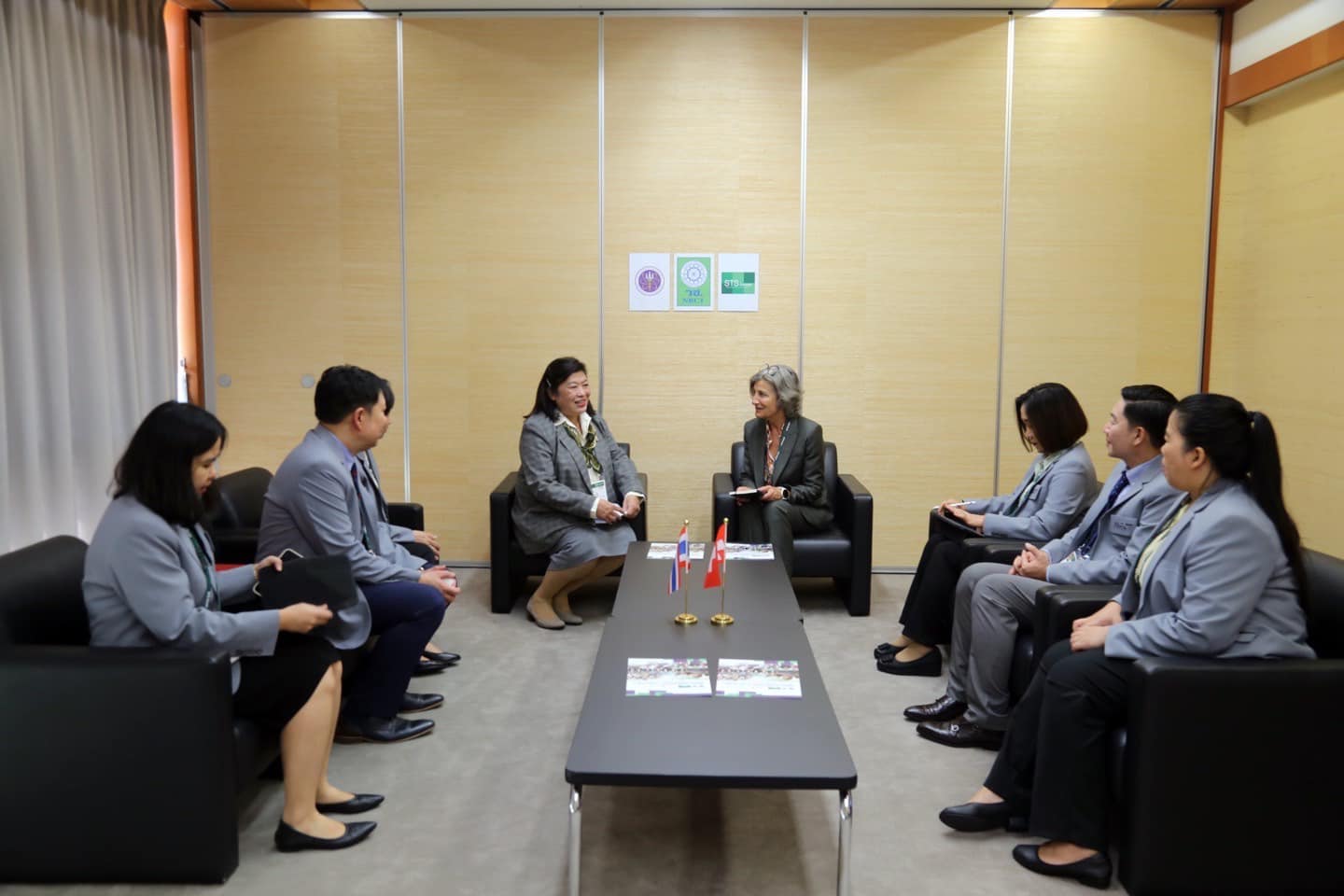
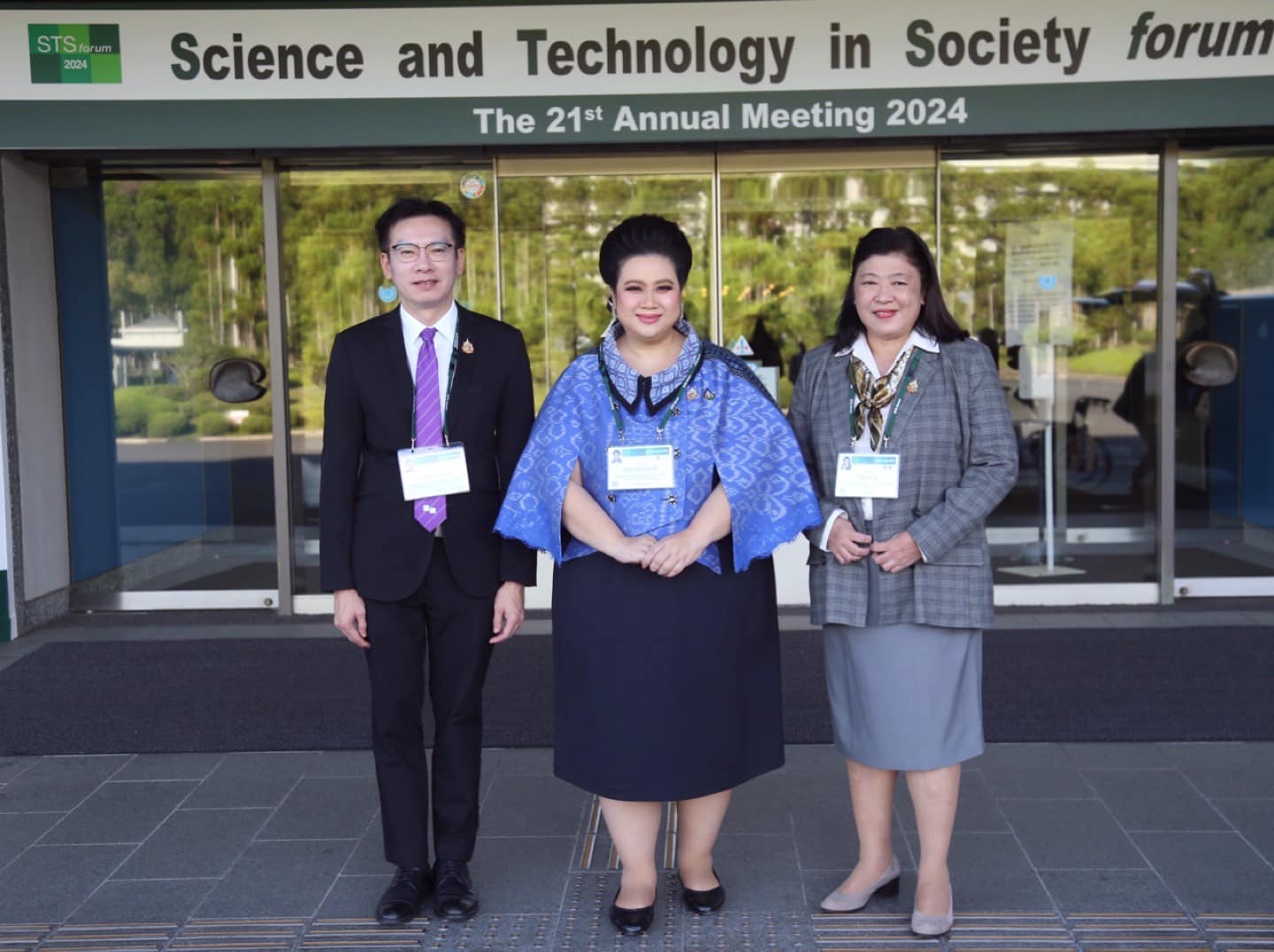
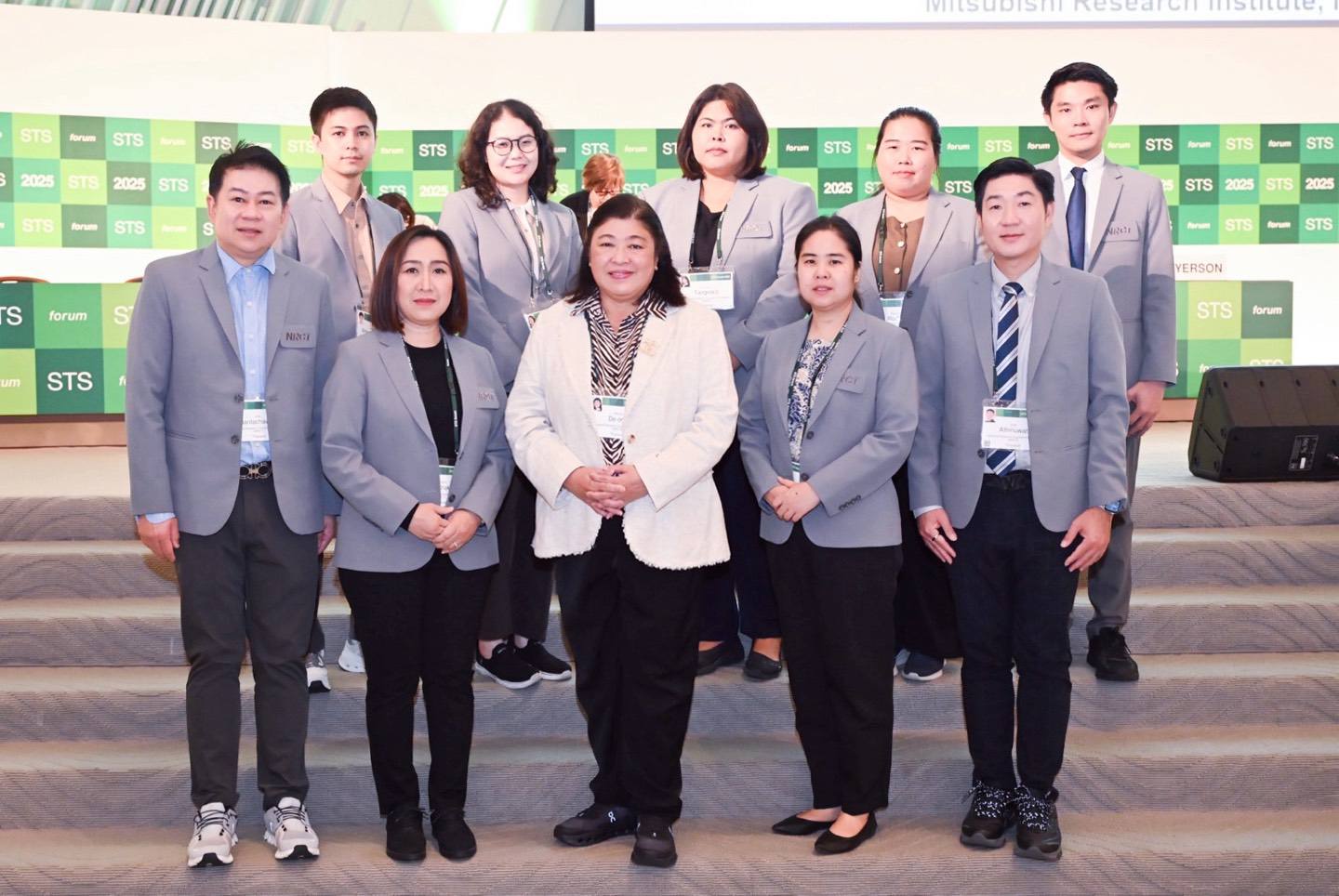
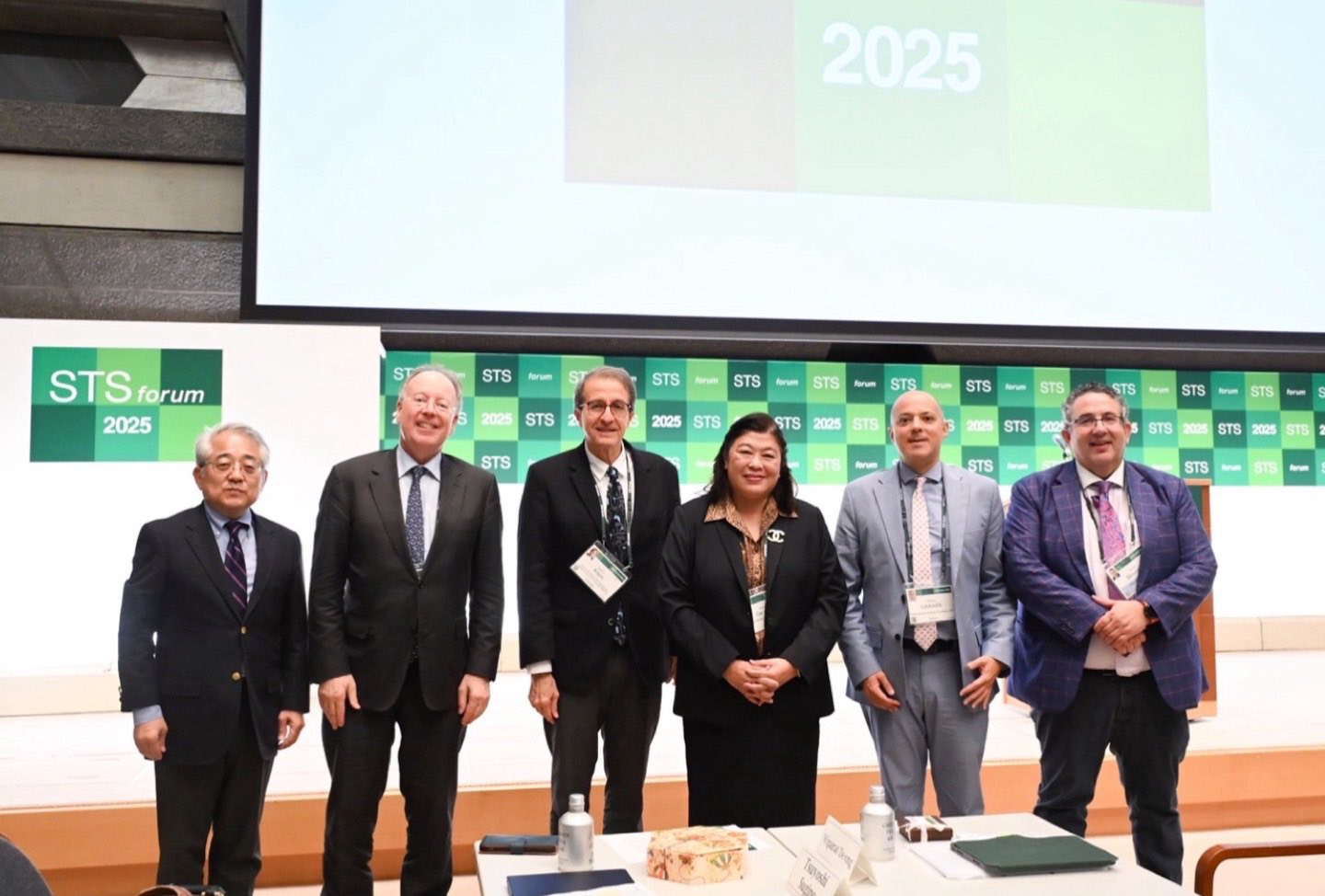
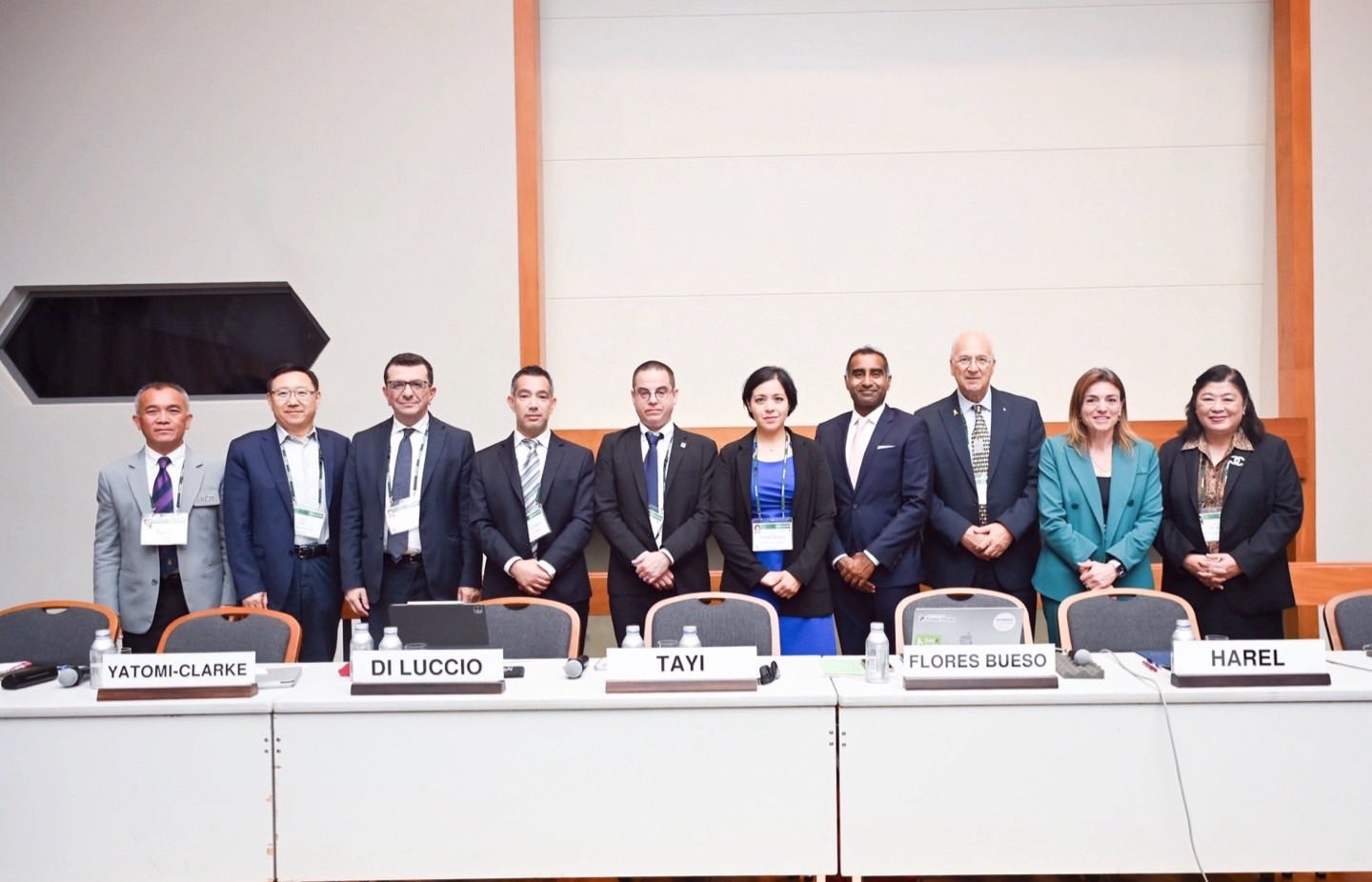
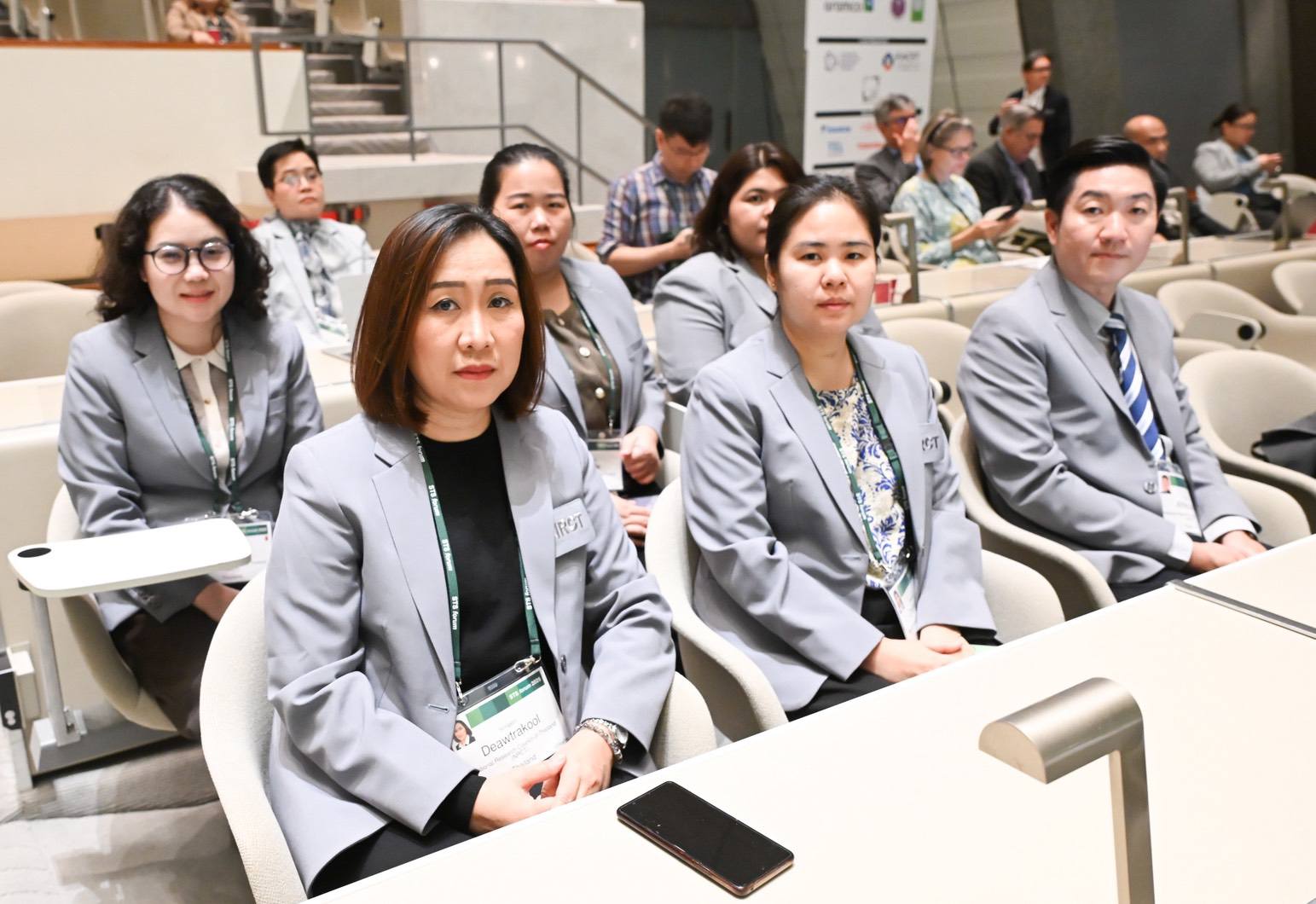
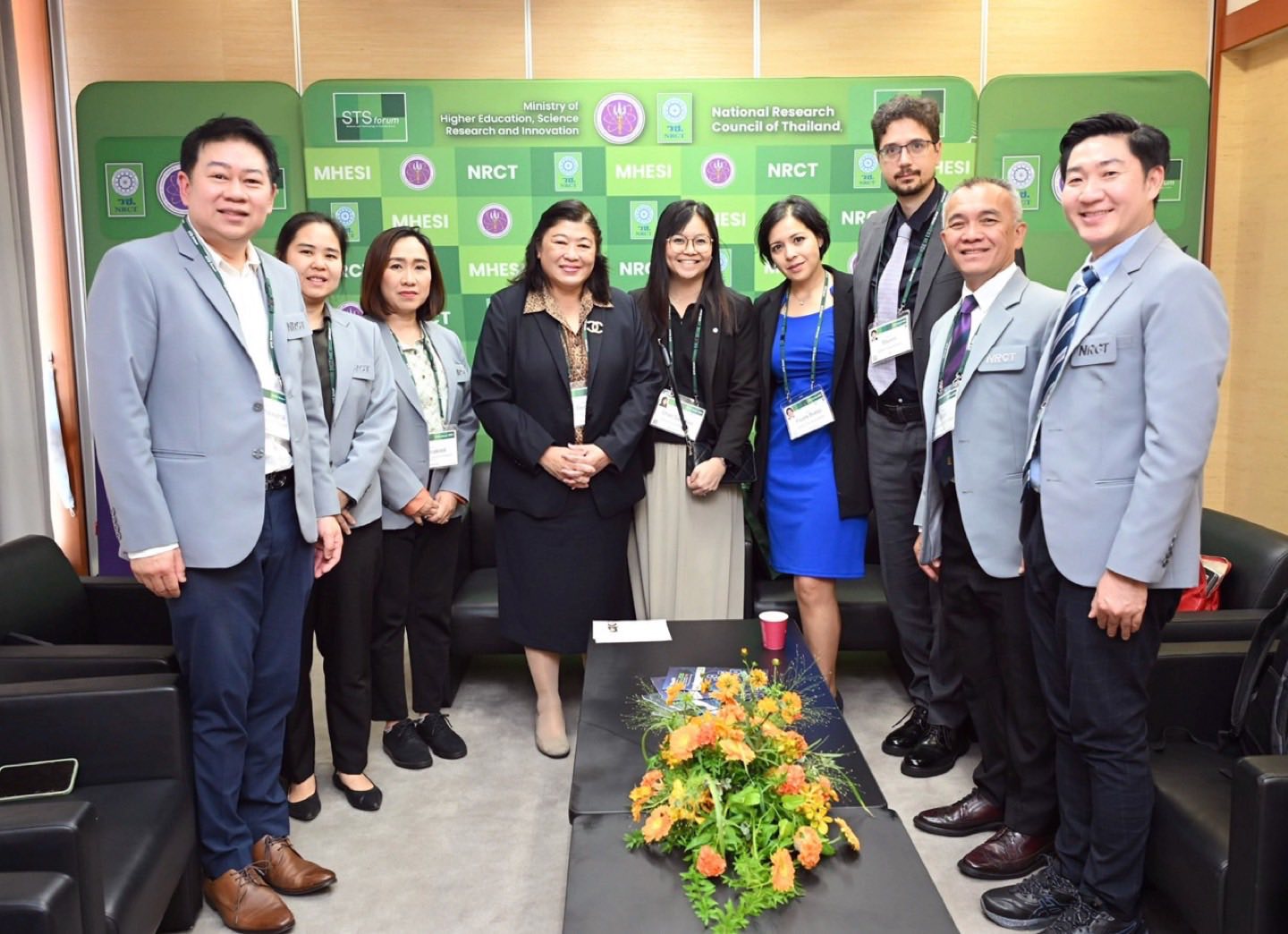
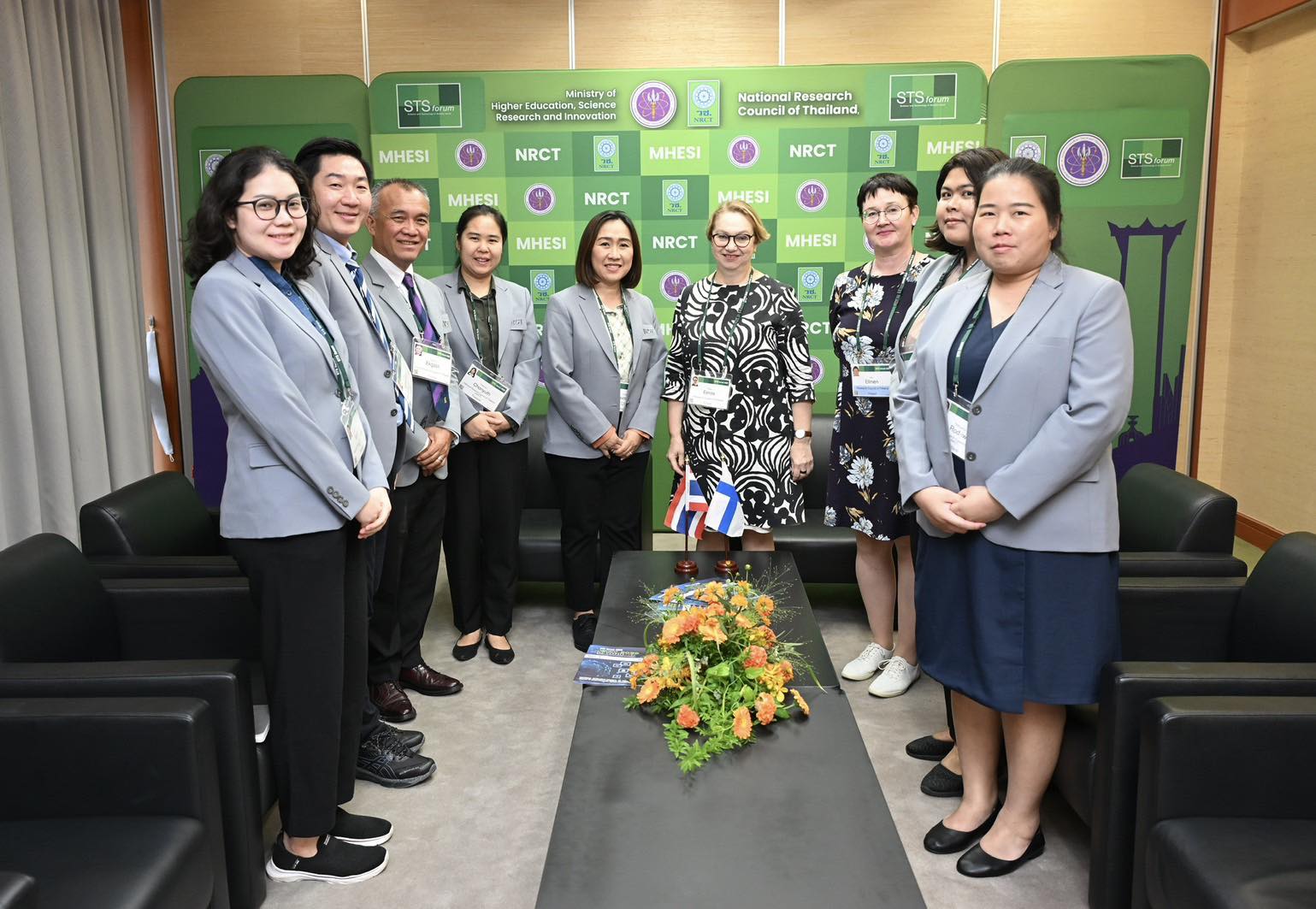
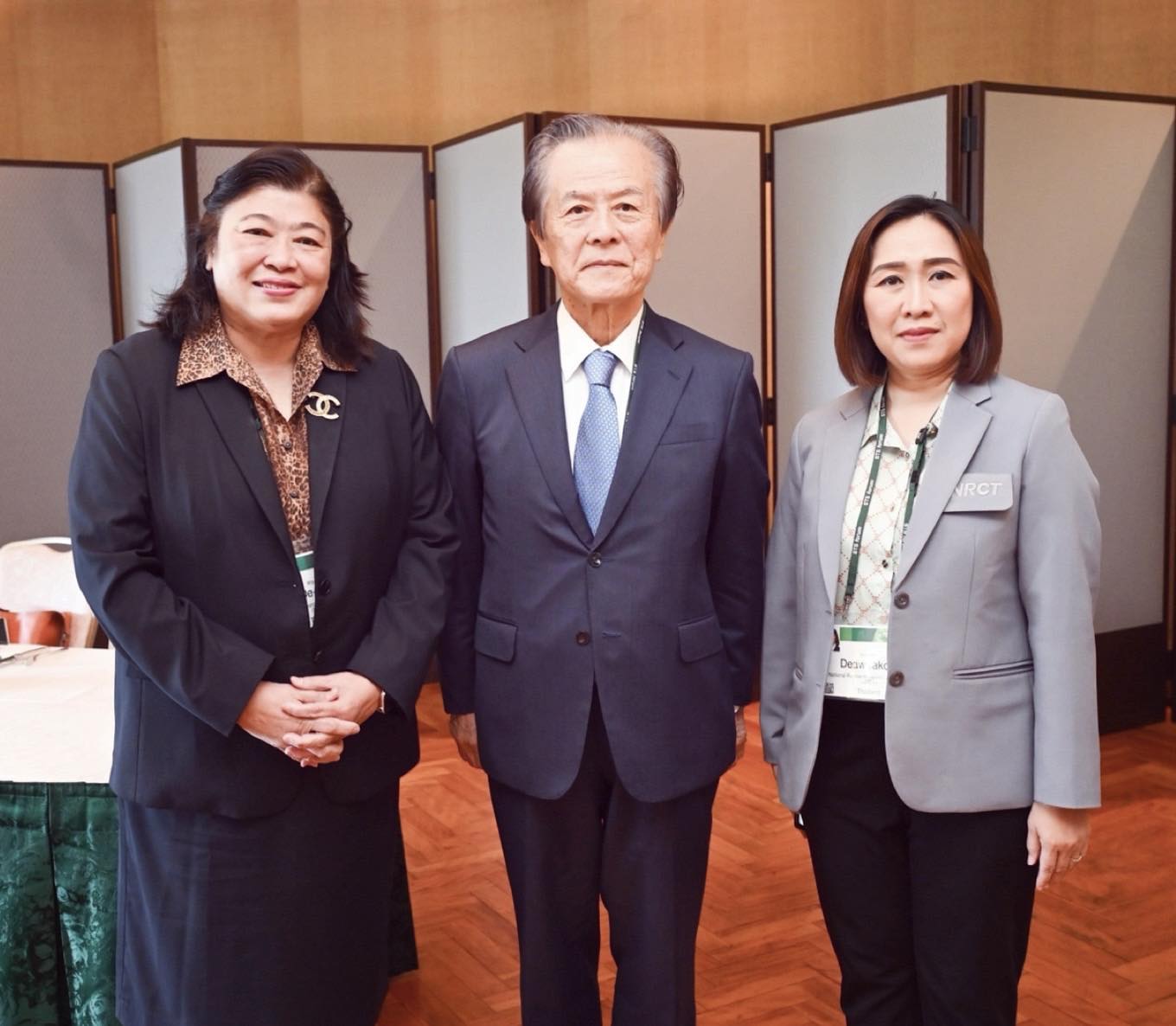
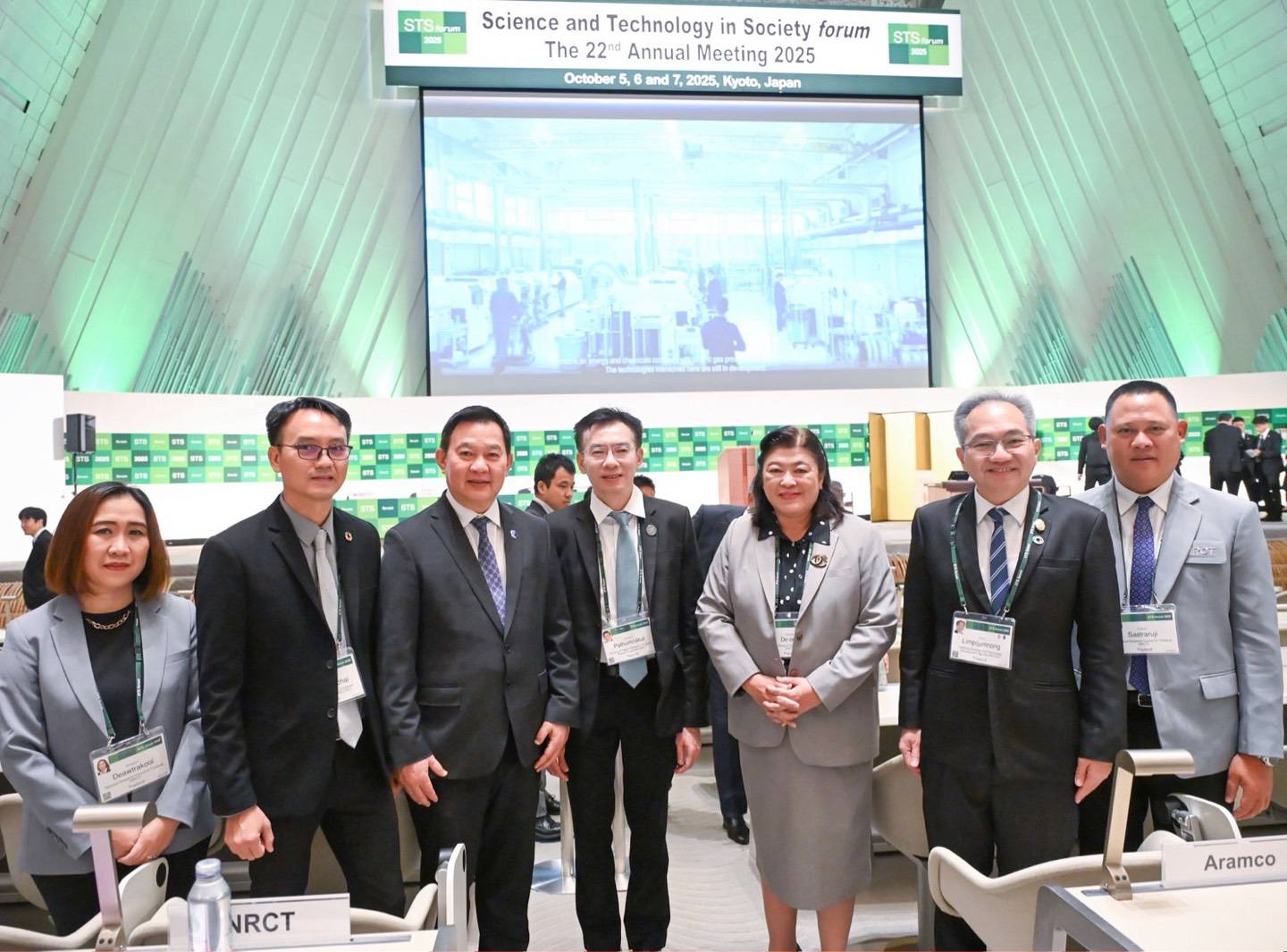
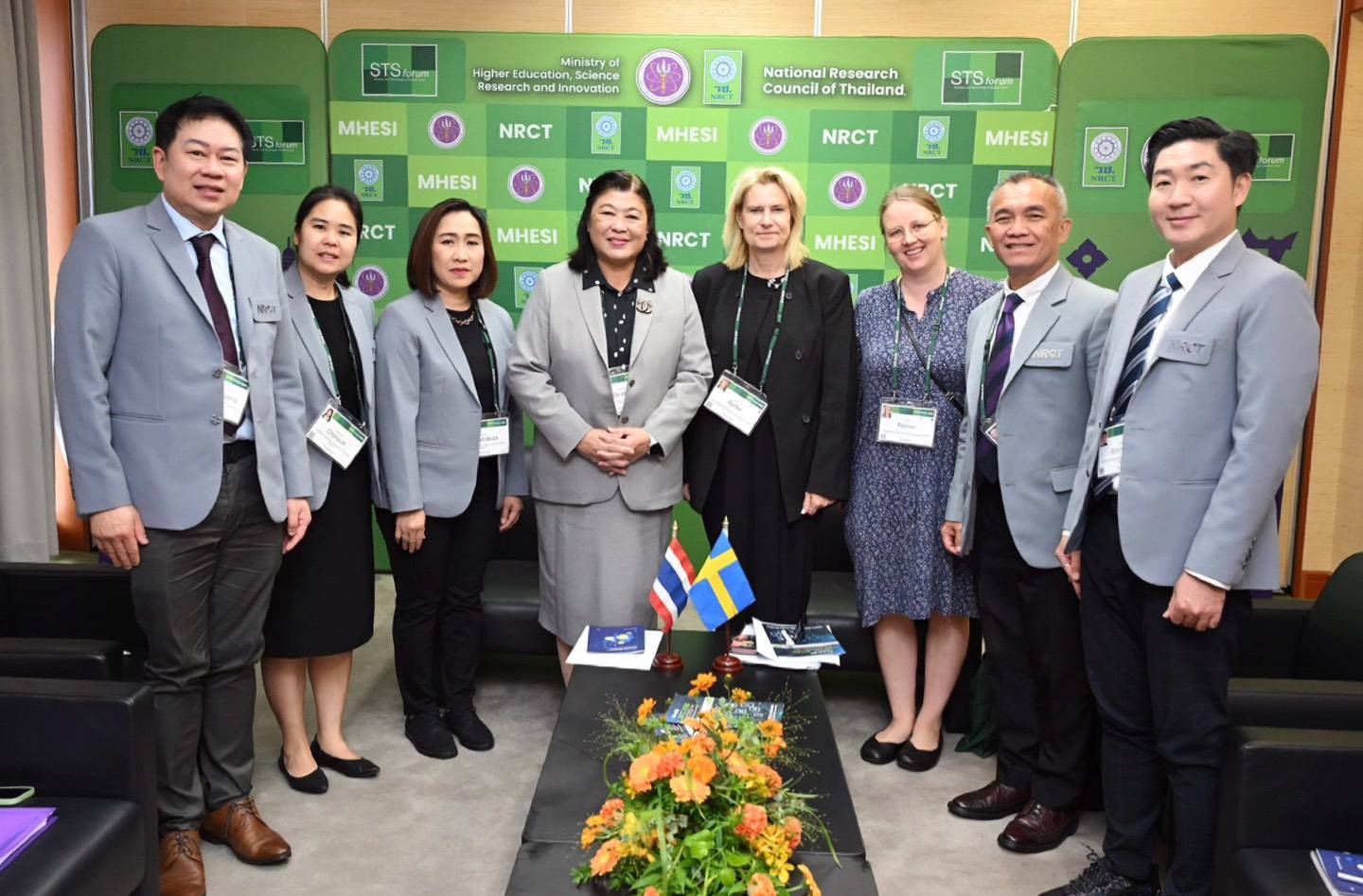
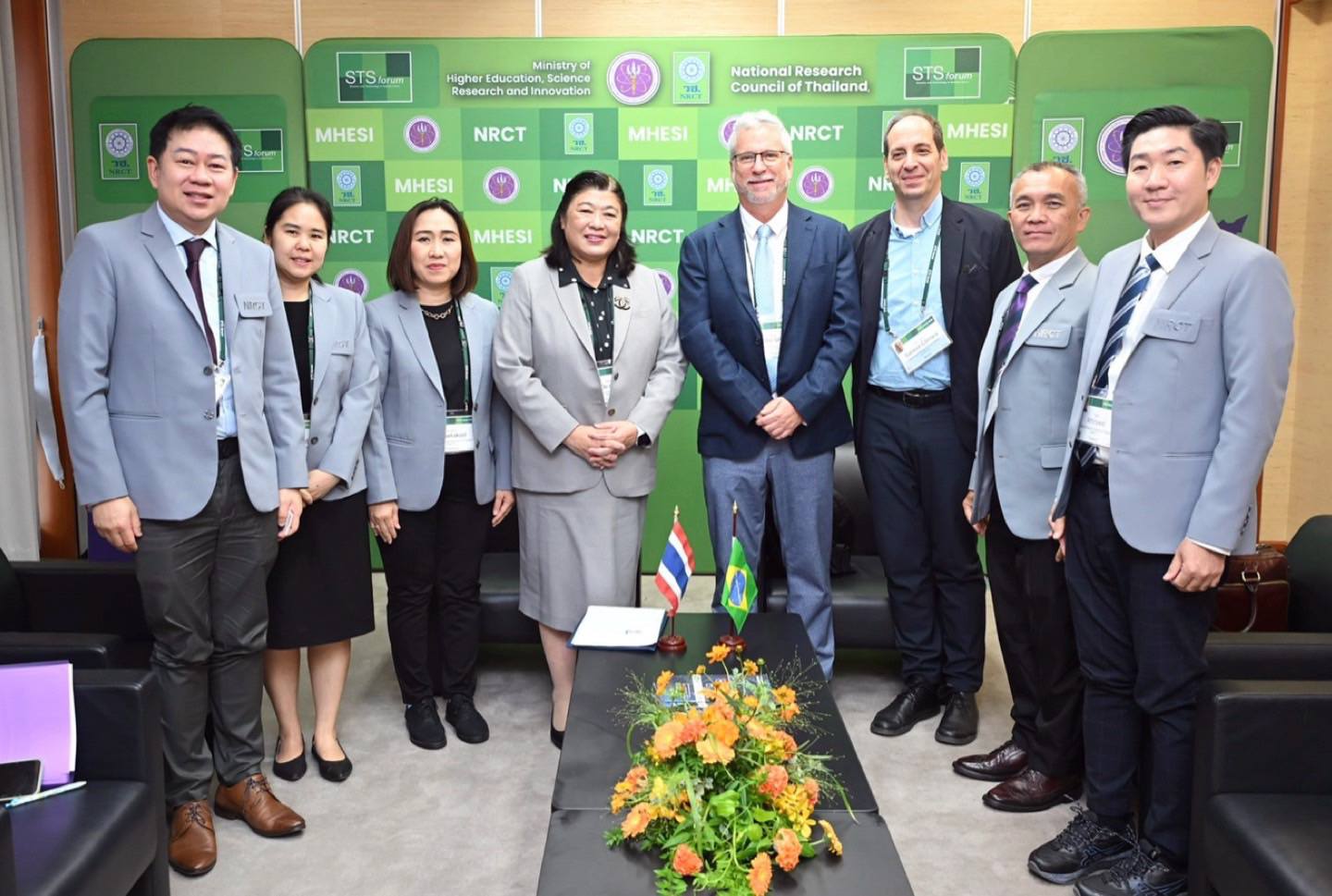
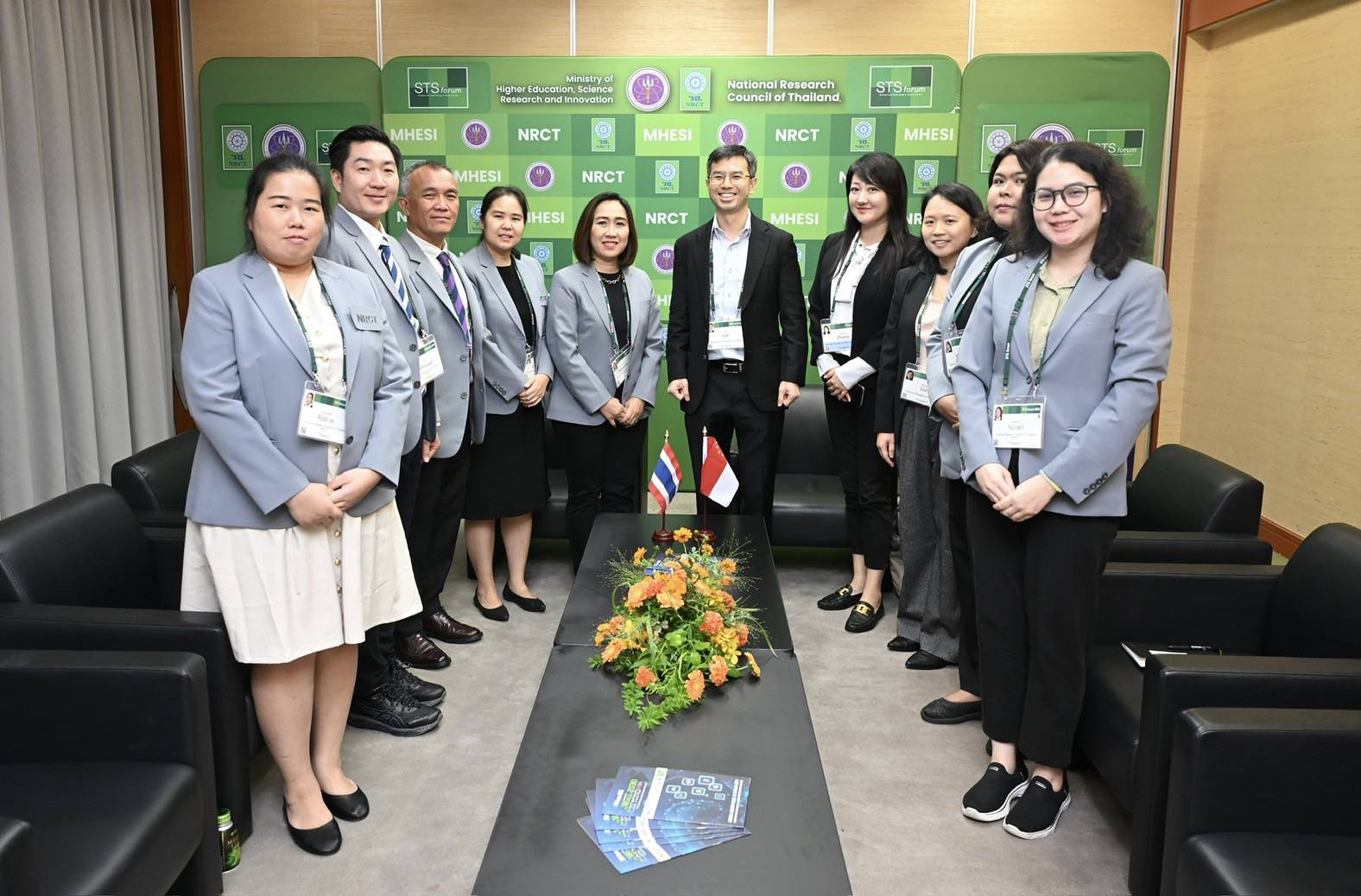
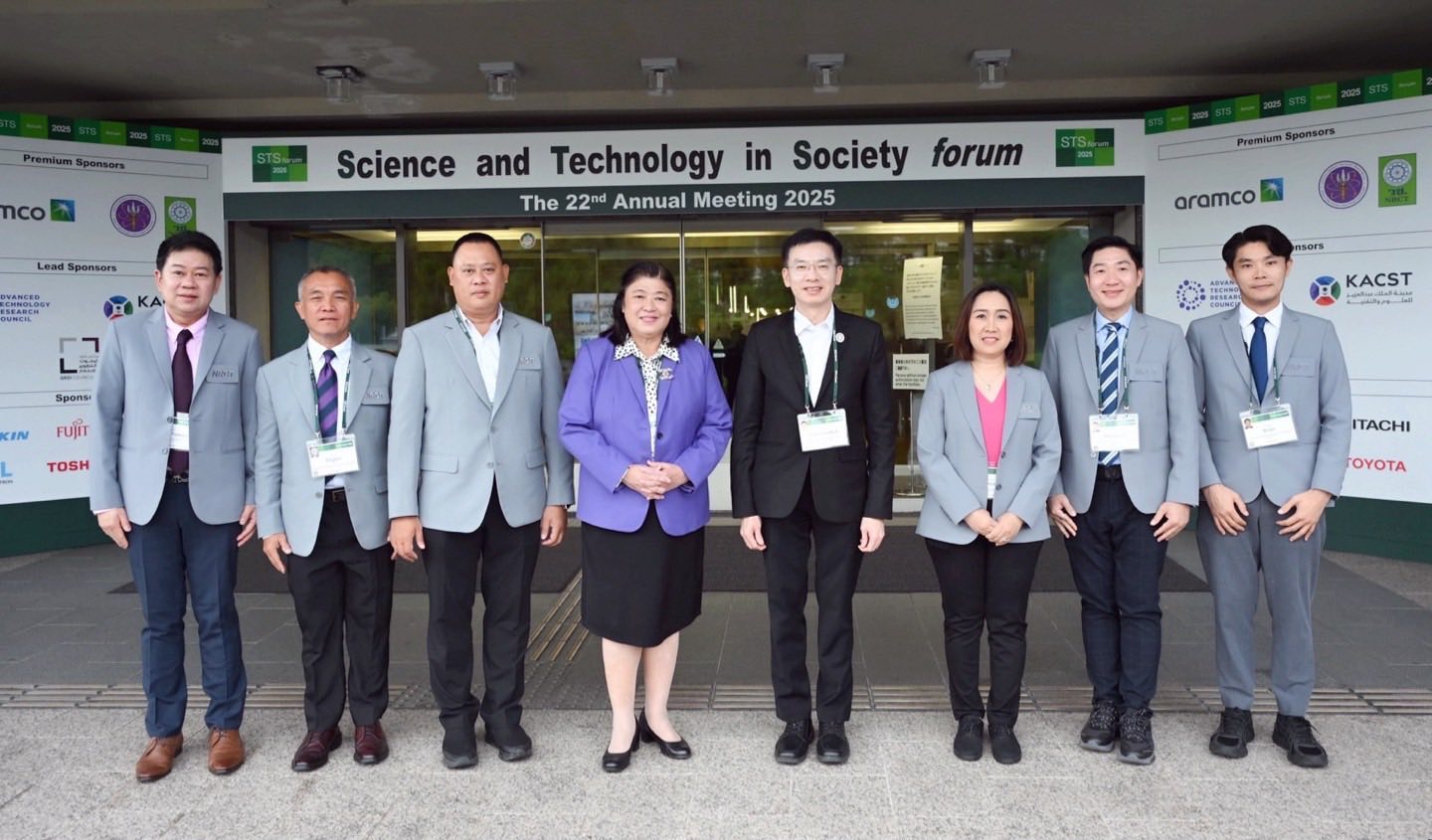
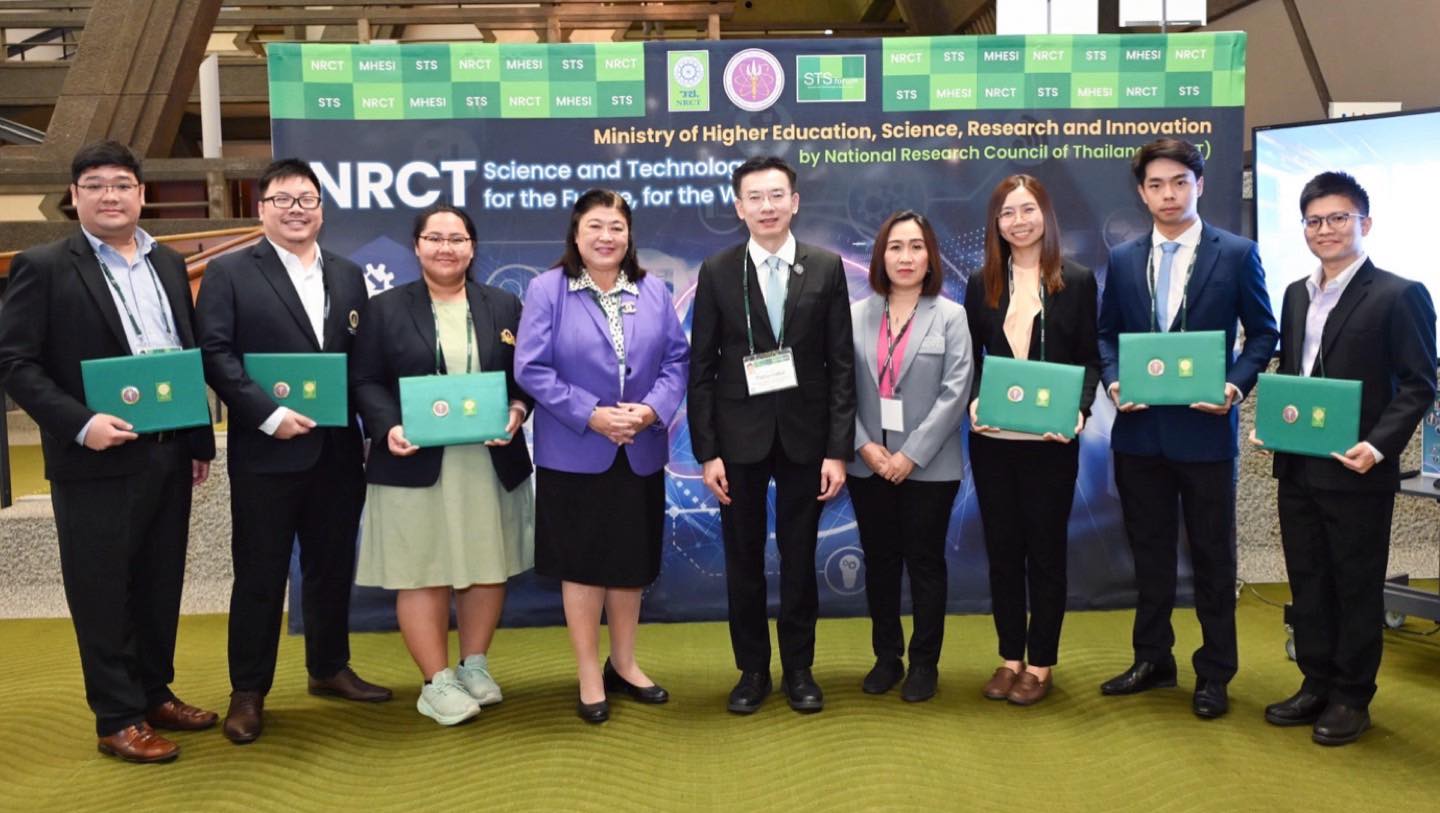
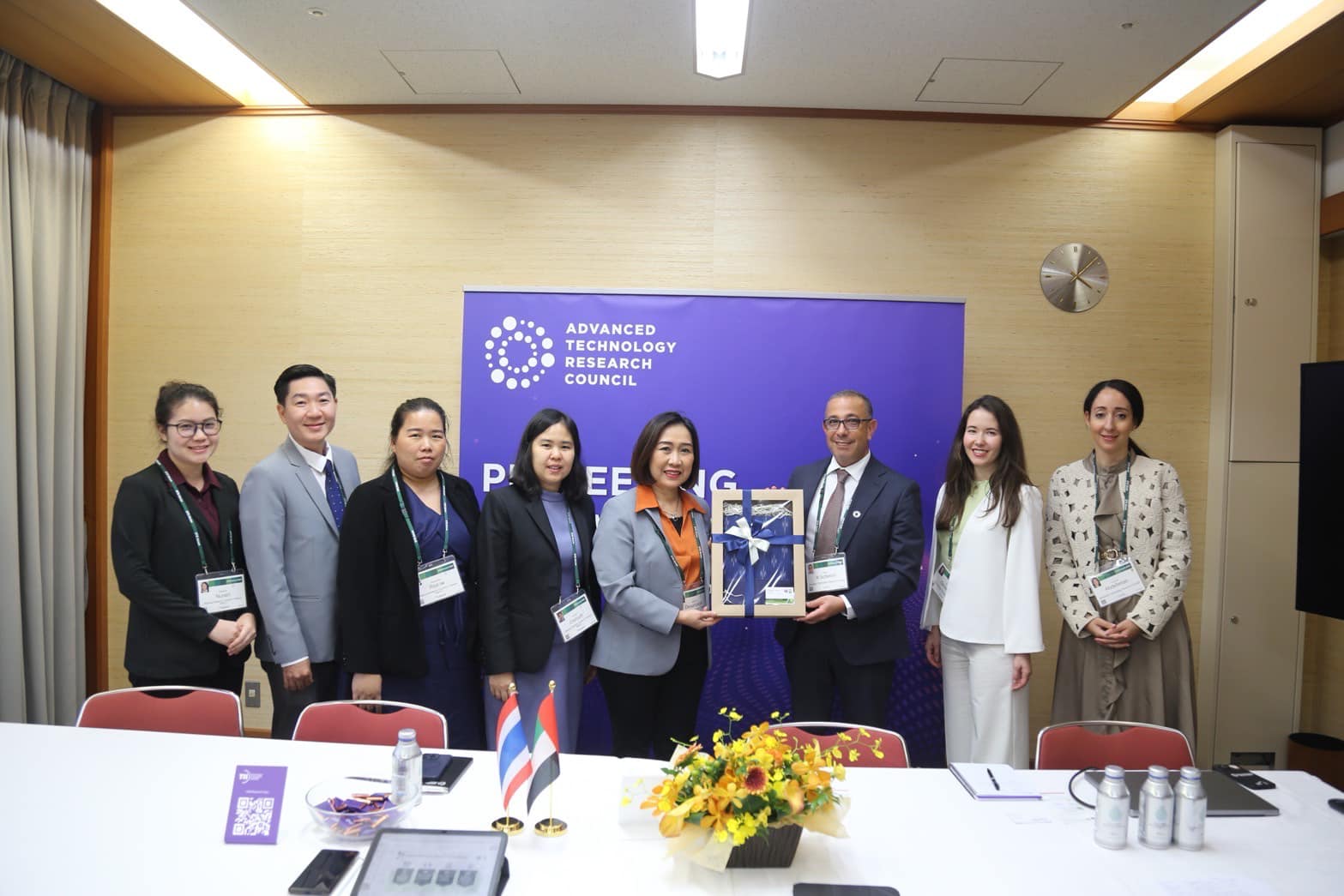
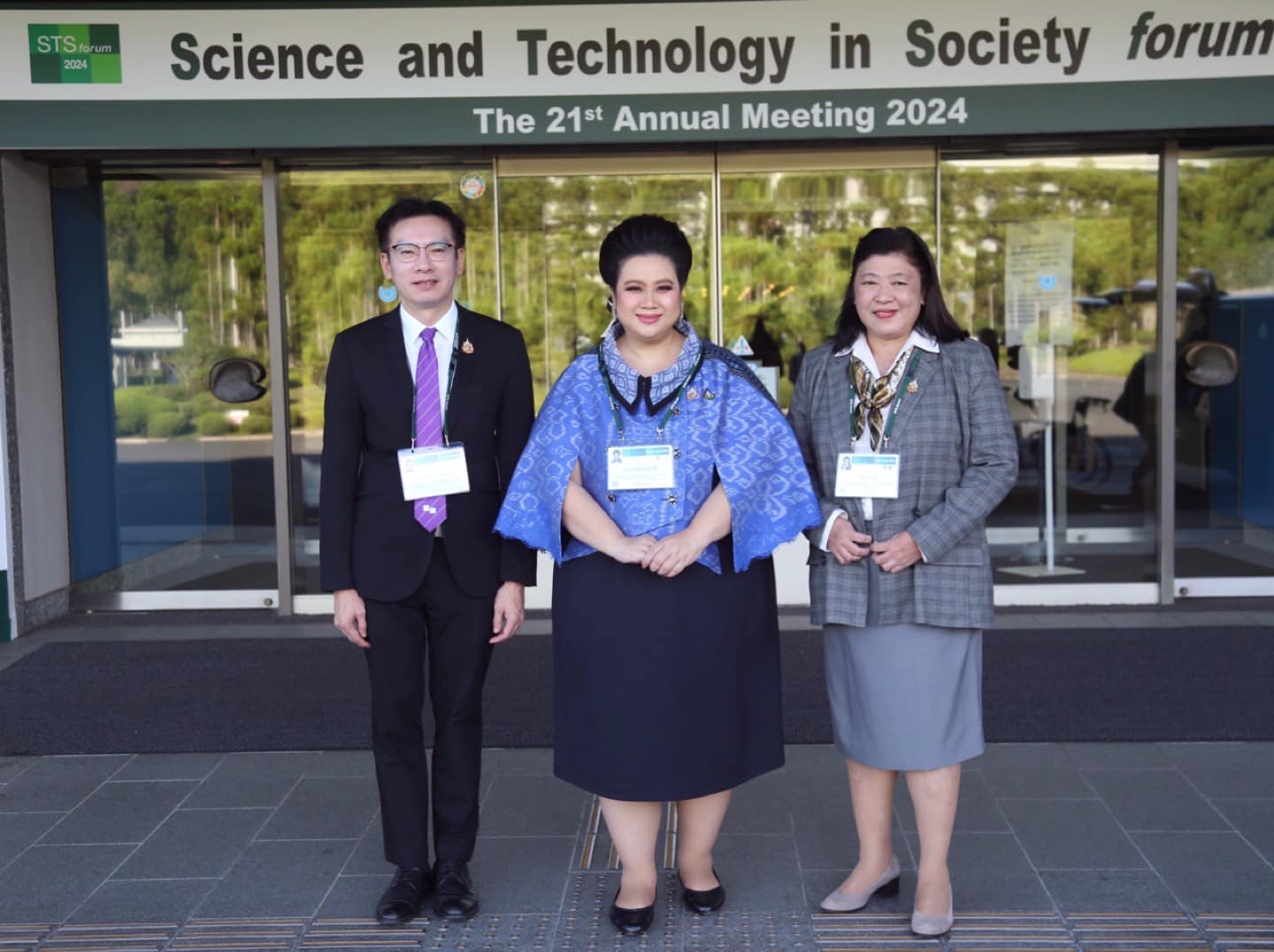
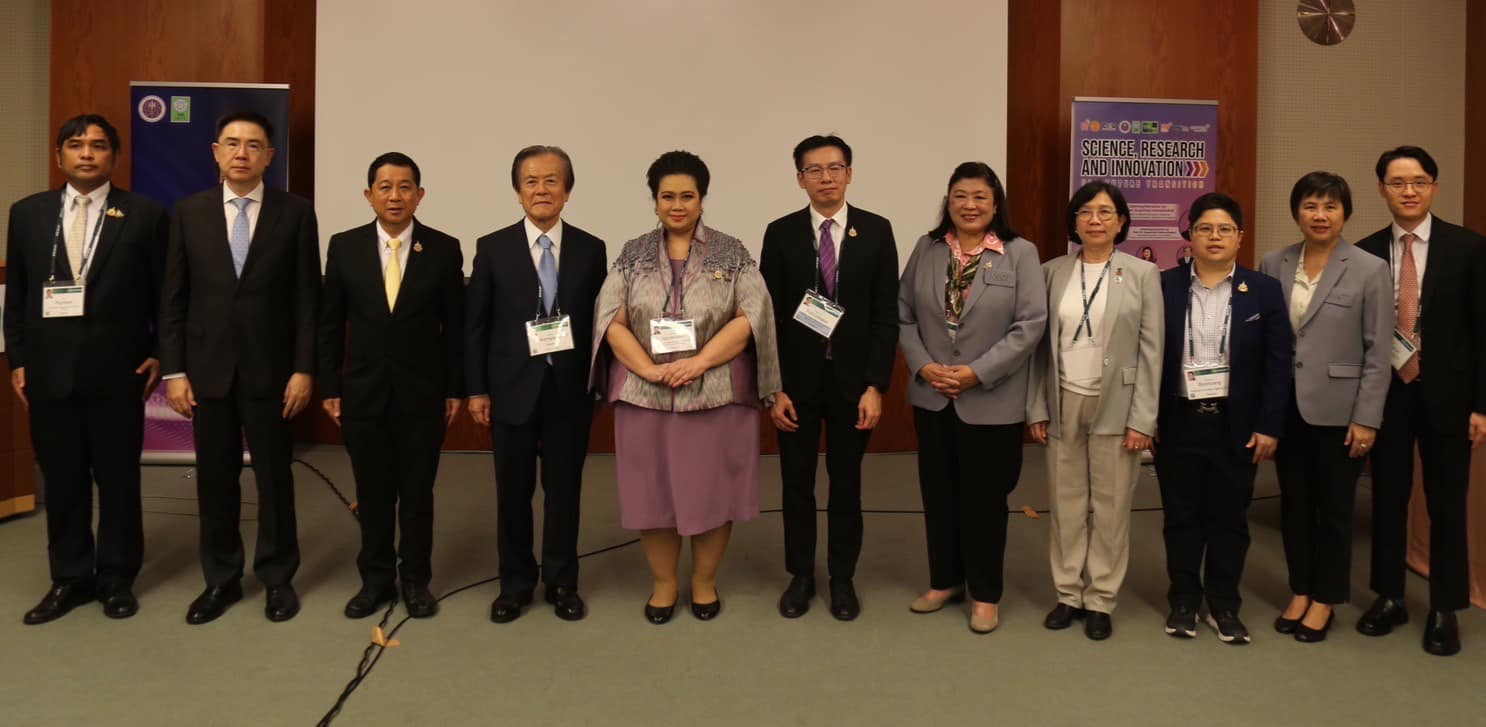
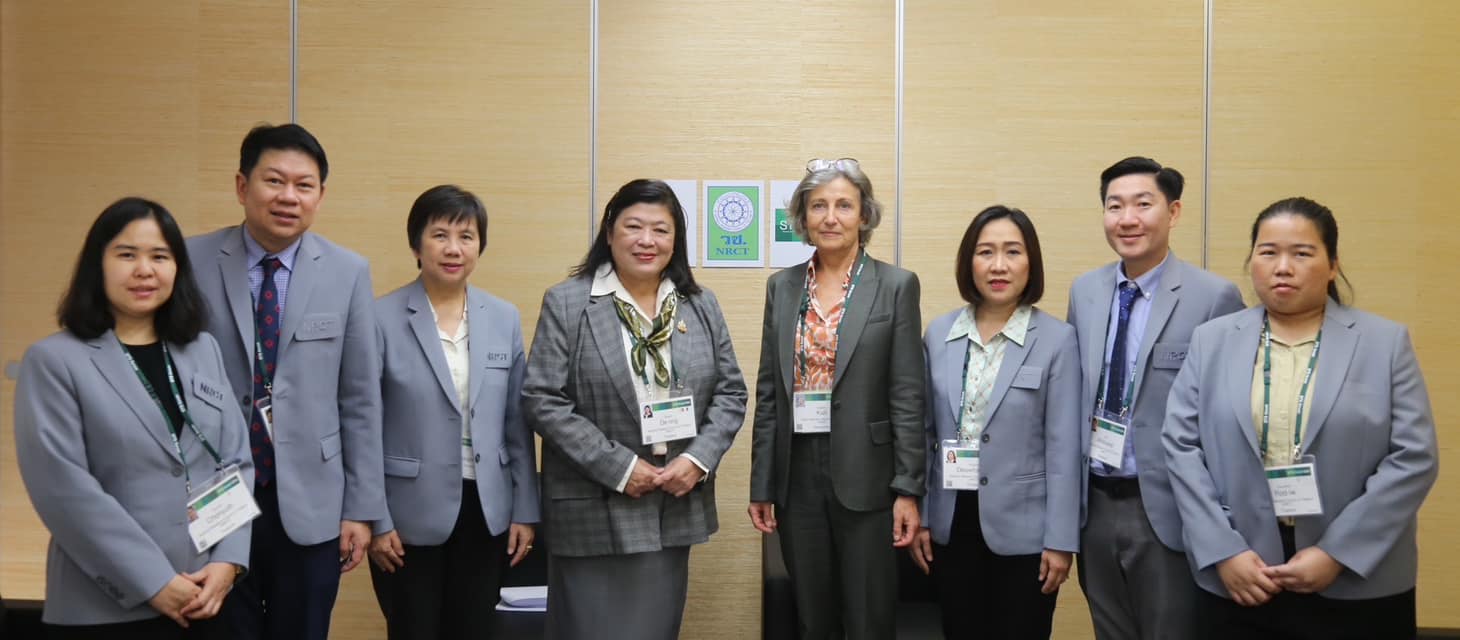
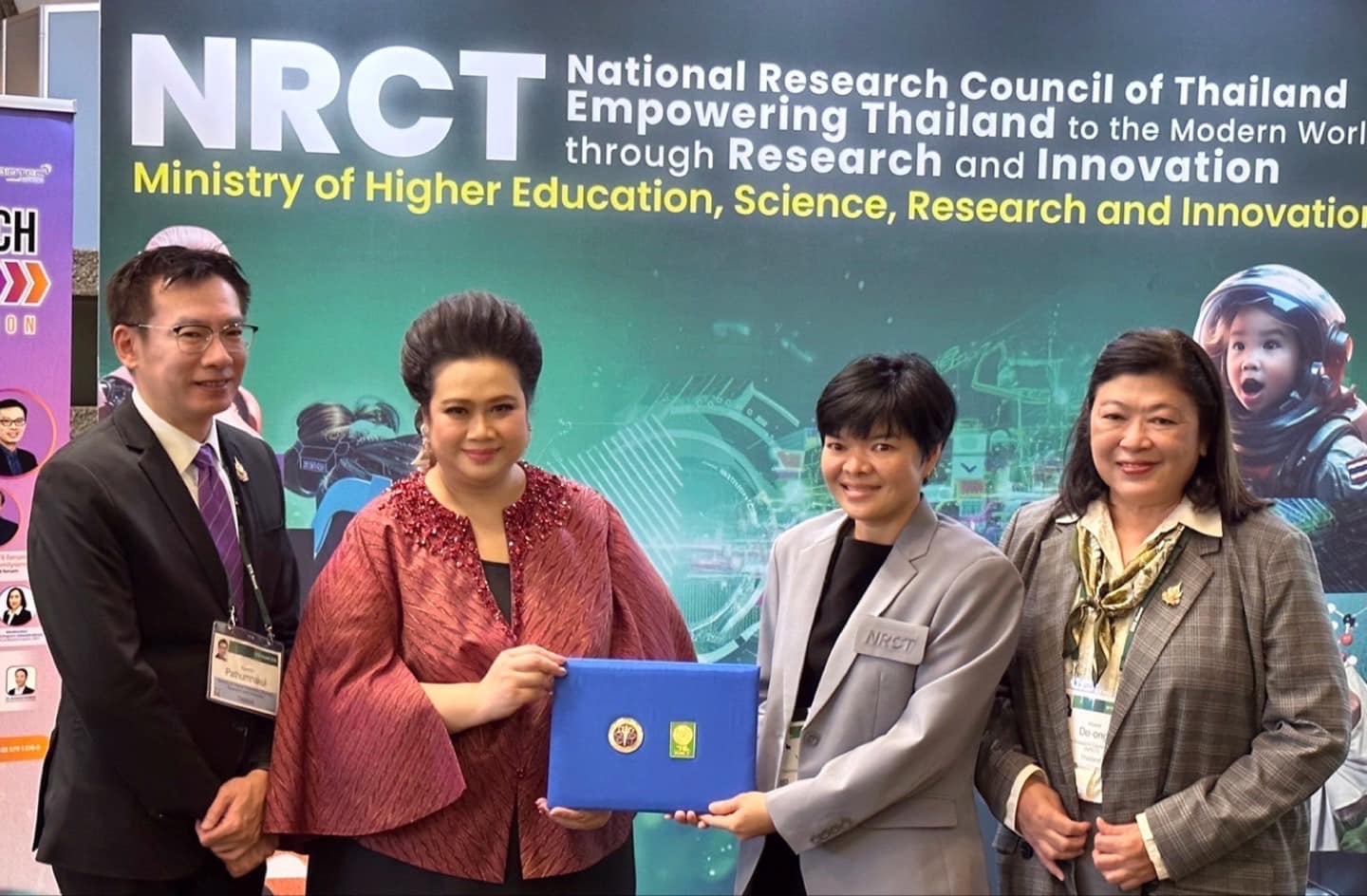
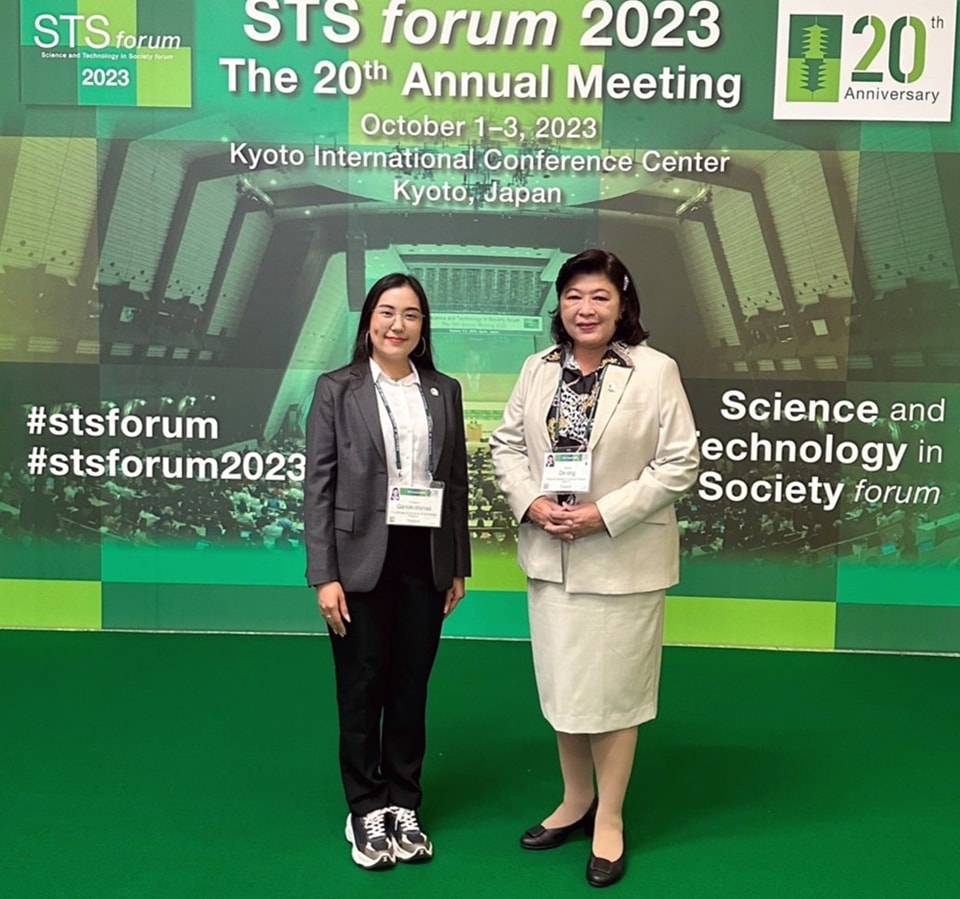
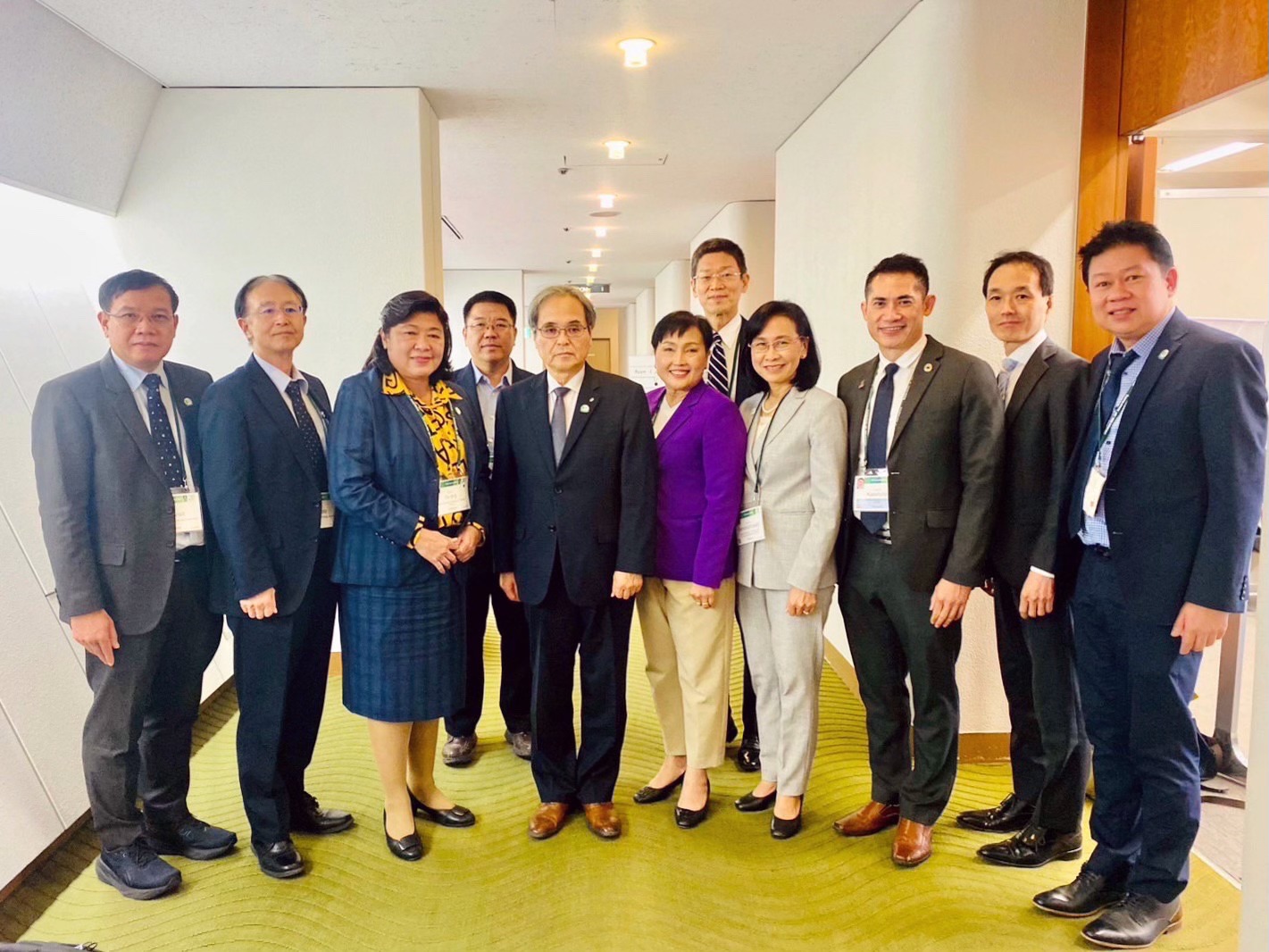
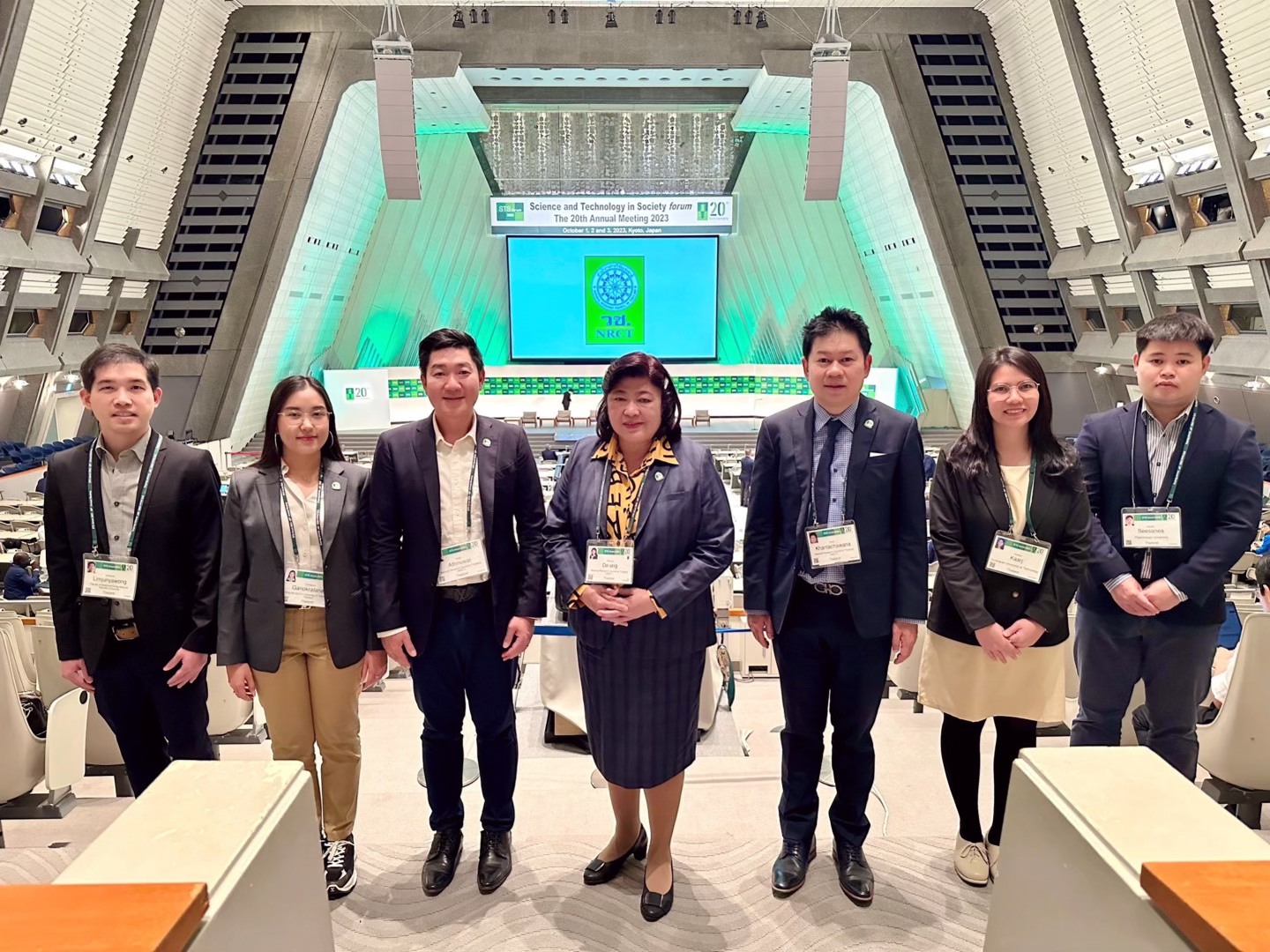
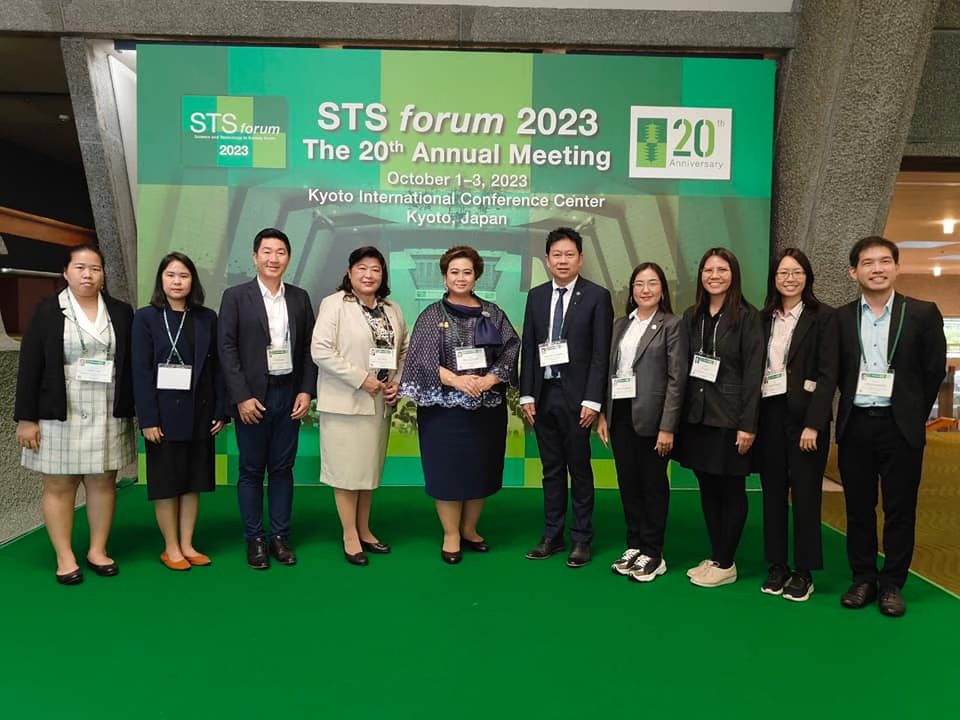
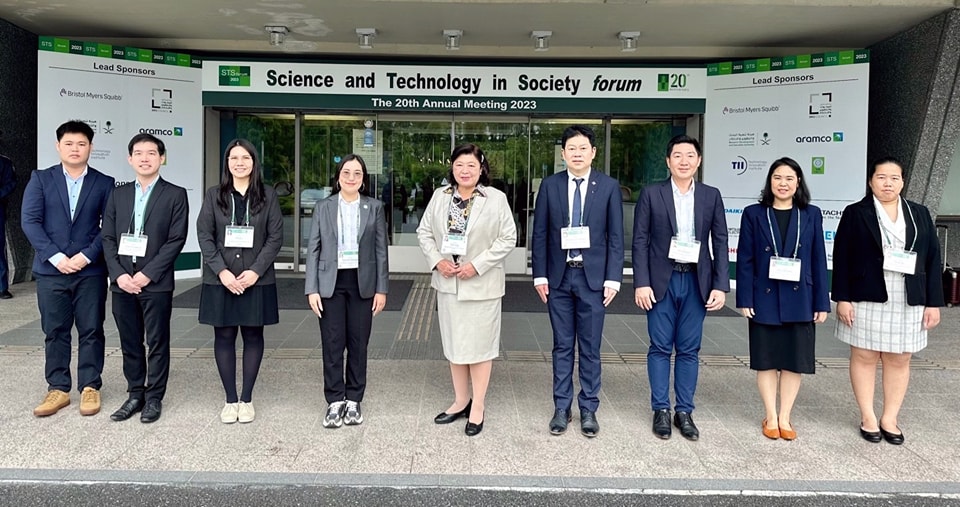
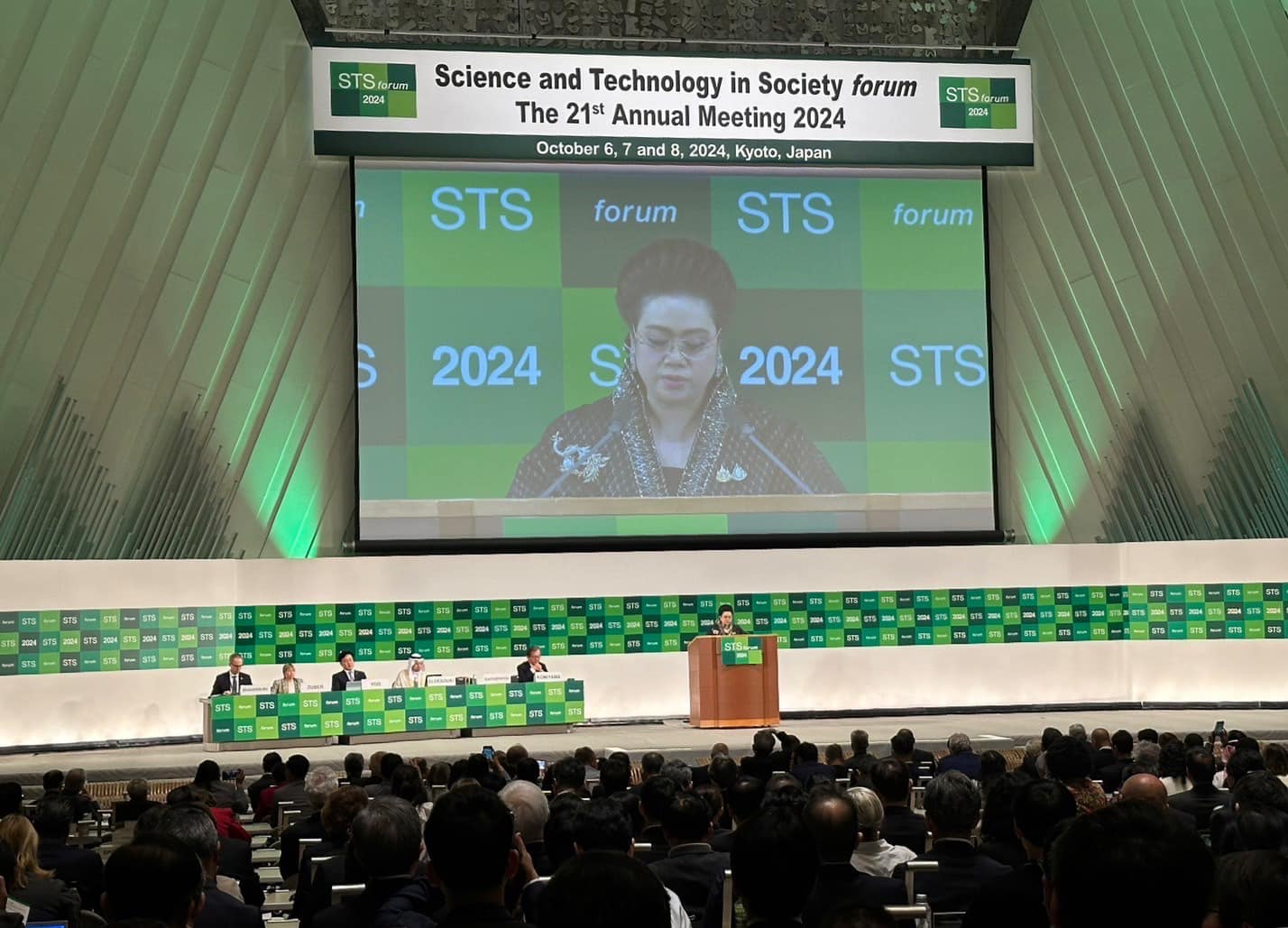
On 4 October 2026, Prof. Dr. Yodchanan Wongsawat, Deputy Prime Minister and Minister of Higher Education, Science, Research and Innovation (MHESI), together with Prof. Dr. Supachai Pathumnakul, Permanent Secretary of MHESI; Mr. Chattarin Chanhom, Secretary to the Minister of MHESI; Dr. Wiparat De-ong, Executive Director of the National Research Council of Thailand (NRCT); and other executives, met with Professor Dr. Atsushi Kumanogoh, President of The University of Osaka, along with Professor Mikako Hayashi, Executive Vice President, and university executives. The meeting was held on the occasion of their participation in the STS forum 2026 at the Kyoto International Conference Center (ICC Kyoto), Kyoto, Japan.
The meeting aimed to strengthen cooperation between Thailand and Japan in higher education, science, research, technology and innovation, with an emphasis on translating collaboration into concrete outcomes. Both sides exchanged views on expanding collaboration in areas of mutual interest, particularly science, biotechnology, and medicine. The discussion also explored opportunities to connect the expertise of The University of Osaka with leading Thai universities and research institutions, including Mahidol University, Chulalongkorn University, and Kasetsart University, to expand research networks and develop joint research projects addressing shared challenges and priorities.
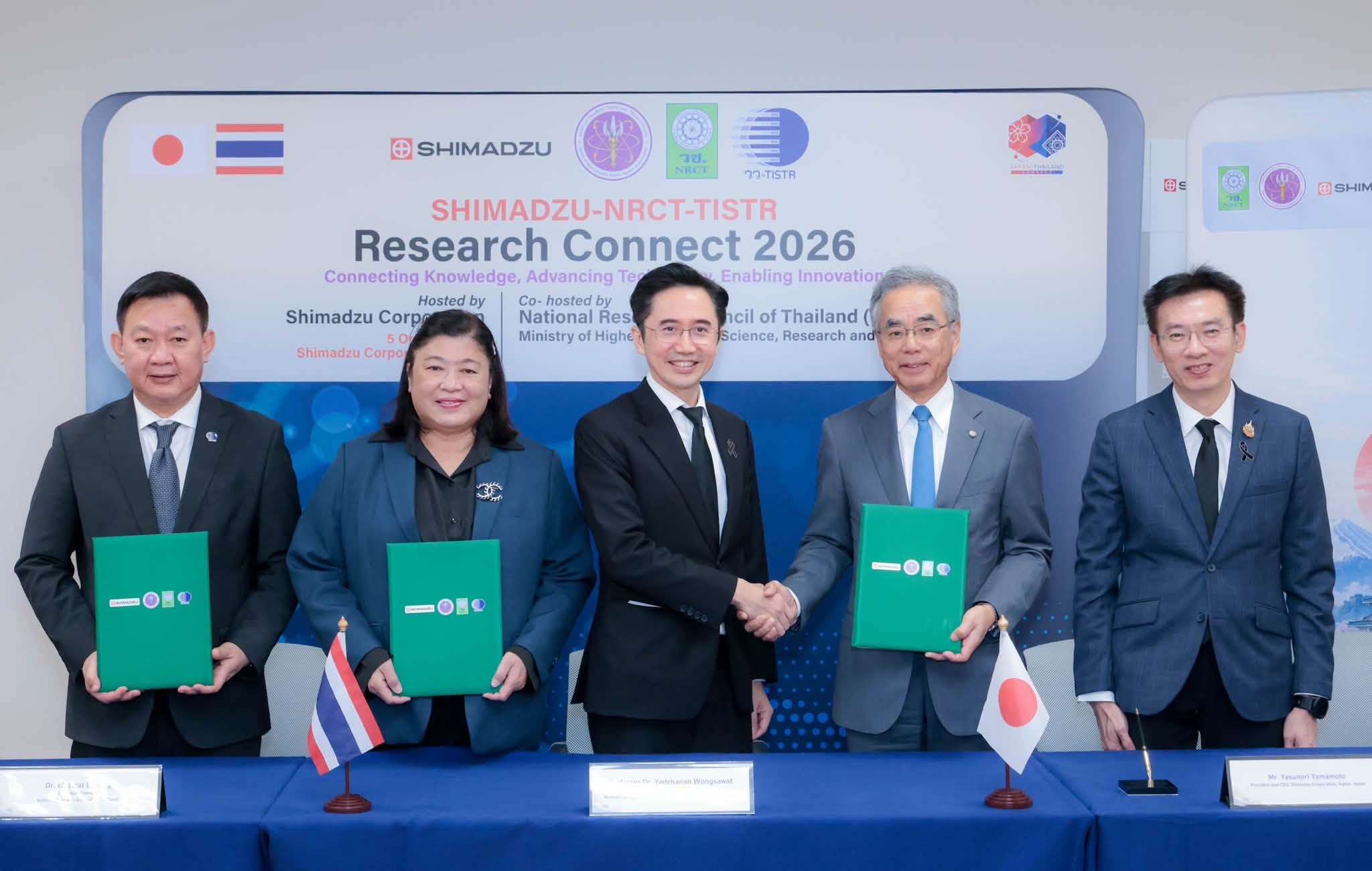
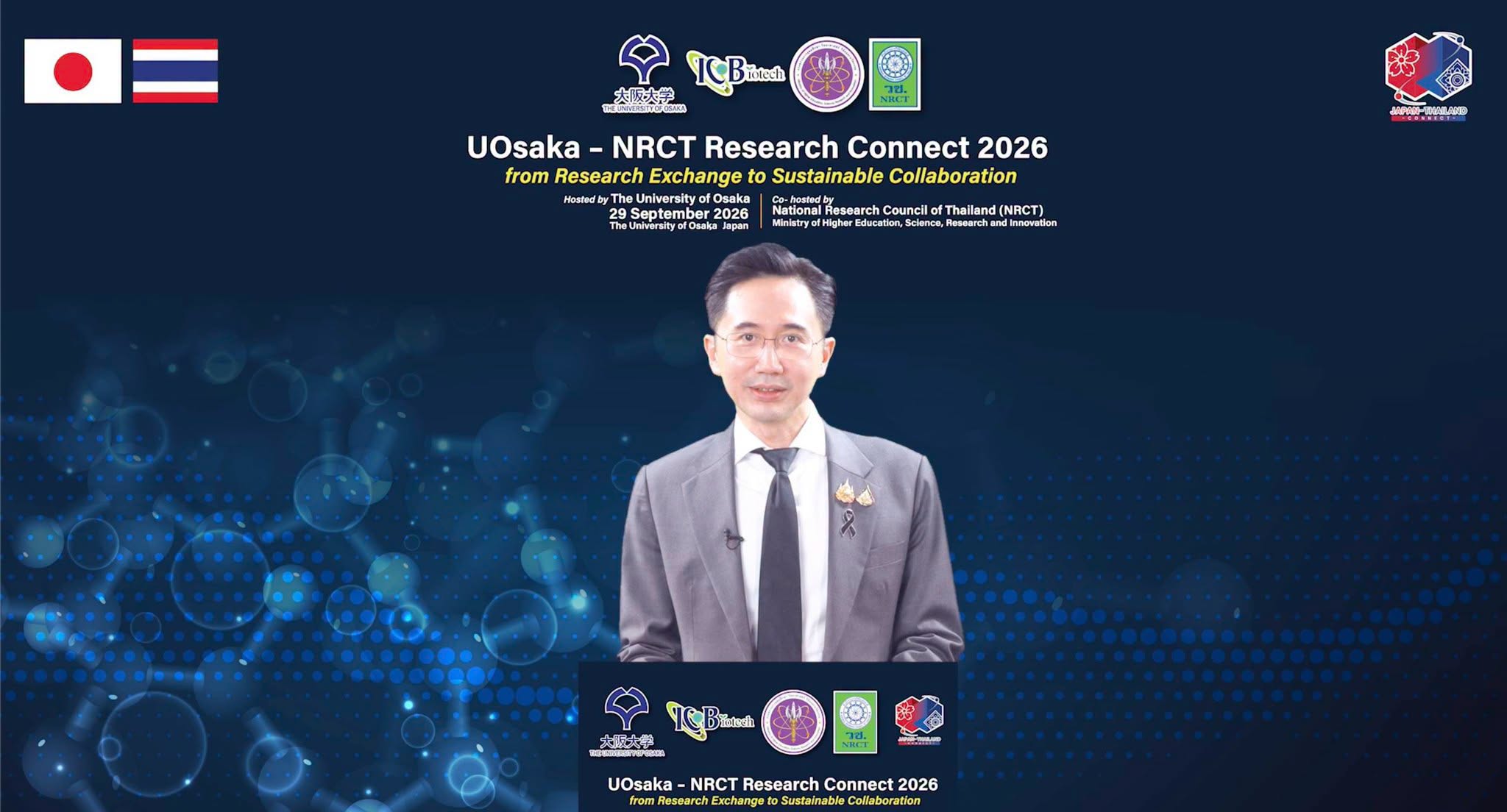
Both sides also highlighted the successful organization of UOsaka–NRCT Research Connect 2026, held on 29 September 2026. The event served as an important platform for connecting Thai and Japanese researchers and students, enabling them to exchange knowledge, research findings, and experiences while creating opportunities to build networks and develop long-term research collaboration.
Looking ahead, both sides identified two strategic priority areas: semiconductors and regenerative biomedicine, recognizing their importance for future economic development and quality of life. The discussion focused on moving beyond knowledge exchange toward concrete joint activities, including collaborative research projects, researcher and expert exchanges, mobility of highly skilled personnel, human resource development, research funding mechanisms, and partnerships with industry. These efforts aim to accelerate the translation of scientific knowledge and technologies from laboratories into practical applications that generate economic and social benefits.
The meeting marked another important step in advancing Thailand–Japan research and innovation relations, moving from networking and knowledge exchange toward strategic collaboration focused on delivering tangible results. MHESI and NRCT remain committed to connecting universities, research institutions, researchers, and industries in both countries to strengthen the research and innovation ecosystem. Through cooperation in emerging technologies, both organizations aim to promote the practical application of research outcomes, enhance national competitiveness, and support sustainable development.