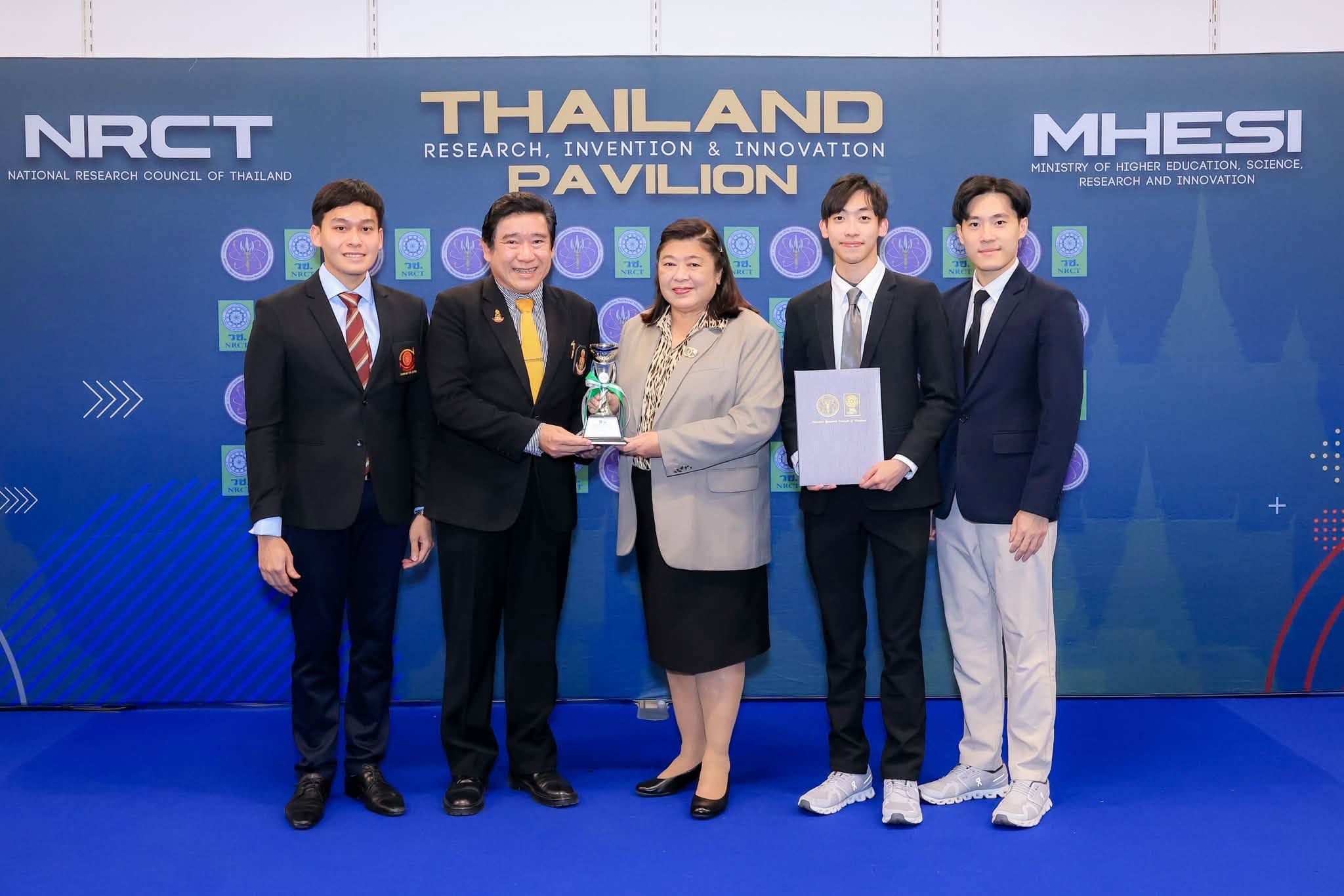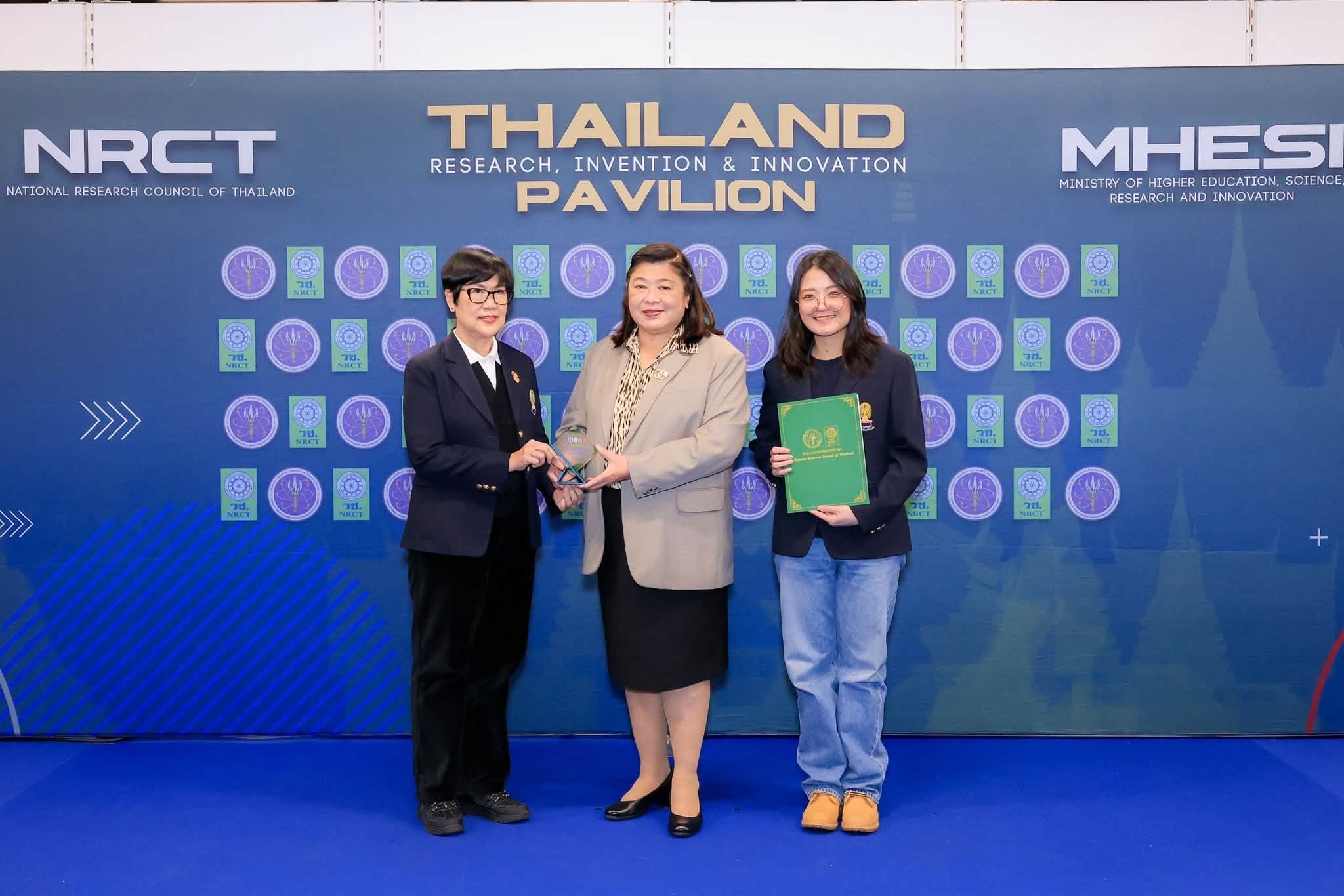
Yodchanan Visits Research and Innovation Exhibition on Biochar Technology for Soil Improvement and Reducing Agricultural Burning and PM2.5 Pollution
16 November 2026


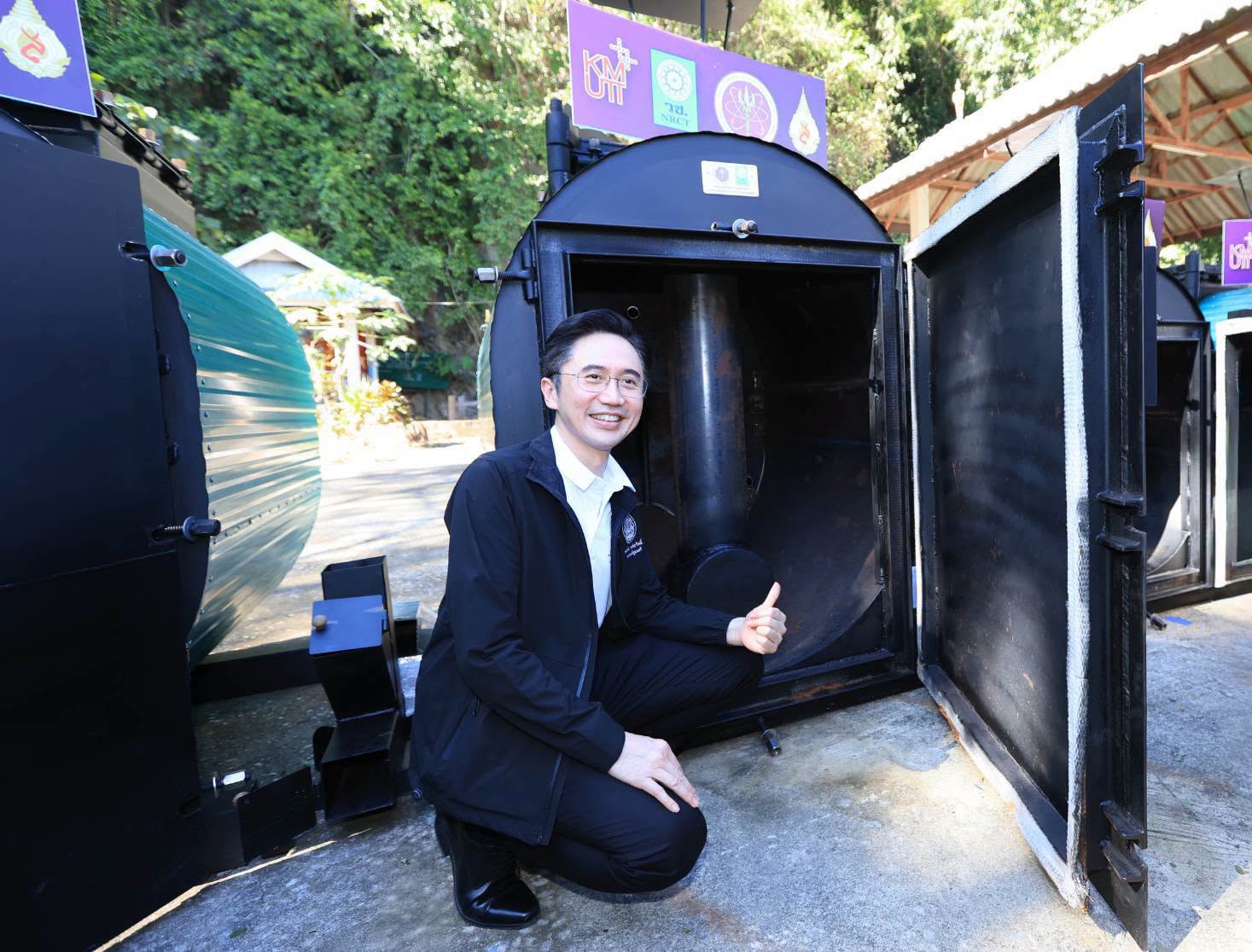
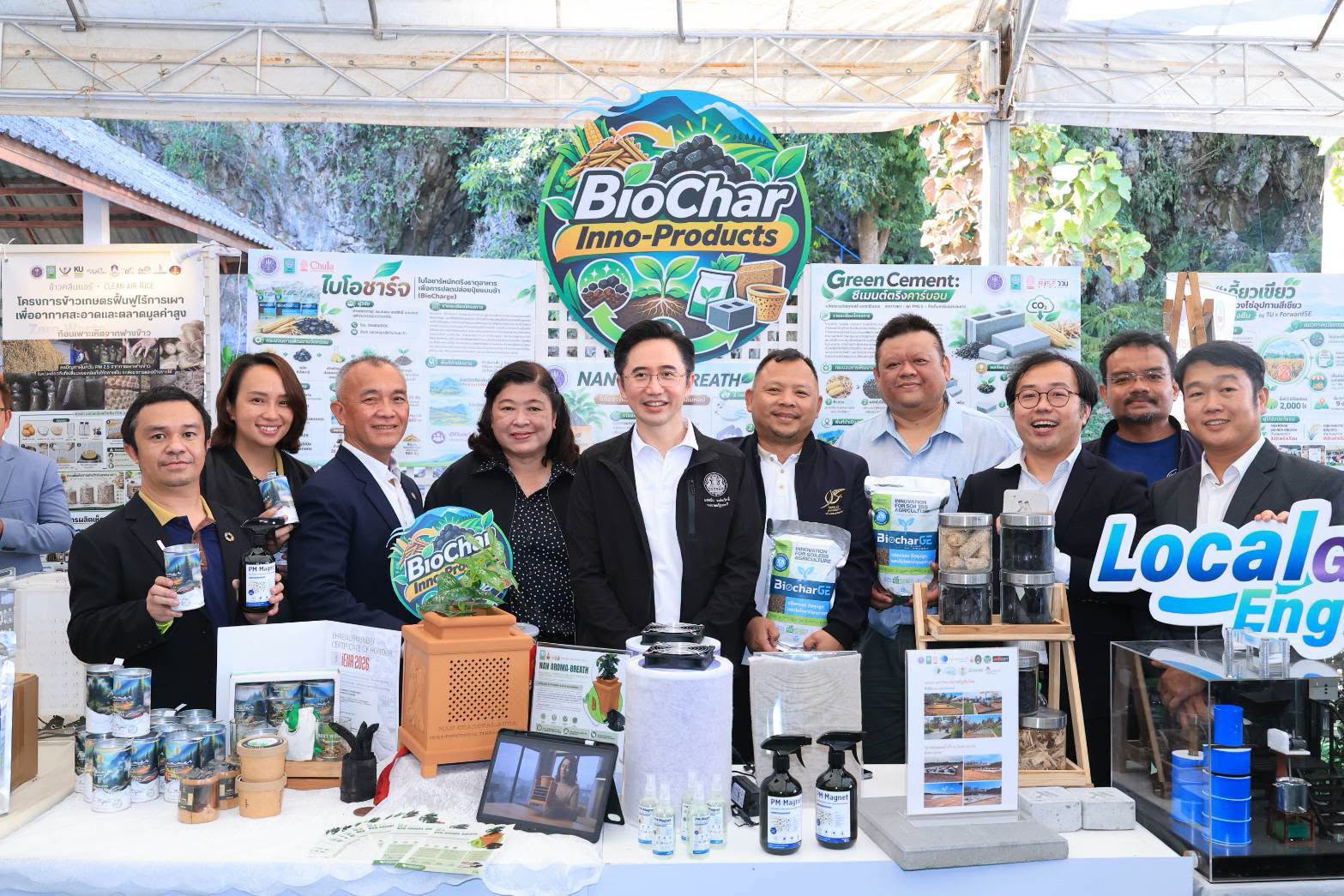
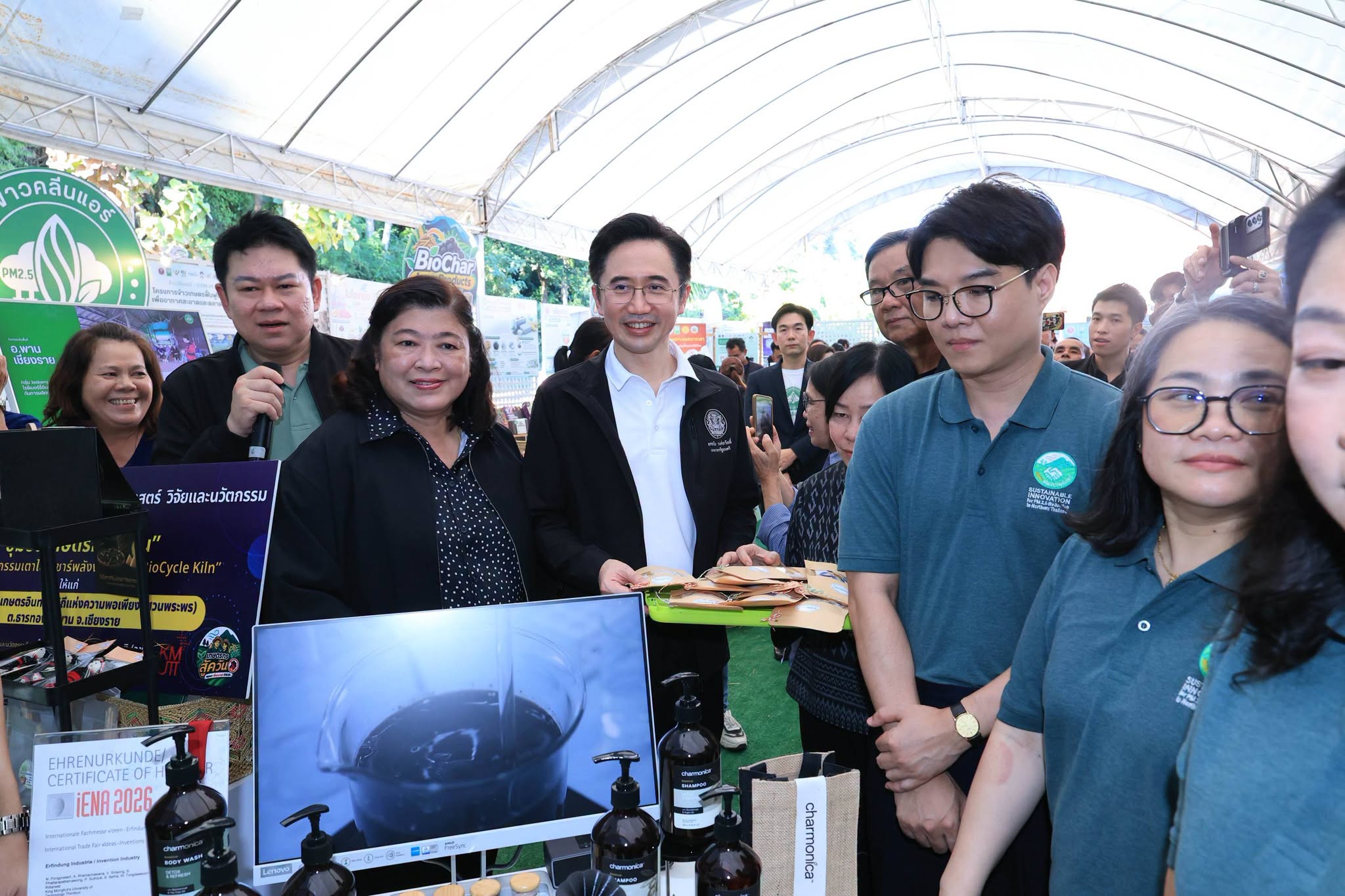
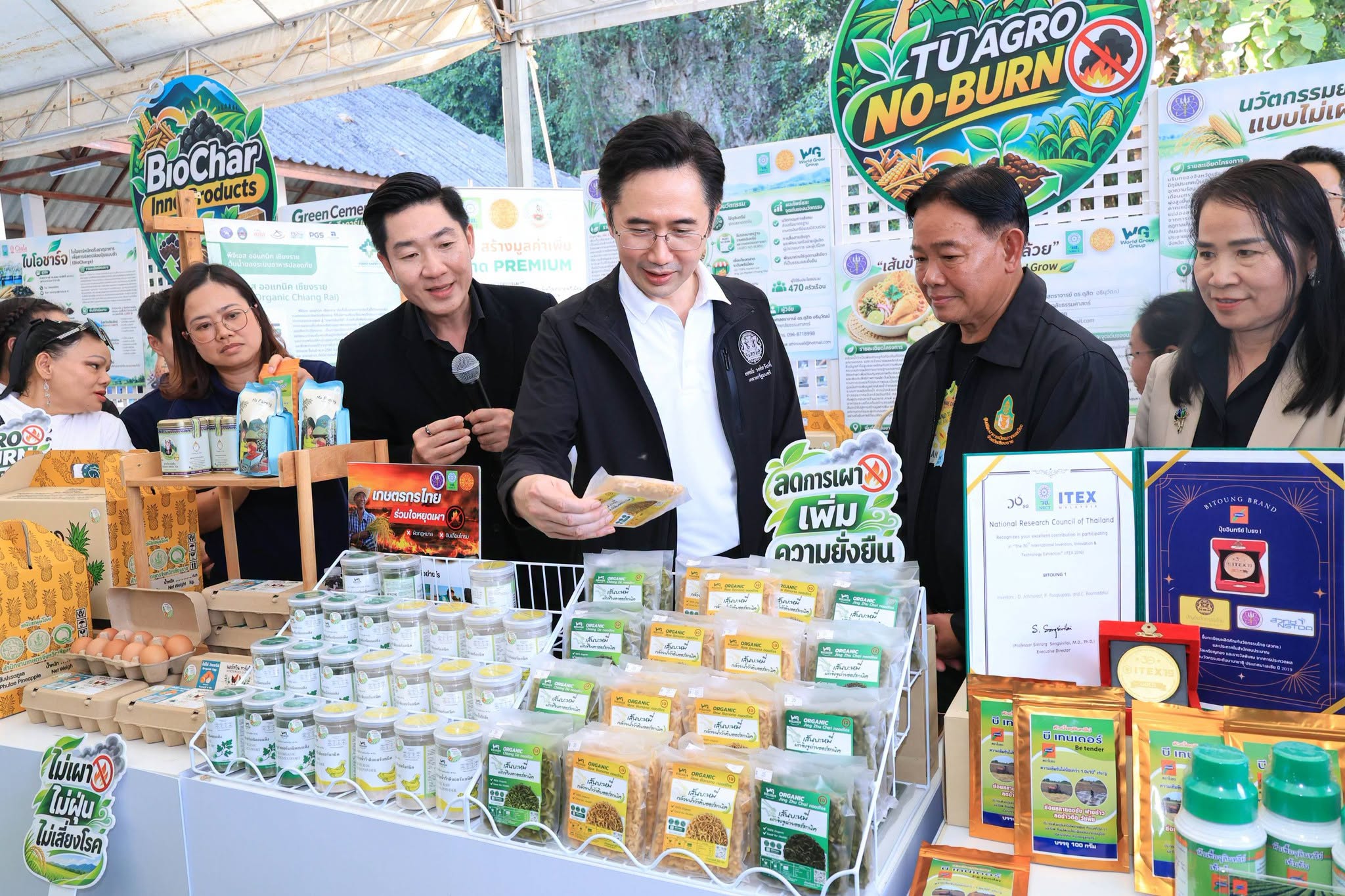
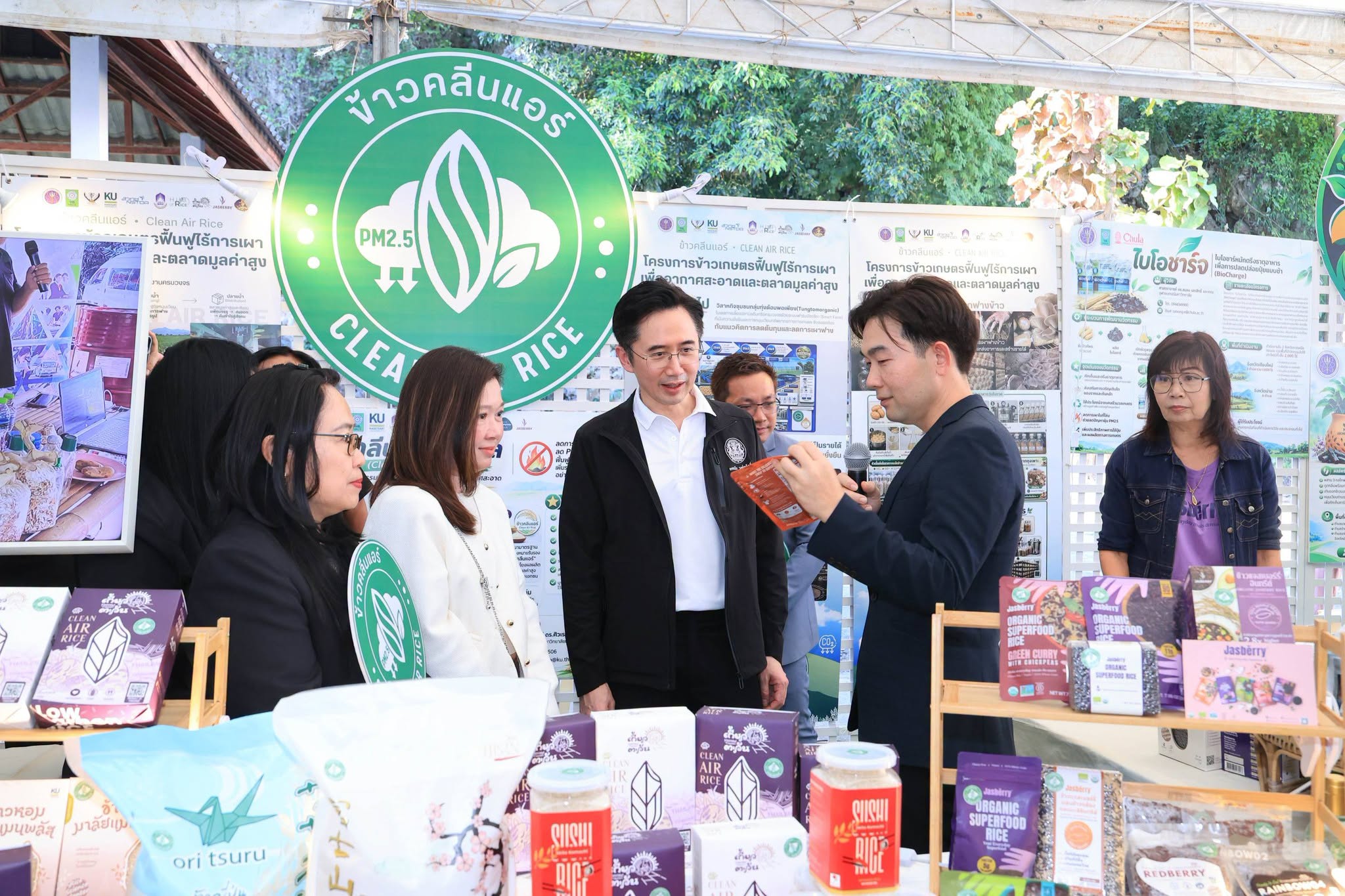
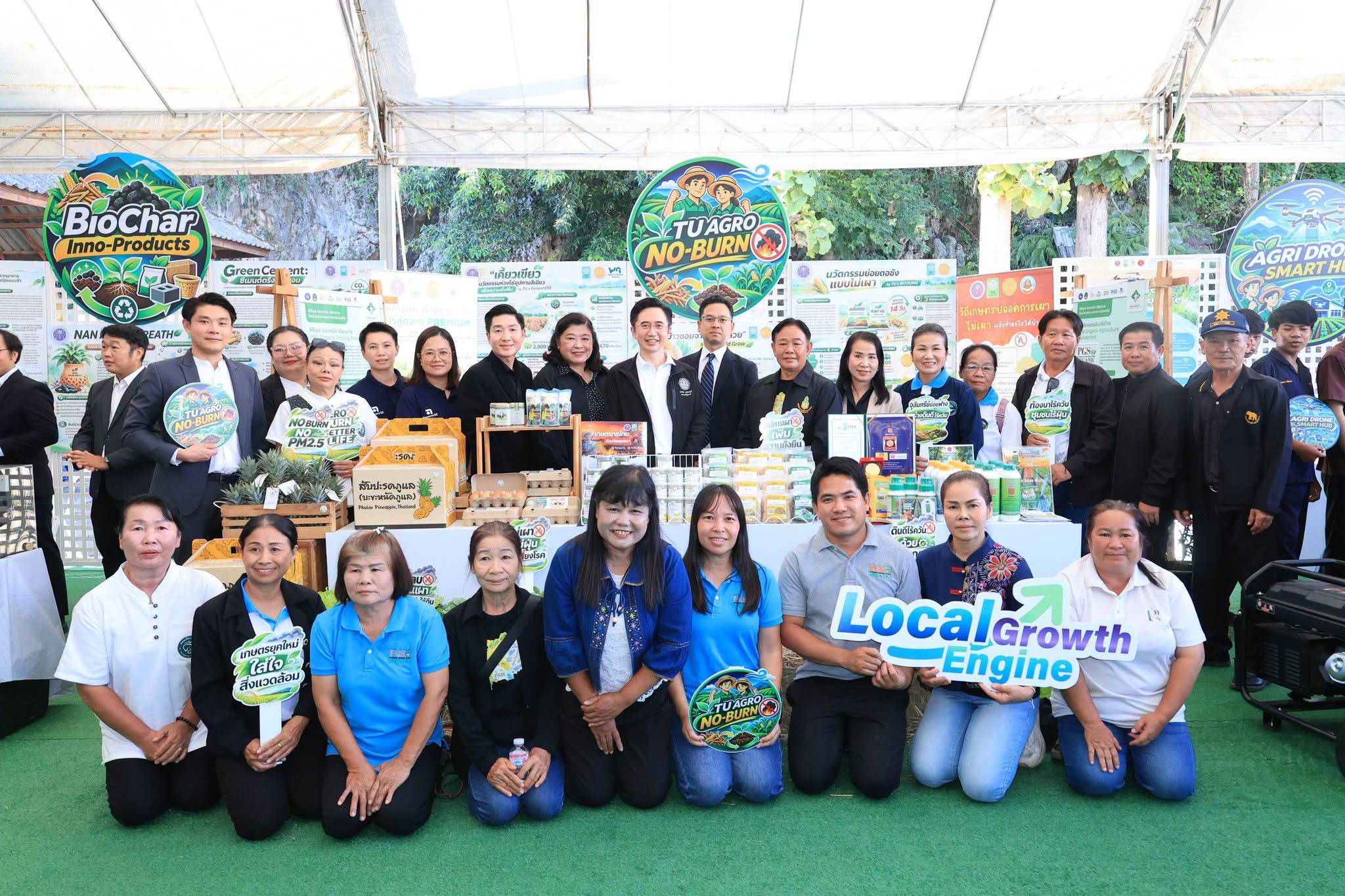
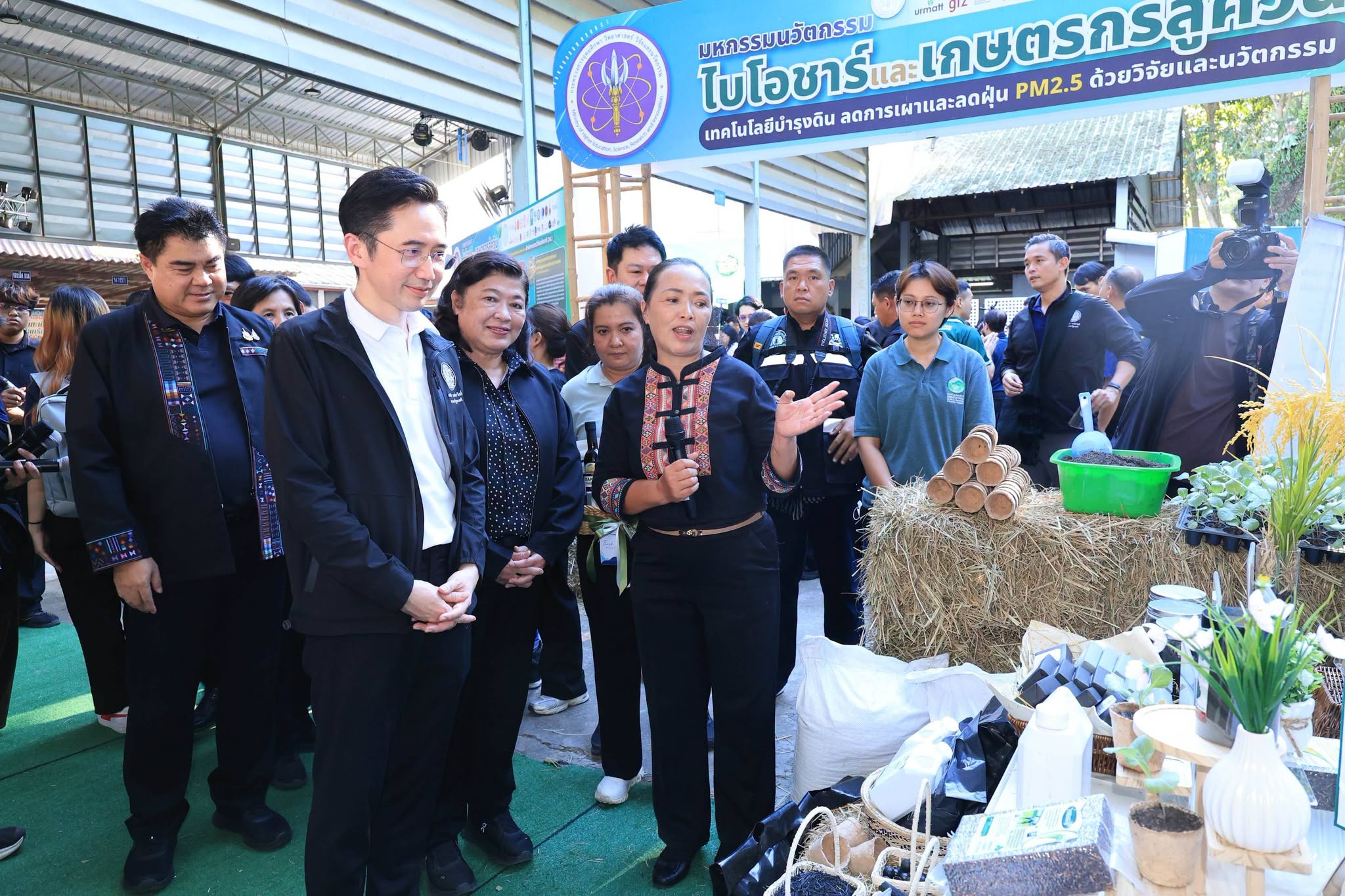
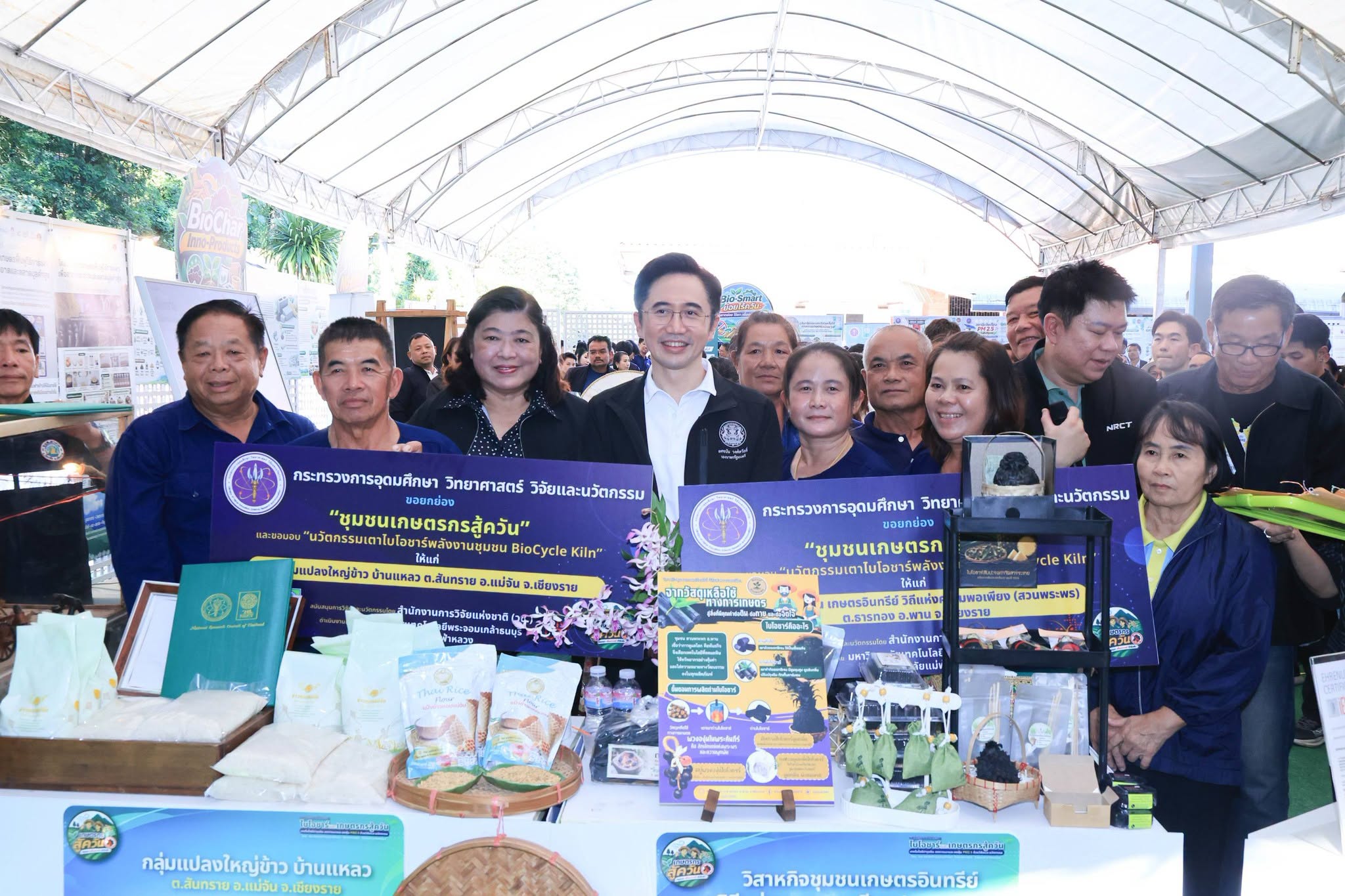
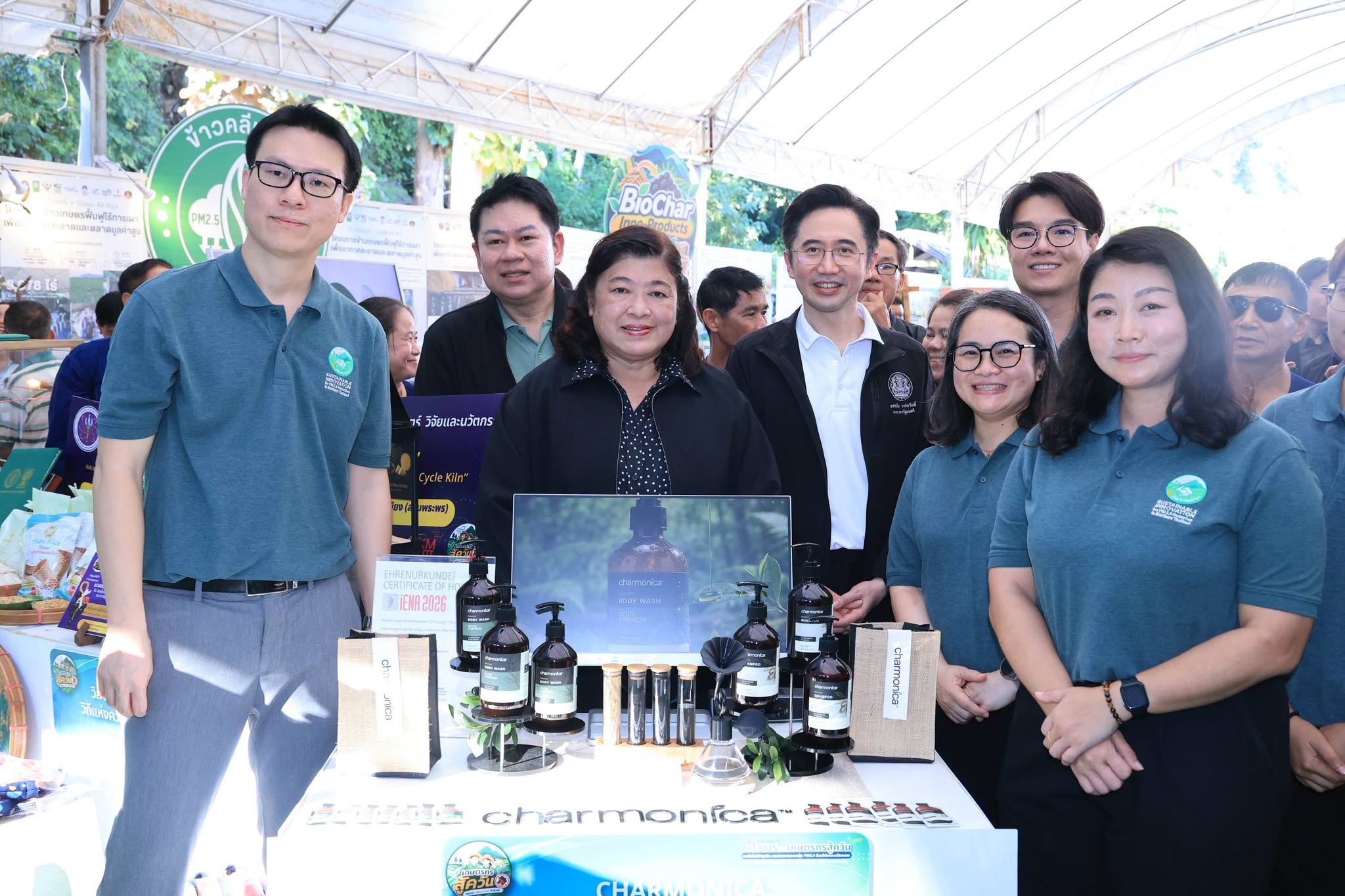
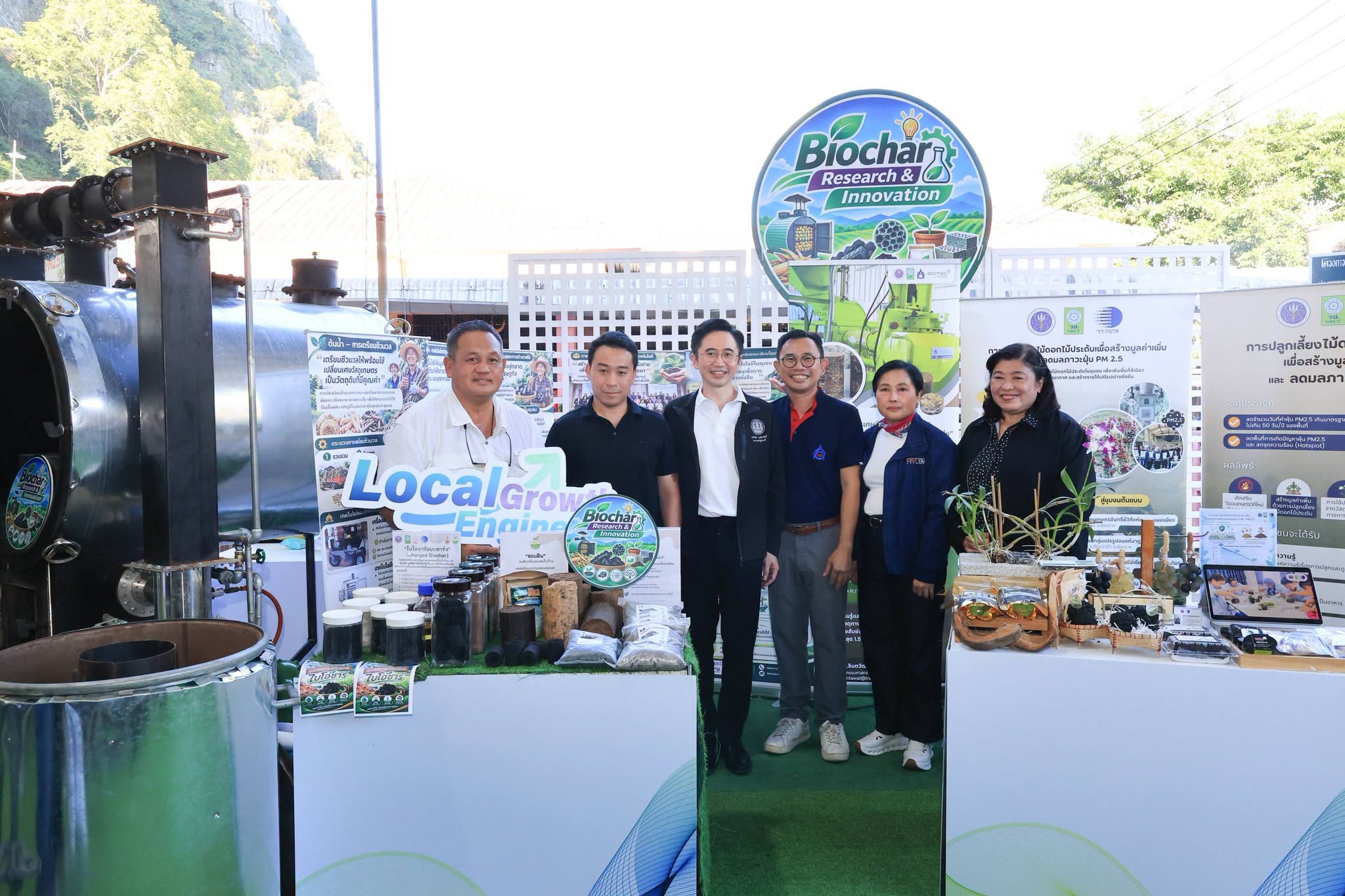
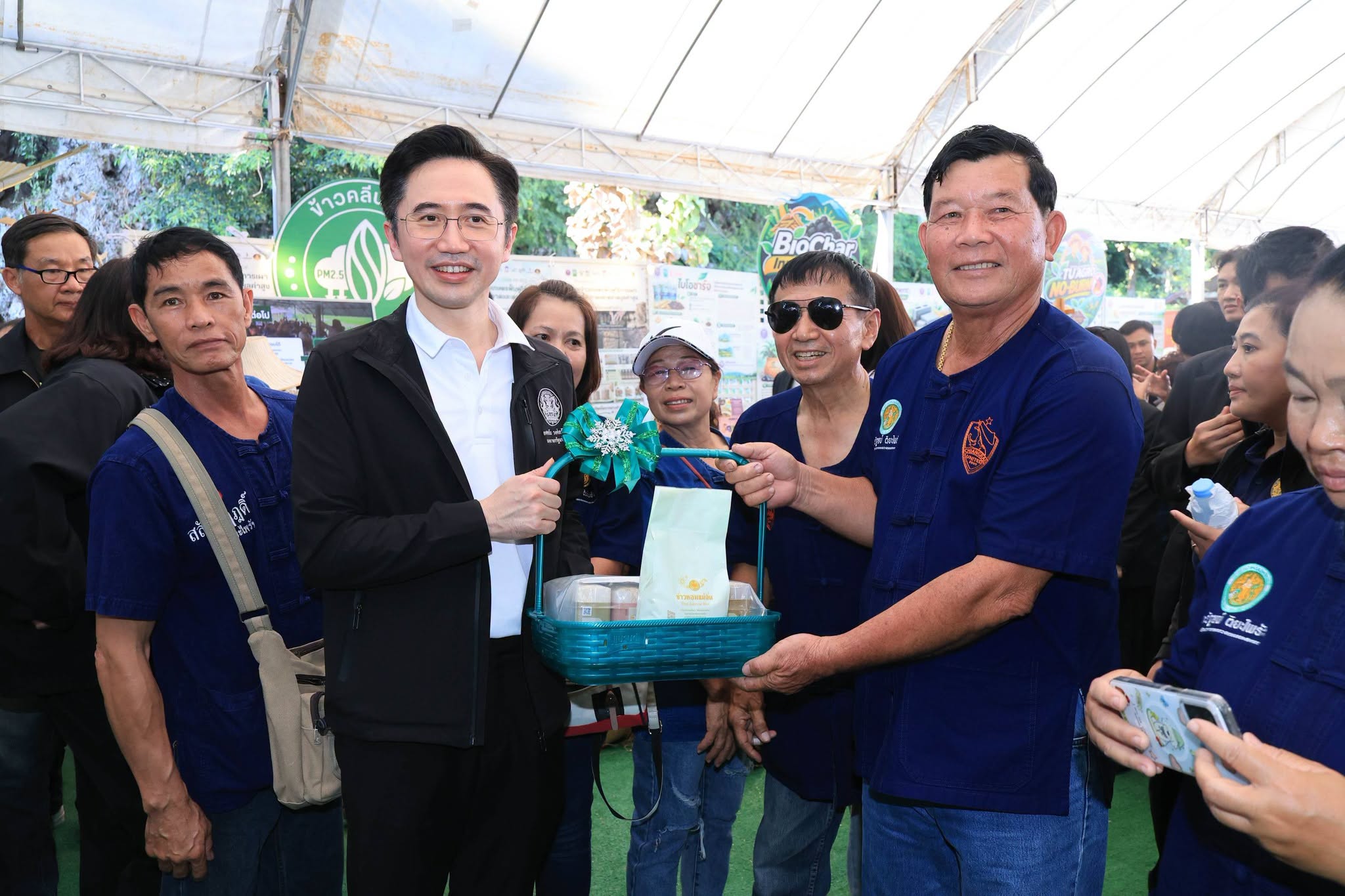
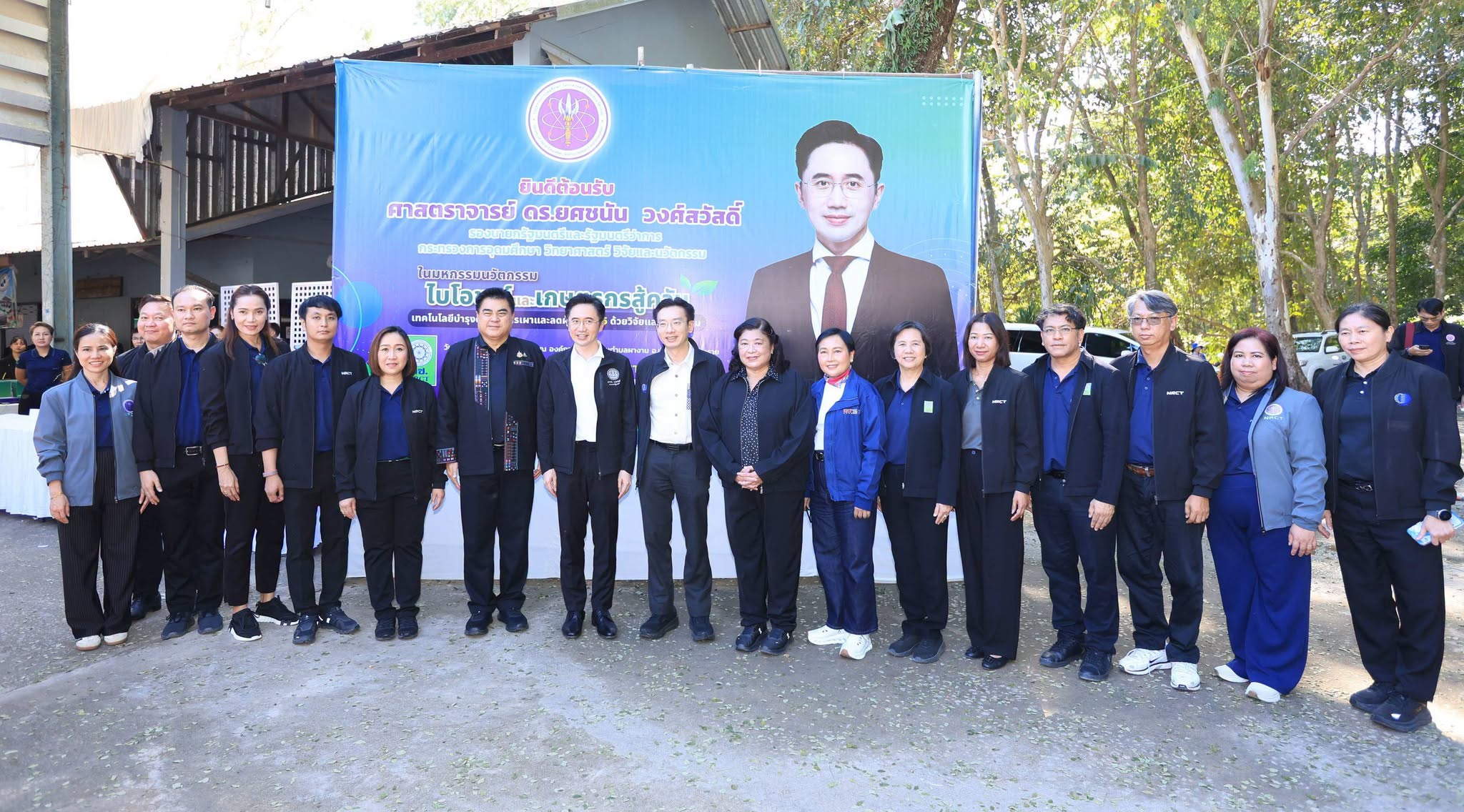
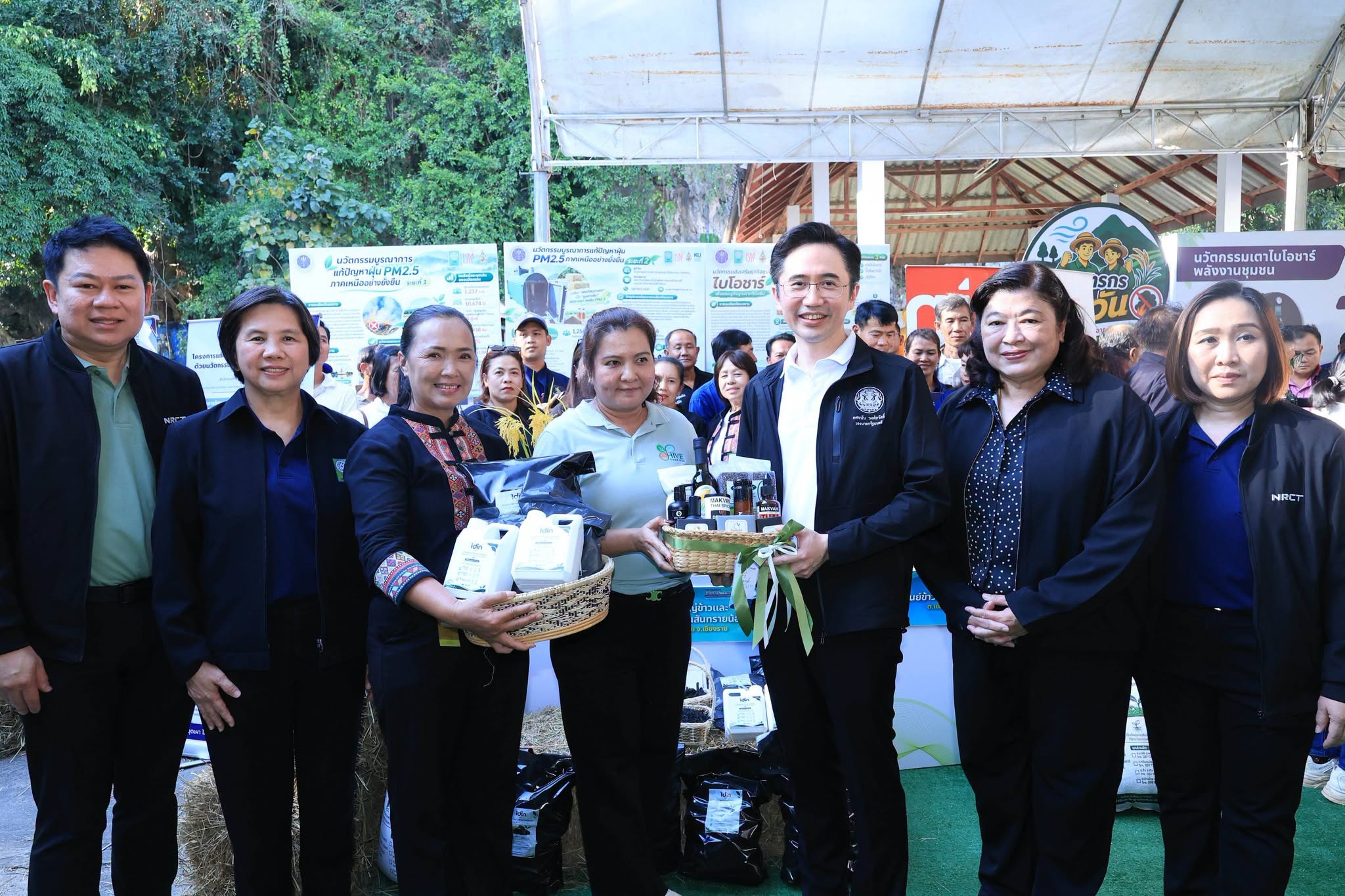
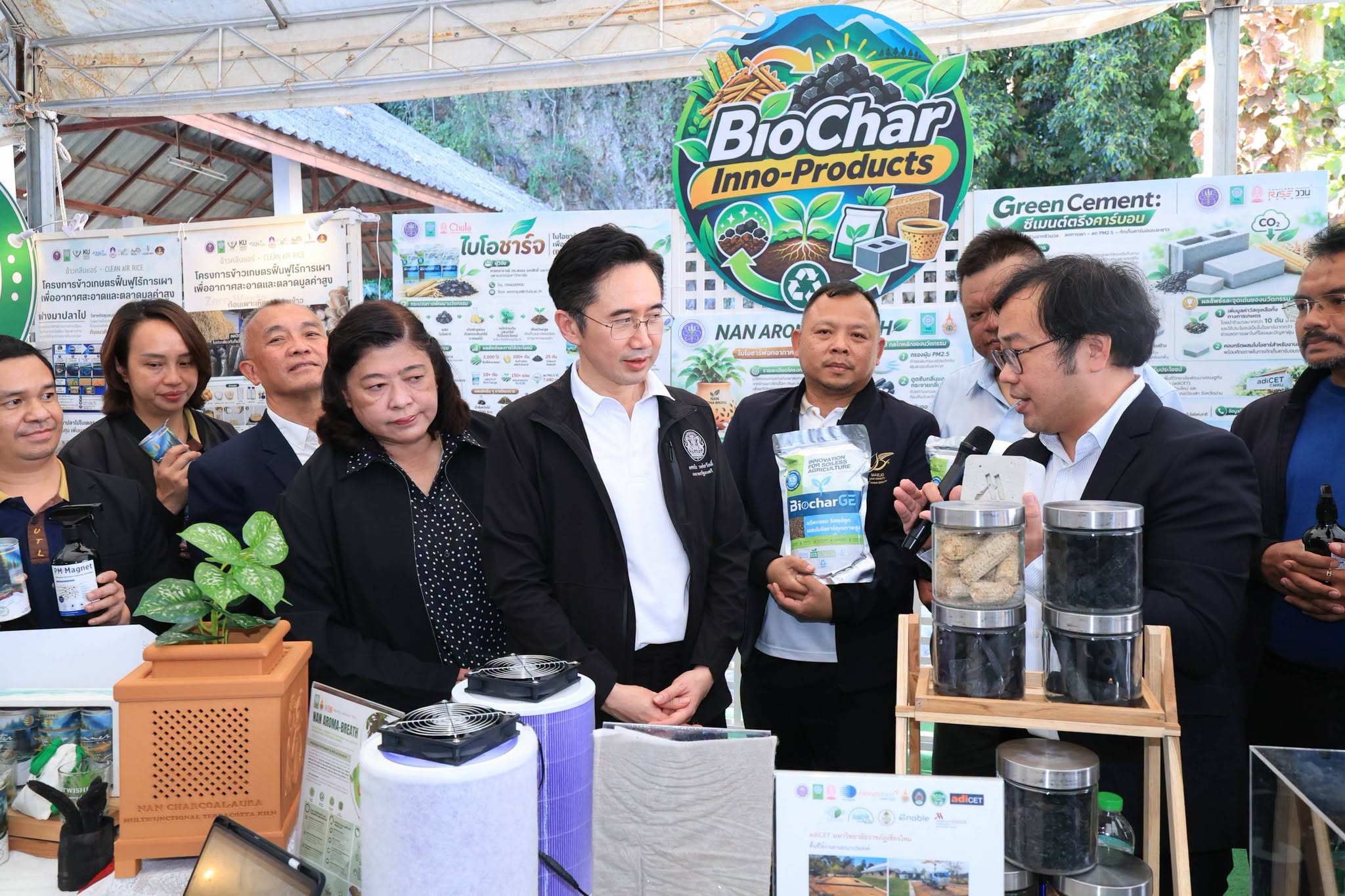
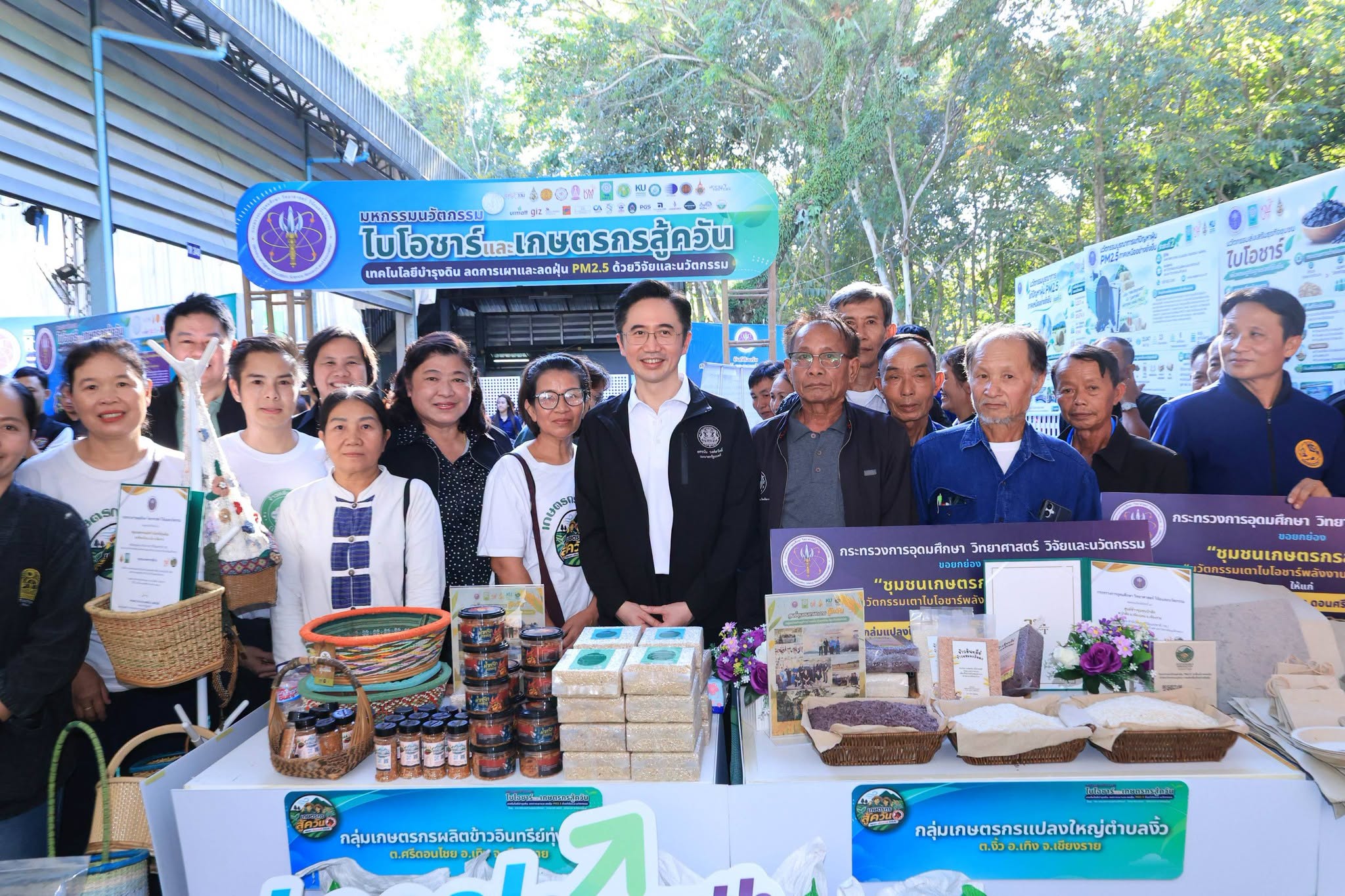
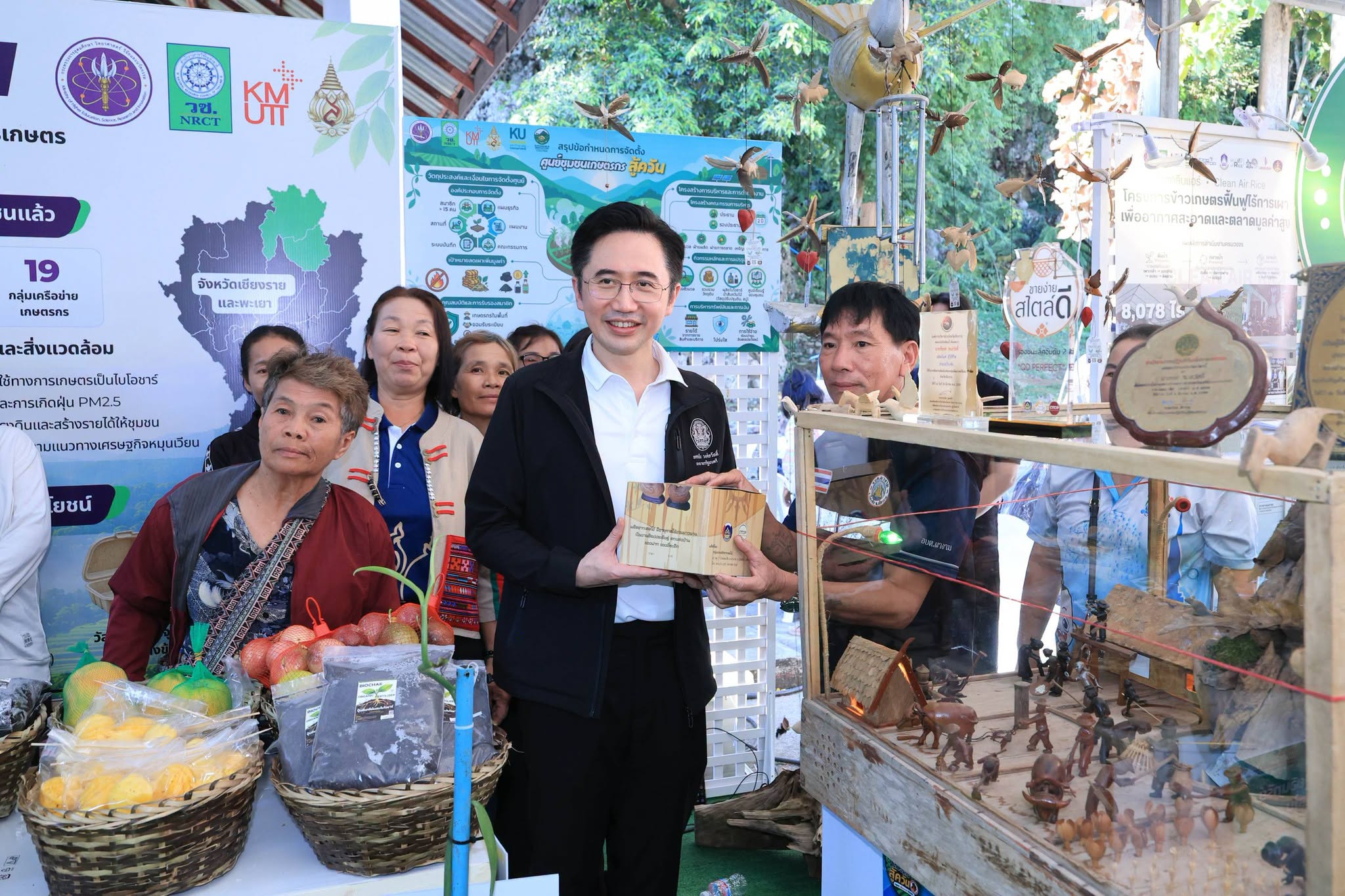
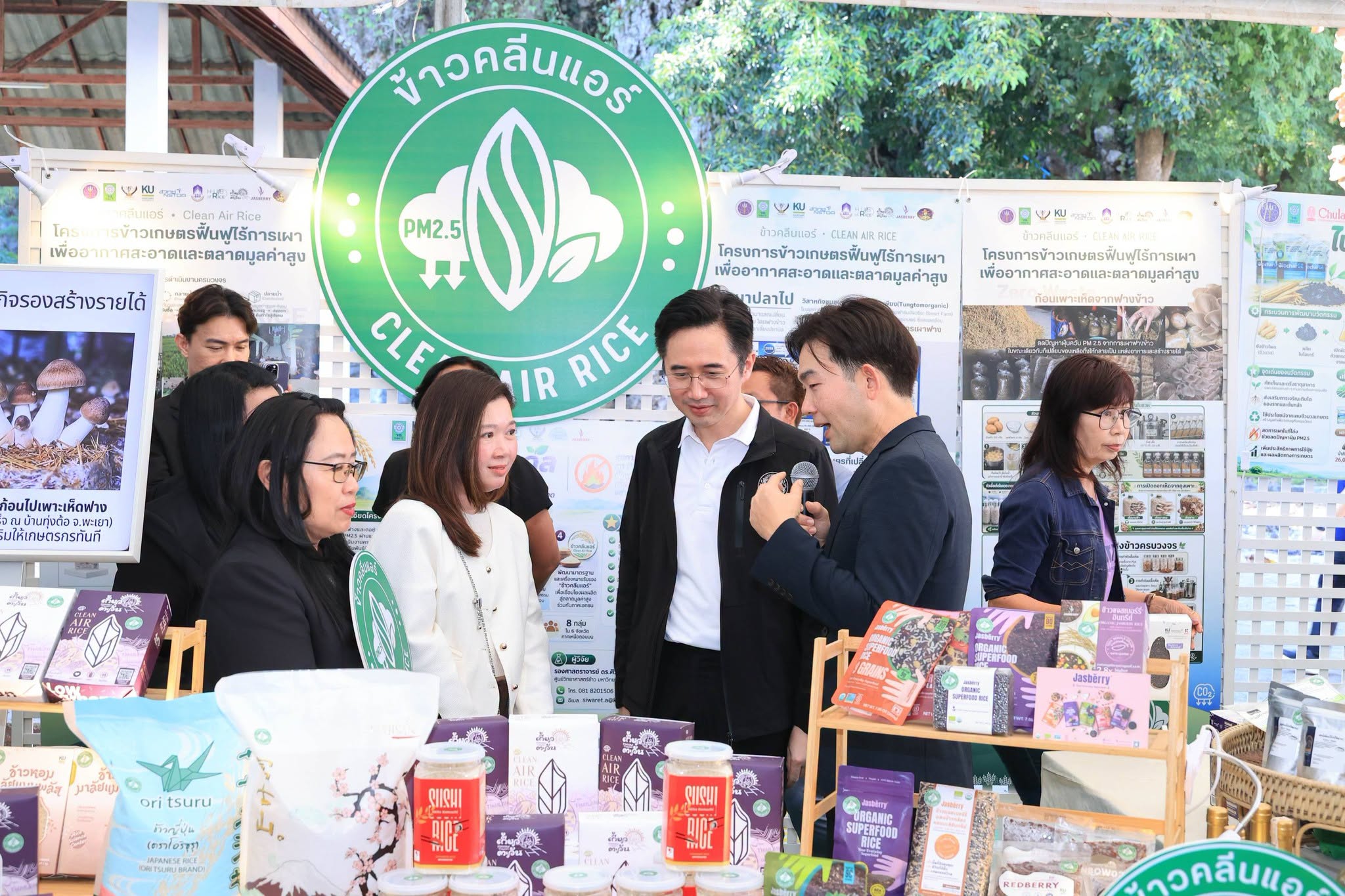
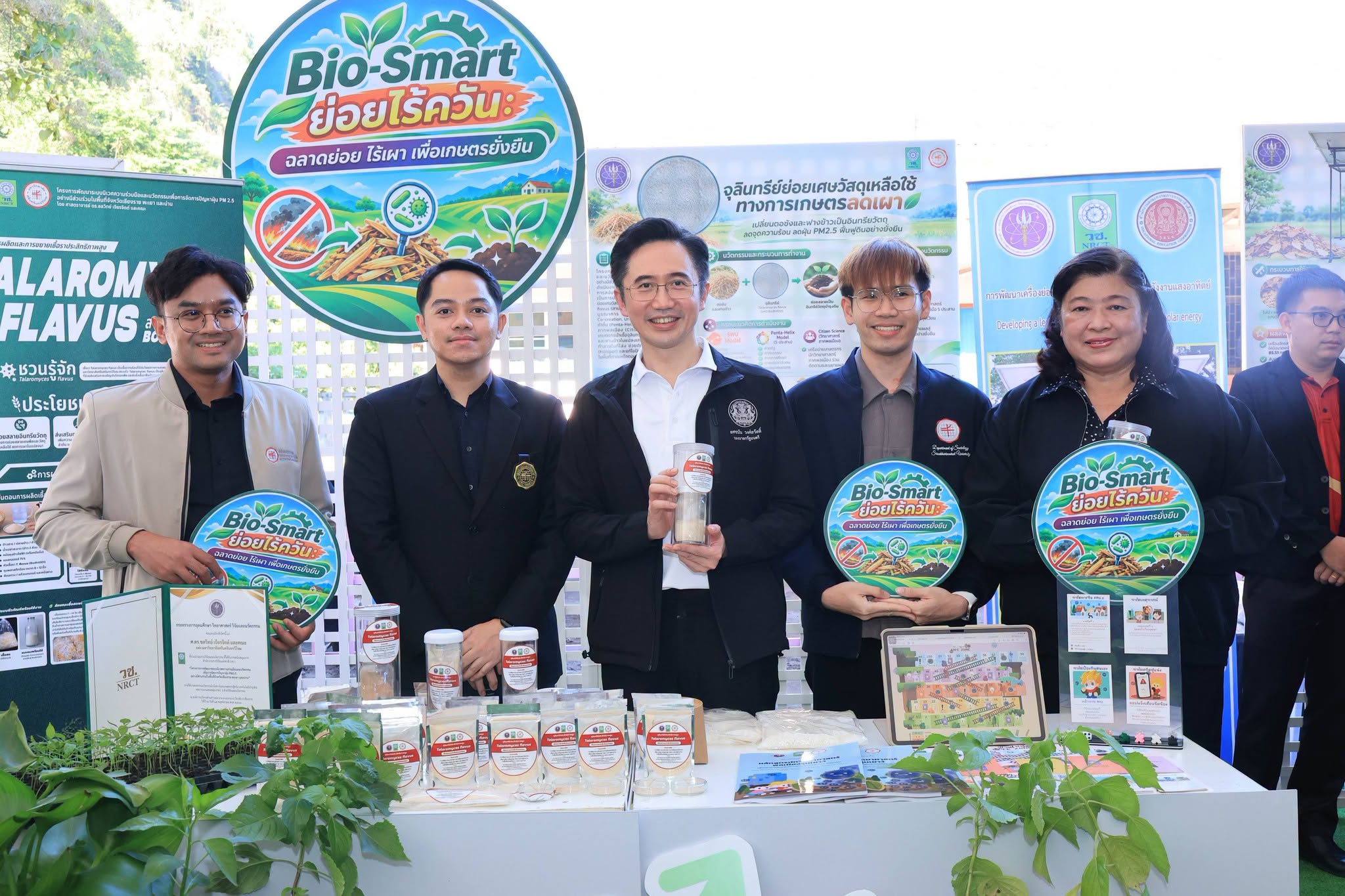
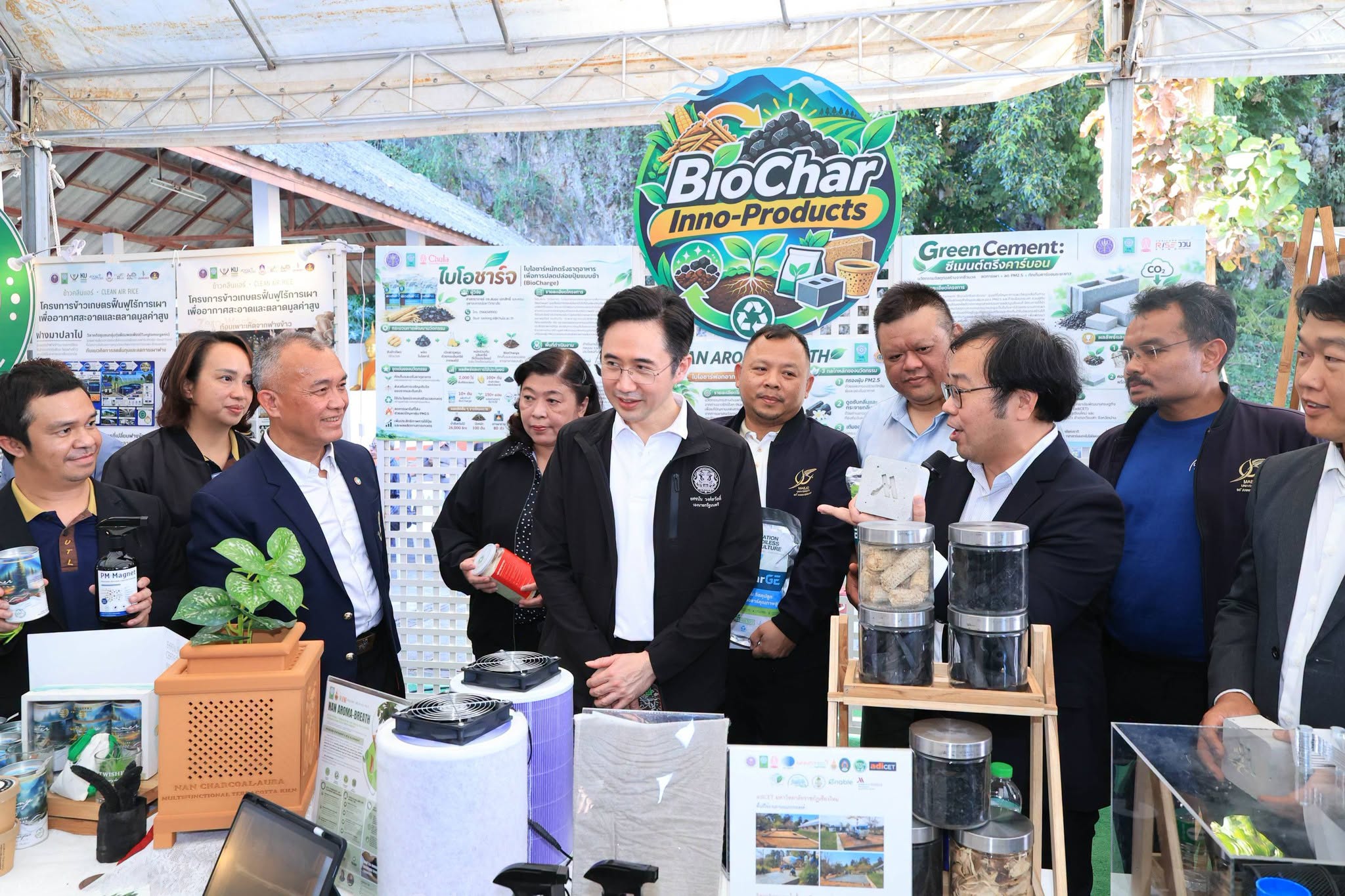
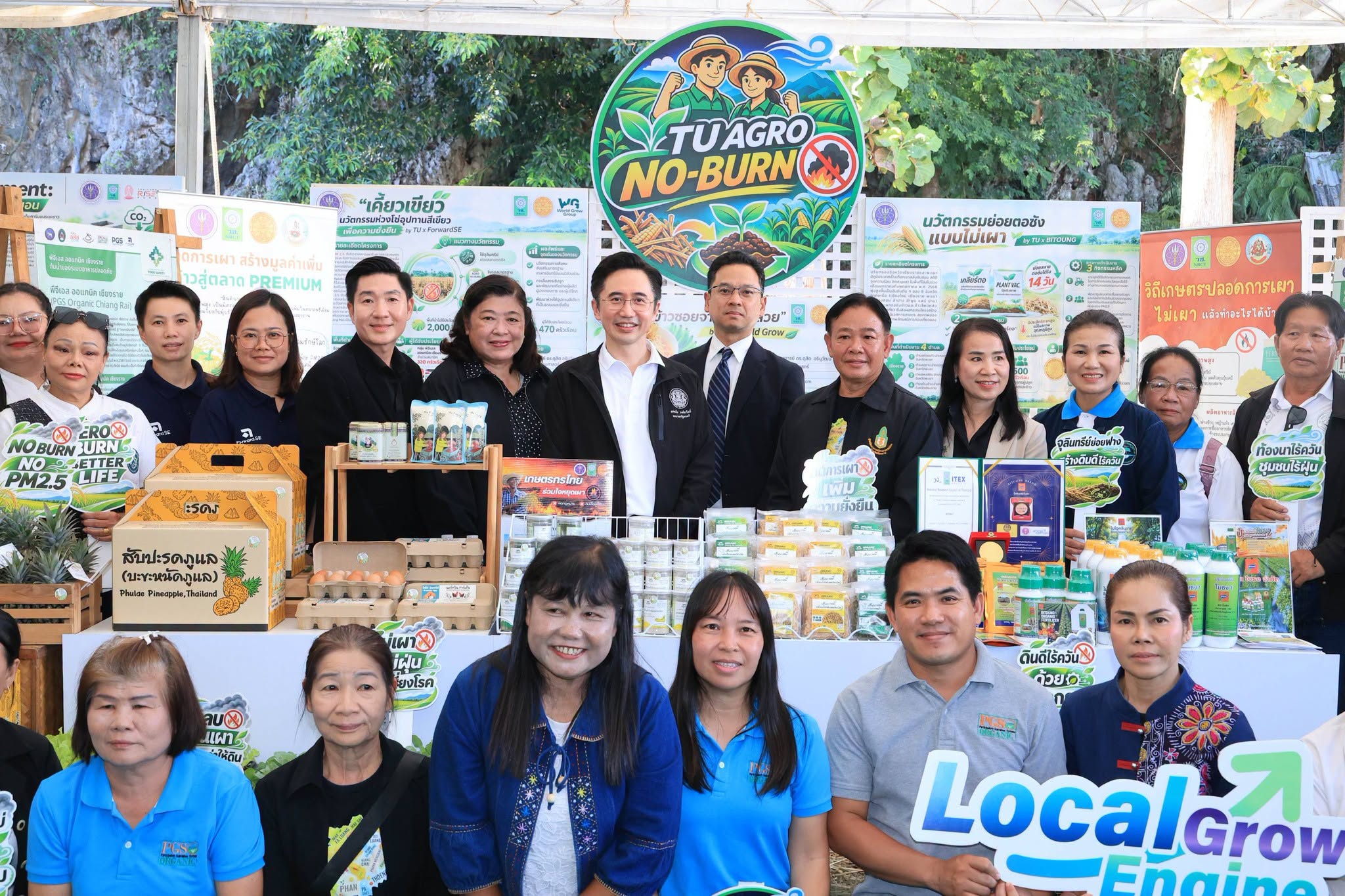
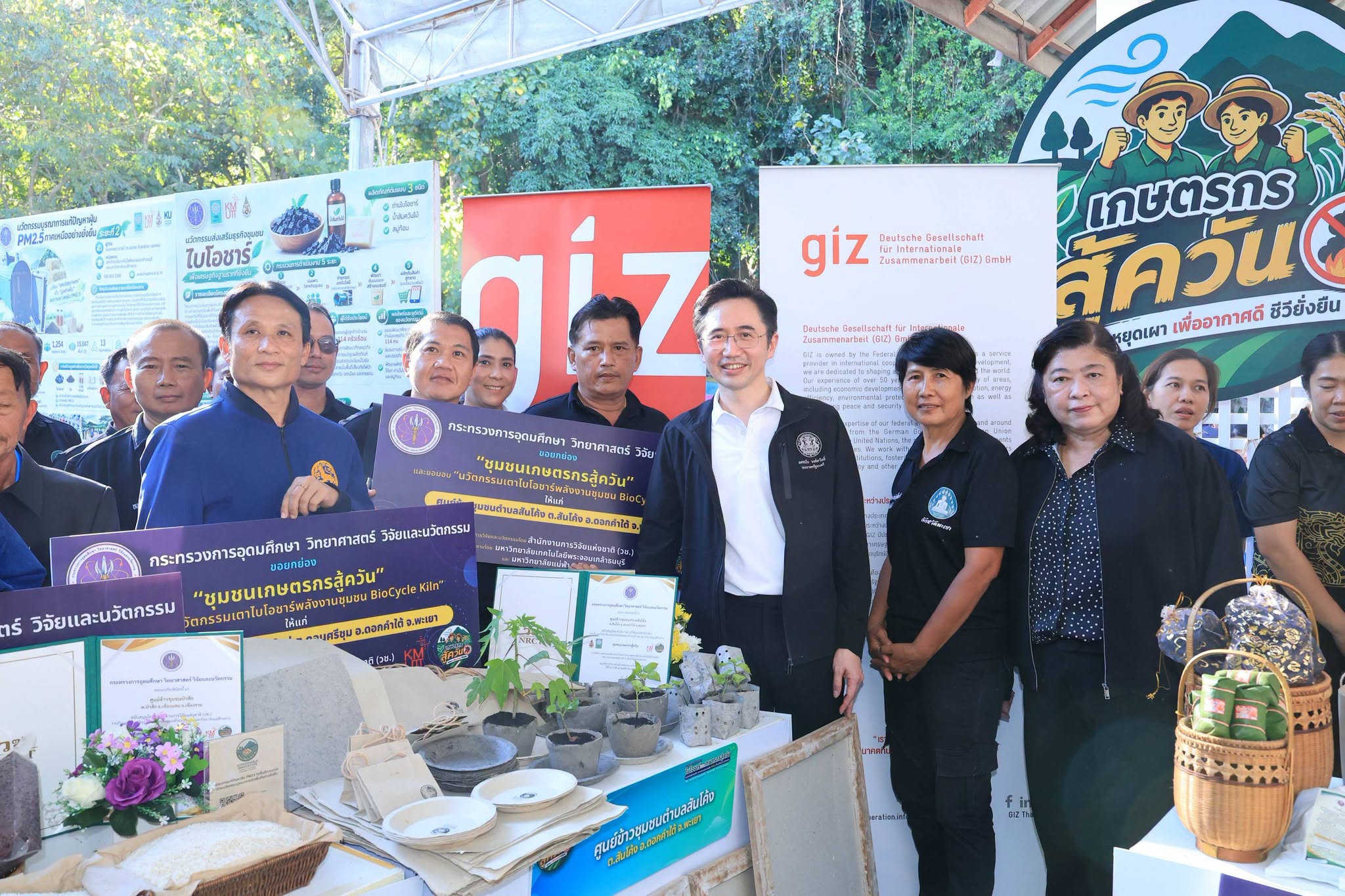
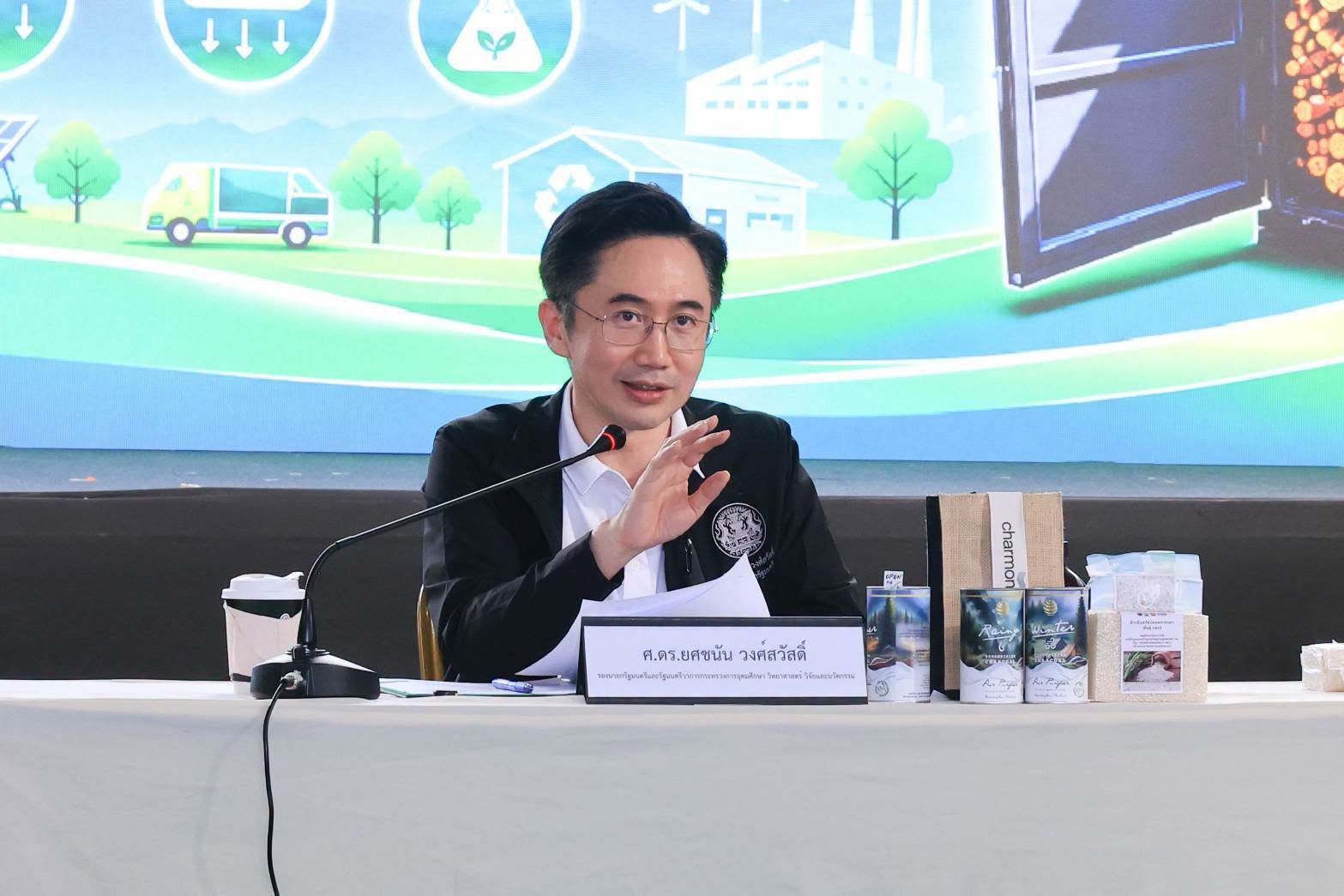
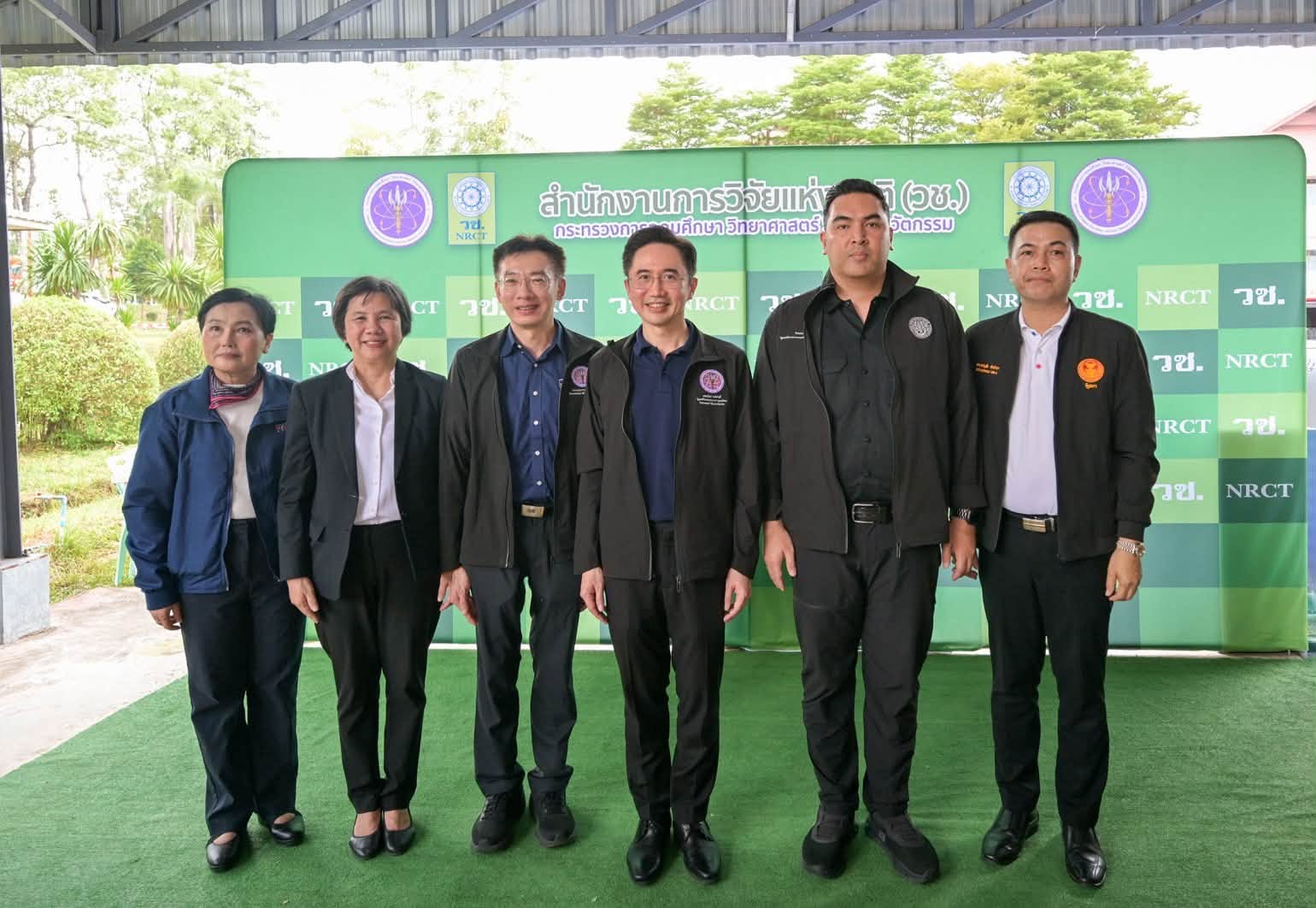
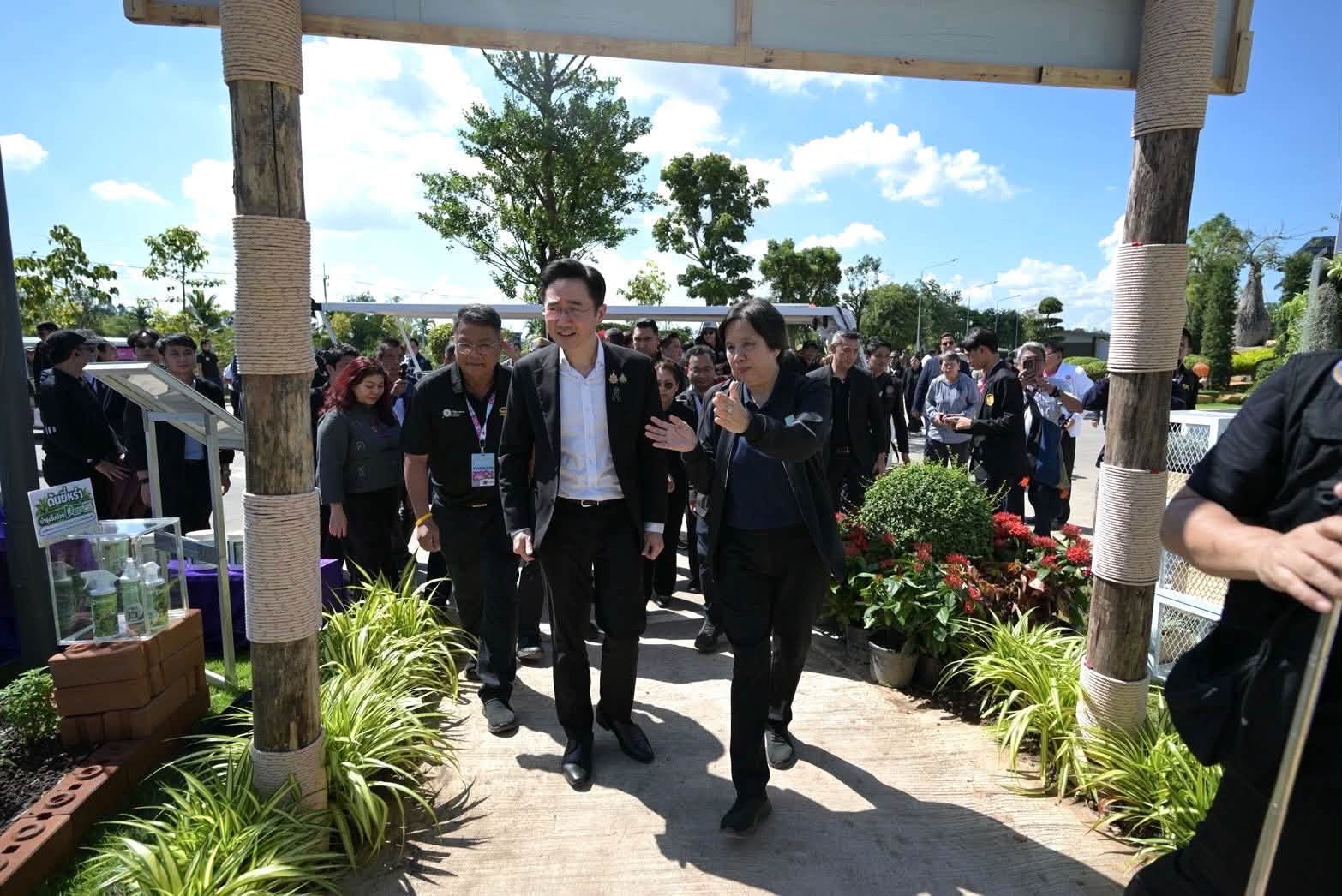
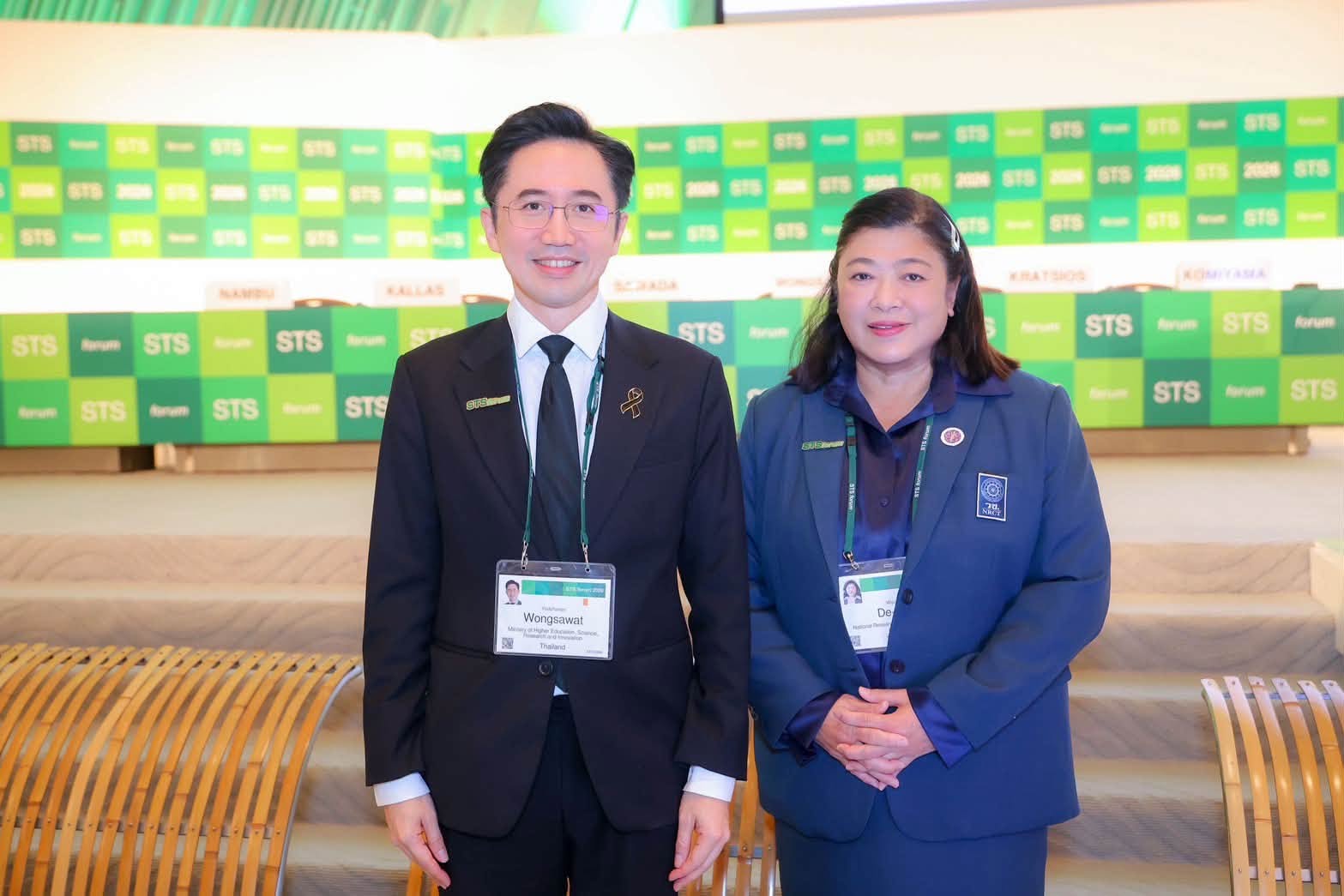
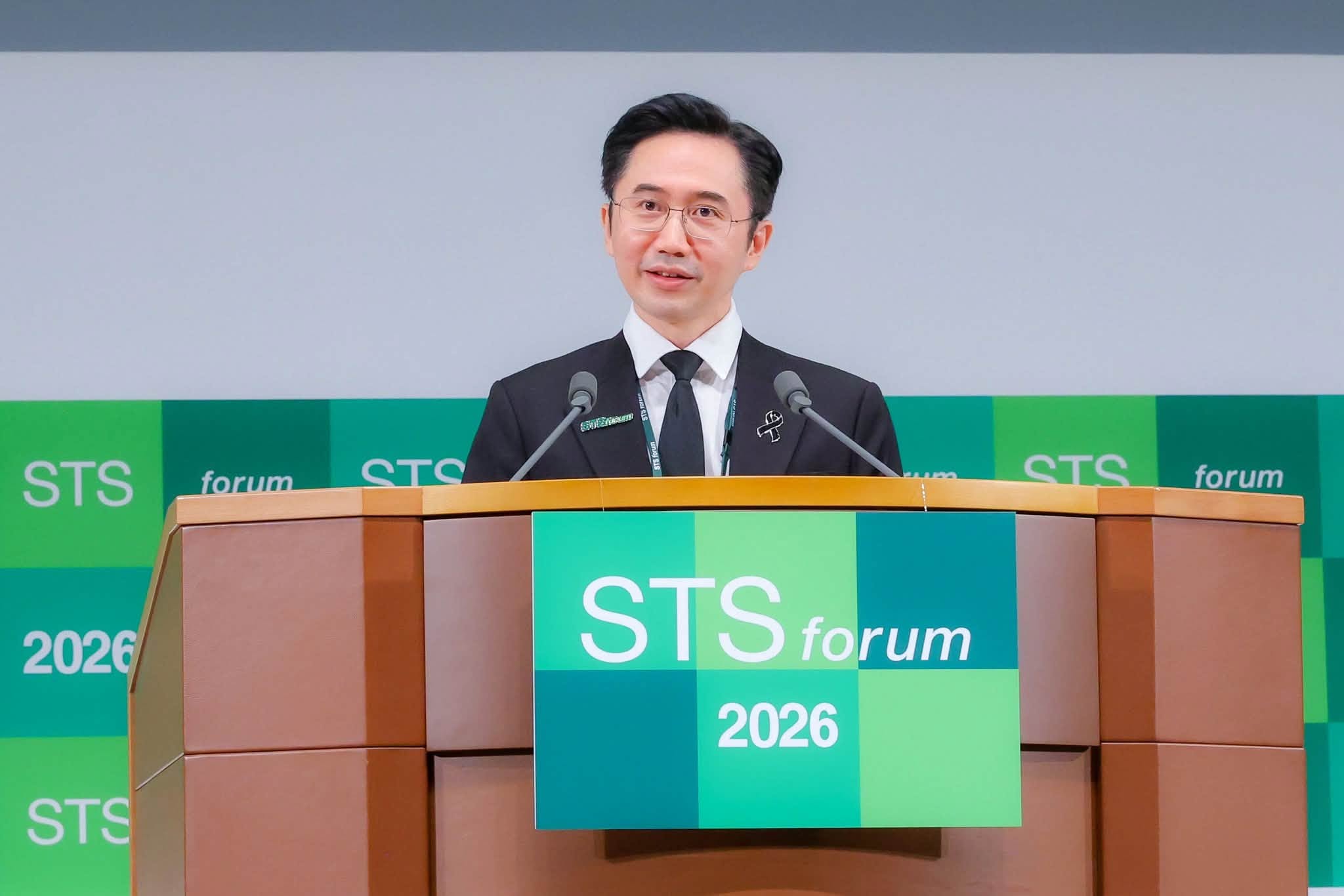
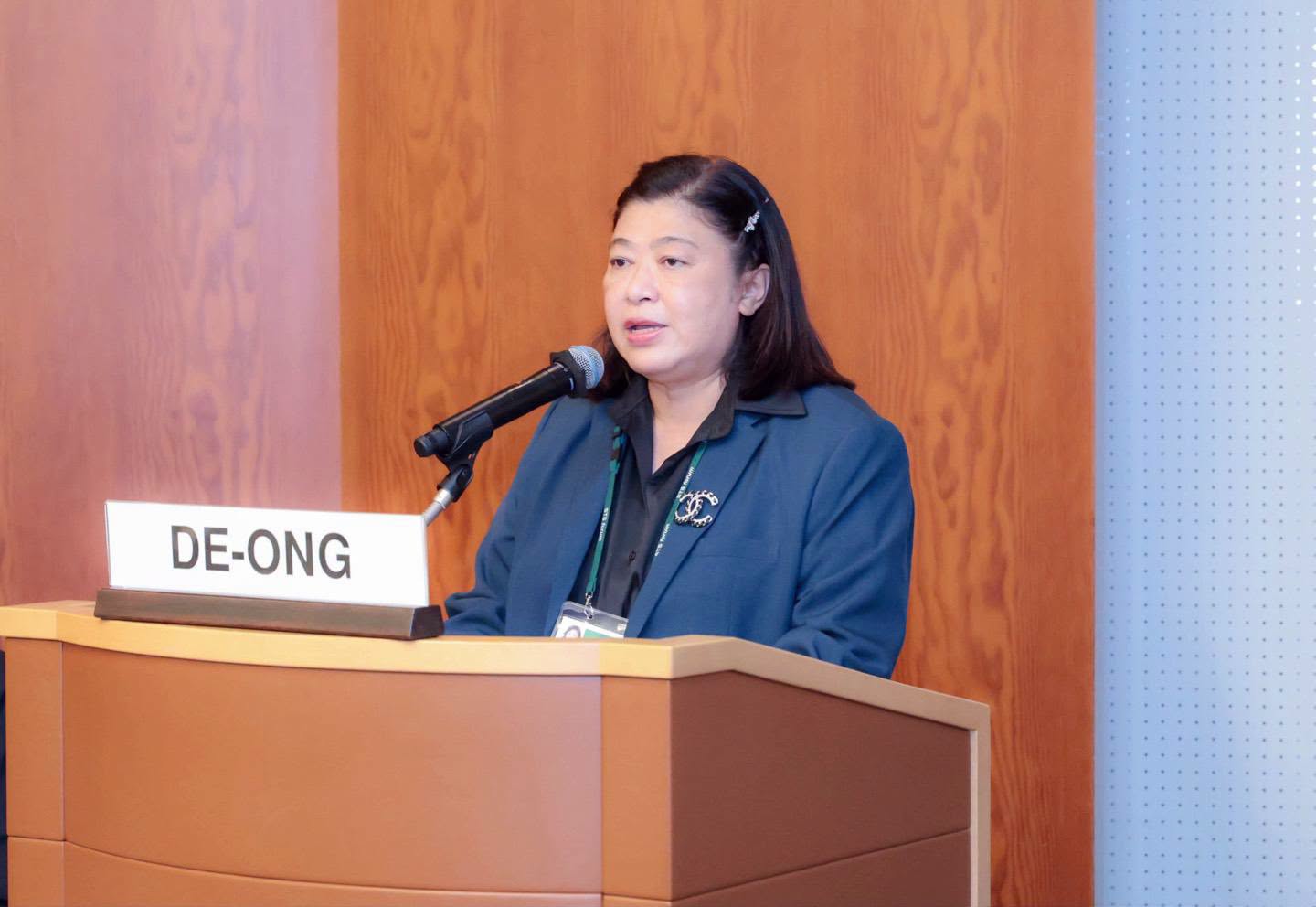
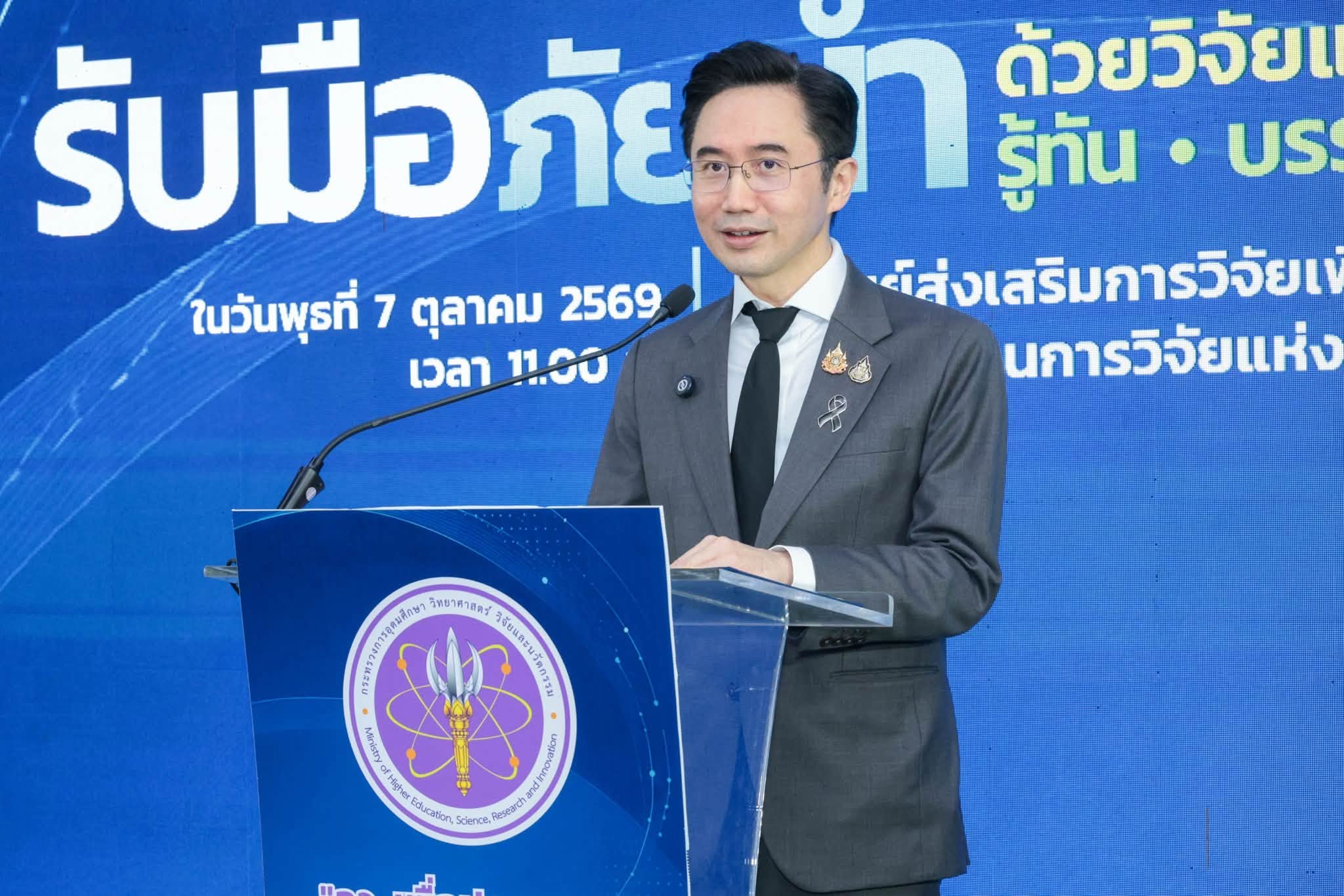
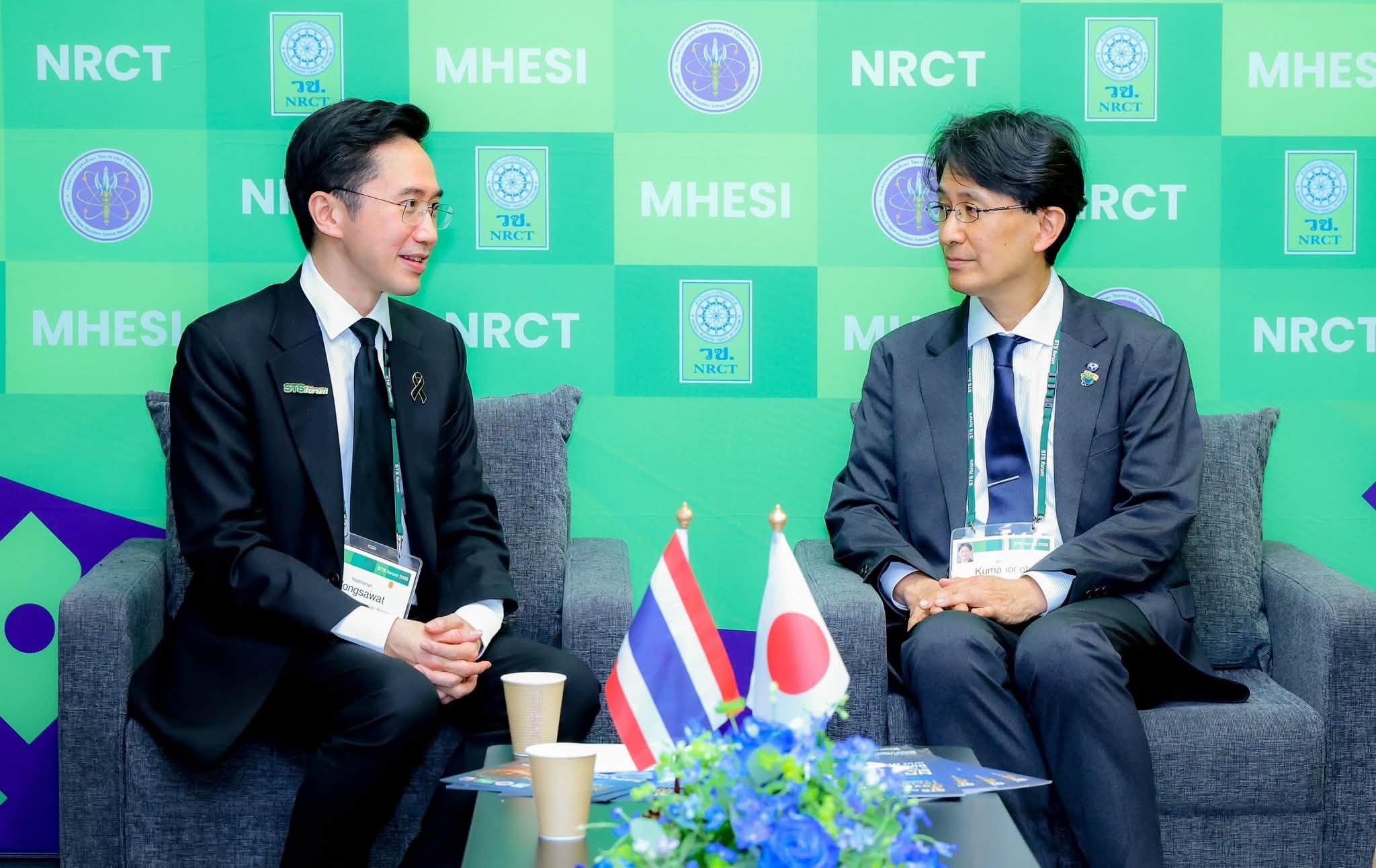
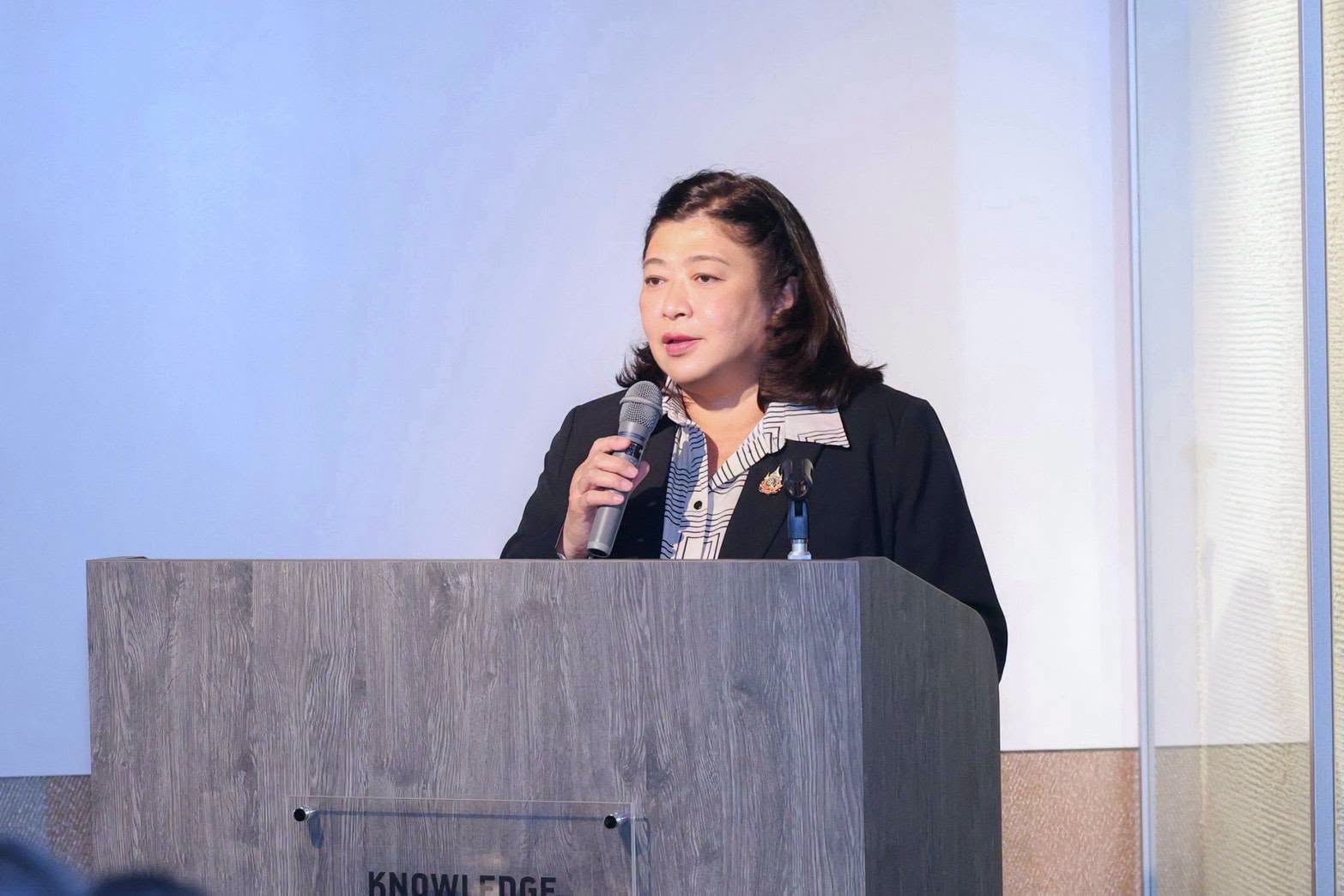
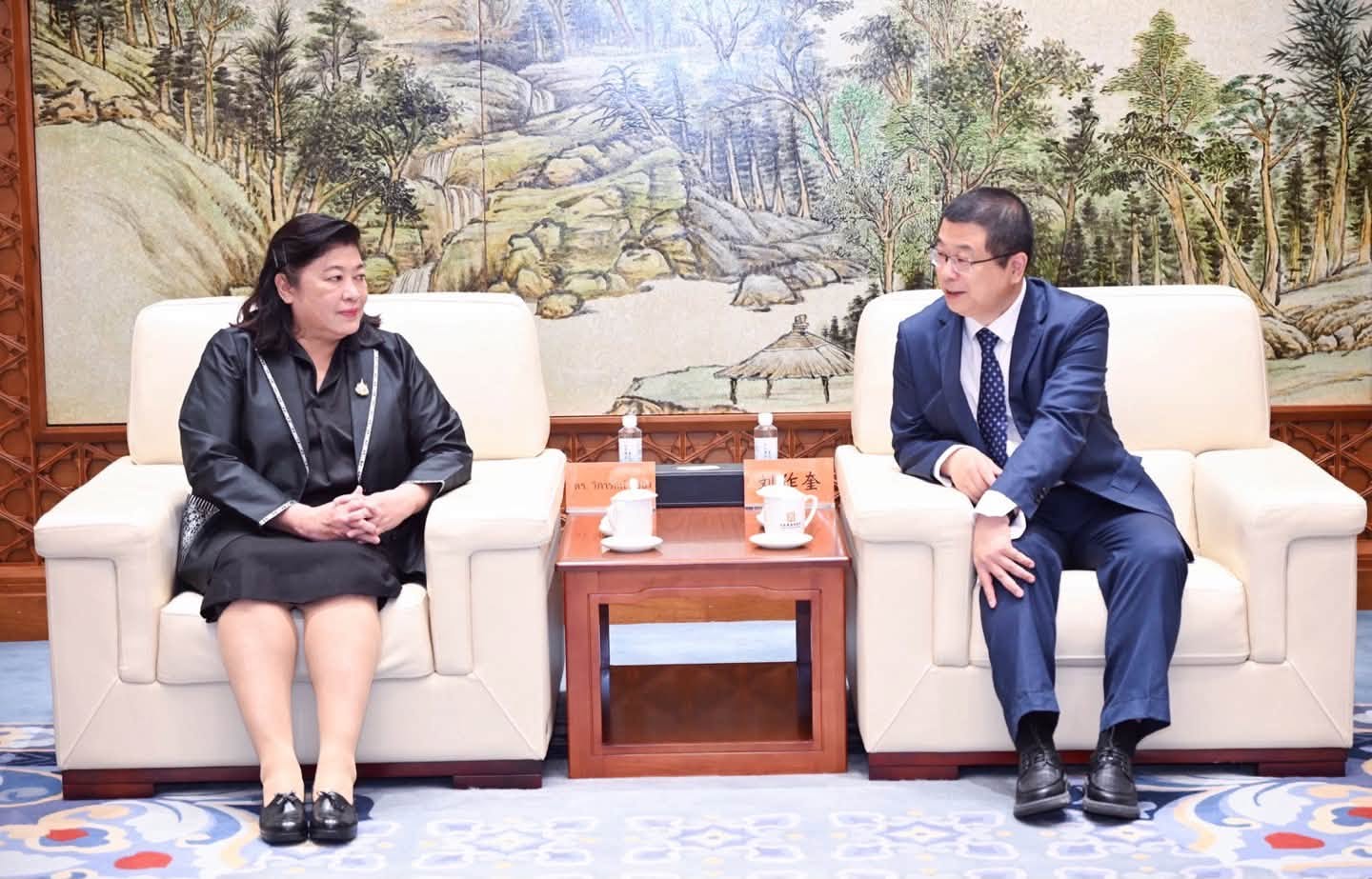
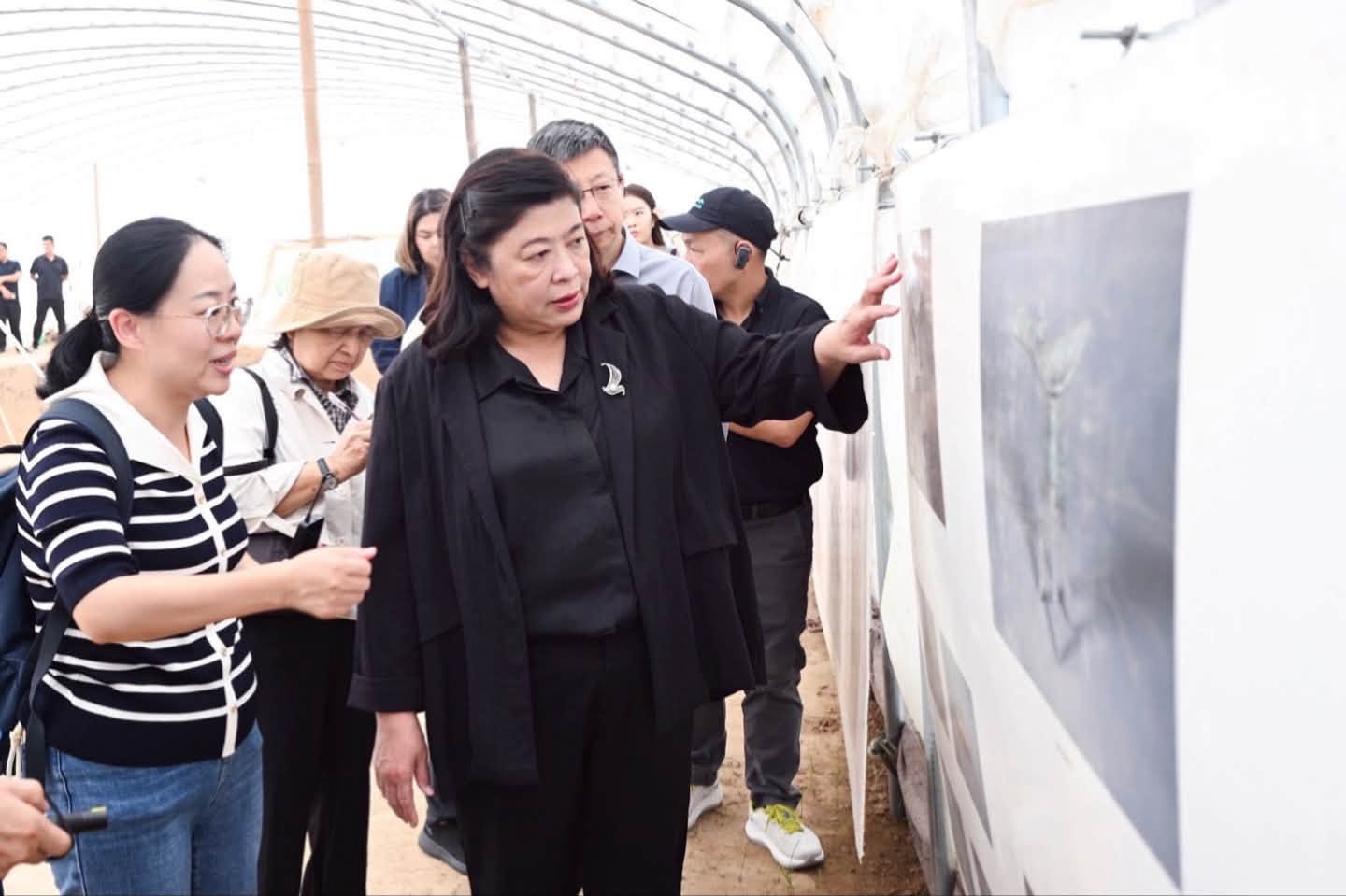
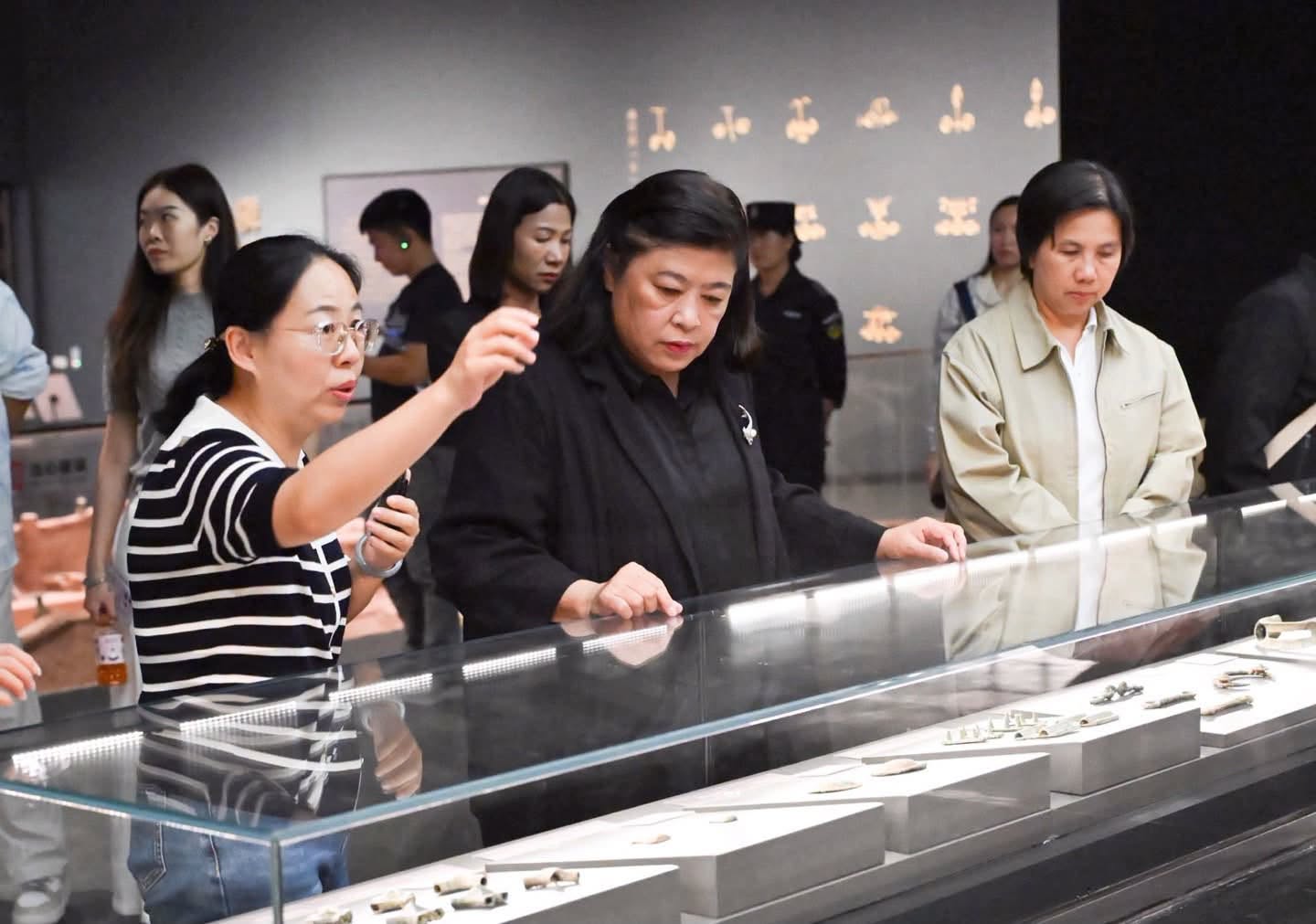
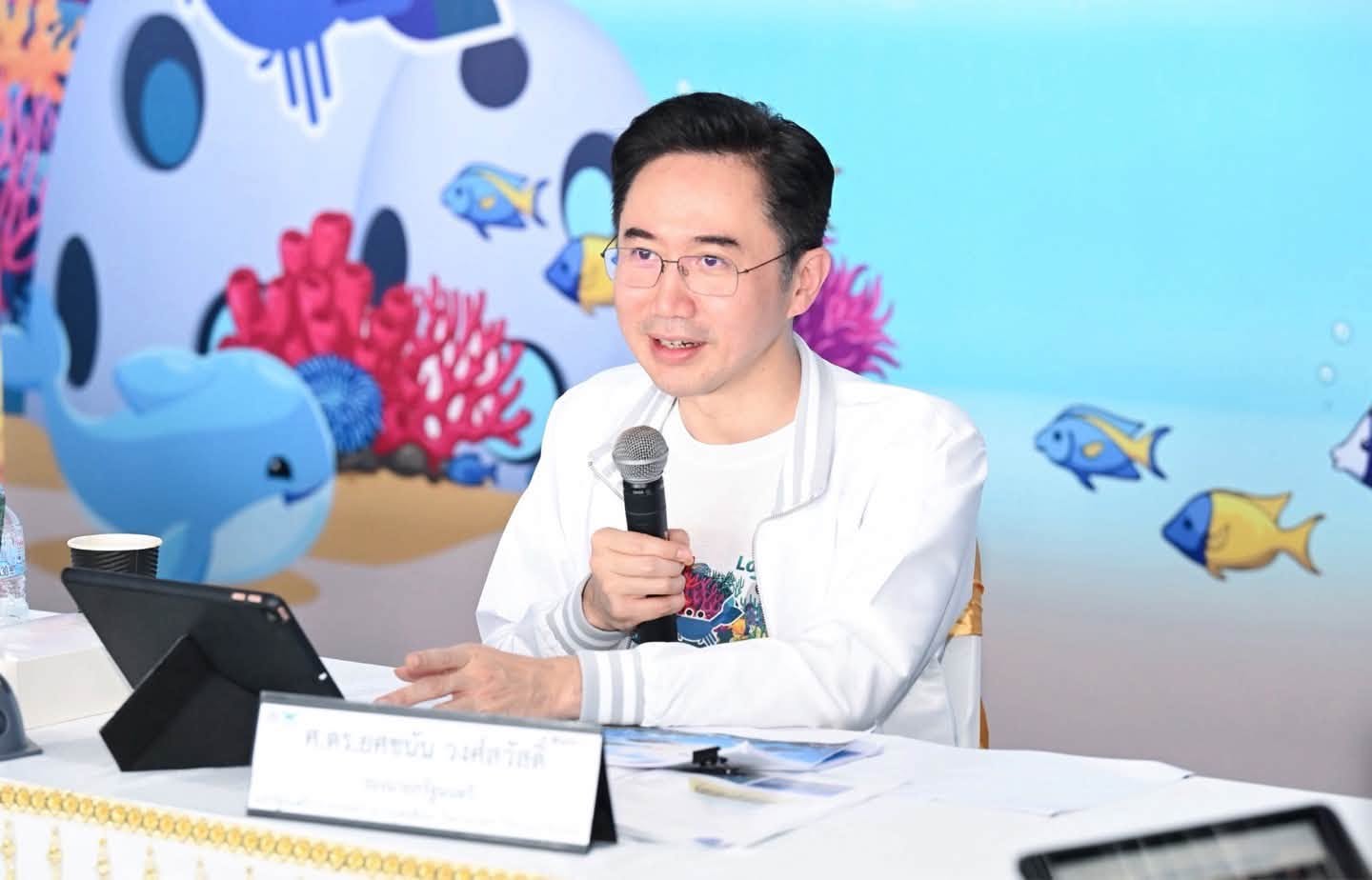
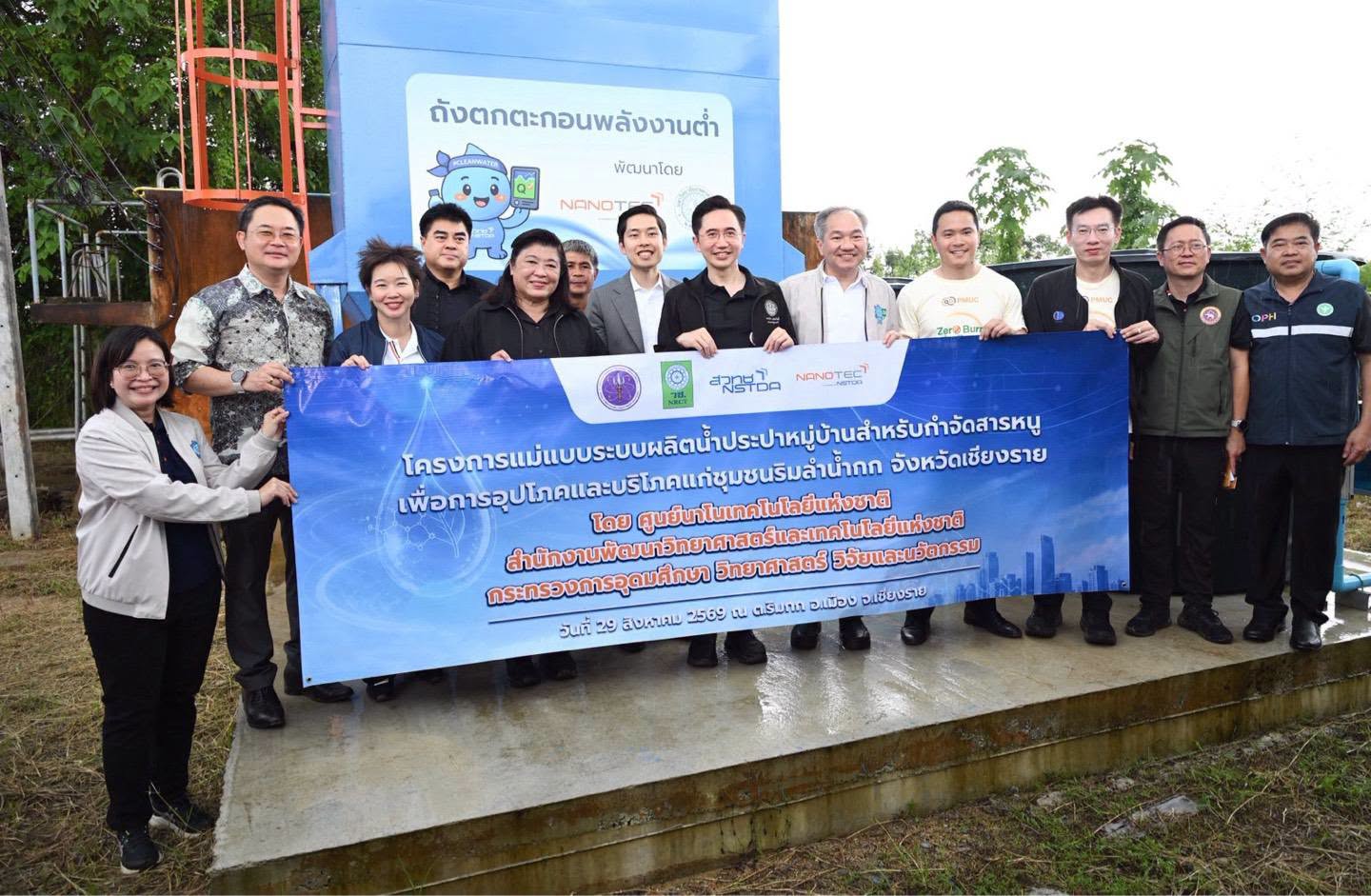
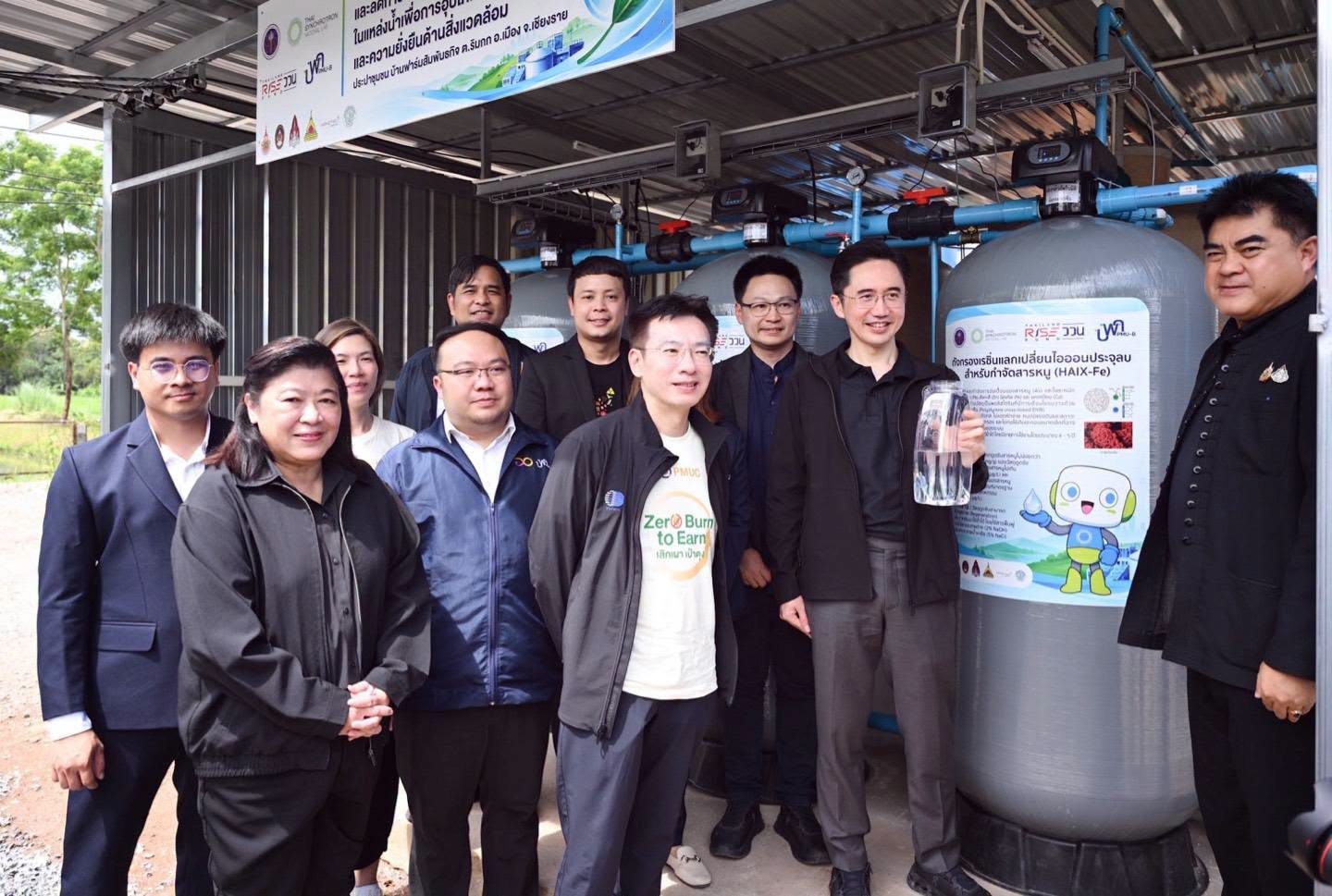
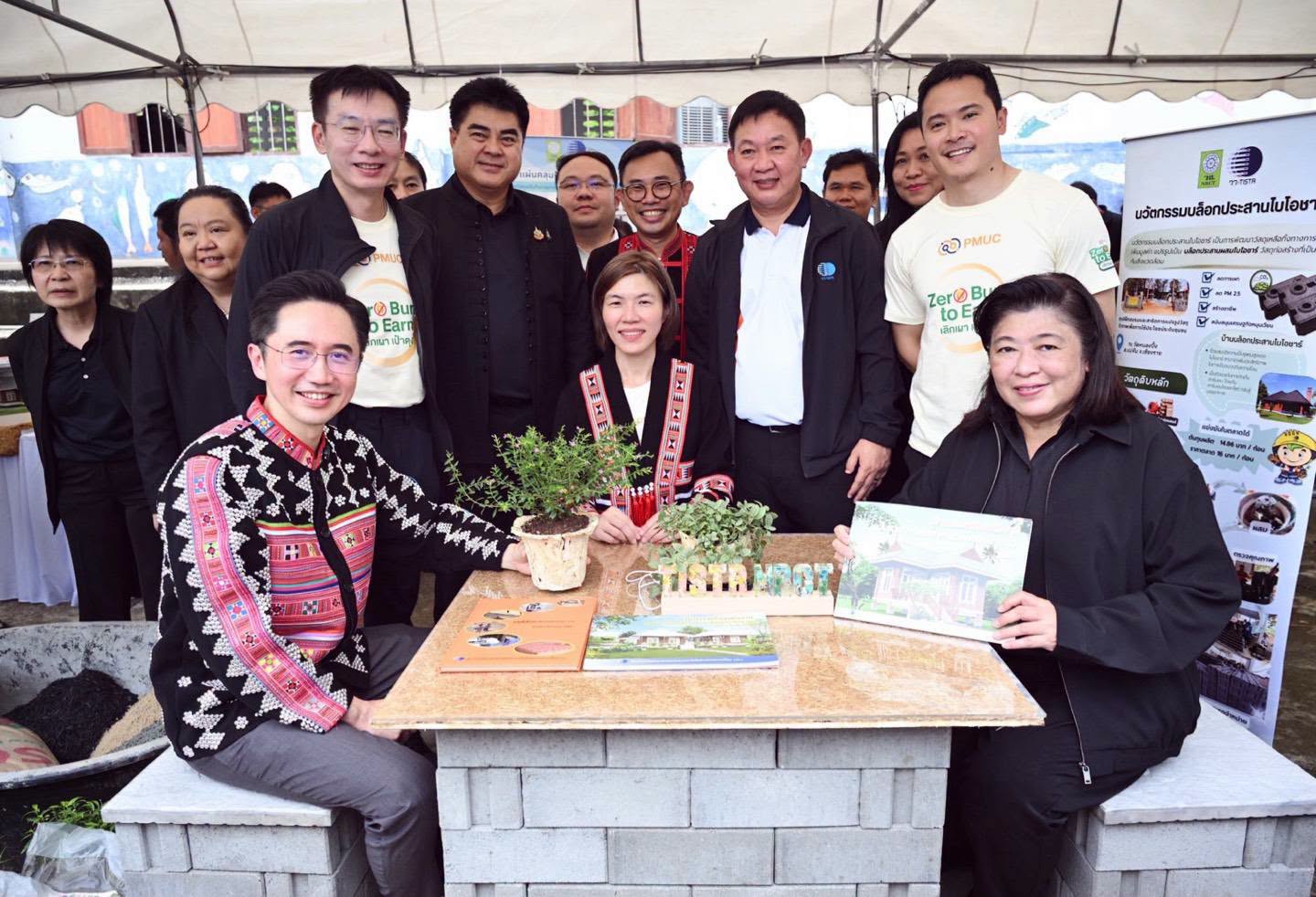
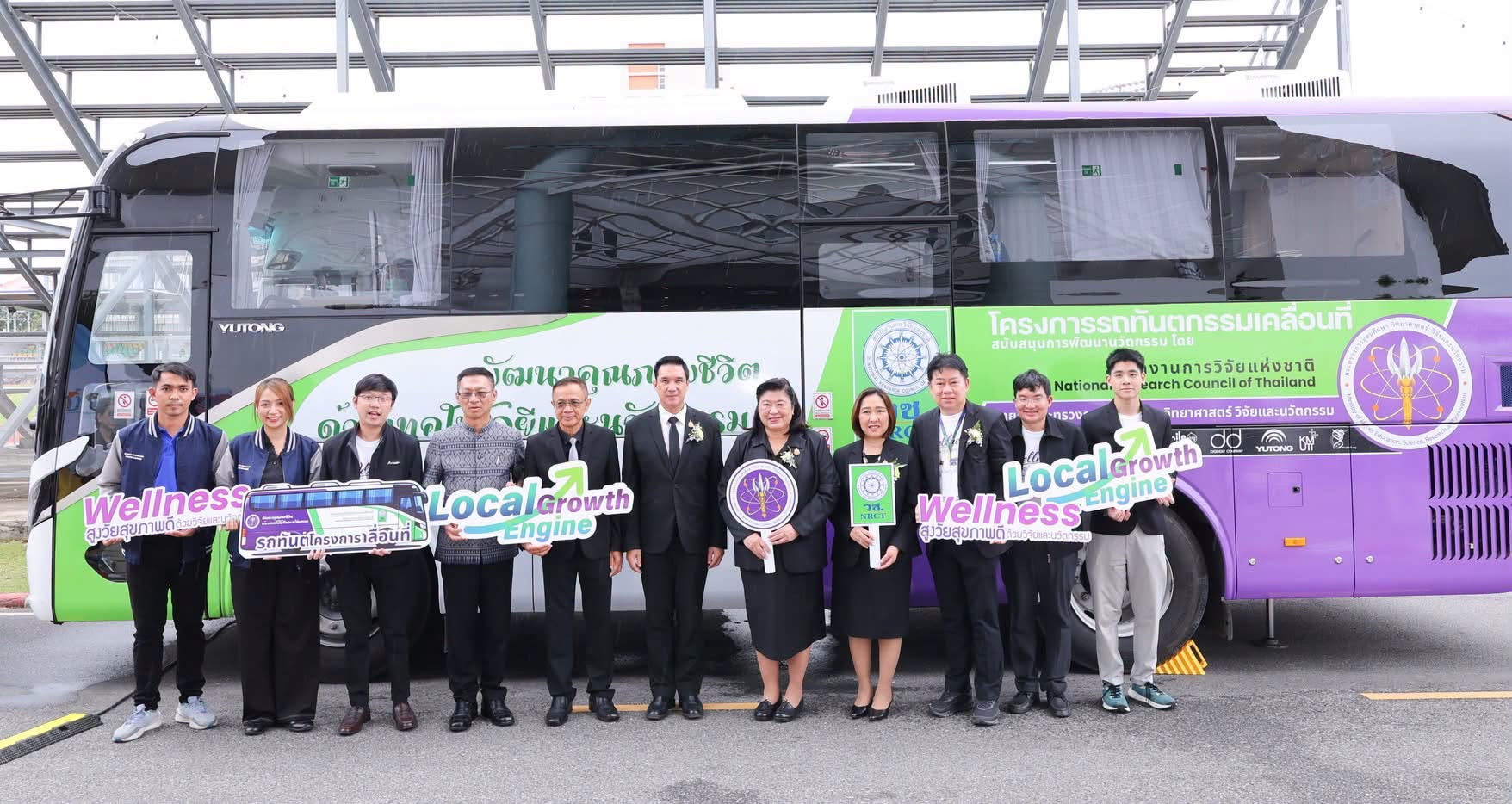
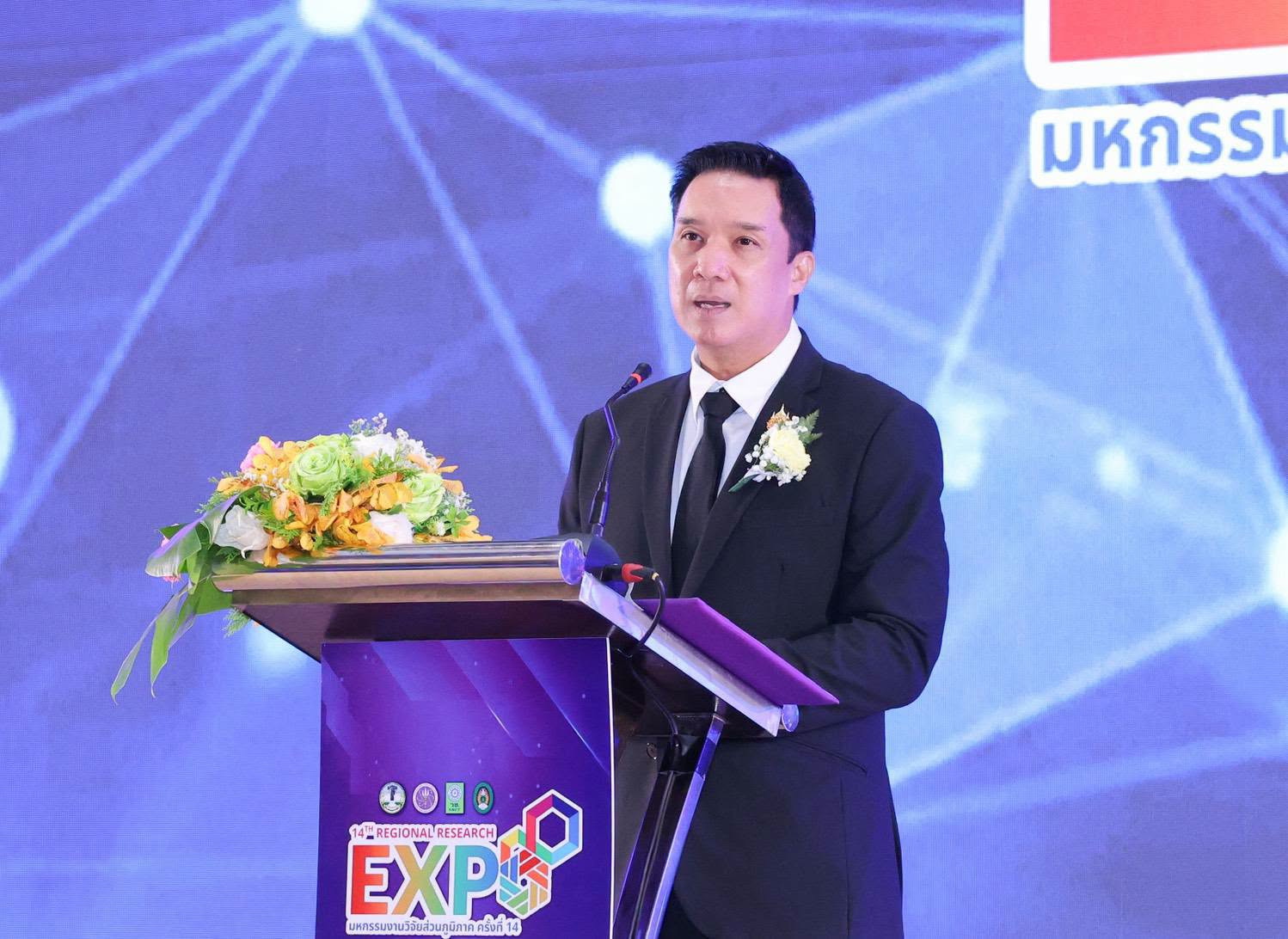
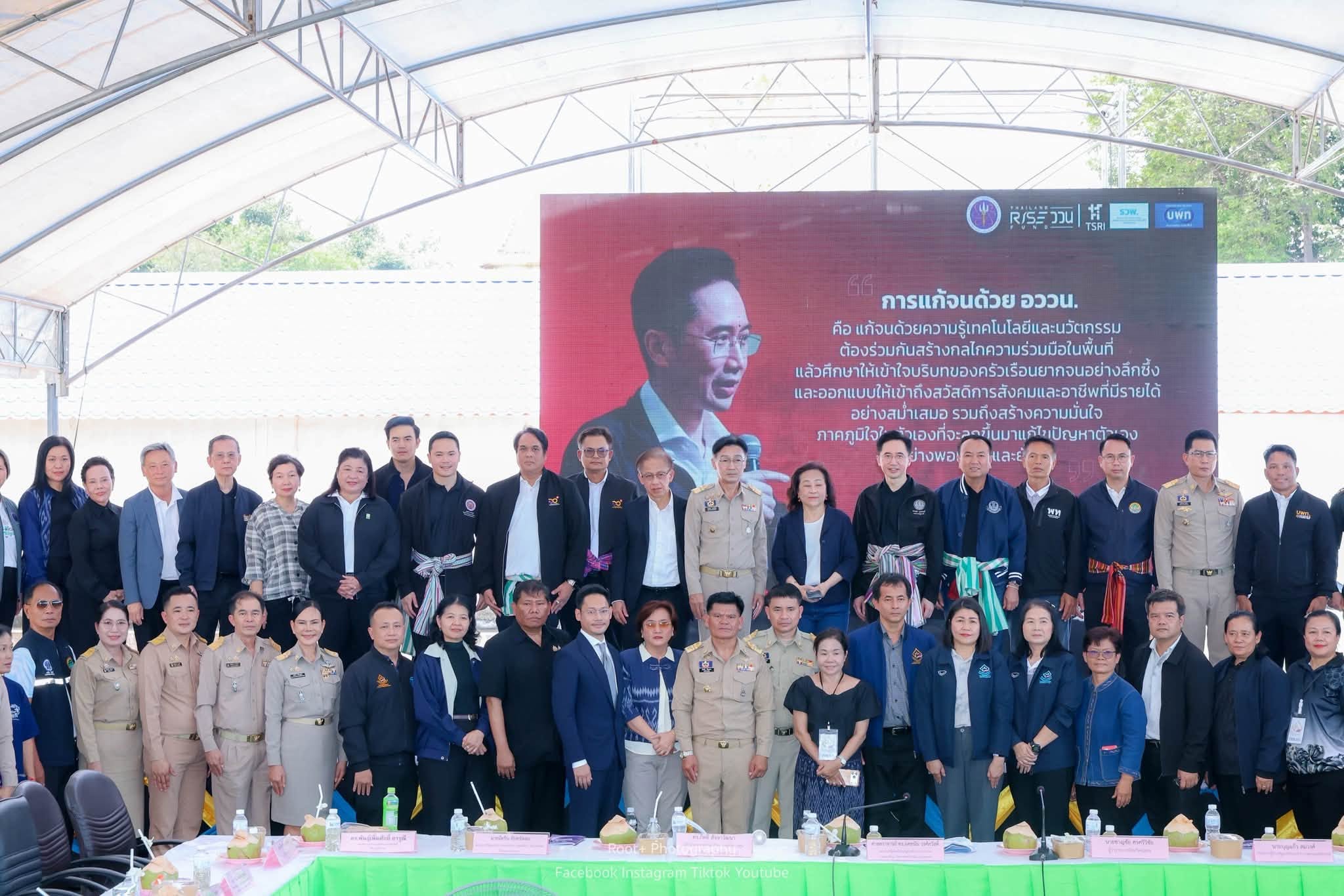
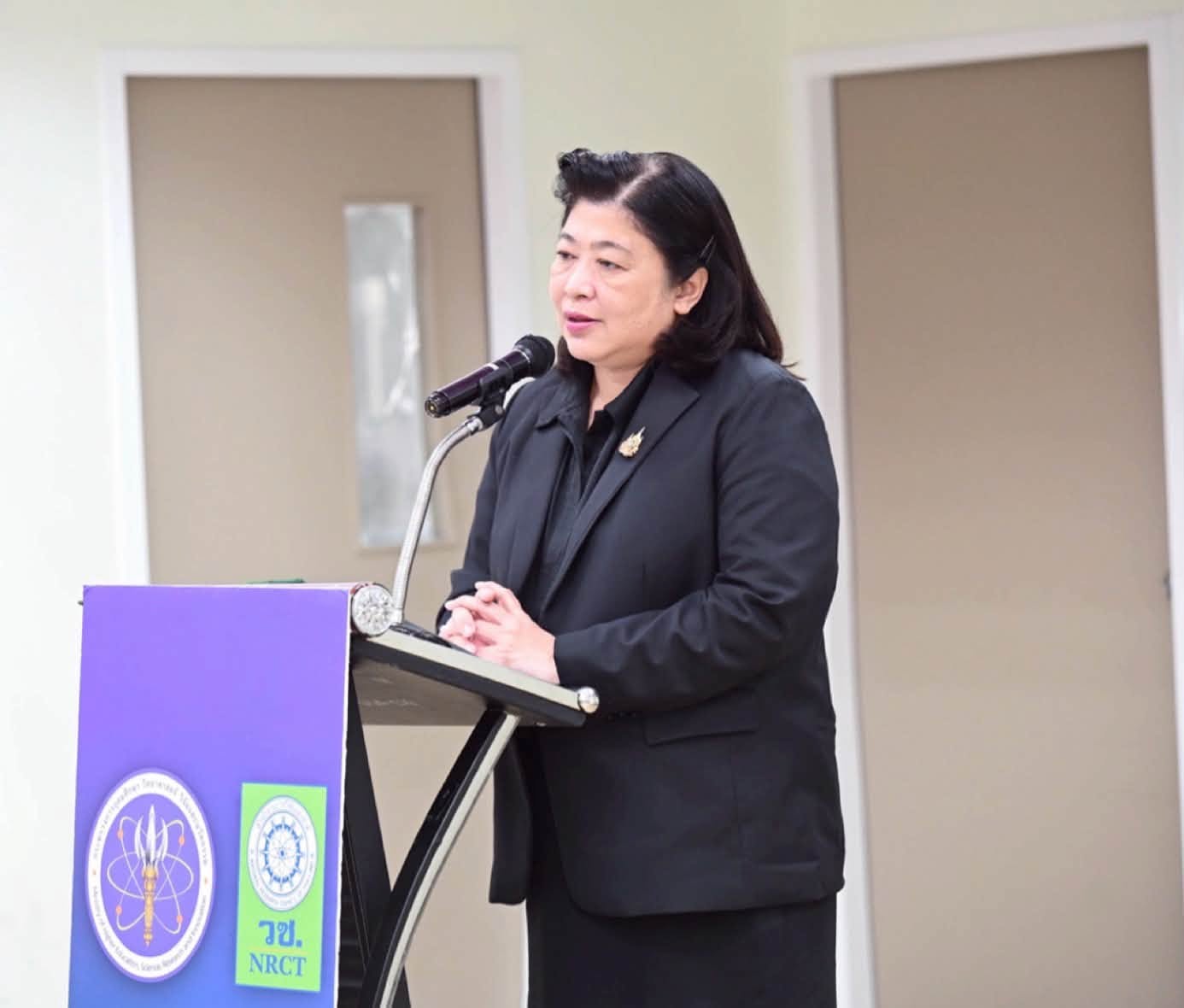
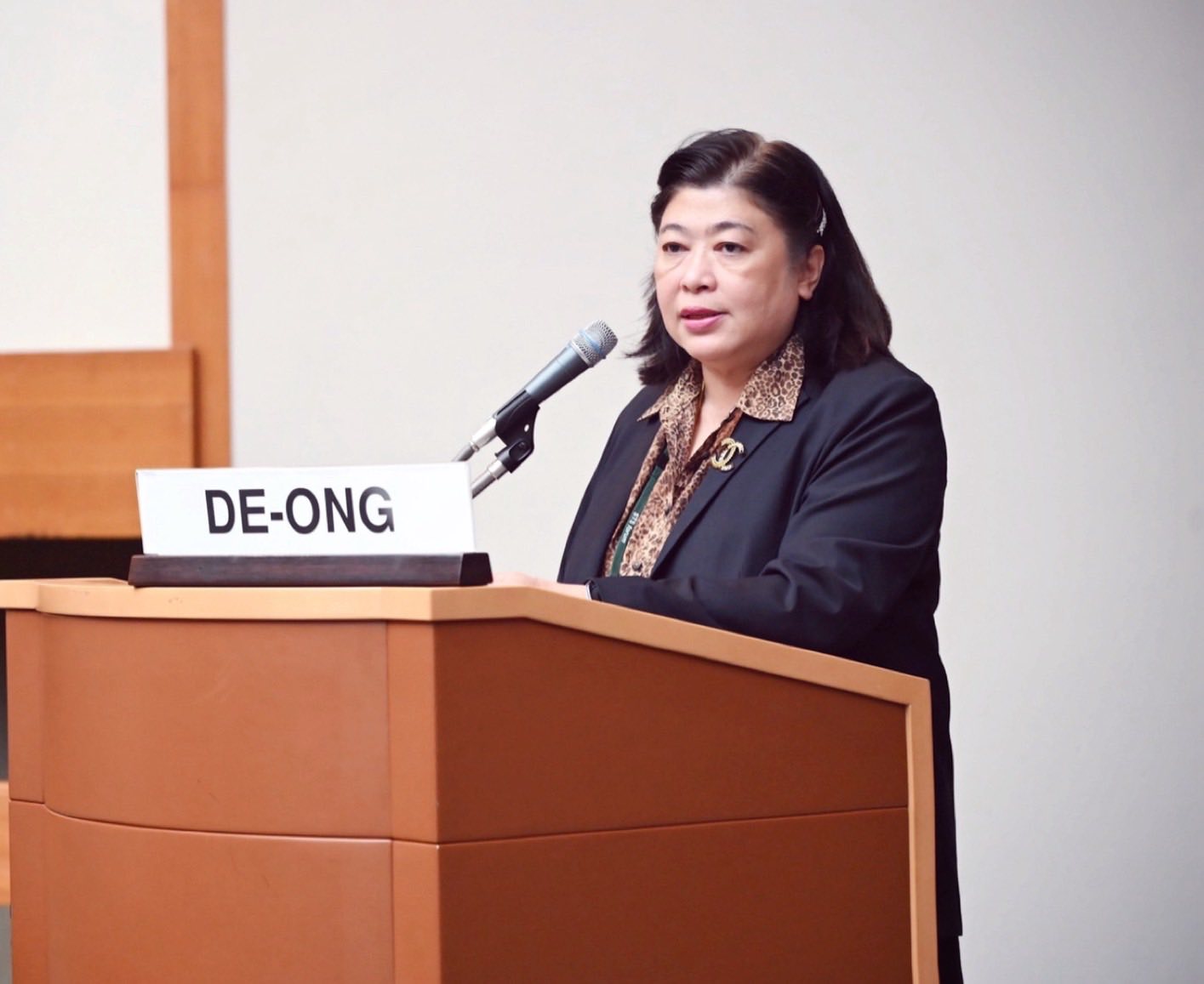
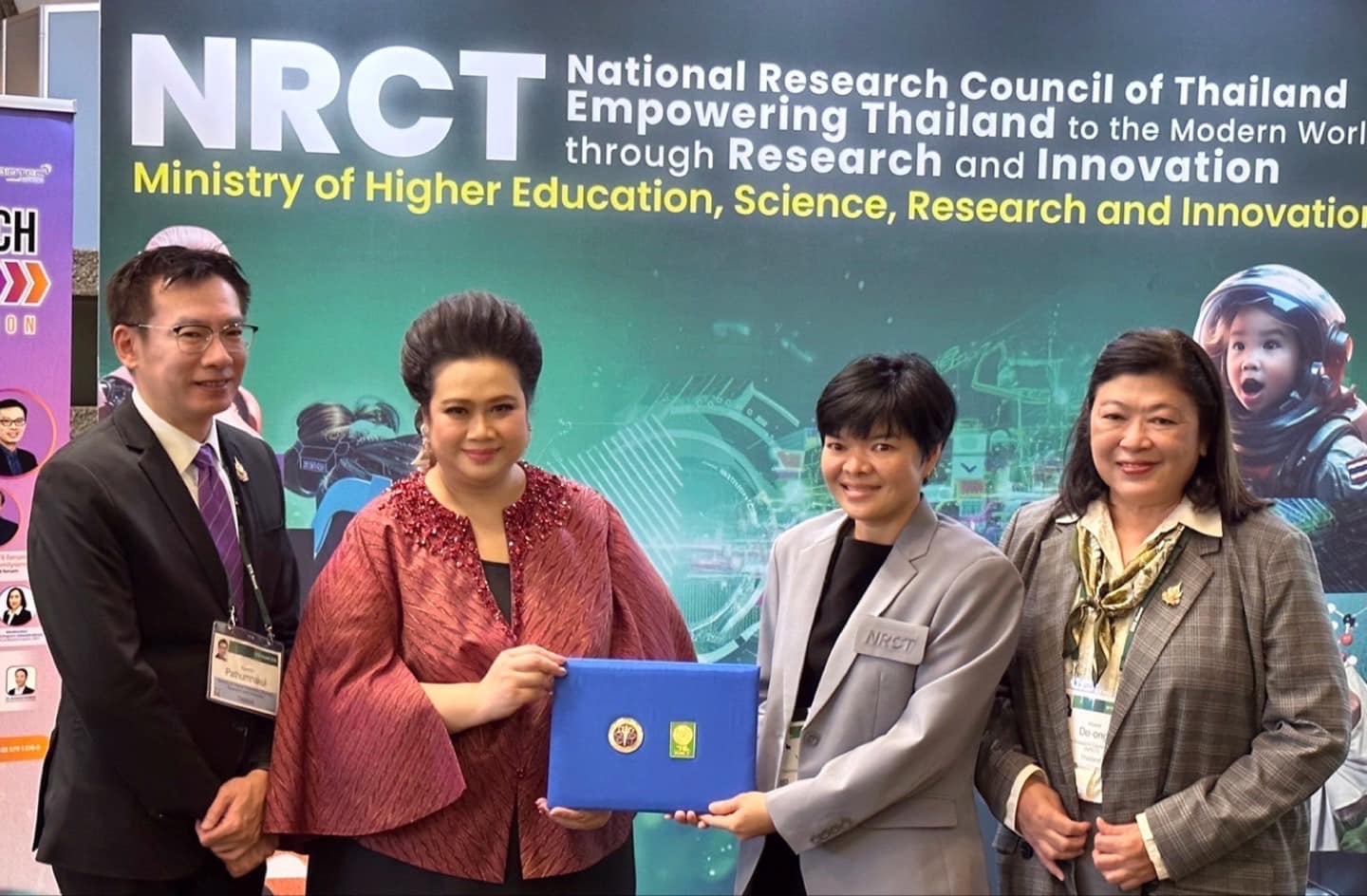
15 November 2026 – Prof. Dr. Yodchanan Wongsawat, Deputy Prime Minister and Minister of Higher Education, Science, Research and Innovation, visited an exhibition showcasing research and innovation at the “Biochar and Soil Improvement Technology Expo: Reducing Agricultural Burning and PM2.5 Pollution through Research and Innovation.” He was welcomed by Dr. Wiparat De-ong, Executive Director of the National Research Council of Thailand (NRCT), at the Pha Ngam Subdistrict Administrative Organization in Wiang Chai District, Chiang Rai Province, Thailand.
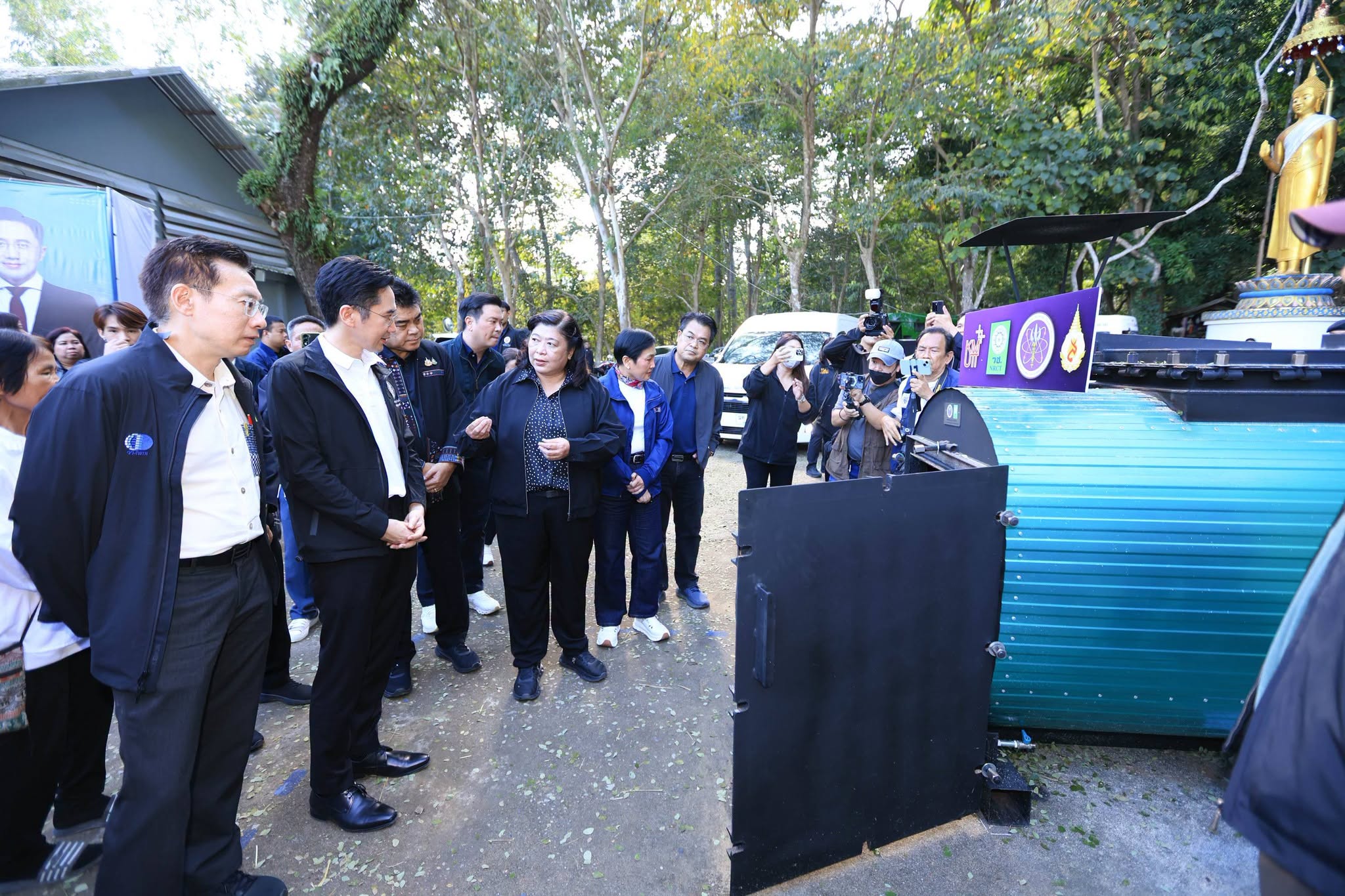
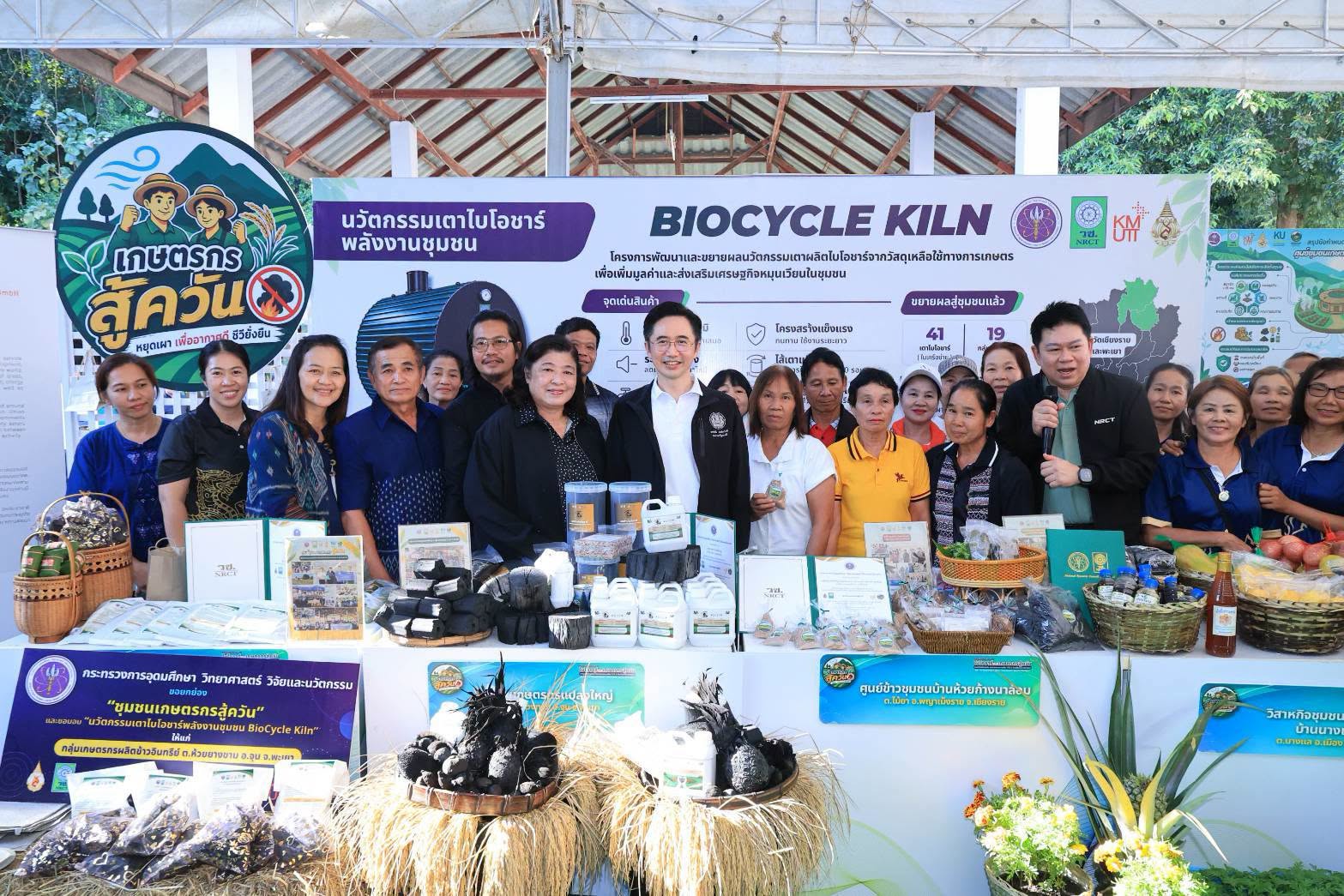
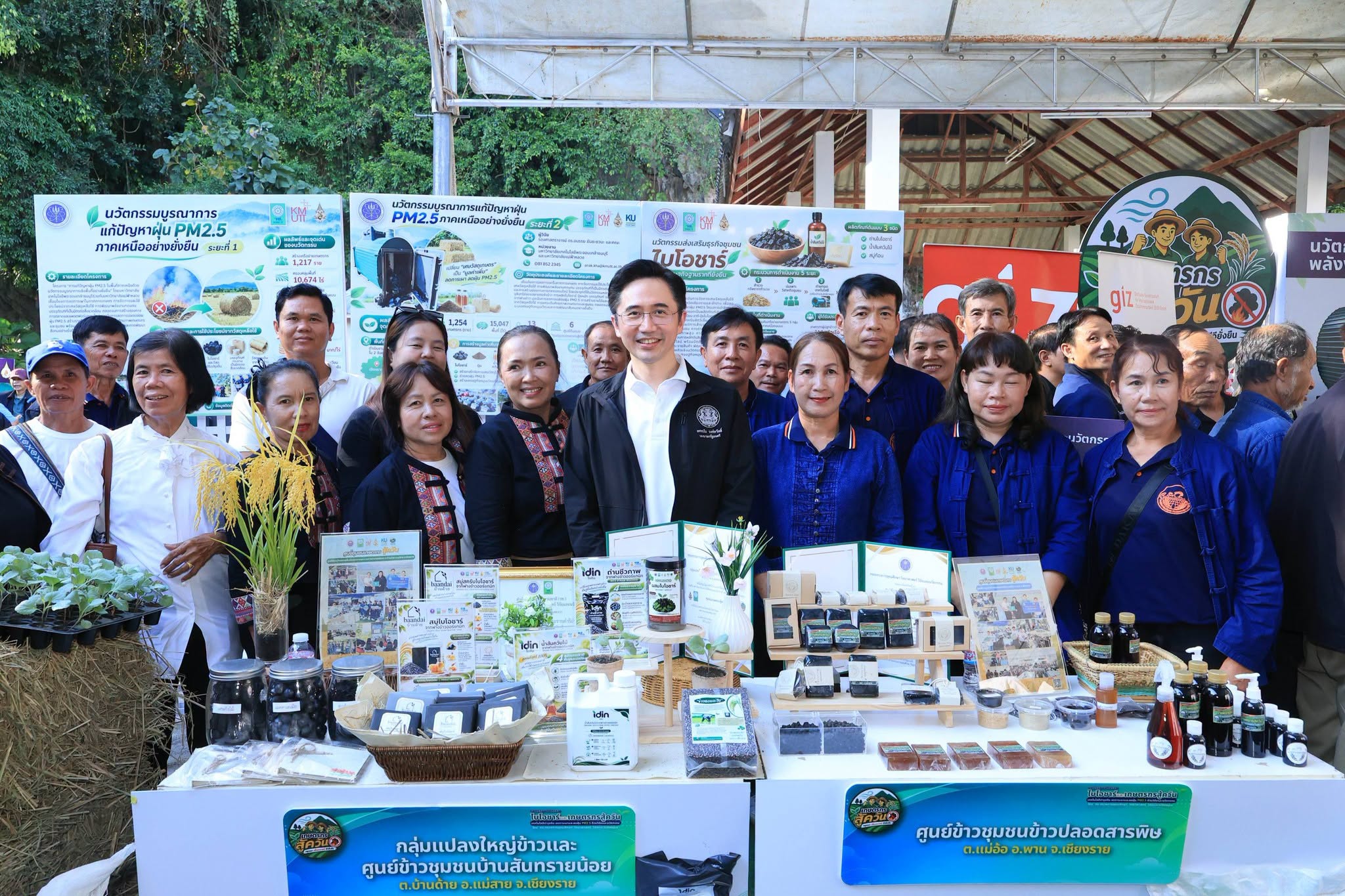
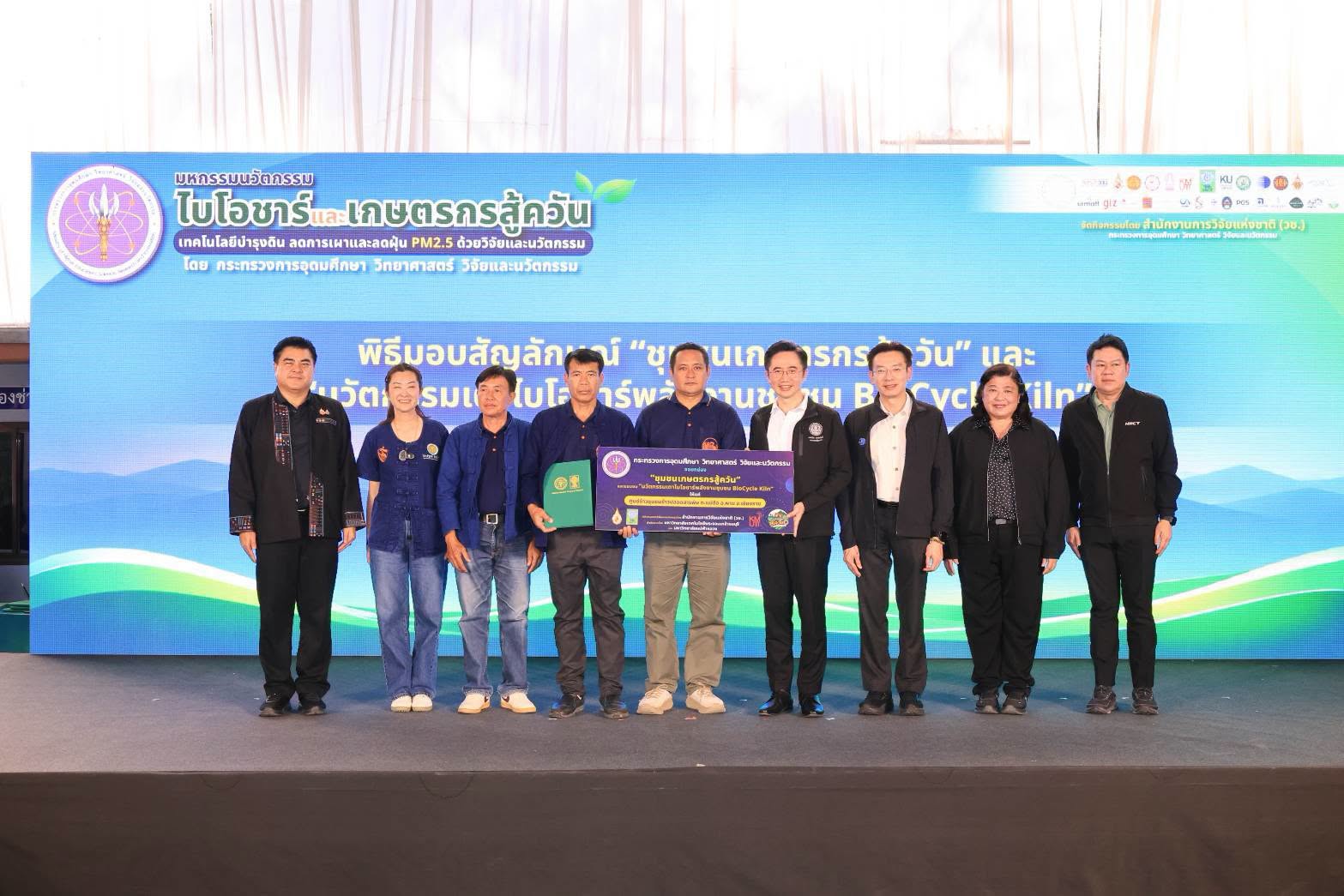
The exhibition featured a wide range of NRCT-supported research and innovation projects, particularly those addressing PM2.5 pollution in Northern Thailand. These included “Integrated Innovation for Sustainable Solutions to PM2.5 Pollution in Northern Thailand, Phases 1 and 2,” developed by King Mongkut's University of Technology Thonburi and Mae Fah Luang University; “Community Business Innovation through Biochar for a Sustainable Grassroots Economy,” developed by Mae Fah Luang University; and “Alternative Agricultural and Livestock Models to Reduce PM2.5 Pollution through Smoke-Free Farming,” along with biochar kiln technology, developed by Maejo University. These initiatives aim to promote more environmentally friendly agricultural practices and provide sustainable alternatives to agricultural burning.
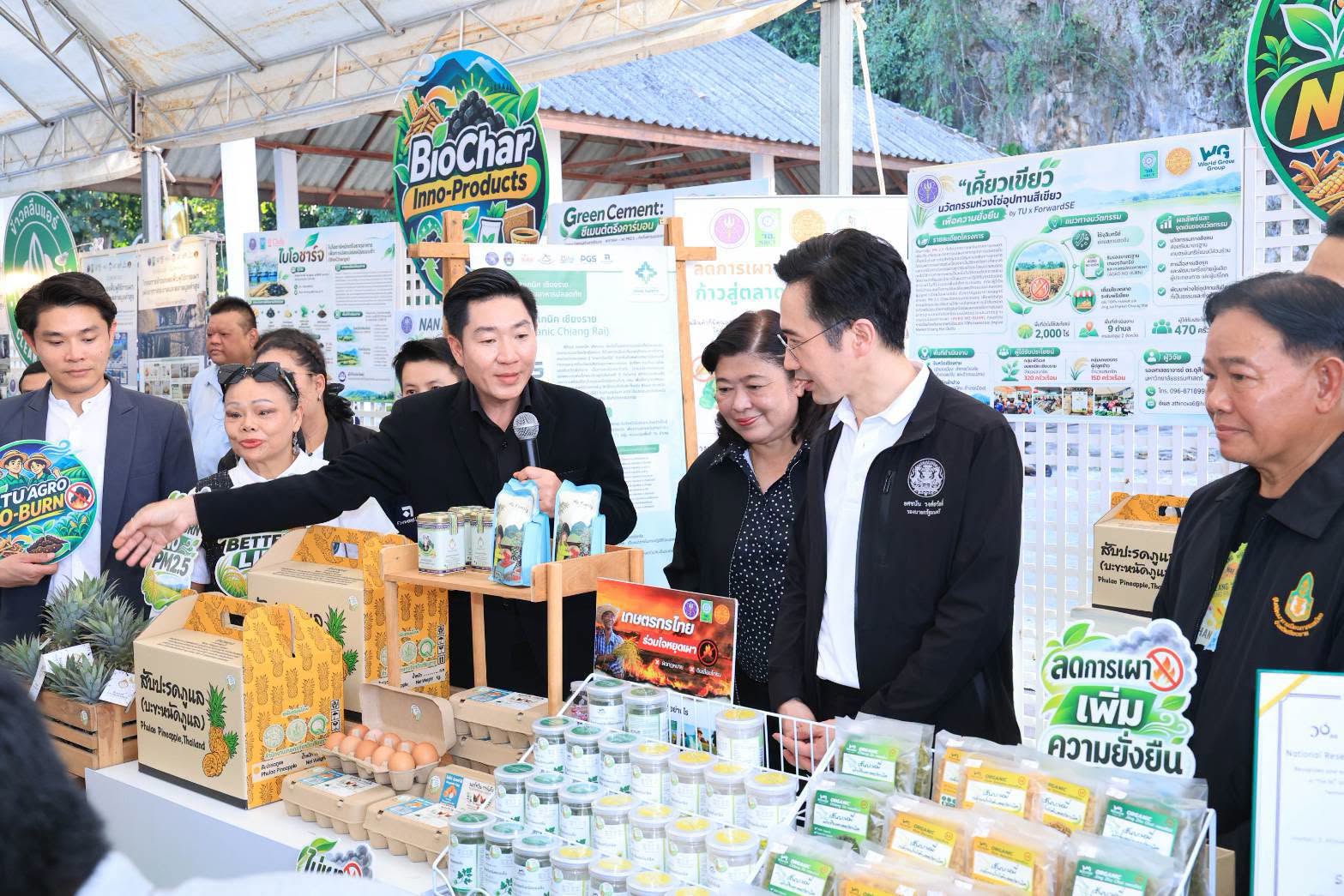
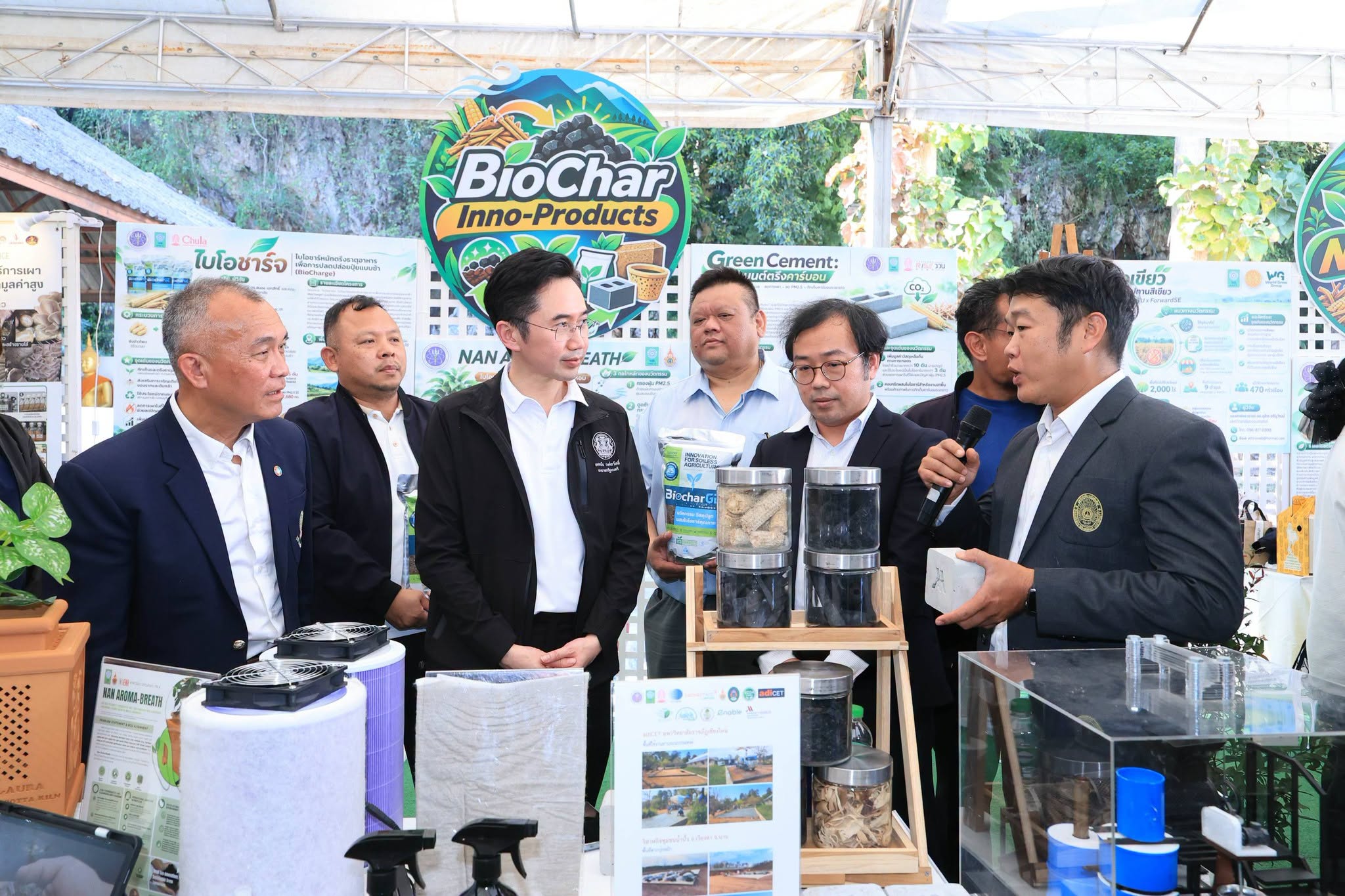
The exhibition also presented innovations in agricultural residue management and value-added product development. These included “Clear Tor,” an innovation for managing rice straw without burning, and “Kiew Khiao (Green Chew),” a sustainable green supply chain innovation, both developed by Thammasat University; “Green Cement: Carbon-Sequestering Cement,” developed by the National Nanotechnology Center under the National Science and Technology Development Agency (NSTDA); “BioCharge: Nutrient-Enriched Biochar for Slow-Release Fertilization,” developed by Chulalongkorn University; “Biochar Innovation from Corn Cobs for Improving Maize Cultivation Soil,” developed by the Faculty of Agriculture, Kasetsart University; “Value-Added Biochar Product Innovation for Community Economies,” developed by the Thailand Institute of Scientific and Technological Research (TISTR); and “Microorganisms for Decomposing Agricultural Residues to Reduce Open-Field Burning,” developed by Srinakharinwirot University.
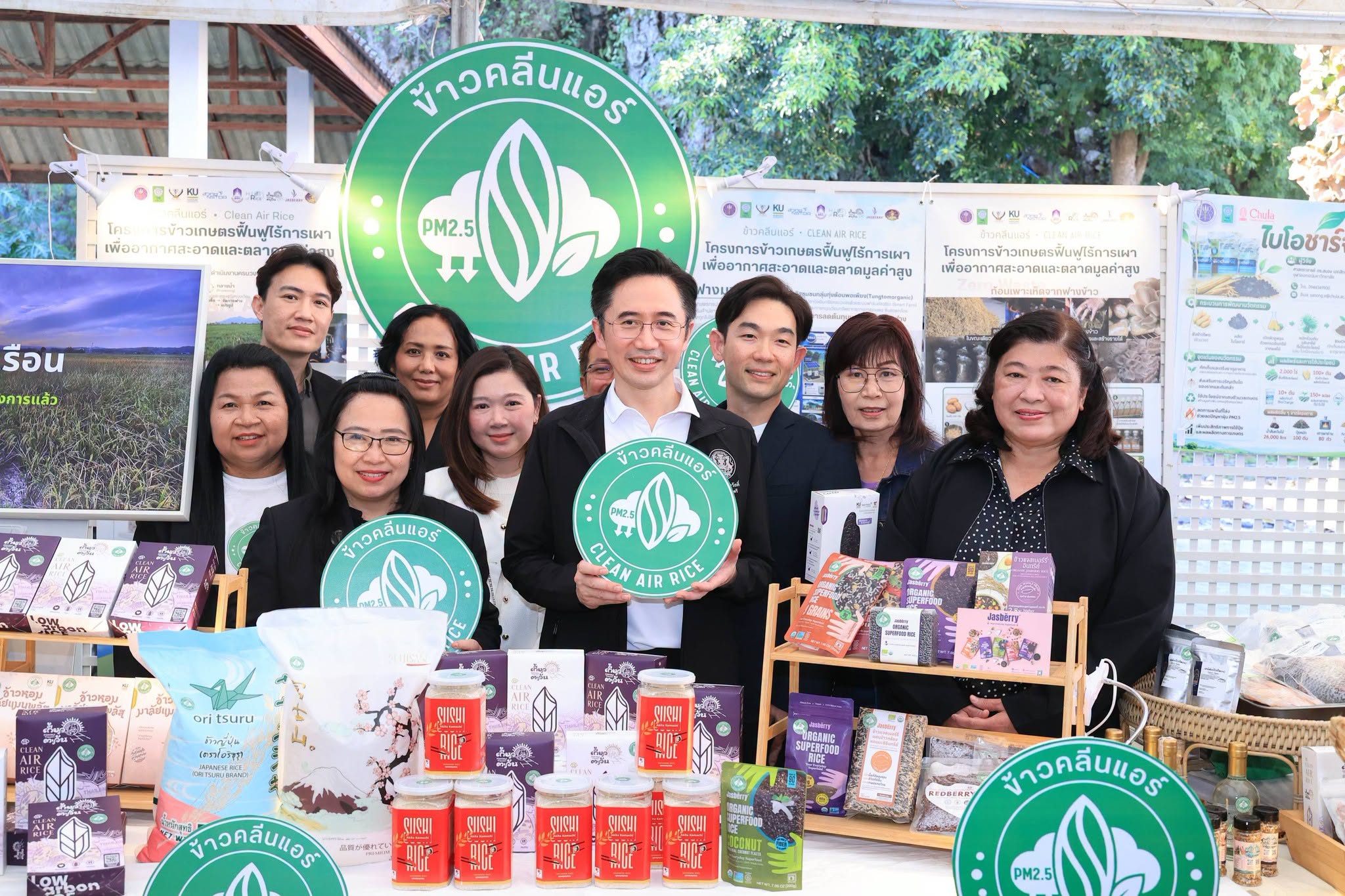
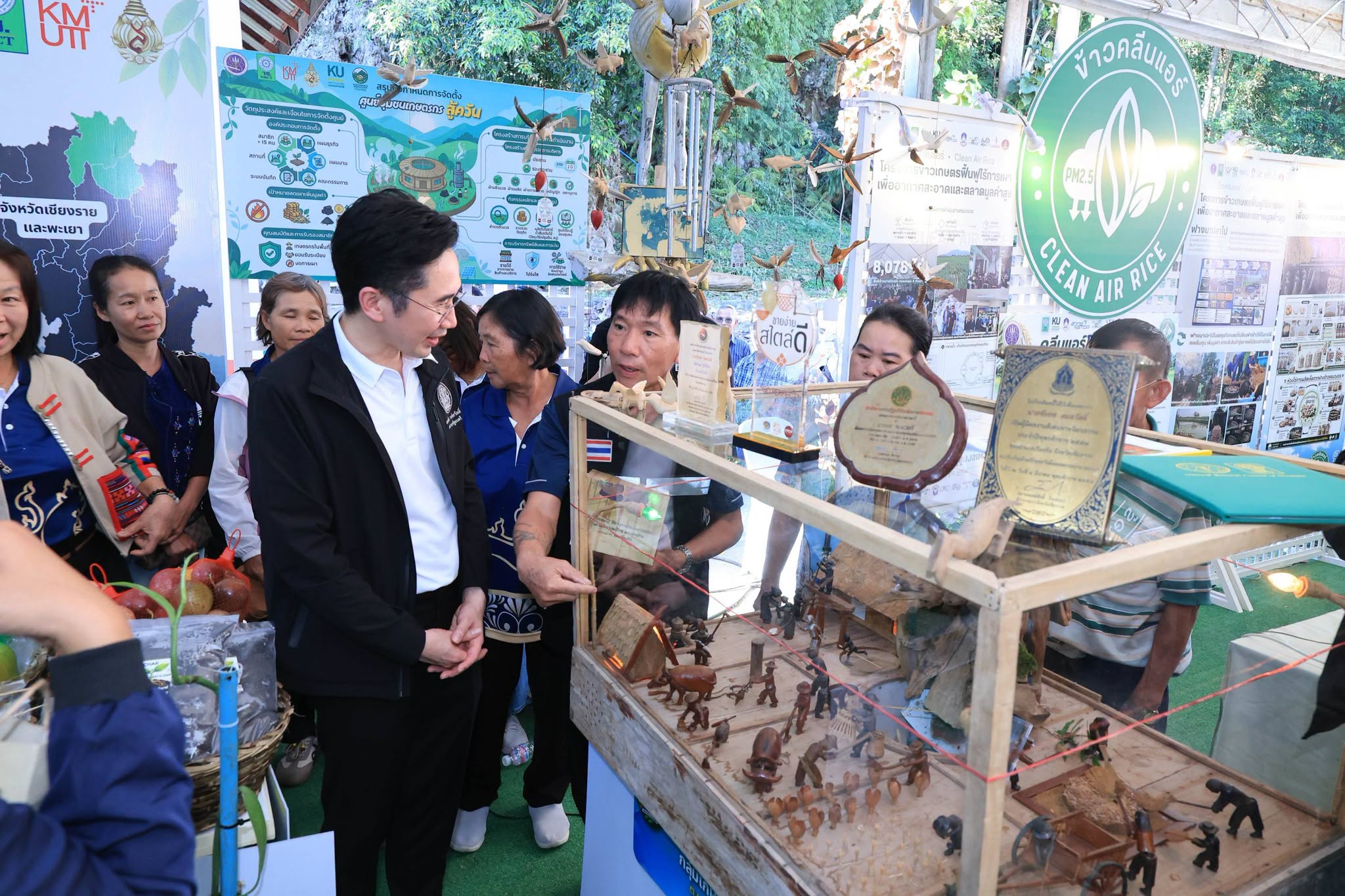
In addition, the exhibition showcased technologies and innovations for soil improvement, biomaterial development, and environmental applications. Highlights included “High-Temperature Dual-Coupled Reactor Technology for Producing White Charcoal from Bamboo Residues”; “NAN AROMA-BREATH: Air-Purifying Biochar with Fragrance Dispersion Technology,” developed by Rajamangala University of Technology Lanna, Nan Campus; “An Innovative Technology Transfer Chain from Kilns to Policy: Bringing Biochar to Smoke-Free Communities,” developed by the National Center for Genetic Engineering and Biotechnology (BIOTEC); and the “Clean Air Rice Model,” developed by the Rice Science Center, Kasetsart University.
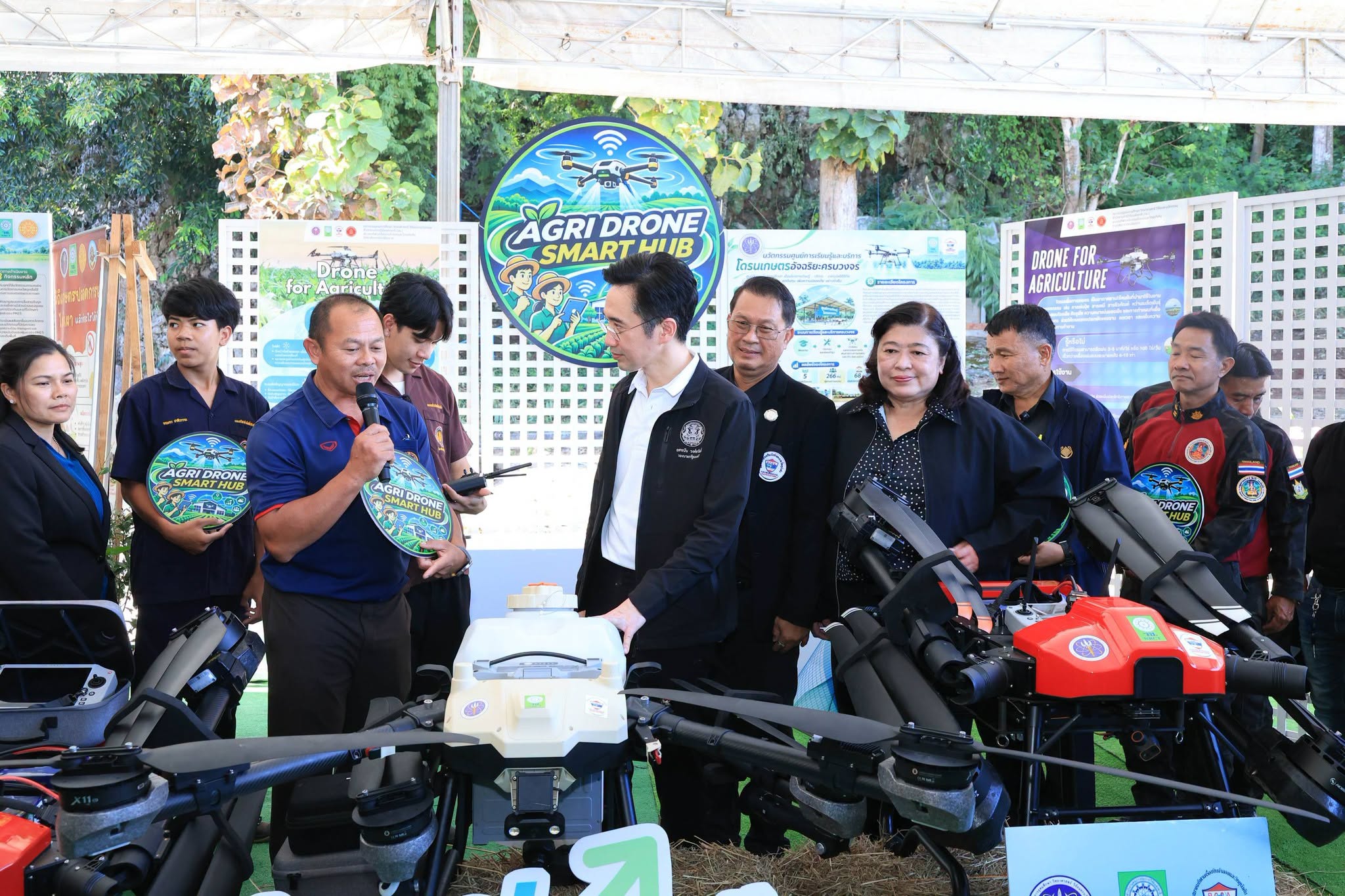
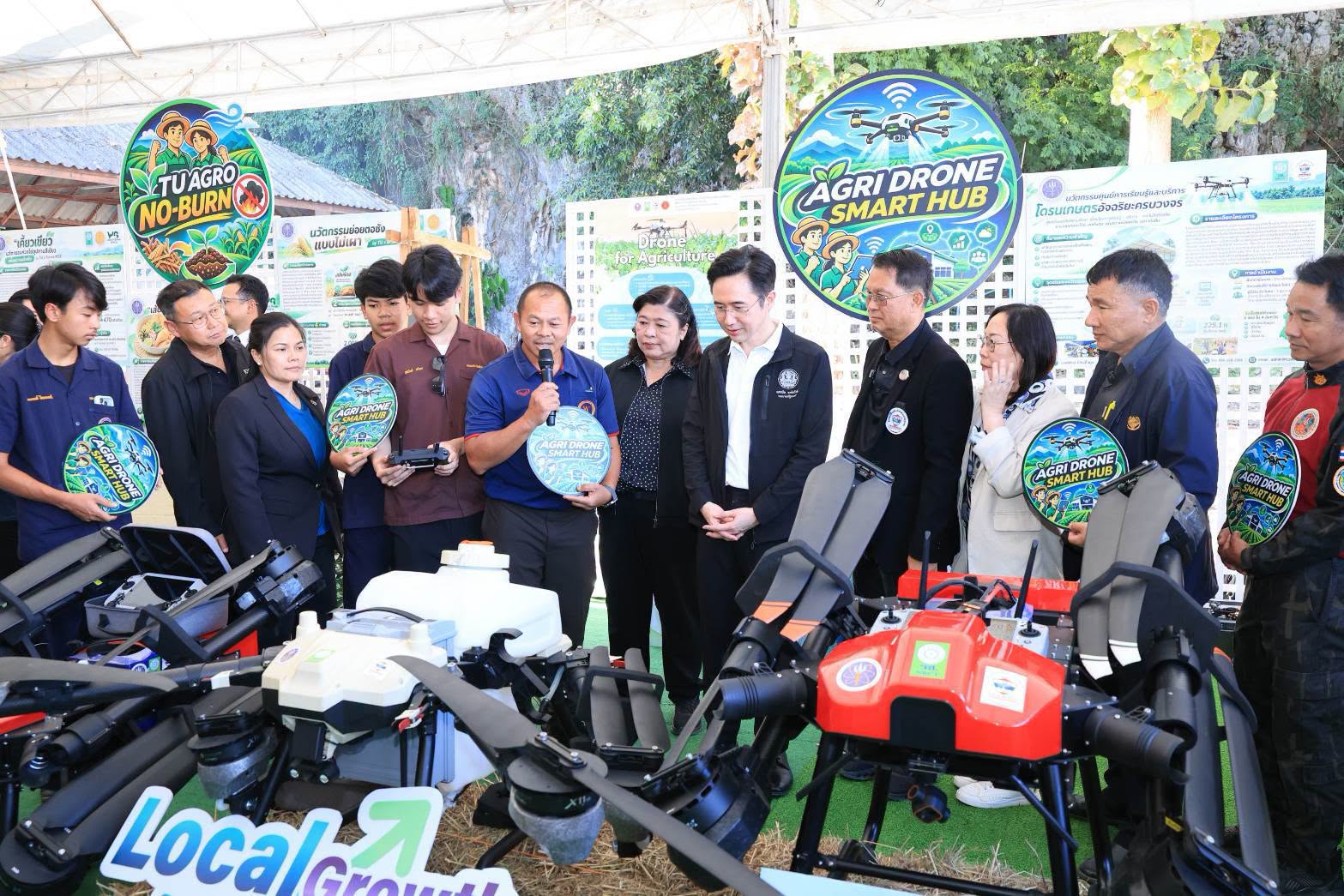
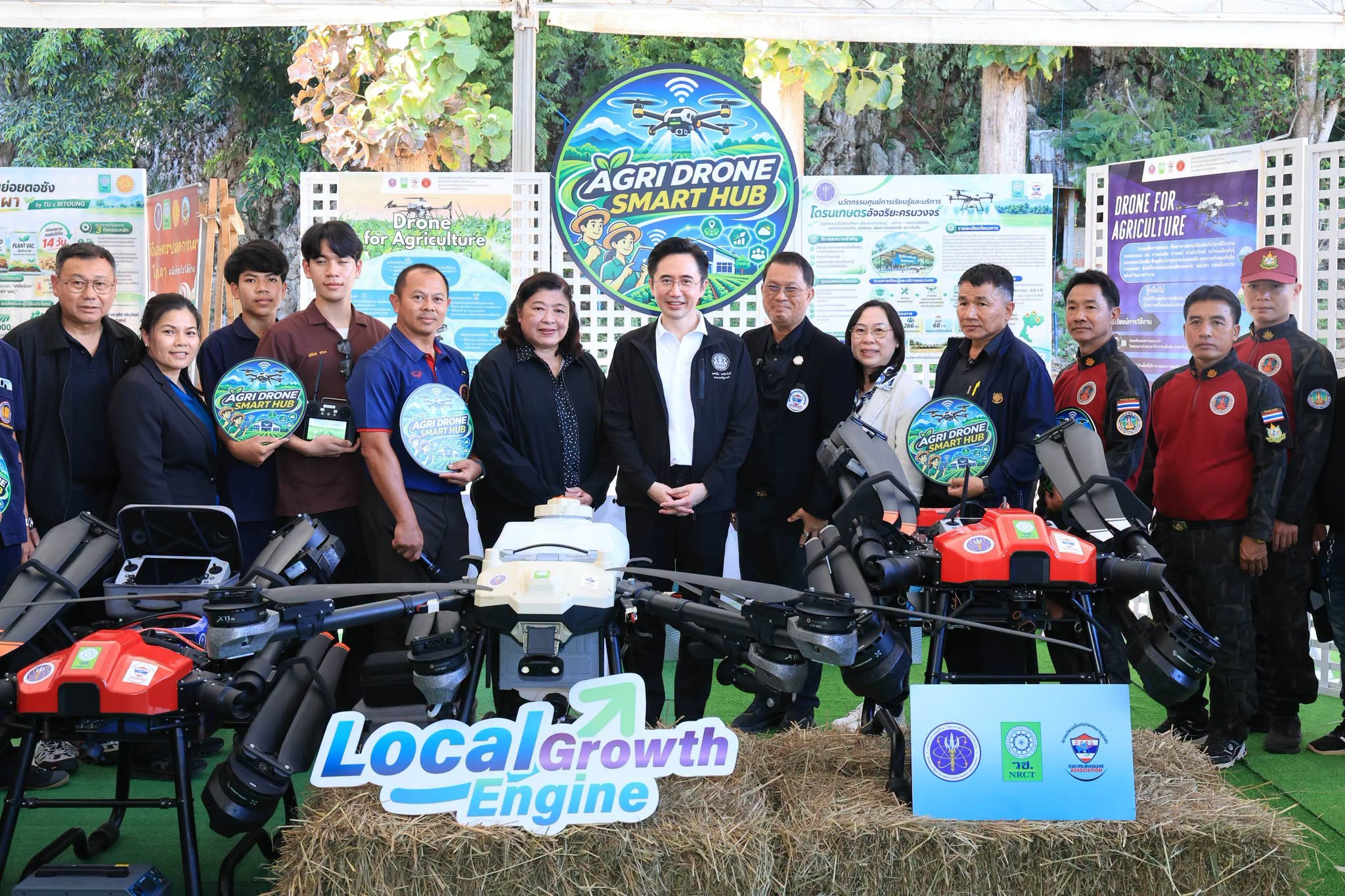
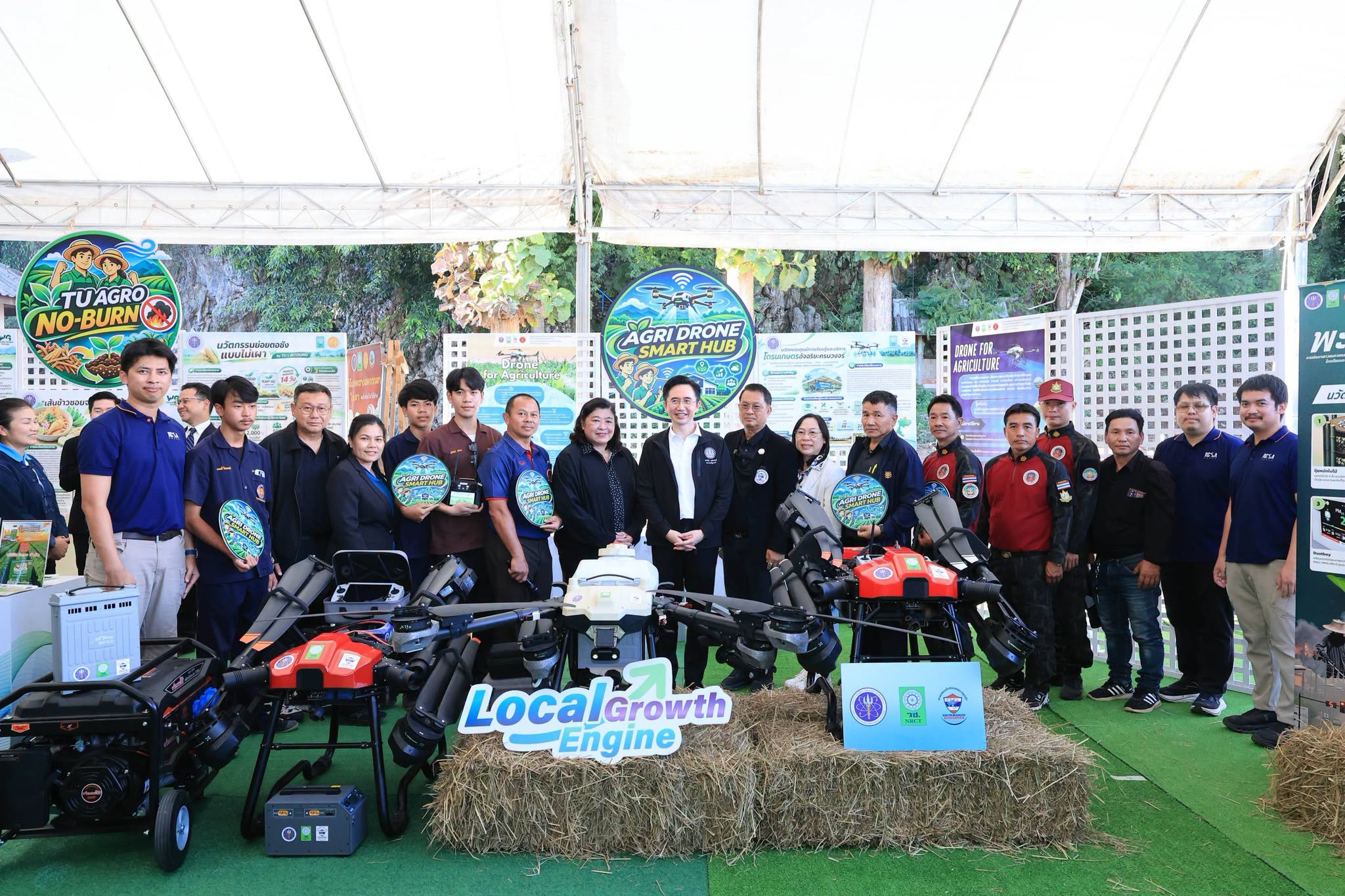
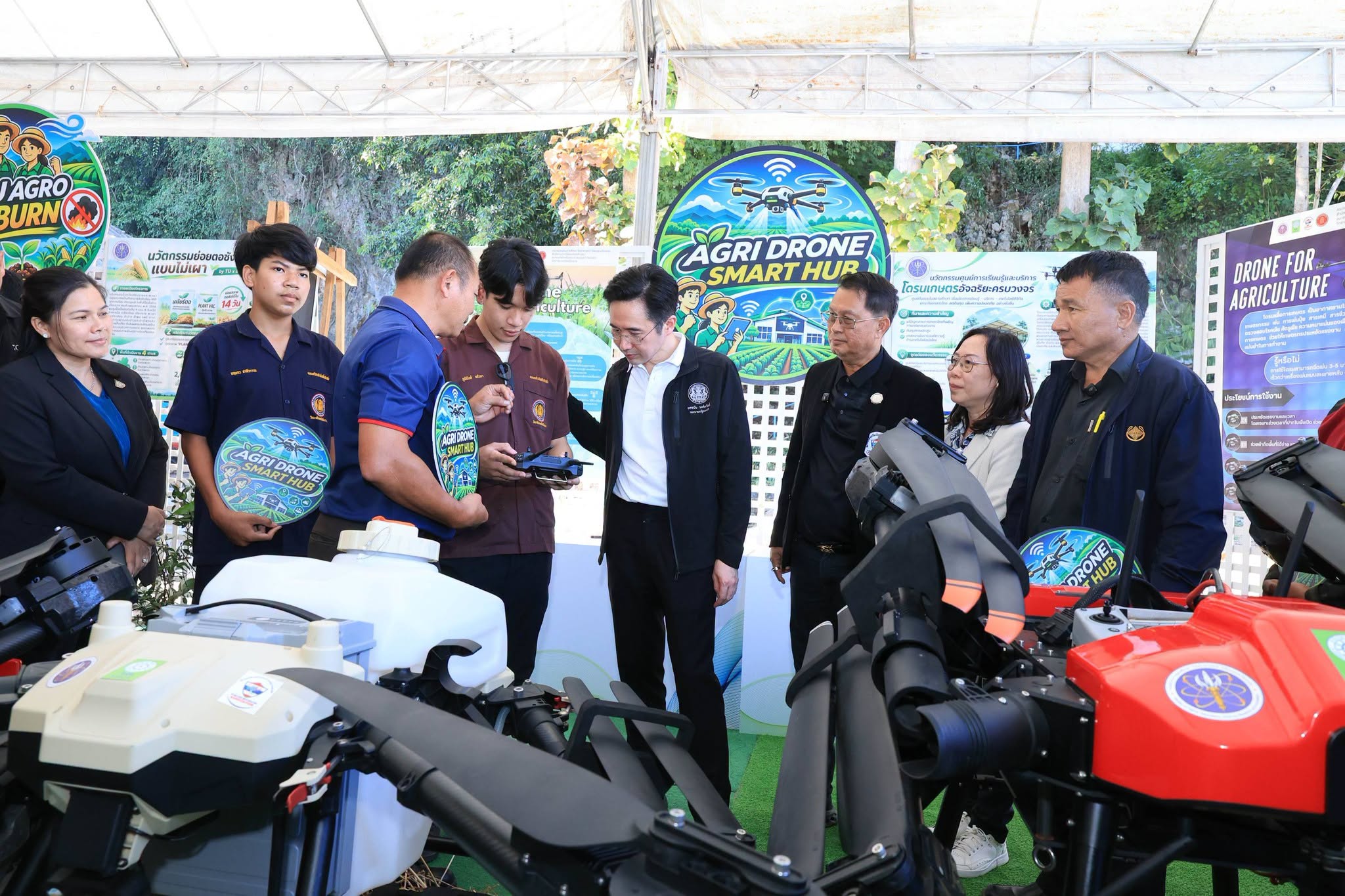
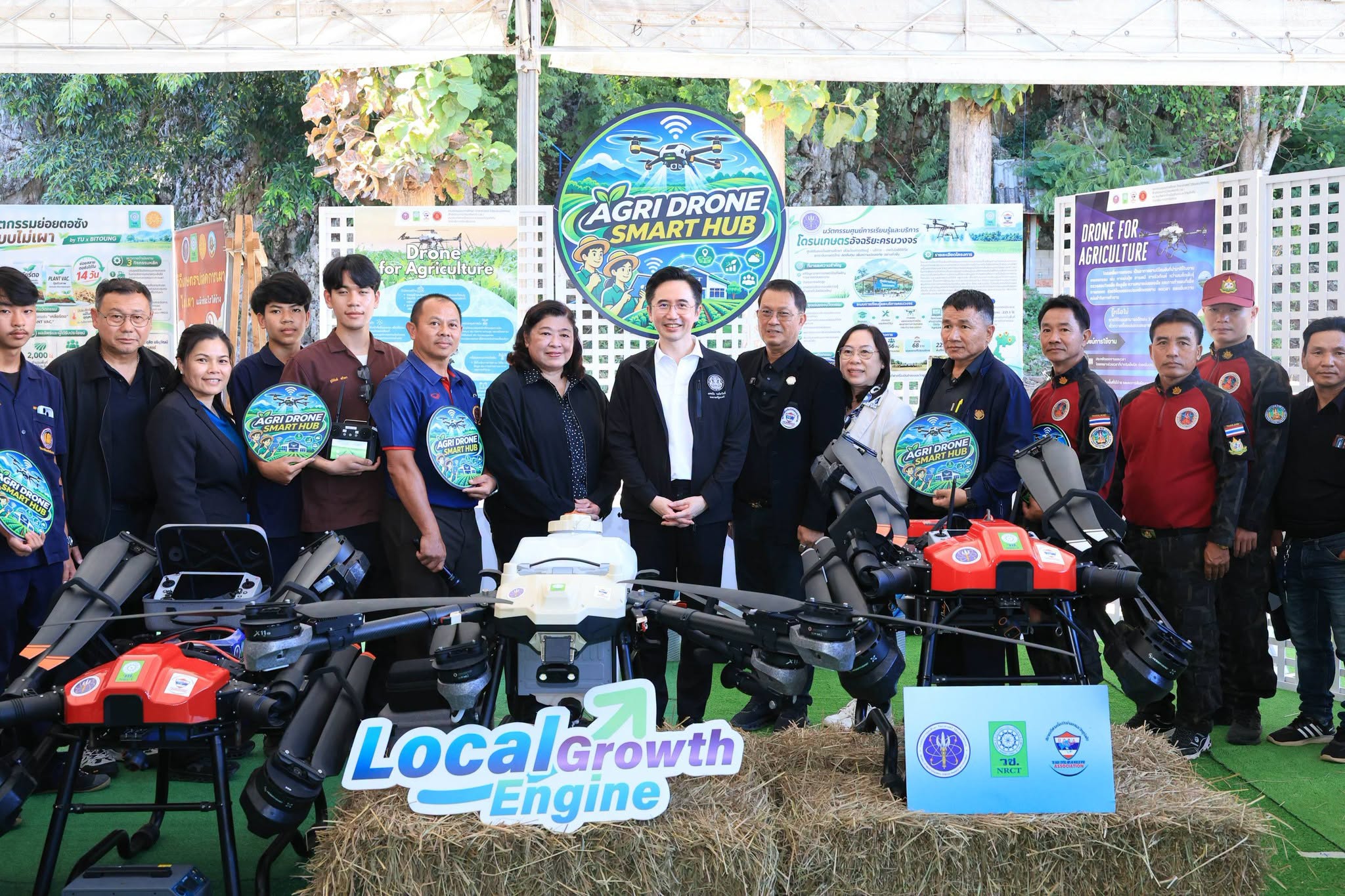
The exhibition also featured the “Integrated Smart Agricultural Drone Learning and Service Center Innovation,” demonstrating how drone technology can support agricultural operations, improve production efficiency, and expand farmers' access to modern agricultural technologies.
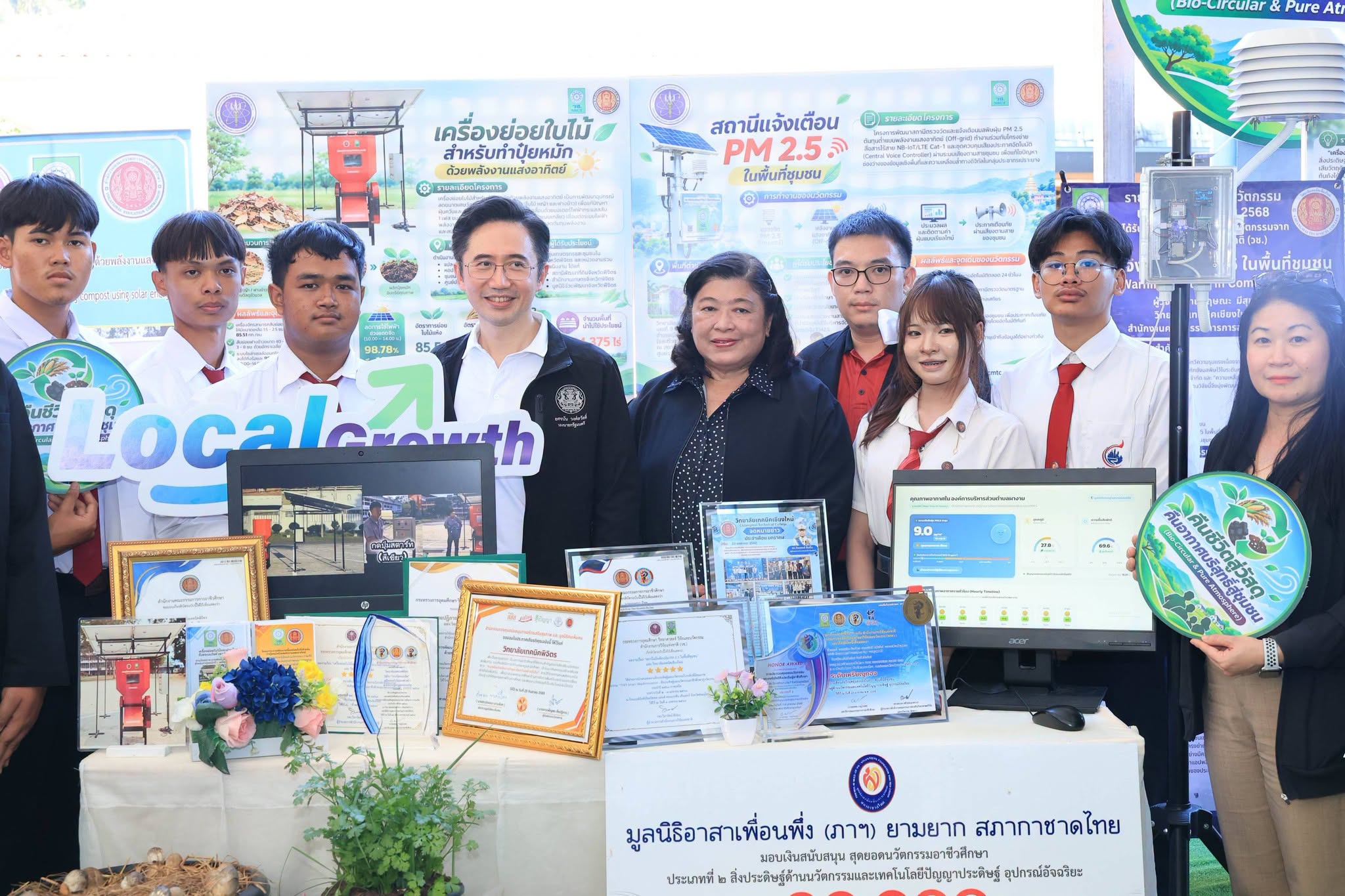
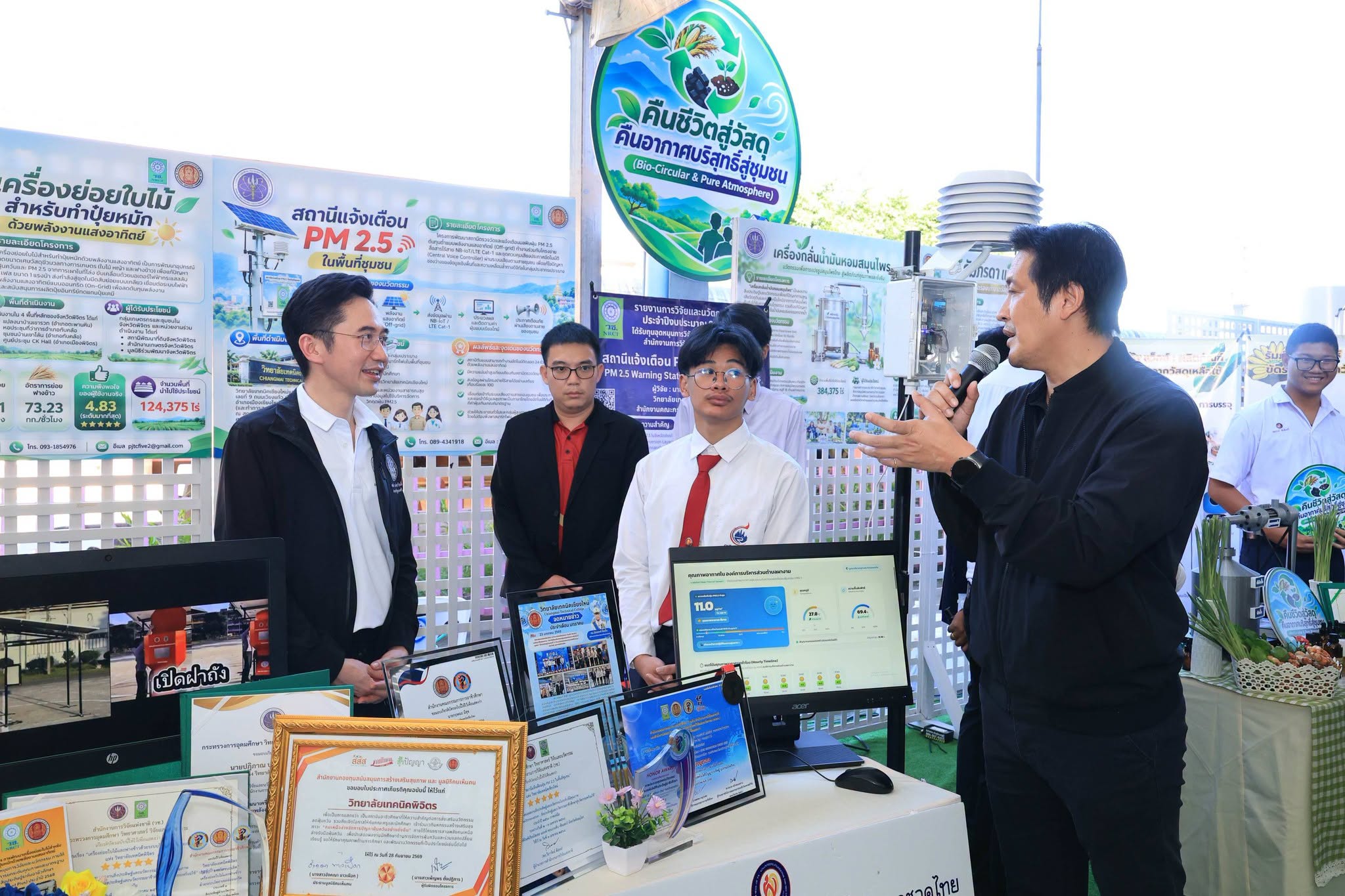
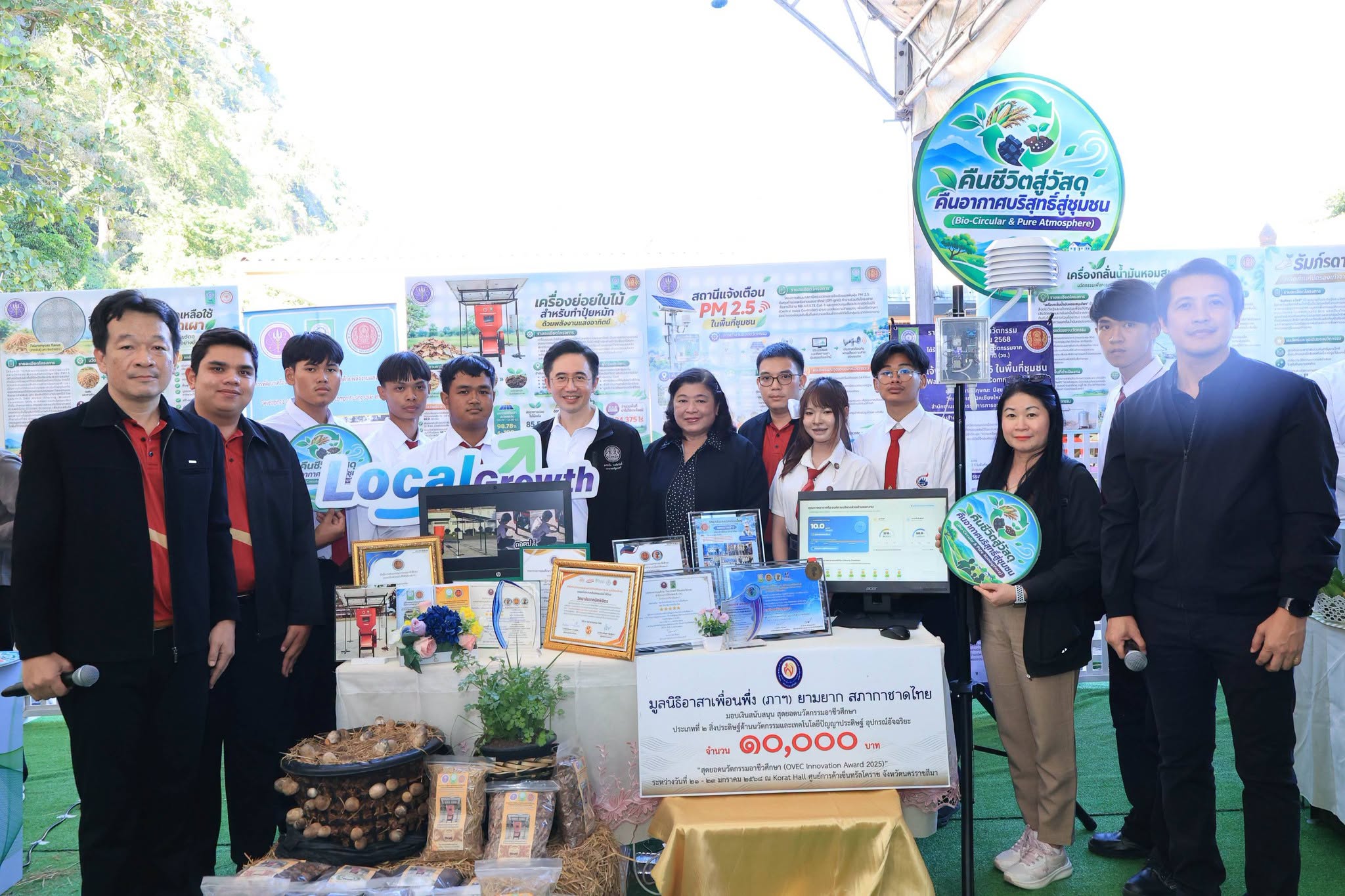
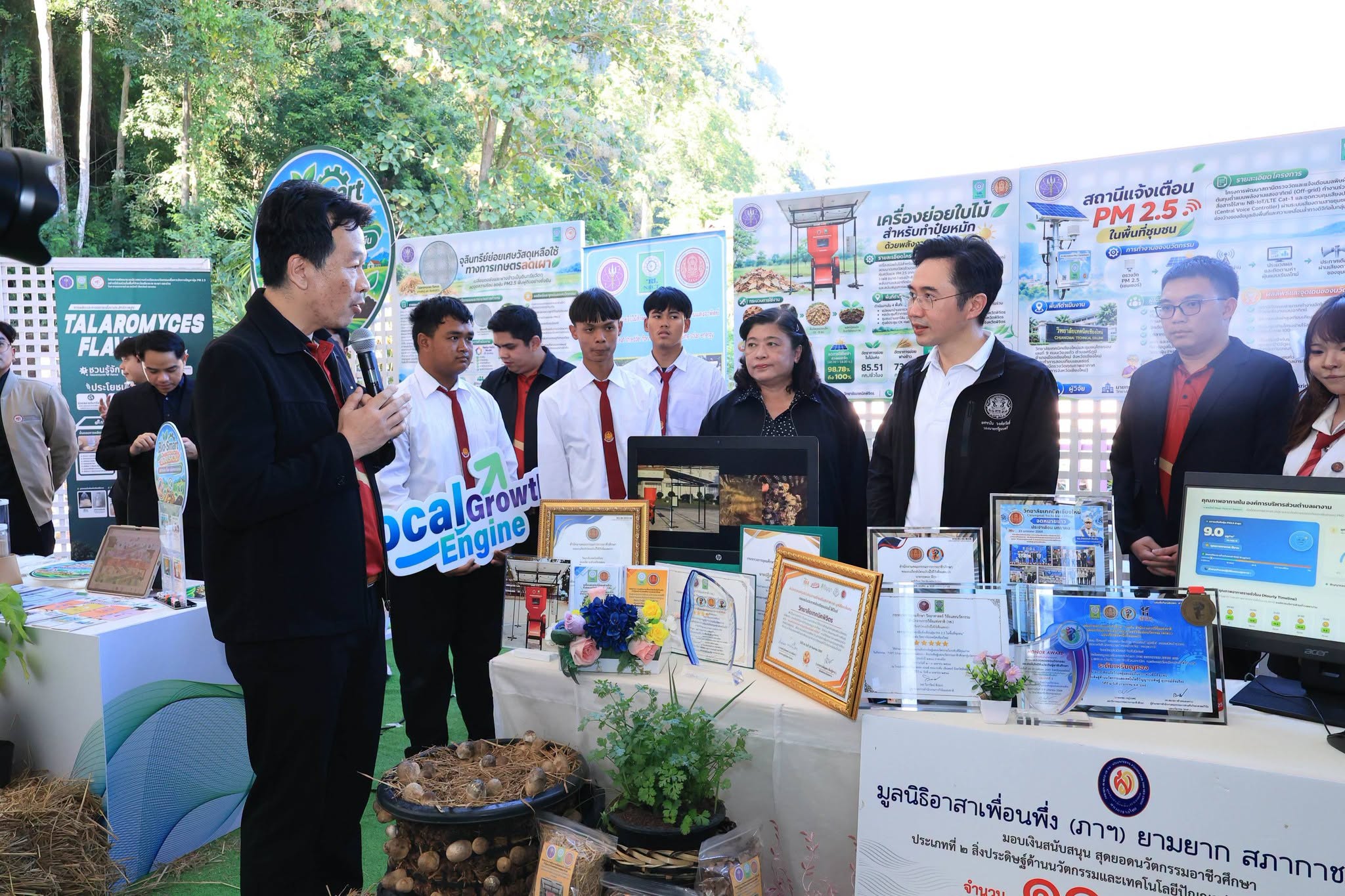
Furthermore, the exhibition highlighted practical innovations developed by vocational education students and inventors, demonstrating their ability to apply technical knowledge and skills to address local challenges. Featured innovations included an Essential Oil Distillation Machine and a Solar-Powered Leaf Shredder for Compost Production, both developed by technical colleges, as well as a Community-Based PM2.5 Monitoring and Alert Station.