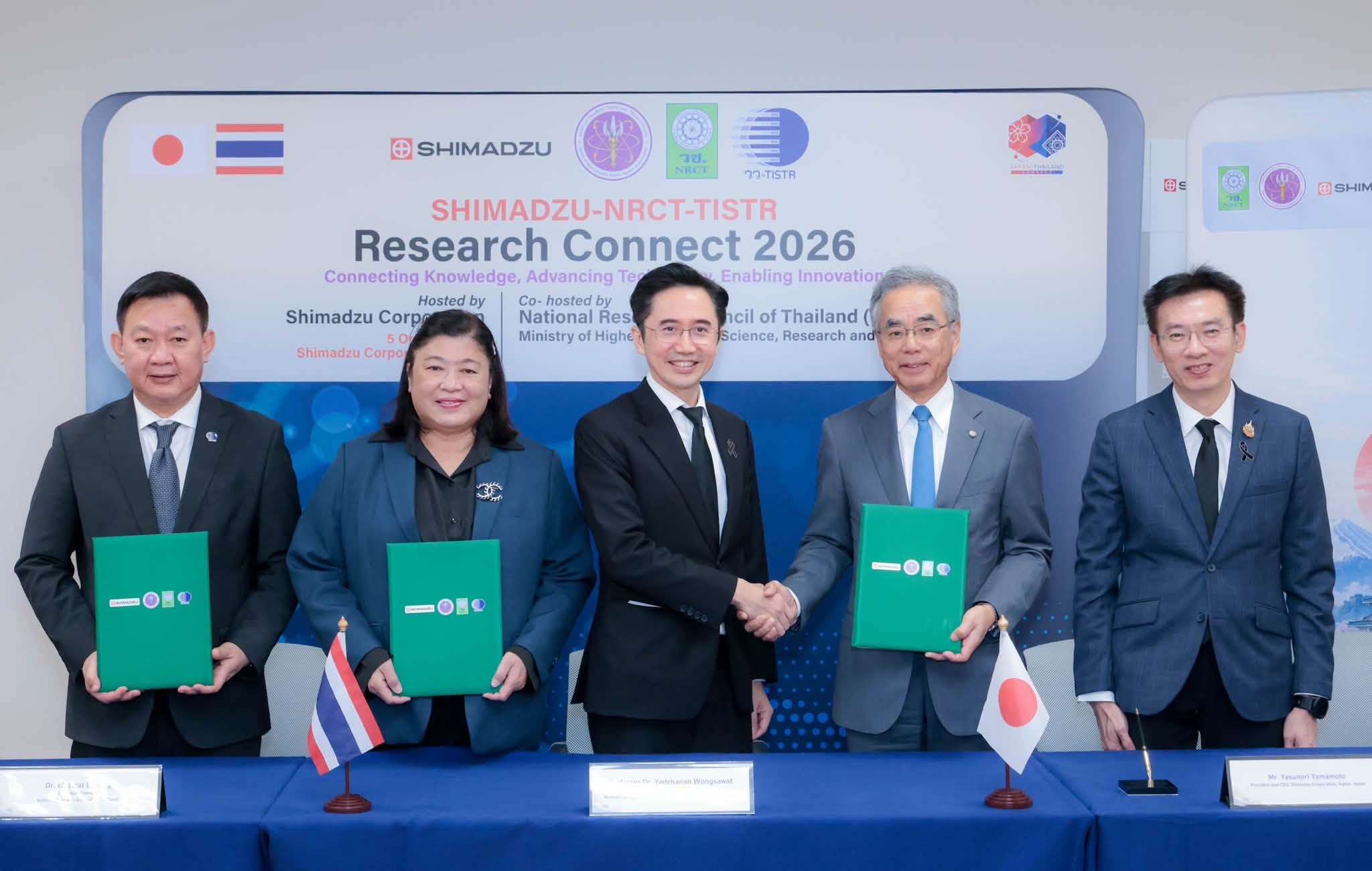
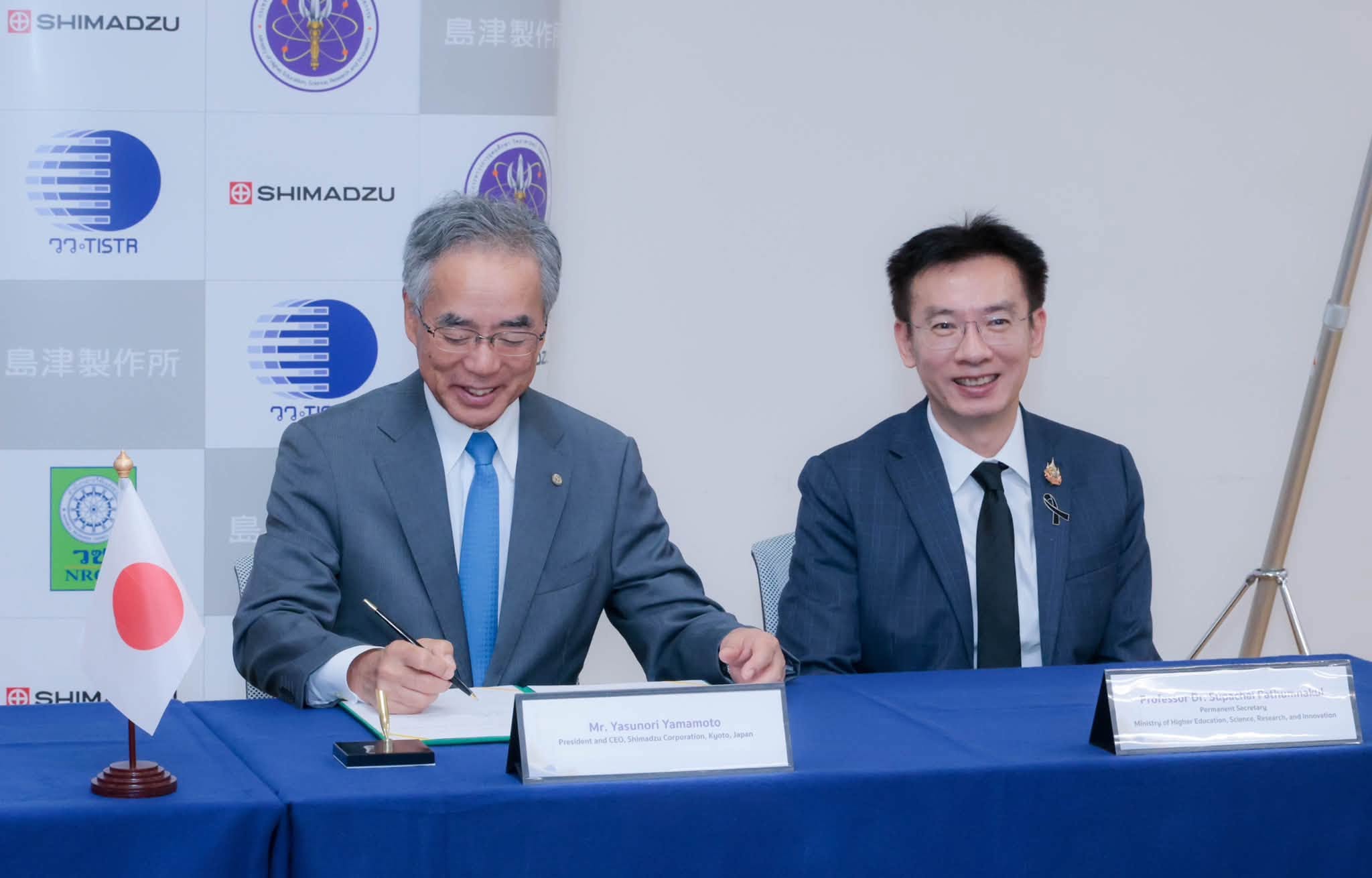
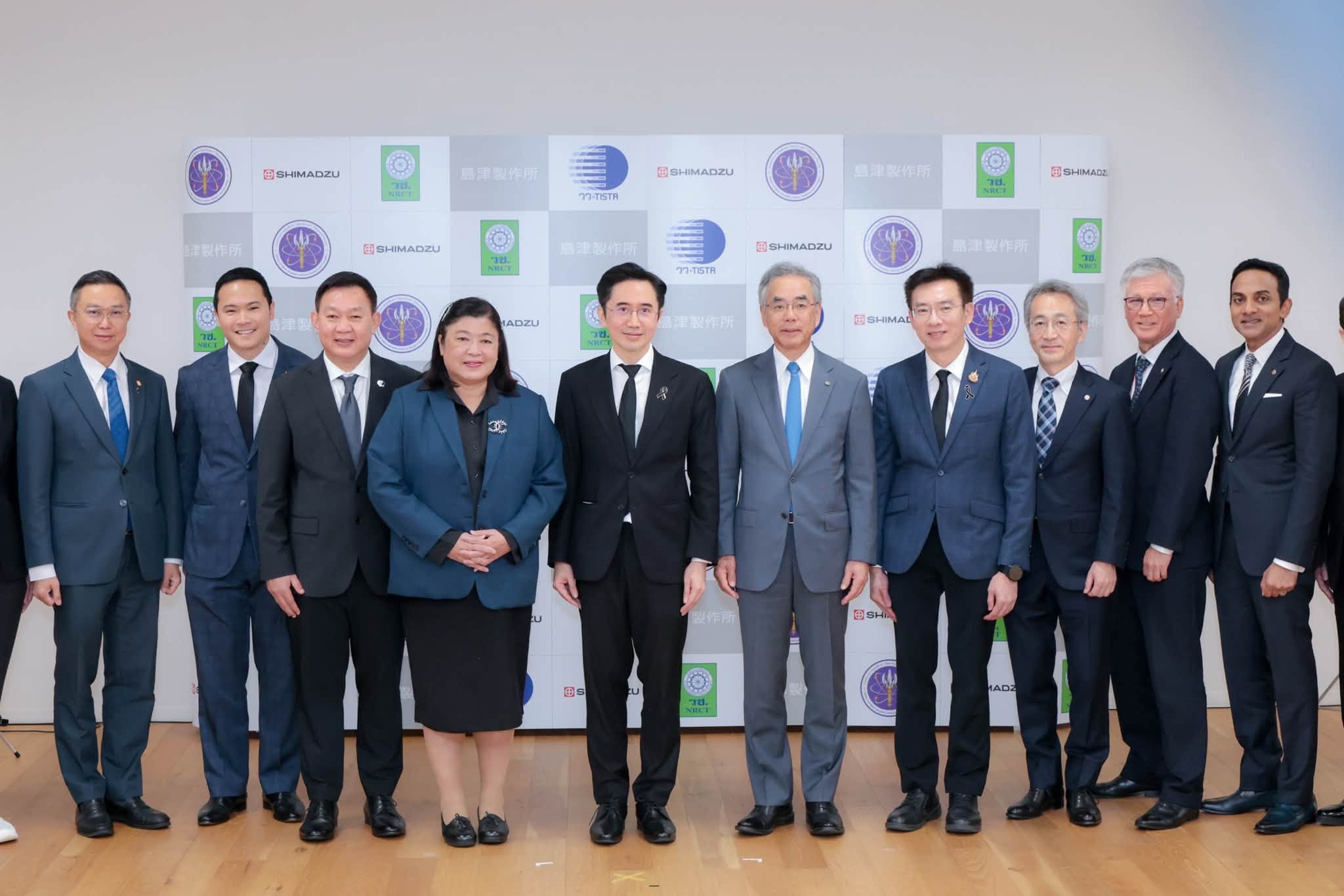
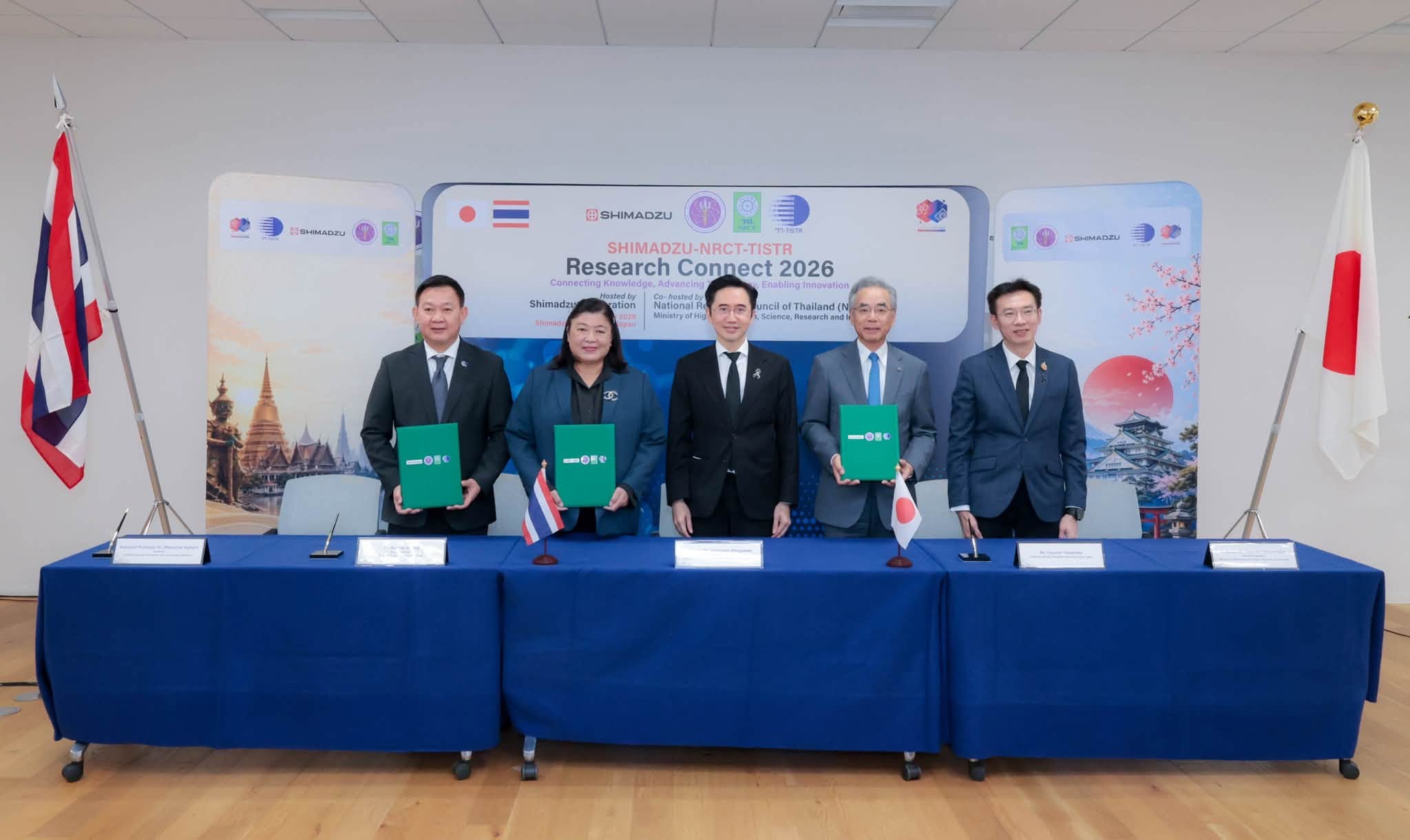
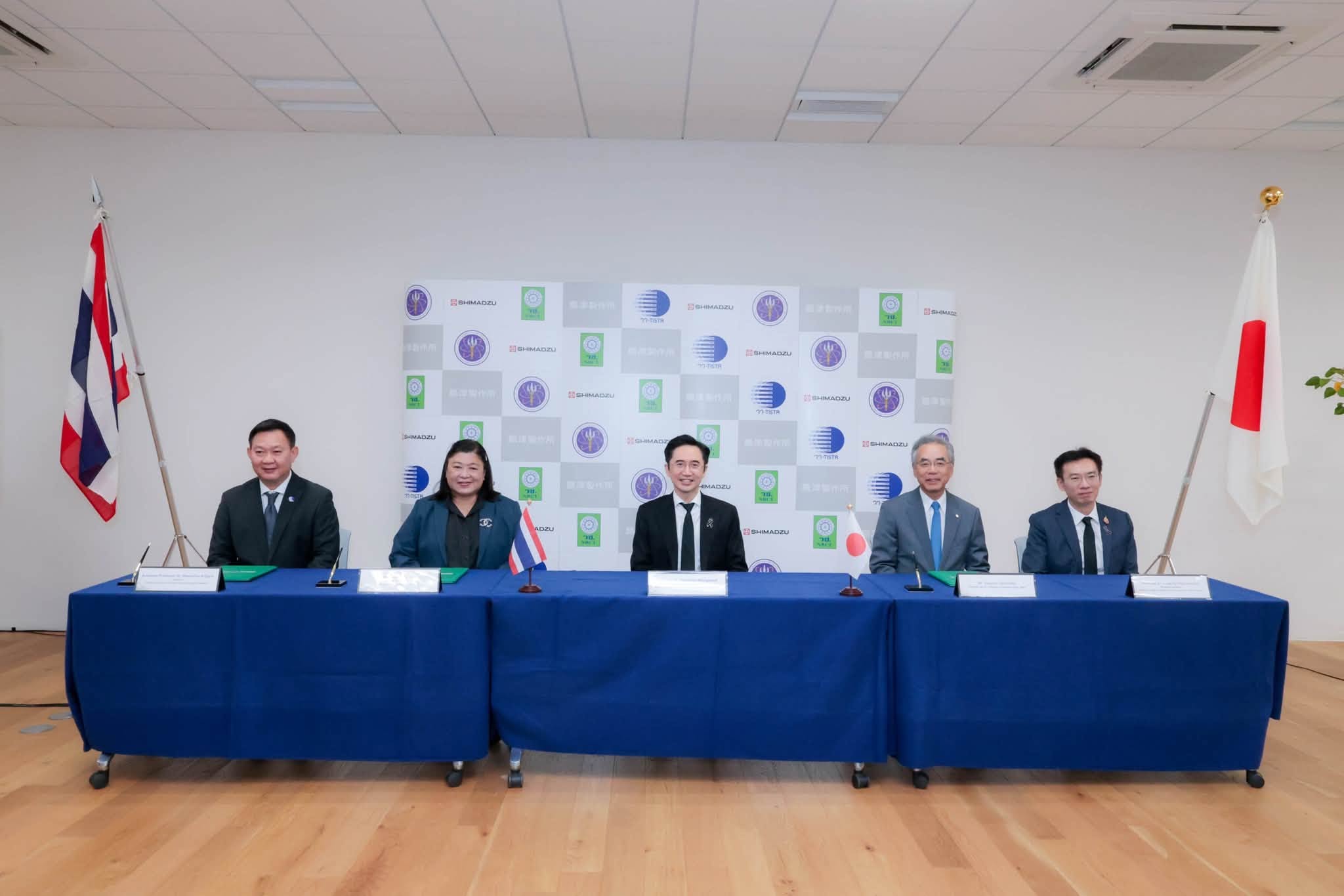
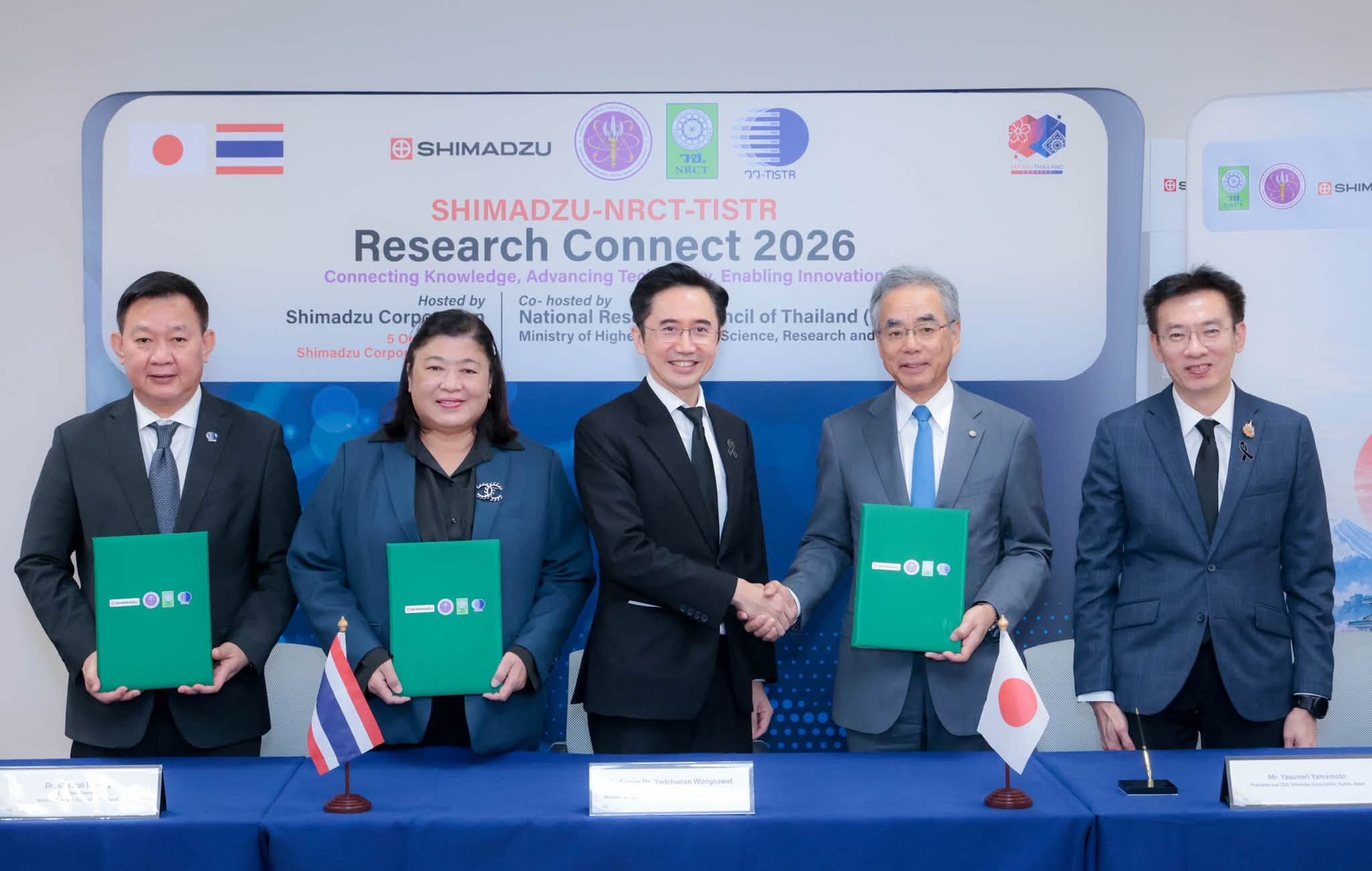
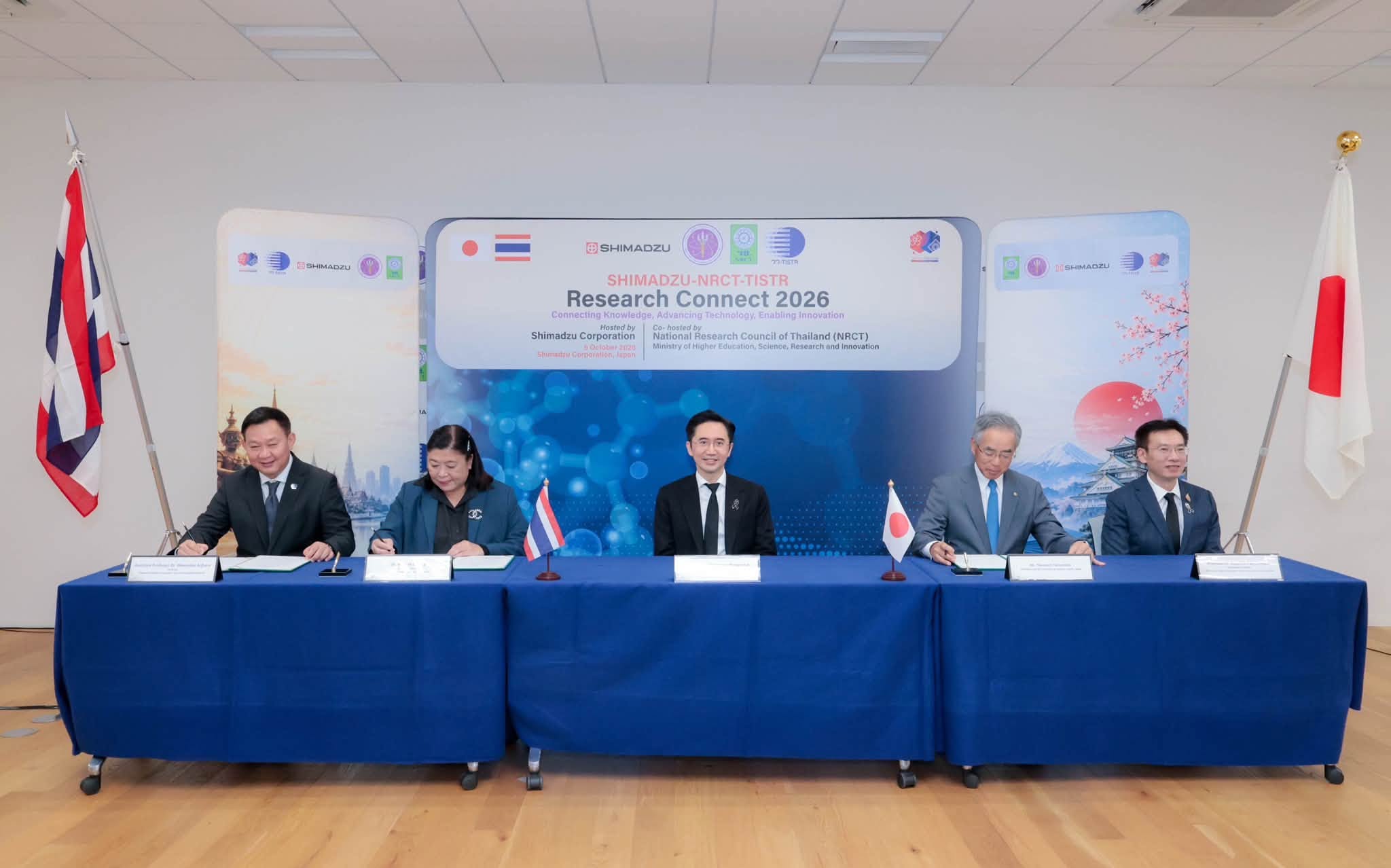
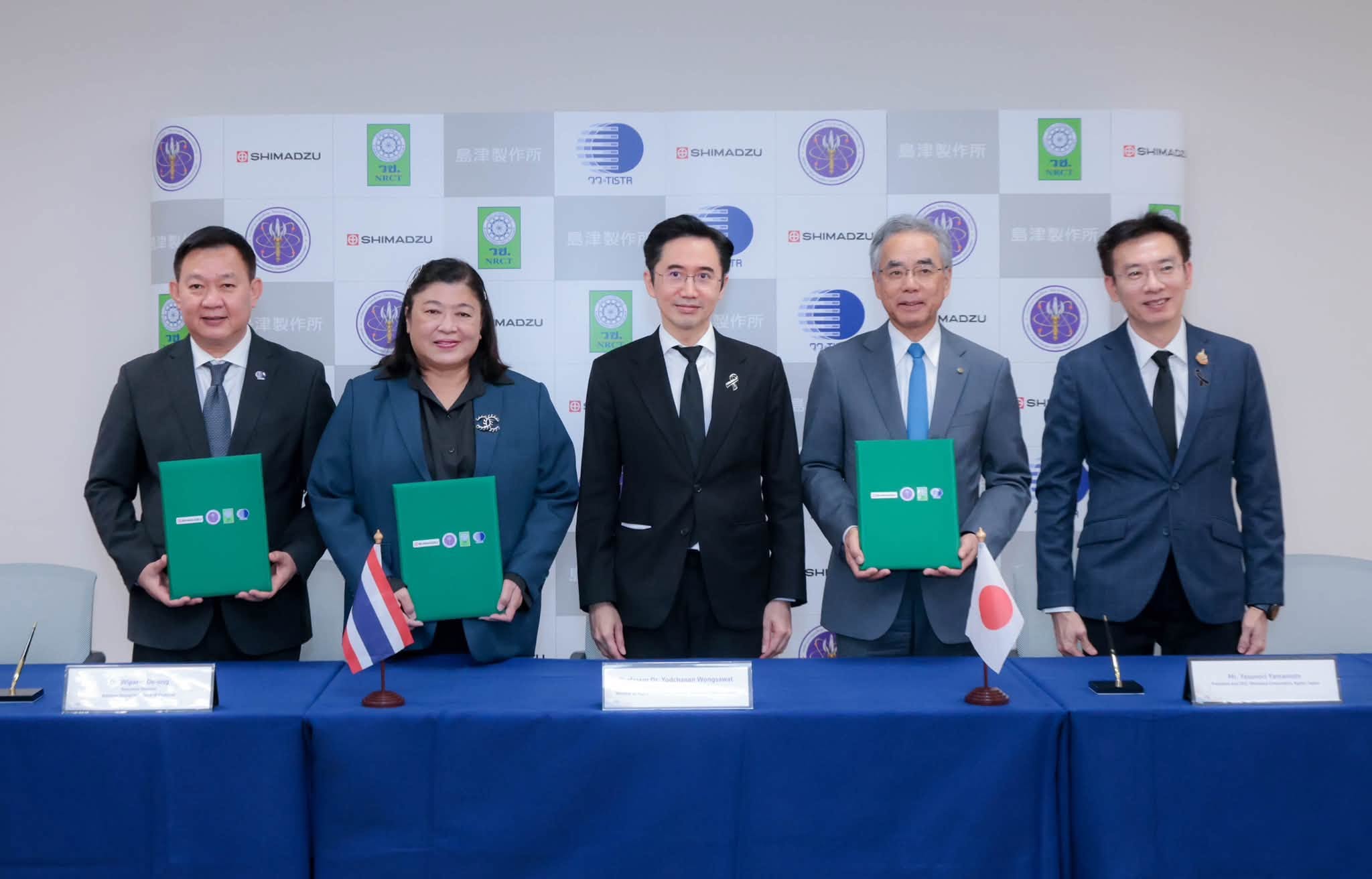
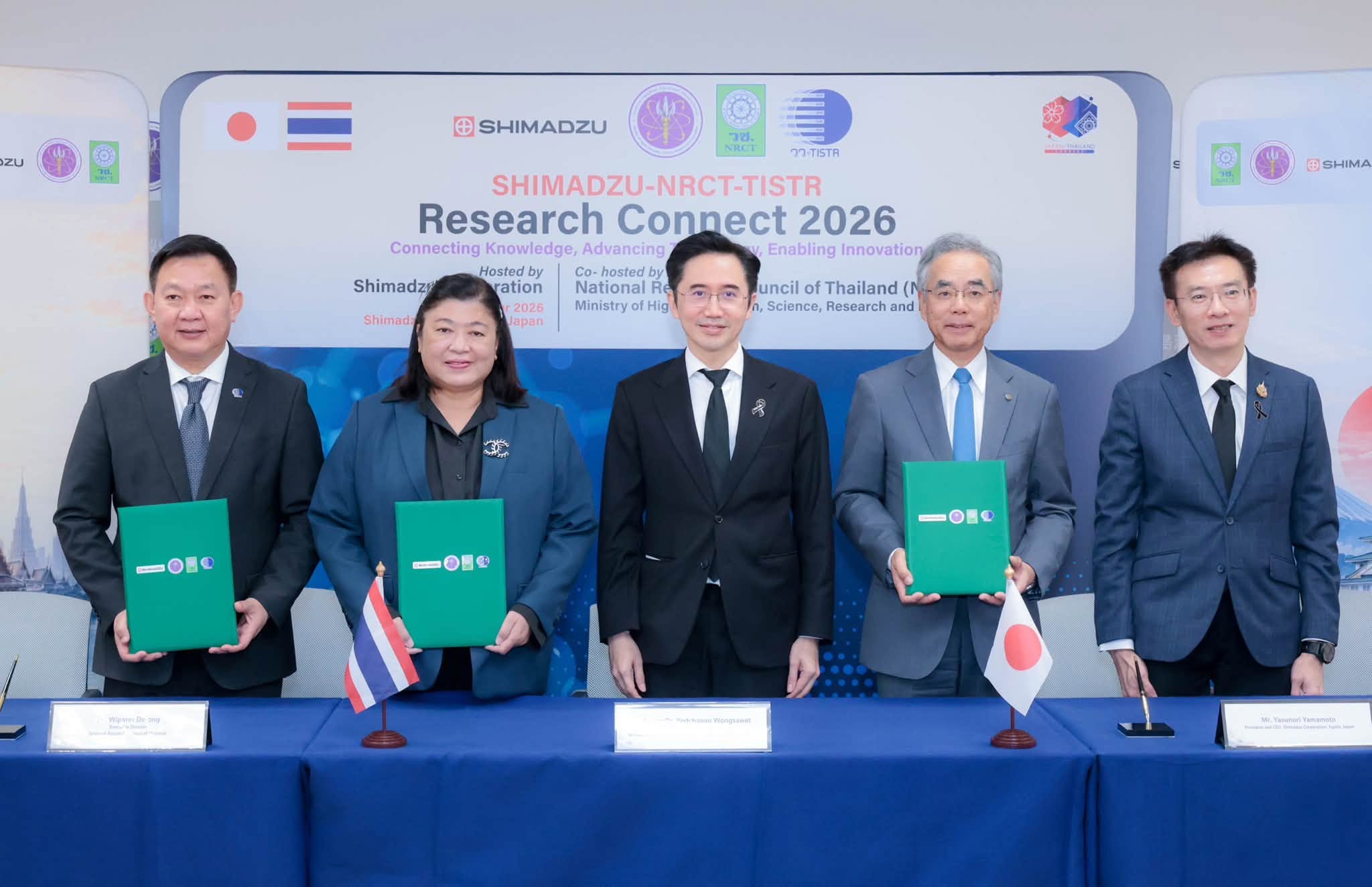
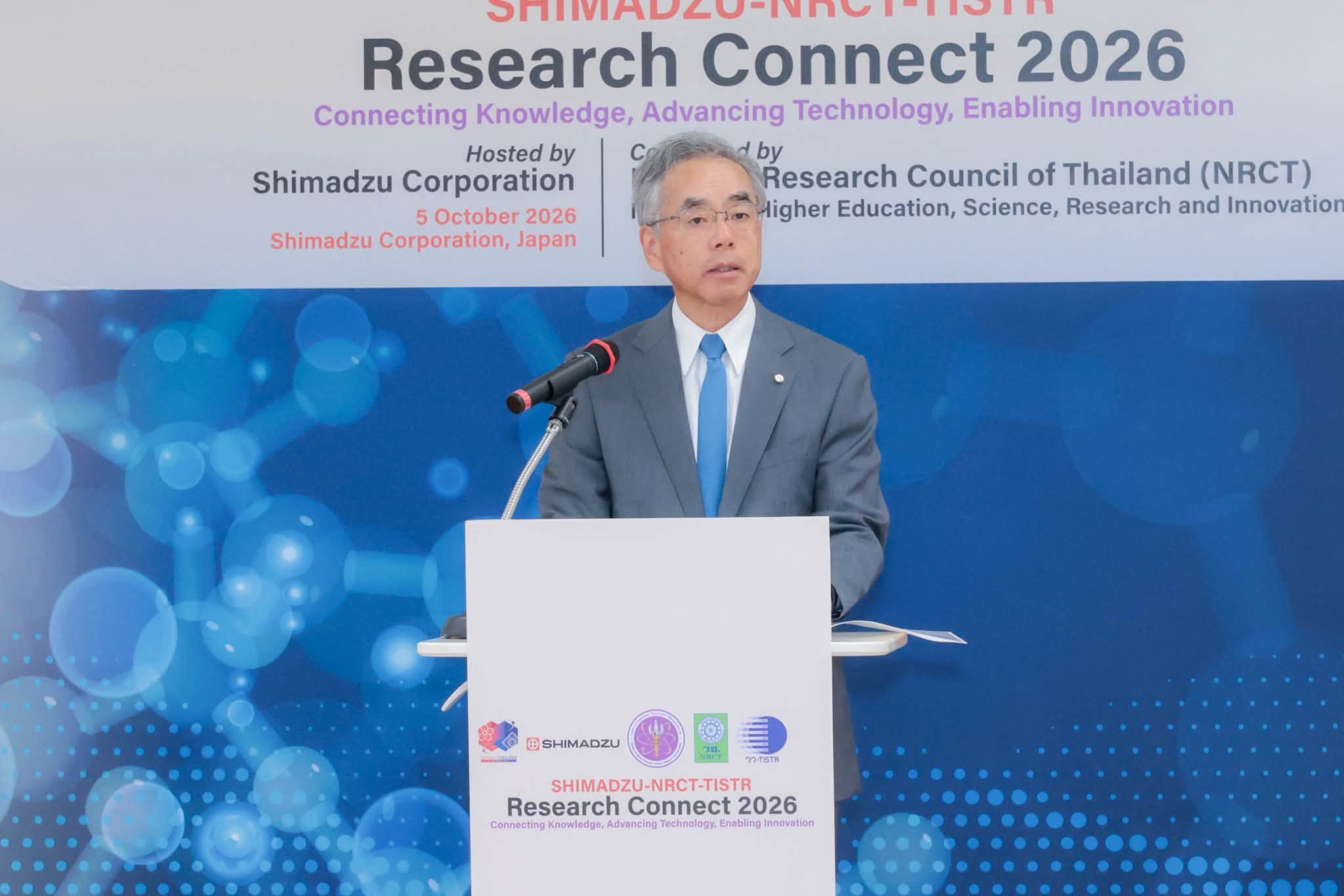
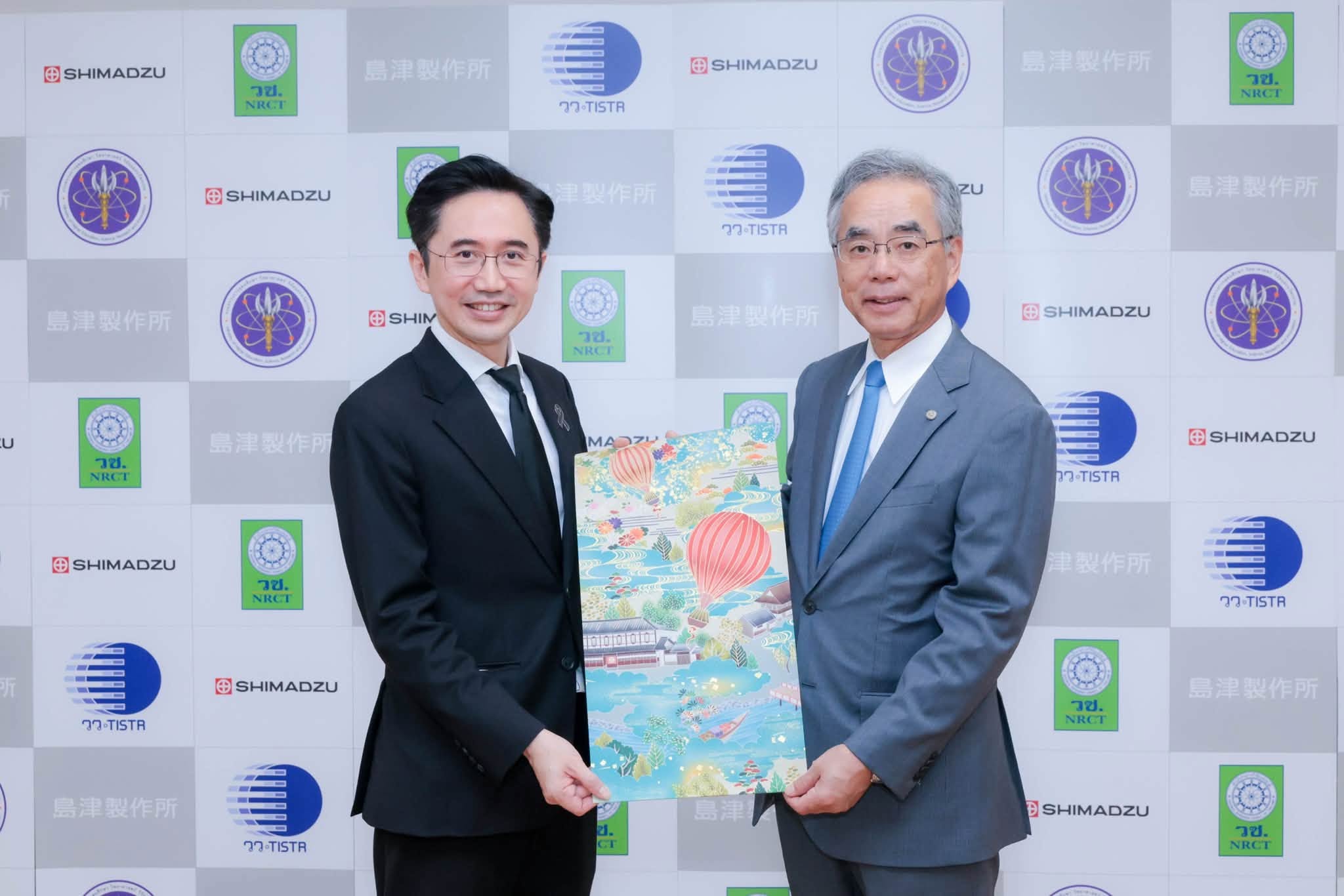
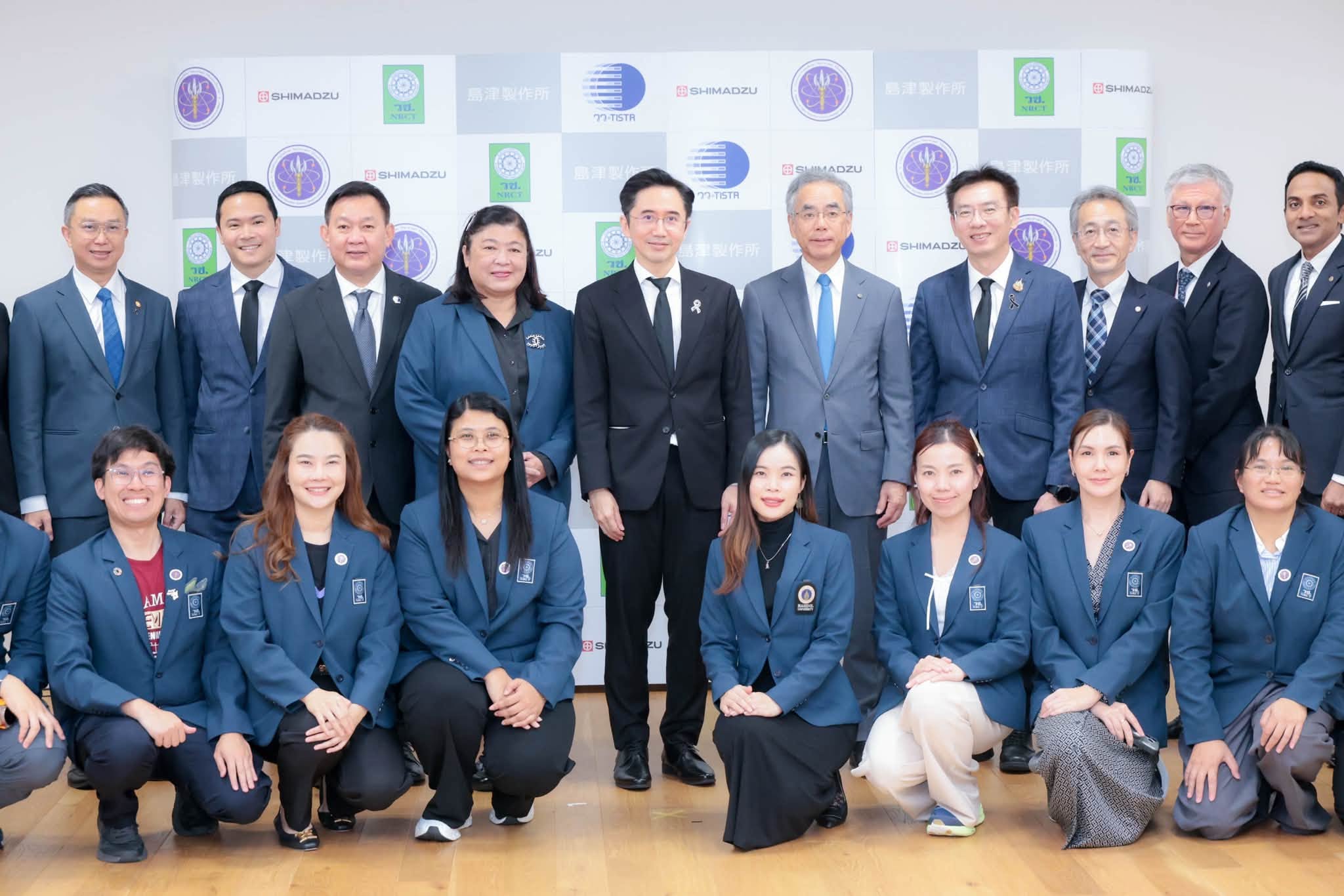
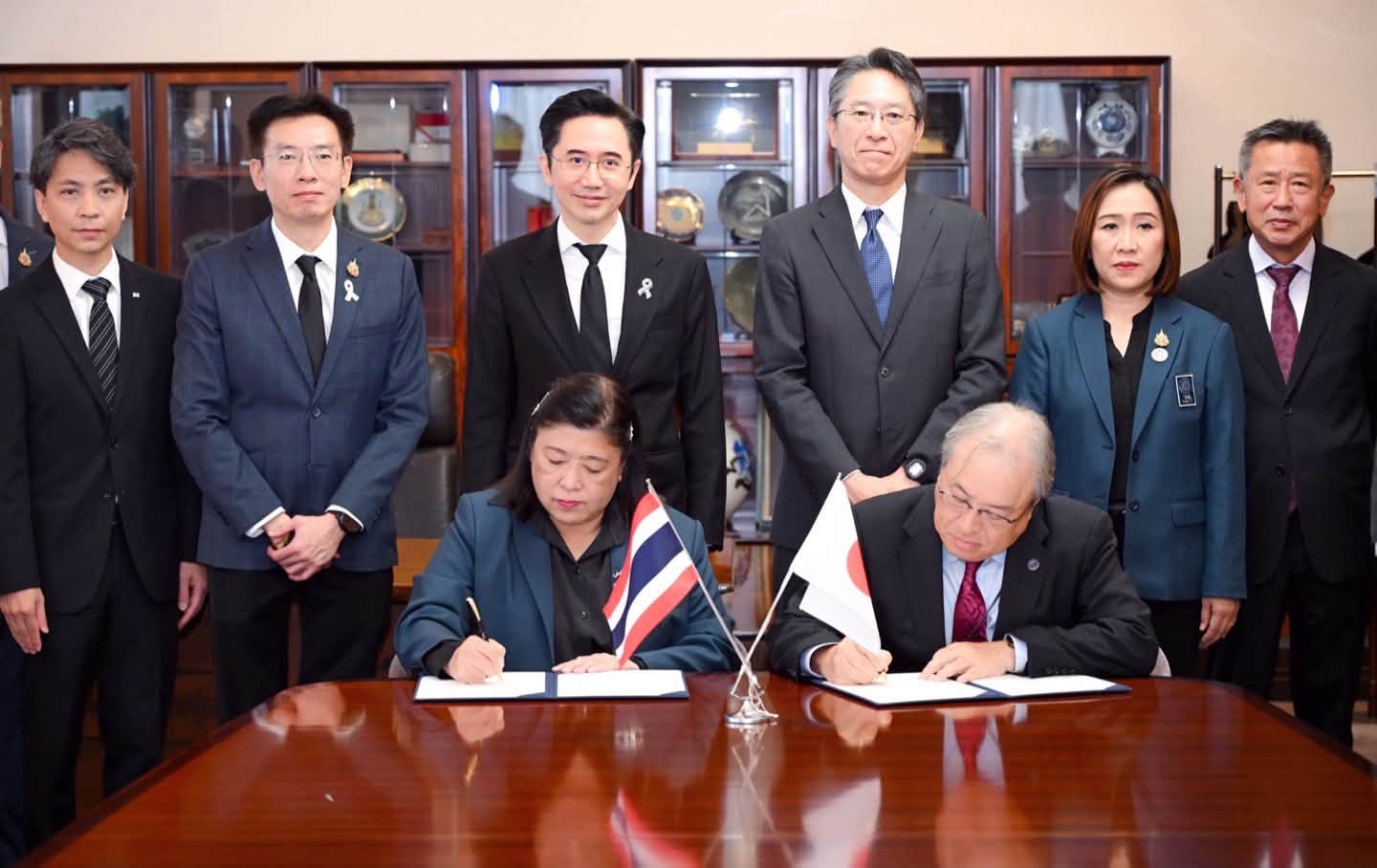
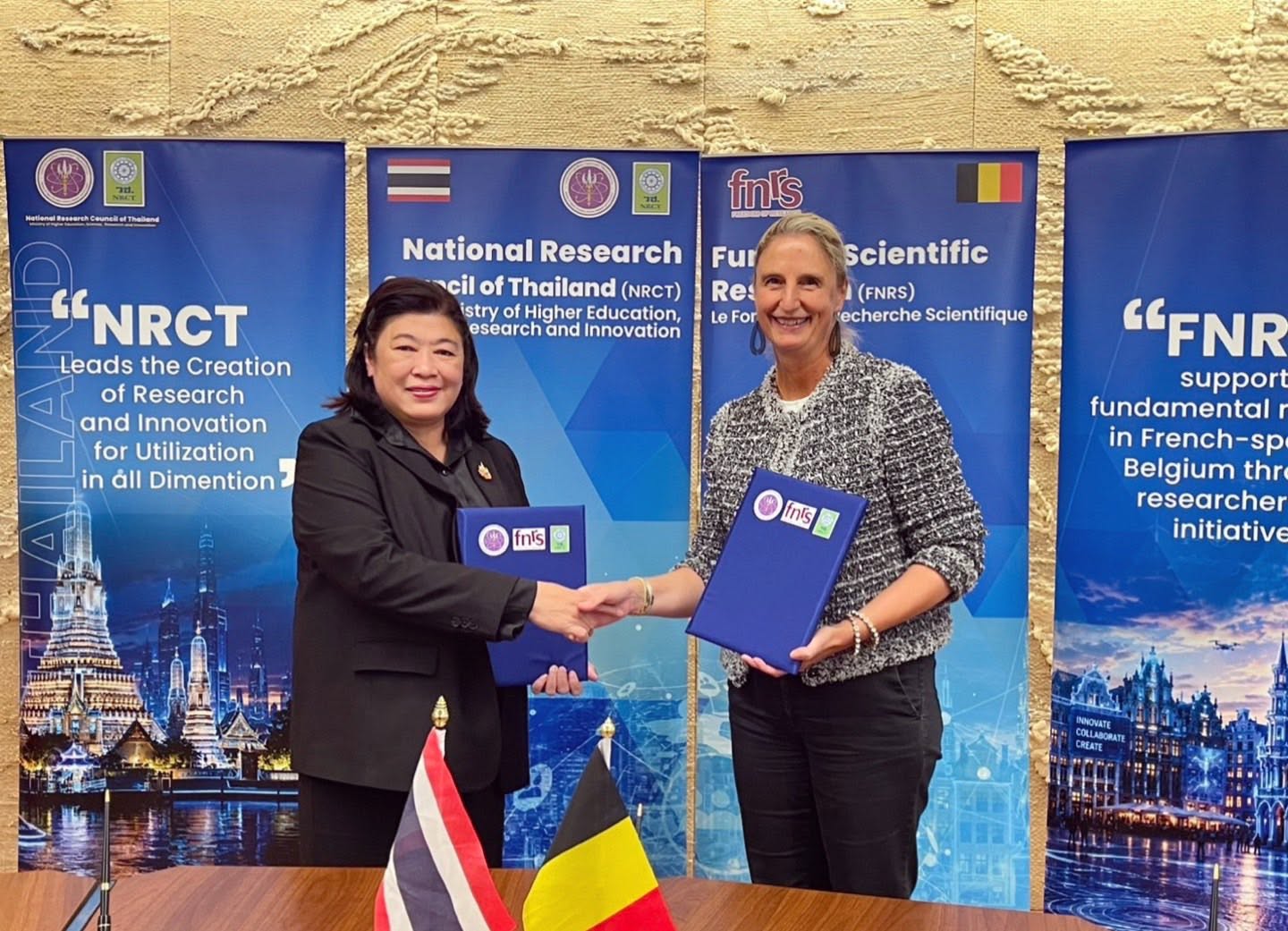
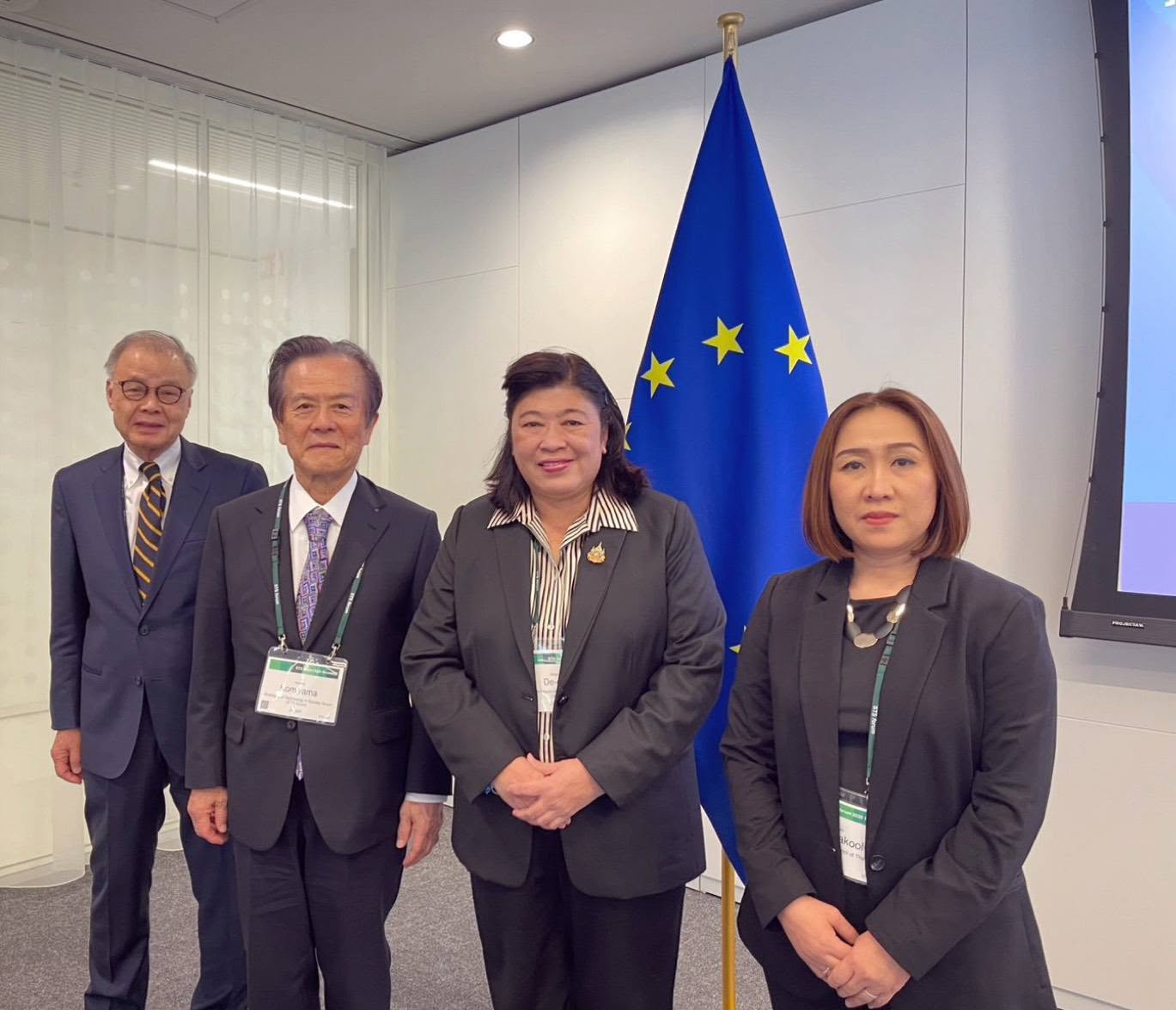
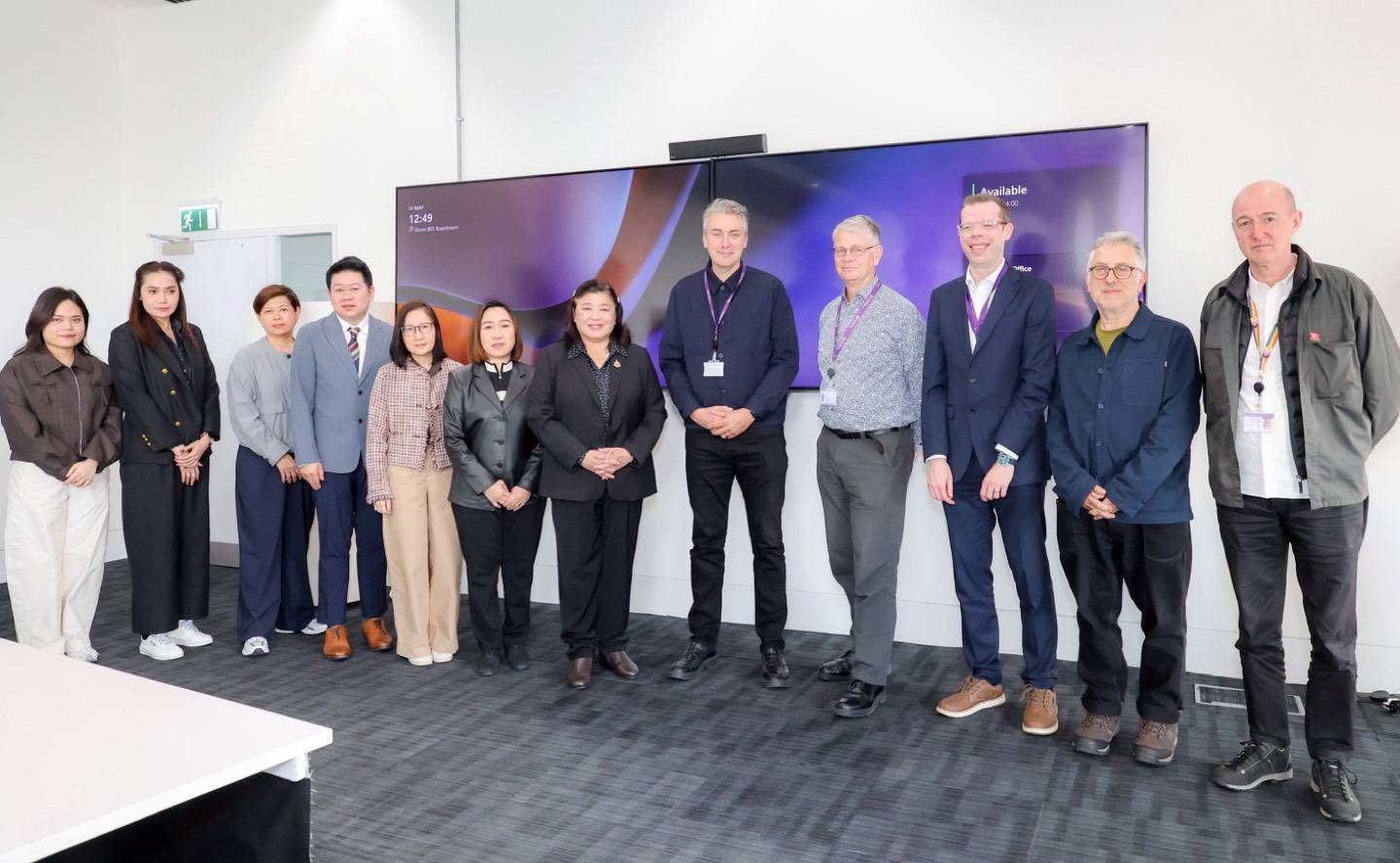
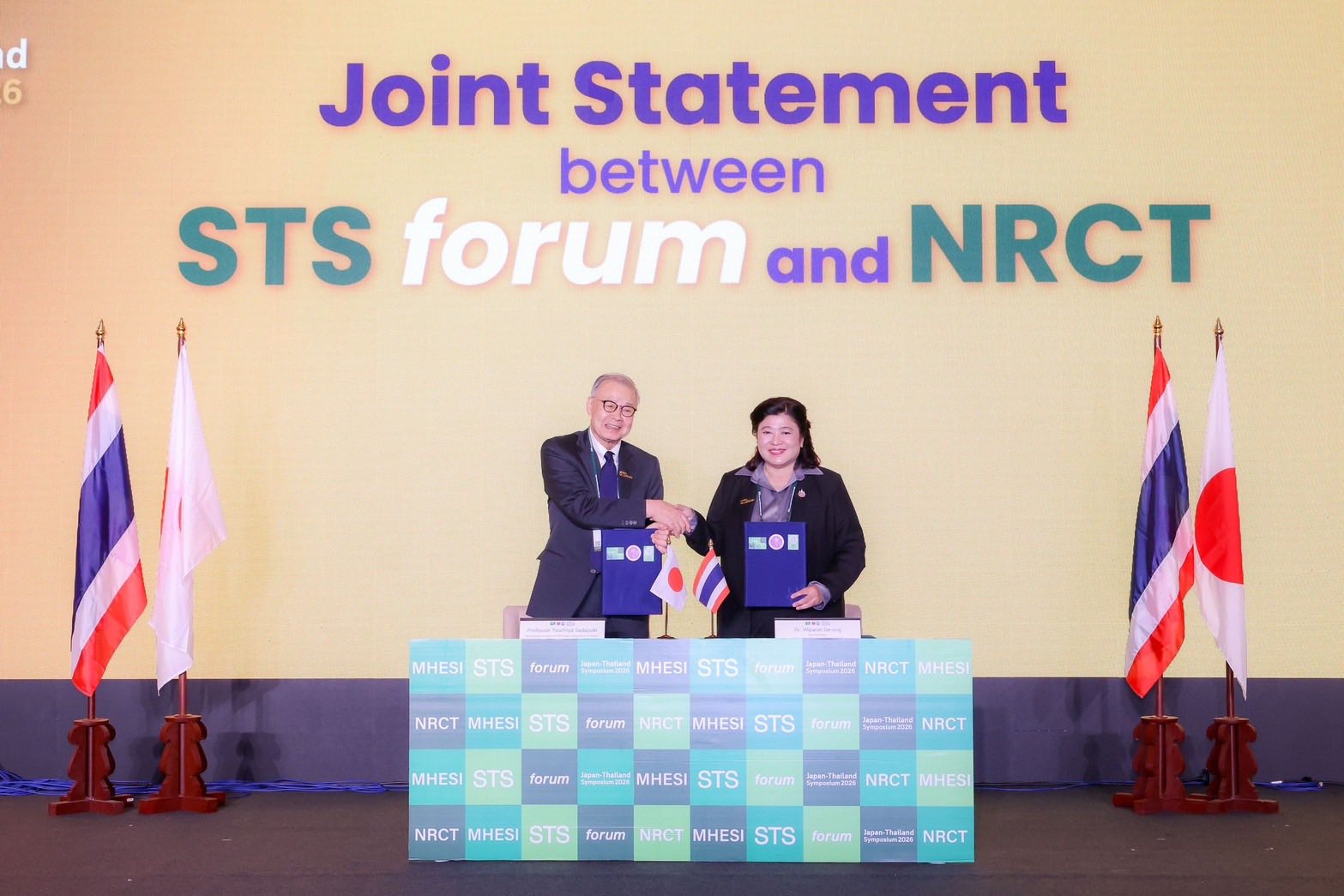
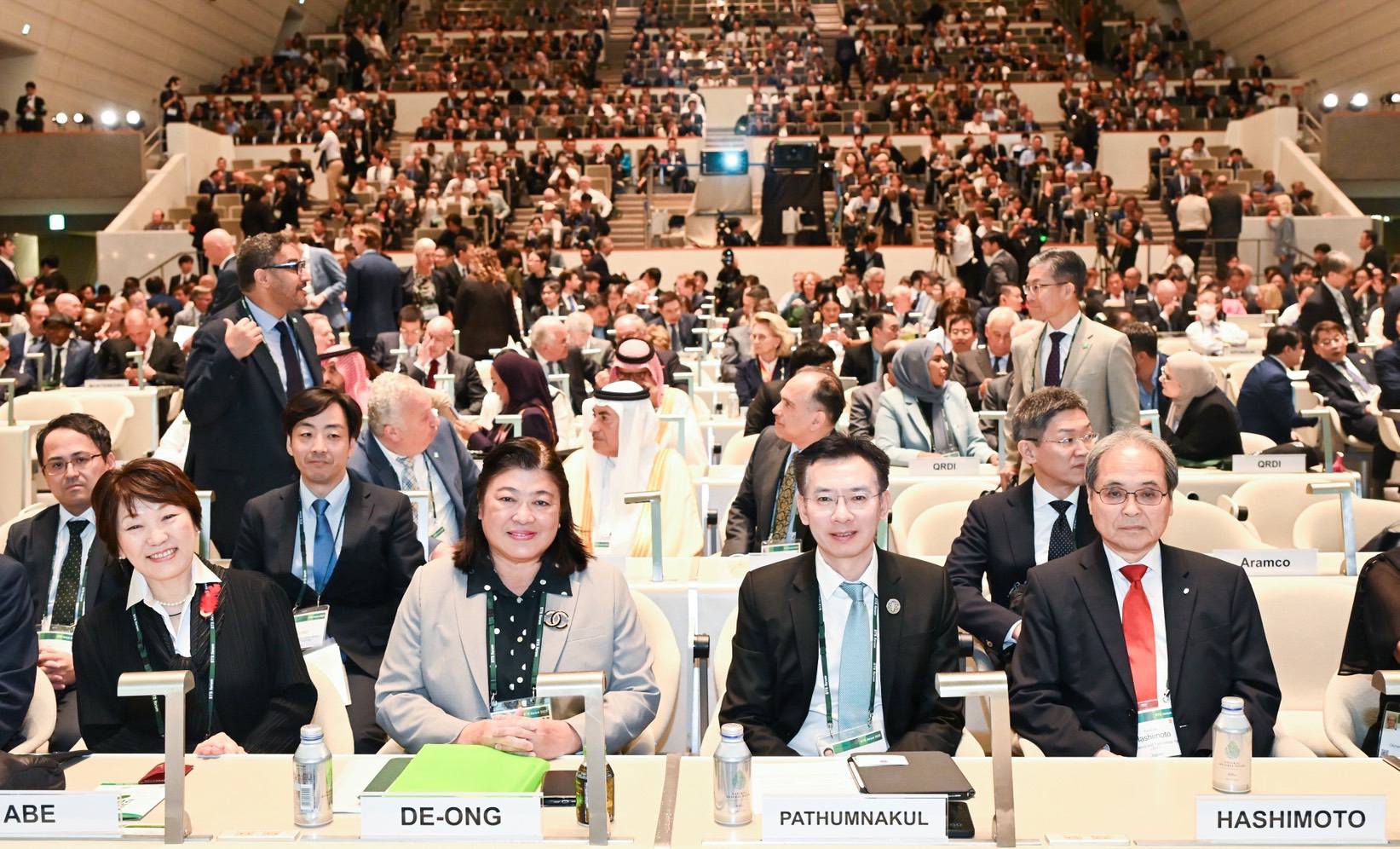
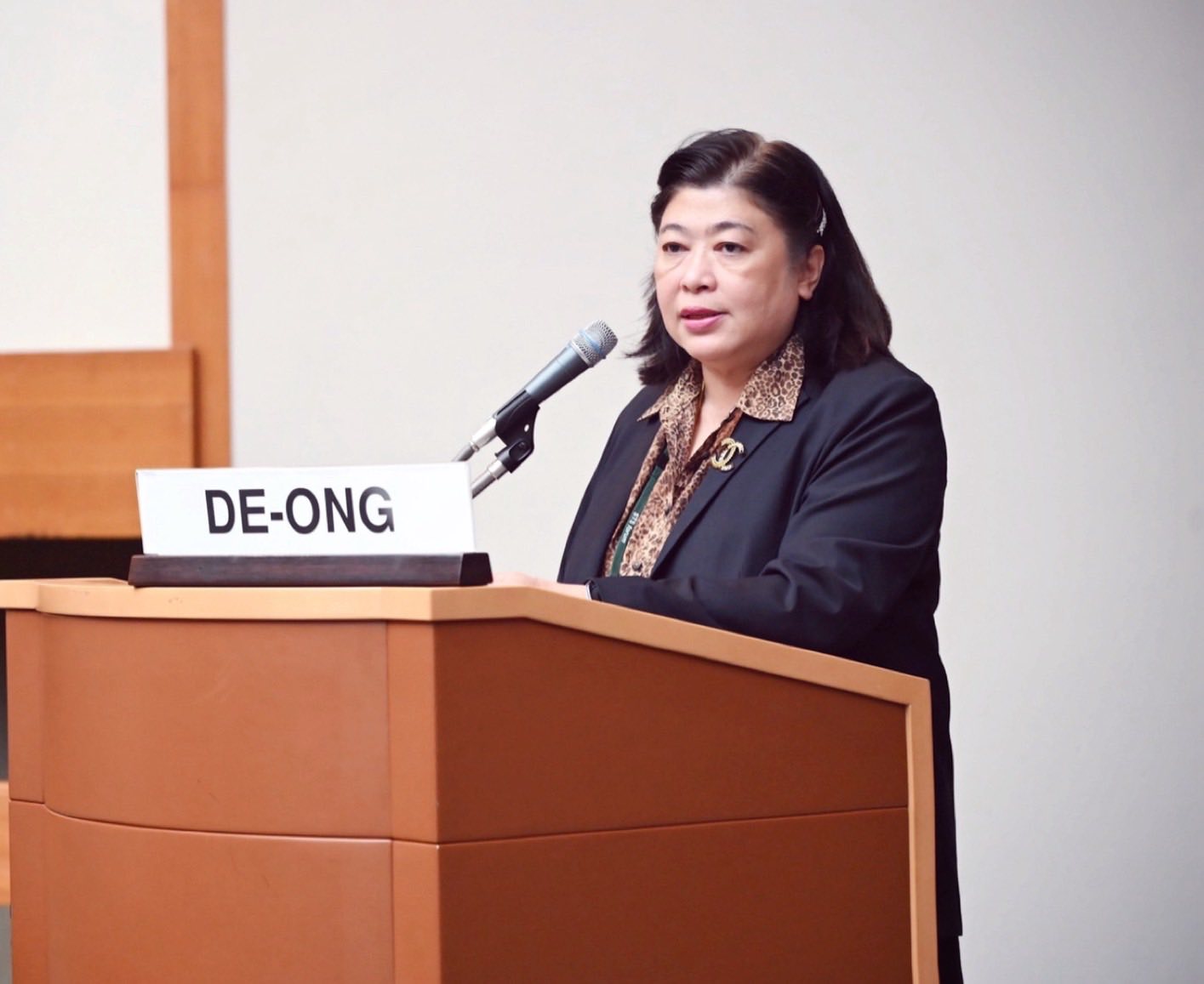
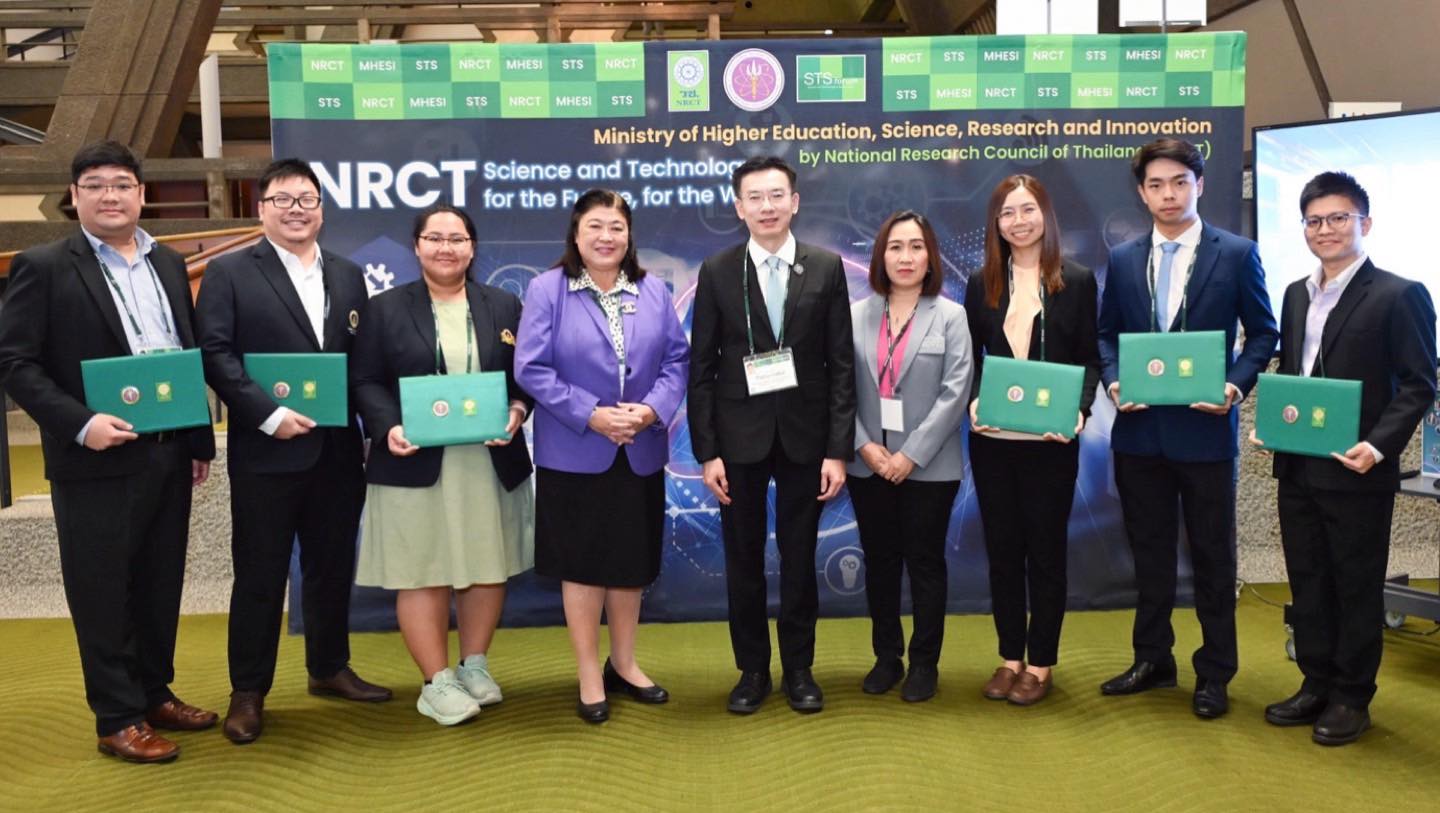
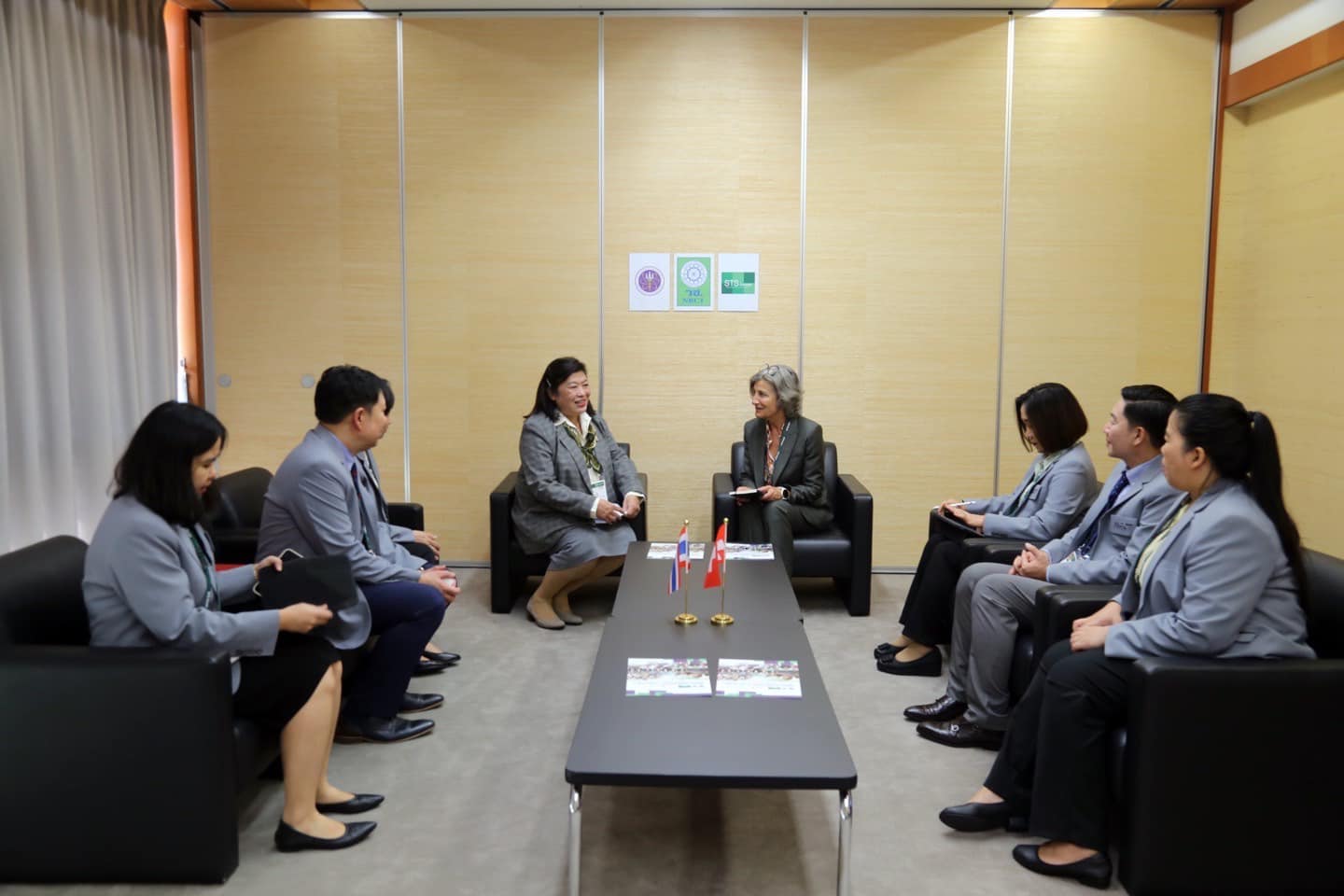
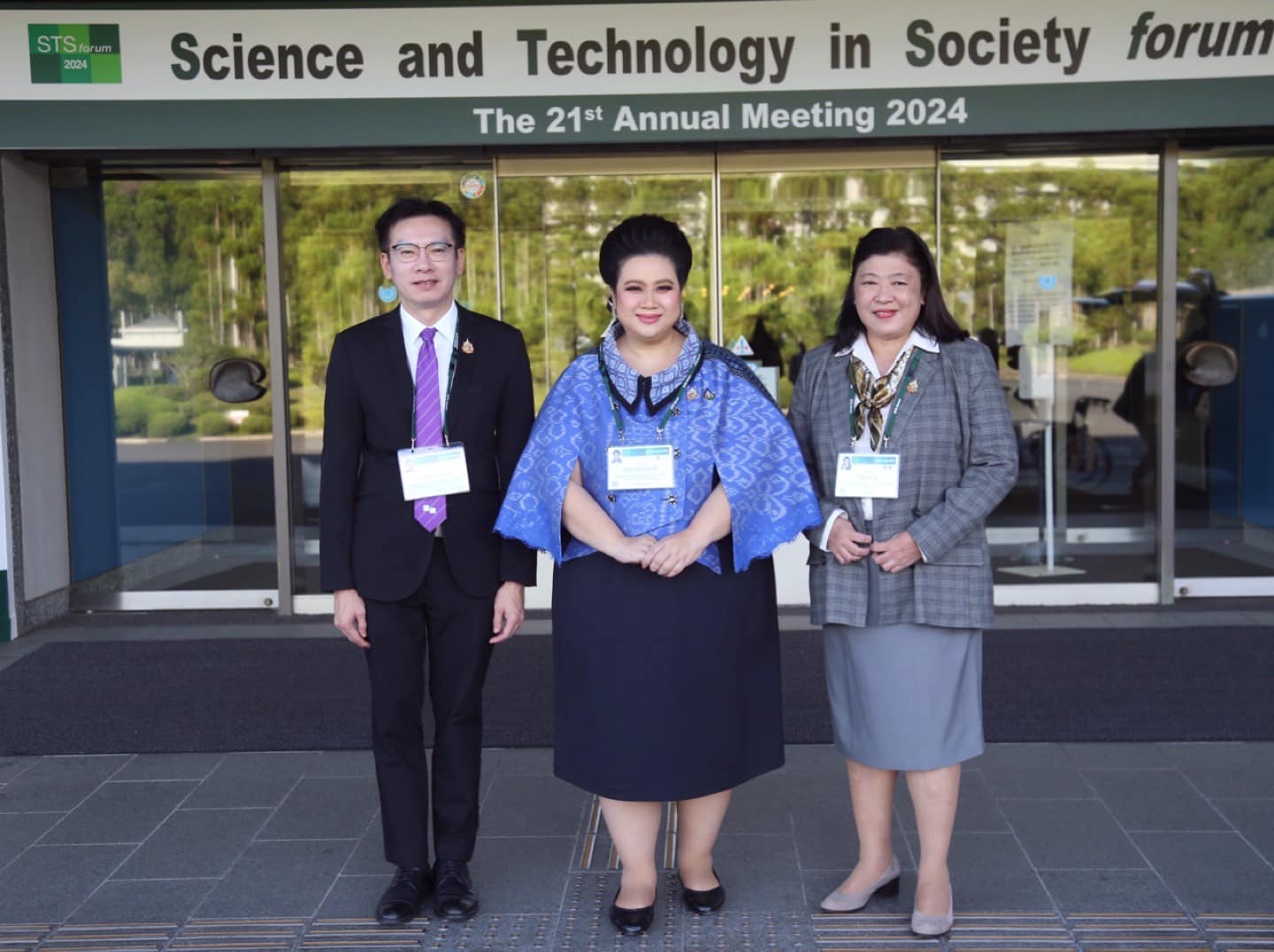
On 5 October 2026, at Shimadzu Corporation in Kyoto, Japan, Prof. Dr. Yodchanan Wongsawat, Deputy Prime Minister and Minister of Higher Education, Science, Research and Innovation, and Prof. Dr. Supachai Pathumnakul, Permanent Secretary of the Ministry, witnessed the signing of a Letter of Intent (LOI) among the National Research Council of Thailand (NRCT), the Thailand Institute of Scientific and Technological Research (TISTR), and Shimadzu Corporation.
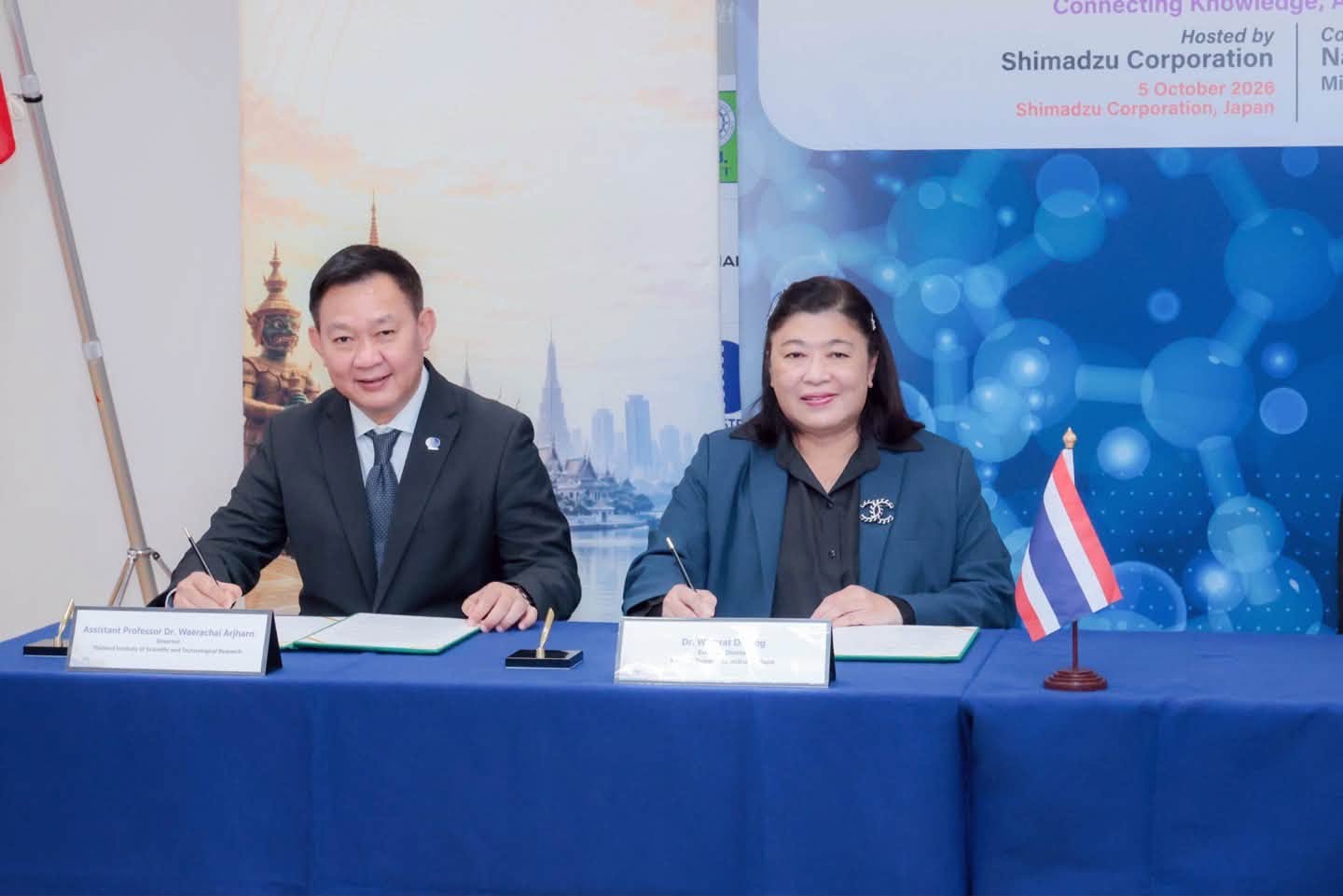
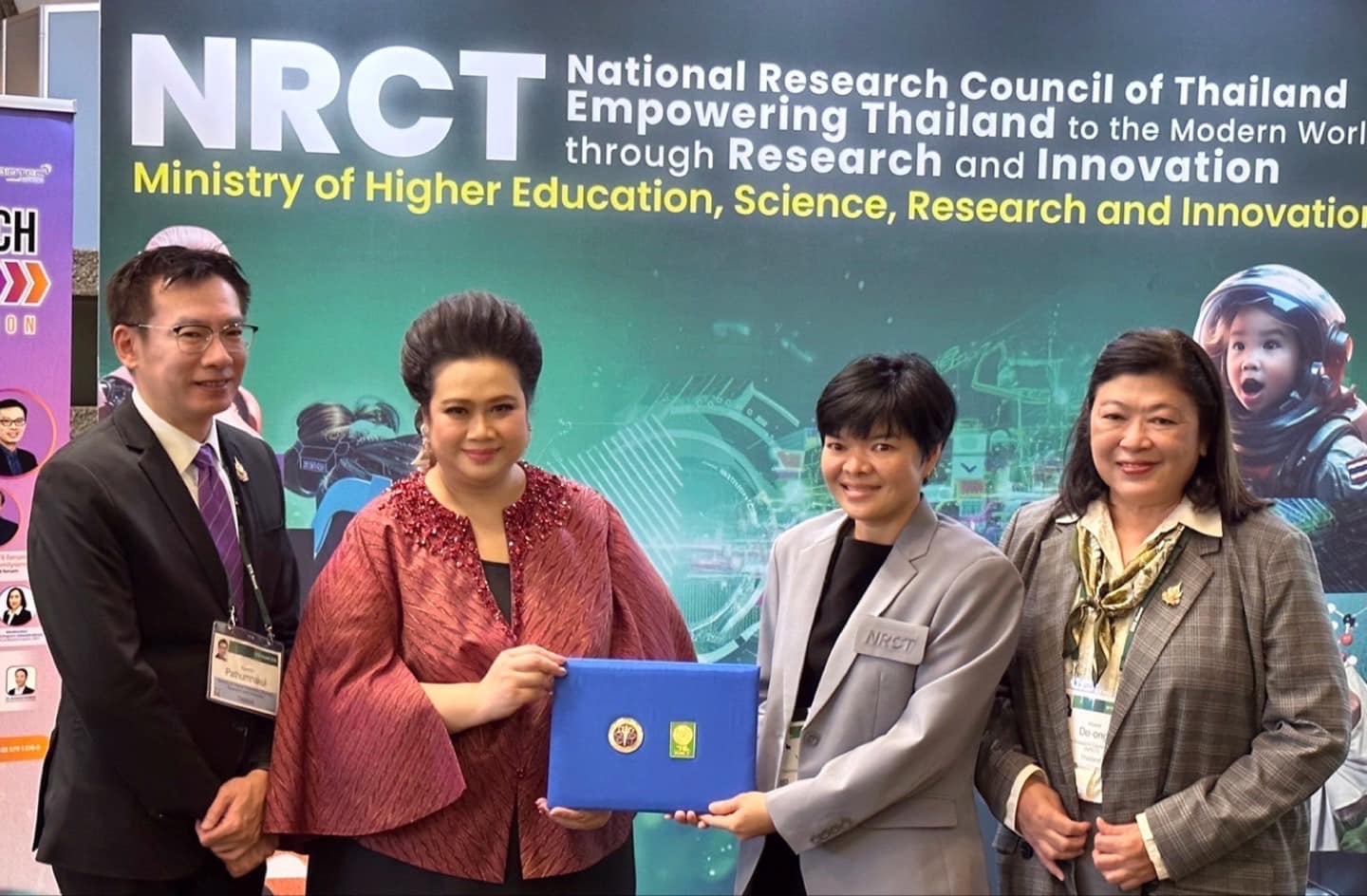
The LOI was signed by Dr. Wiparat De-ong, Executive Director of NRCT; Asst. Prof. Dr. Weerachai Arjharn, Governor of TISTR; and Mr. Yasunori Yamamoto, President and CEO of Shimadzu Corporation, in the presence of executives and representatives from MHESI agencies.
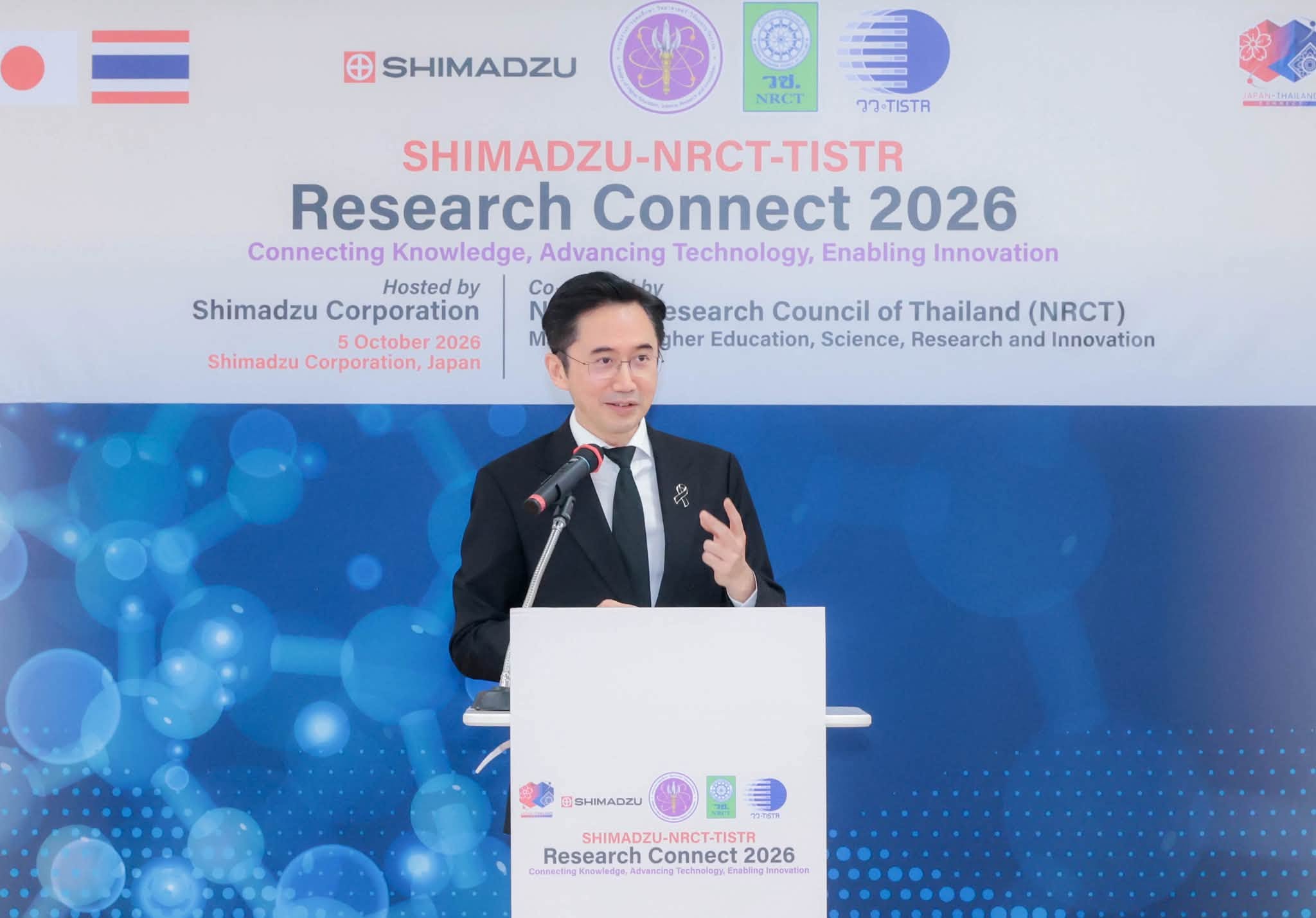
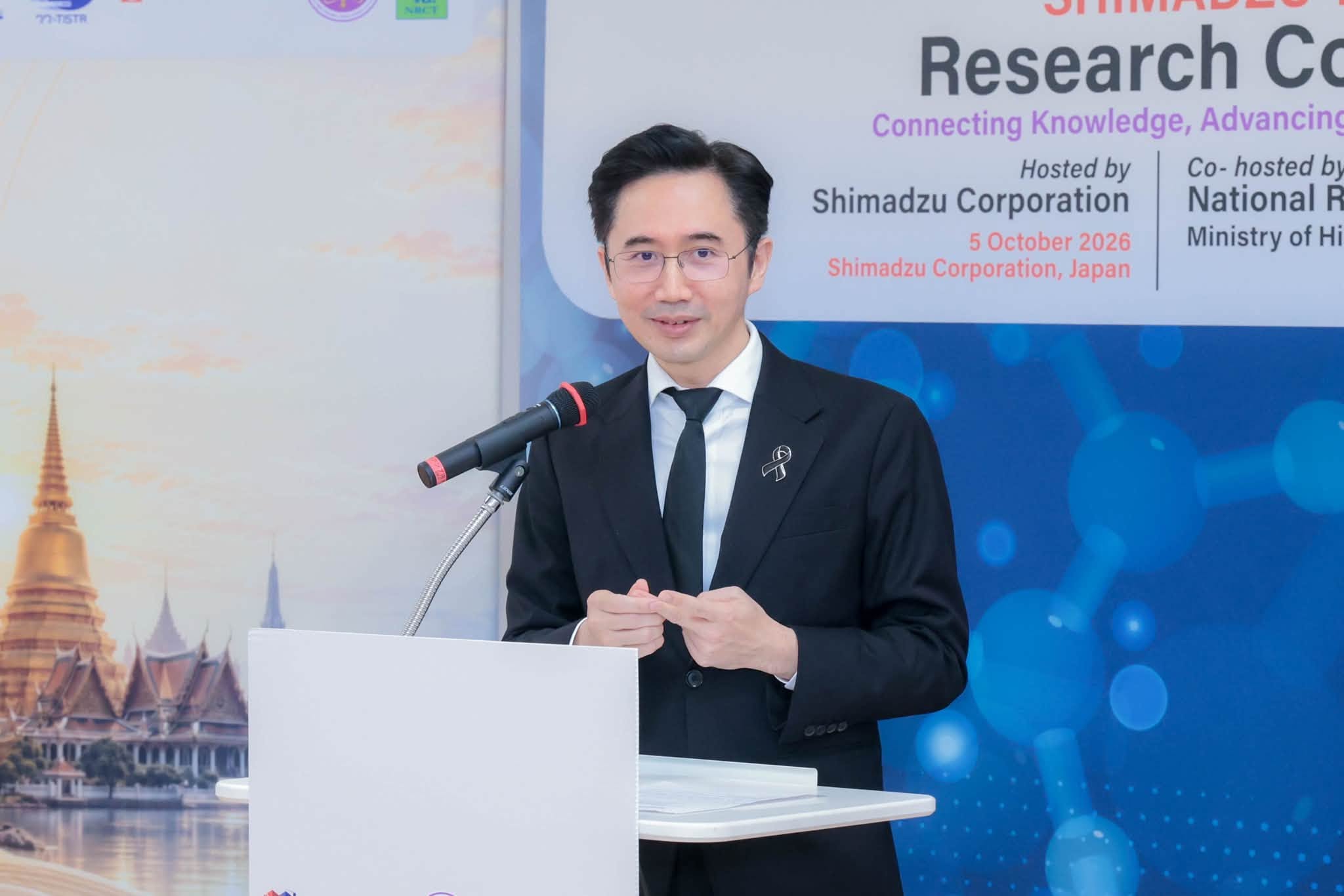
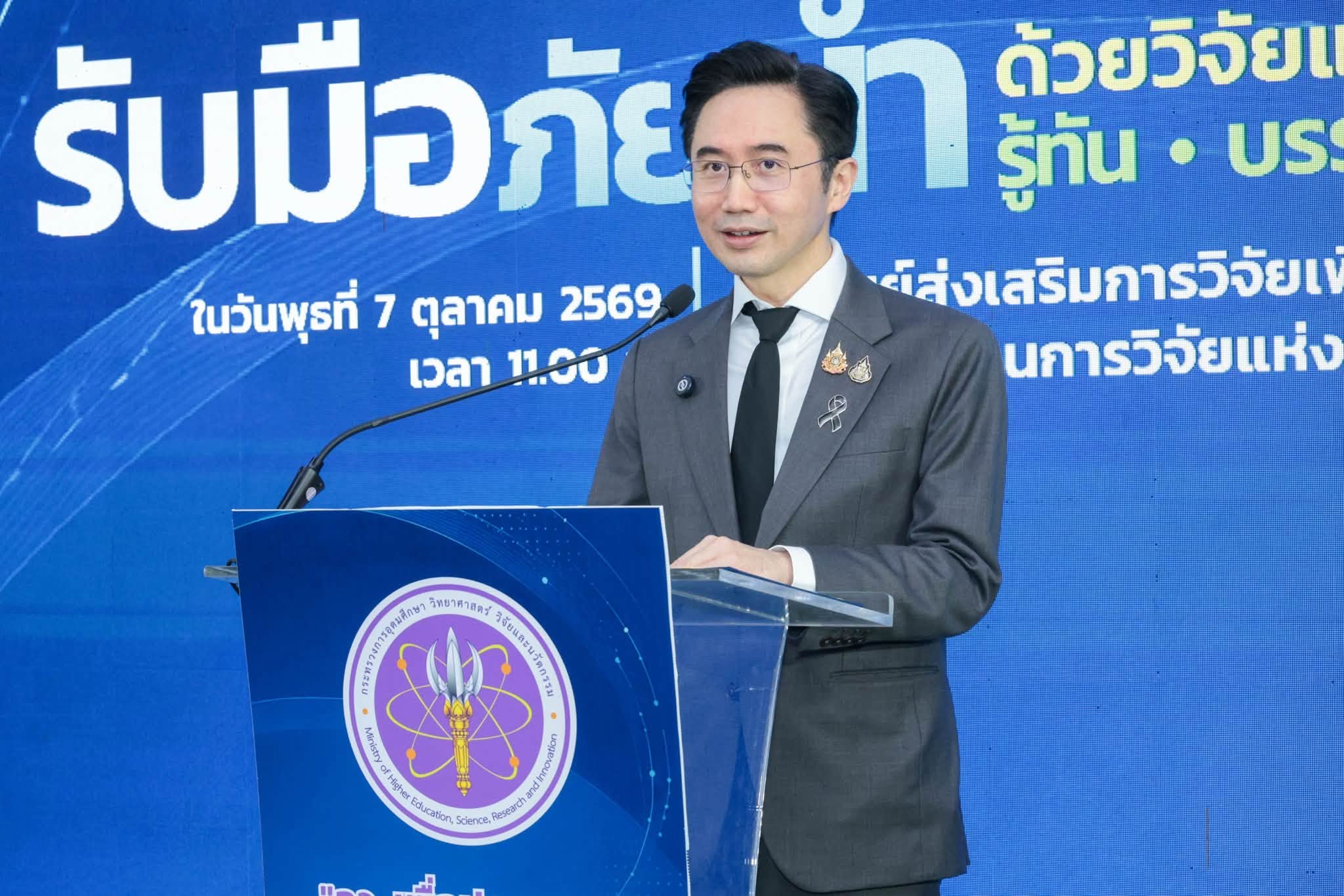
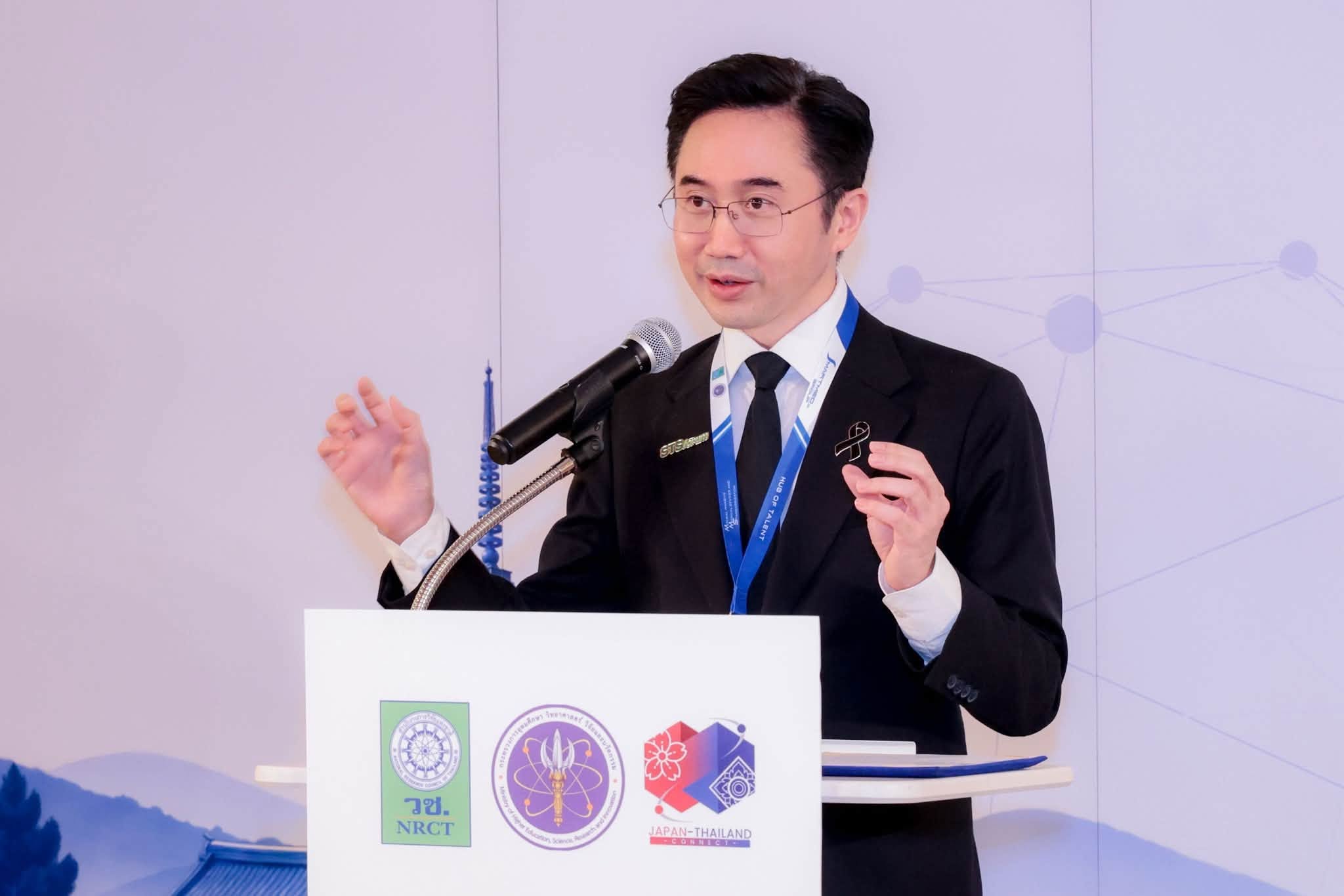
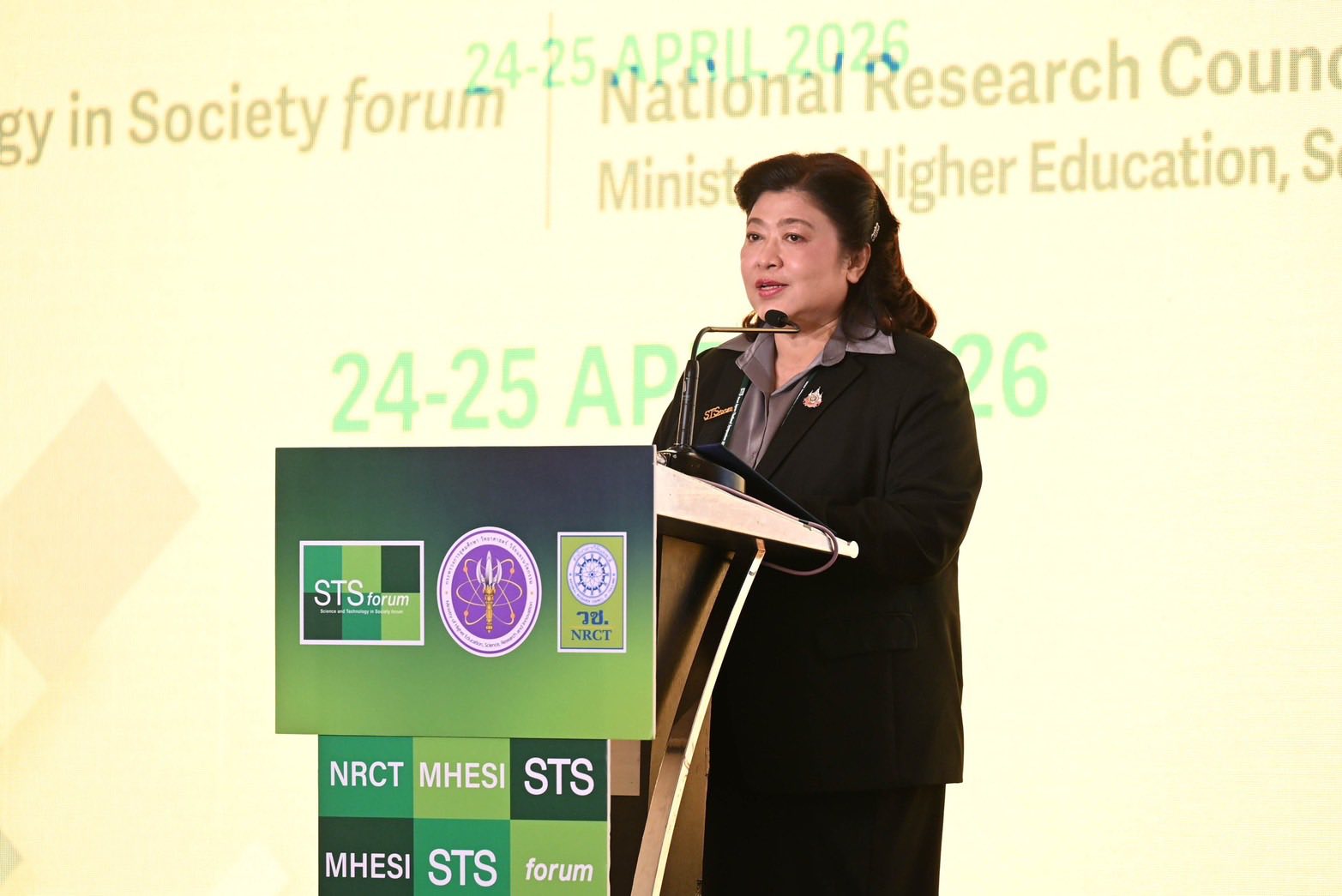
During the ceremony, Prof. Dr. Yodchanan Wongsawat shared his vision for advancing cooperation to deliver tangible research and innovation outcomes. He emphasized the importance of applying science and technology to improve quality of life and wellness, connecting Thailand’s manufacturing capabilities and industrial base with regional networks across Asia, and utilizing advanced technologies and artificial intelligence (AI) in laboratory analysis, research, development, and innovation to create practical solutions.
He also highlighted opportunities to develop joint projects and cooperation programs under the LoI, enabling Thai and Japanese researchers and experts to work together on developing scientific instruments, equipment, and technologies that address national and local needs. By combining the knowledge, expertise, scientific infrastructure, and technologies of all three organizations, the cooperation aims to translate research into practical applications and generate broader societal and economic impact.
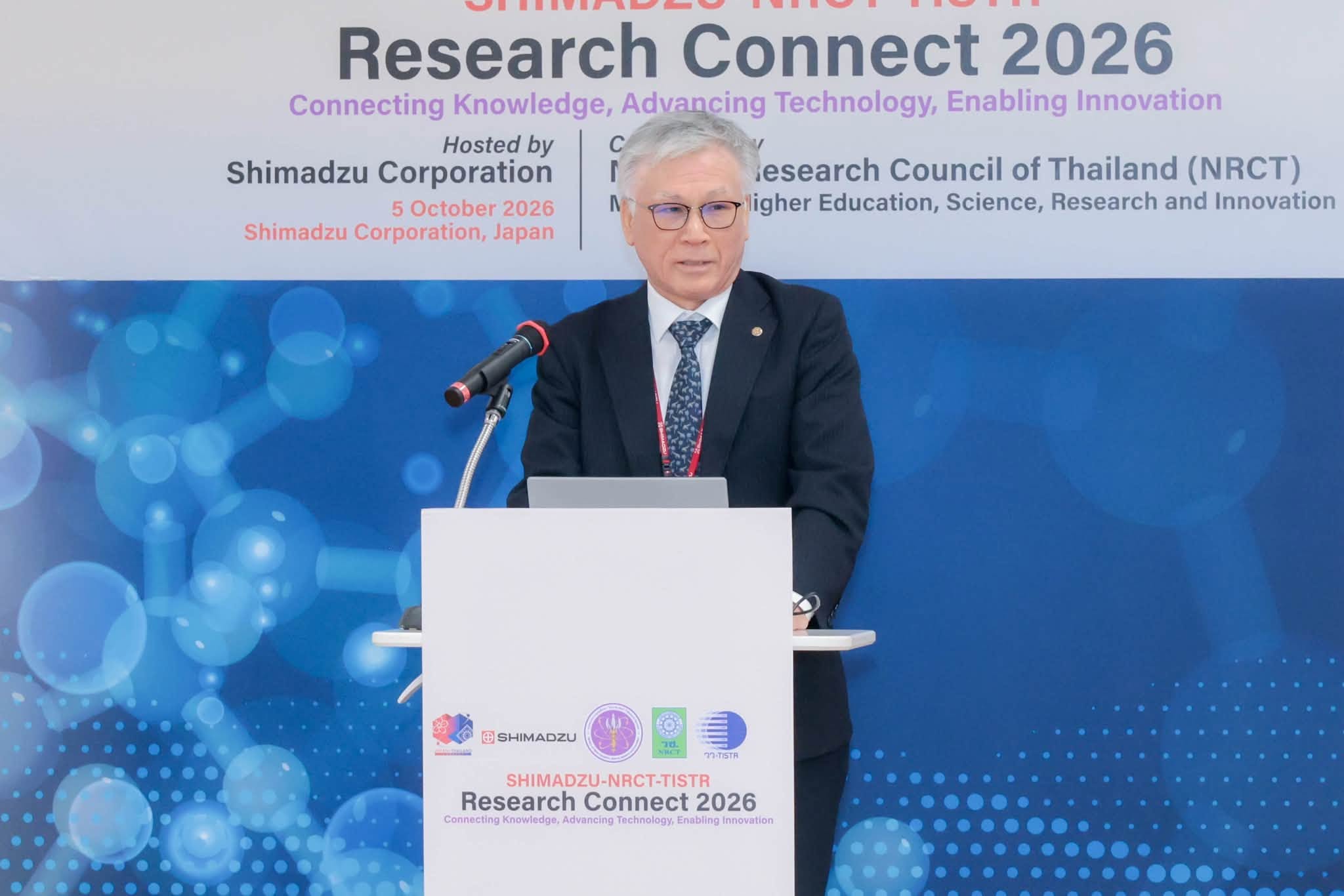
Mr. Wataru Tajima, General Manager of Global Sales Department, on behalf of Shimadzu Corporation, presented an overview of the company’s history and development, as well as its current directions in technology and innovation, particularly in innovative biotechnology and supporting innovation ecosystems. He also shared Shimadzu’s experience in collaborating with Thai universities, including King Mongkut’s University of Technology Thonburi and Chulalongkorn University, and highlighted the company’s role in connecting science, technology, and innovation networks across the Asia-Pacific region.
The signing of the LoI marked another important step in strengthening research, science, technology, and innovation cooperation between Thailand and Japan. The partnership aims to promote joint research and development, technology transfer and exchange, and the sharing of knowledge, expertise, know-how, techniques, and best practices. It will also support exchanges of researchers, experts, and personnel through training programs, study visits, and joint capacity-building activities.
This cooperation is expected to strengthen the capabilities of Thai researchers and institutions in research, laboratory analysis, testing, and the application of advanced technologies. It will also support the translation of shared knowledge and technologies into practical applications, contribute to industrial development, improve quality of life, and enhance Thailand’s long-term competitiveness and sustainable development.