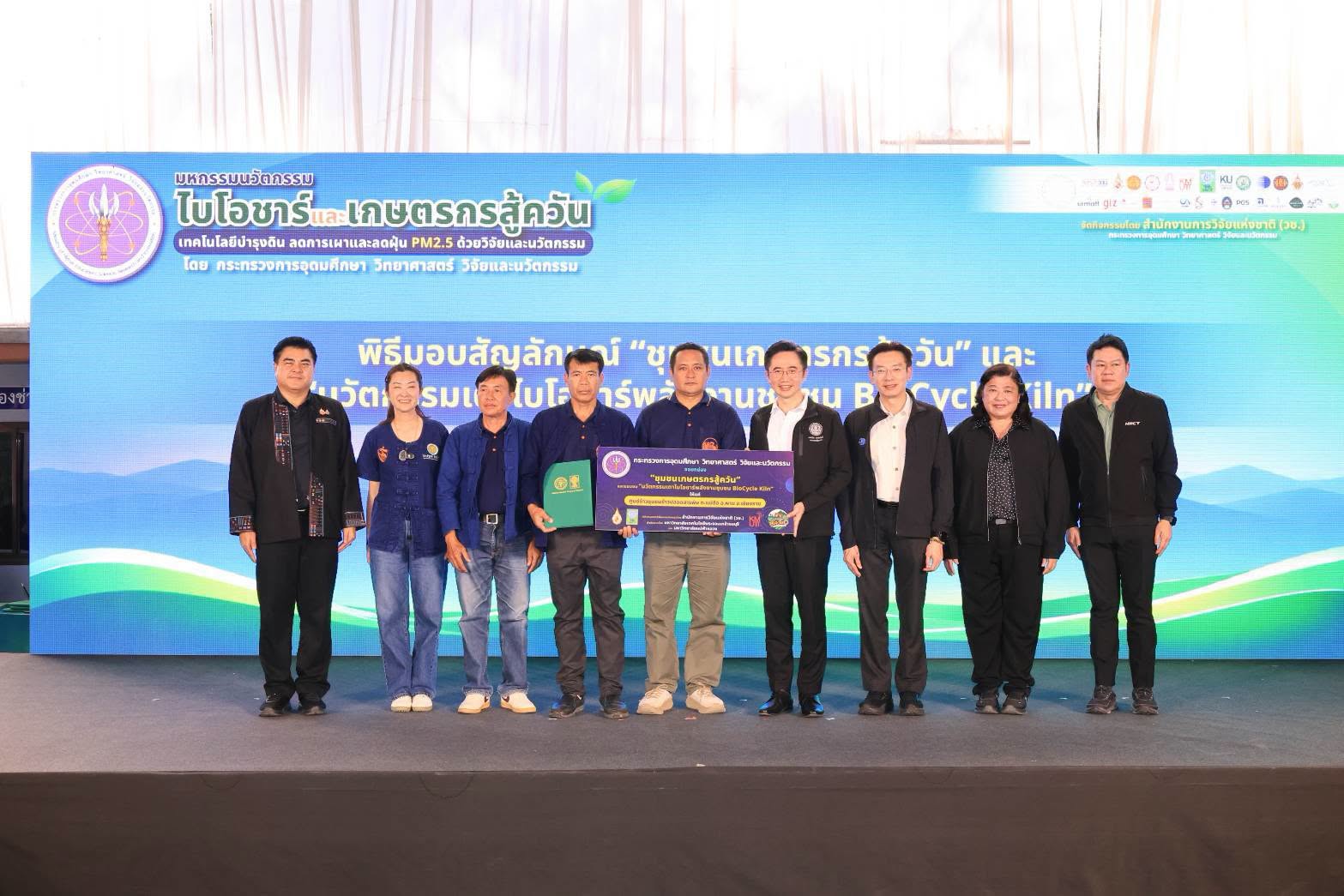
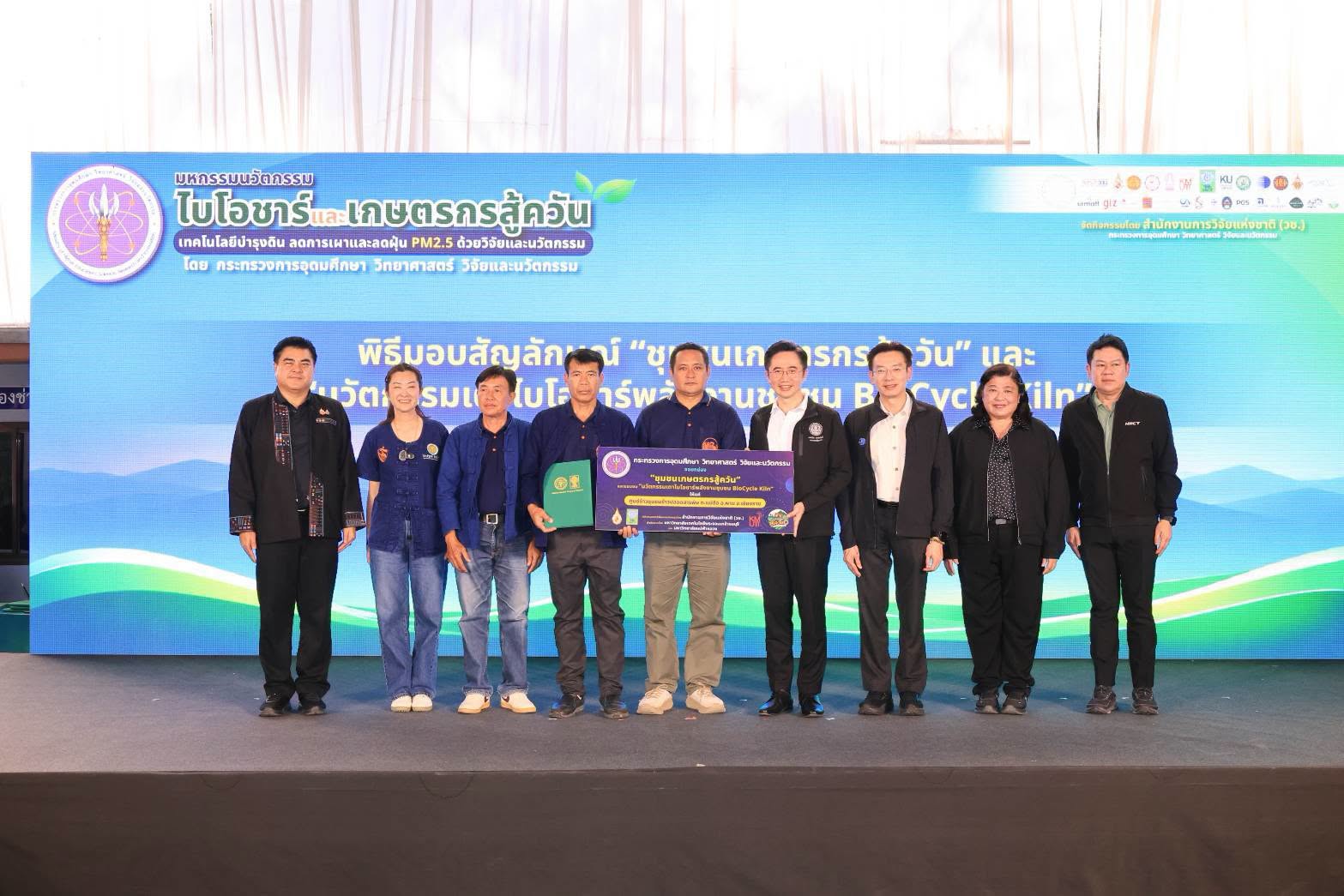
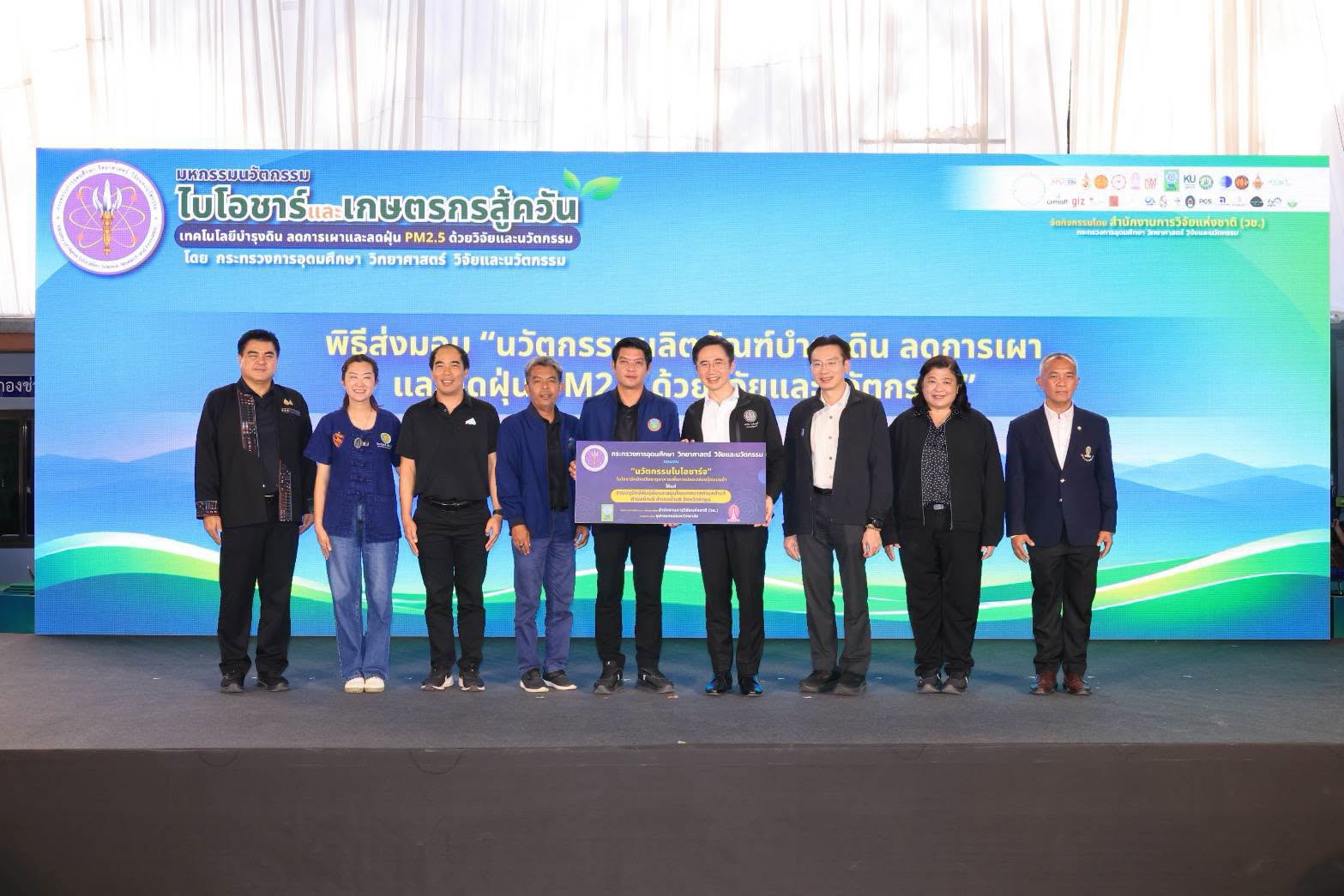
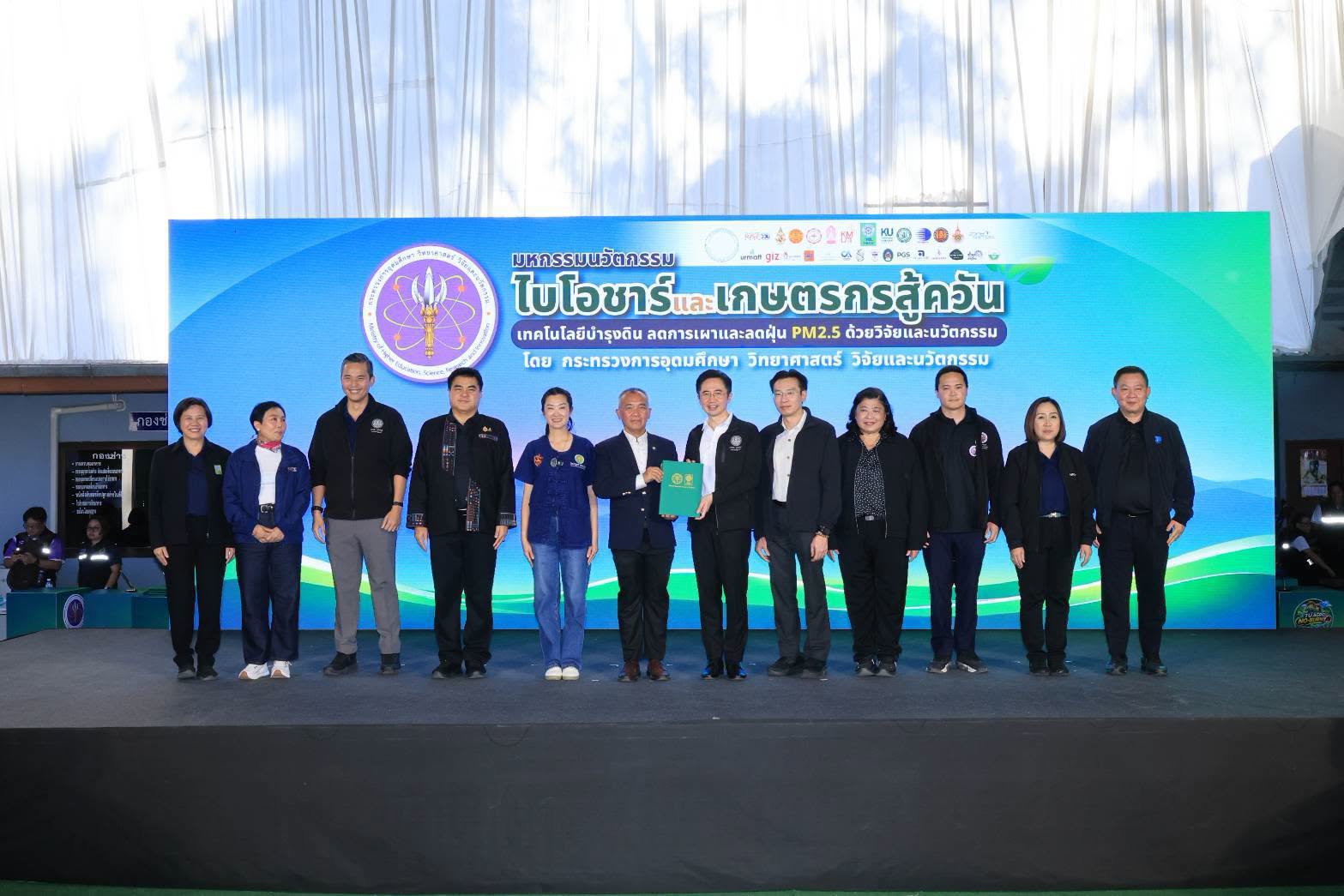
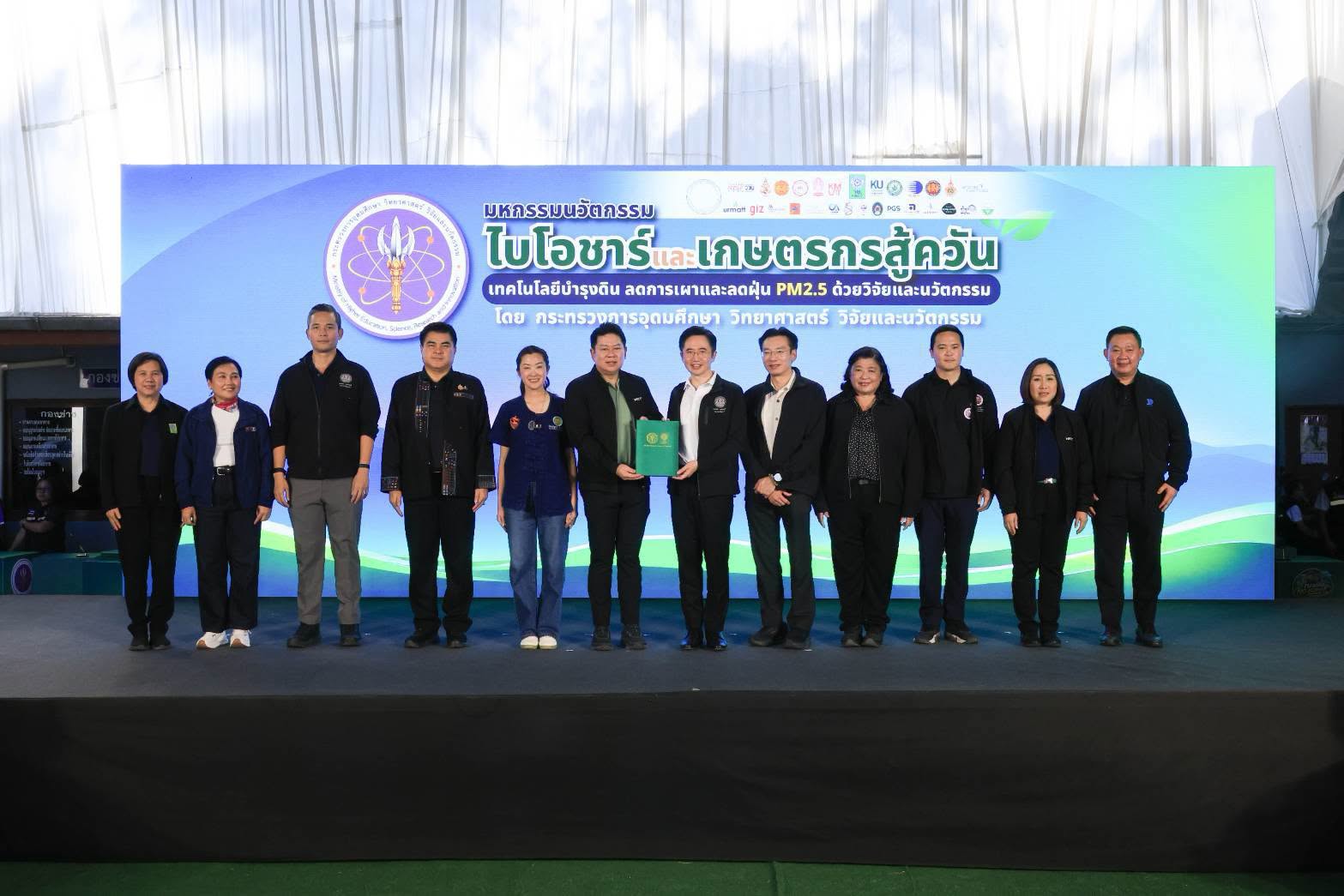
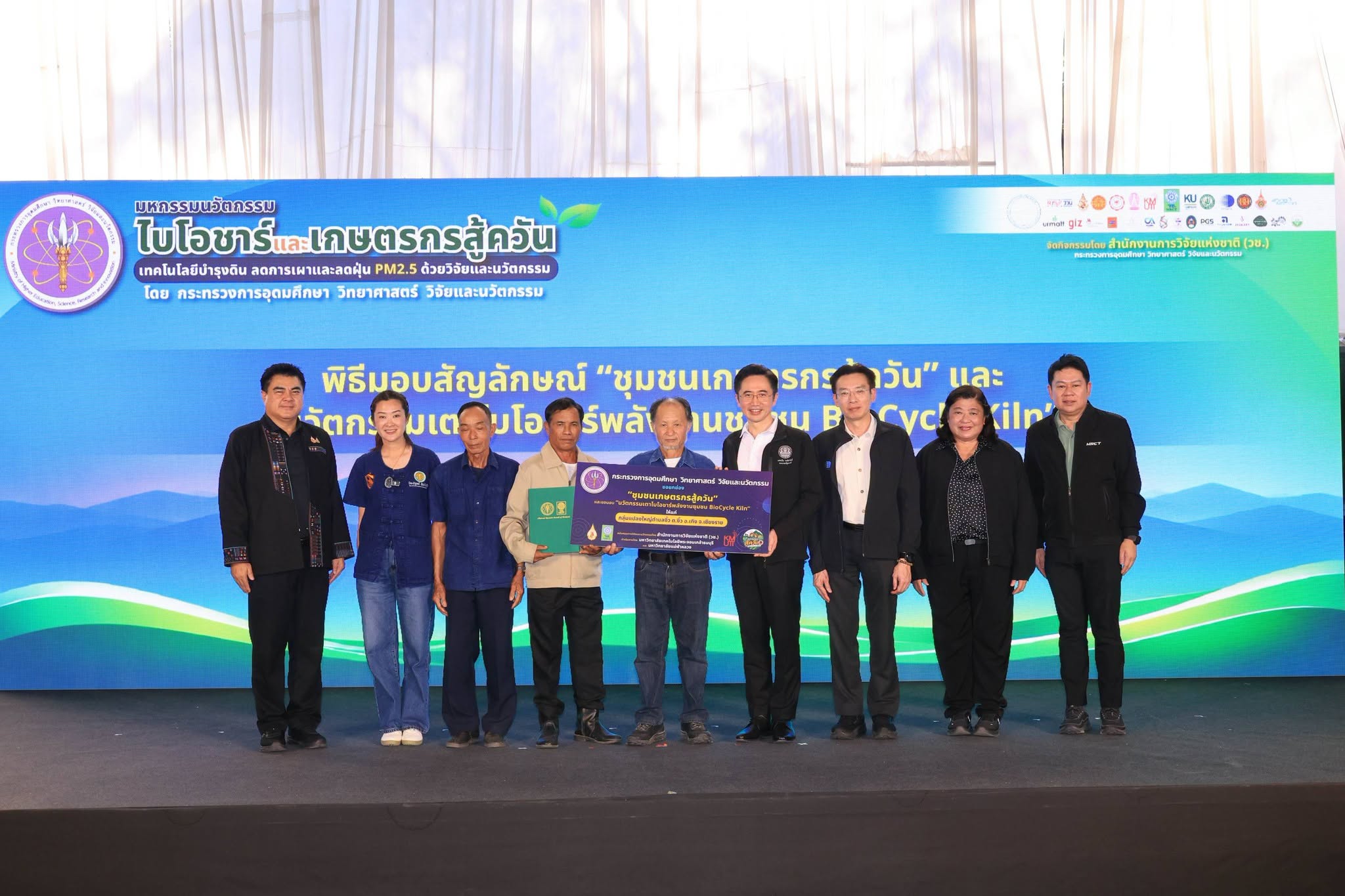
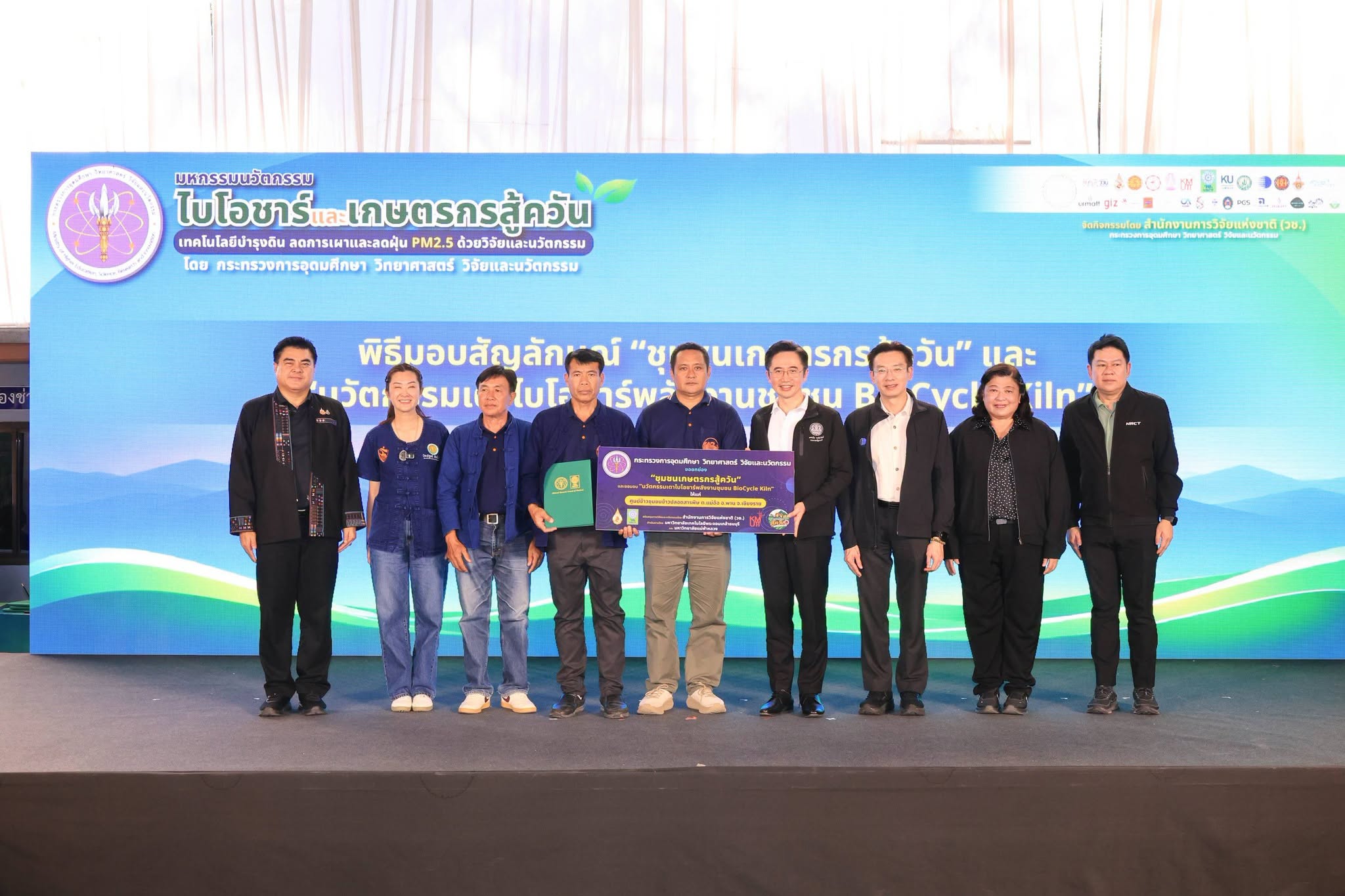
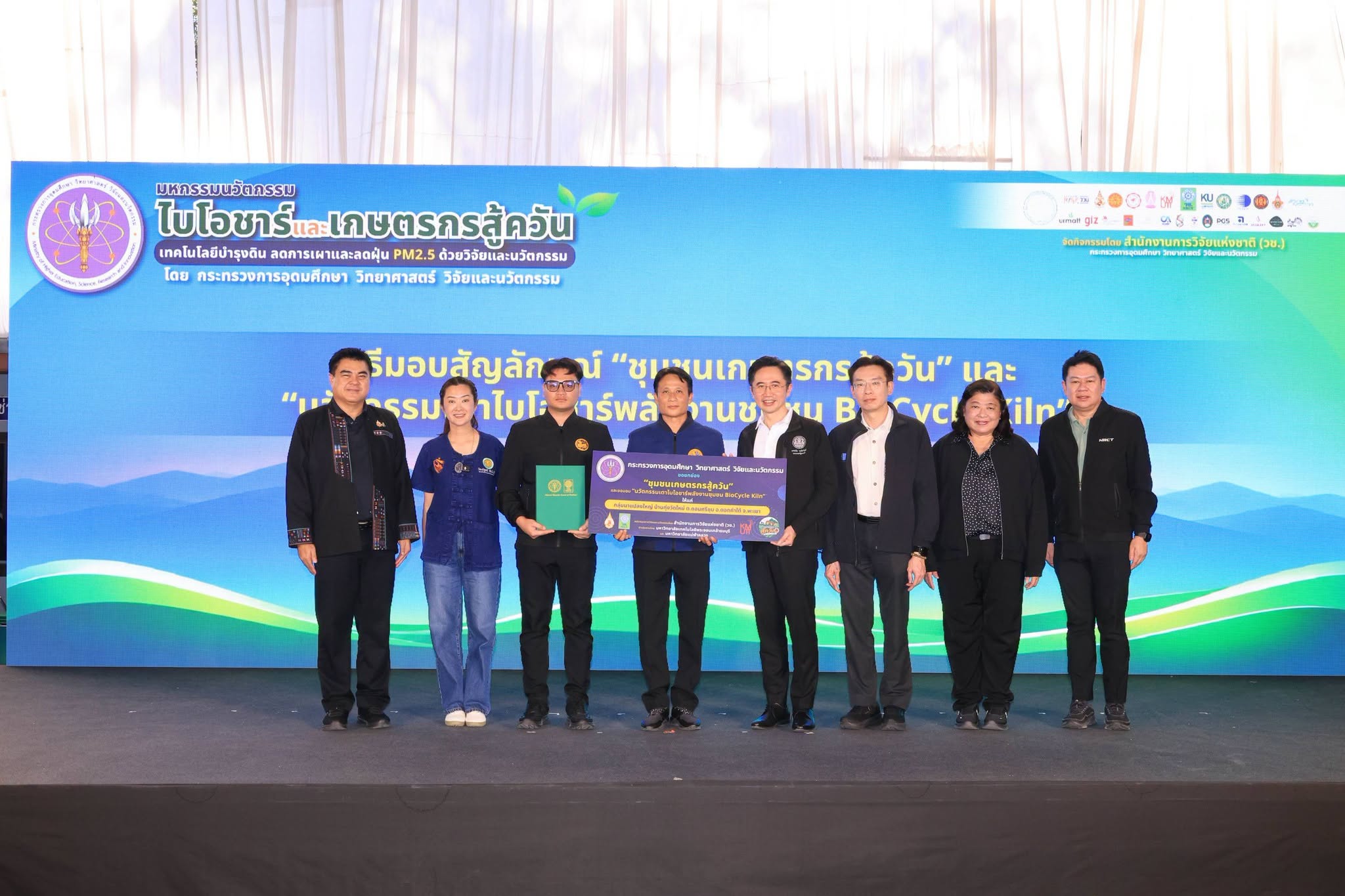
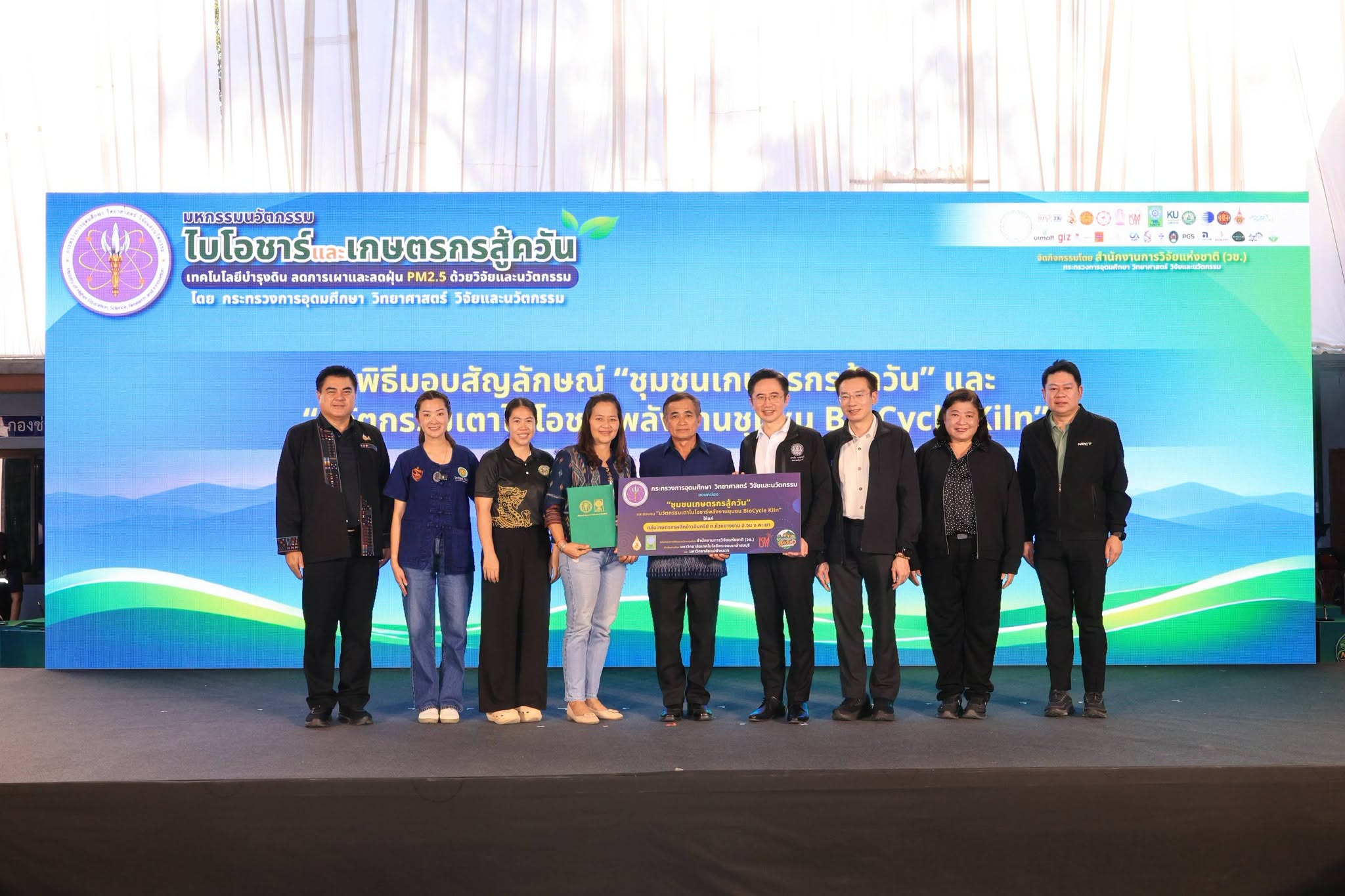
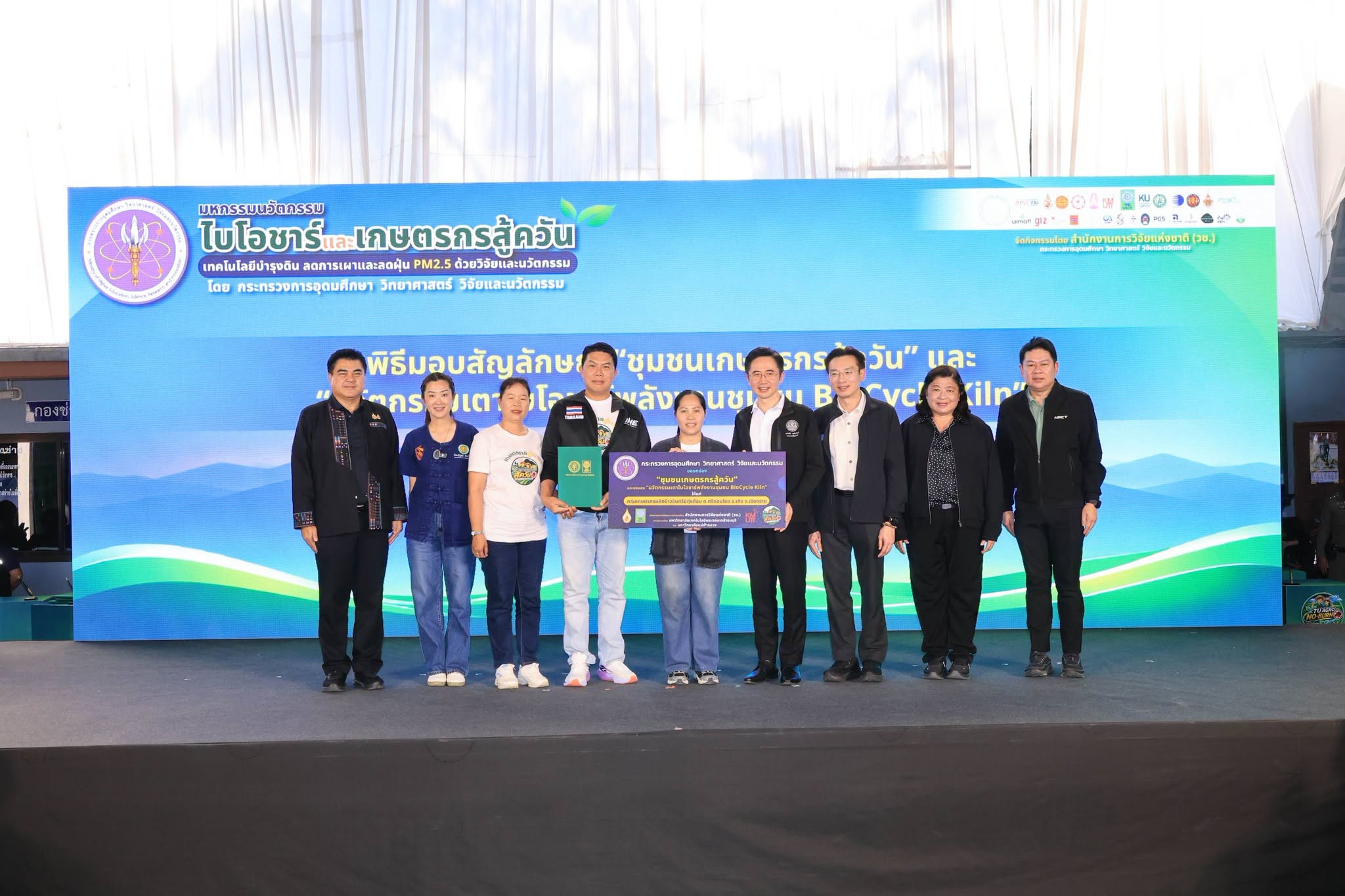
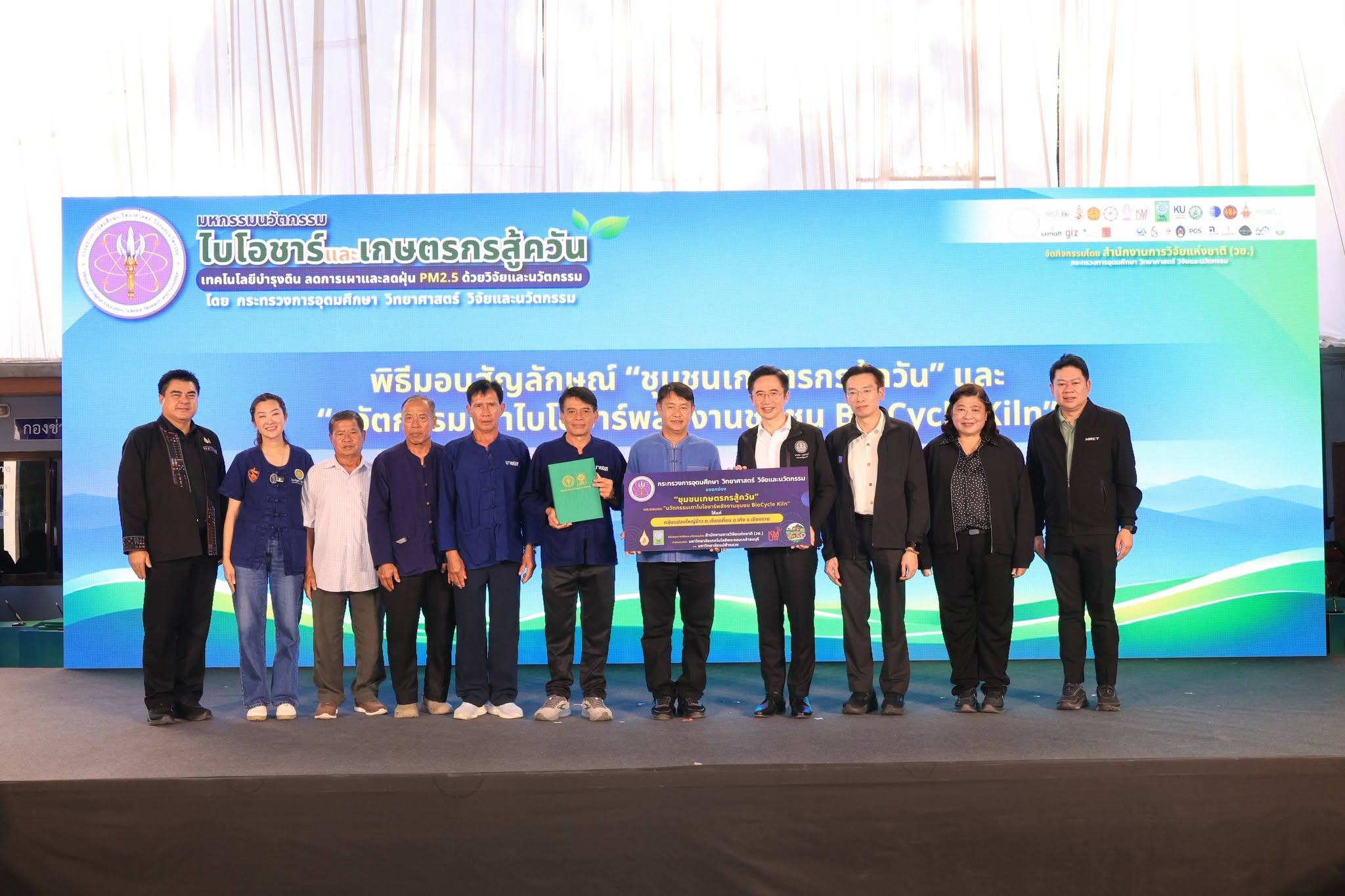
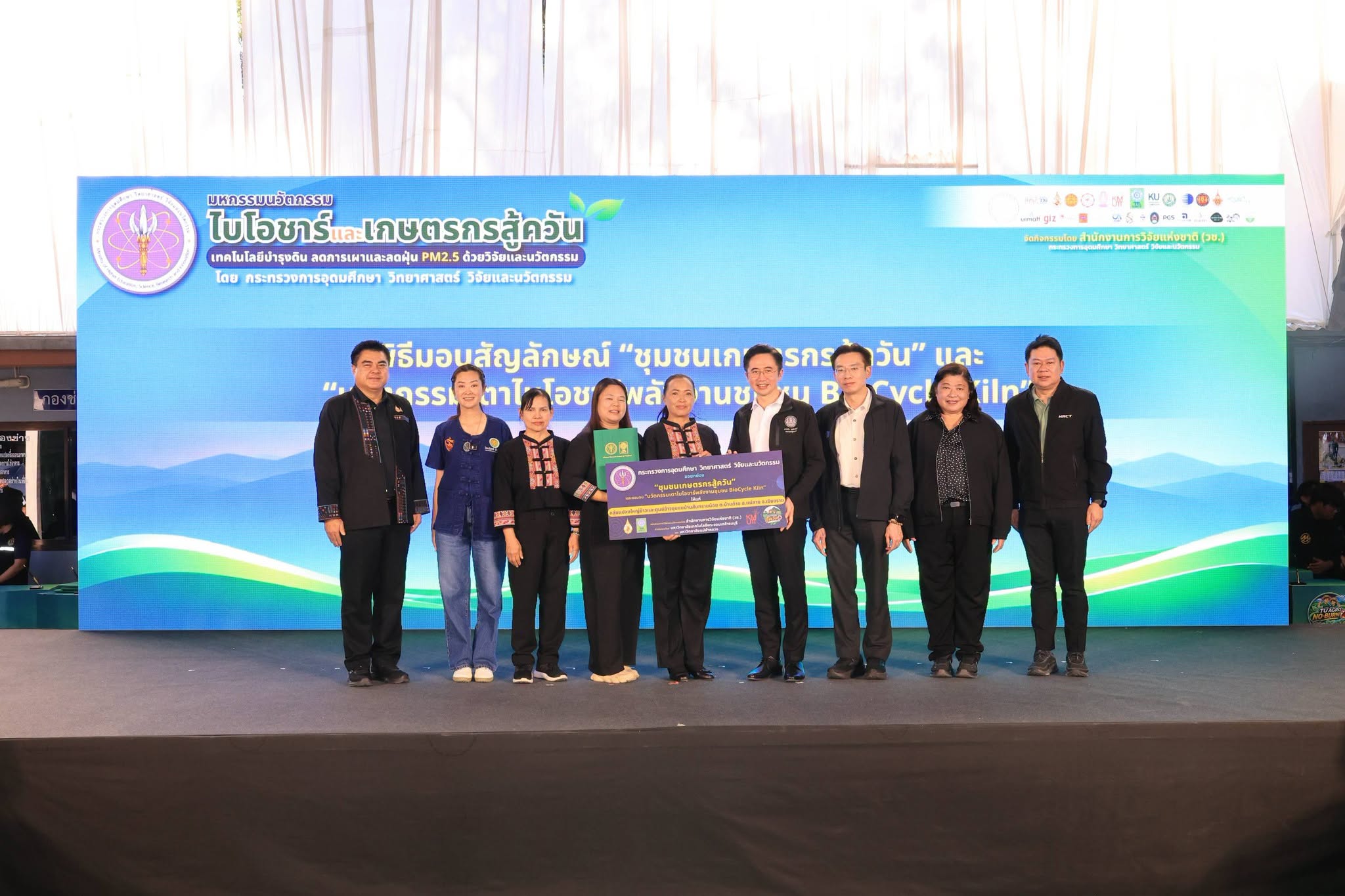
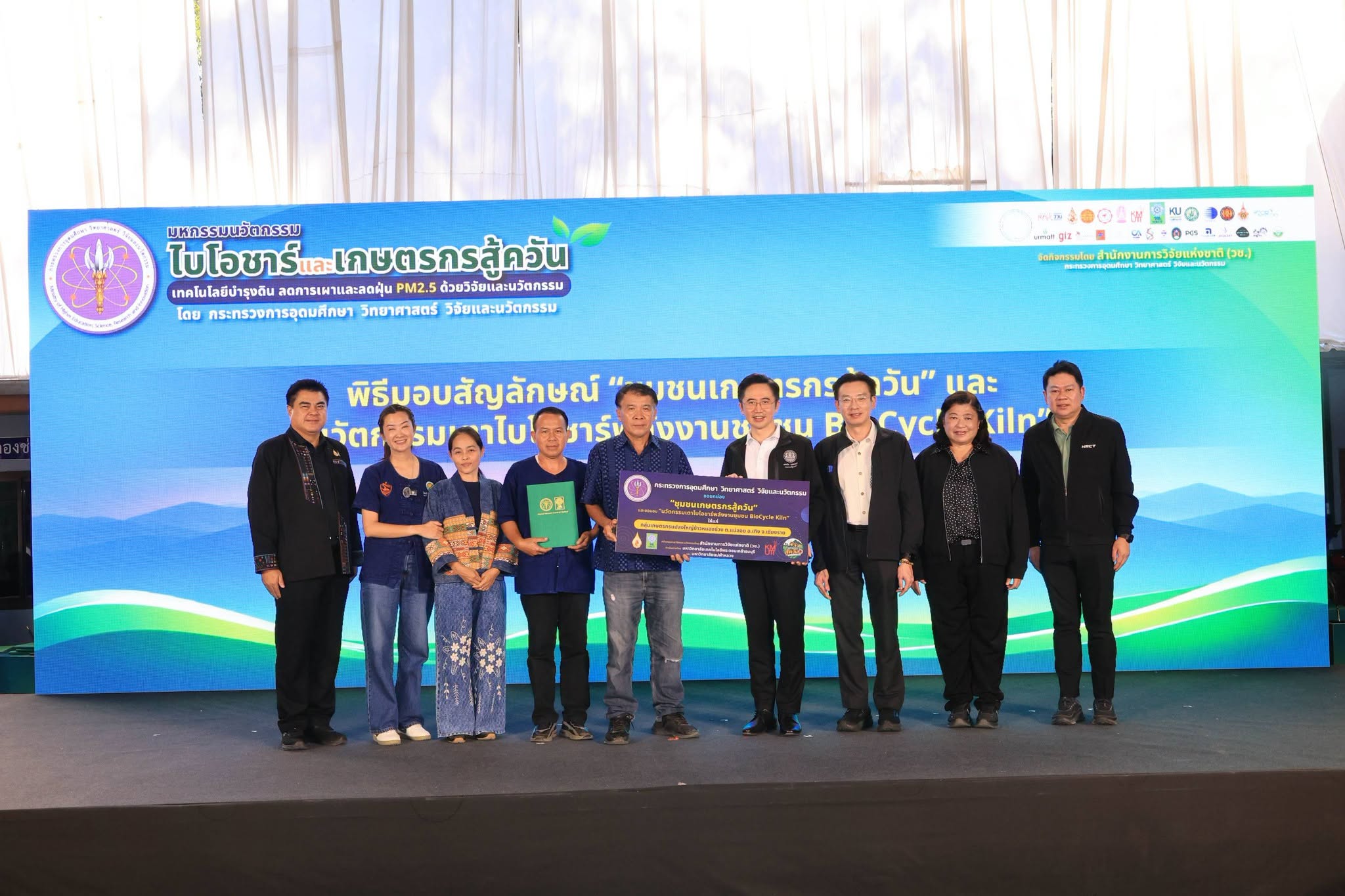
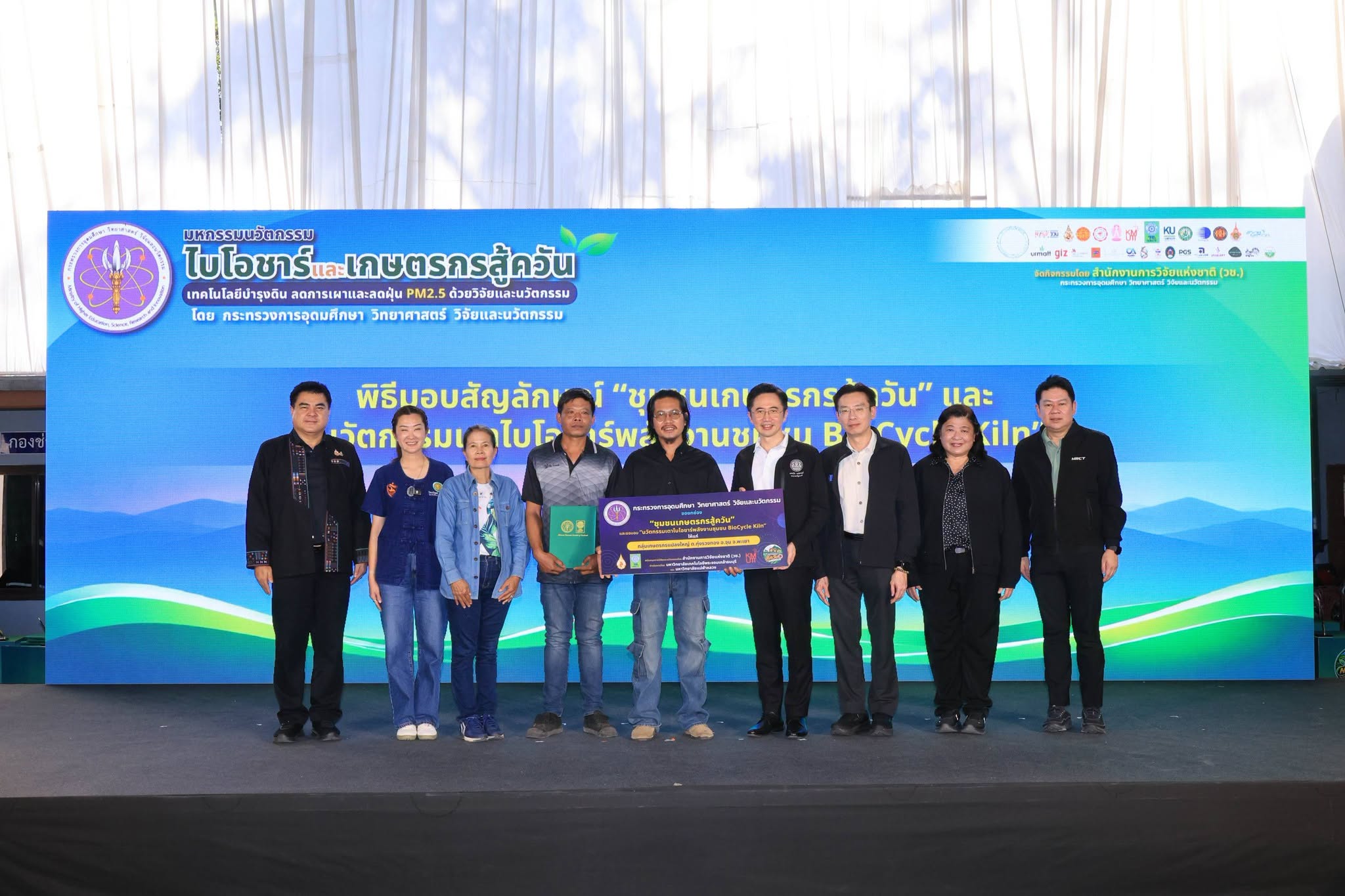
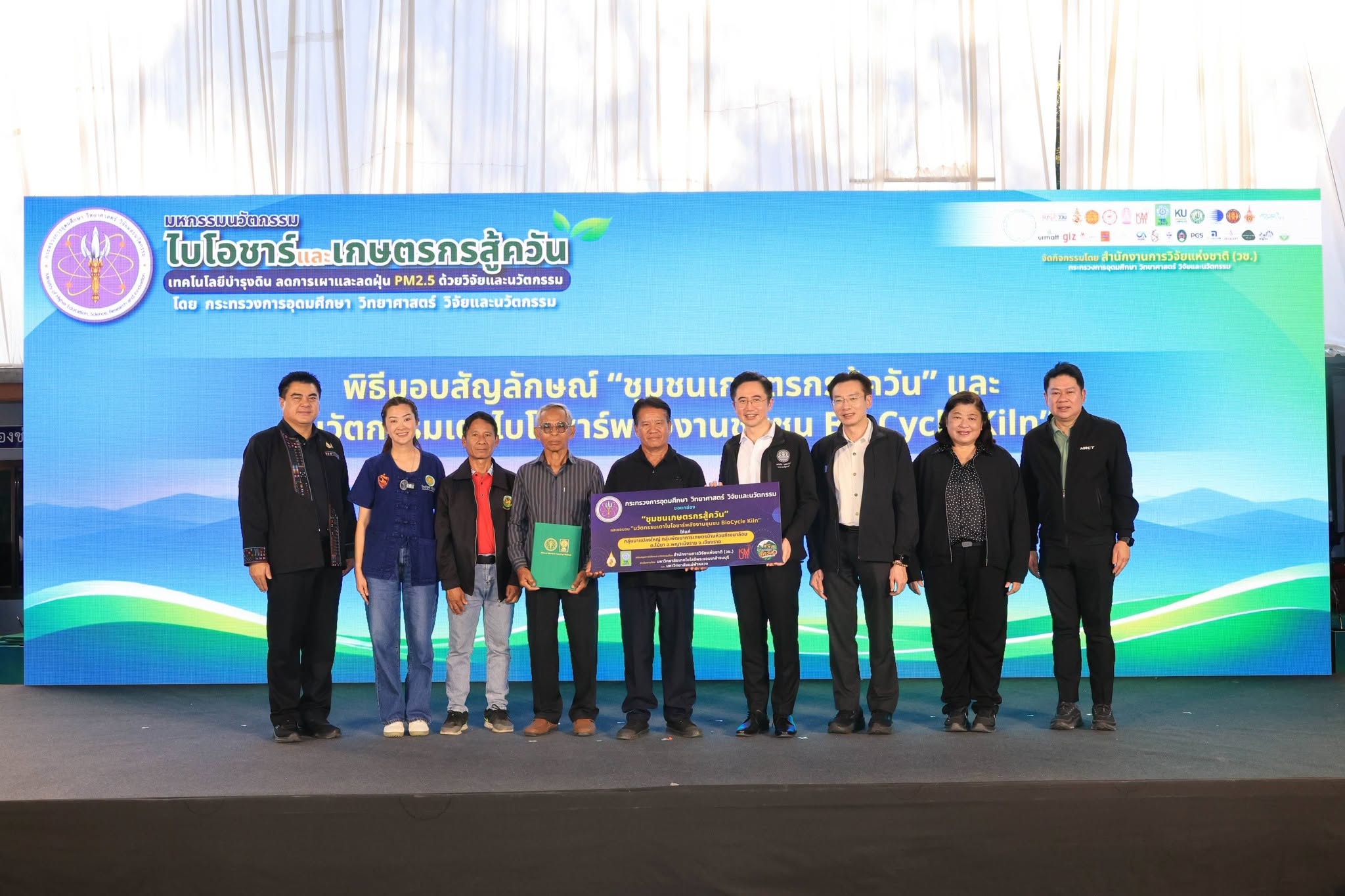
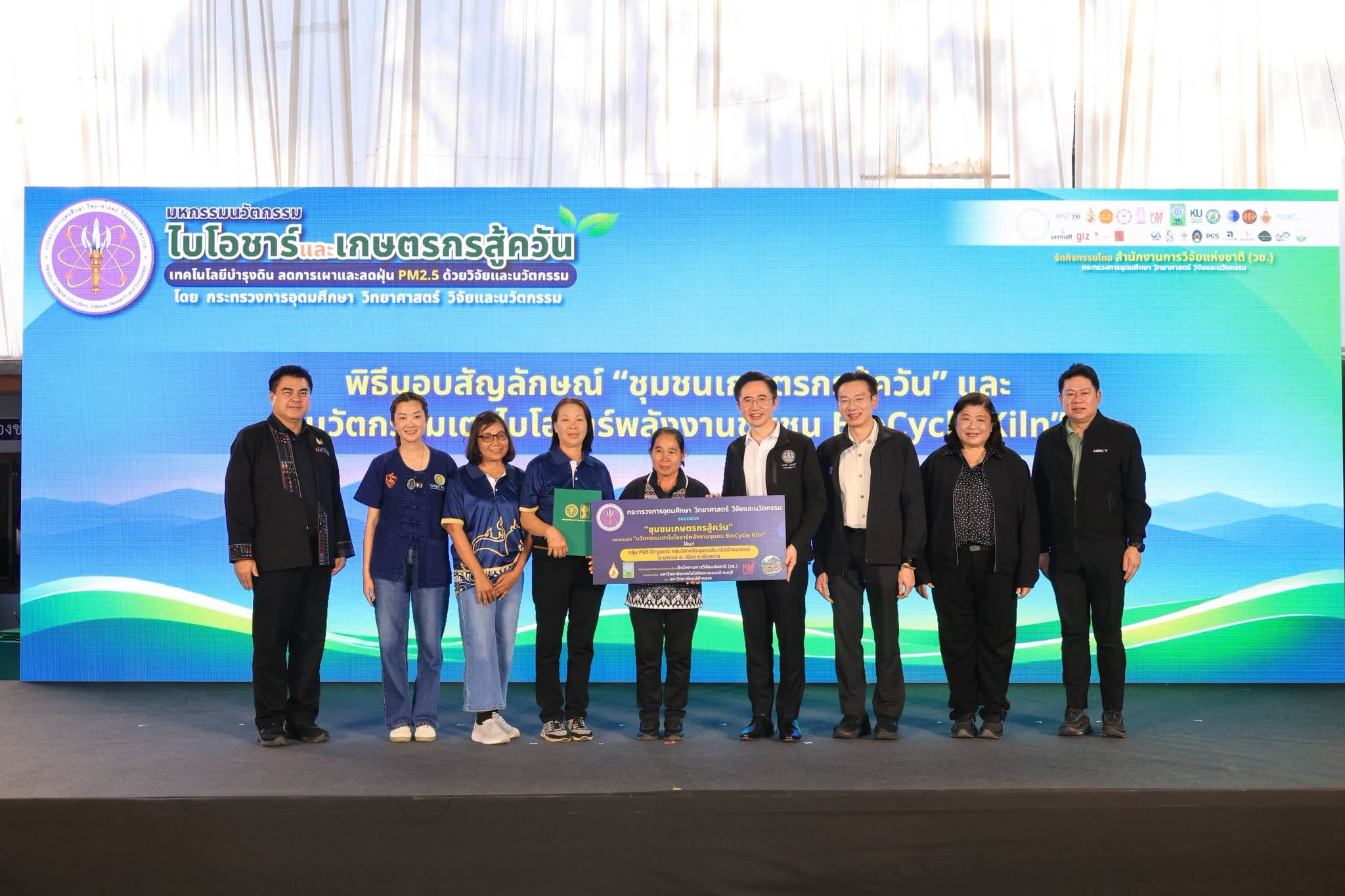
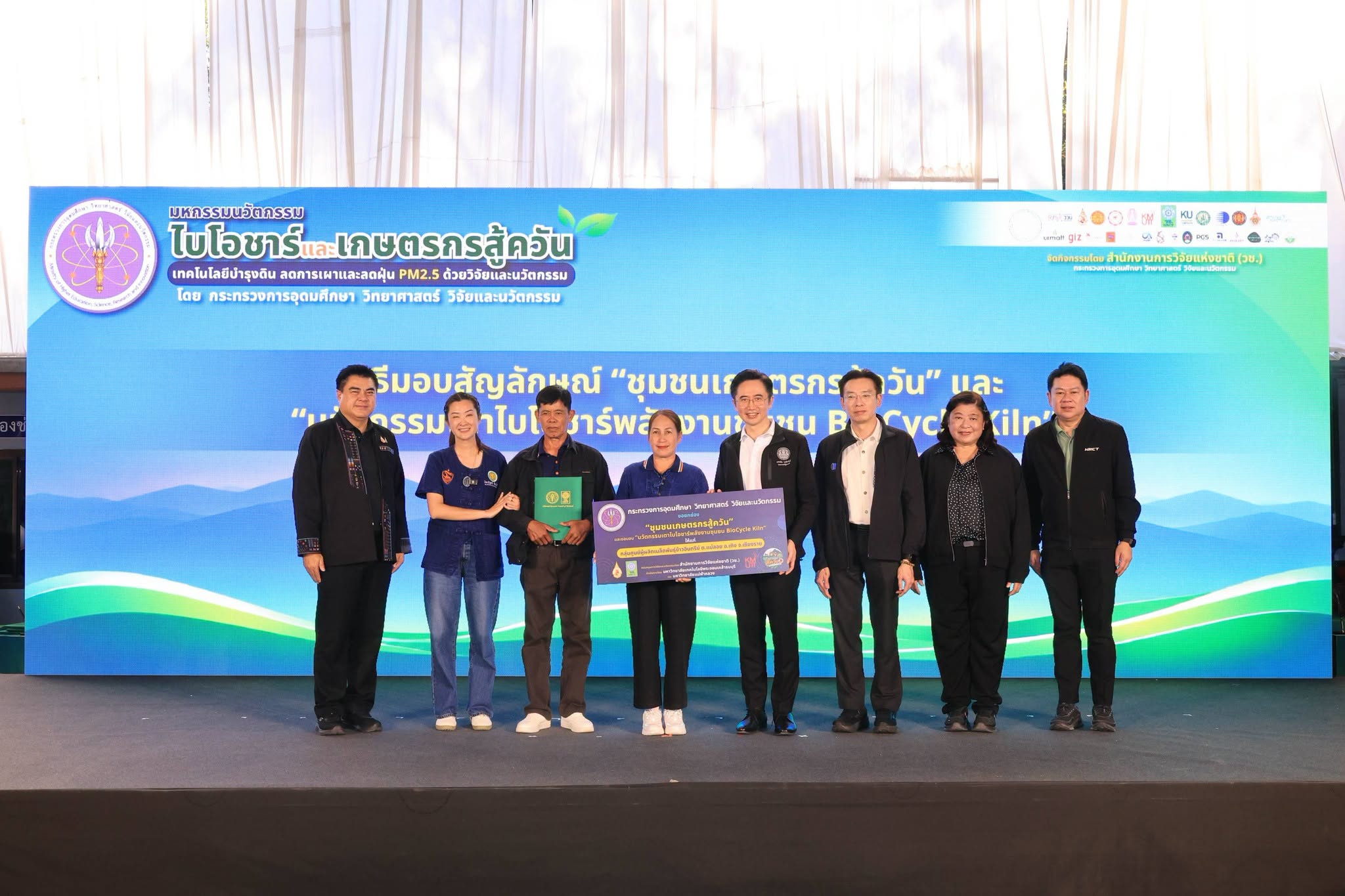
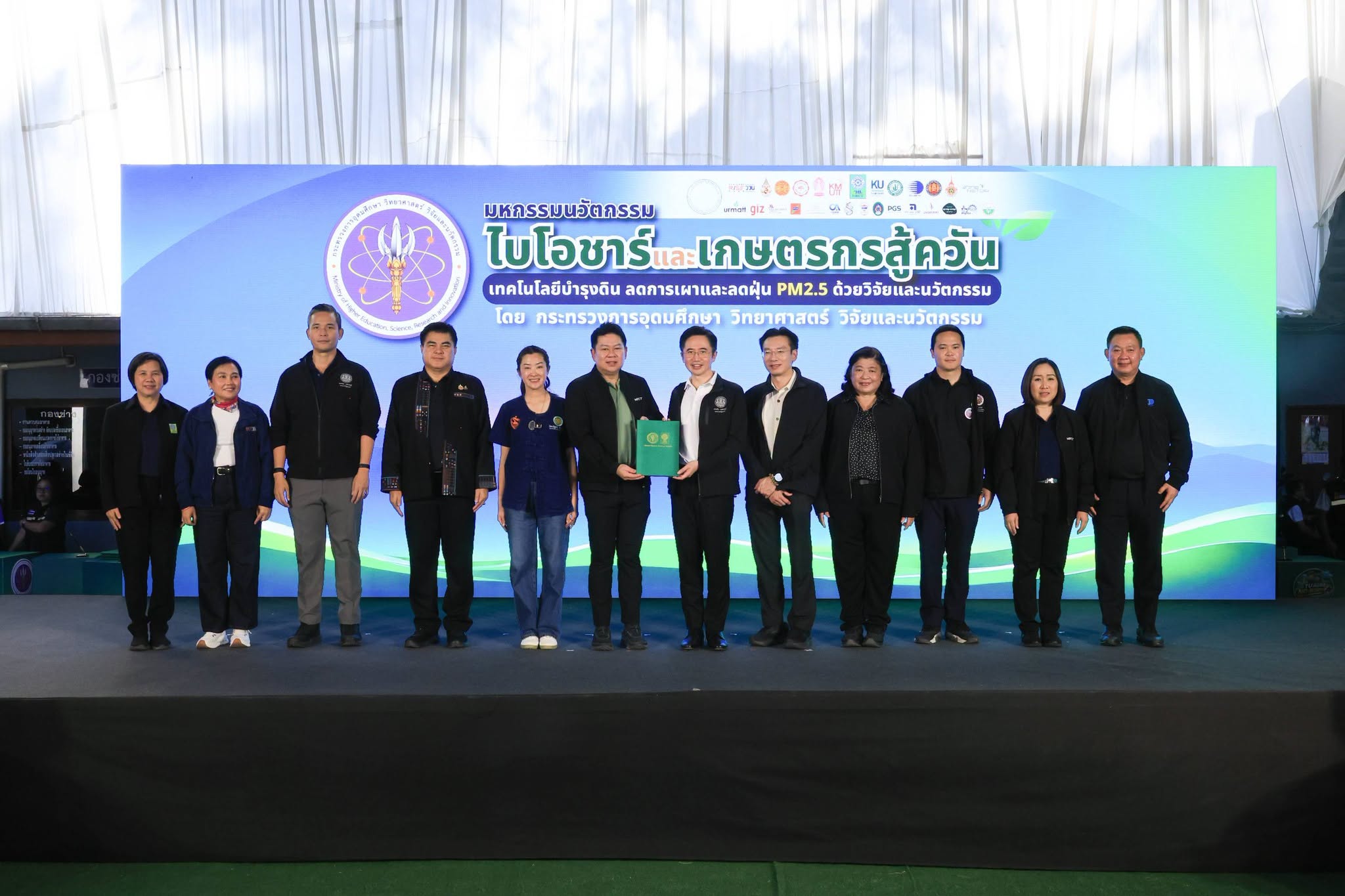
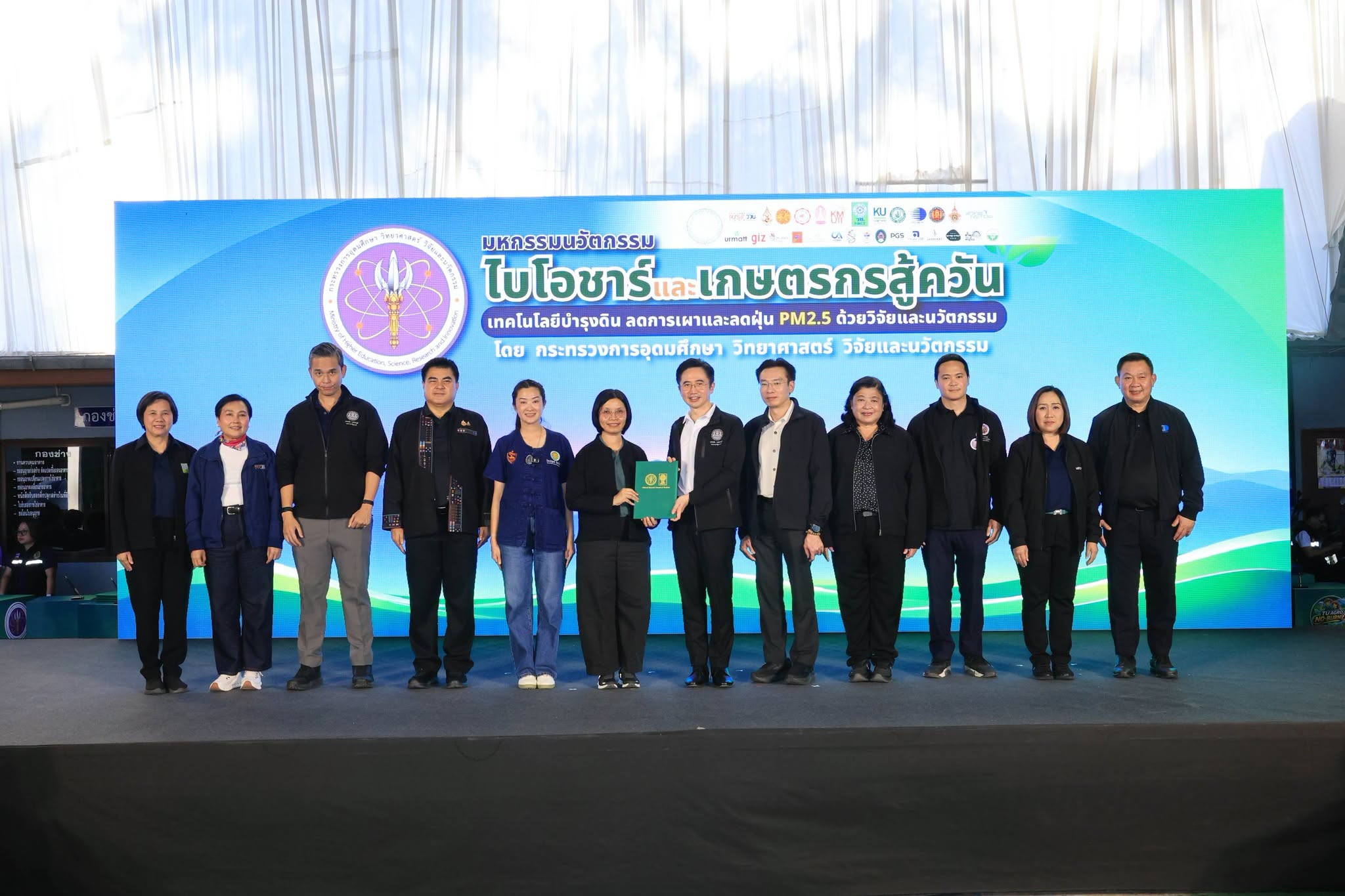
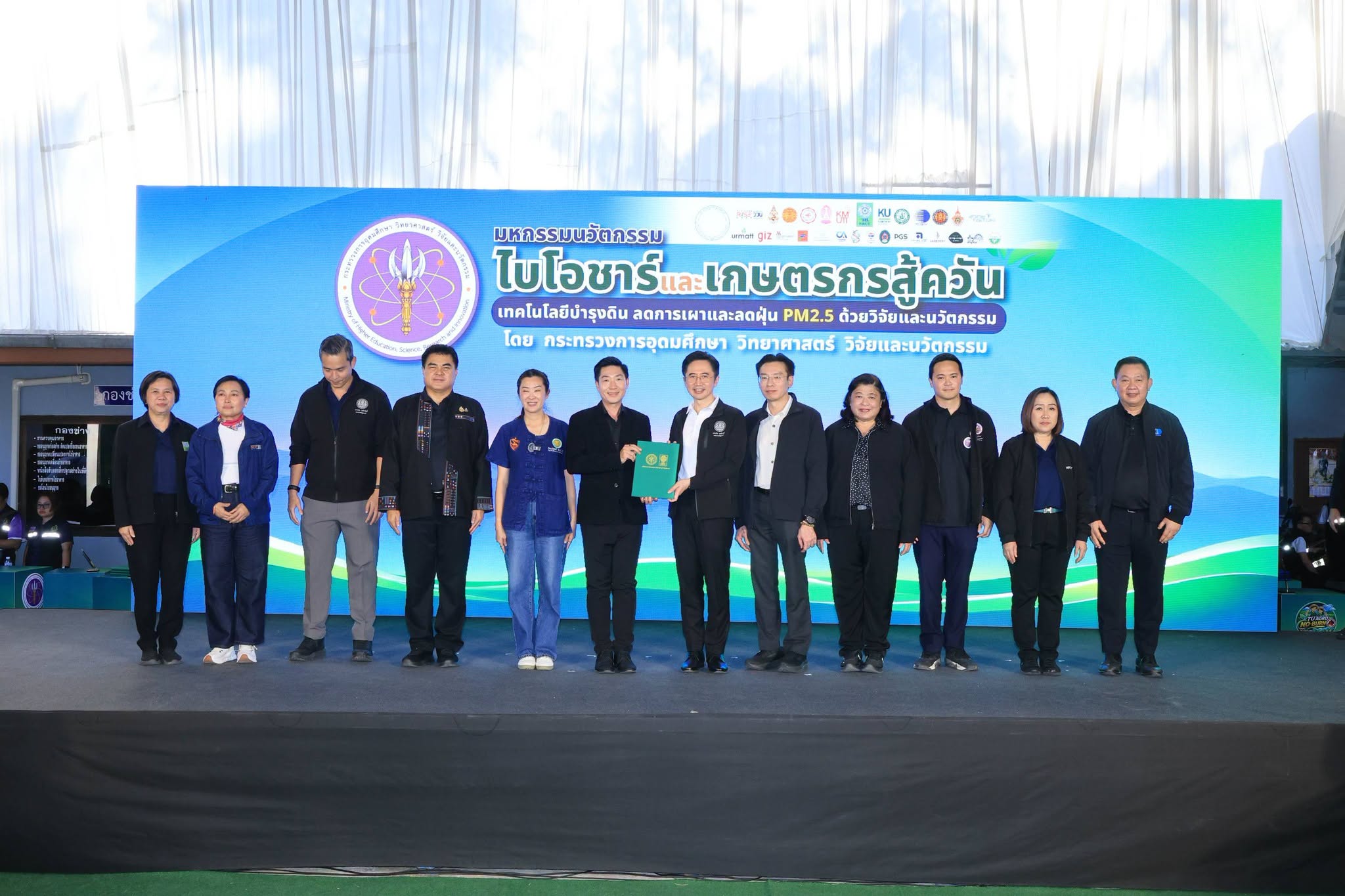
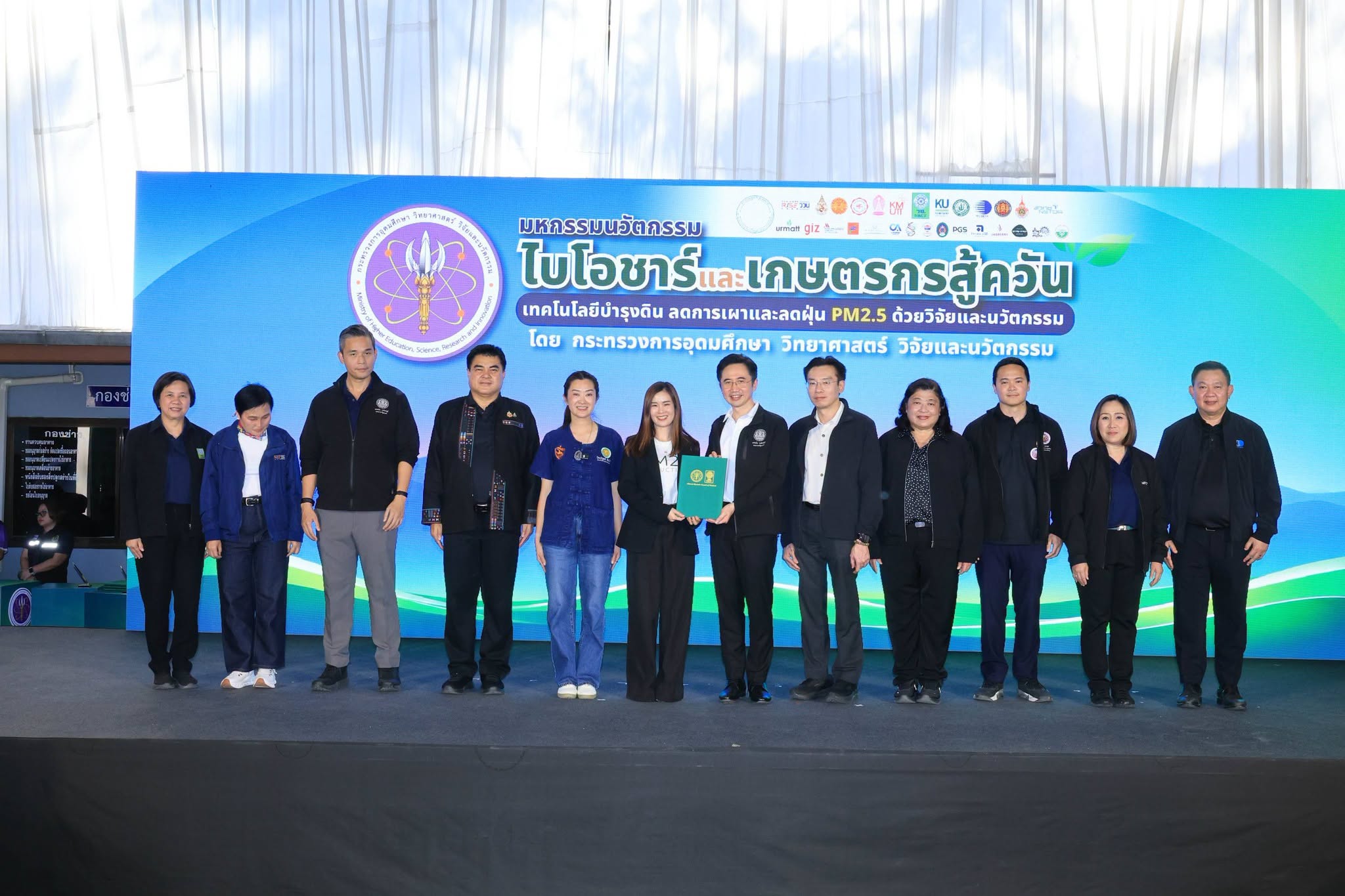
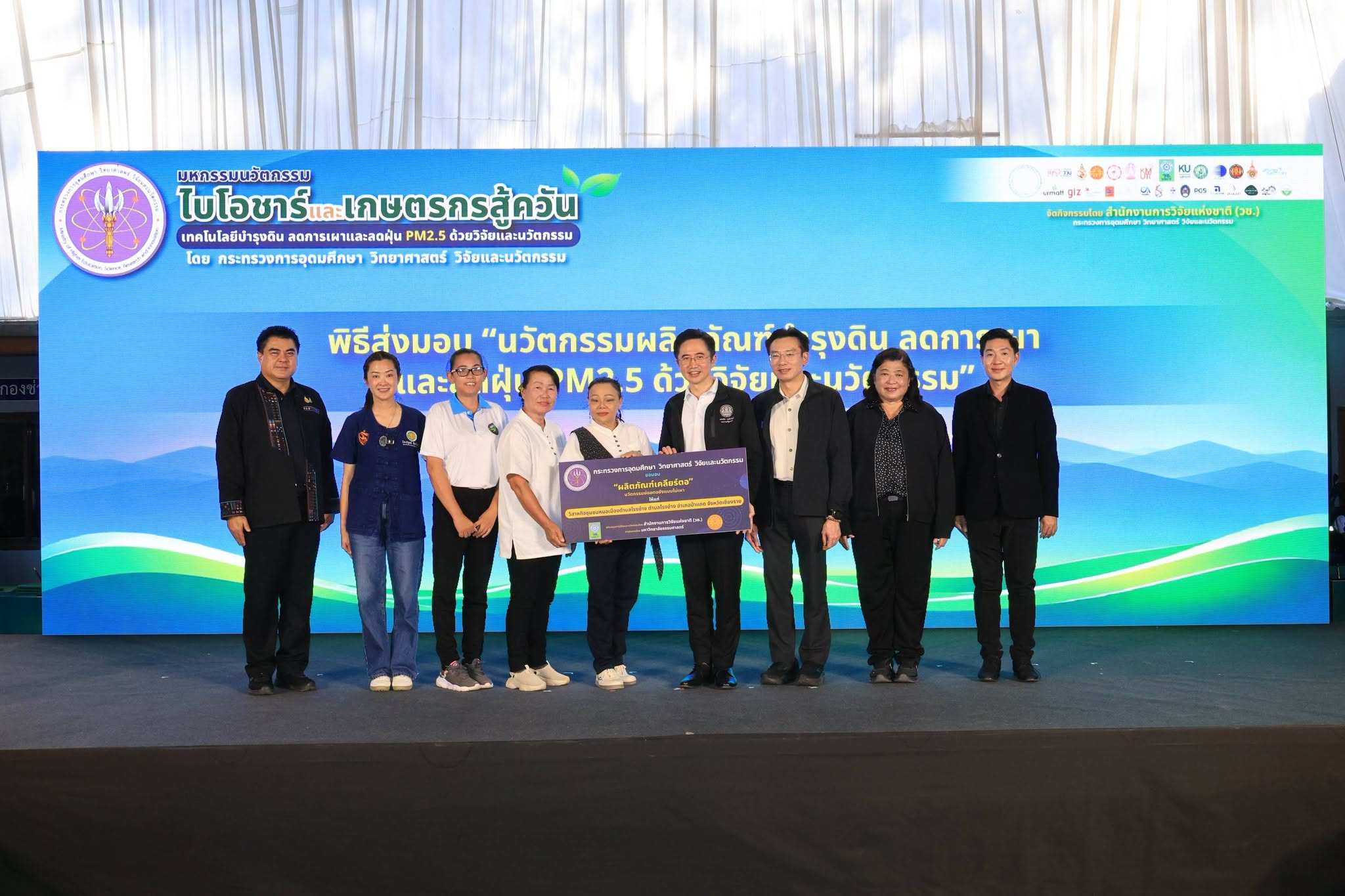
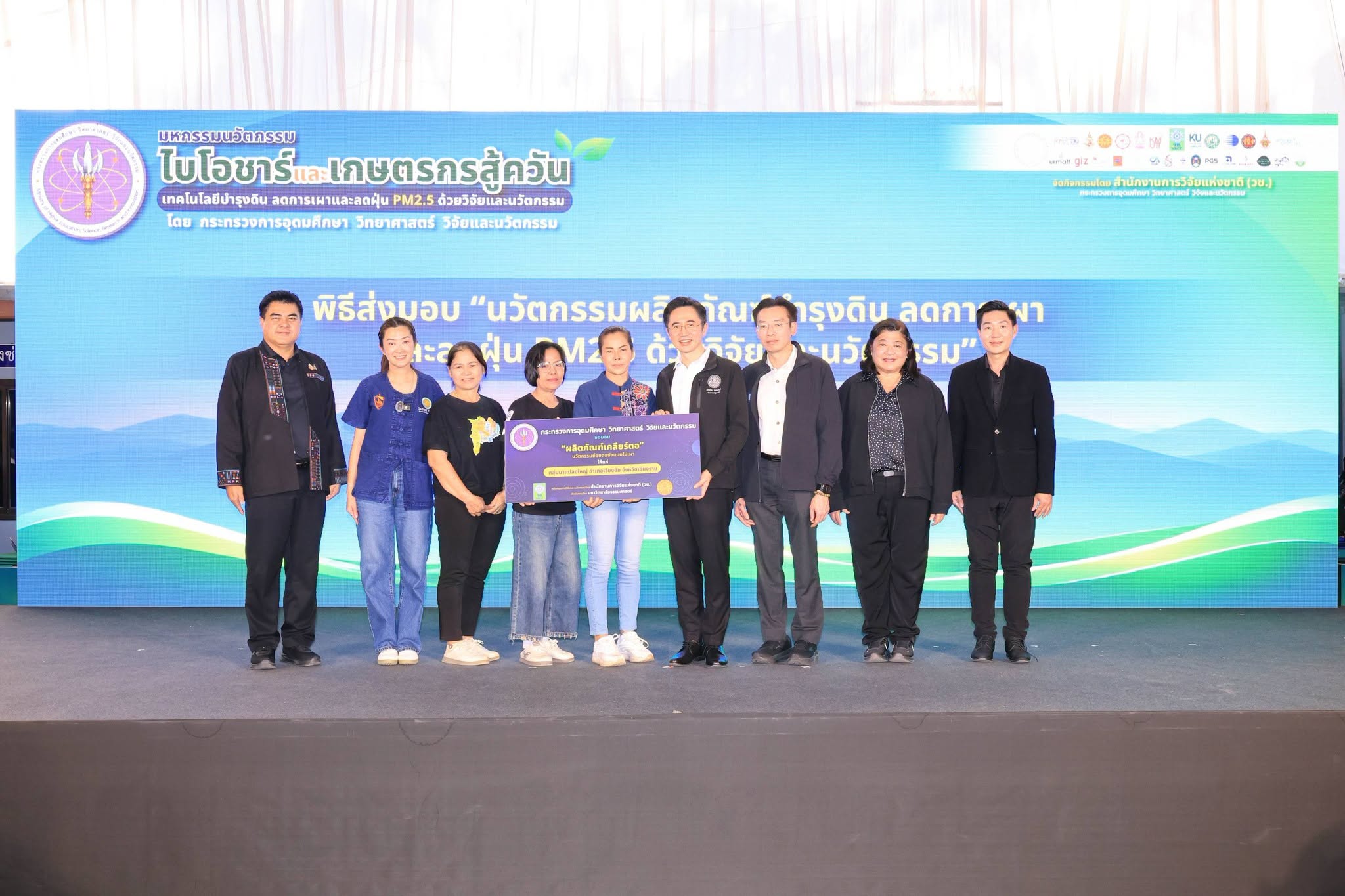
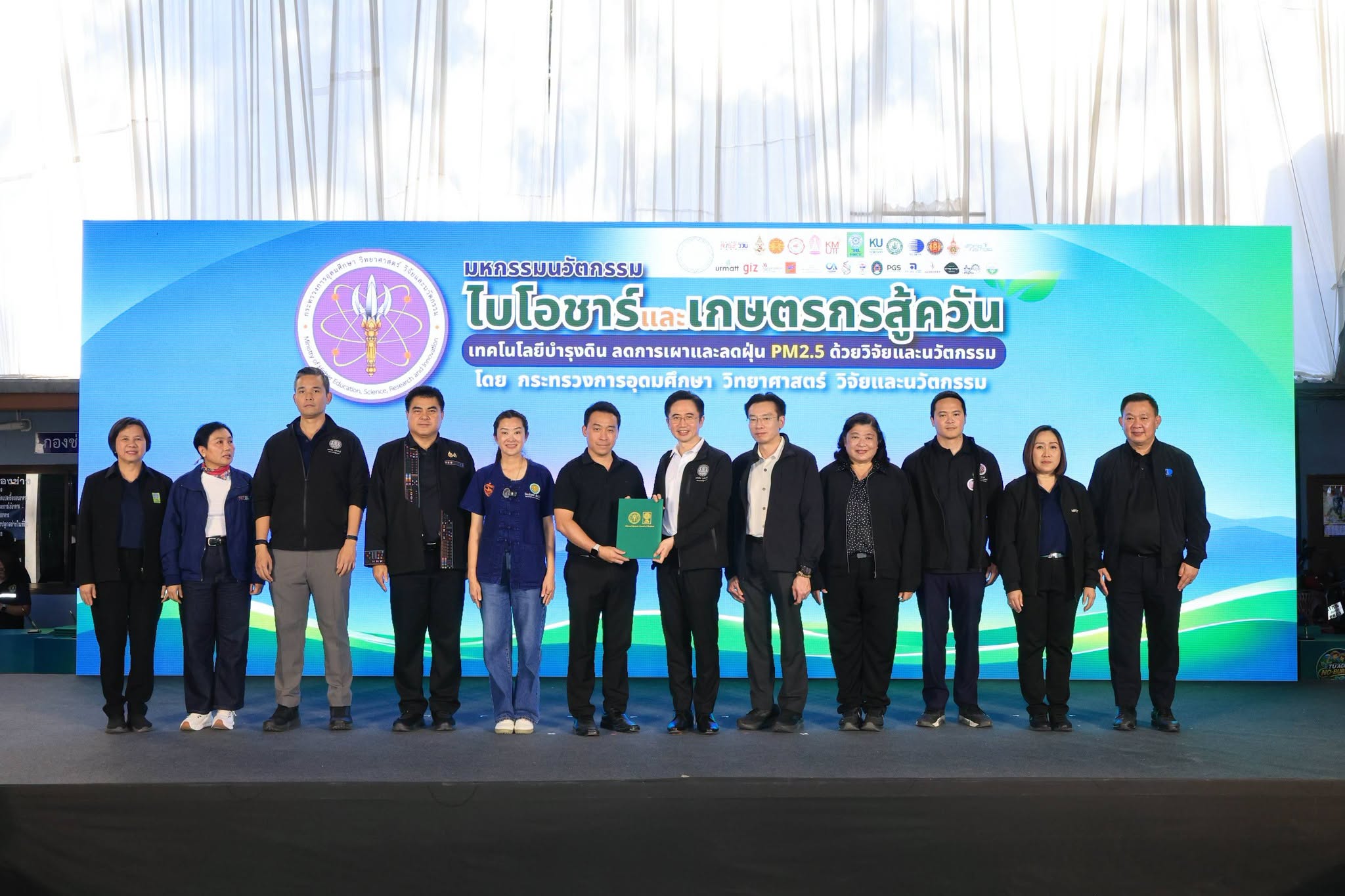
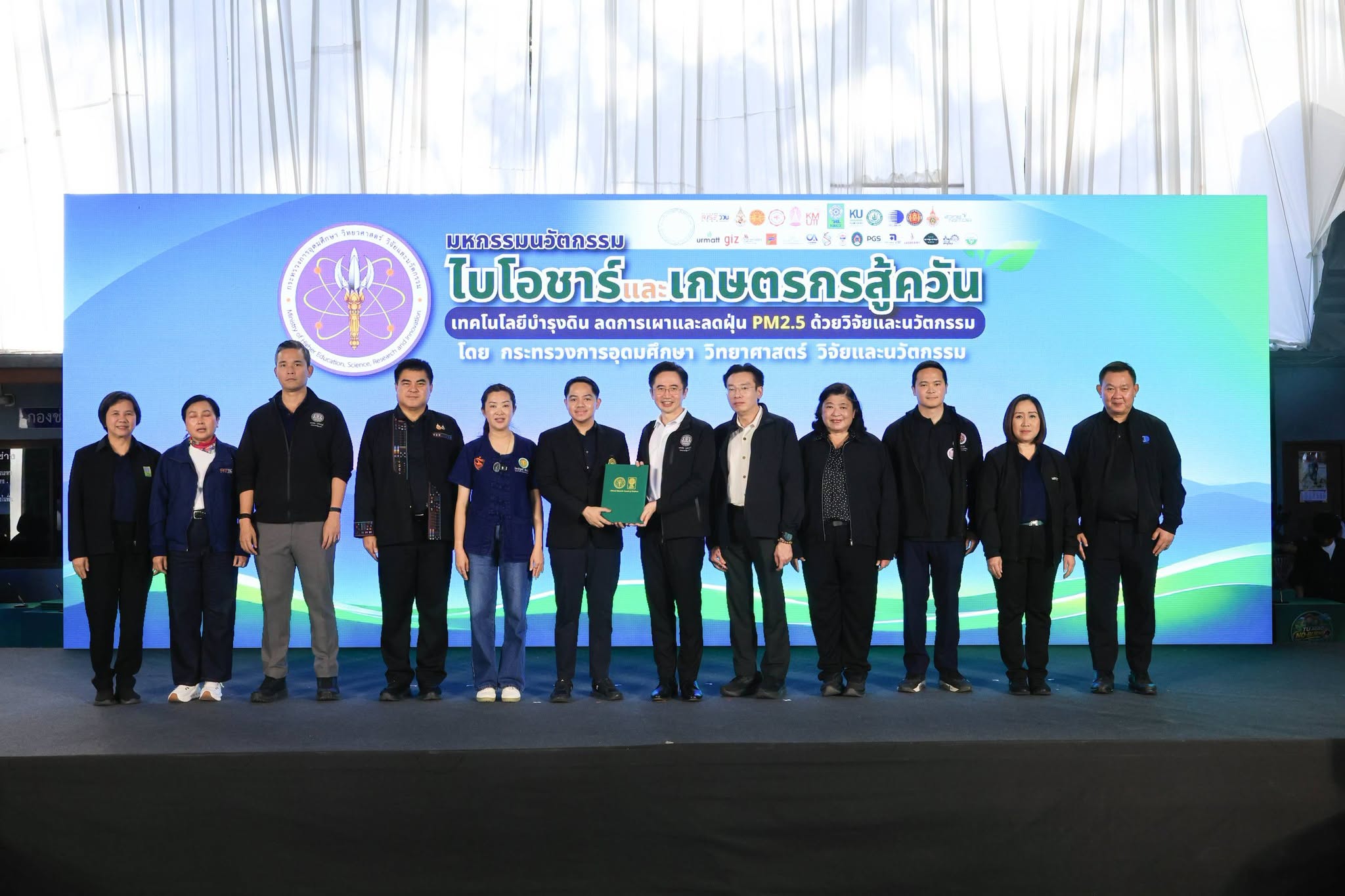
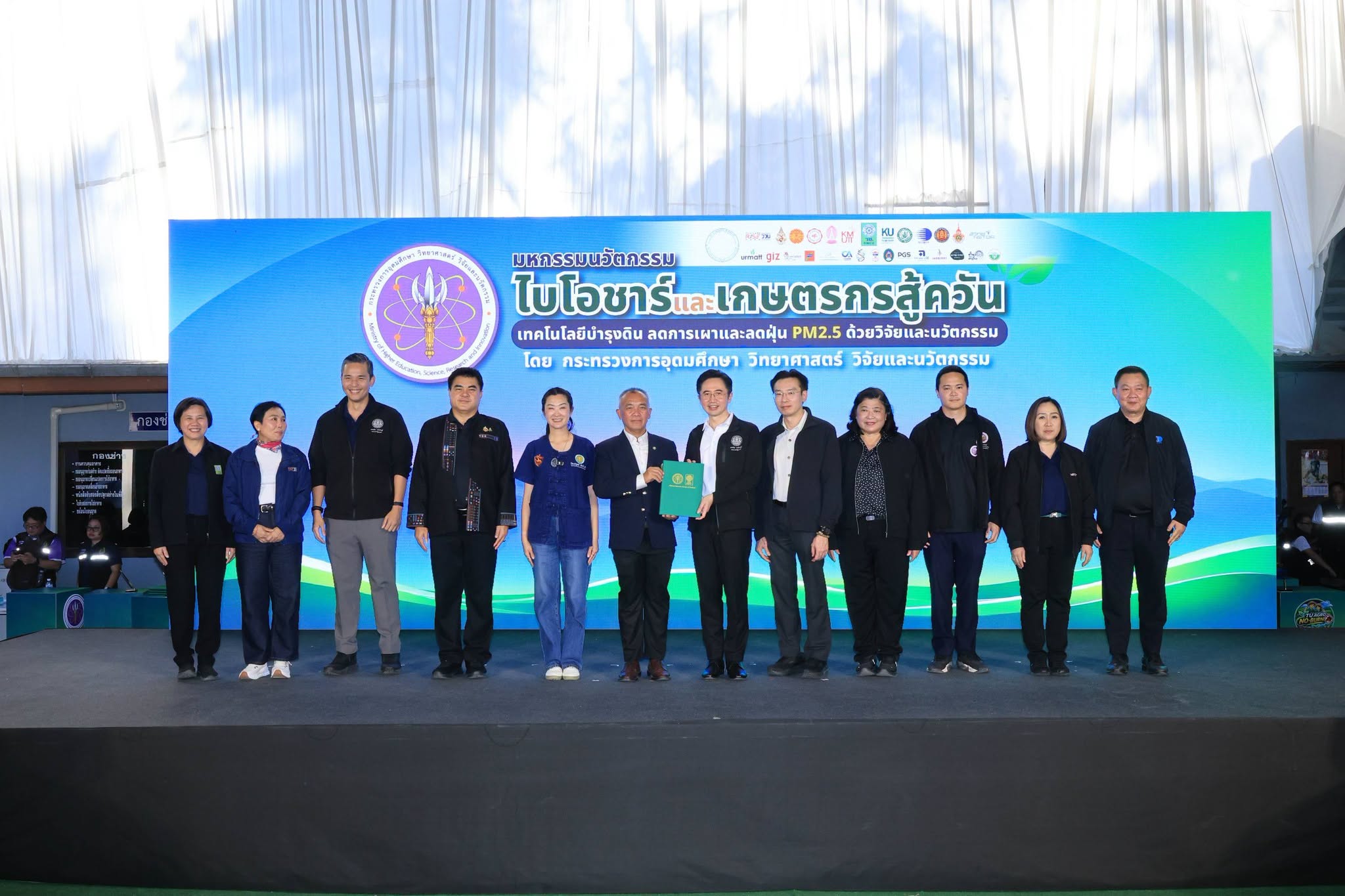
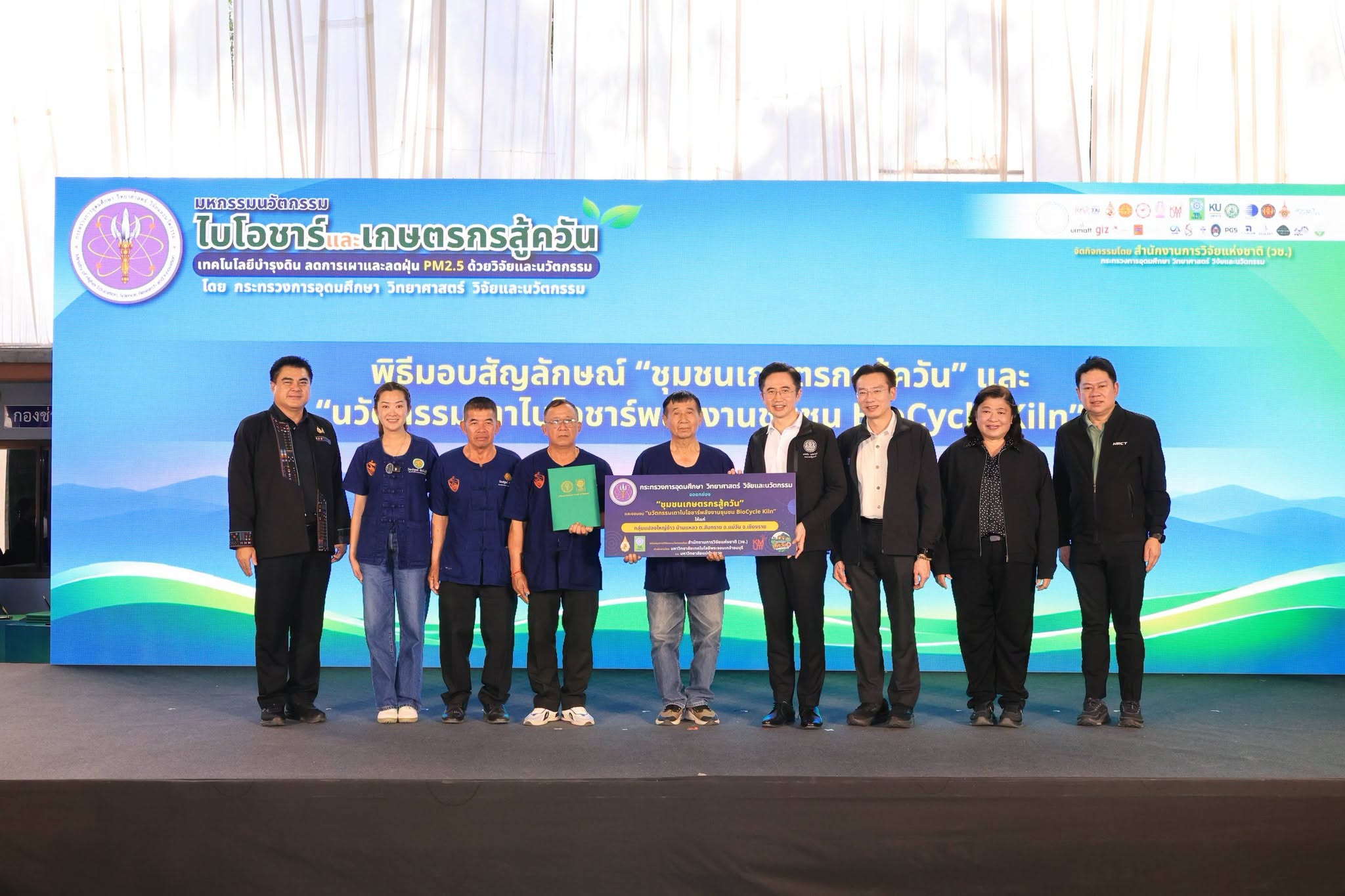
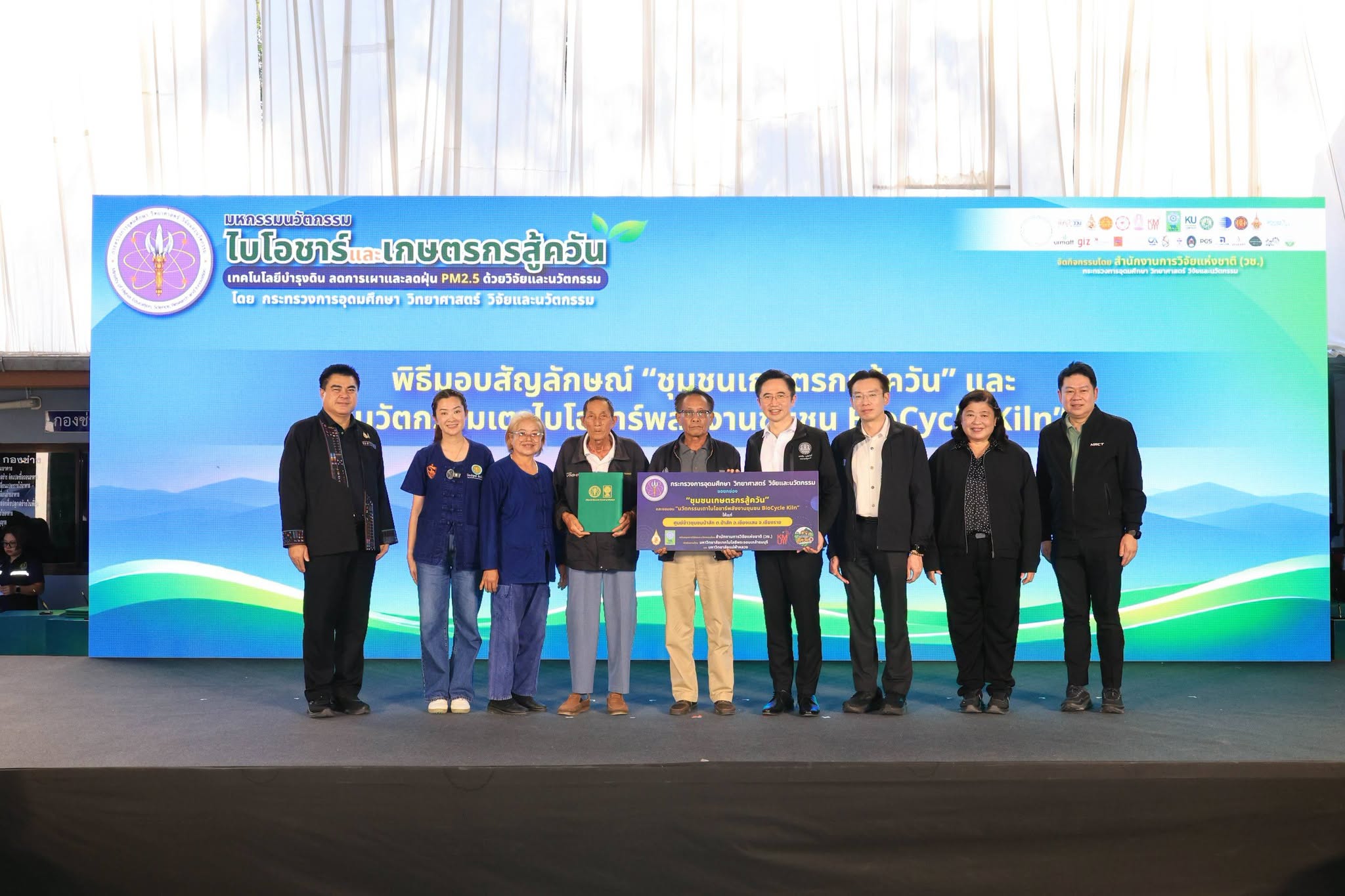
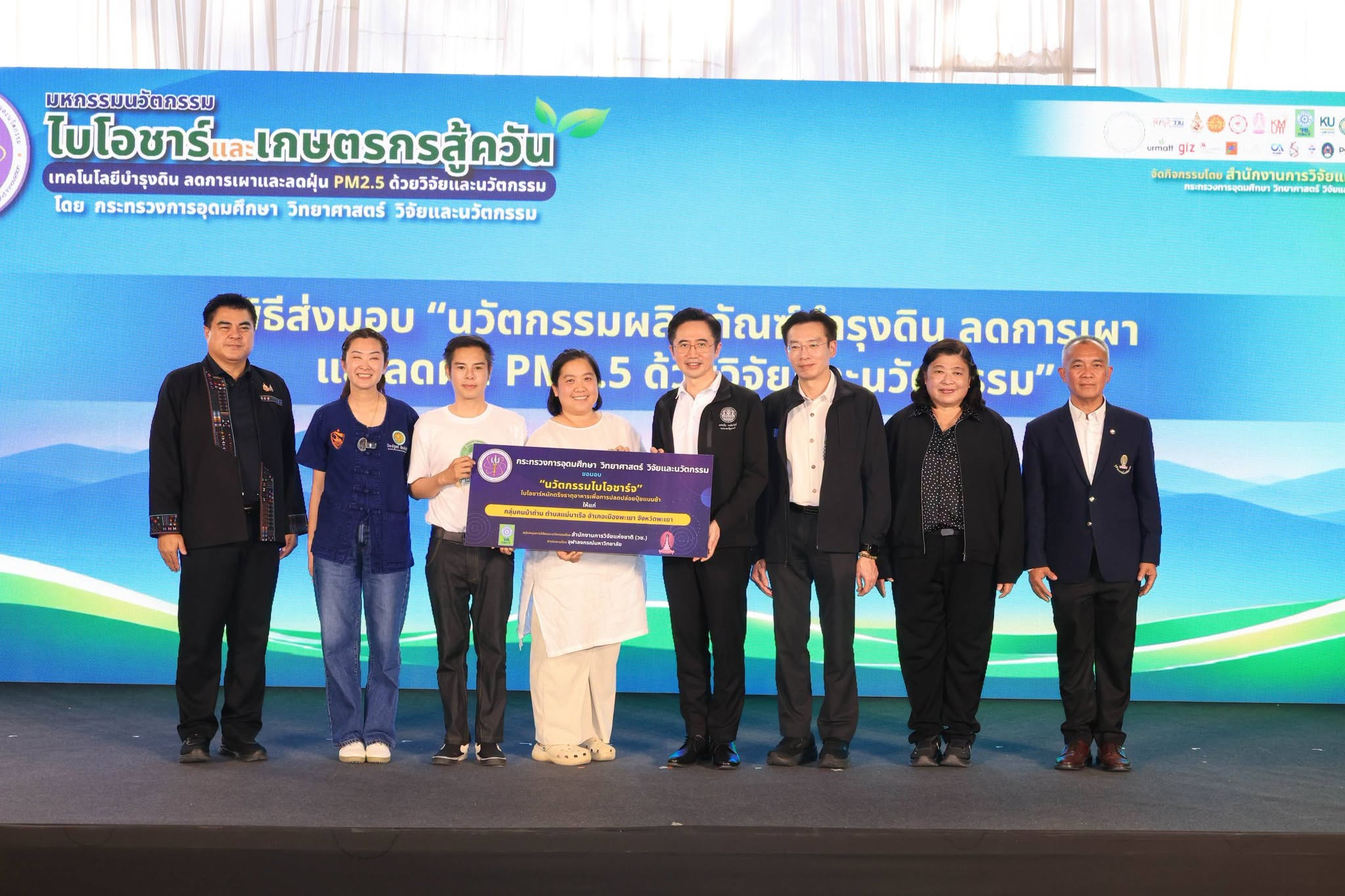
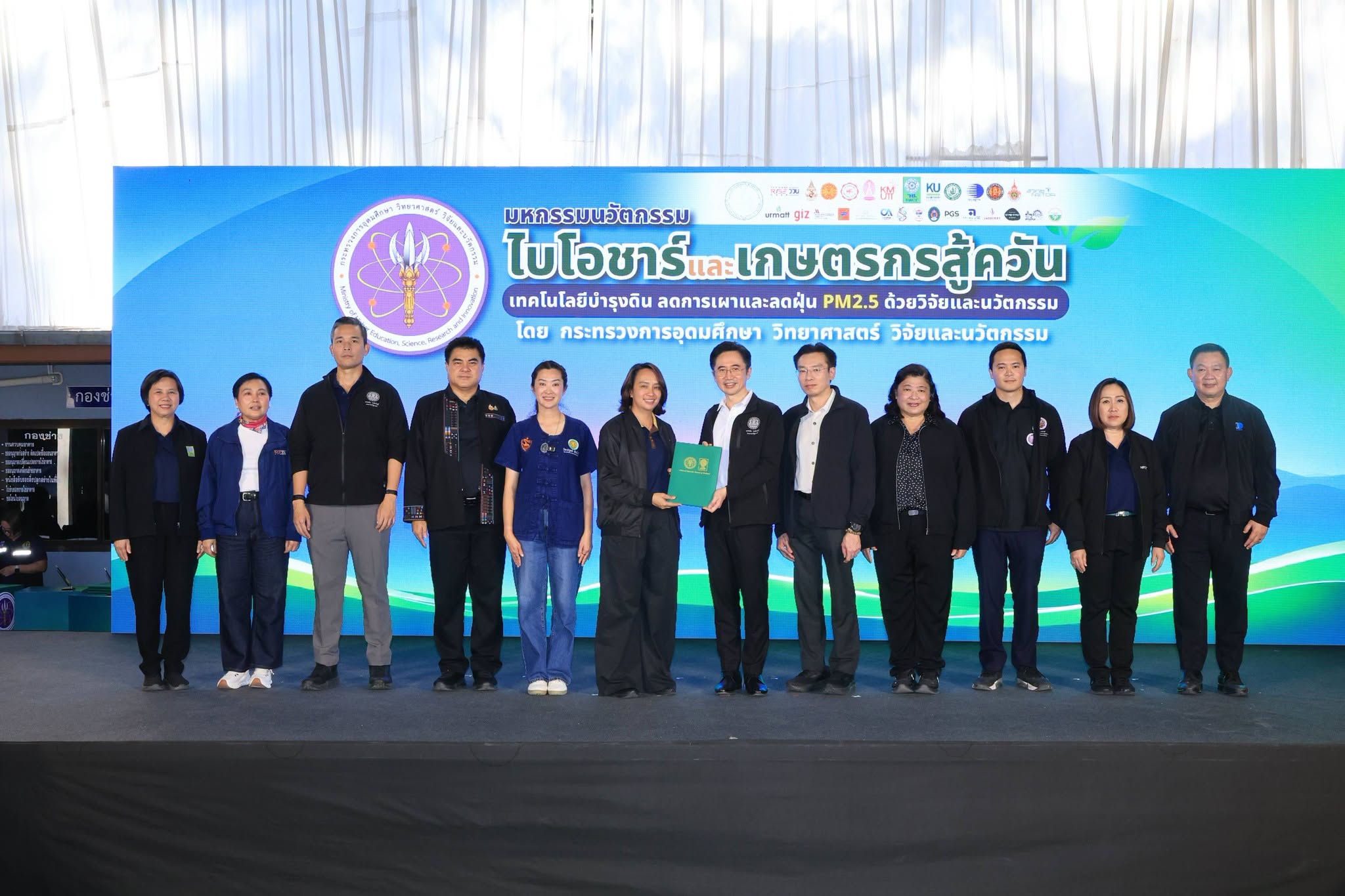
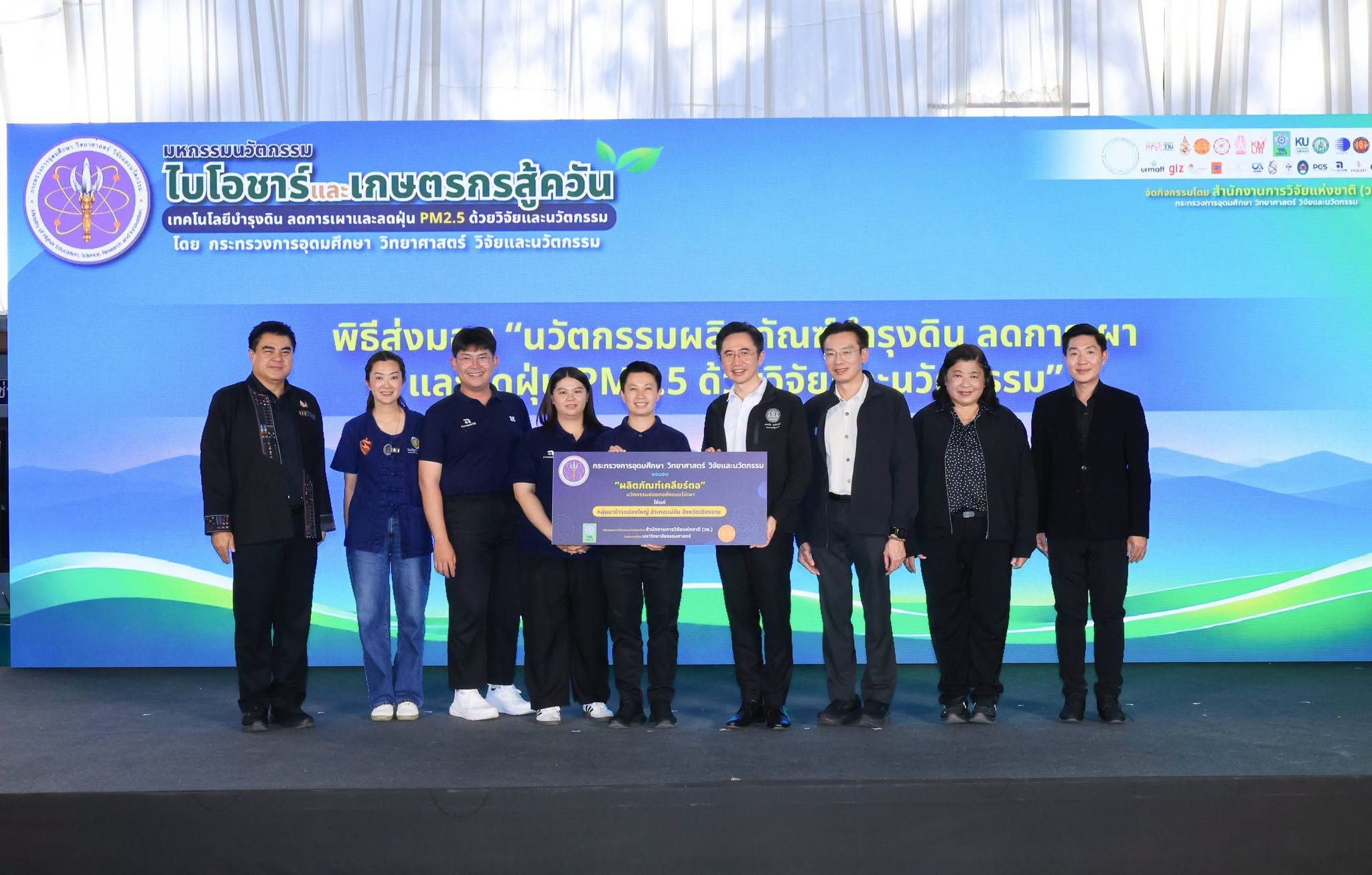
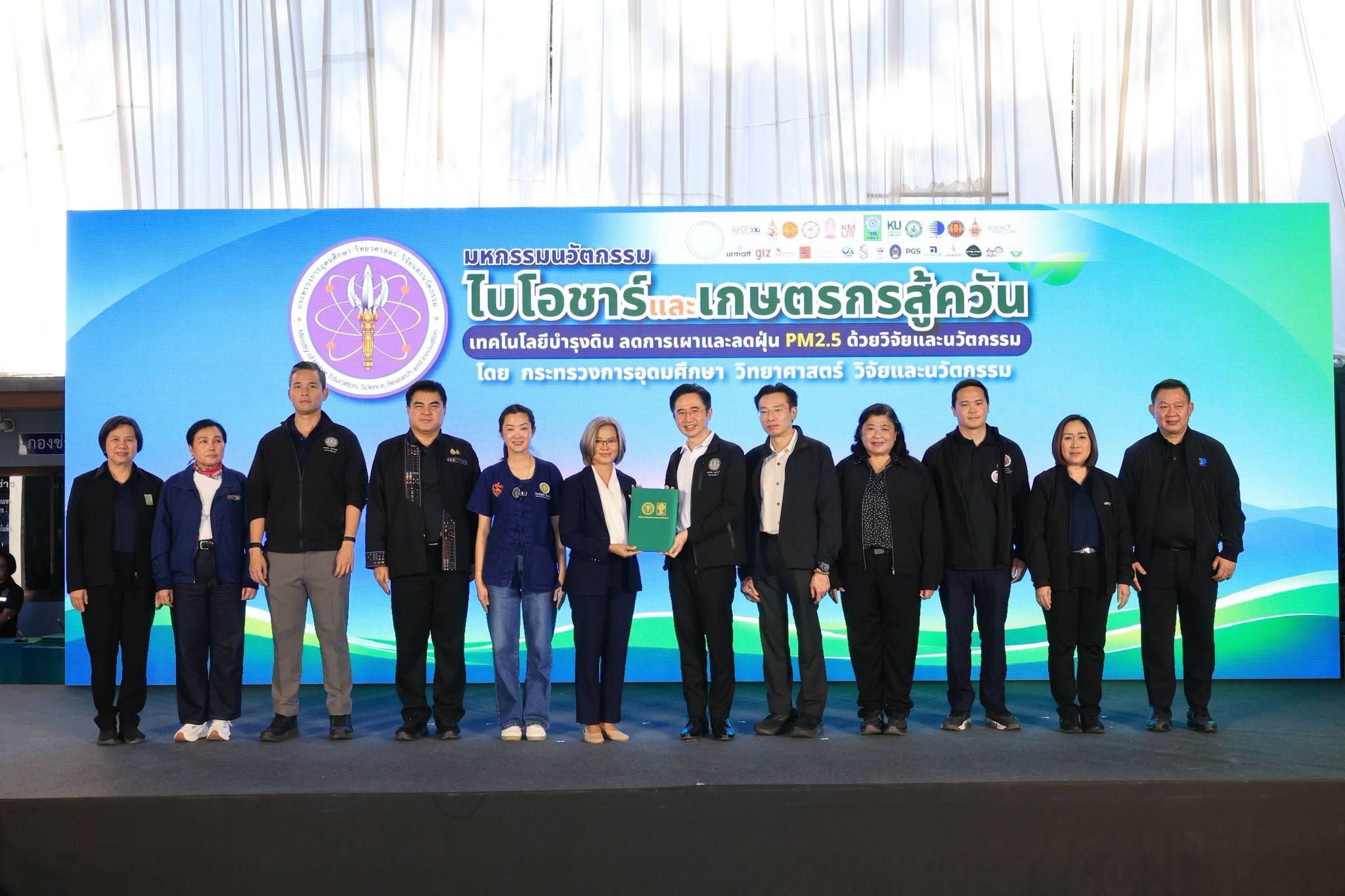
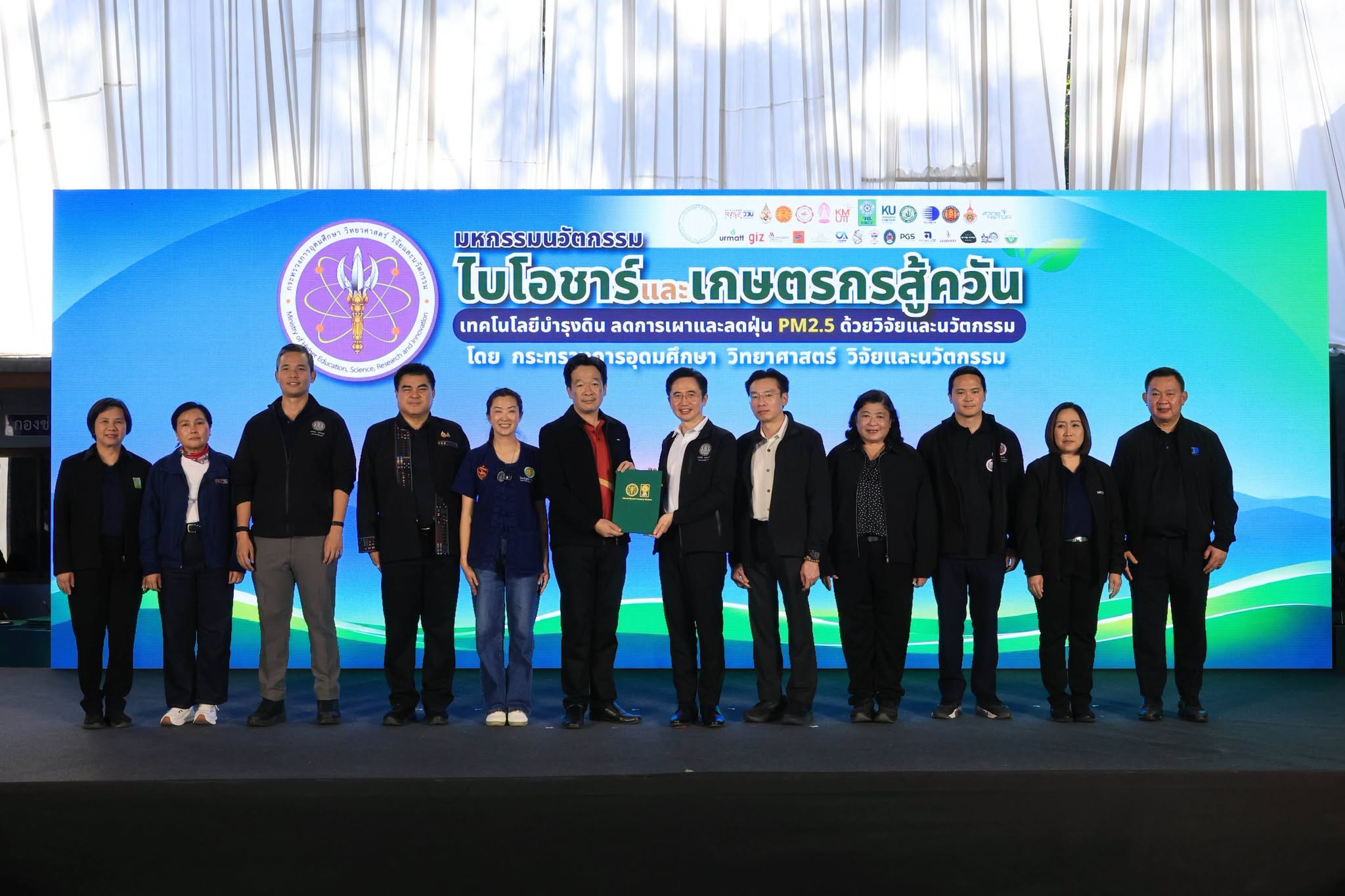
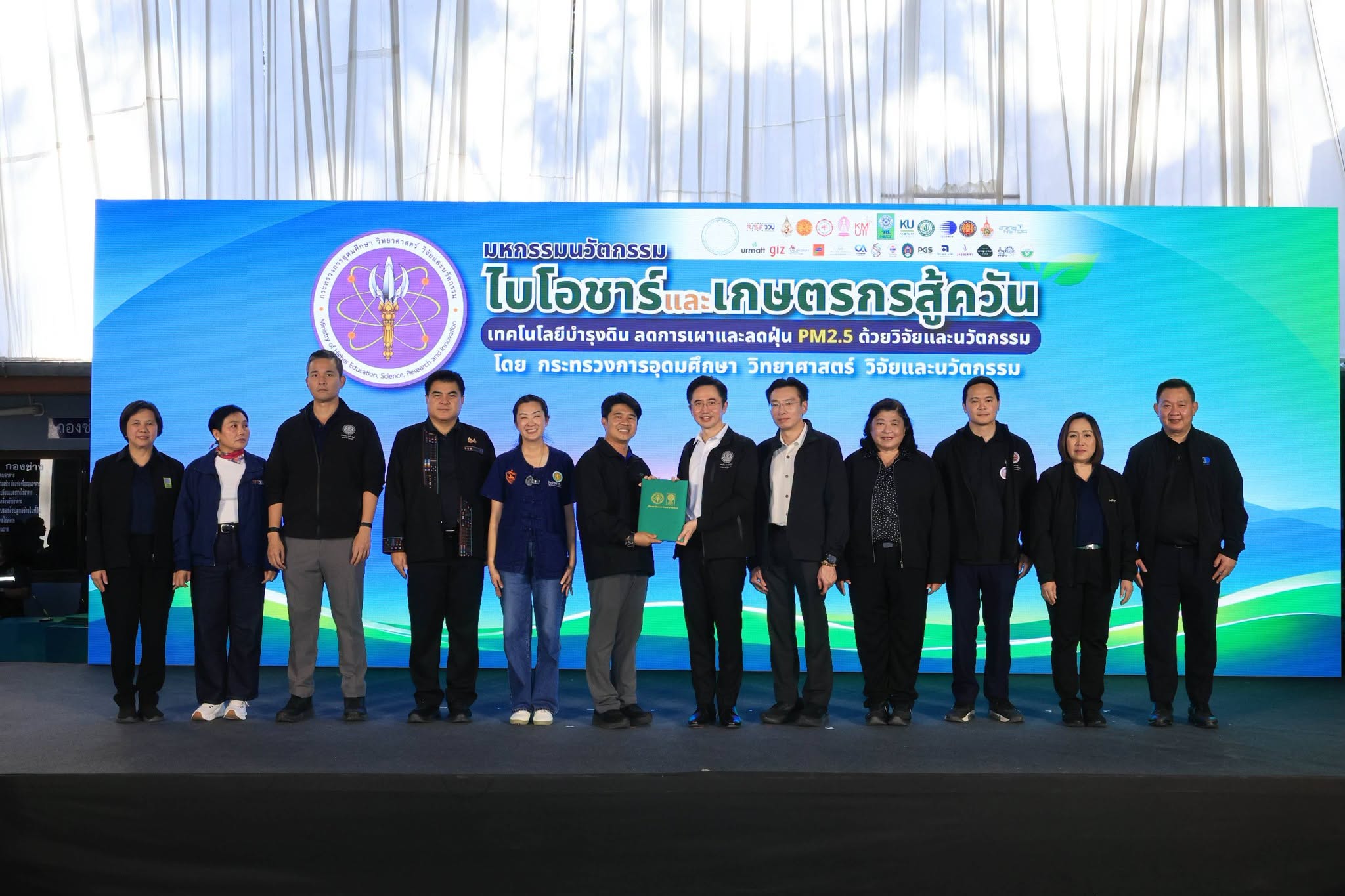
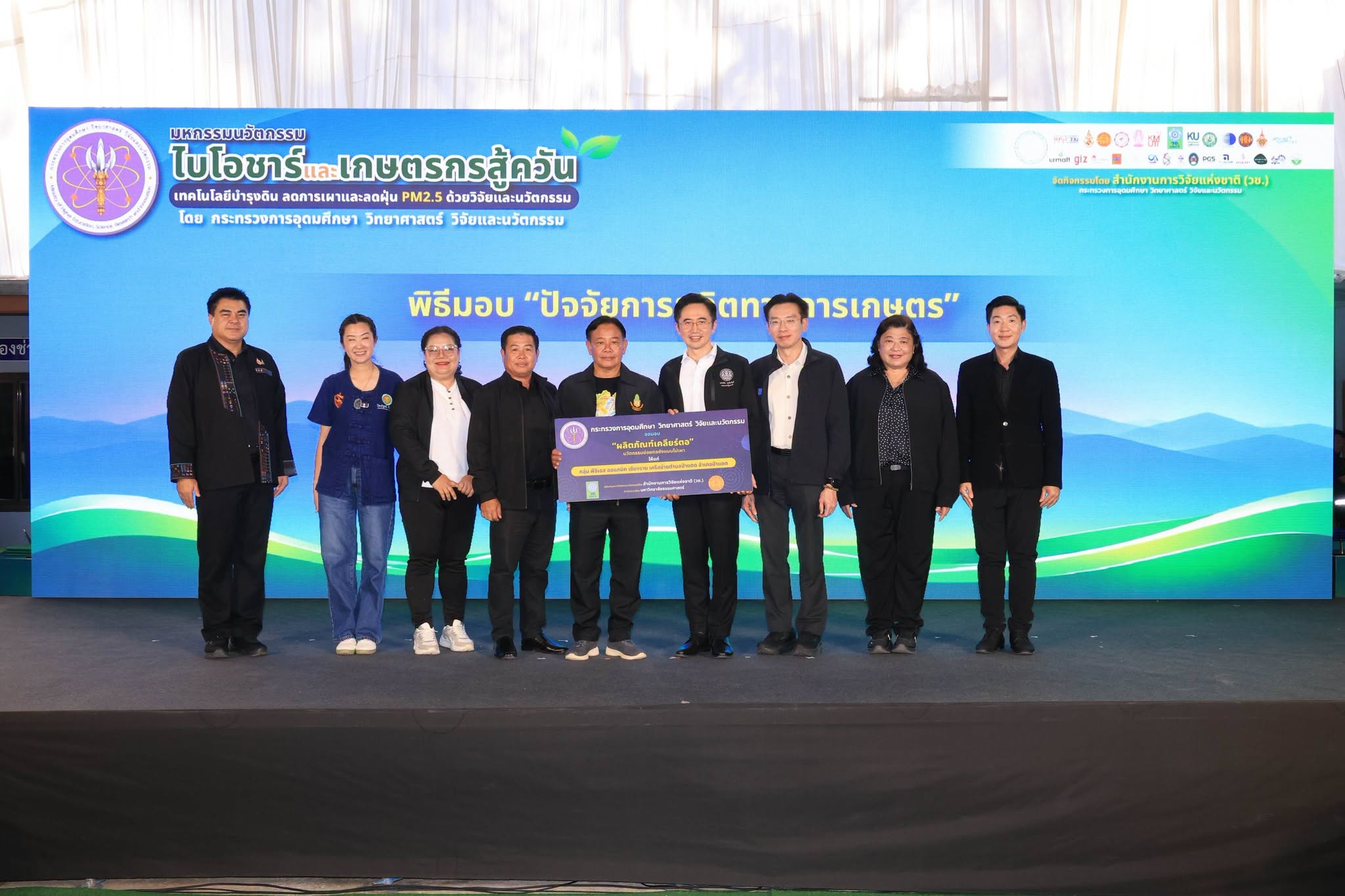
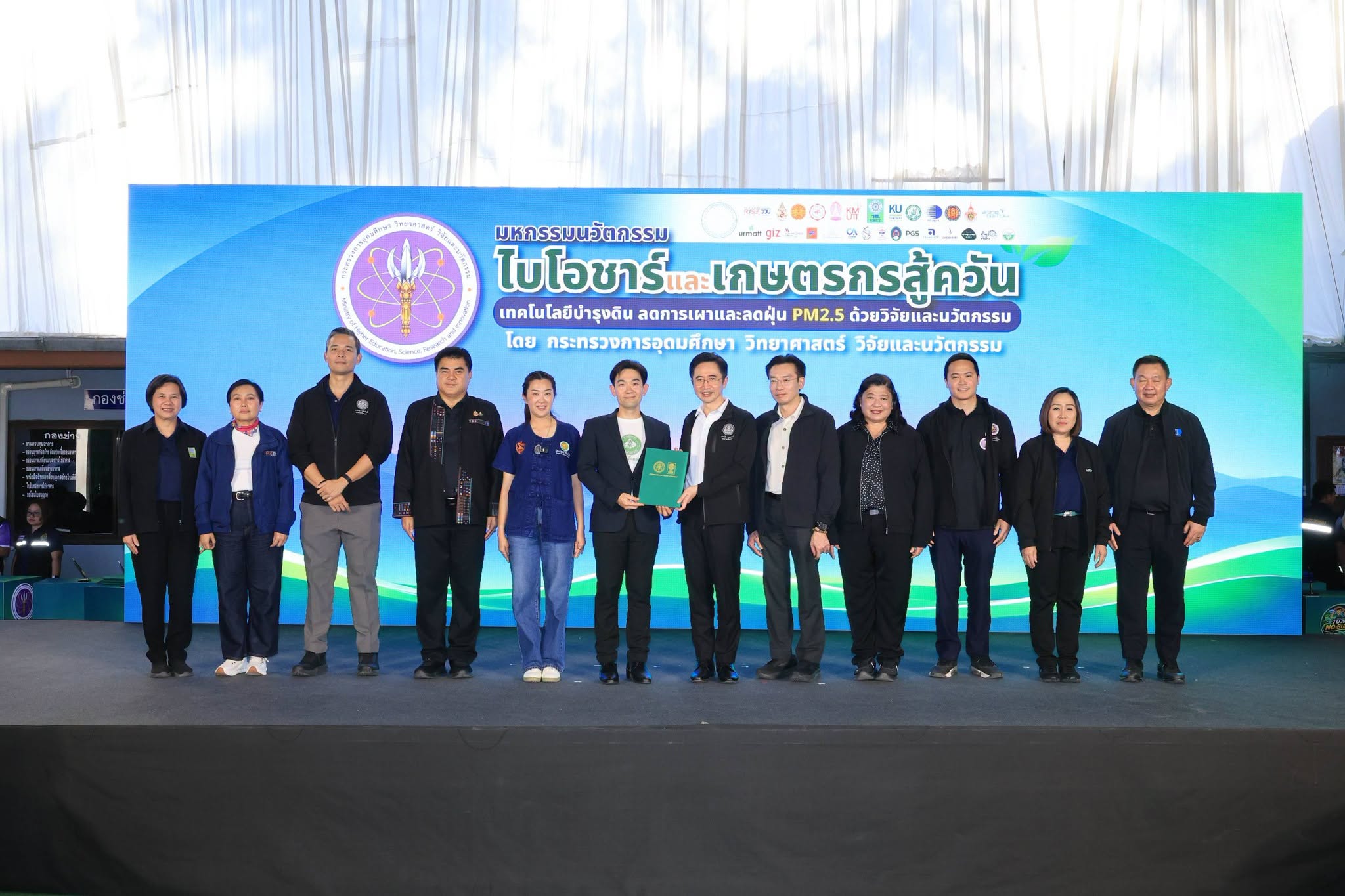
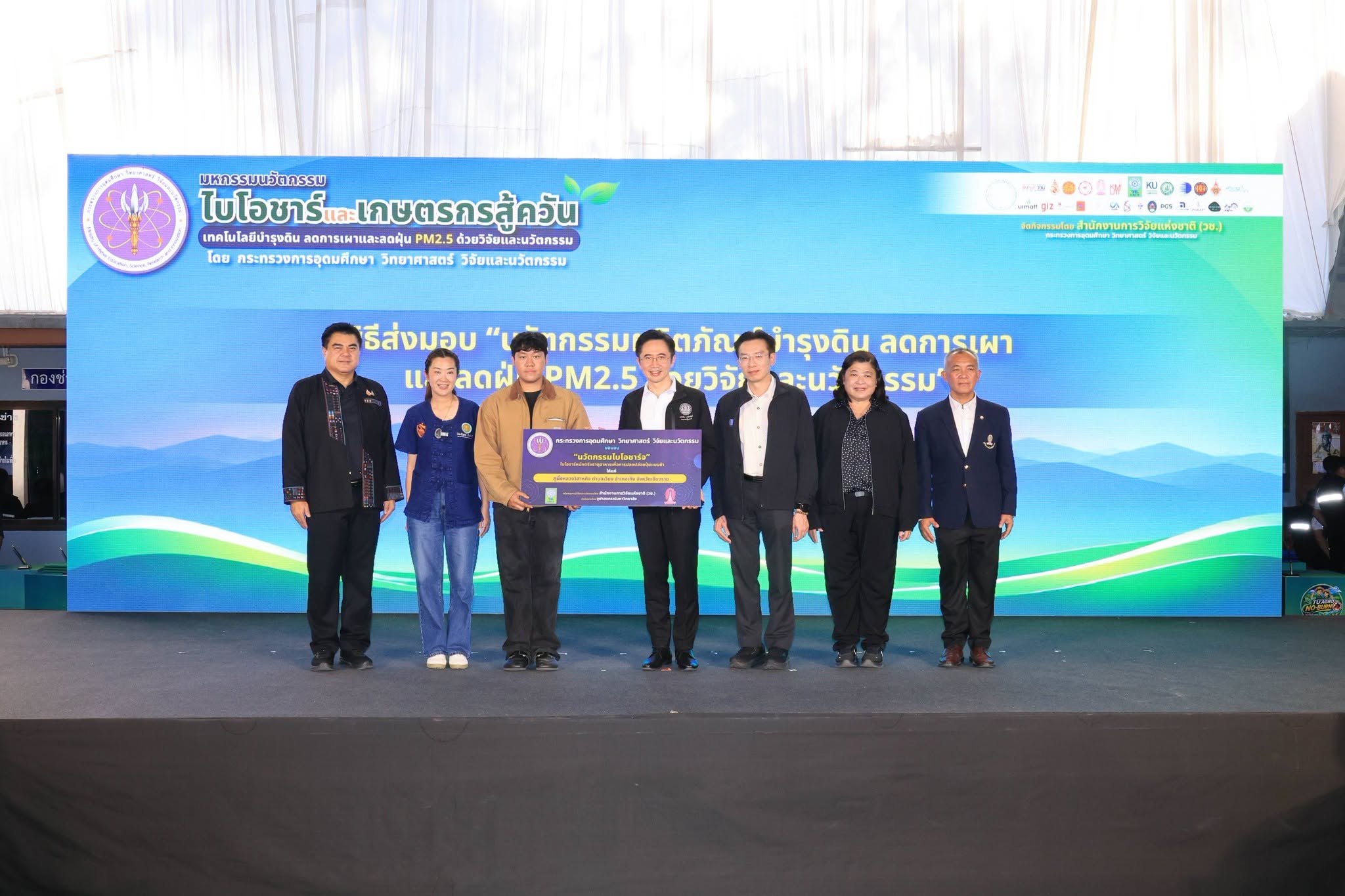
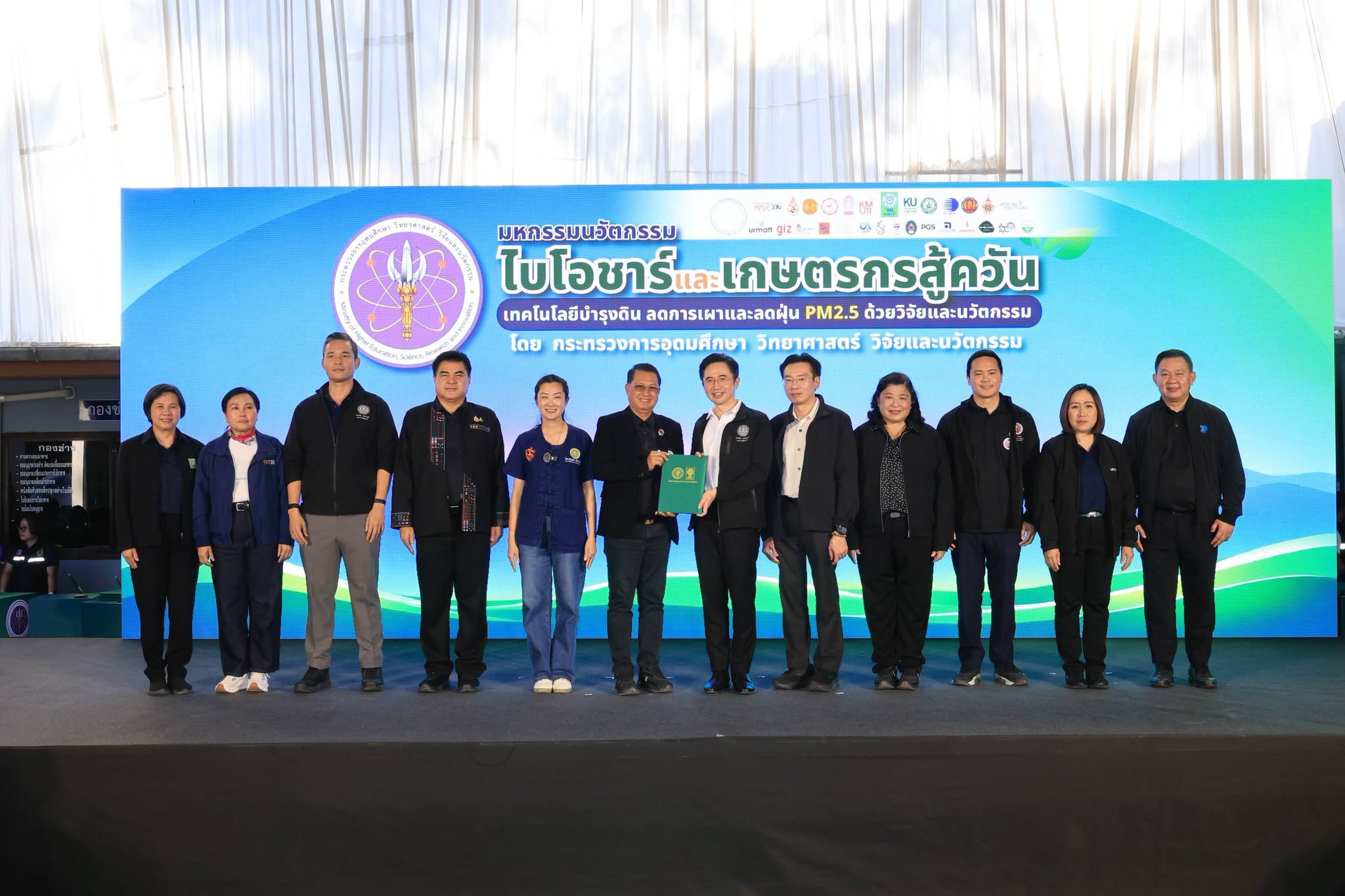
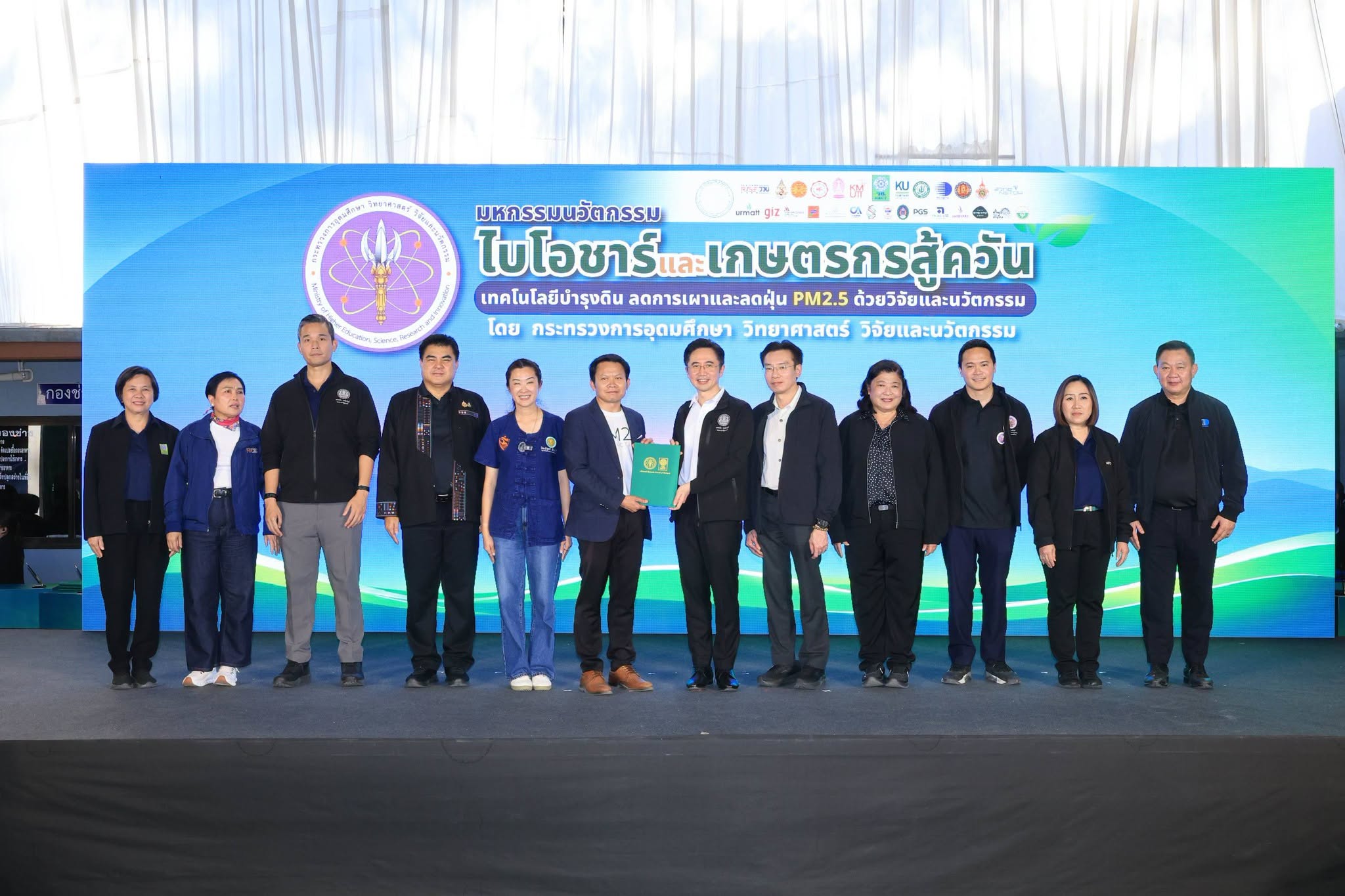
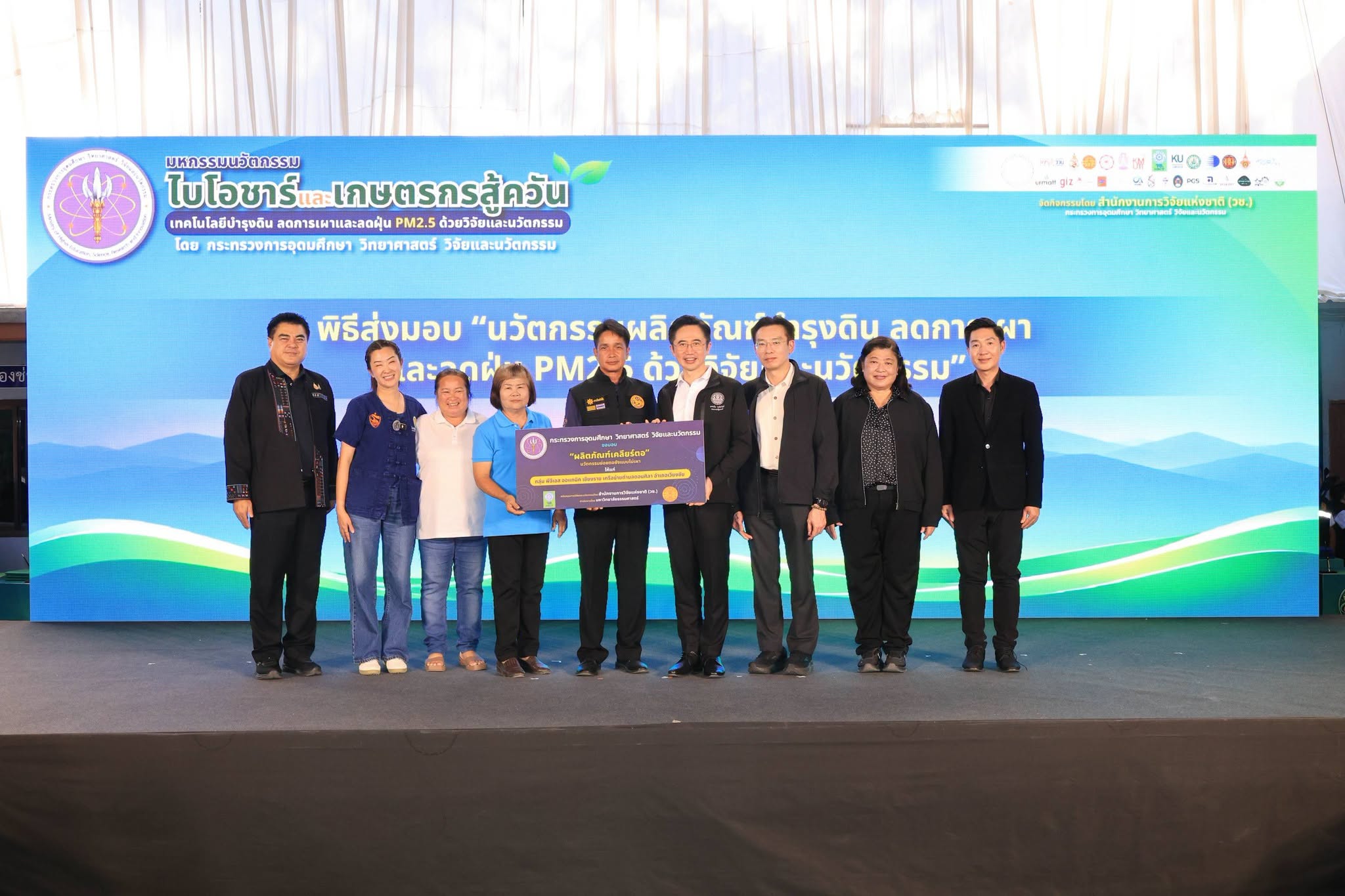
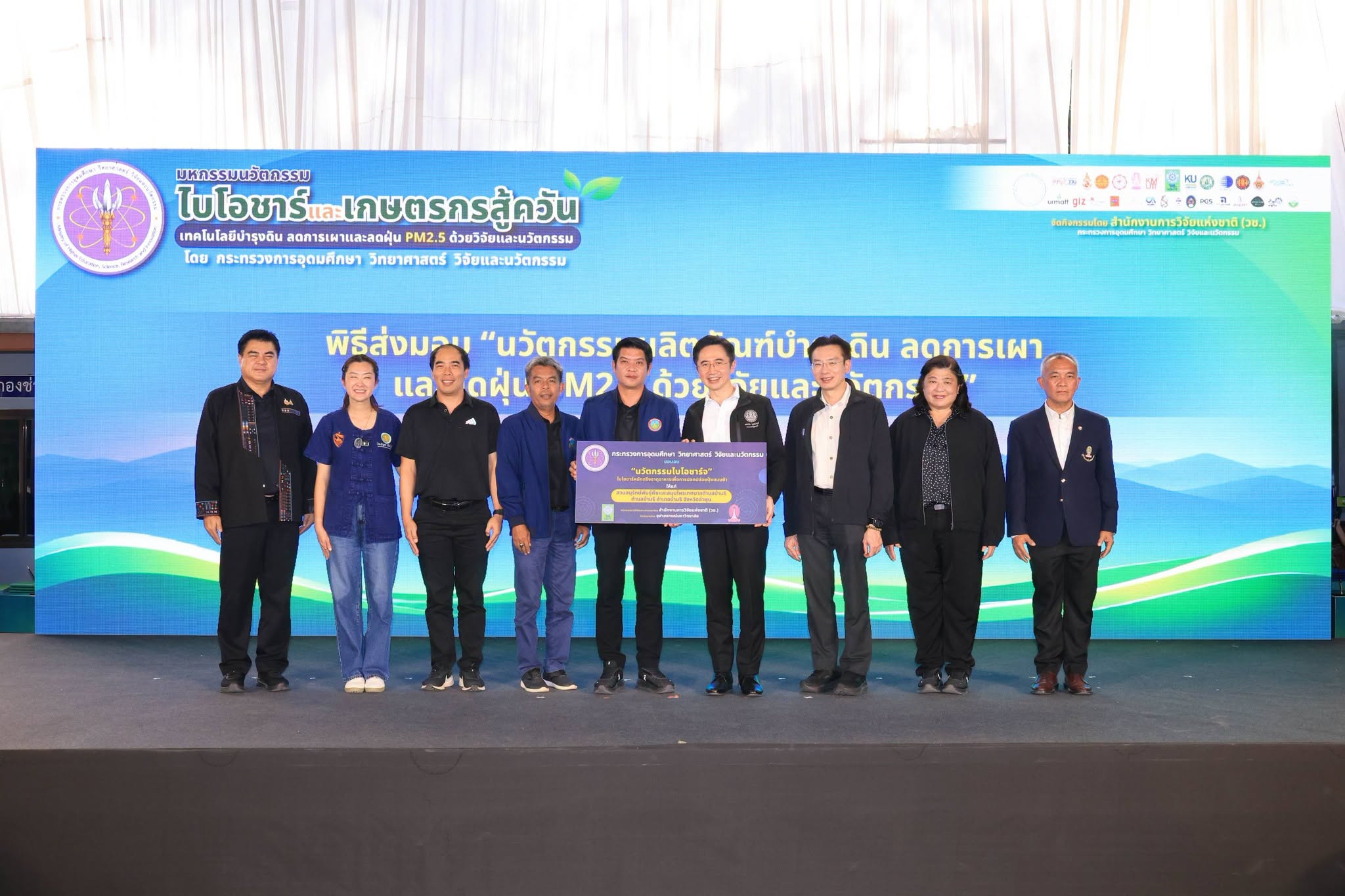
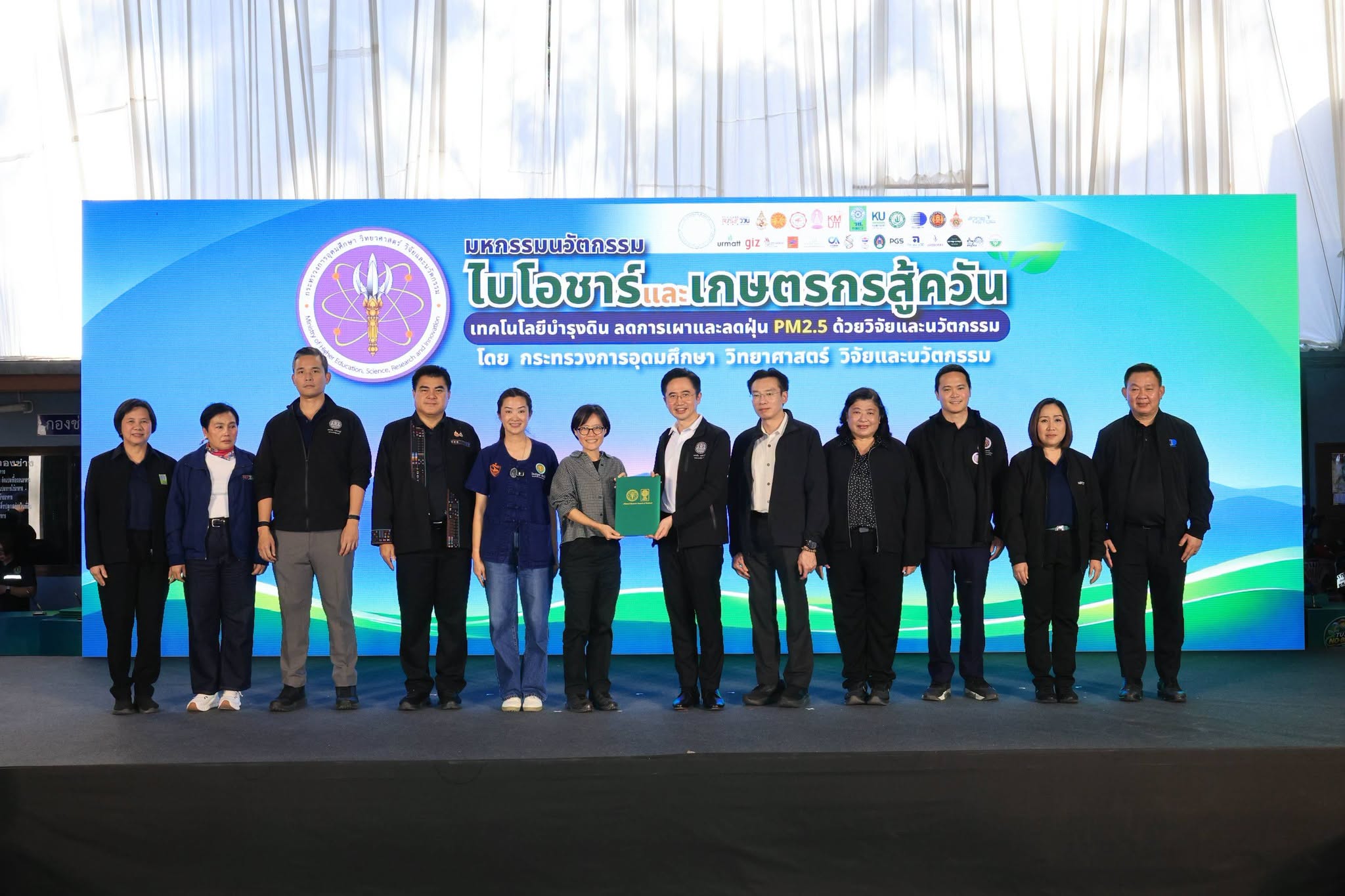
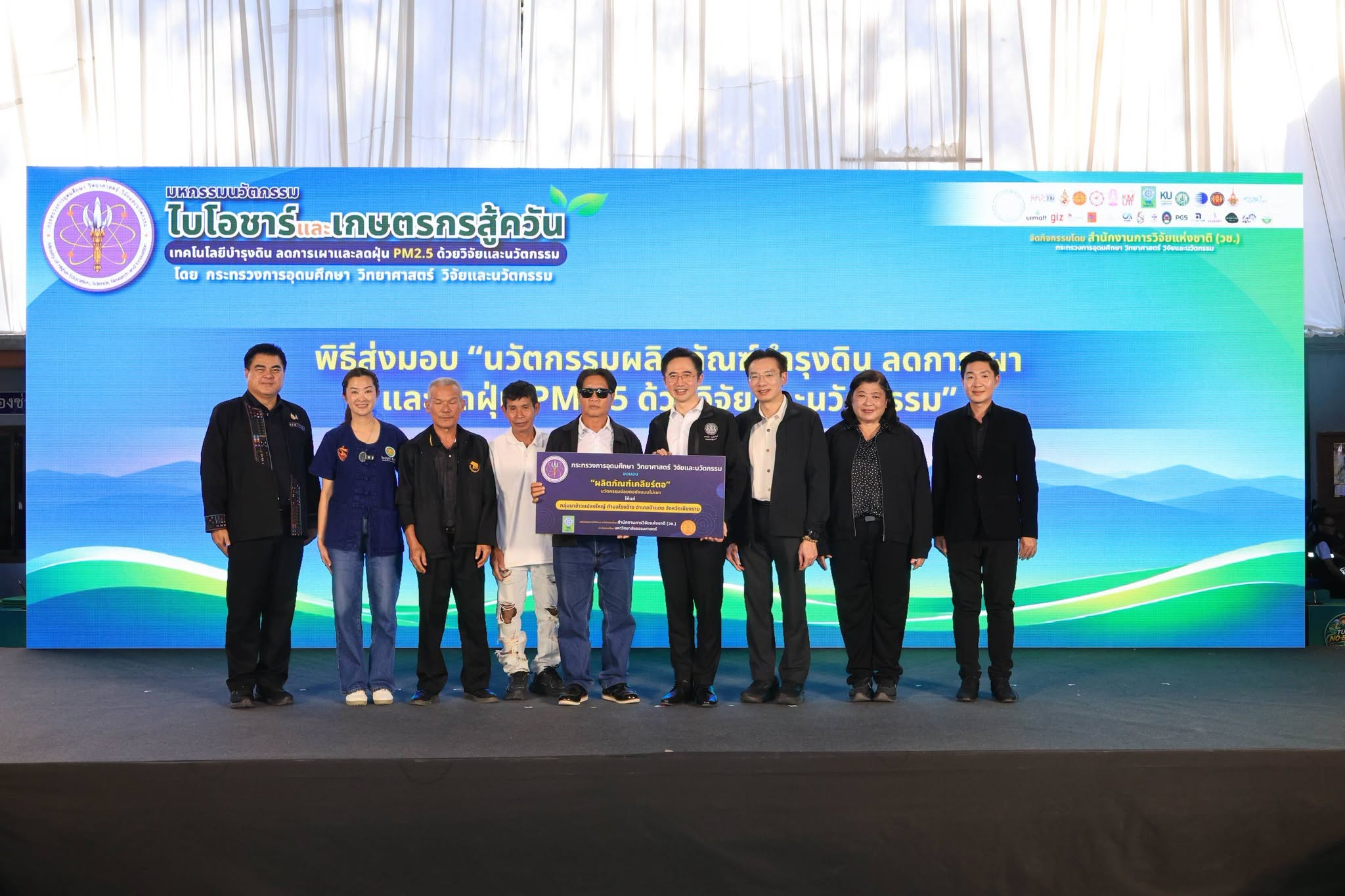
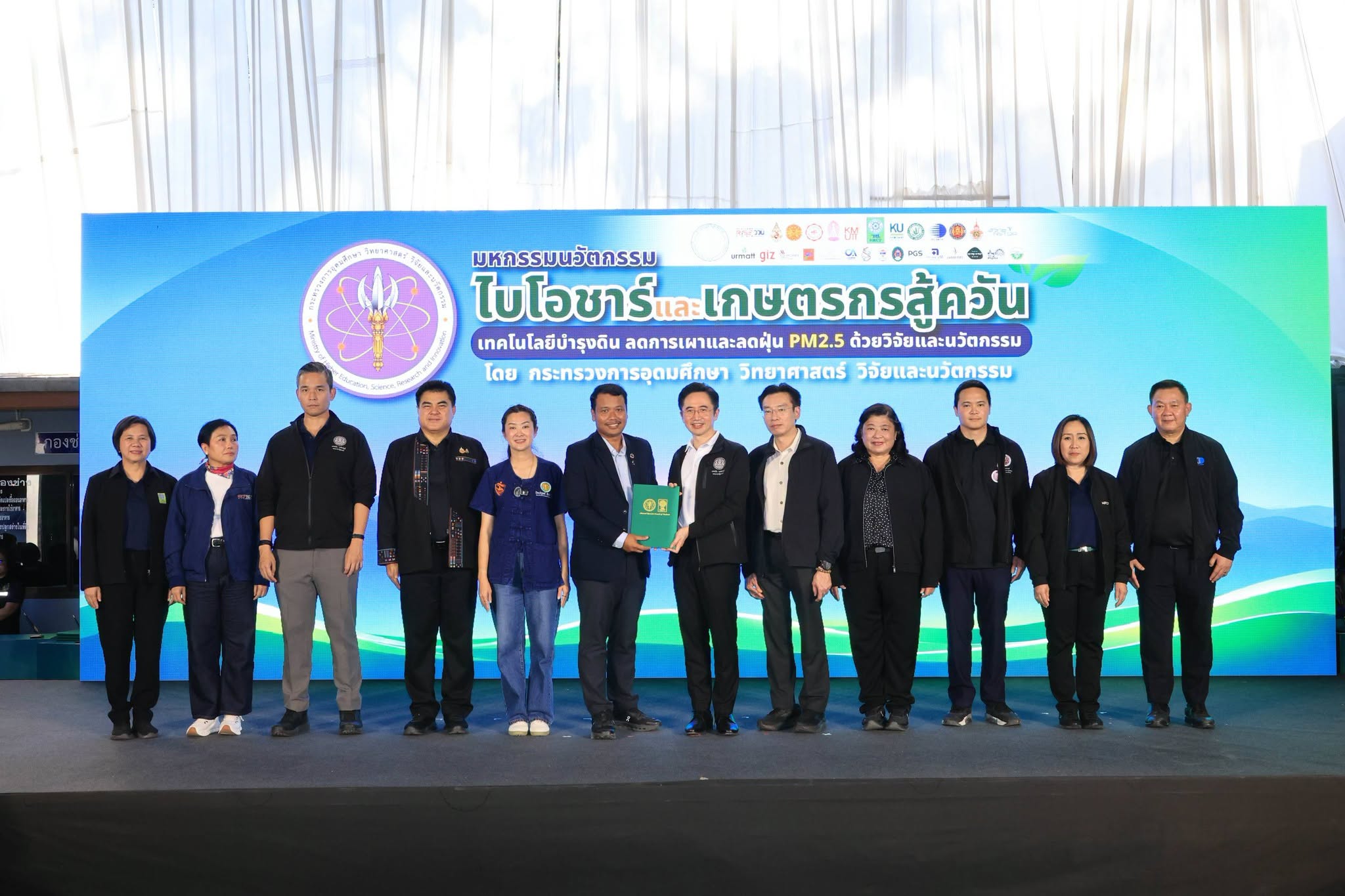
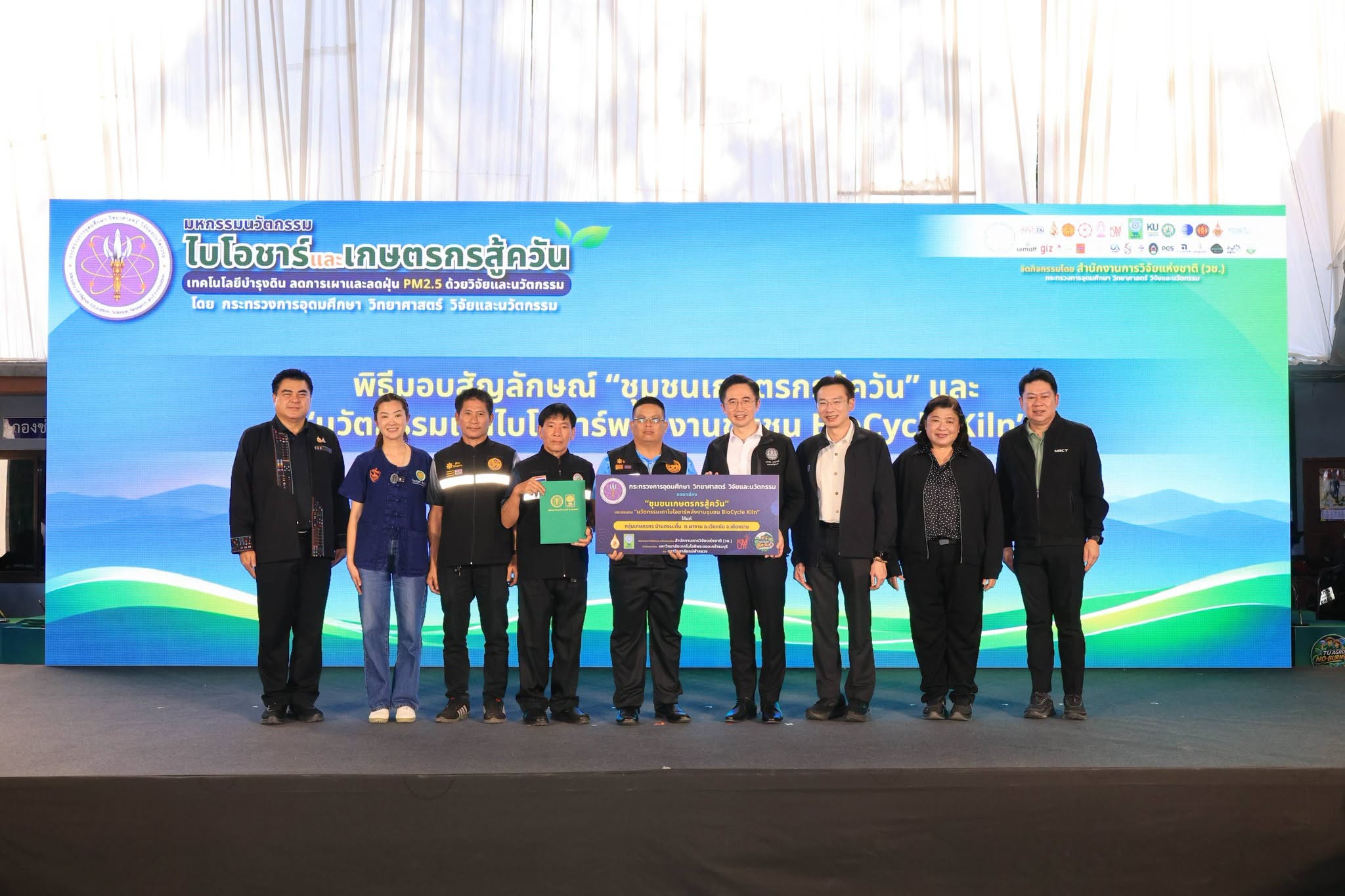
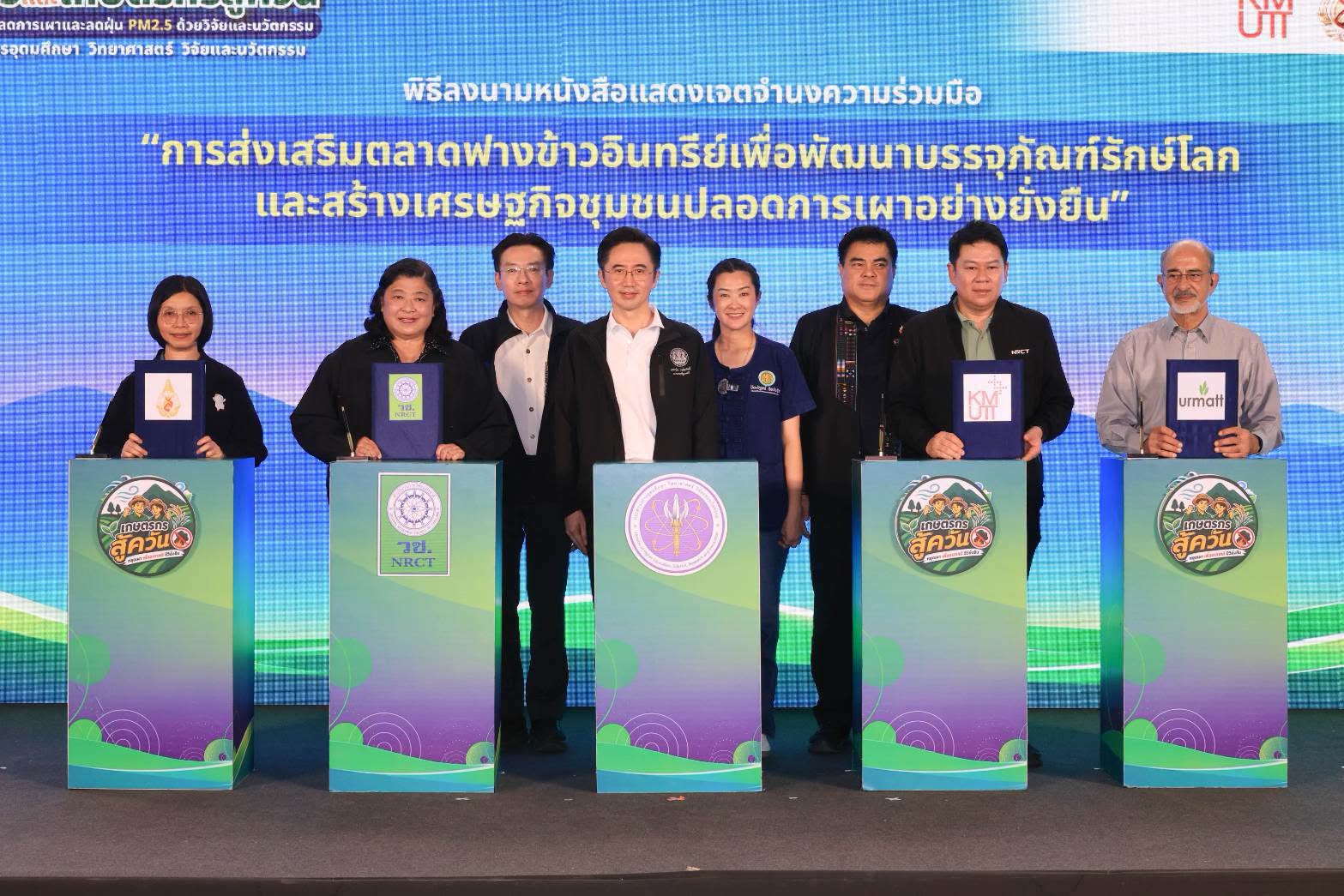
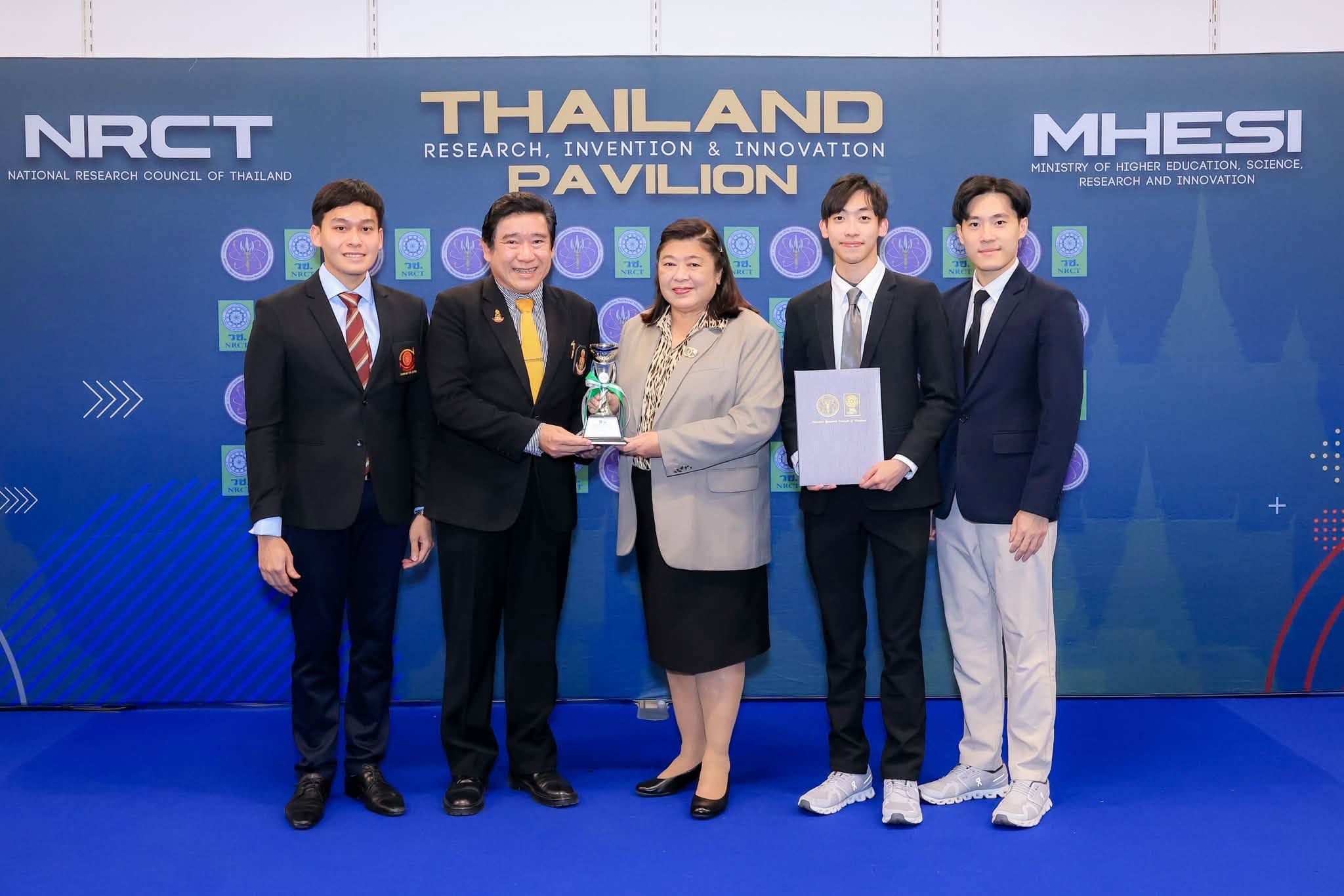
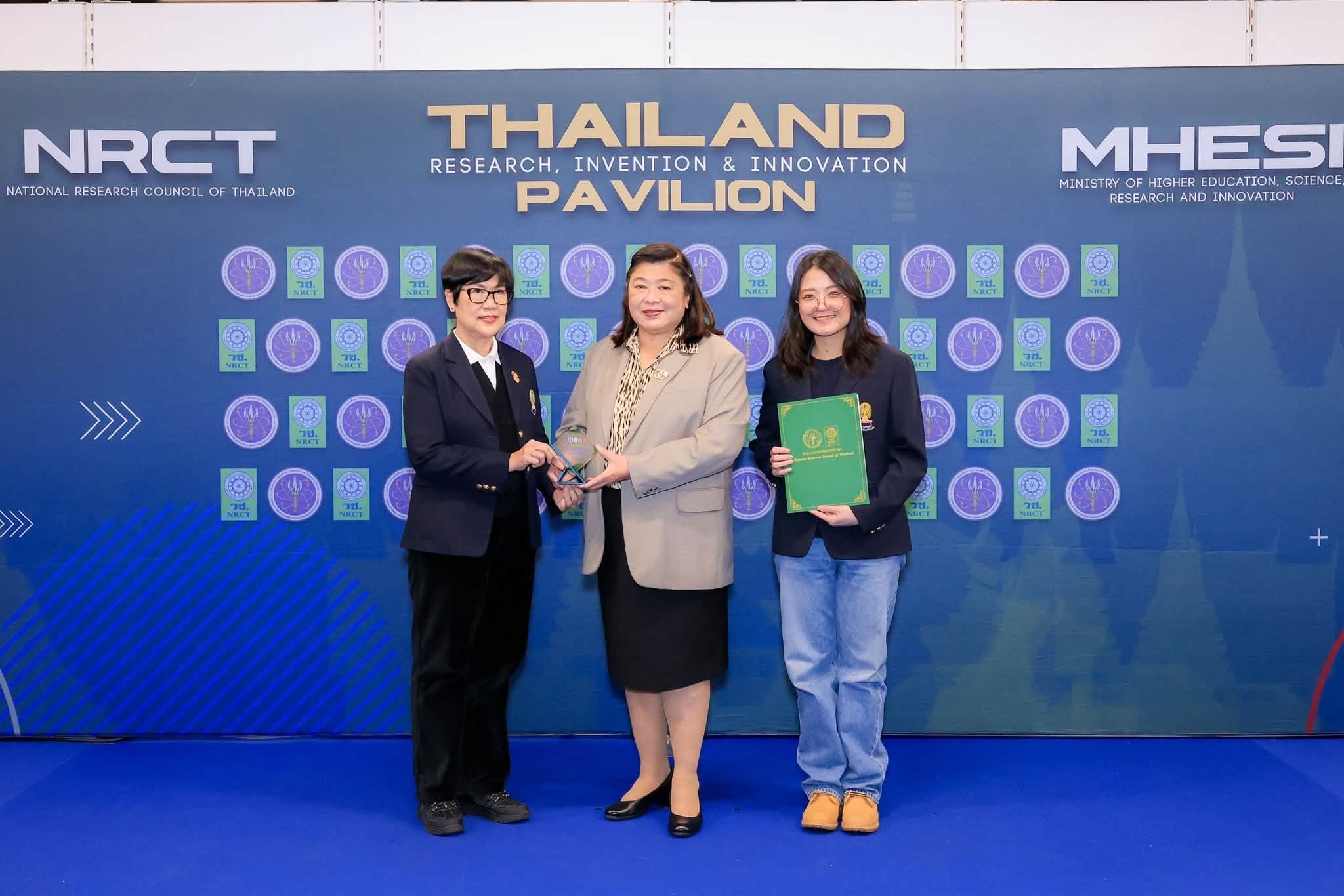
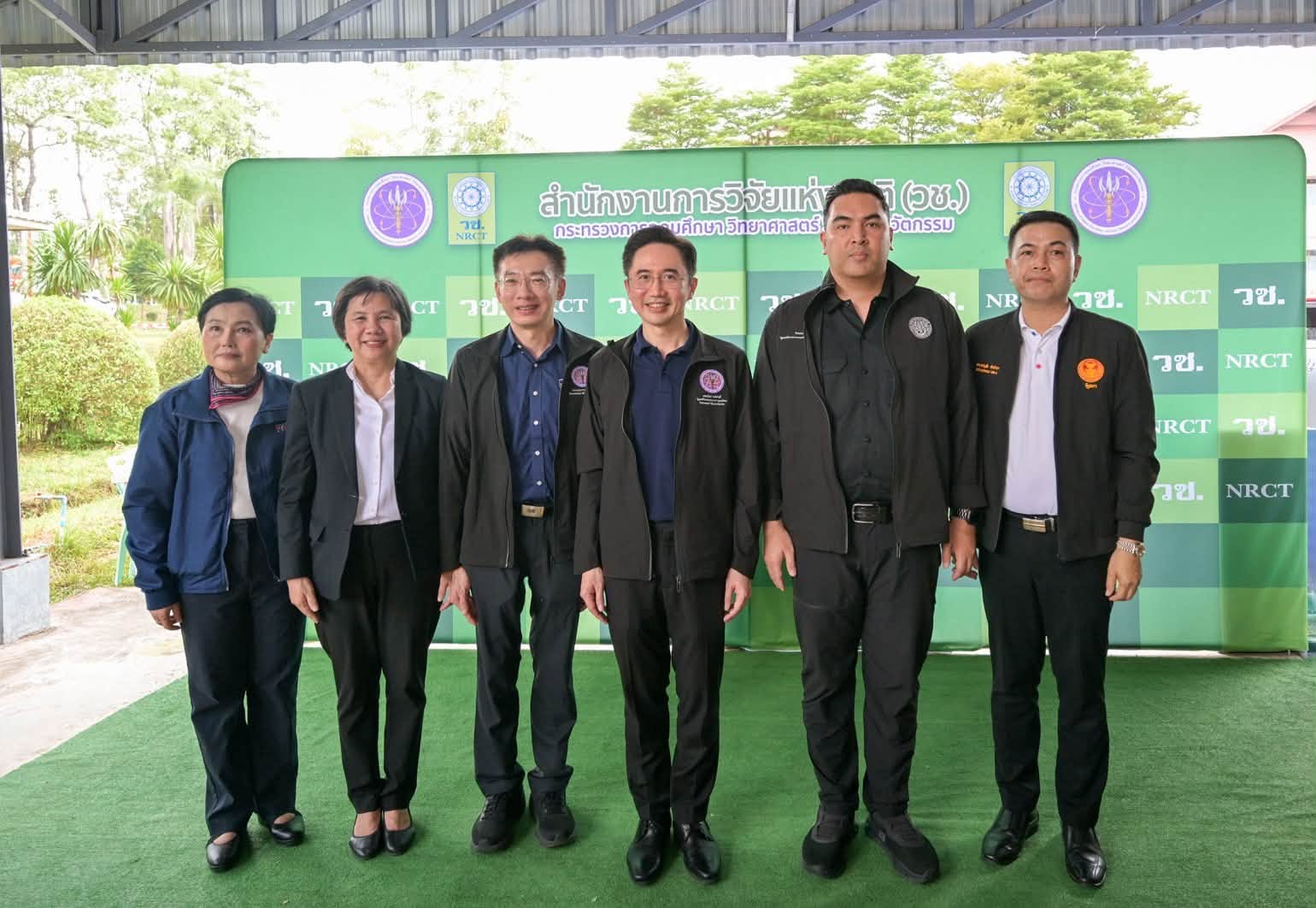
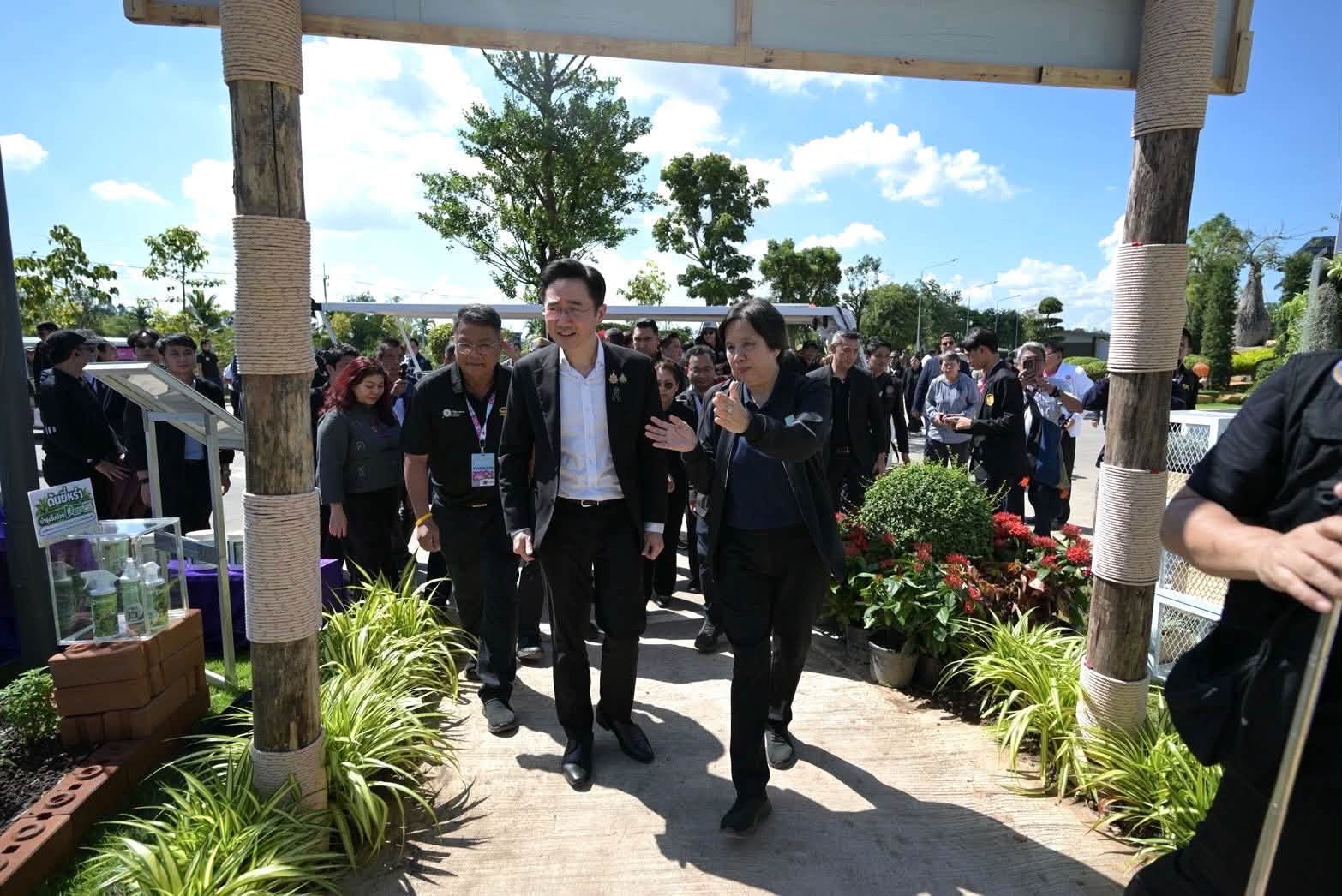
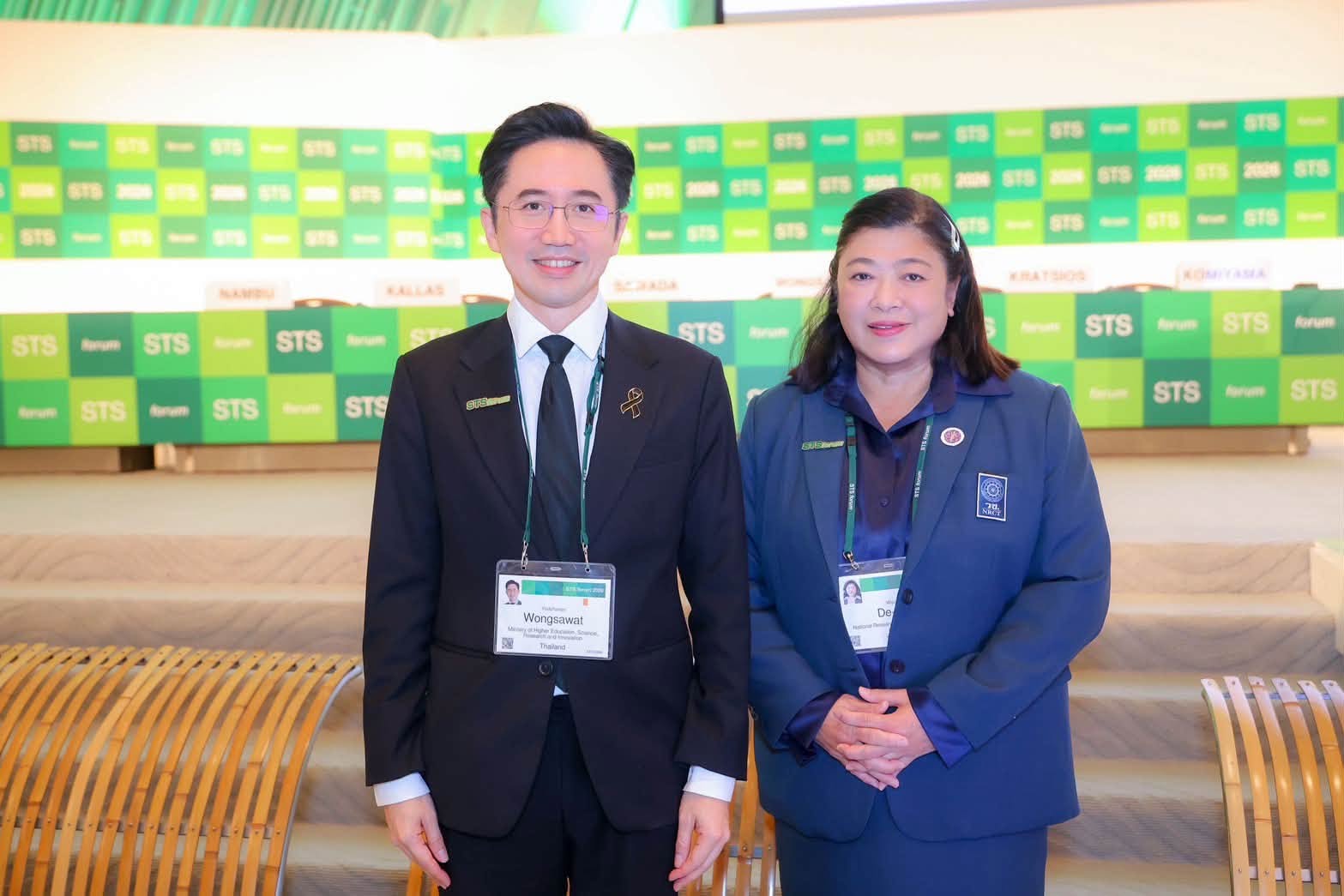
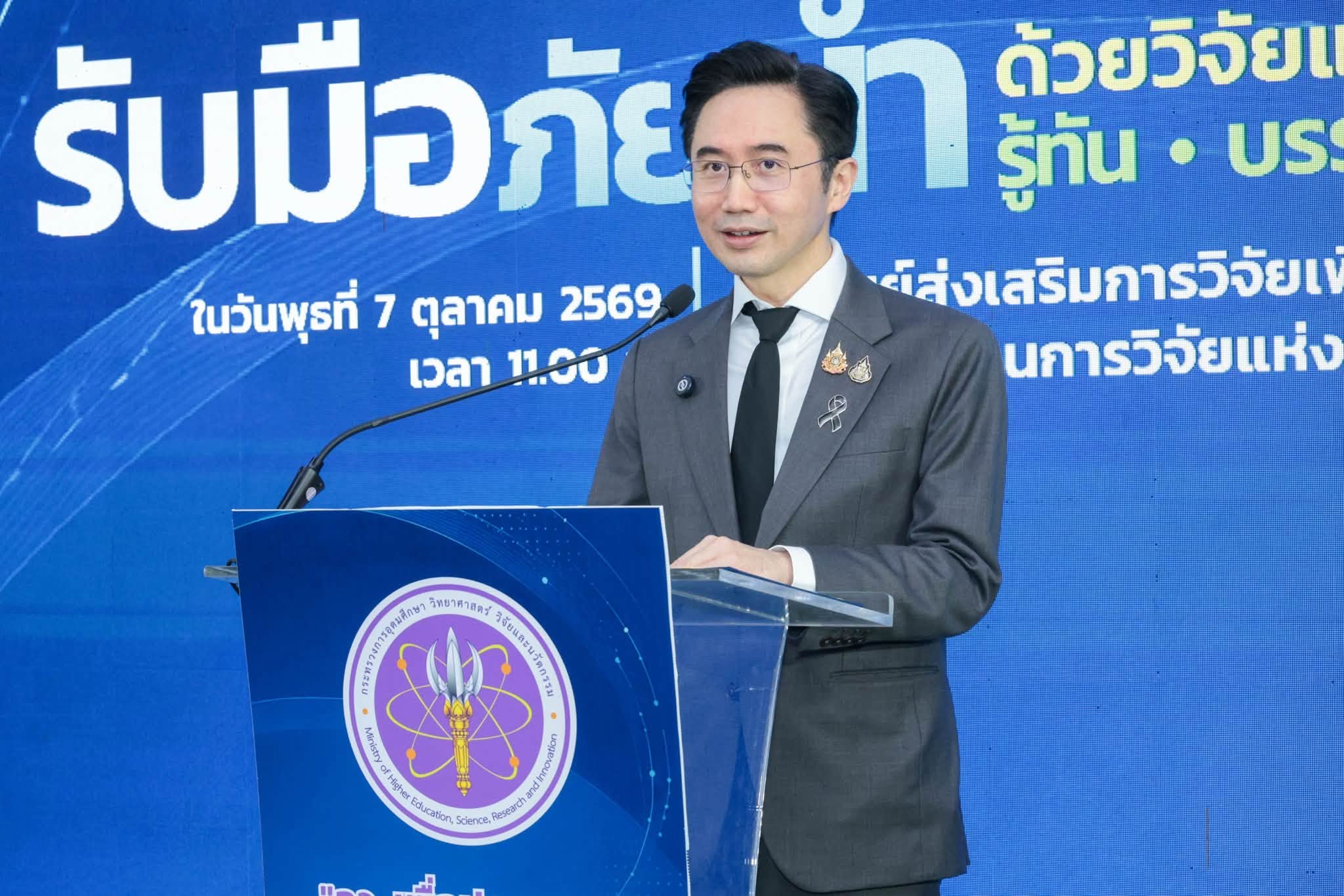
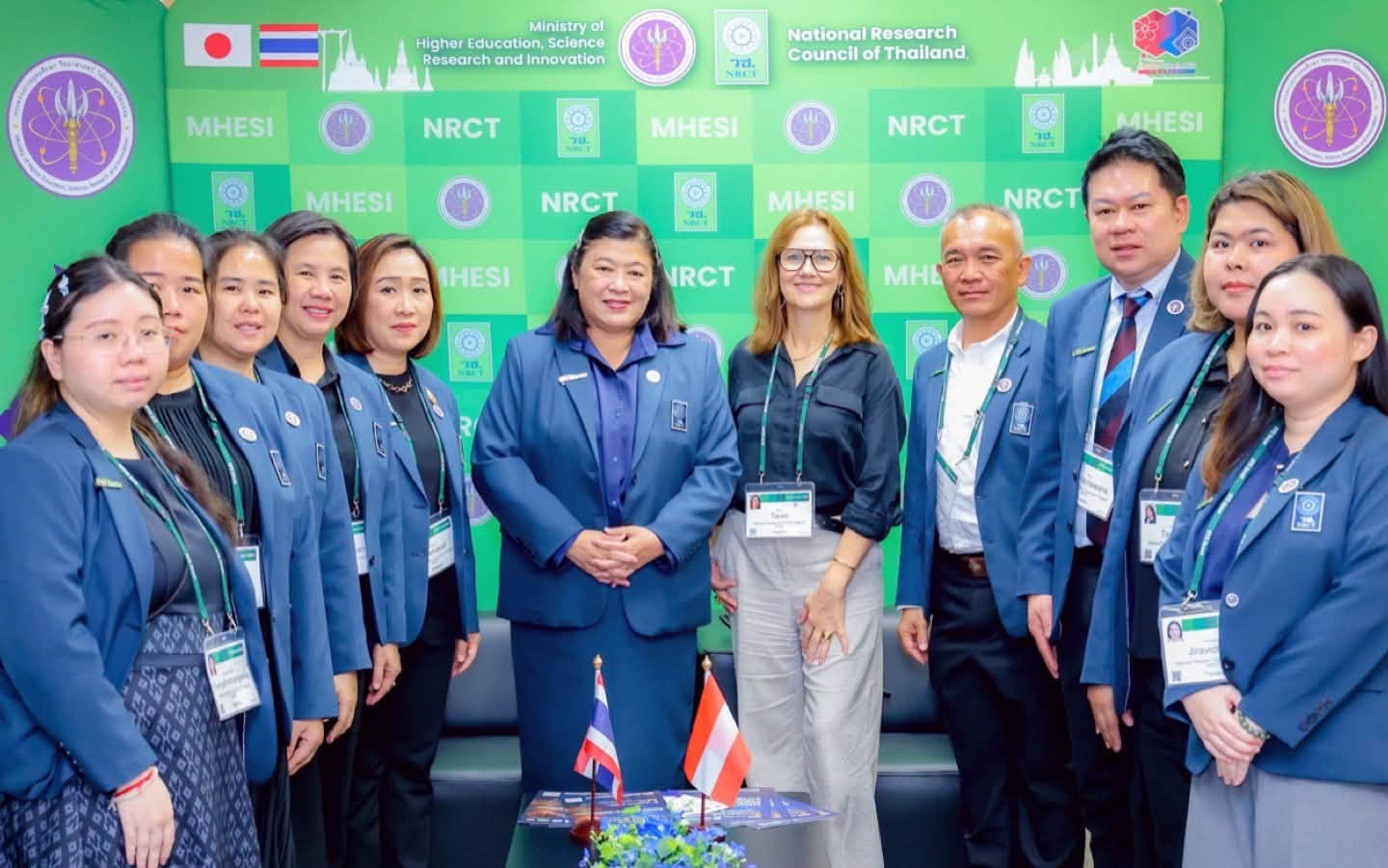
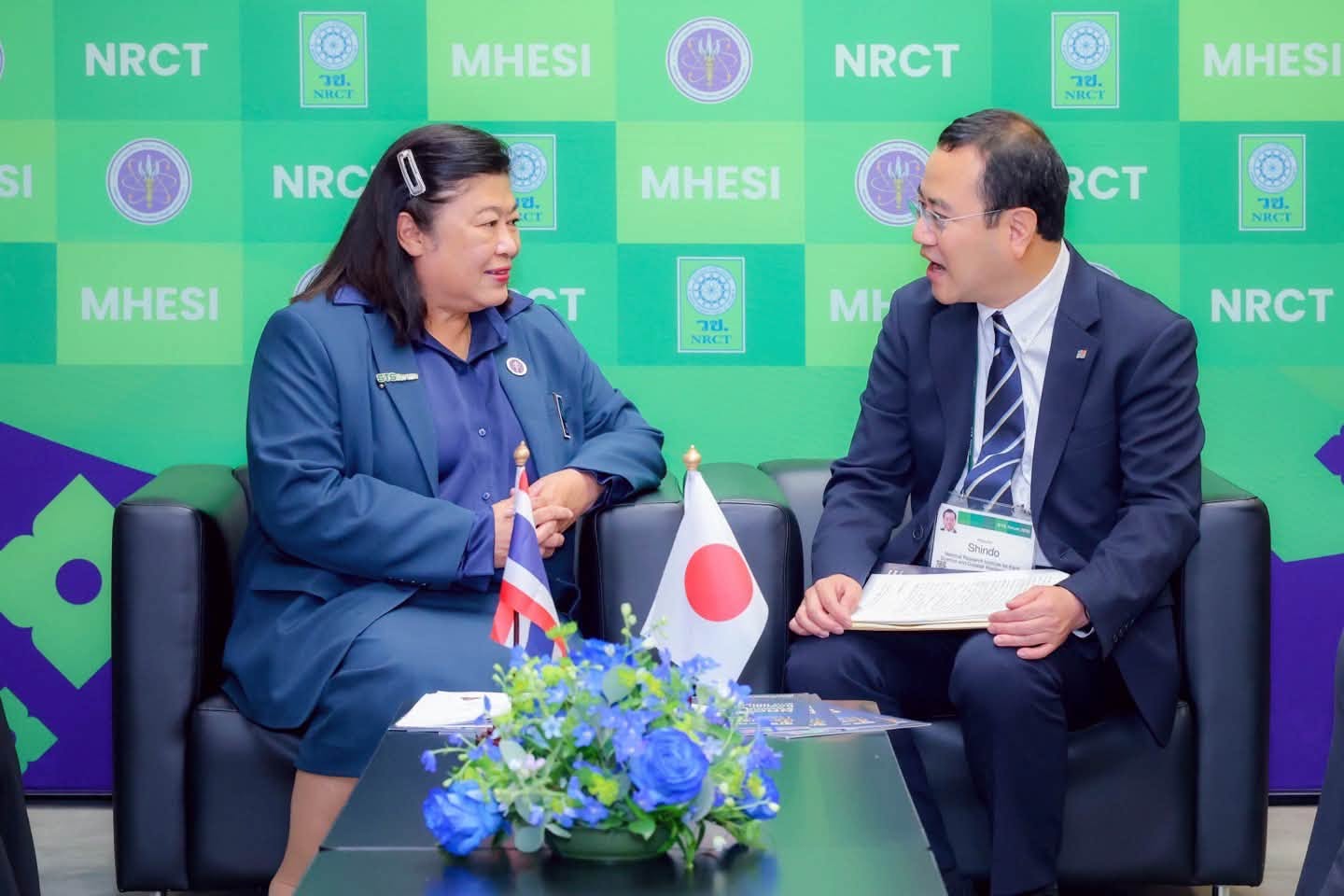
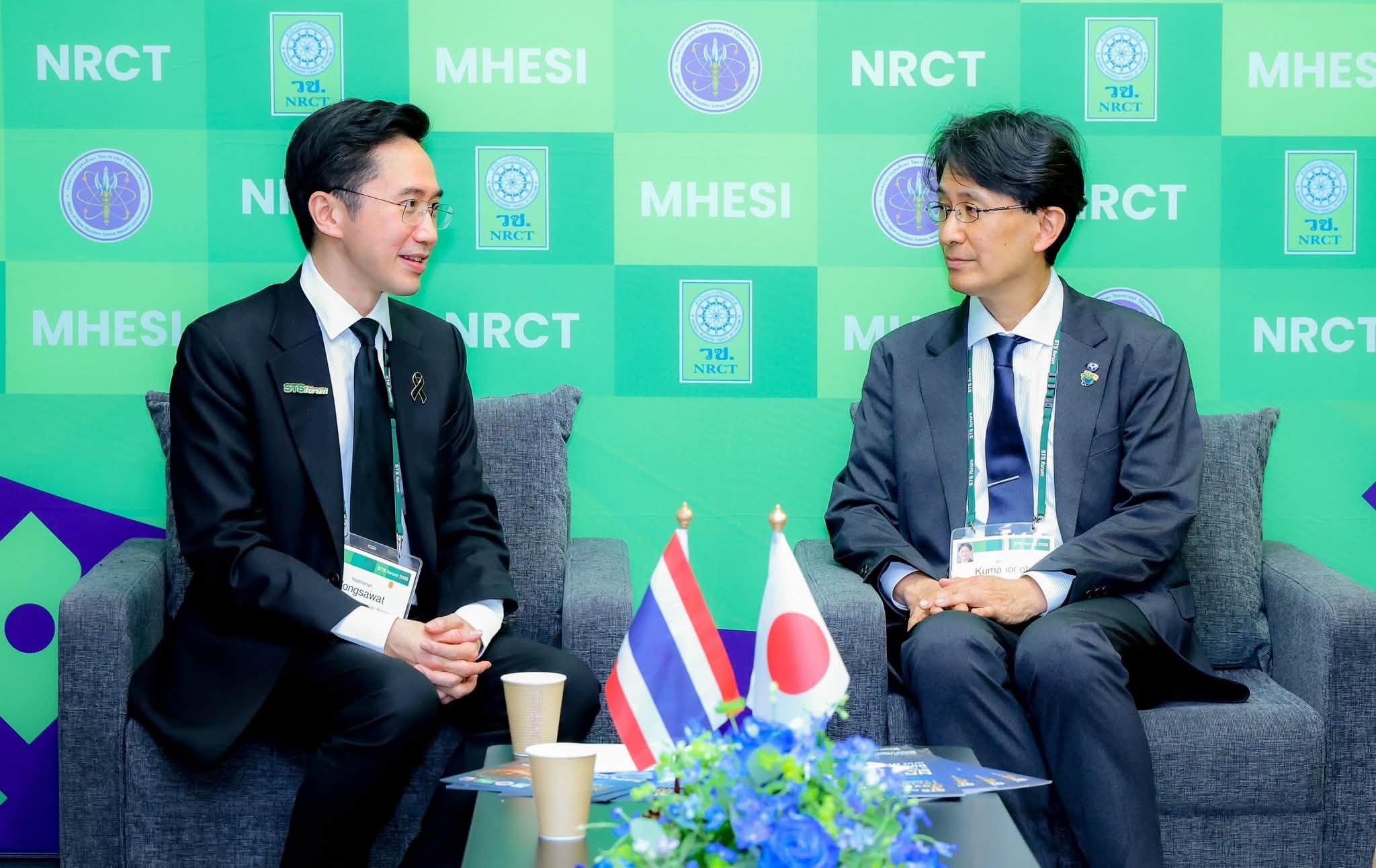
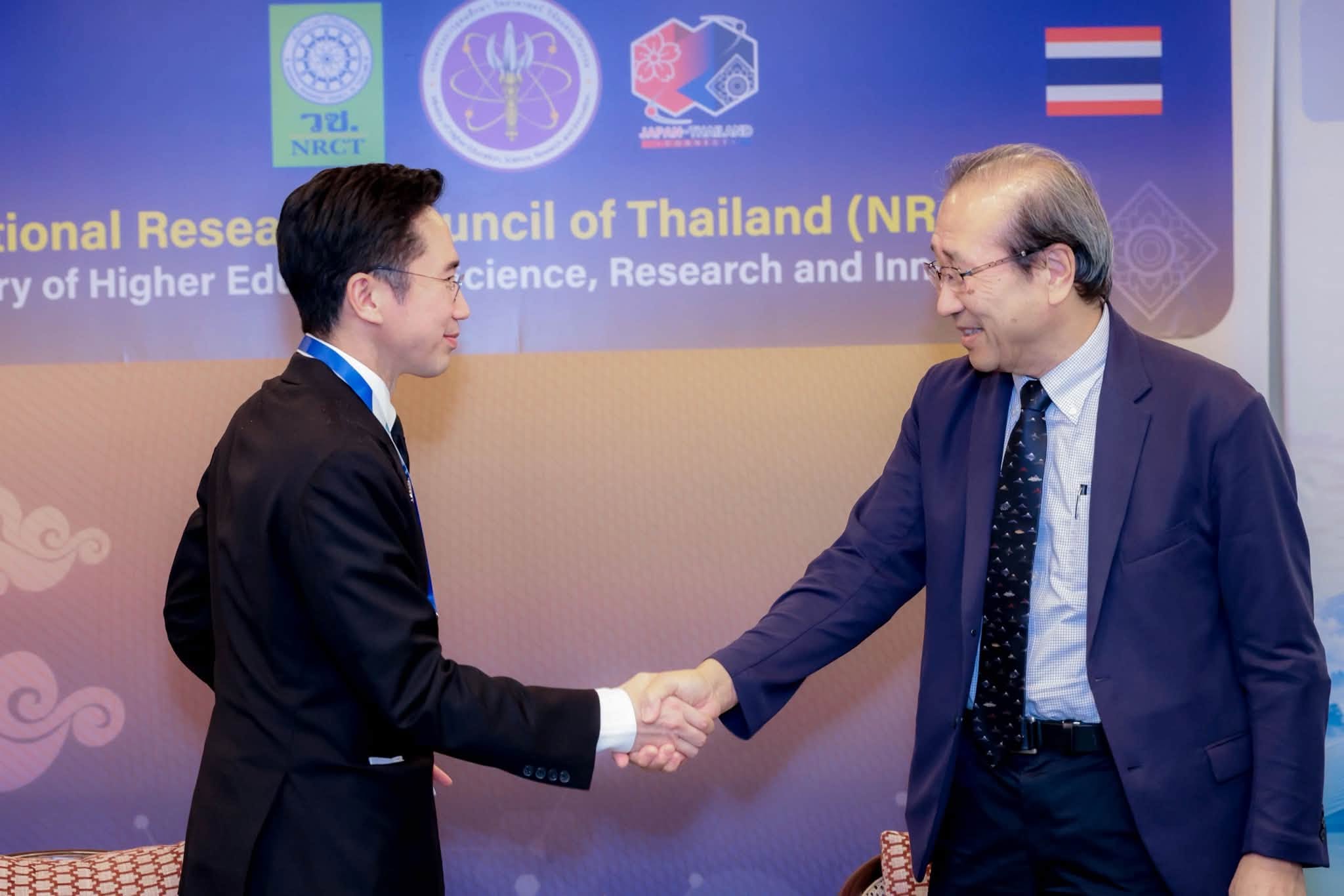
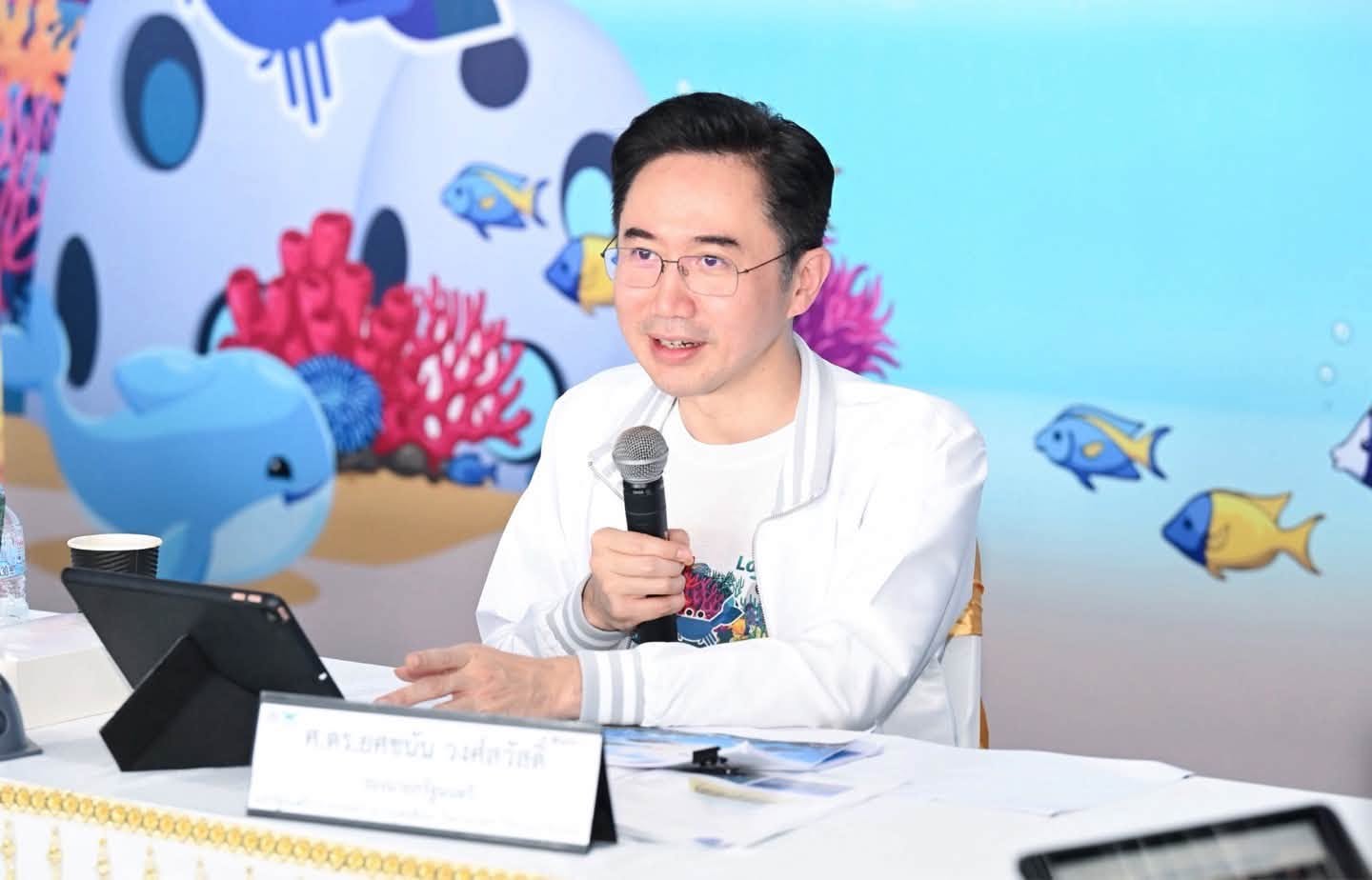
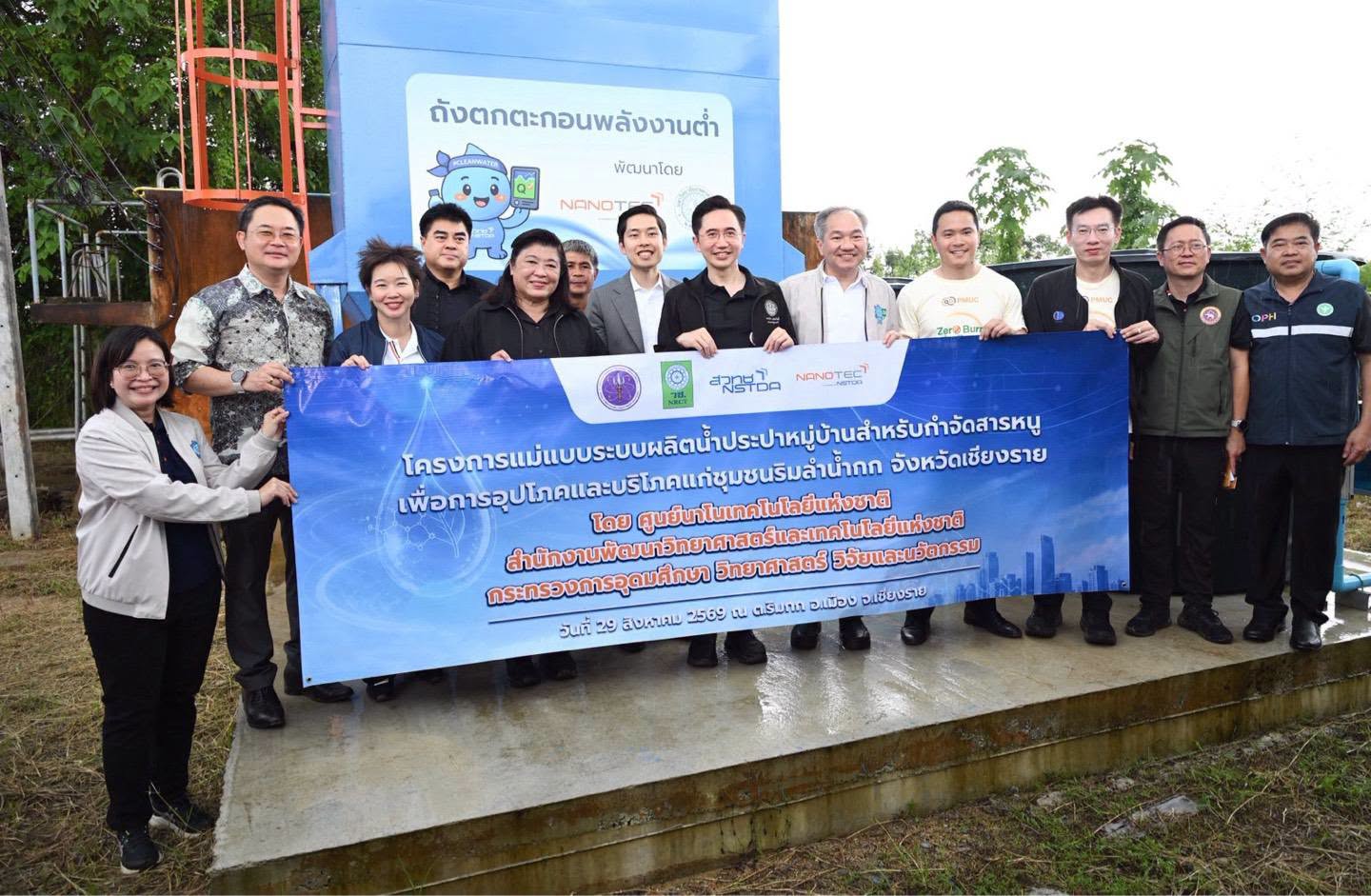
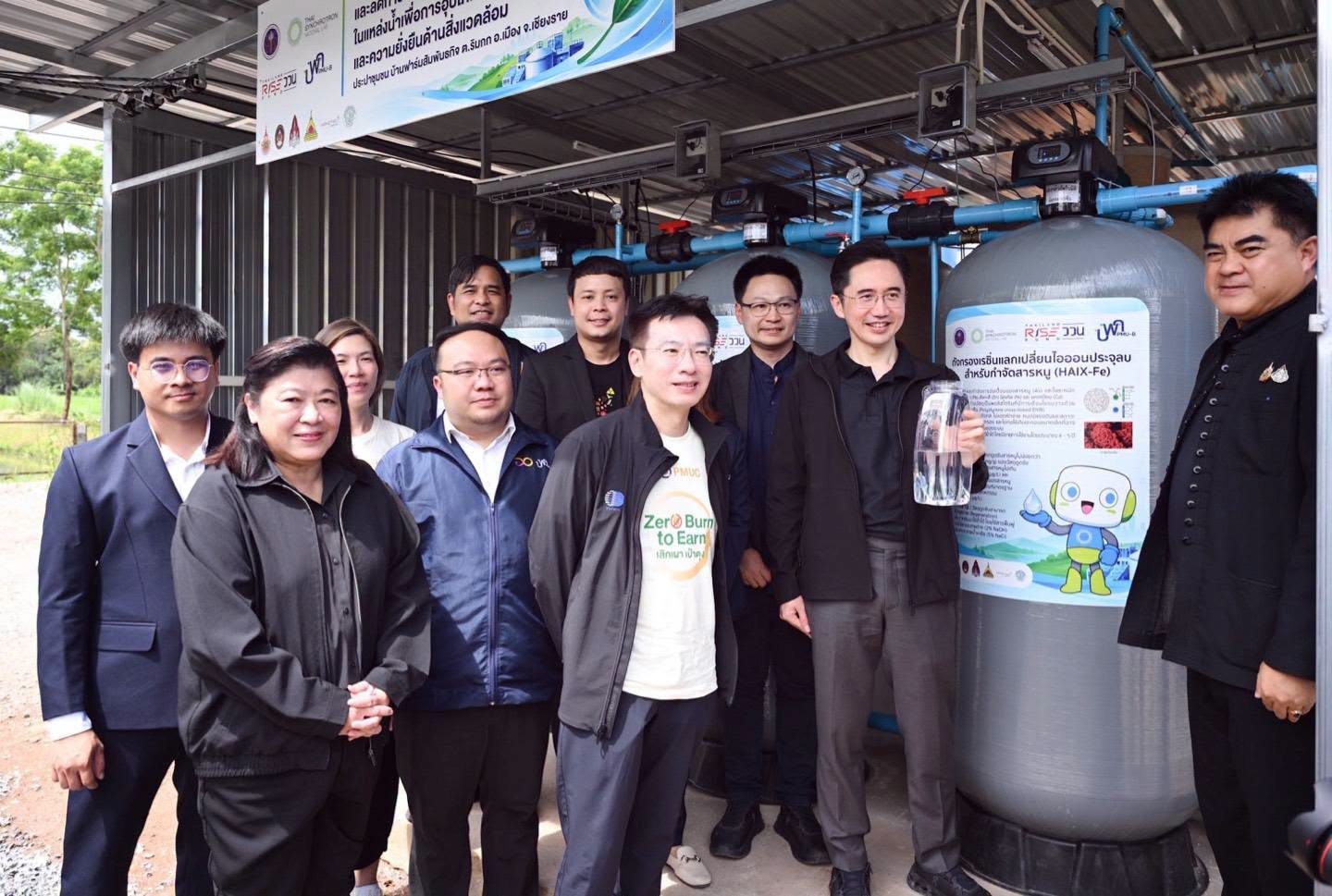
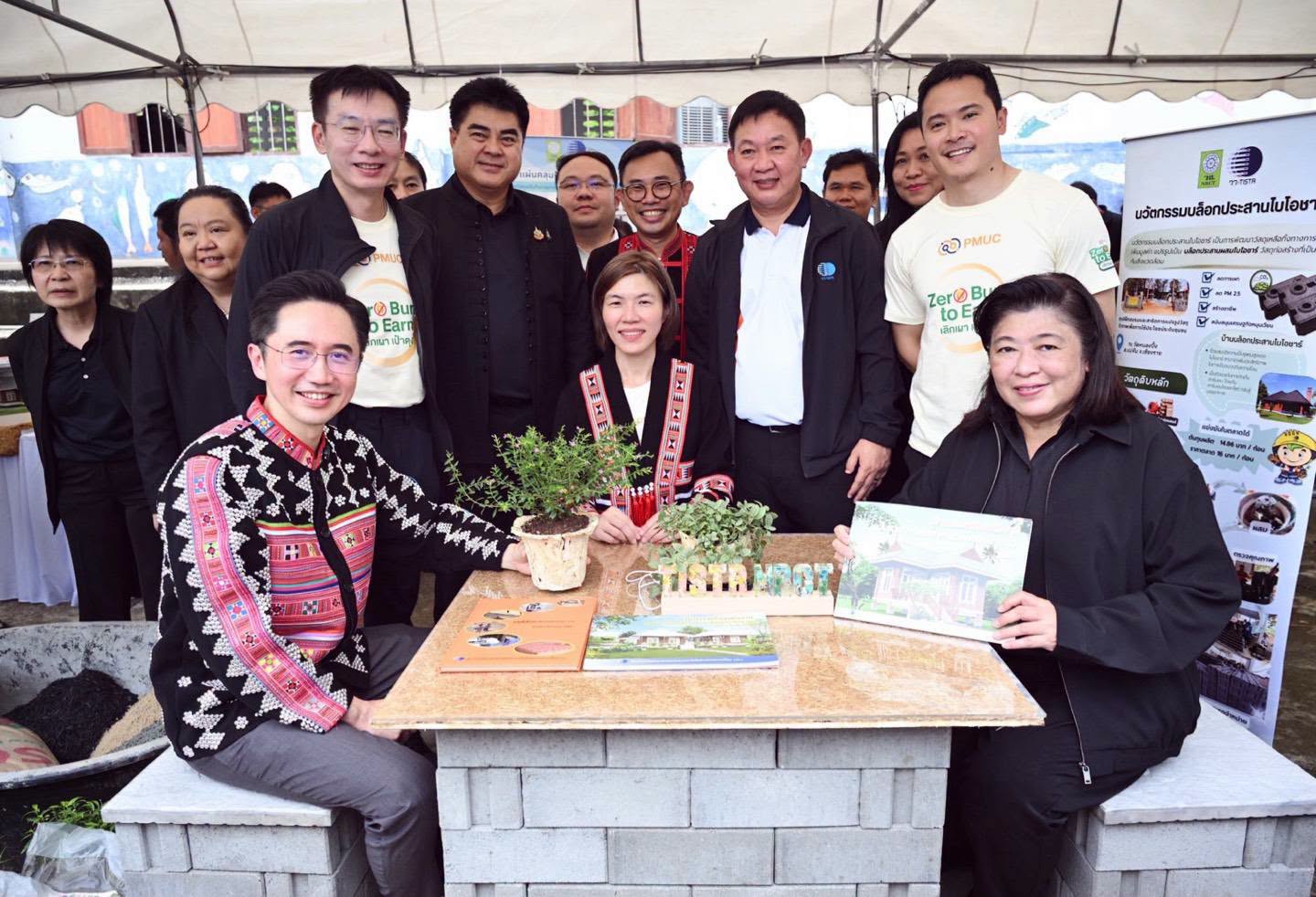
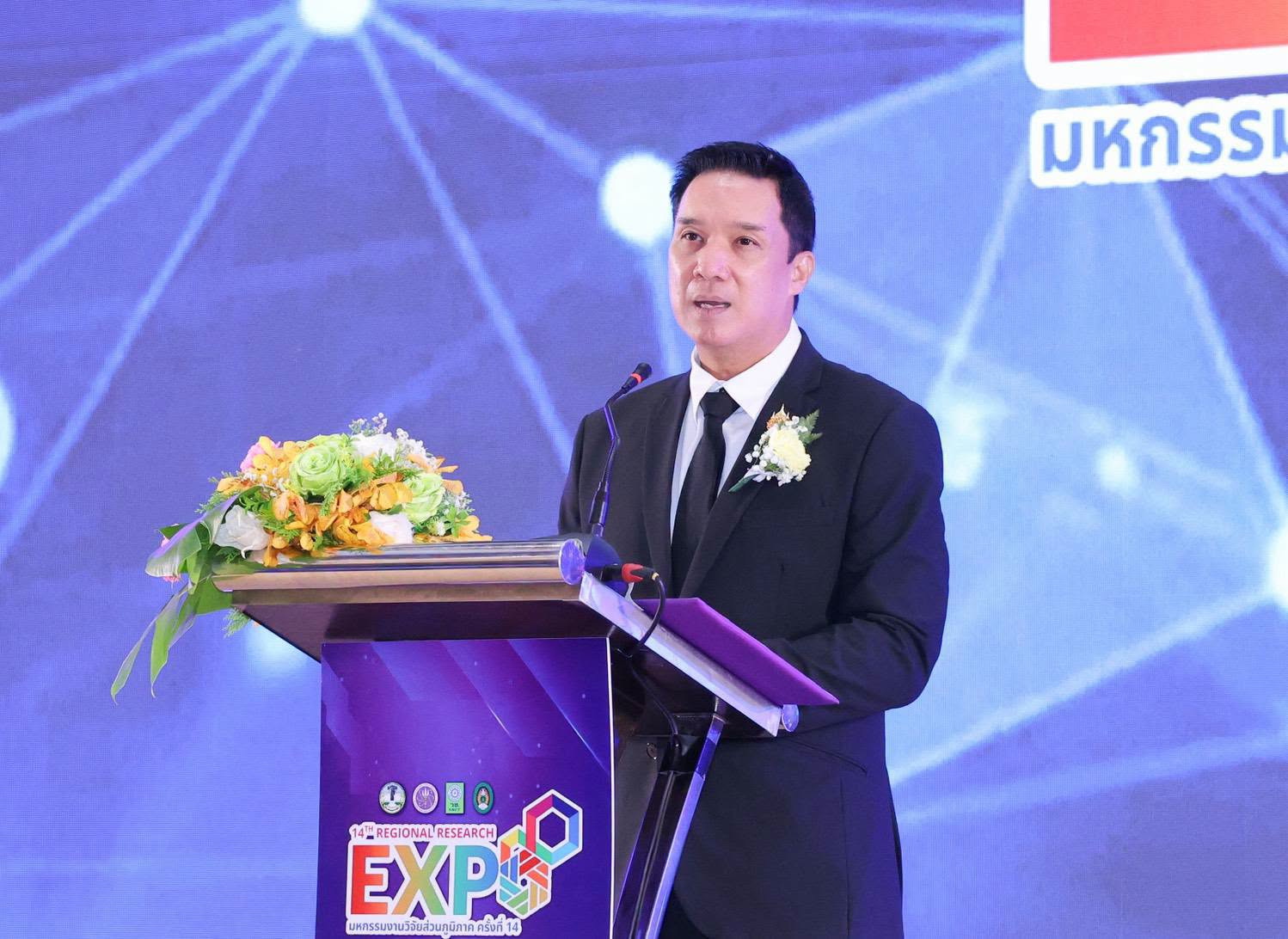
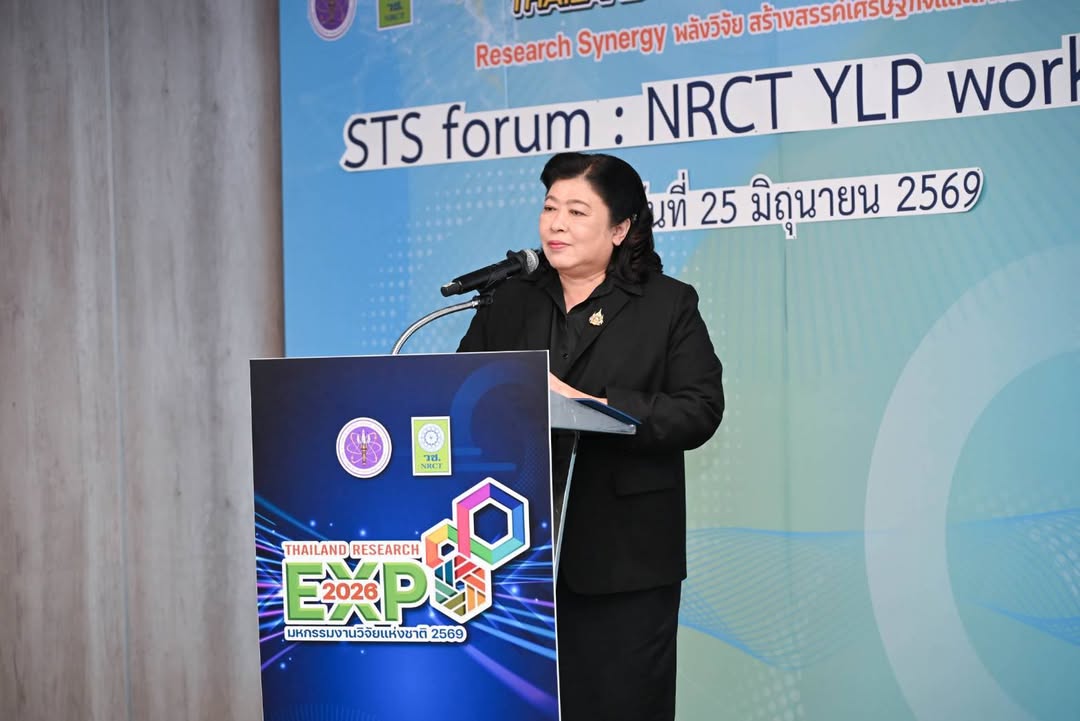
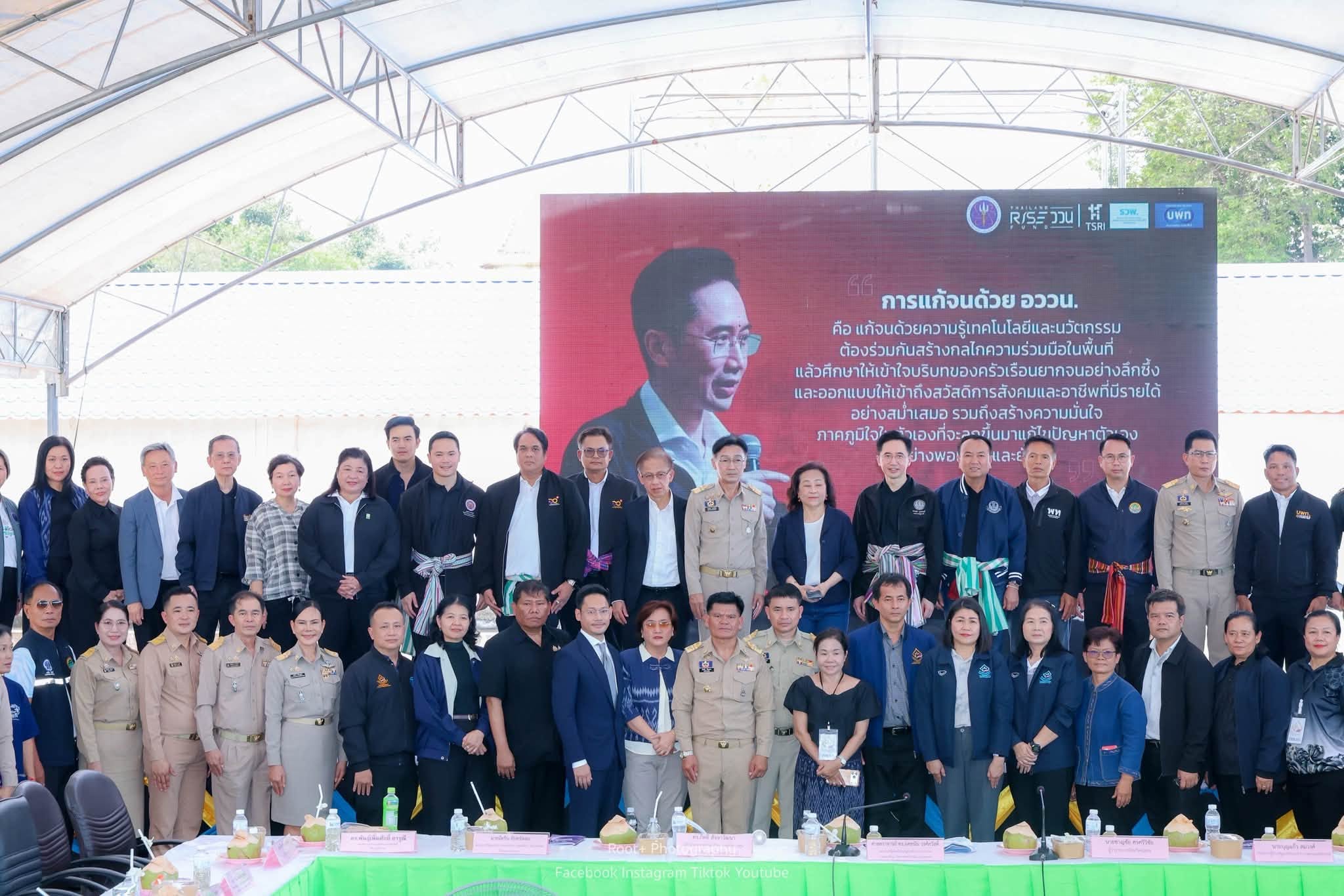
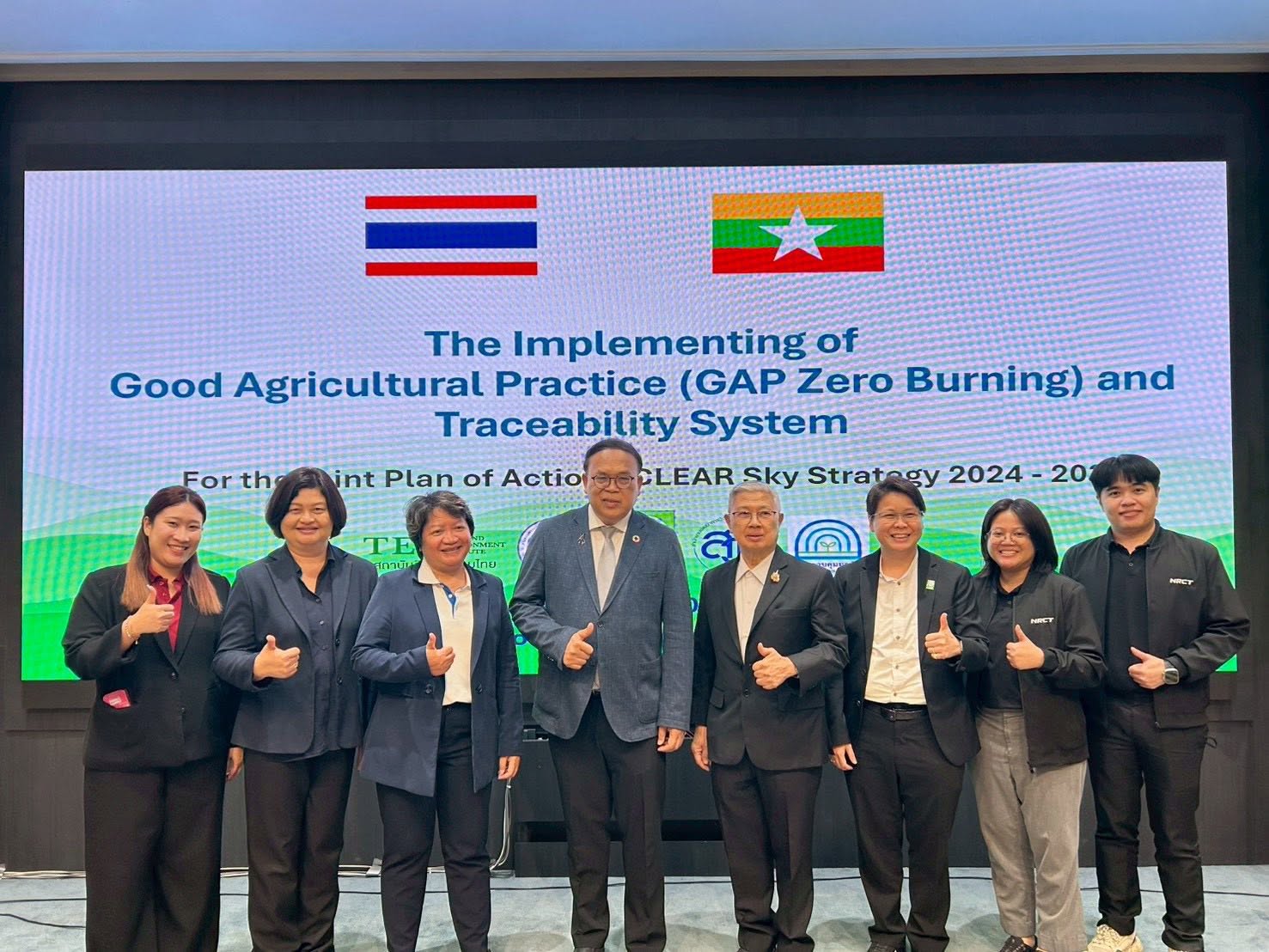
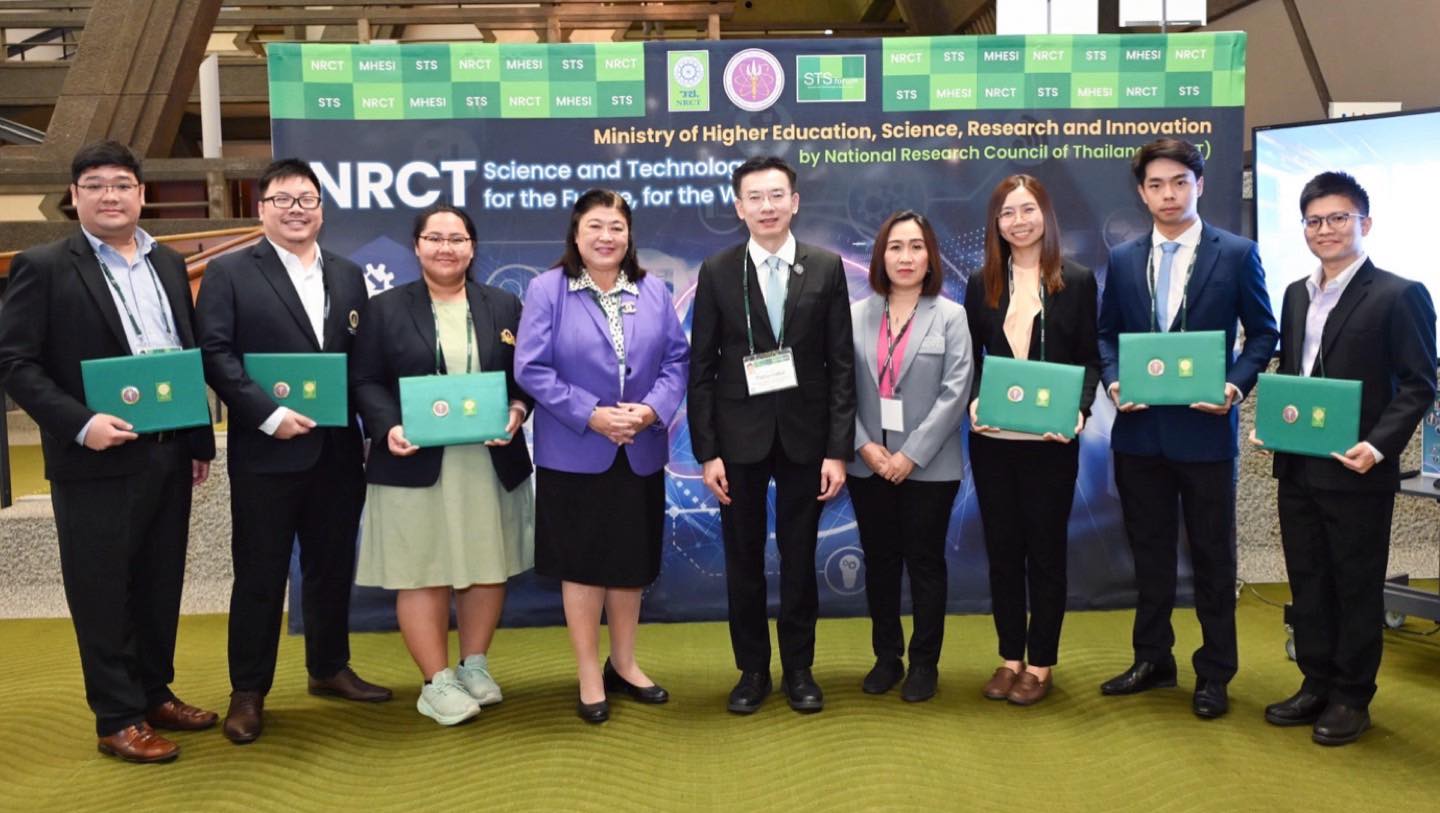
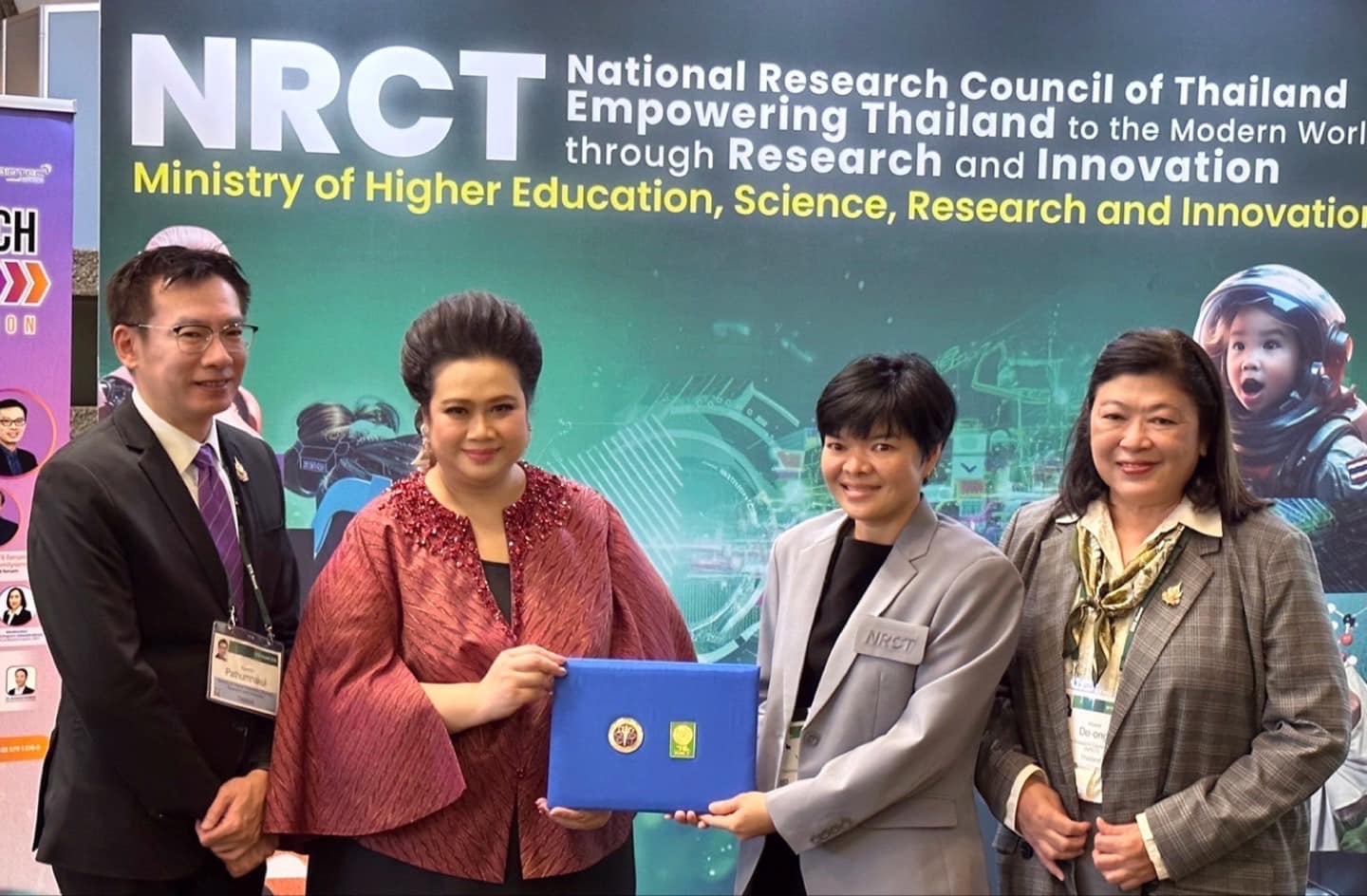
15 November 2026 – Prof. Dr. Yodchanan Wongsawat, Deputy Prime Minister and Minister of Higher Education, Science, Research and Innovation (MHESI), presided over a ceremony to recognize “Smoke-Free Farming Communities” and hand over innovative technologies, including the BioCycle Kiln Community Biochar Energy System and innovative soil improvement products. These innovations aim to provide practical solutions for reducing agricultural burning and PM2.5 pollution through the application of research and innovation.
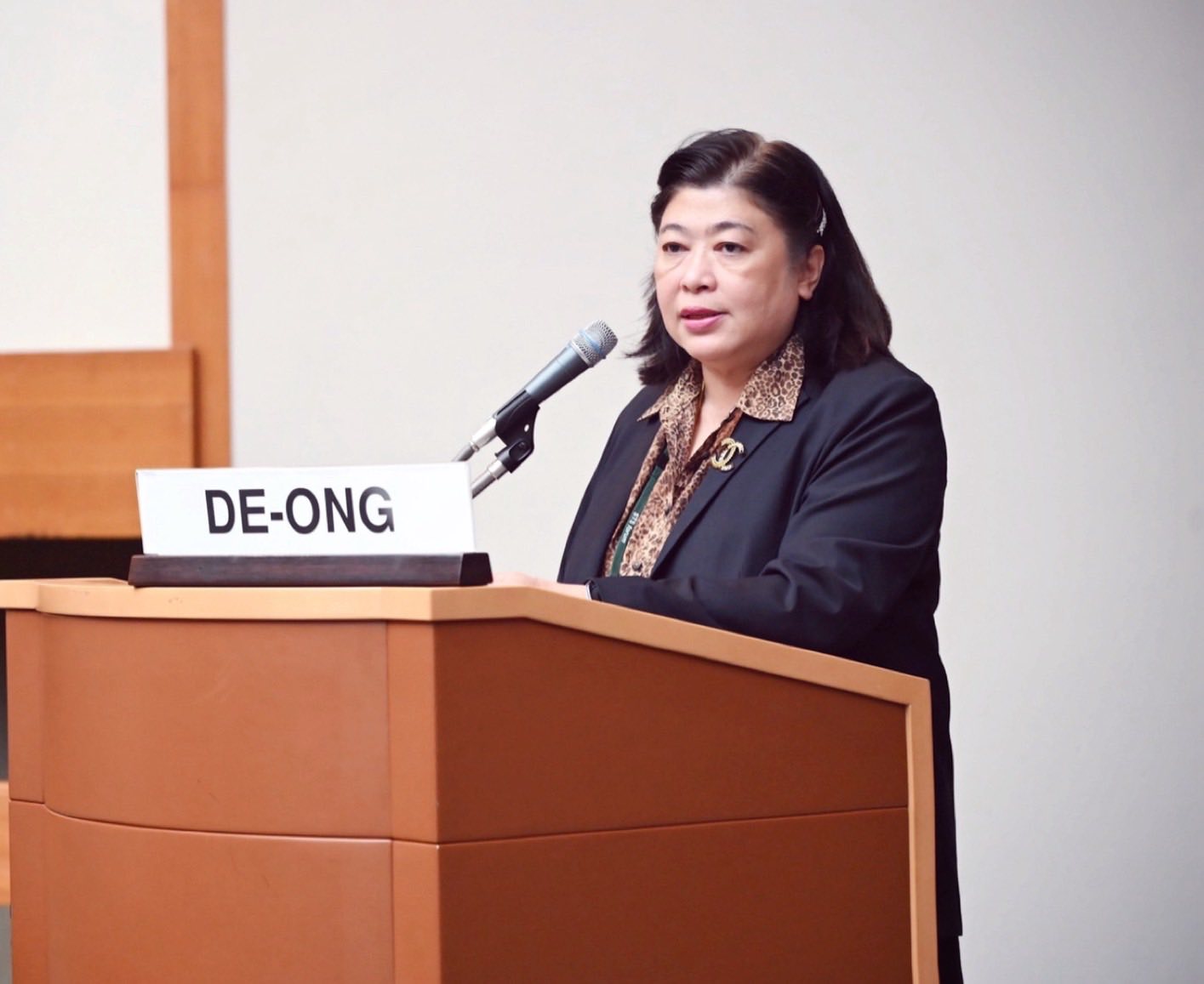
The ceremony was held as part of the Biochar Innovation and Smoke-Free Farmers Festival, which focused on the application of soil improvement technologies to reduce agricultural burning and PM2.5 pollution. The event took place at the Pha Ngam Subdistrict Administrative Organization in Wiang Chai District, Chiang Rai Province, Thailand, and was attended by Dr. Wiparat De-ong, Executive Director of the National Research Council of Thailand (NRCT), along with representatives from relevant government agencies, researchers, and community networks.
On this occasion, NRCT supported the transfer and distribution of three innovations to local farming communities, as follows:
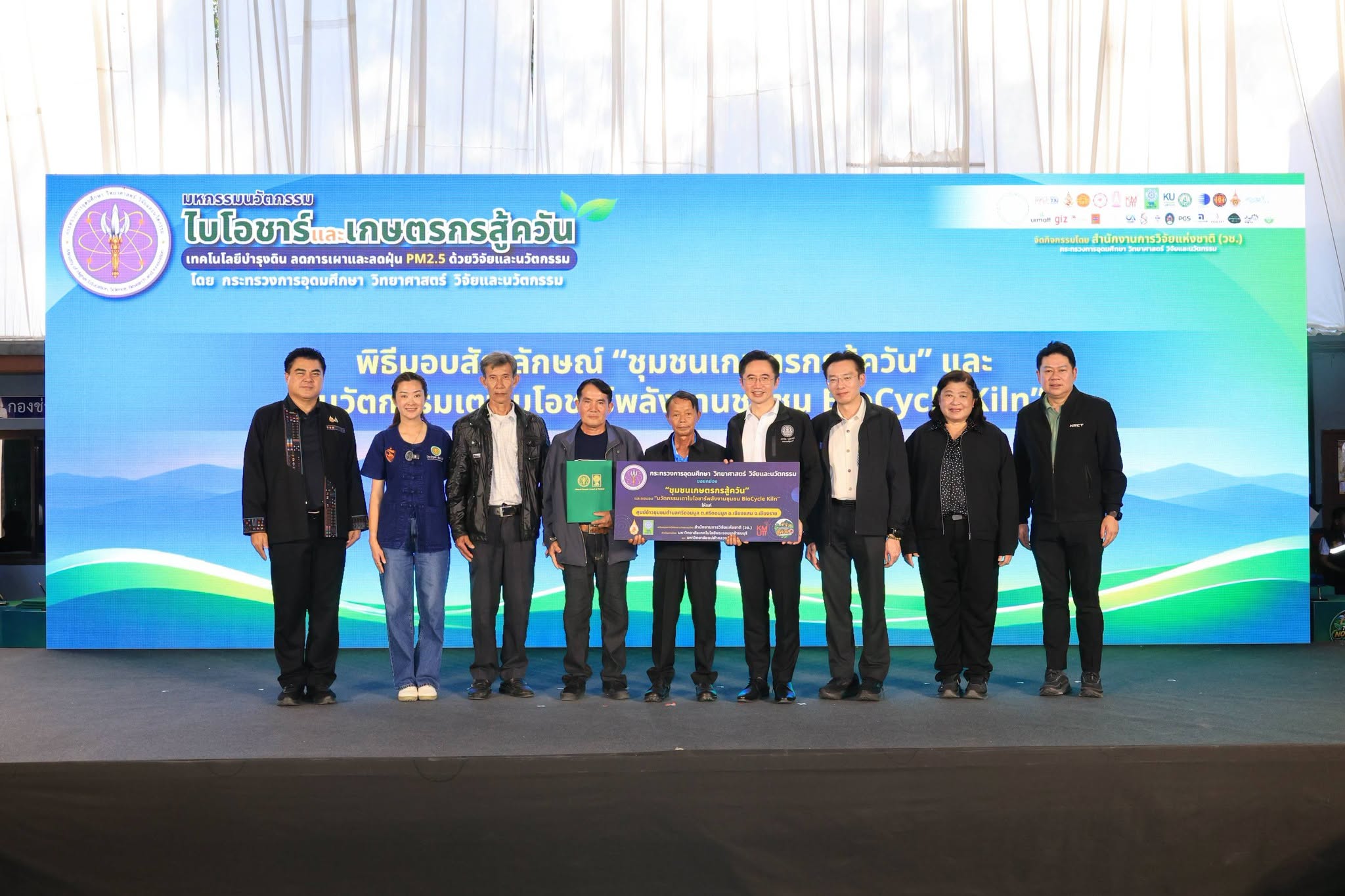
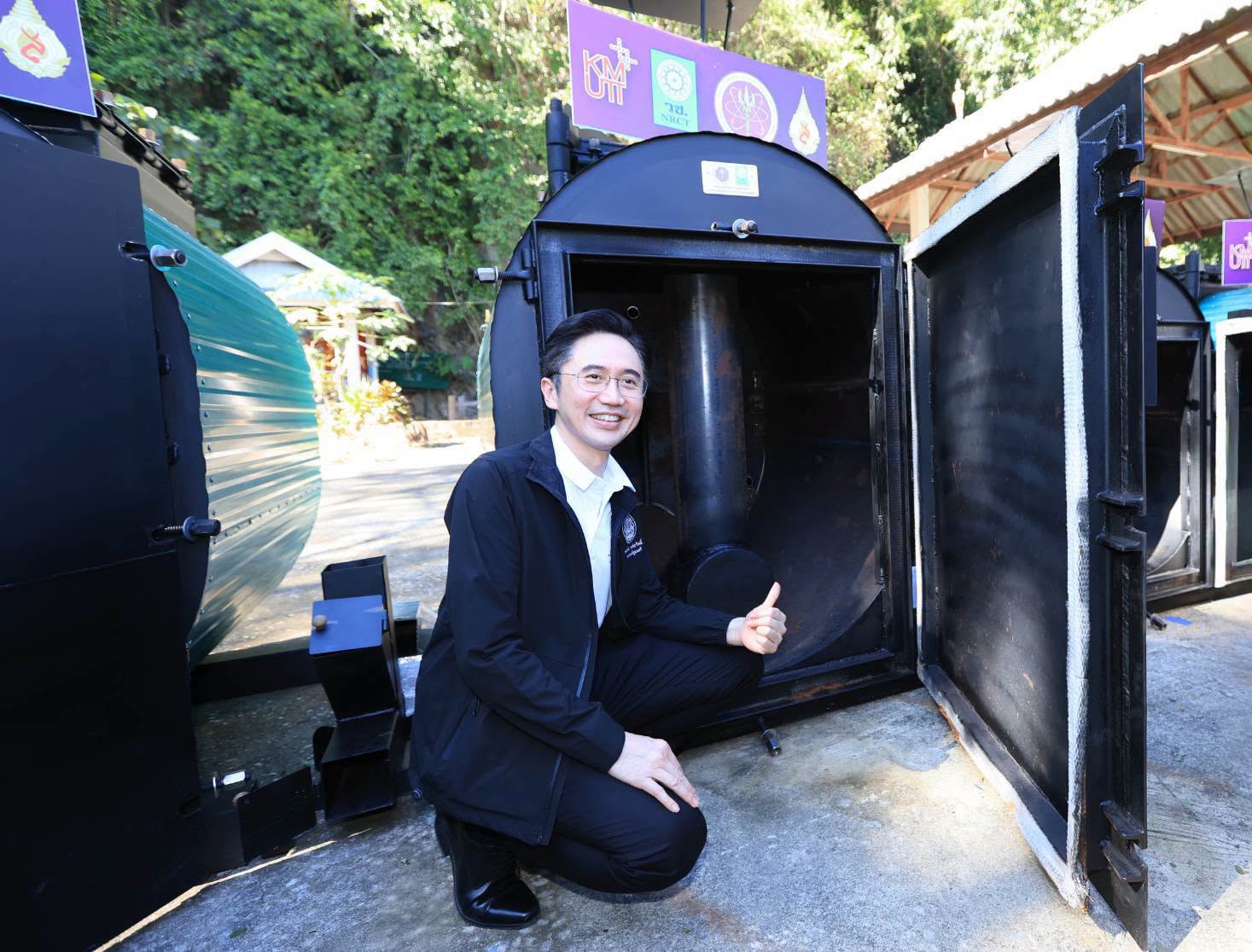
1. BioCycle Kiln: Community Biochar Energy Innovation
Developed by a research team from King Mongkut's University of Technology Thonburi, the BioCycle Kiln was handed over to 19 Smoke-Free Farming Communities in Chiang Rai and Phayao provinces.
The technology enables the conversion of agricultural residues into biochar, offering an alternative to open-field burning. The resulting biochar can be used to improve soil quality and promote more sustainable agricultural practices.
2. BioCharge: Nutrient-Enriched Biochar for Slow-Release Fertilization
Developed by a research team from Chulalongkorn University, BioCharge was handed over to three organizations and community networks.
This innovation combines biochar with plant nutrients to support soil improvement and more effective nutrient management. Its slow-release fertilization properties help improve nutrient-use efficiency and promote sustainable agricultural practices.
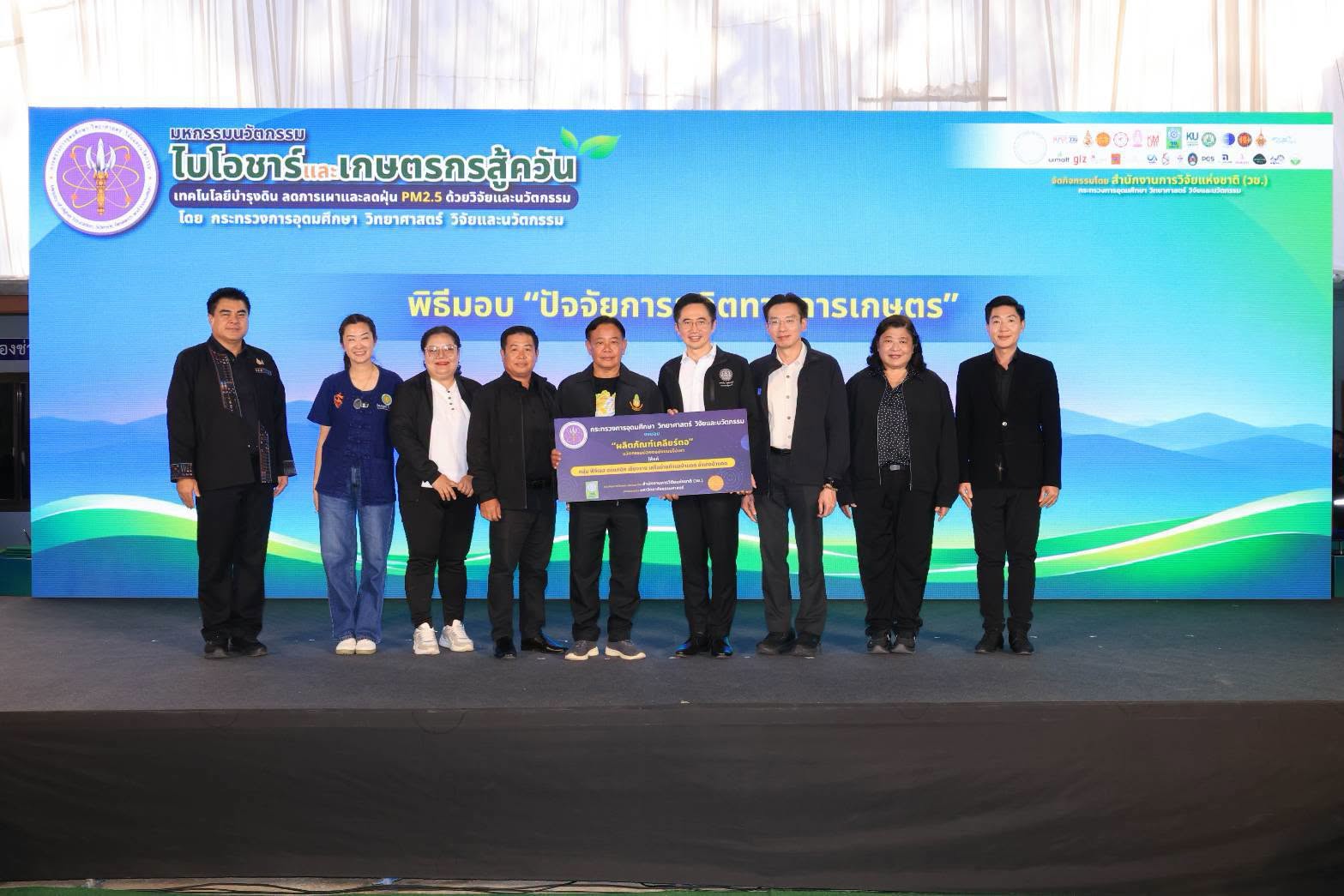
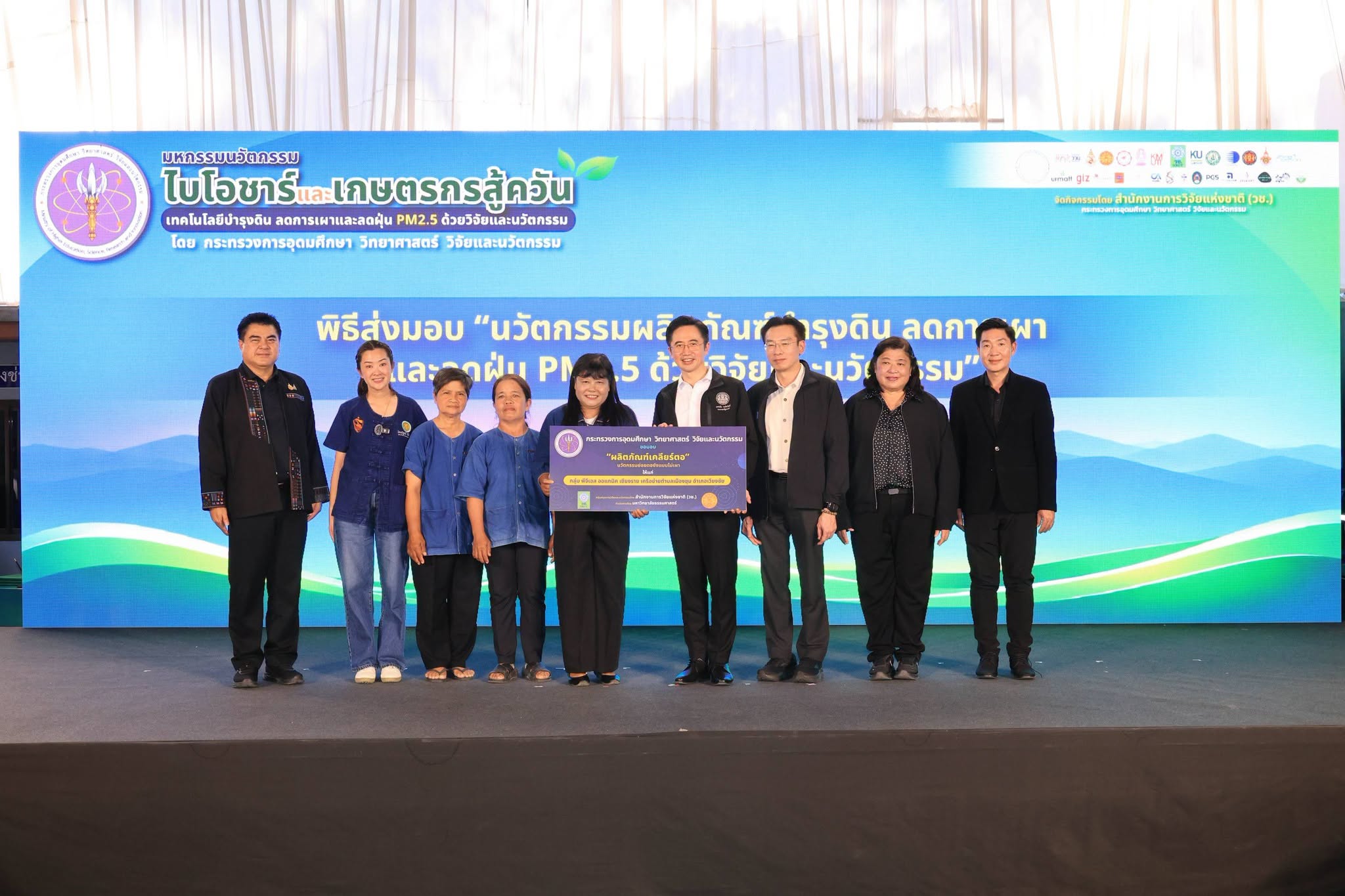
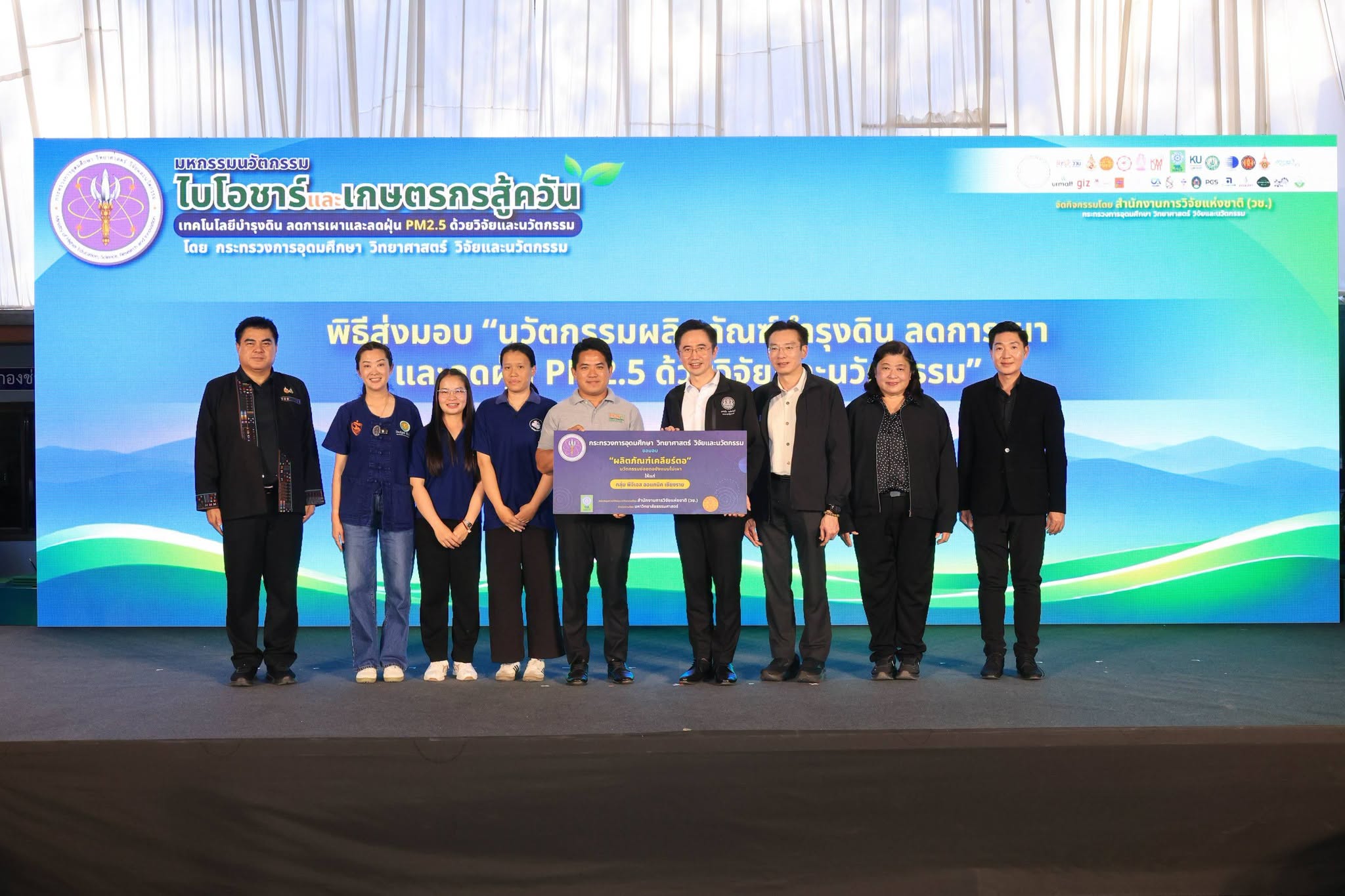
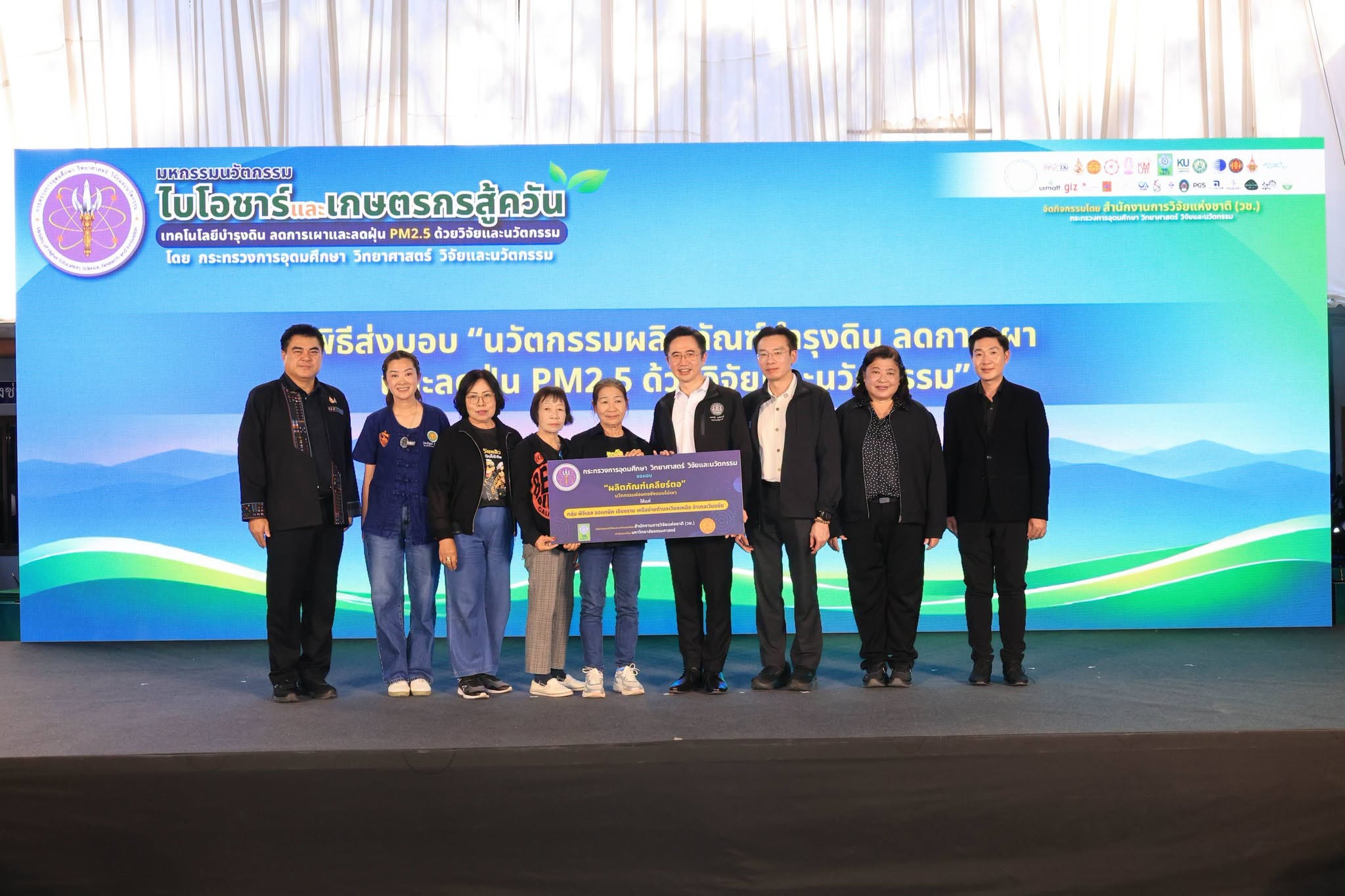
3. Clear Tor: An Innovation for Stubble Decomposition Without Burning
Developed by a research team from Thammasat University, Clear Tor was handed over to 10 farmer groups and community networks.
The innovation supports the decomposition of crop stubble without burning, providing an alternative approach to agricultural land management and helping reduce the open-field burning of rice stubble and straw.
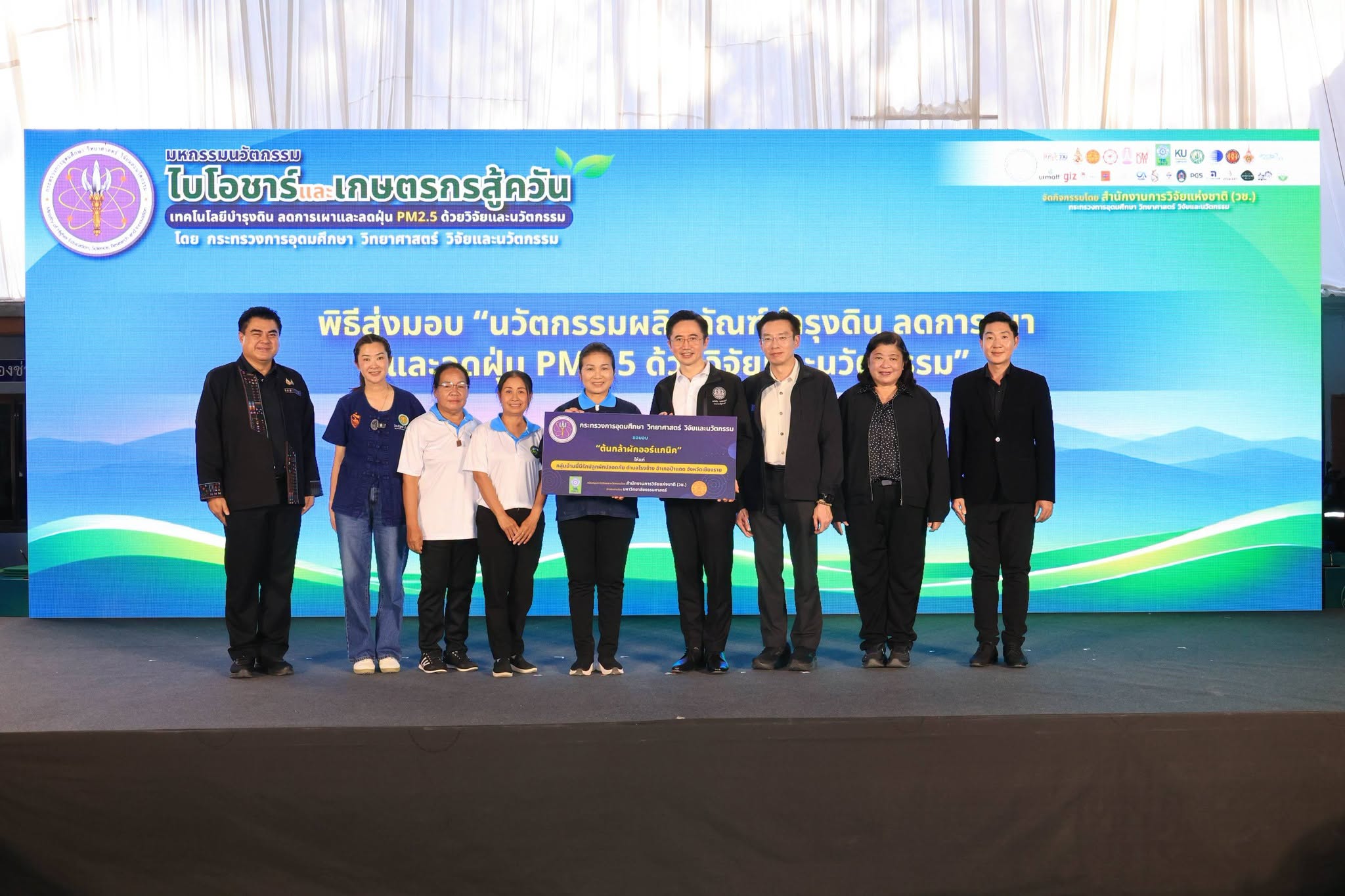
In addition, organic vegetable seedlings were handed over to a local community group in Rong Chang Subdistrict, Pa Daet District, Chiang Rai Province, to encourage safe vegetable cultivation and promote environmentally friendly agricultural practices at the community level.
The transfer of these innovations represents an important step toward translating research and innovation into practical applications. Through the dissemination of appropriate knowledge and technologies, NRCT aims to equip farmers and local communities with alternative solutions for agricultural residue management, reduce open-field burning, and contribute to mitigating PM2.5 pollution.
These initiatives also seek to improve soil quality, enhance agricultural productivity, and create added value from local resources. By promoting the practical application of science, research, and innovation, NRCT continues to support the development of local economies and contribute to the long-term sustainability of Thailand's agricultural sector.