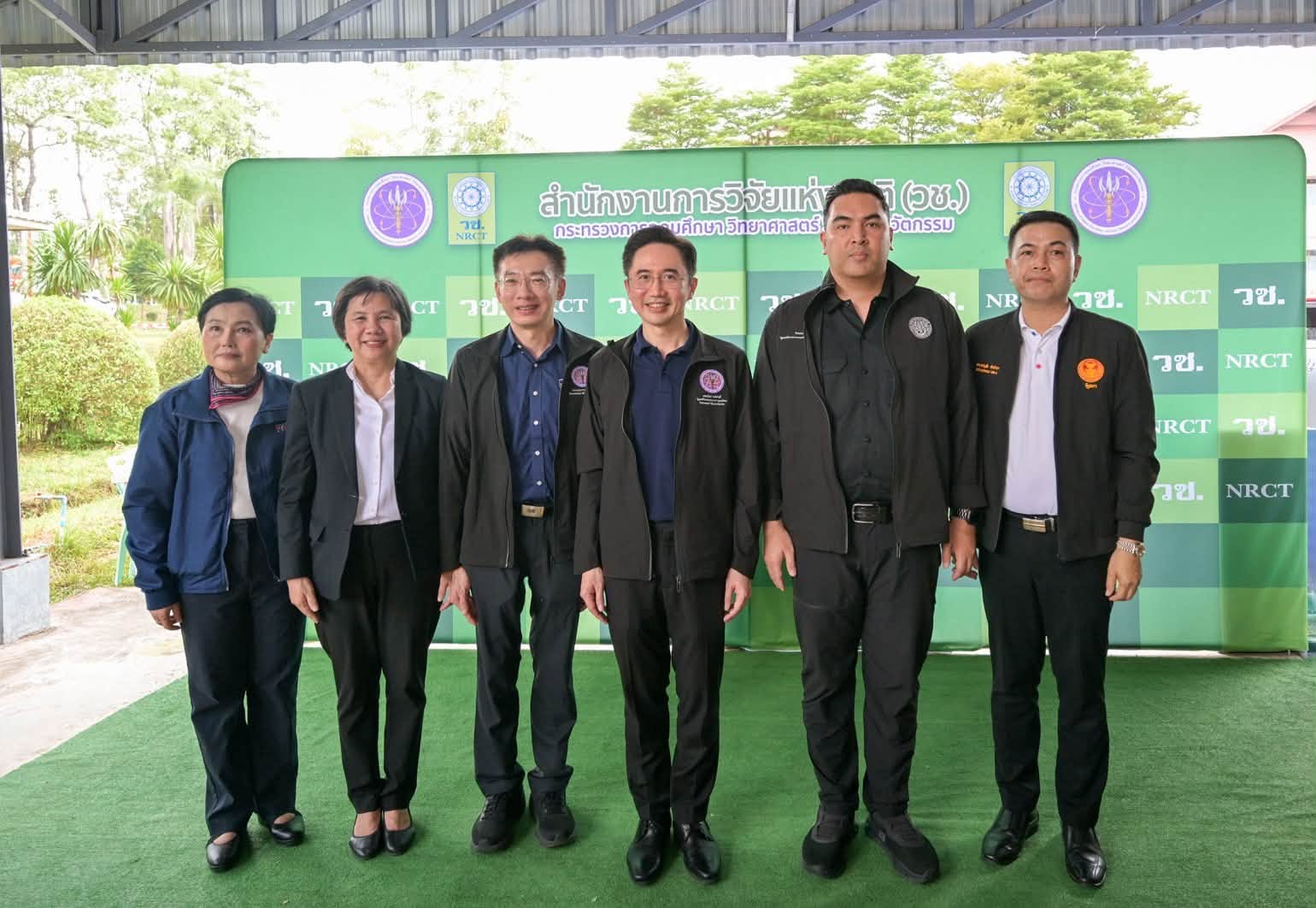
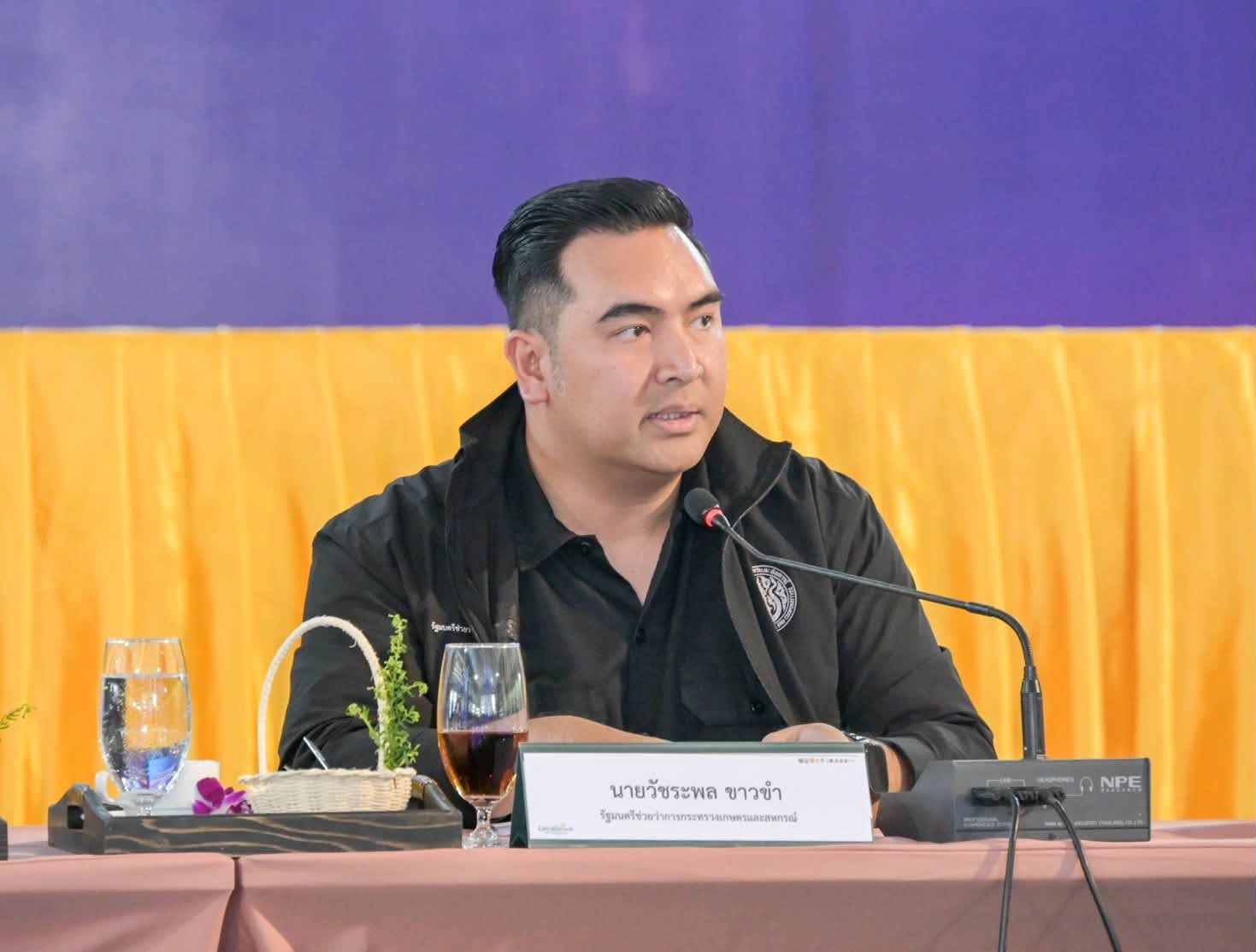
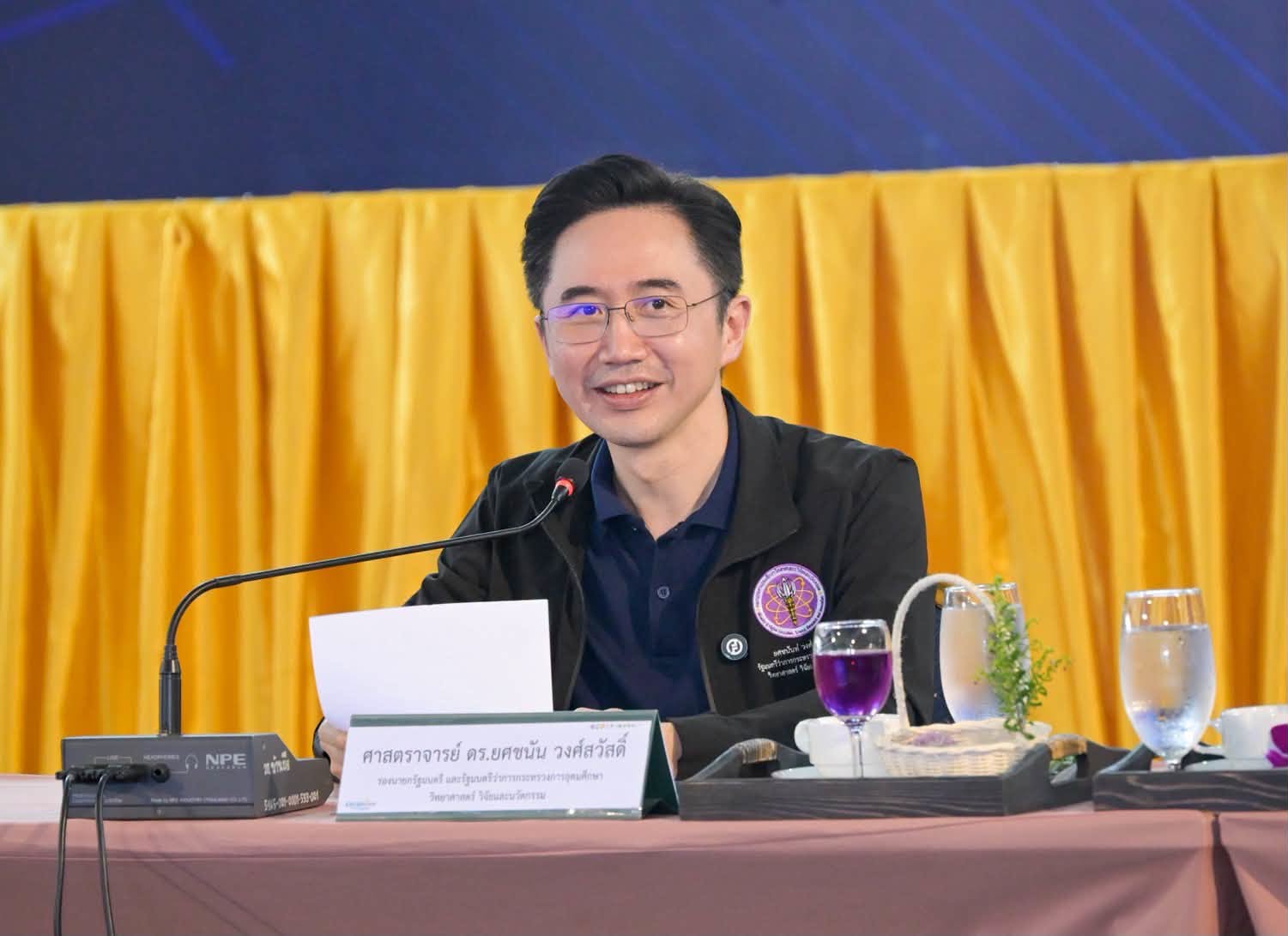
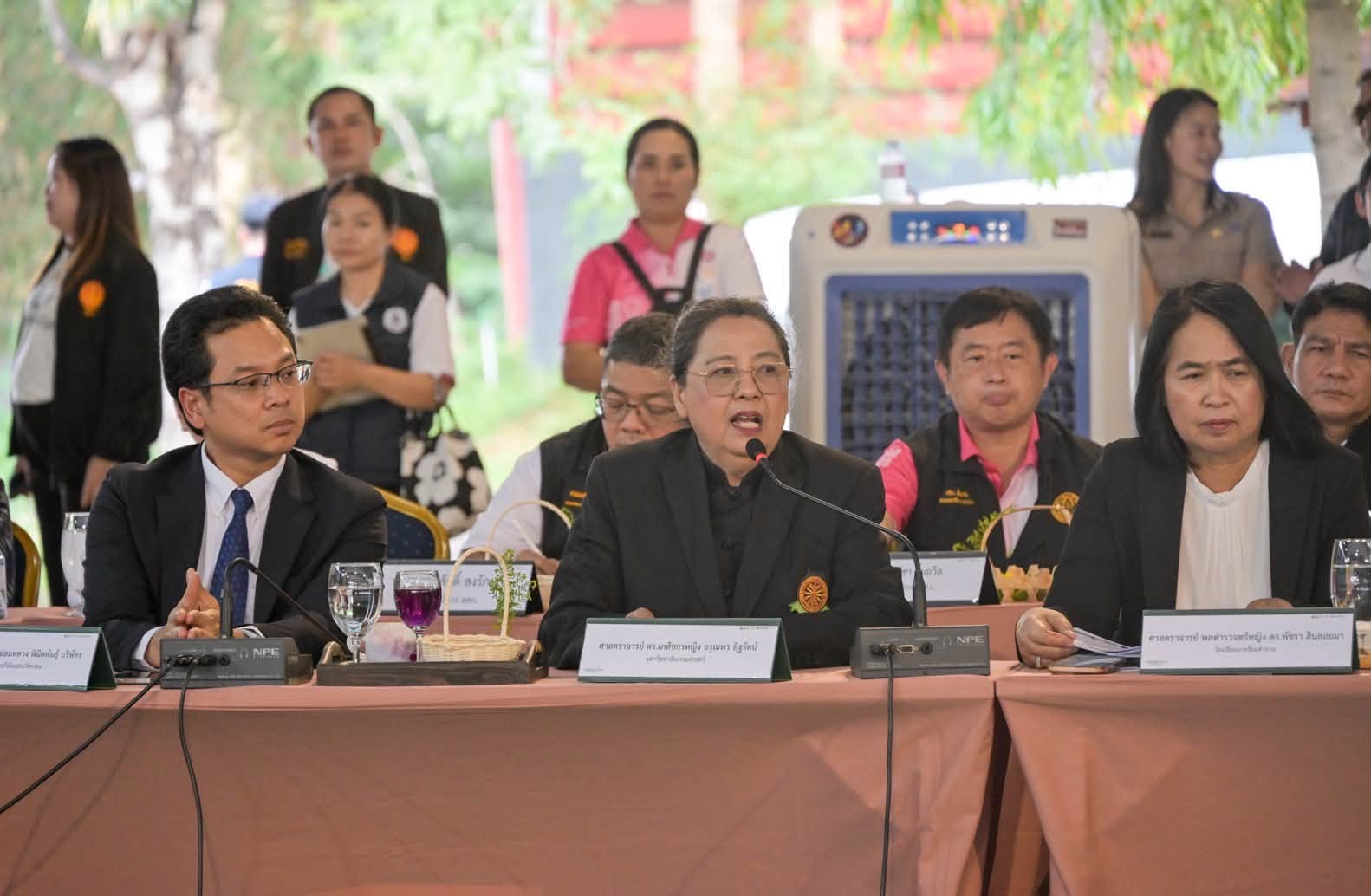
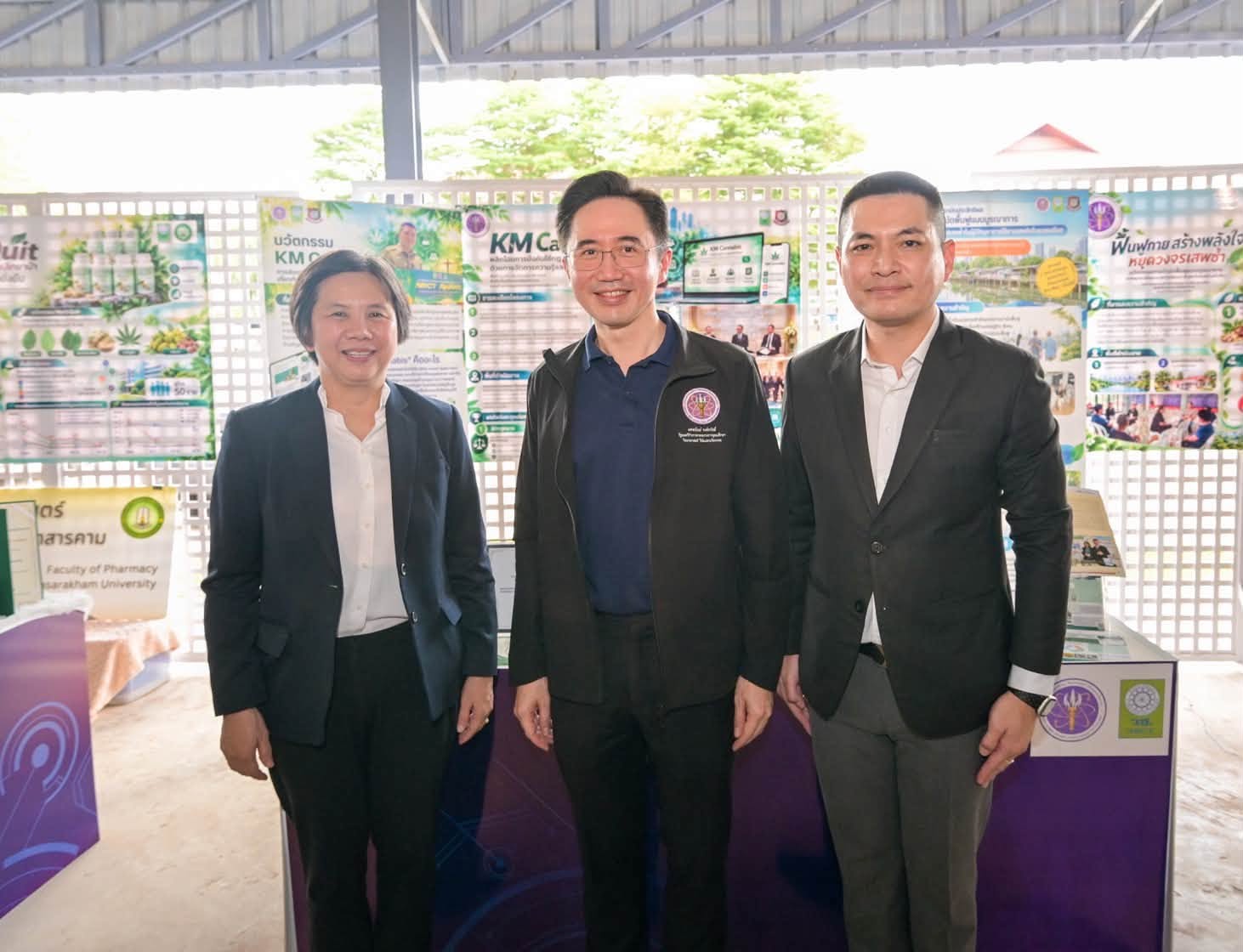
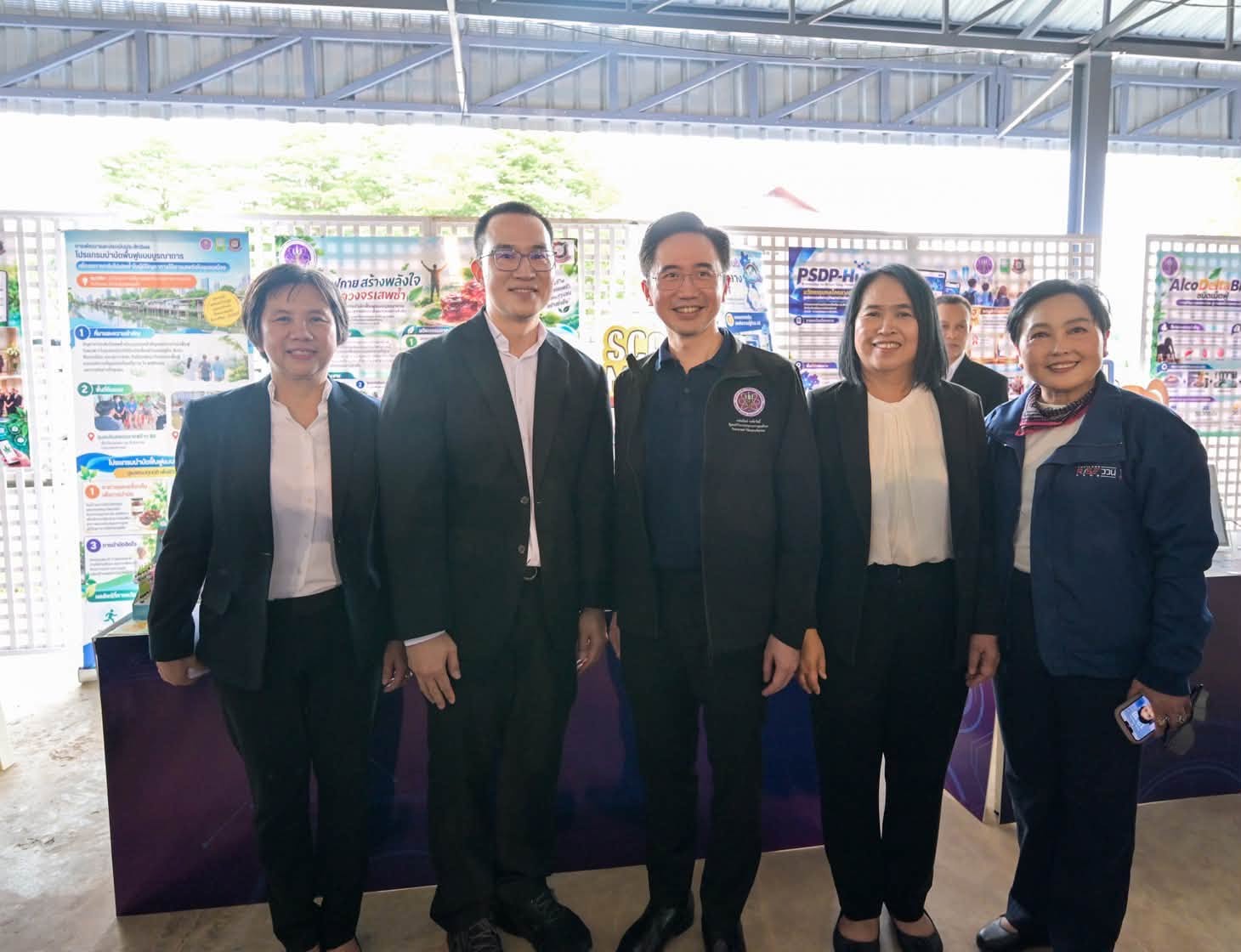
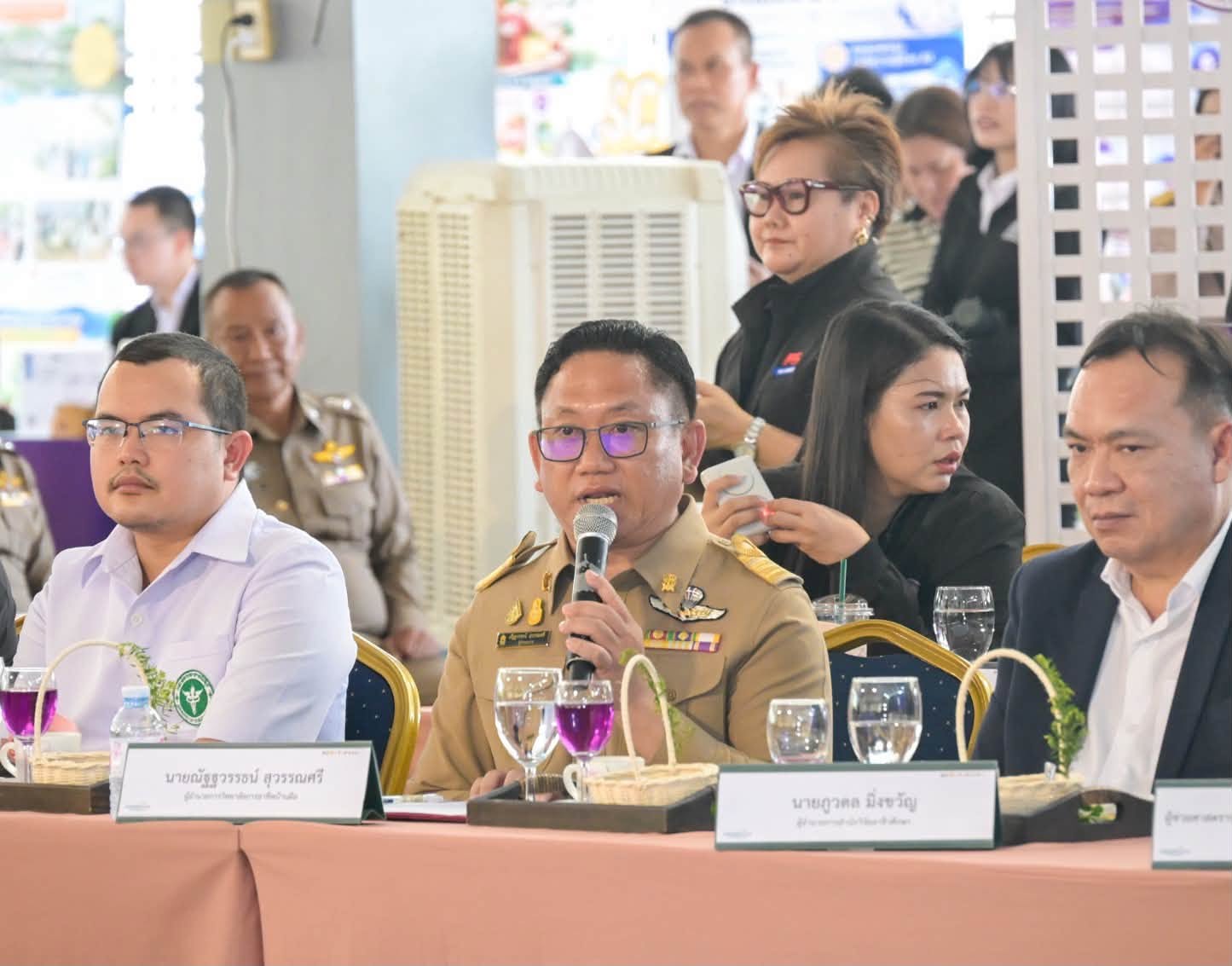
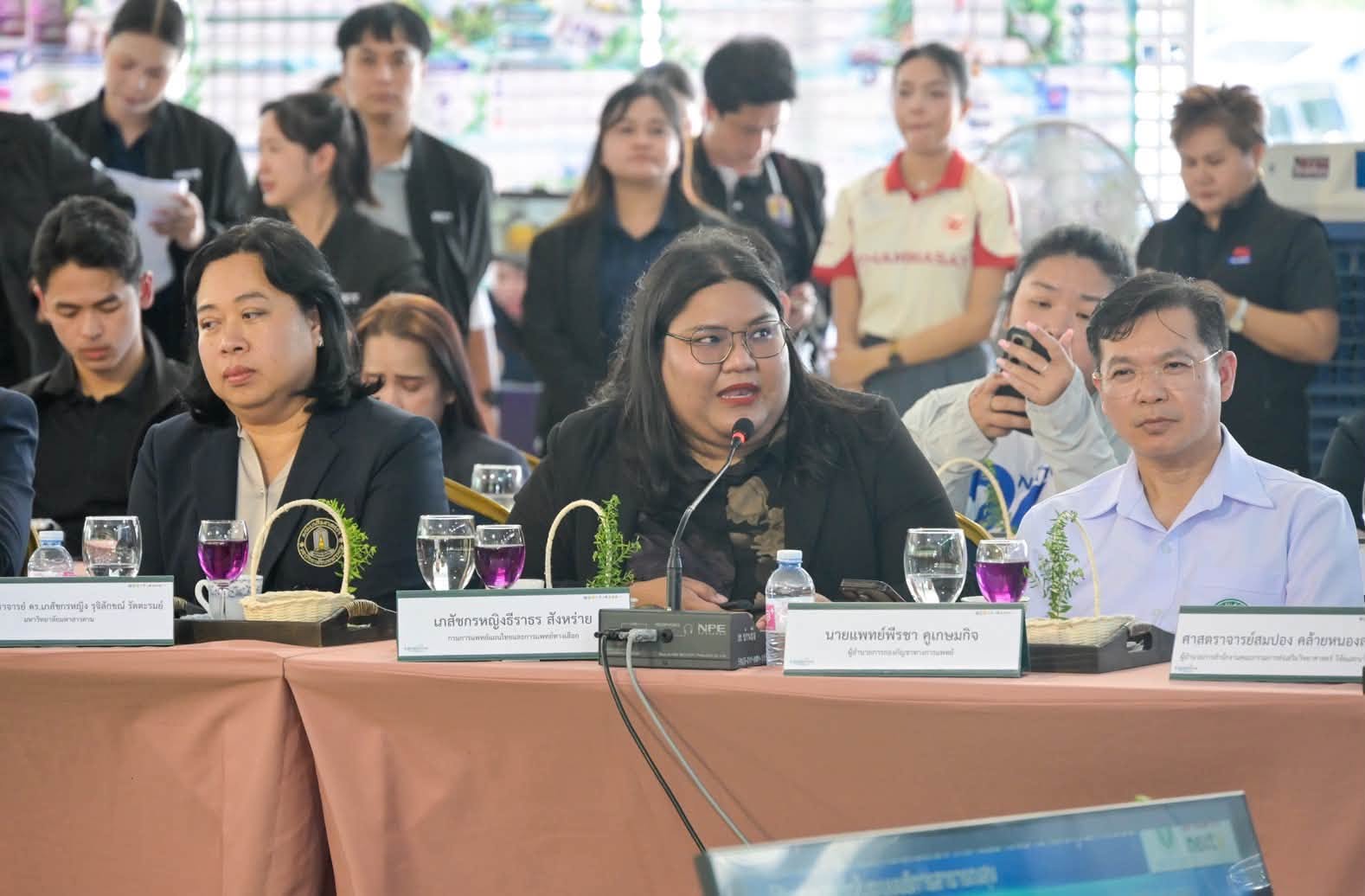
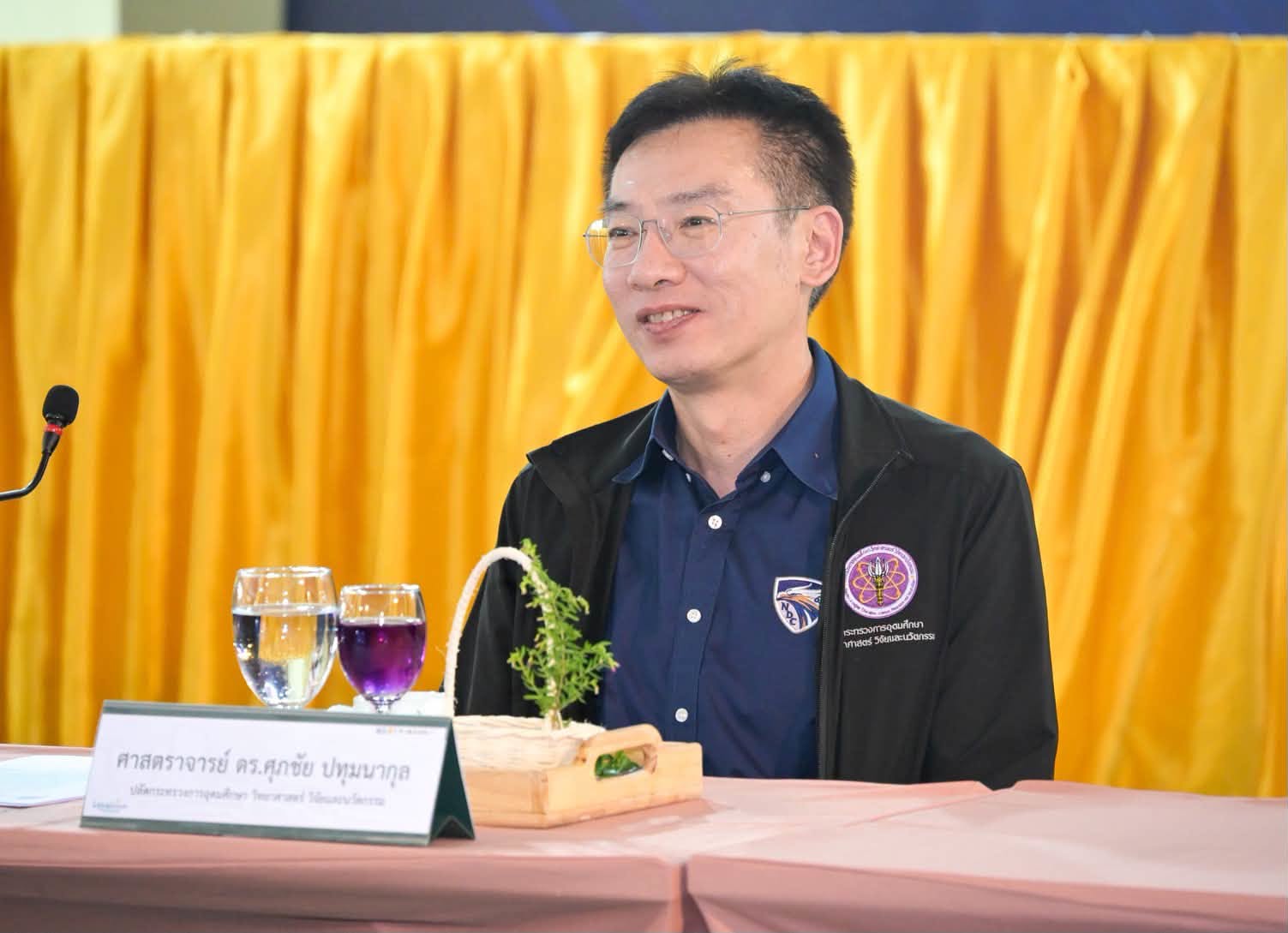
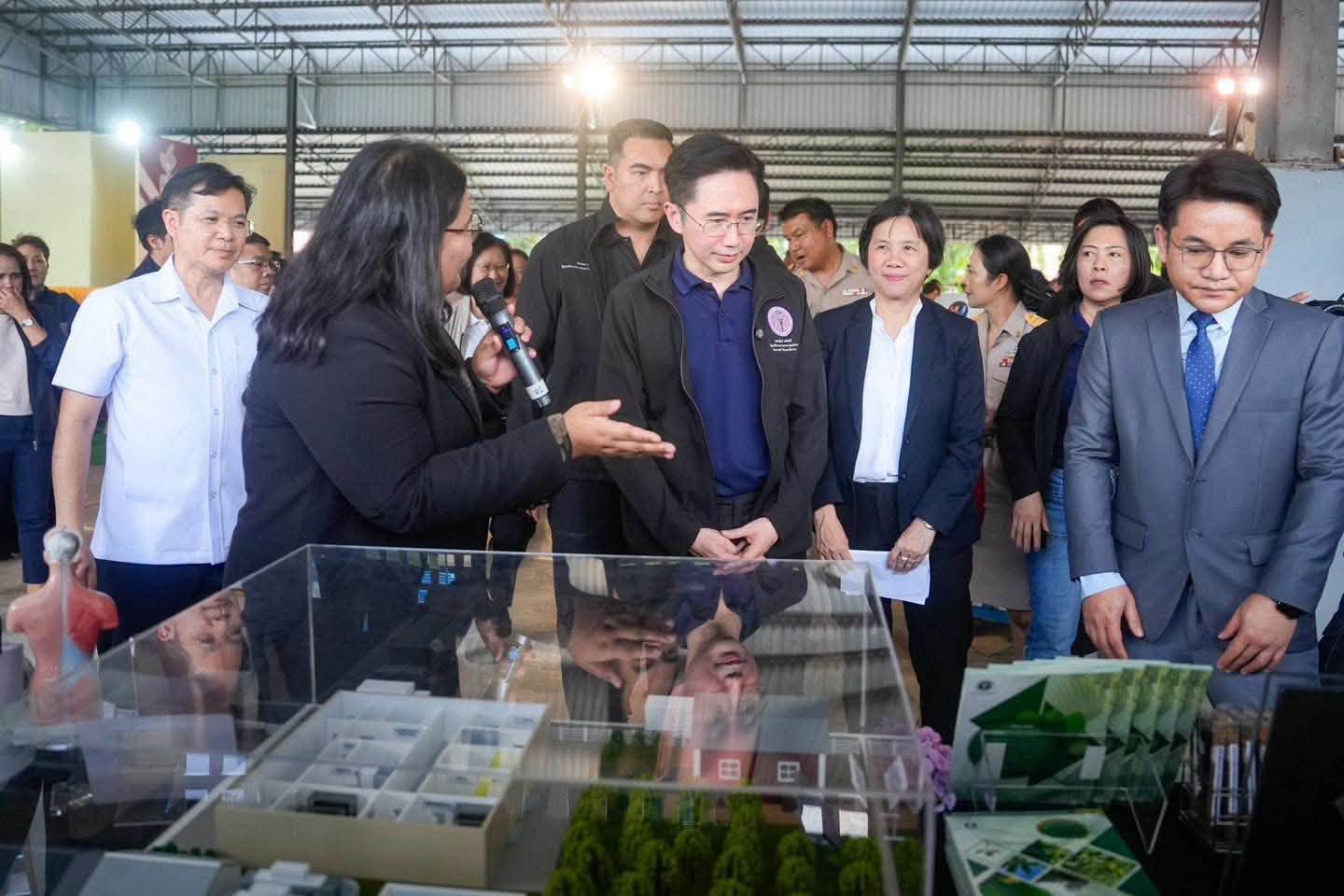
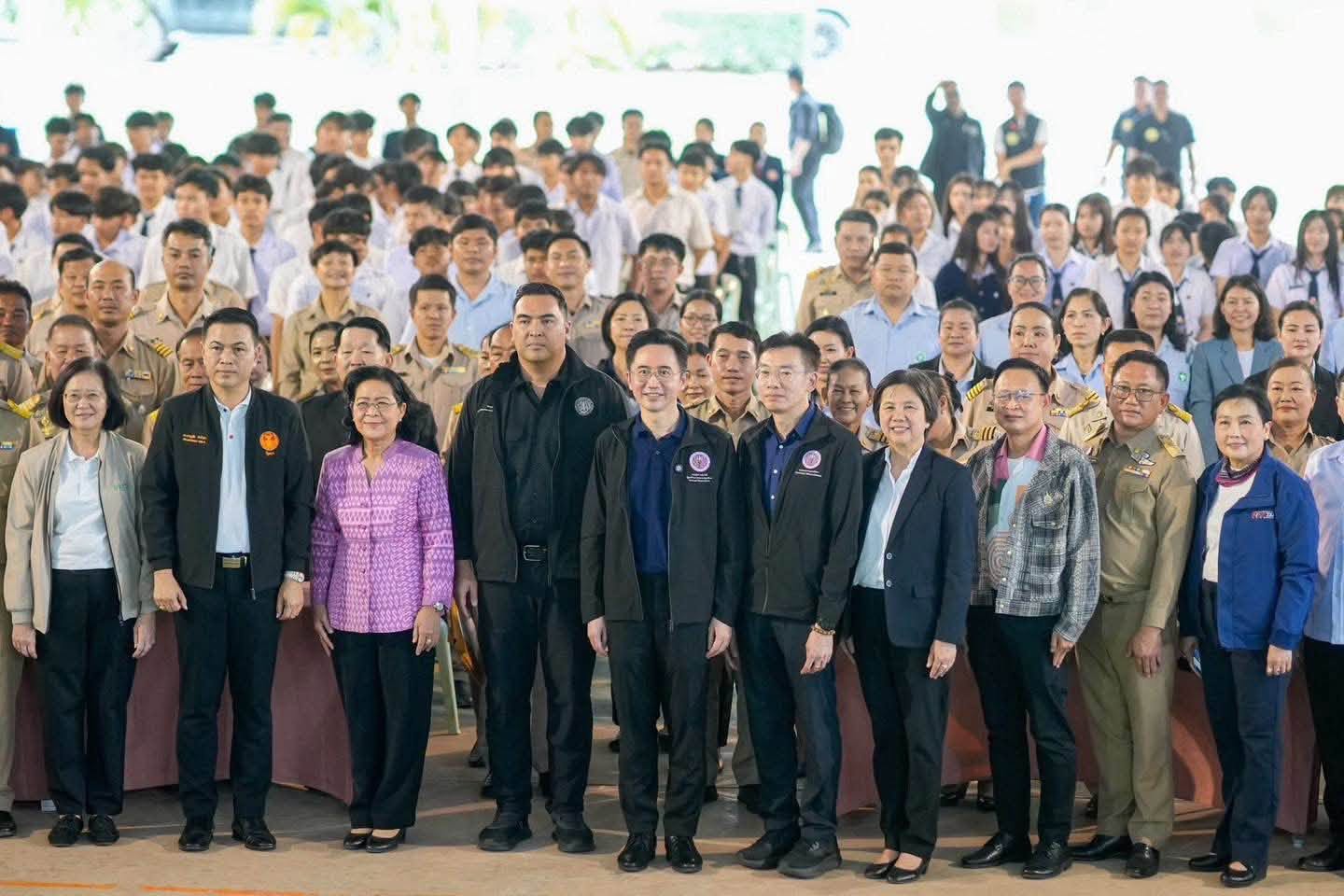
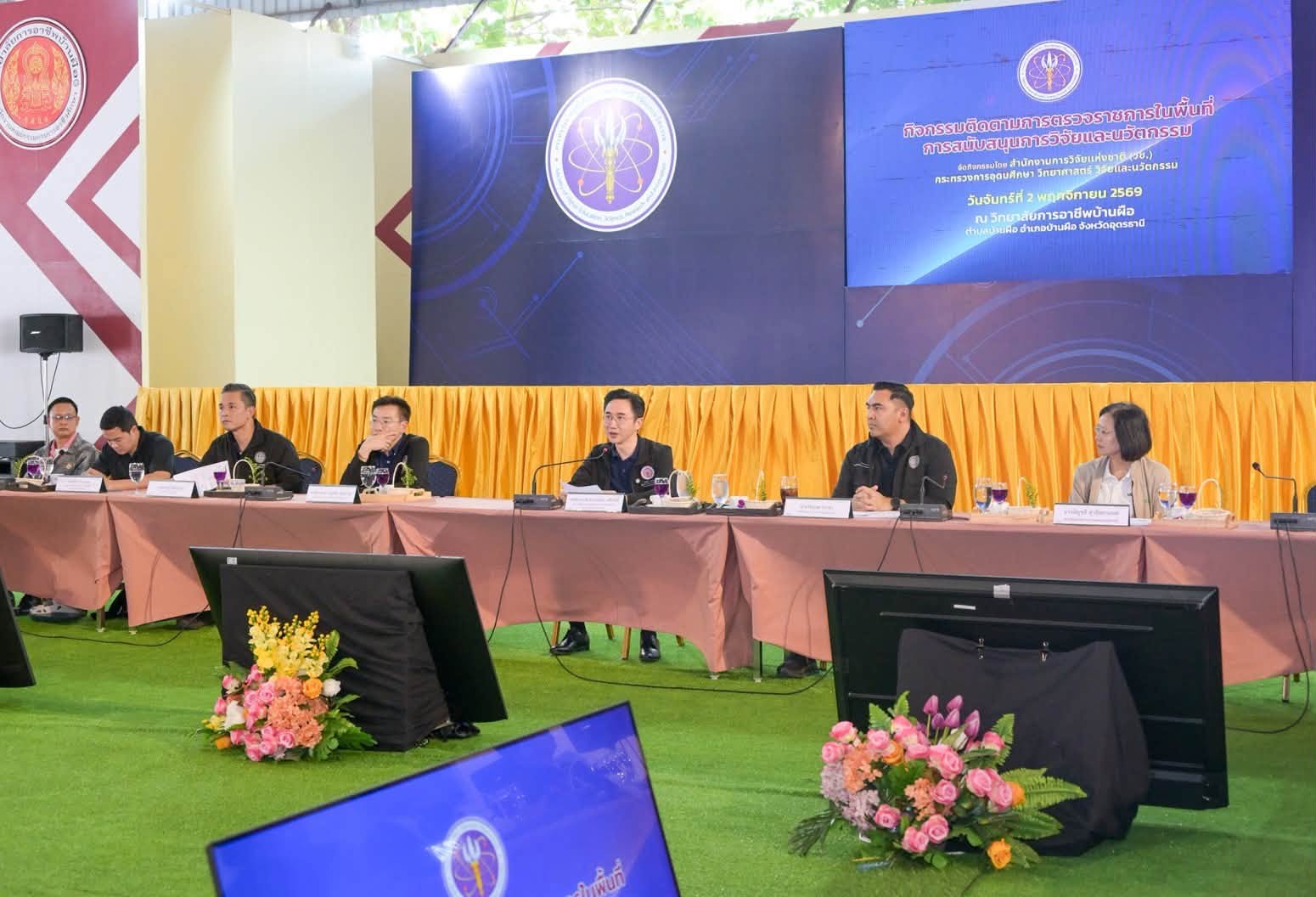
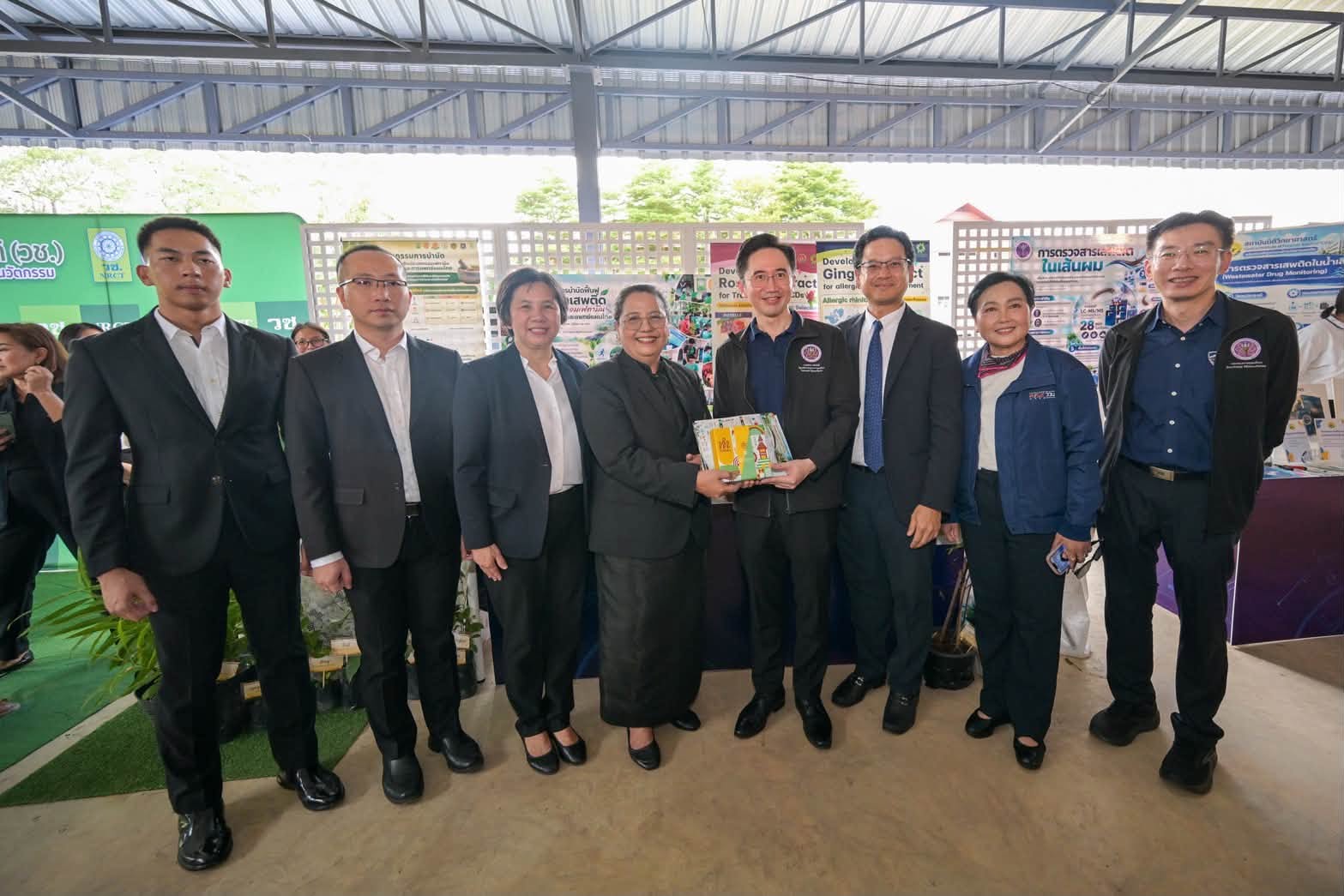
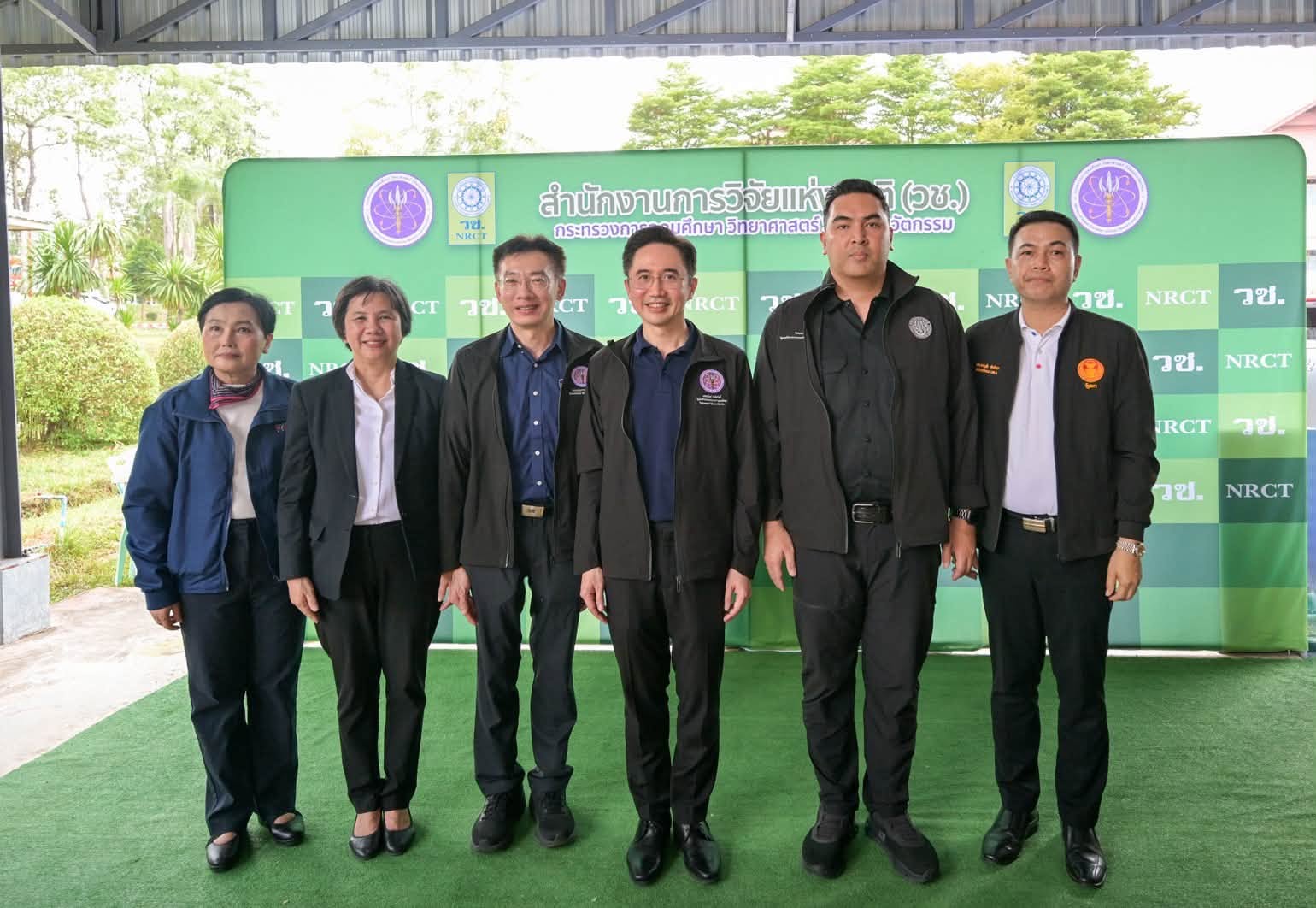
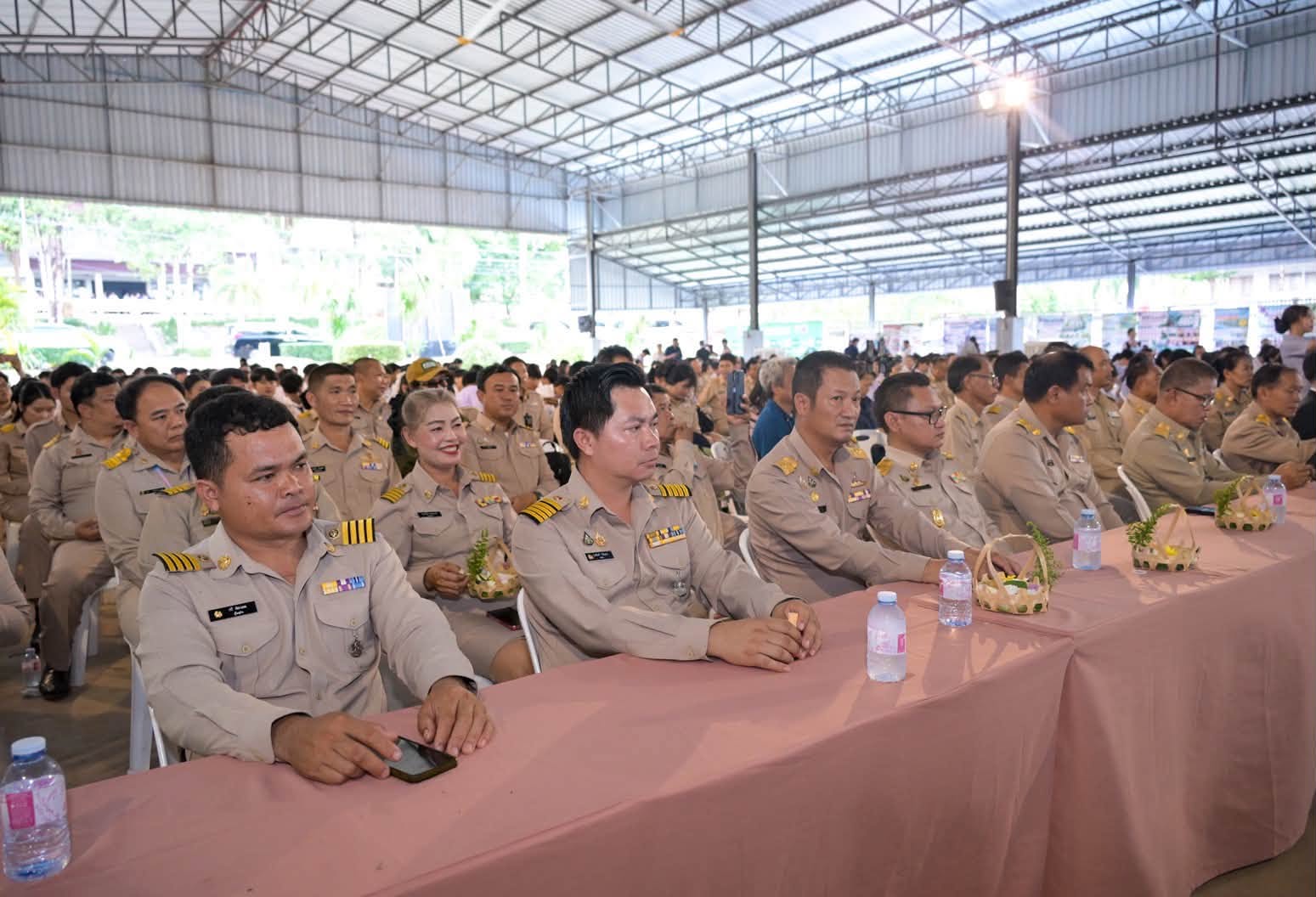
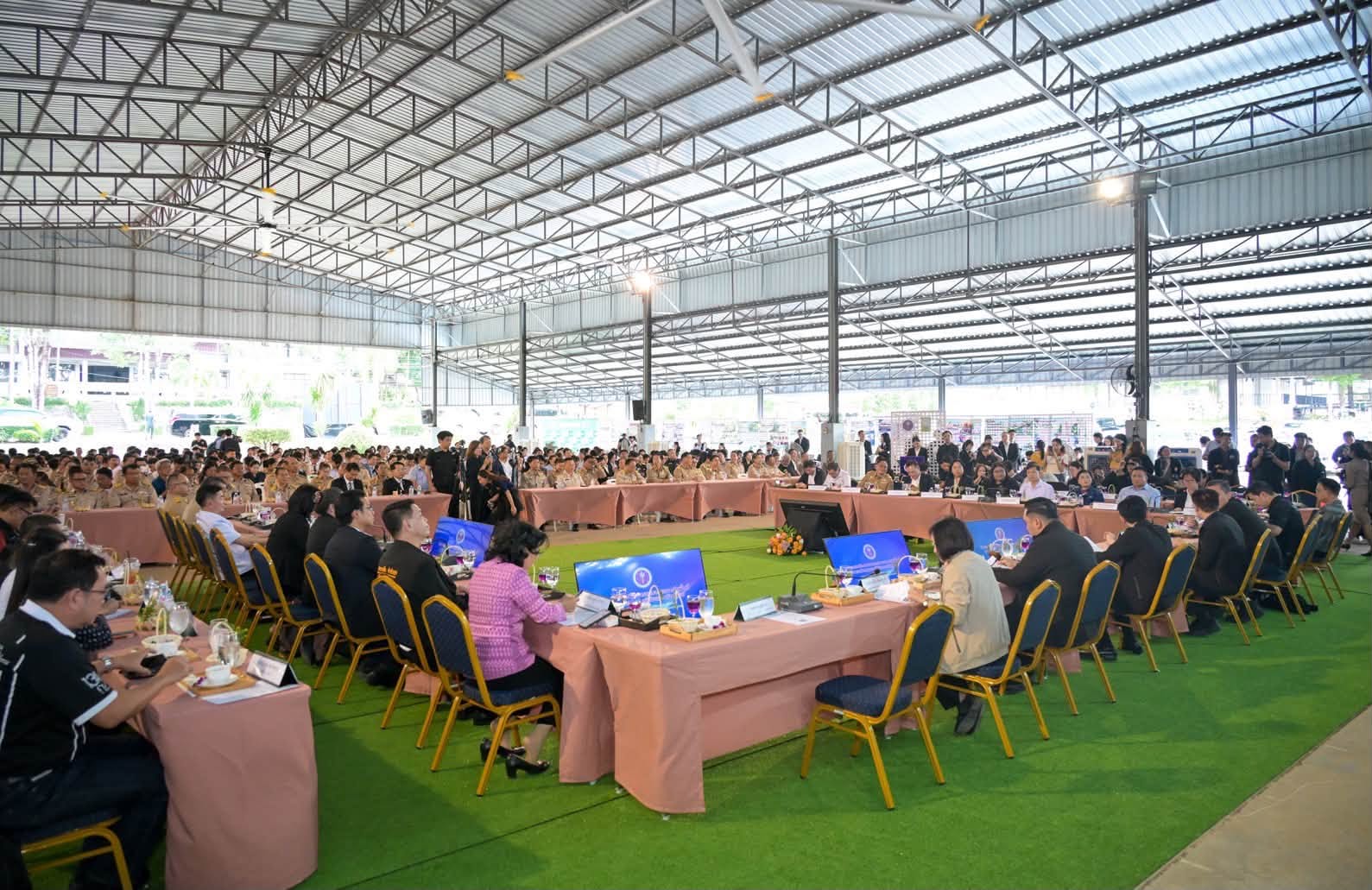
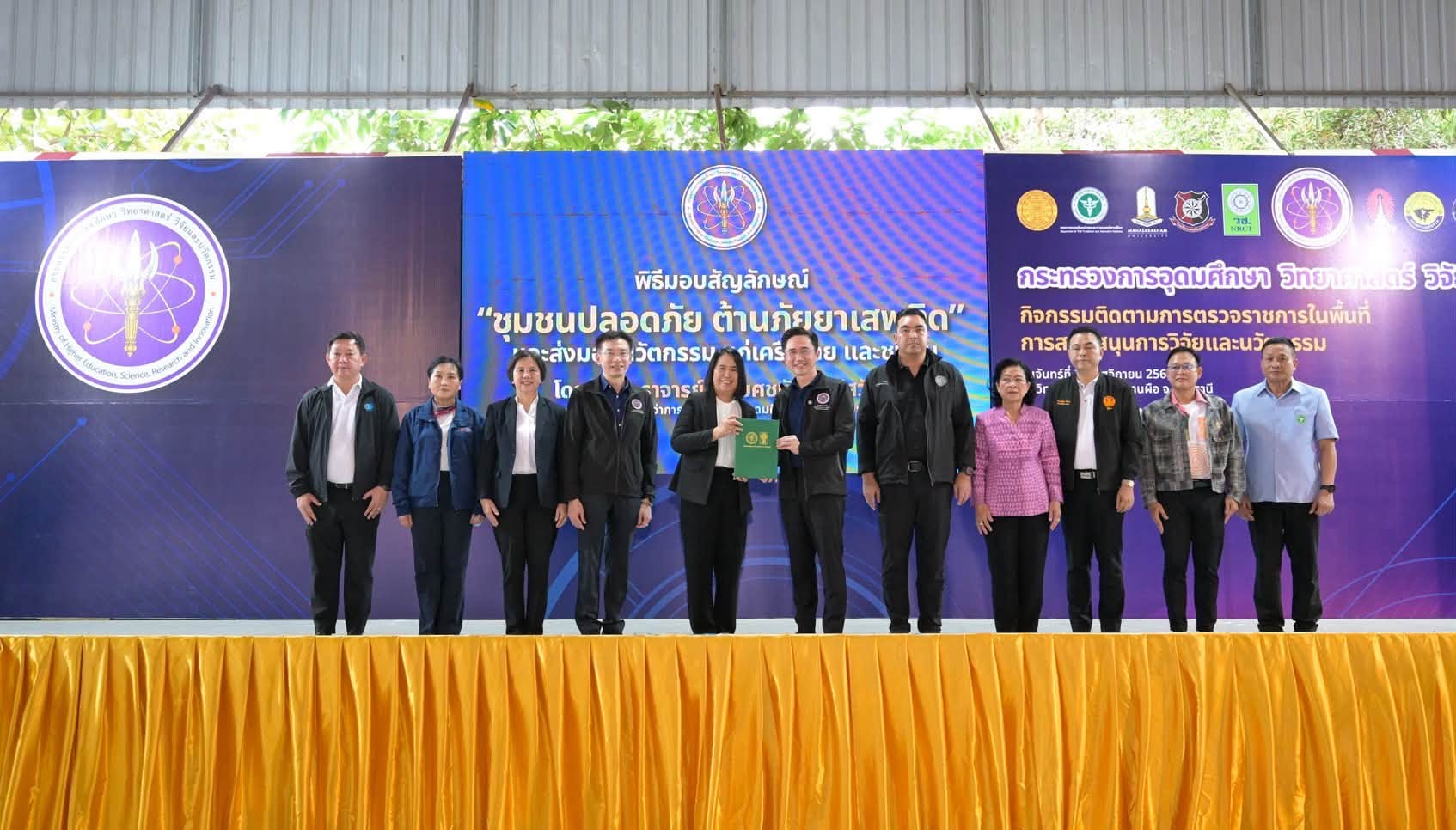
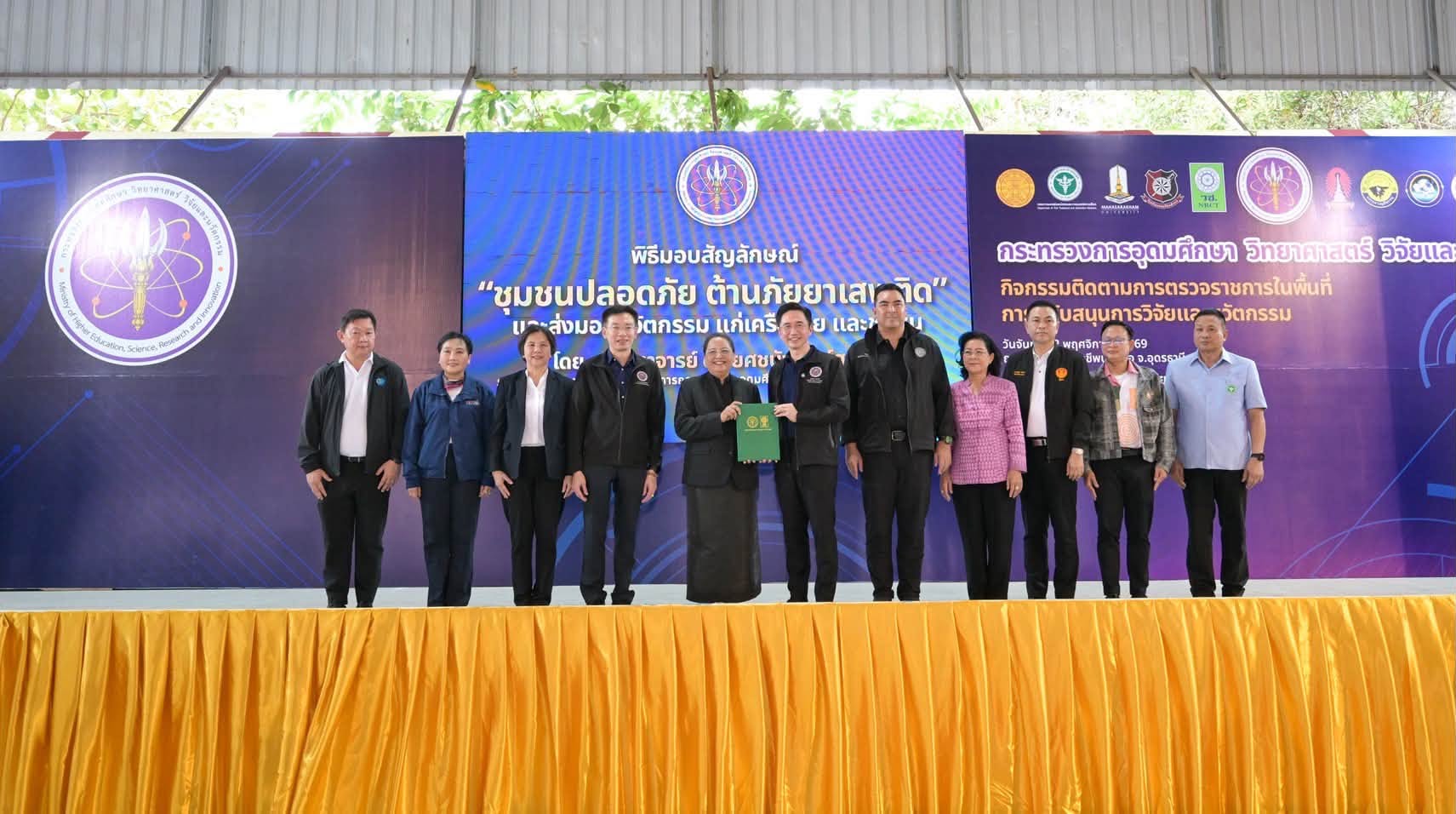
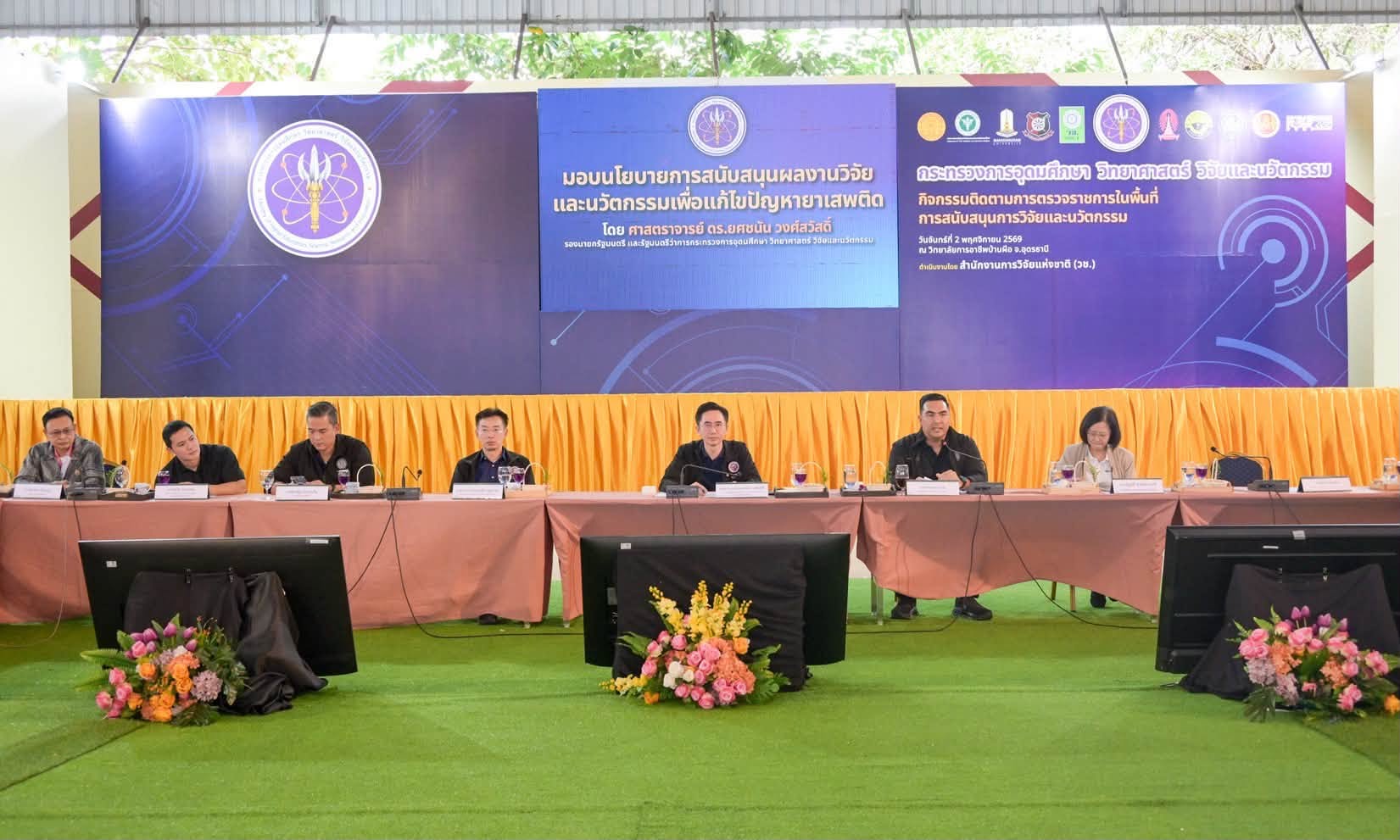
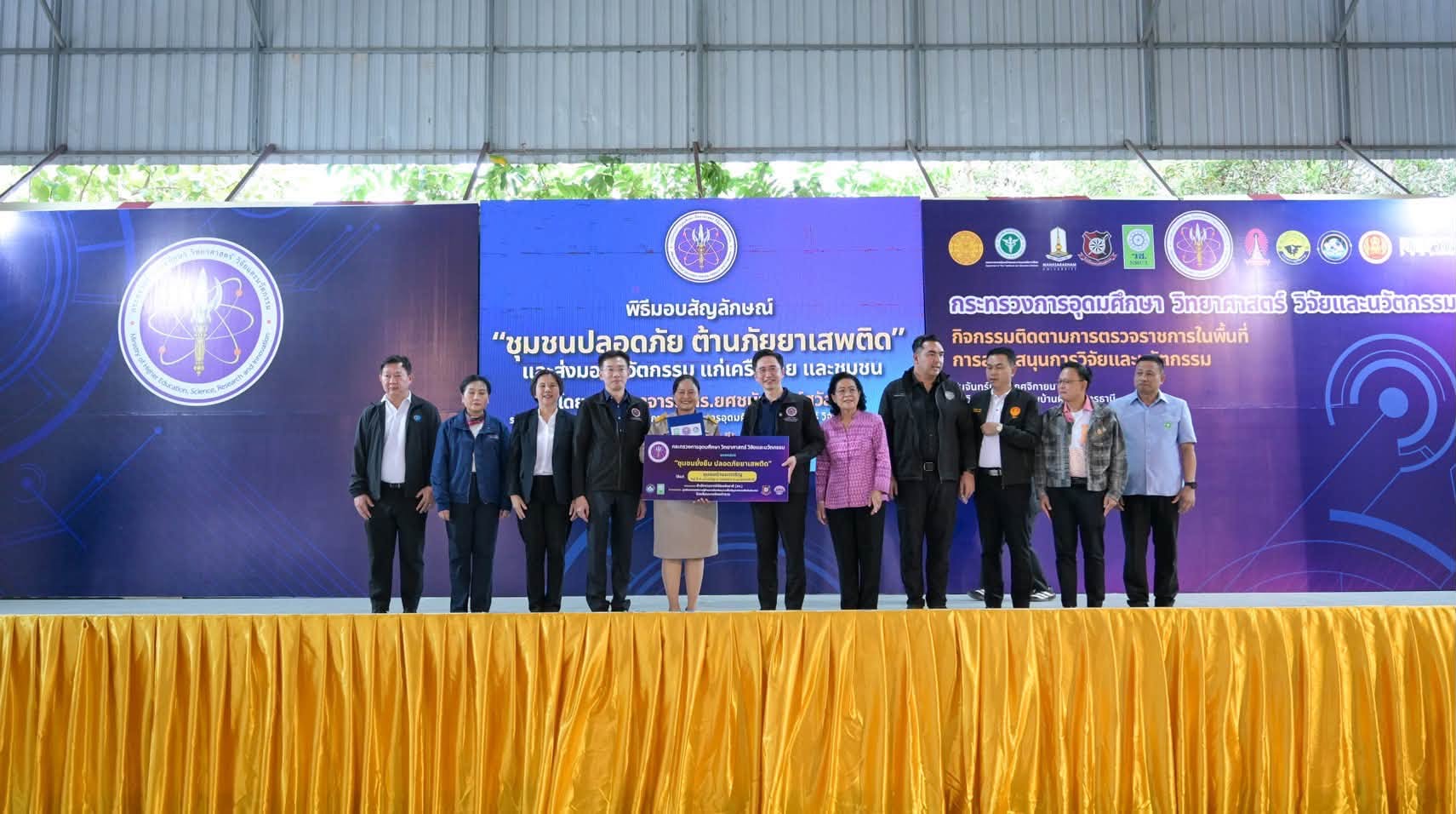
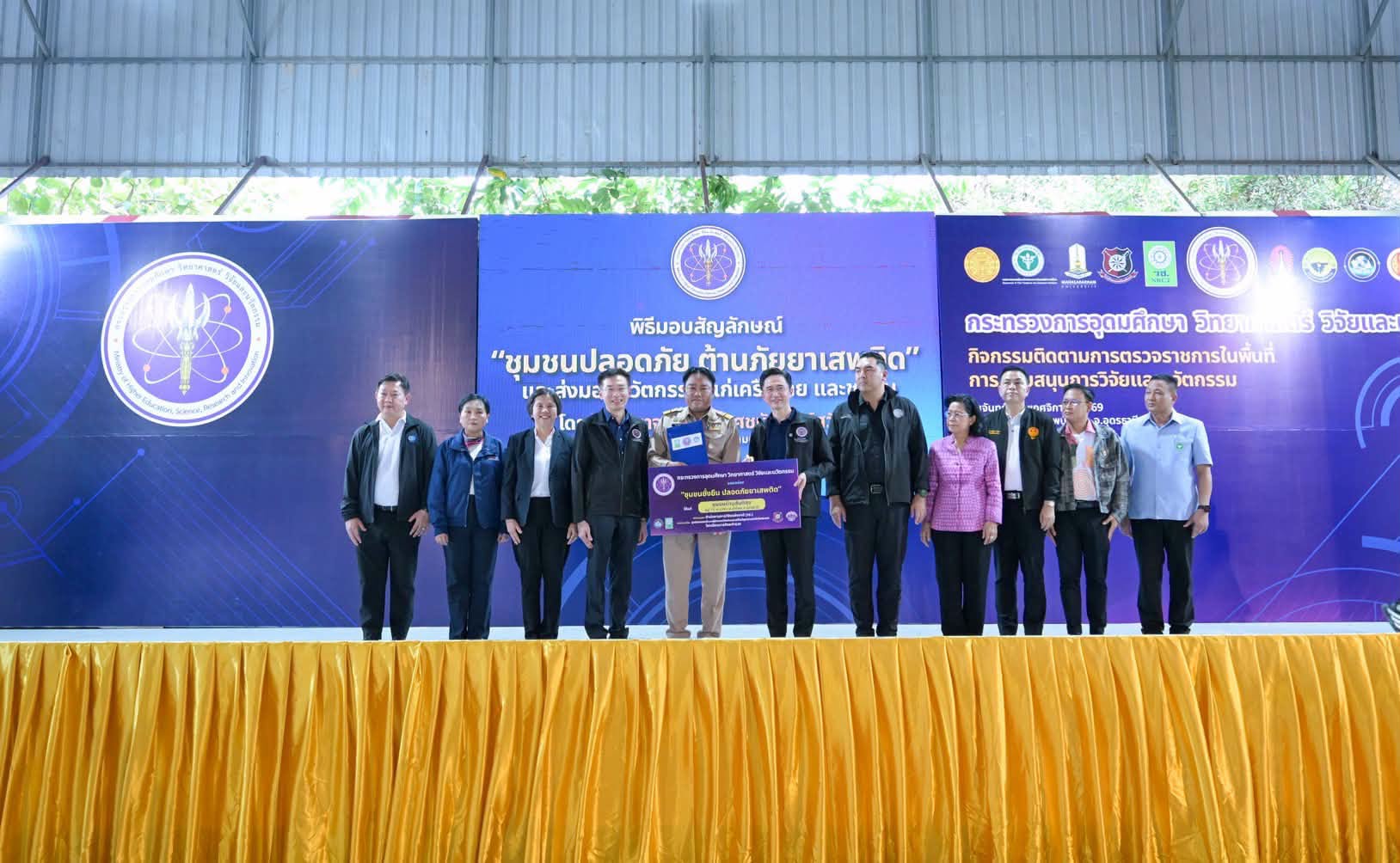
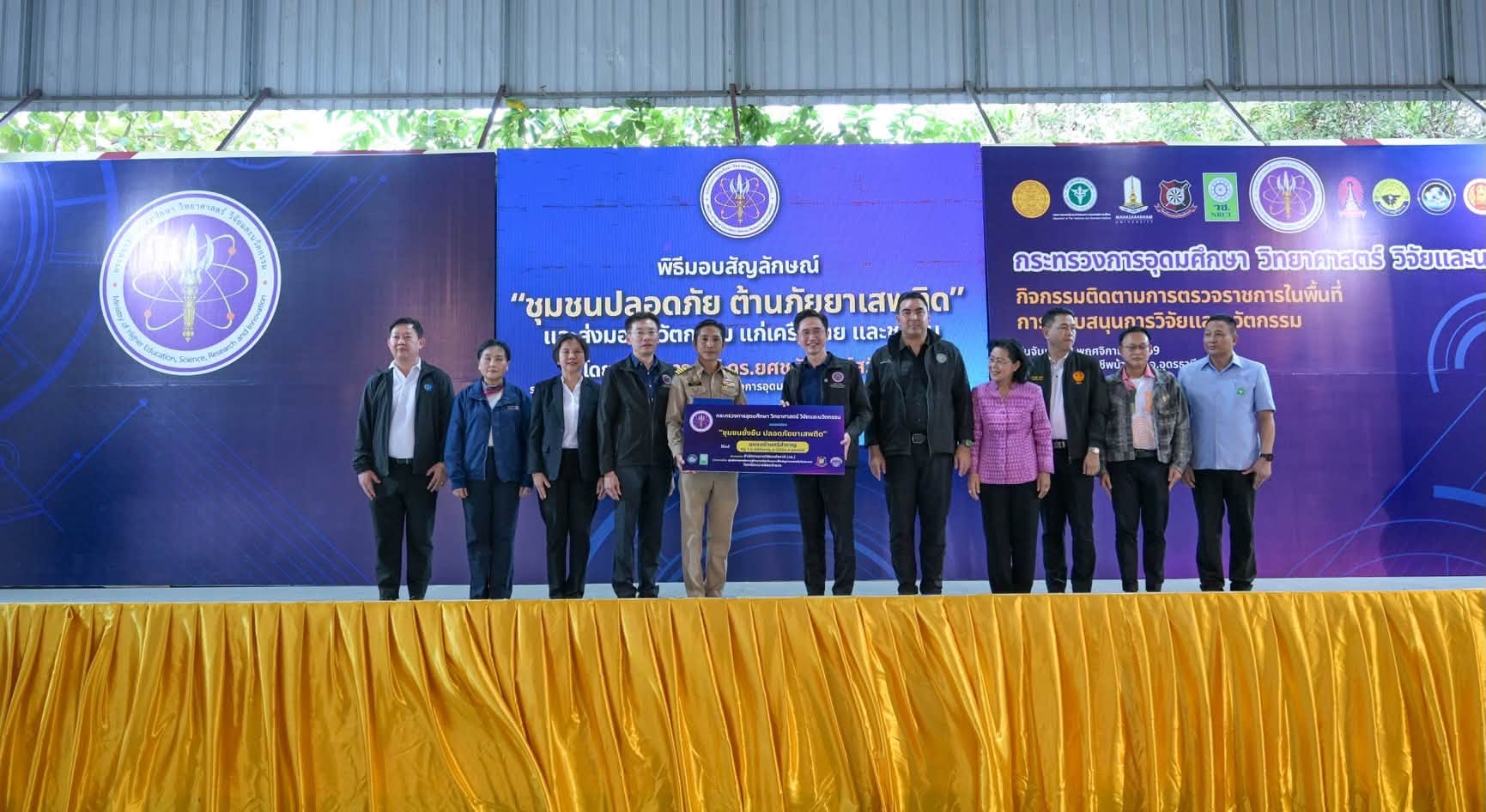
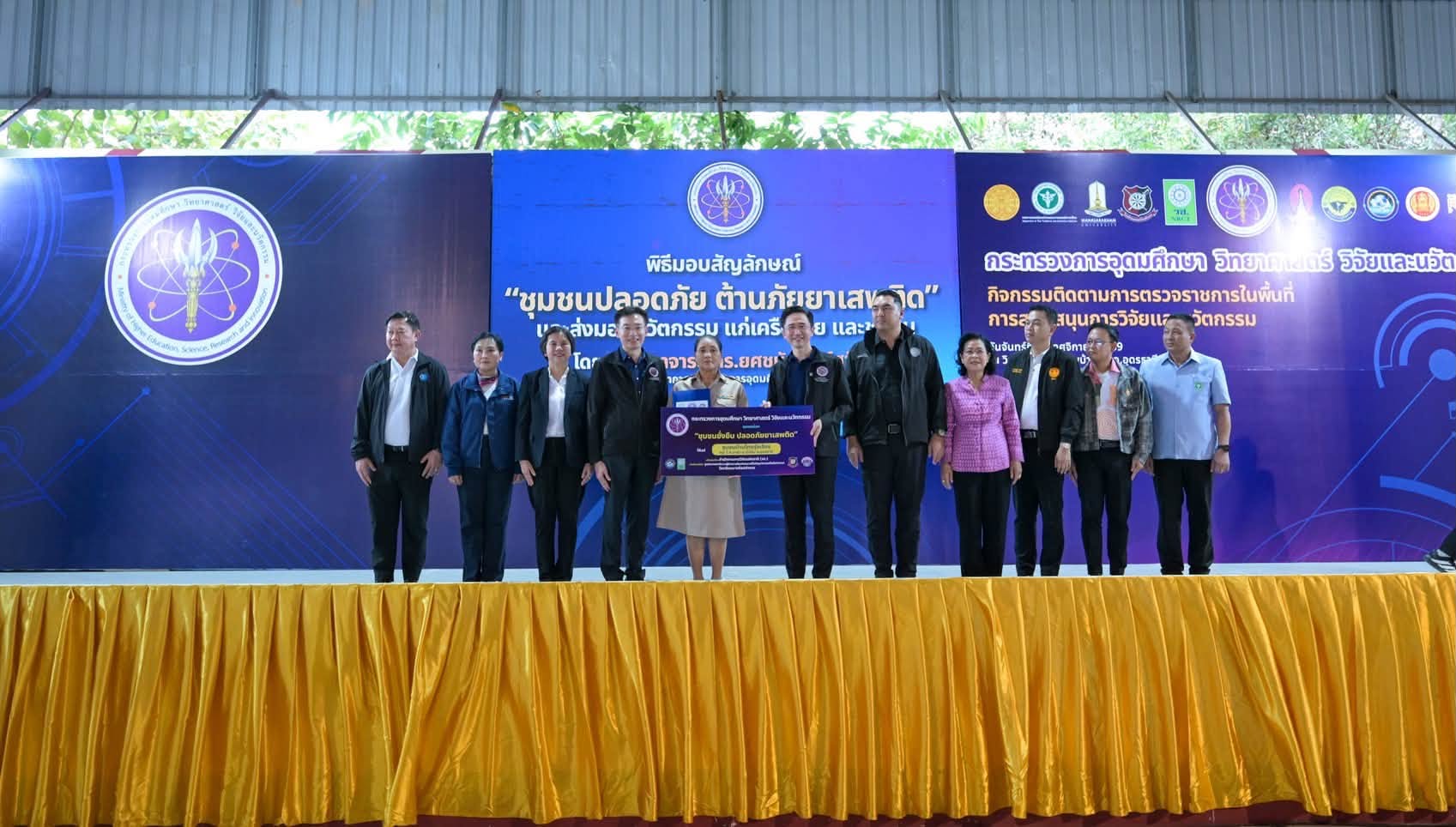
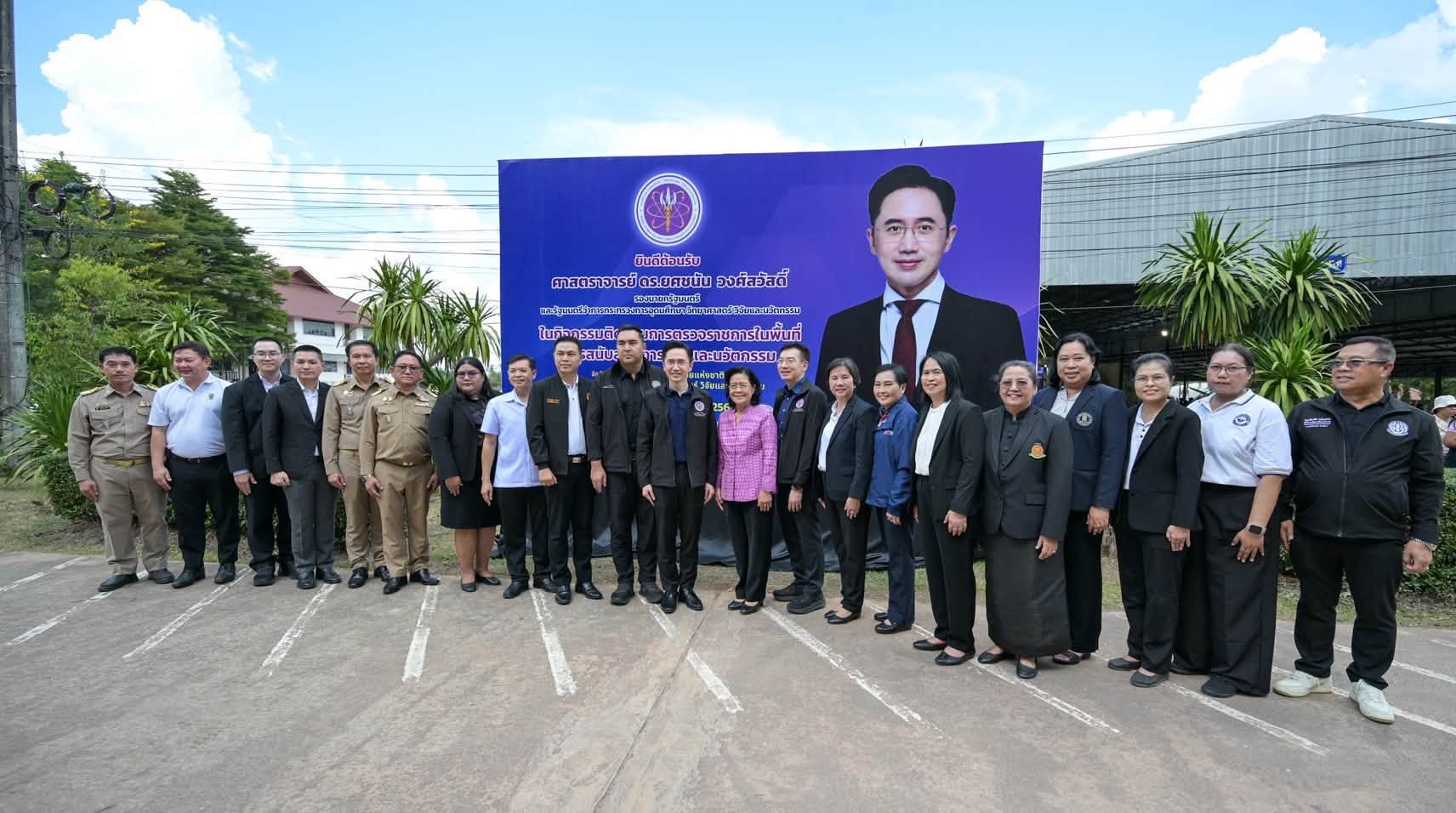
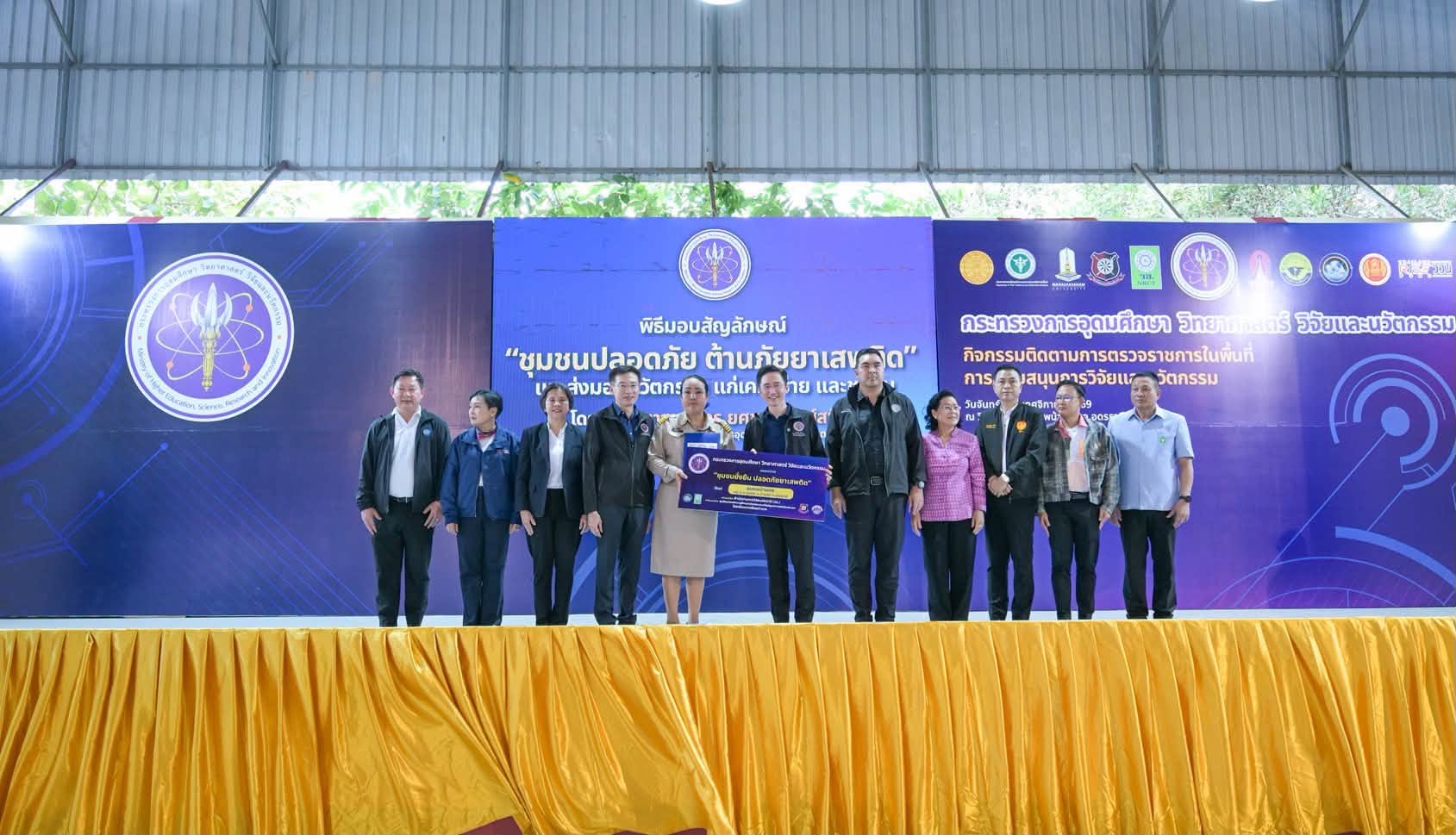
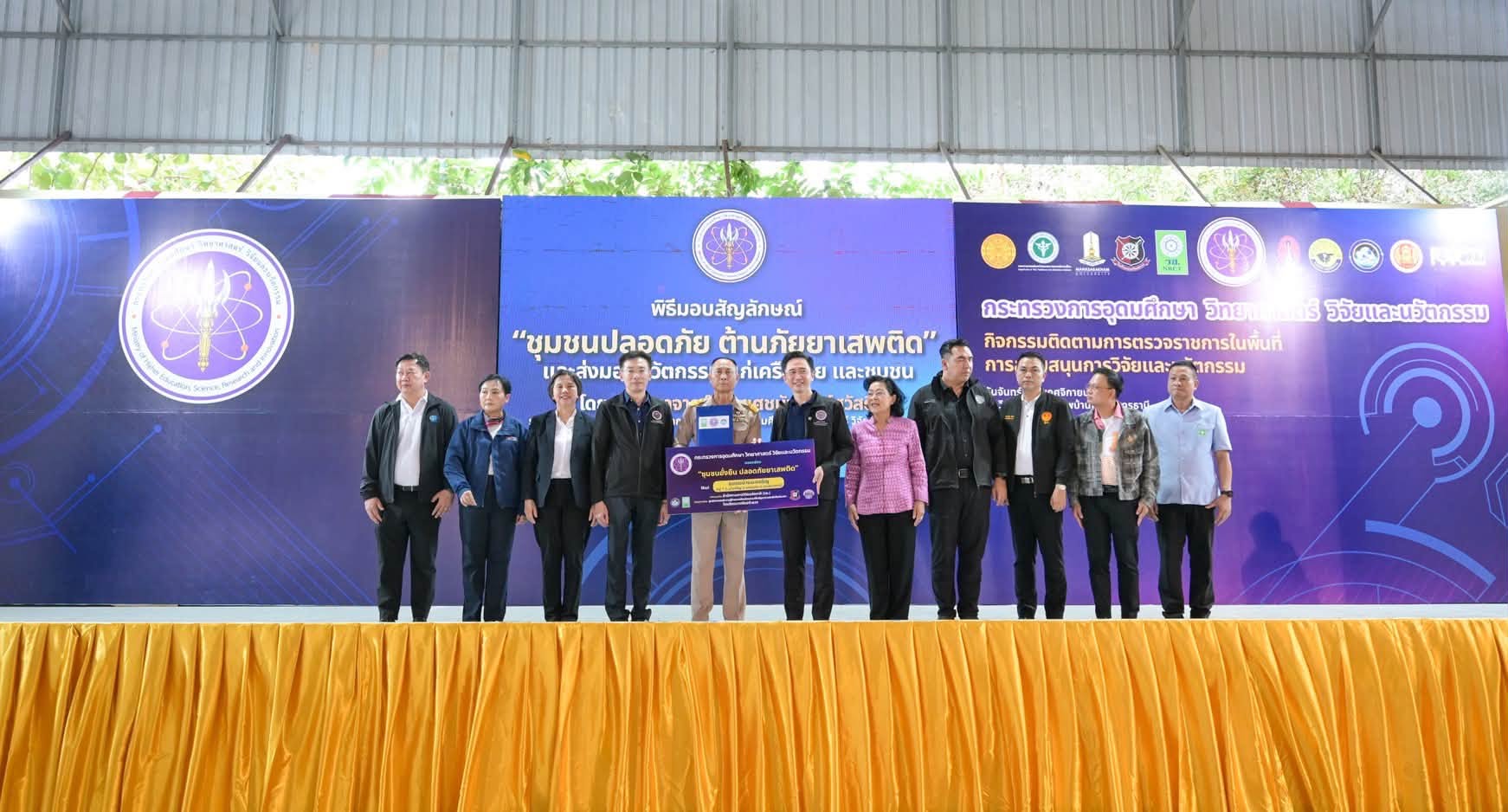
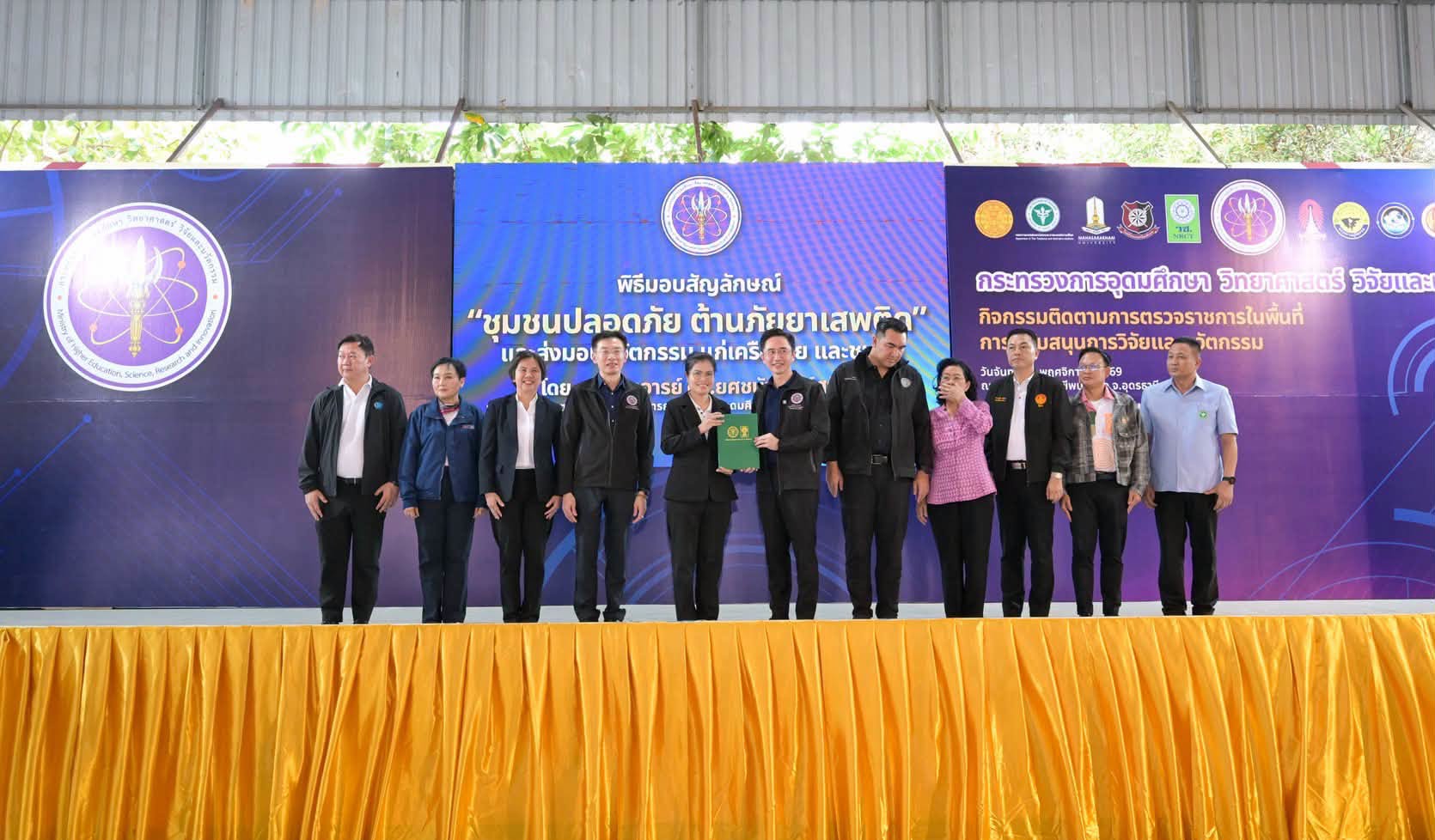
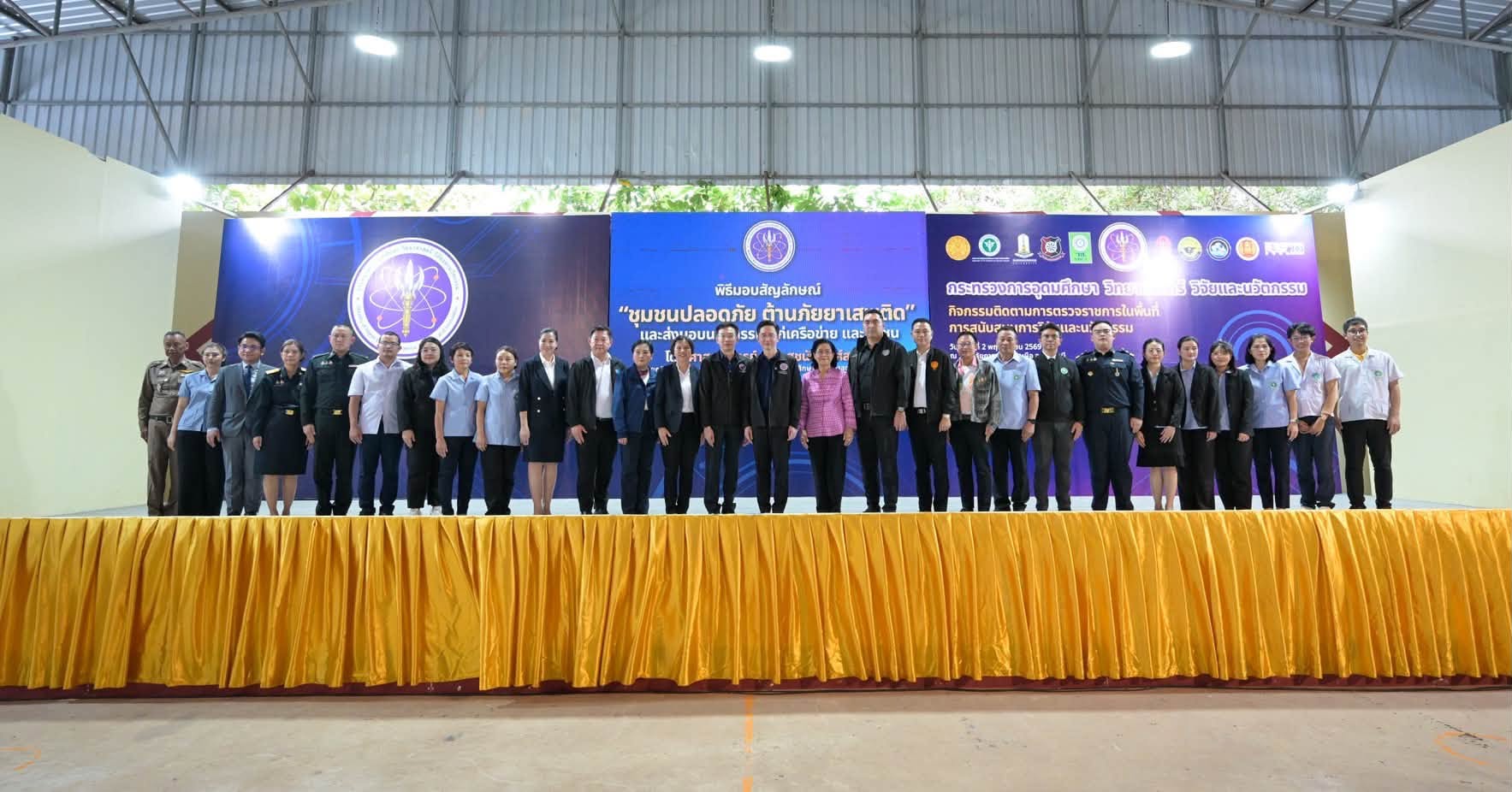
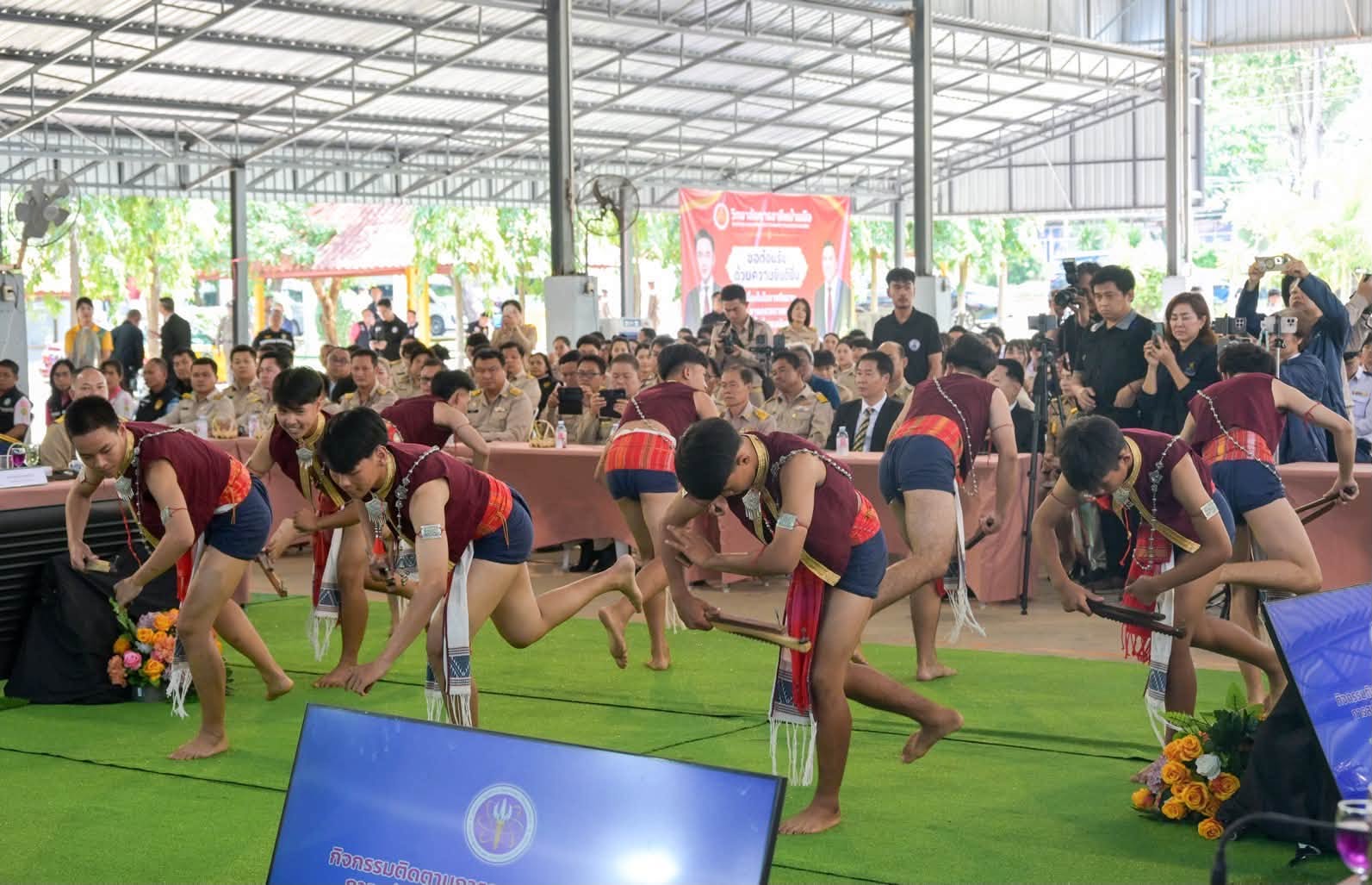
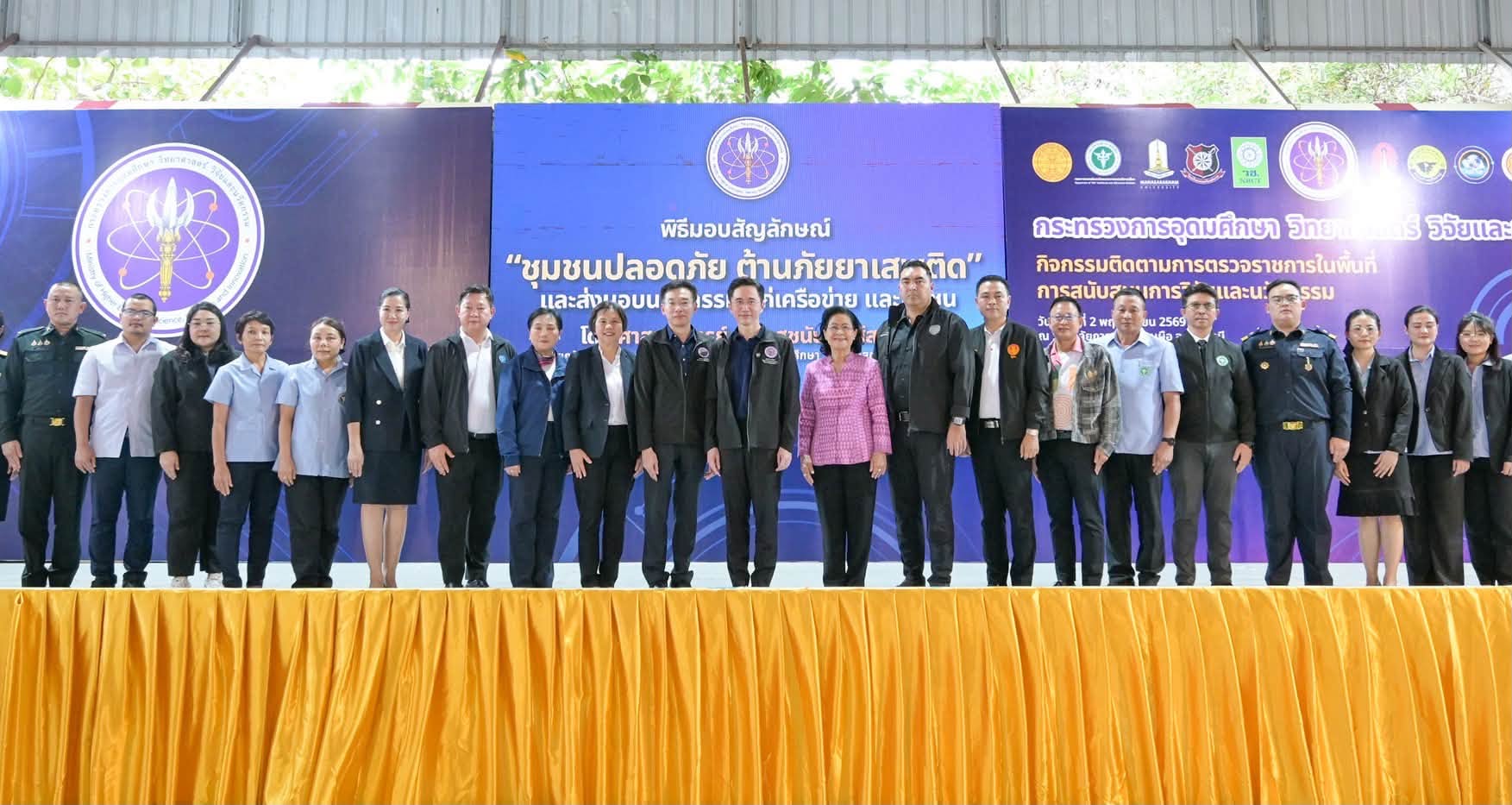
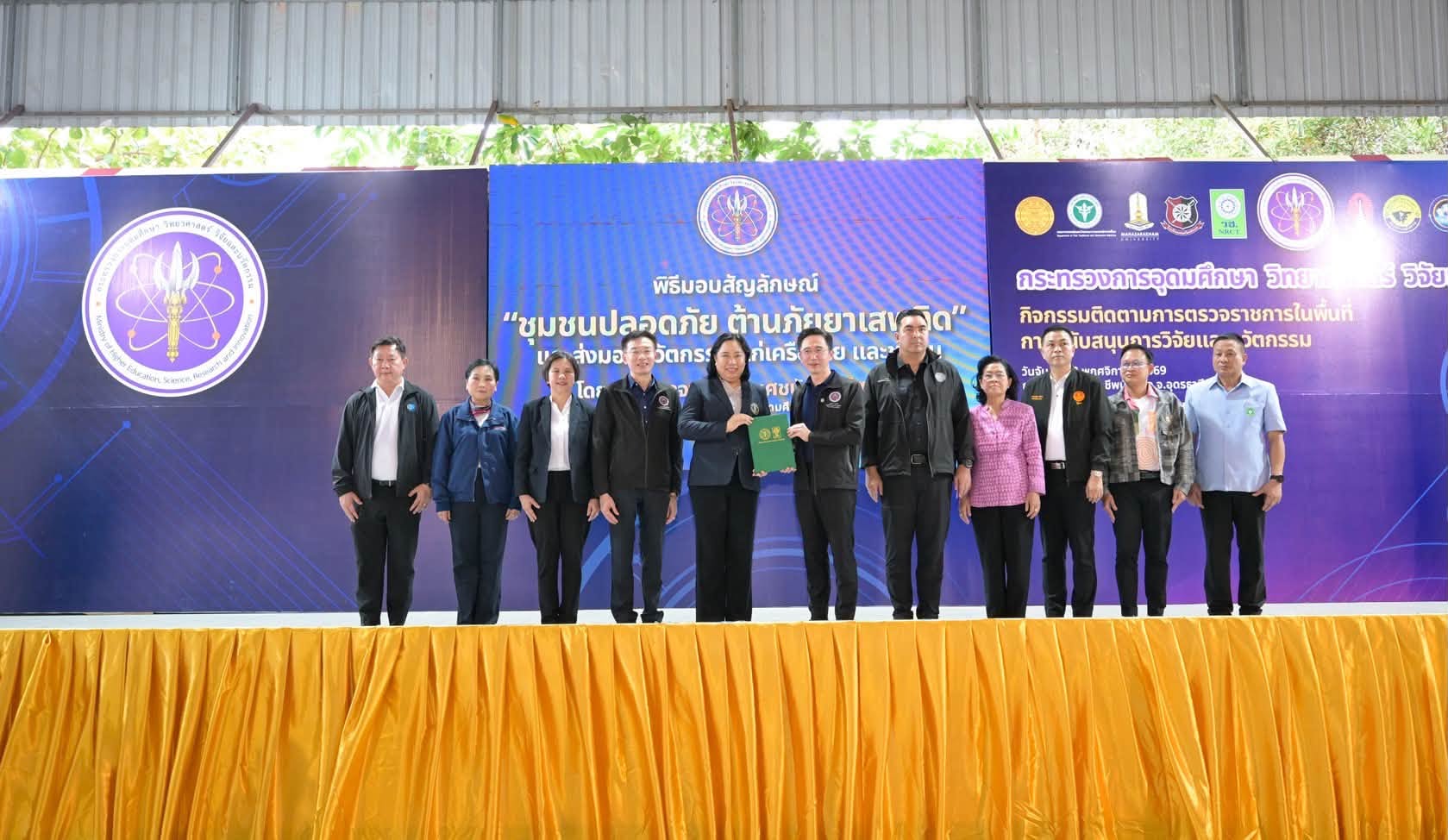
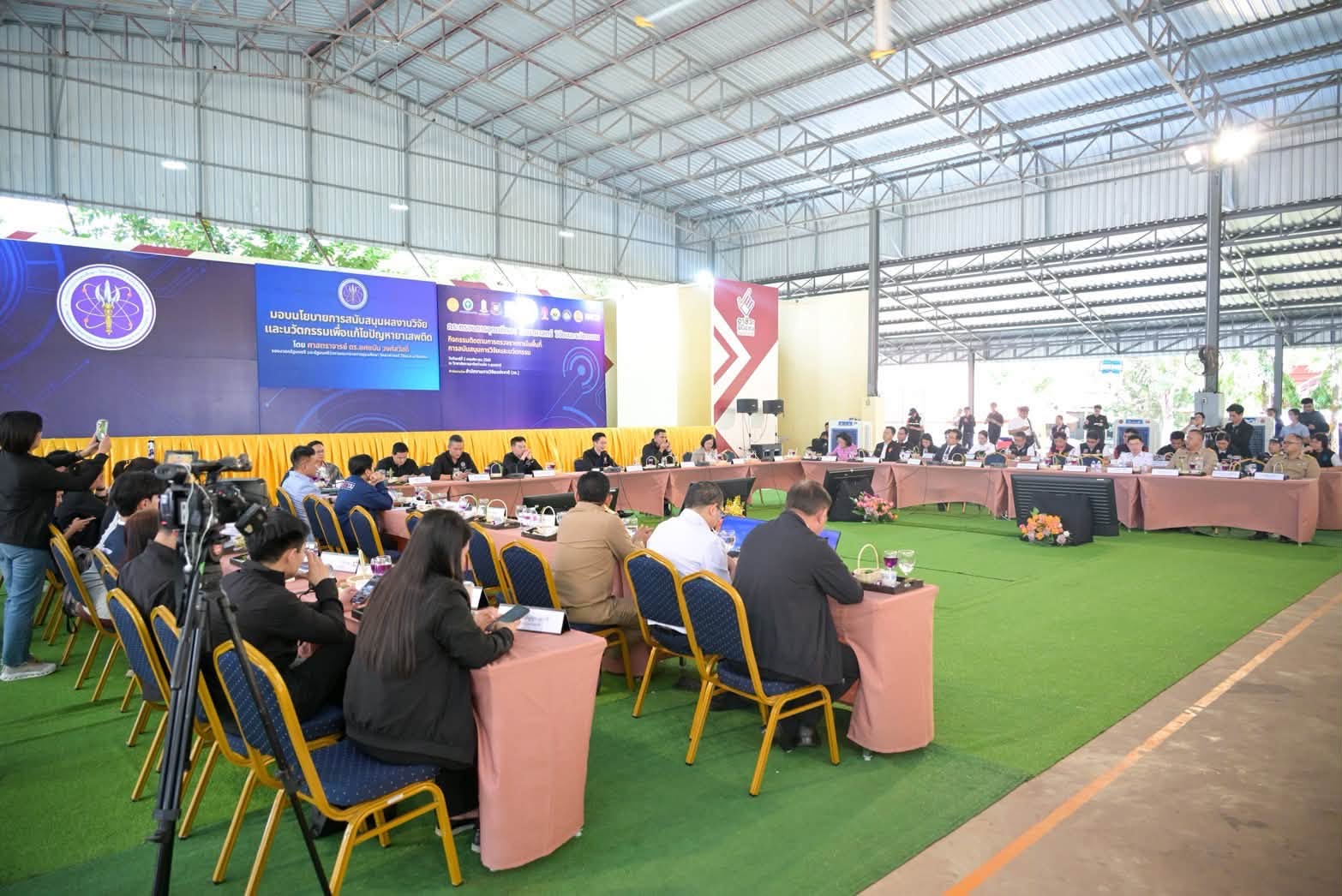
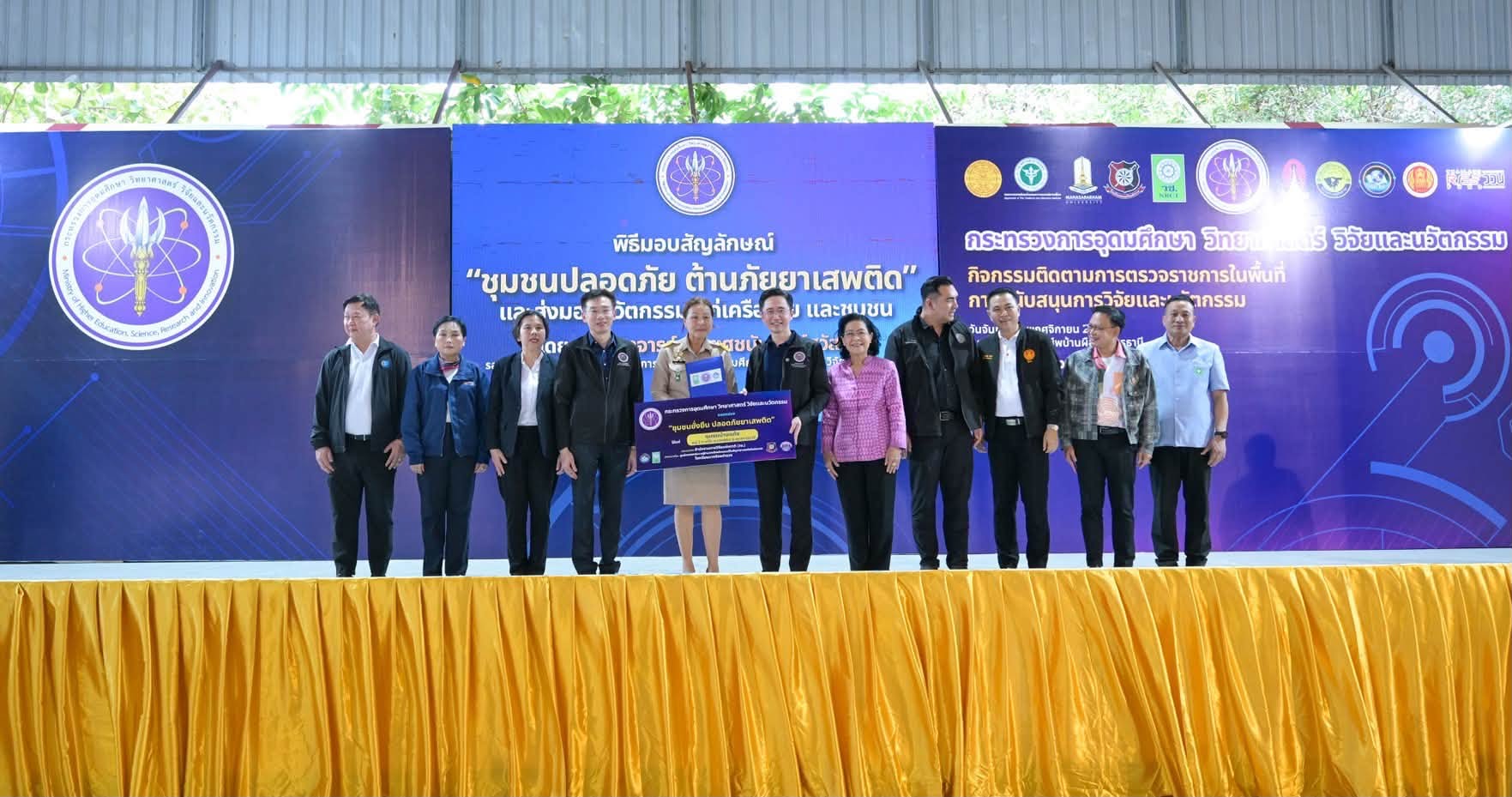
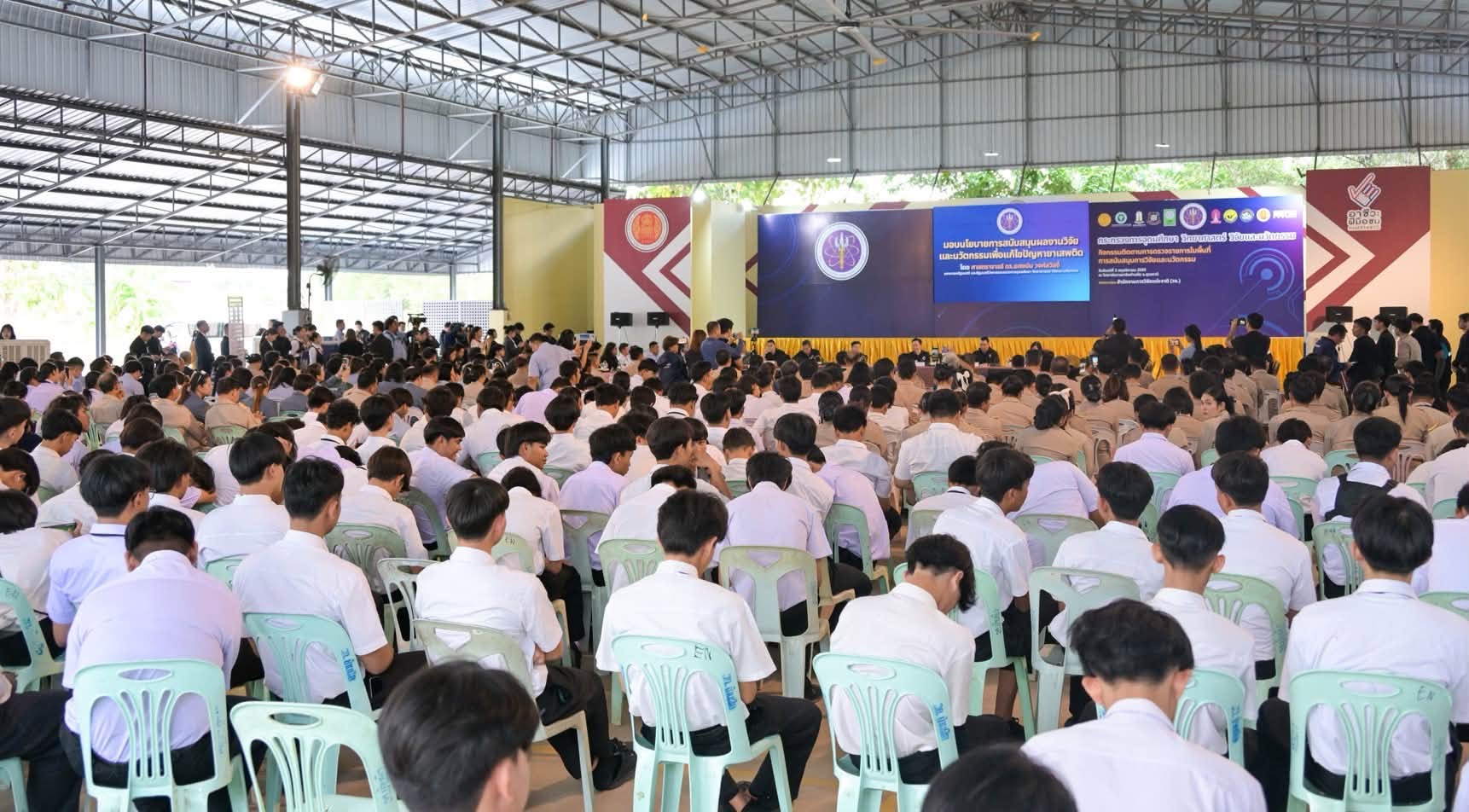
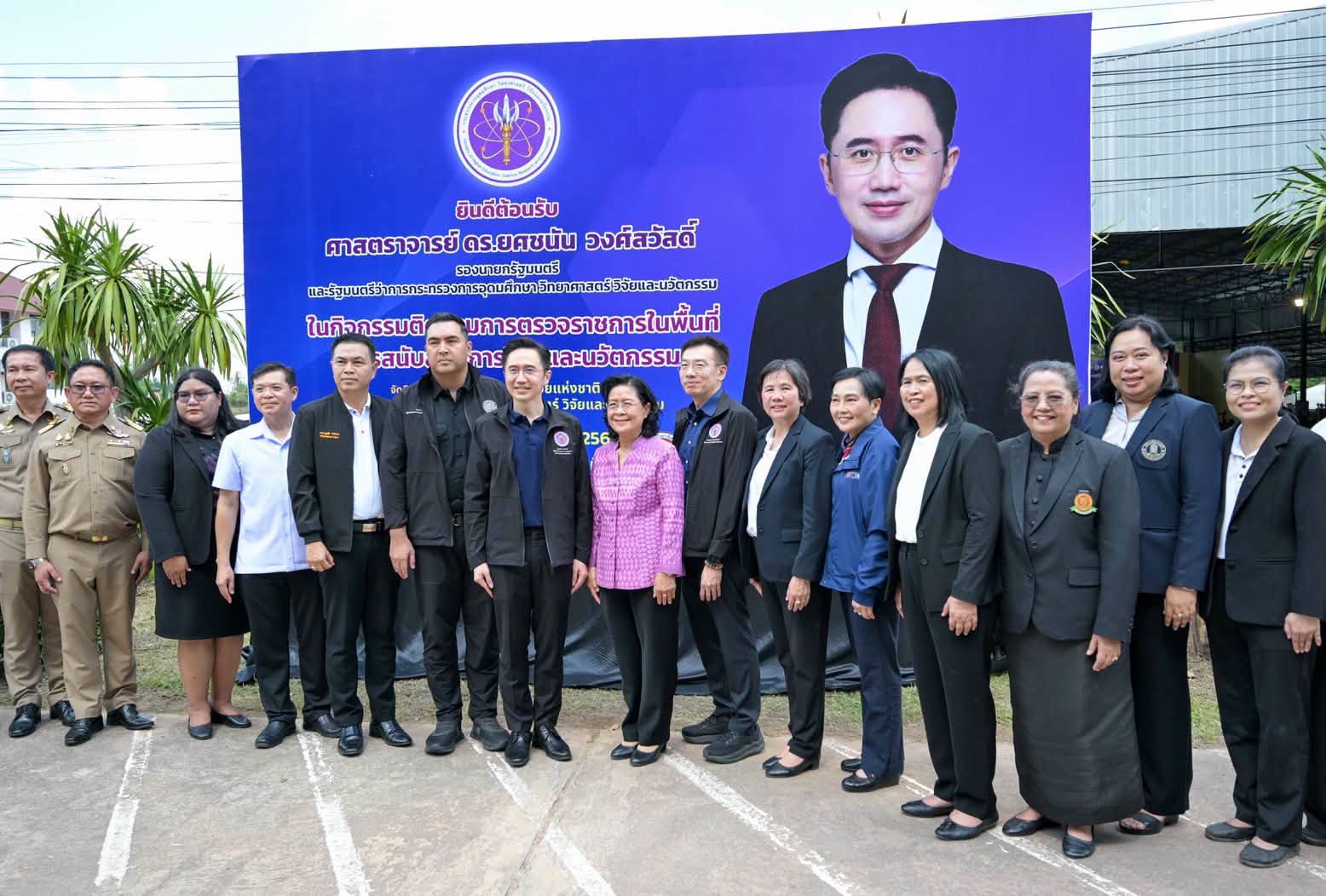
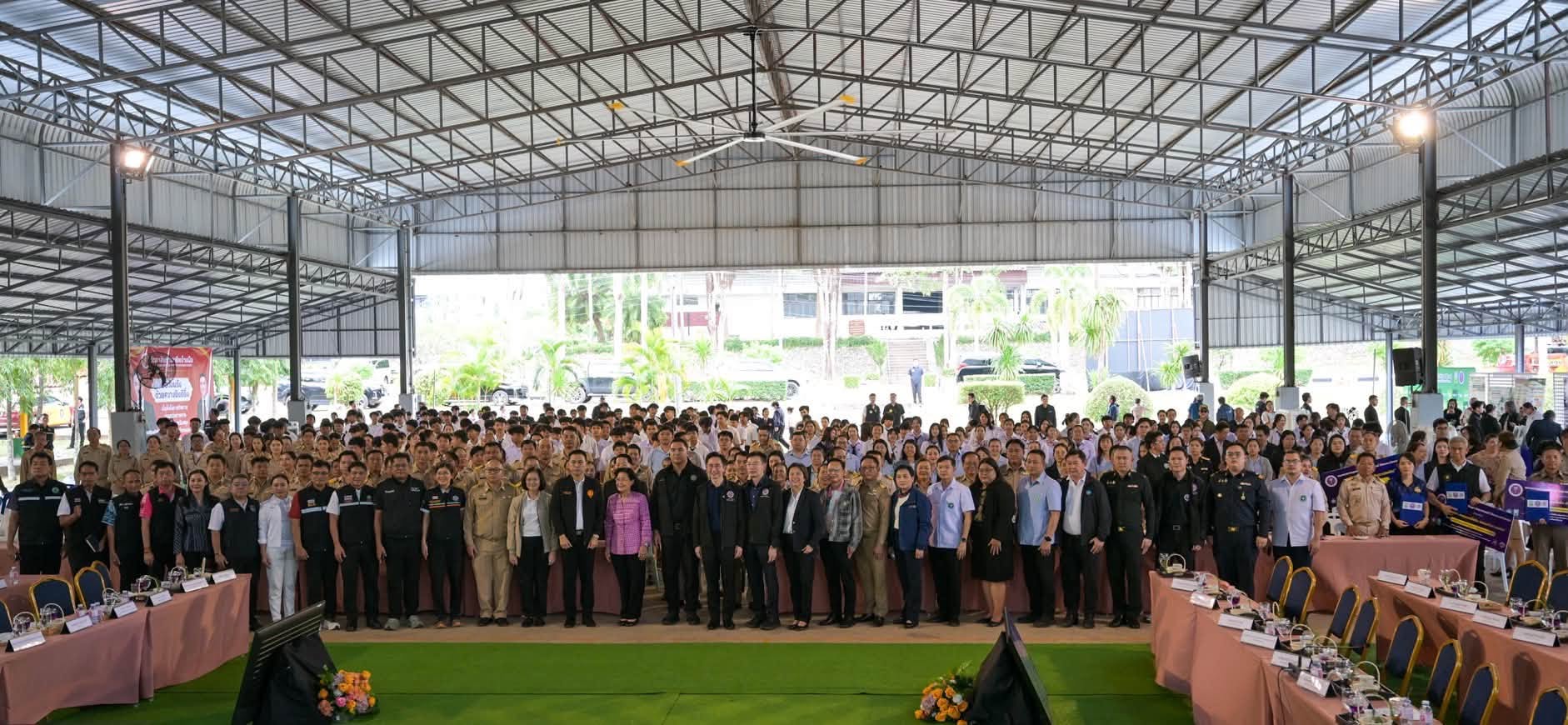
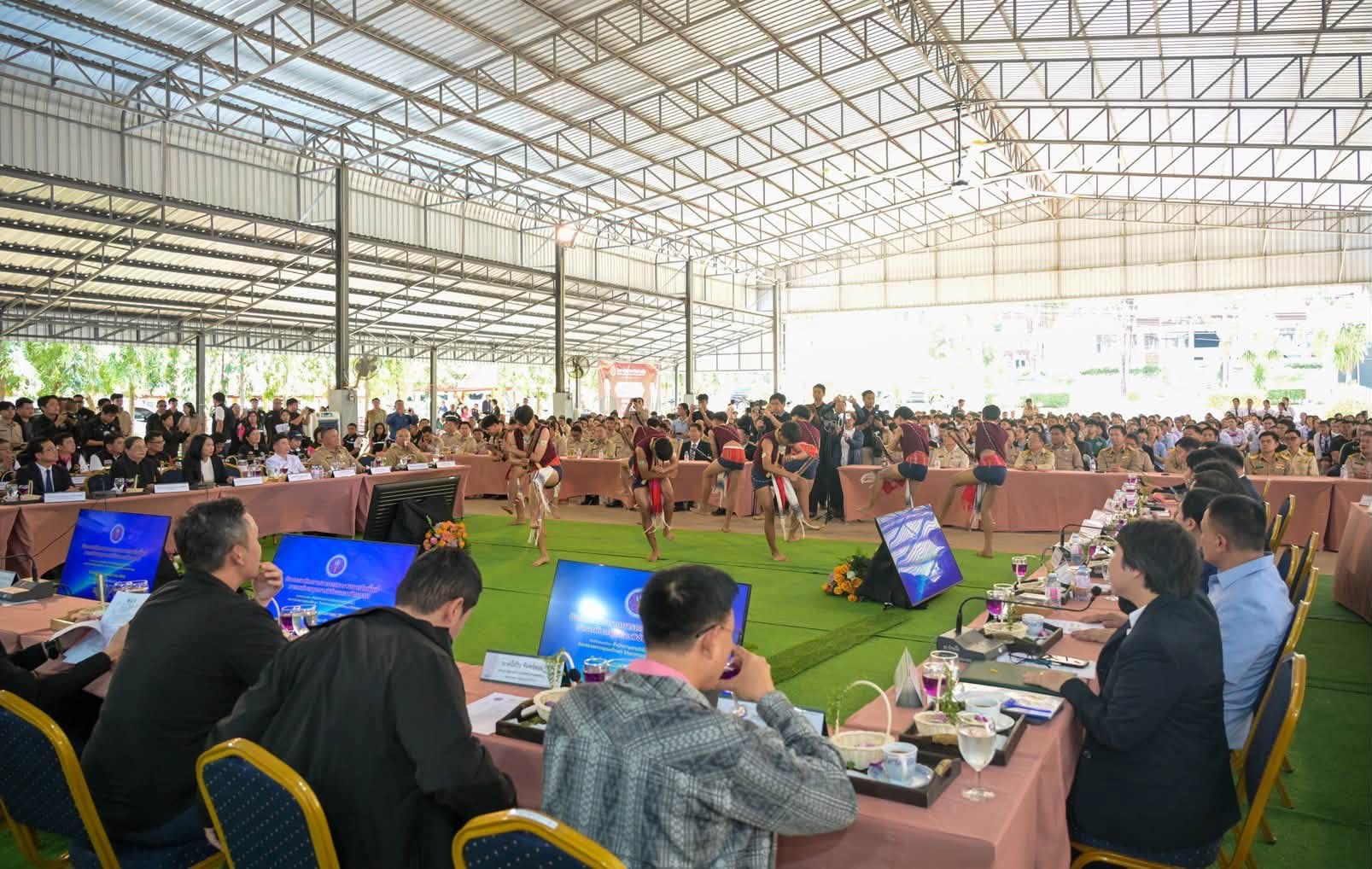
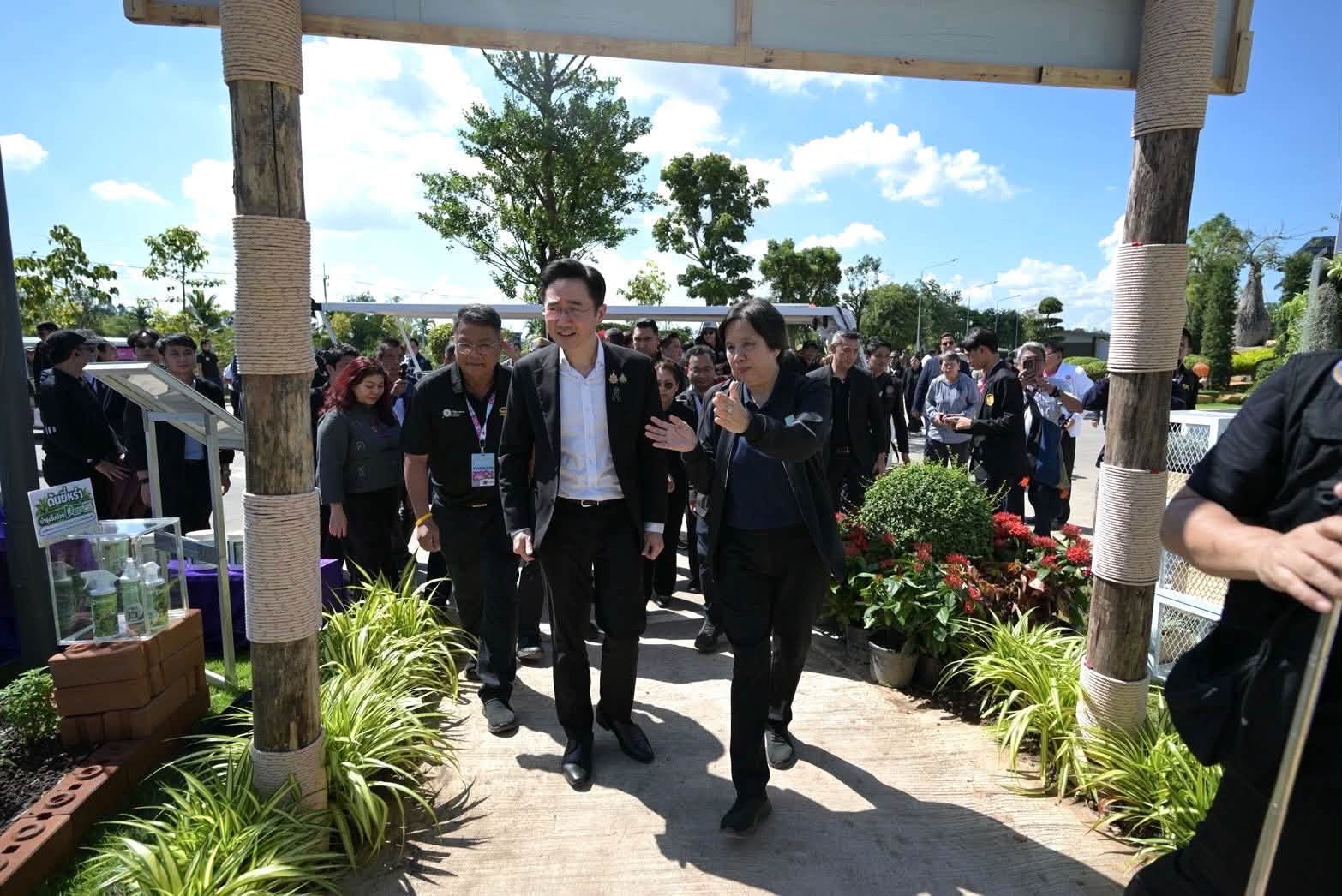
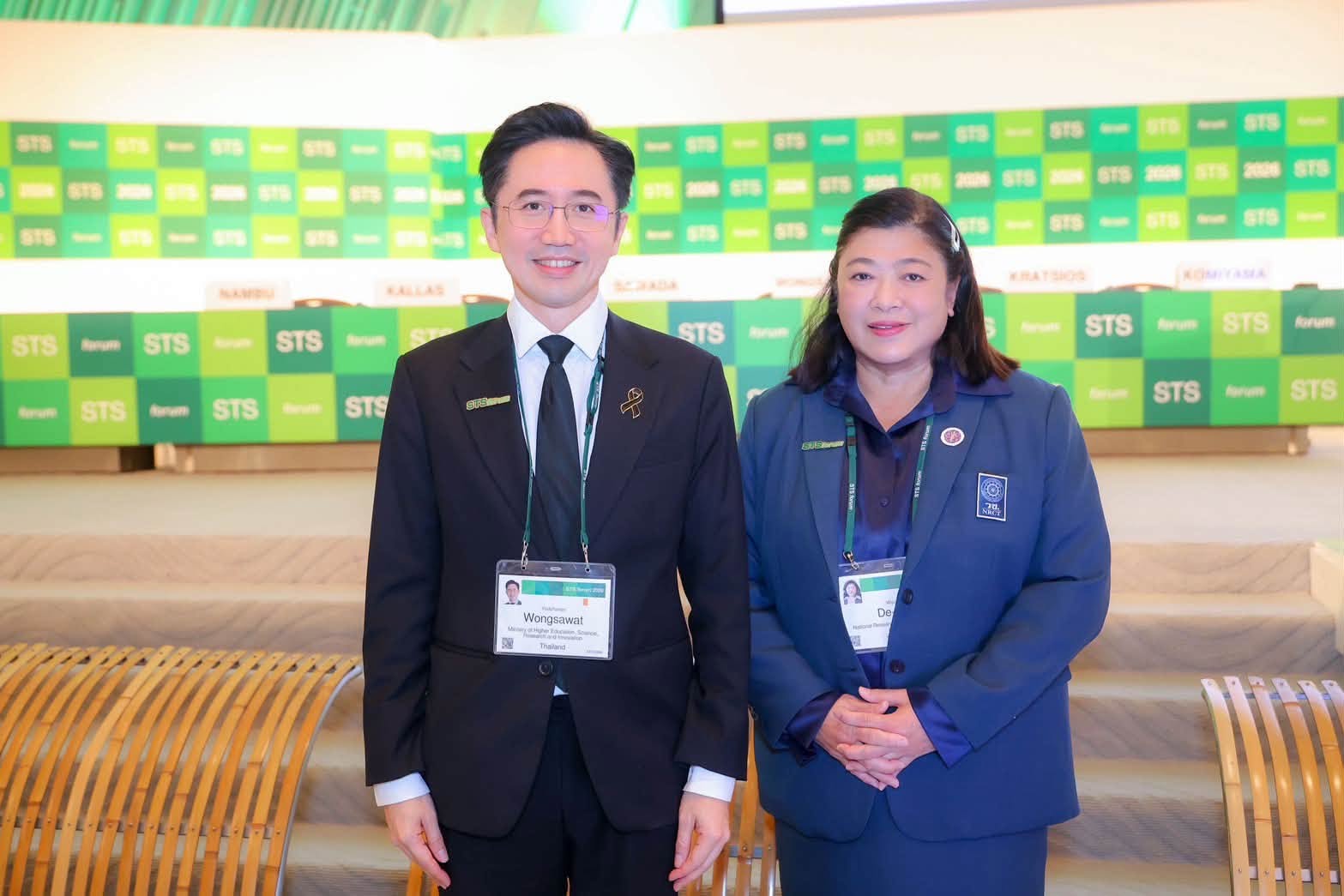
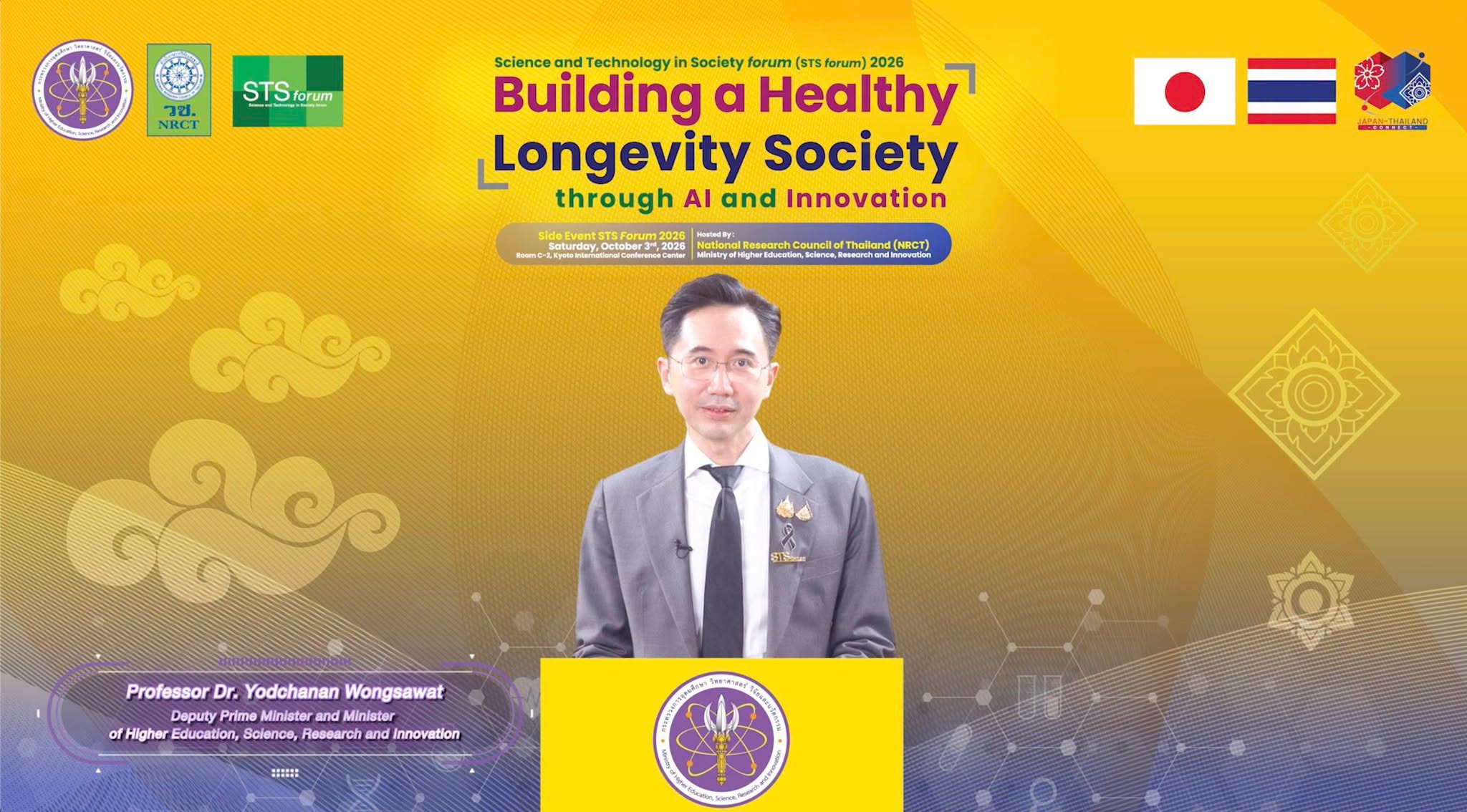
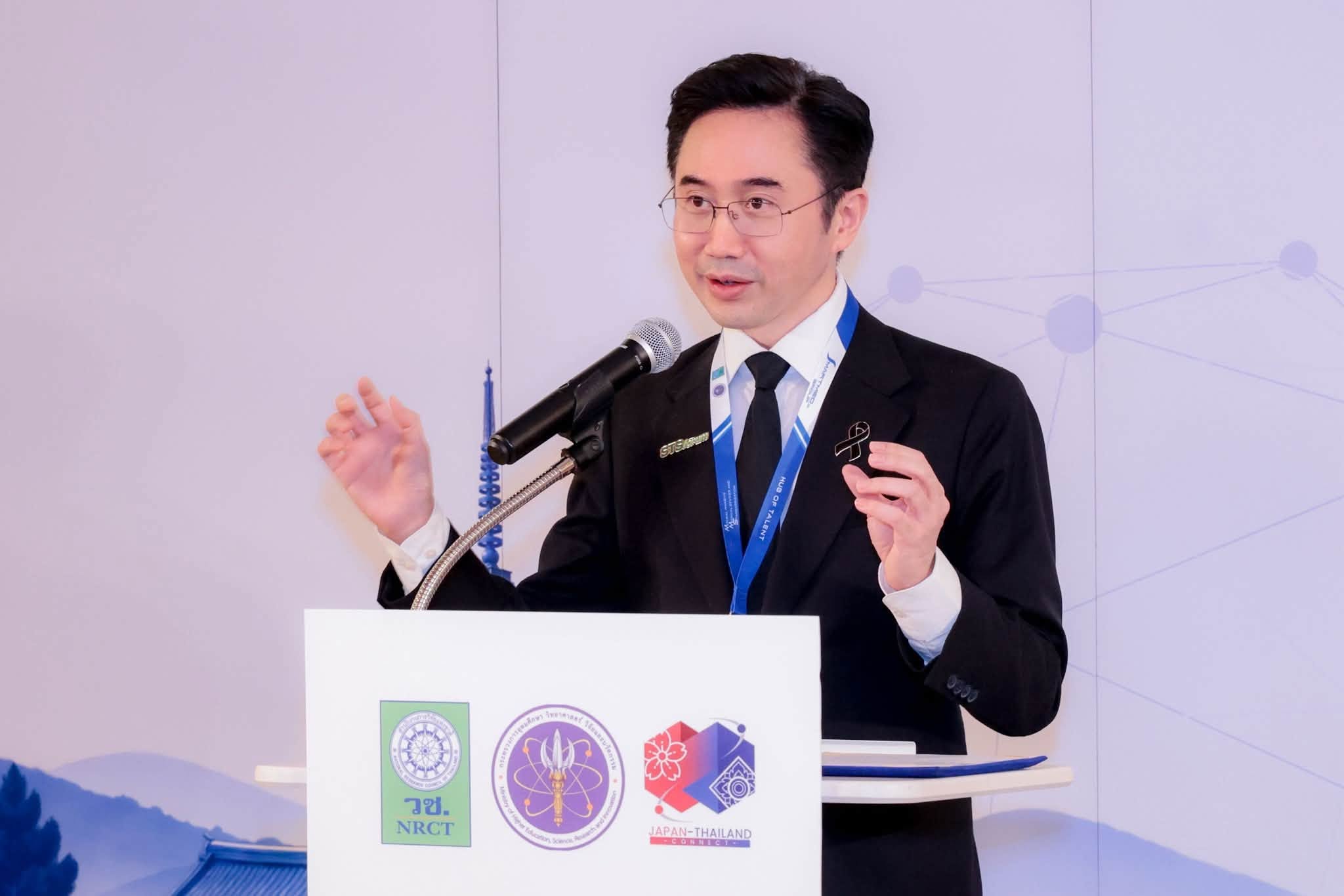
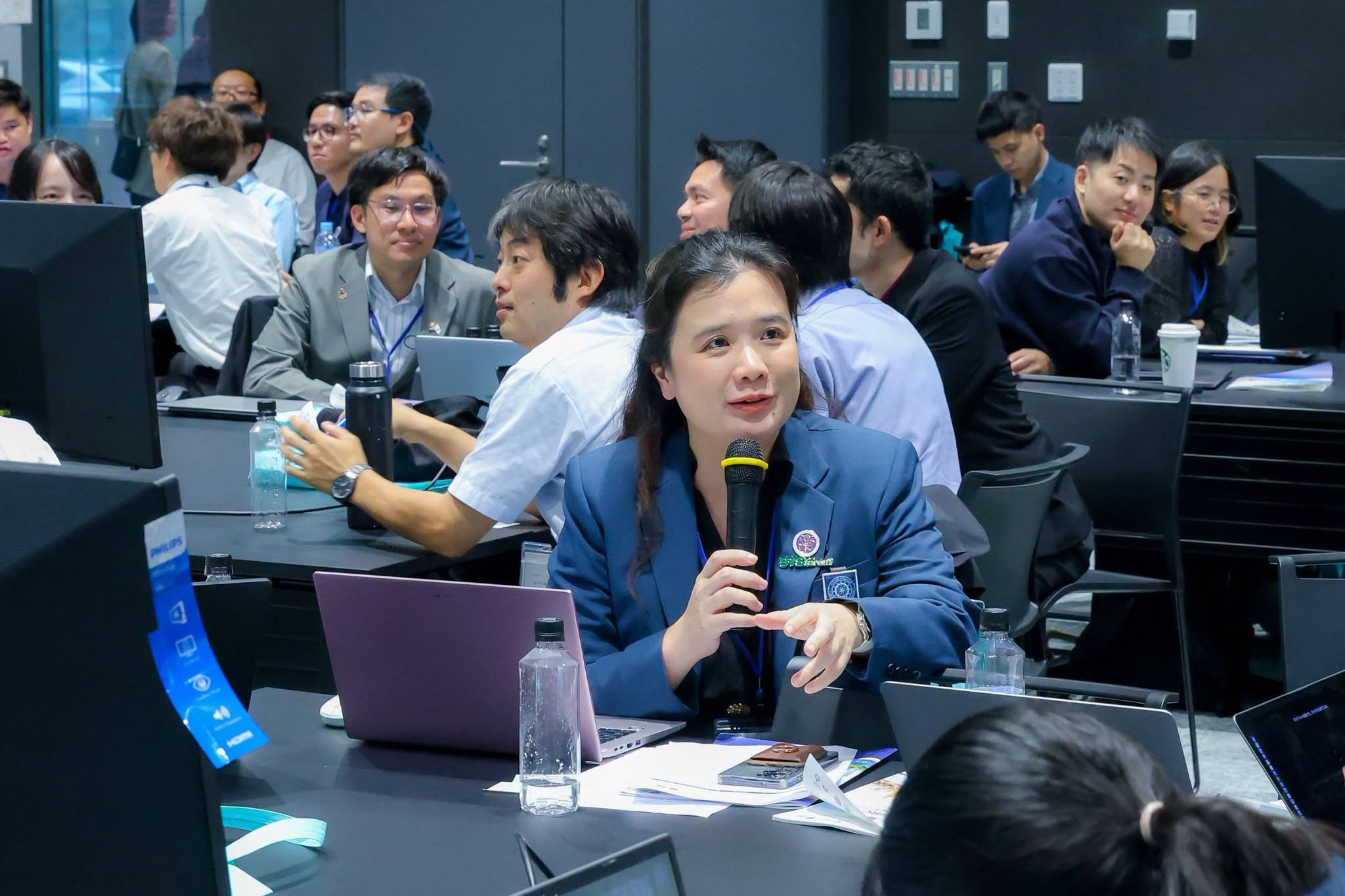
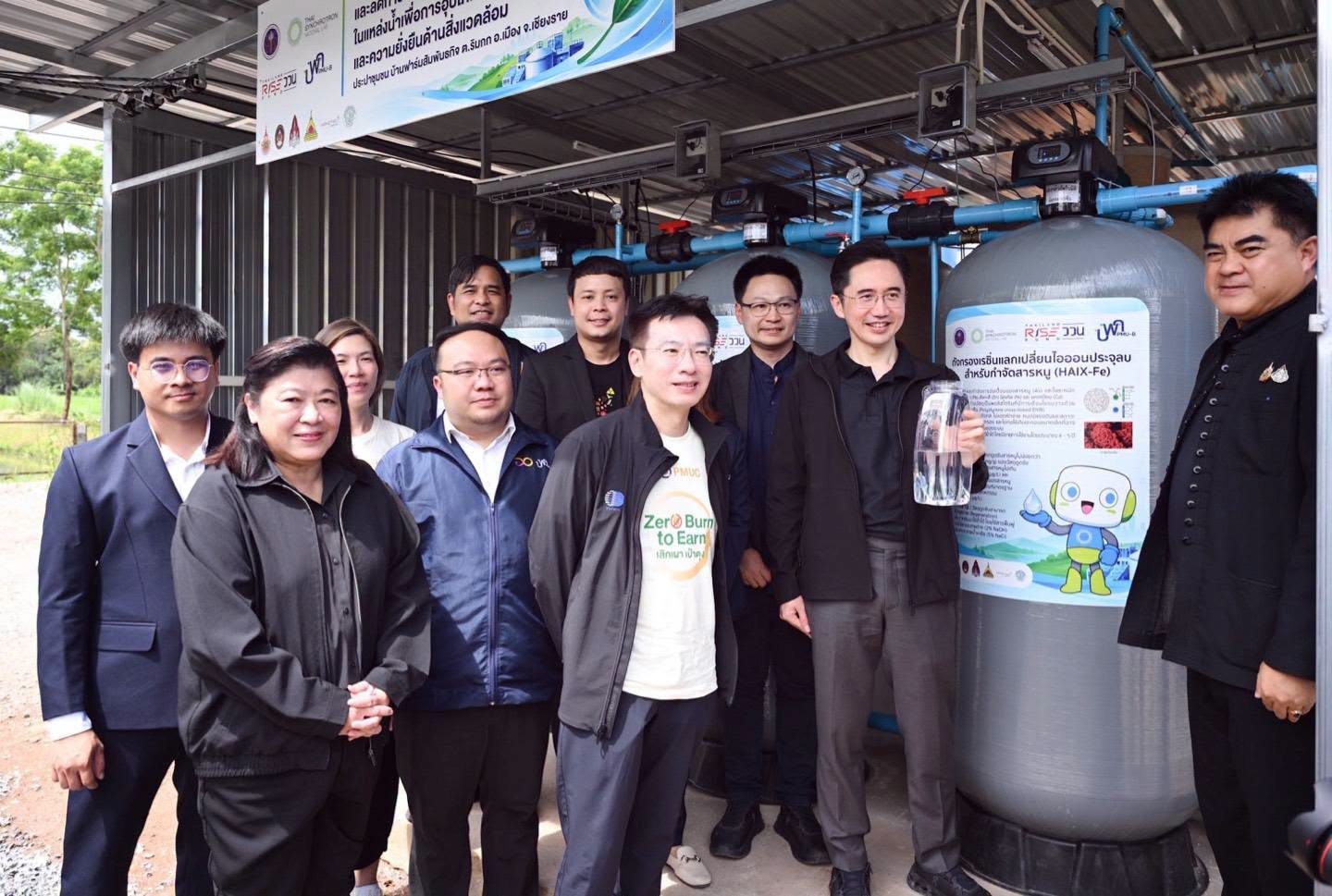
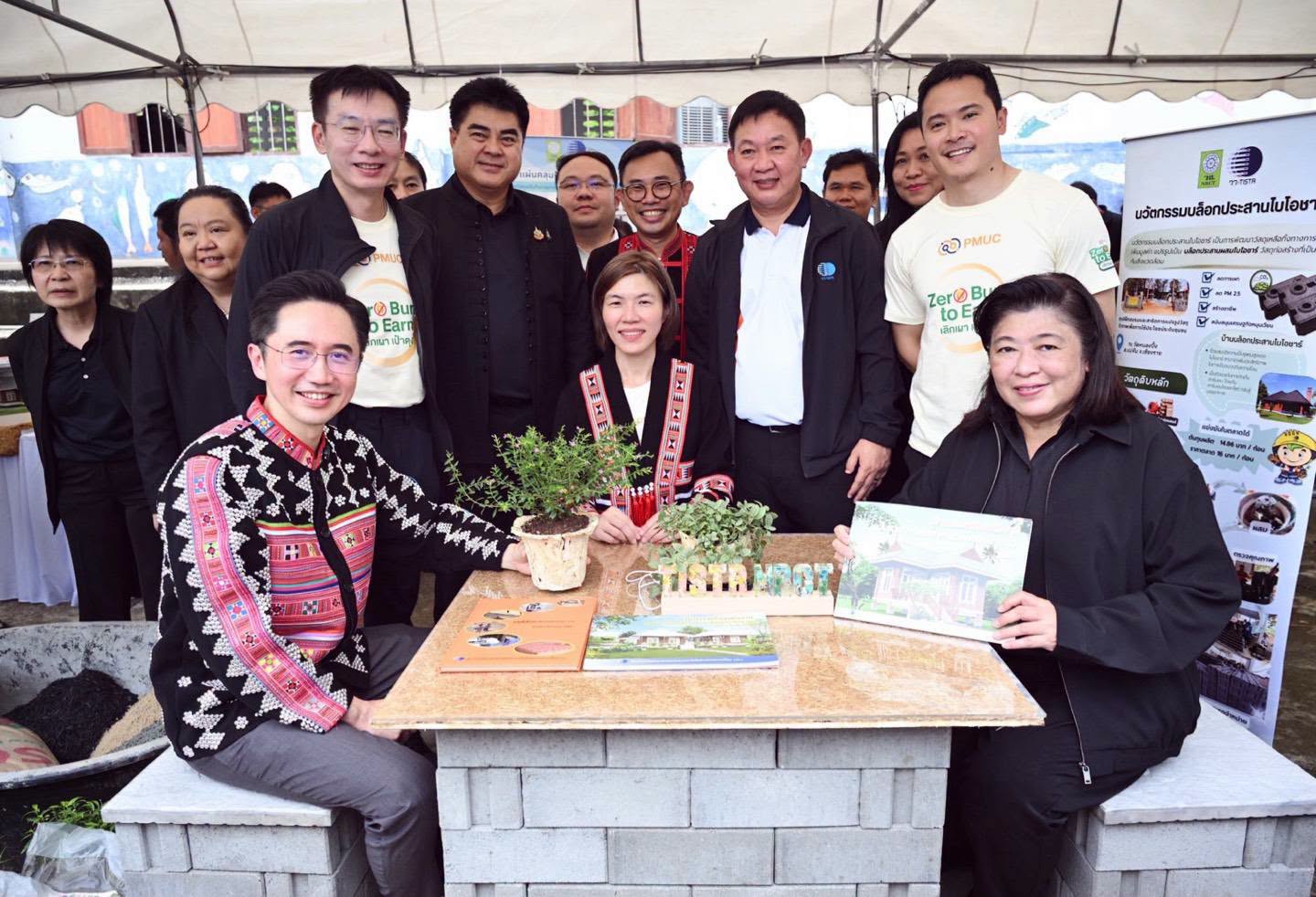
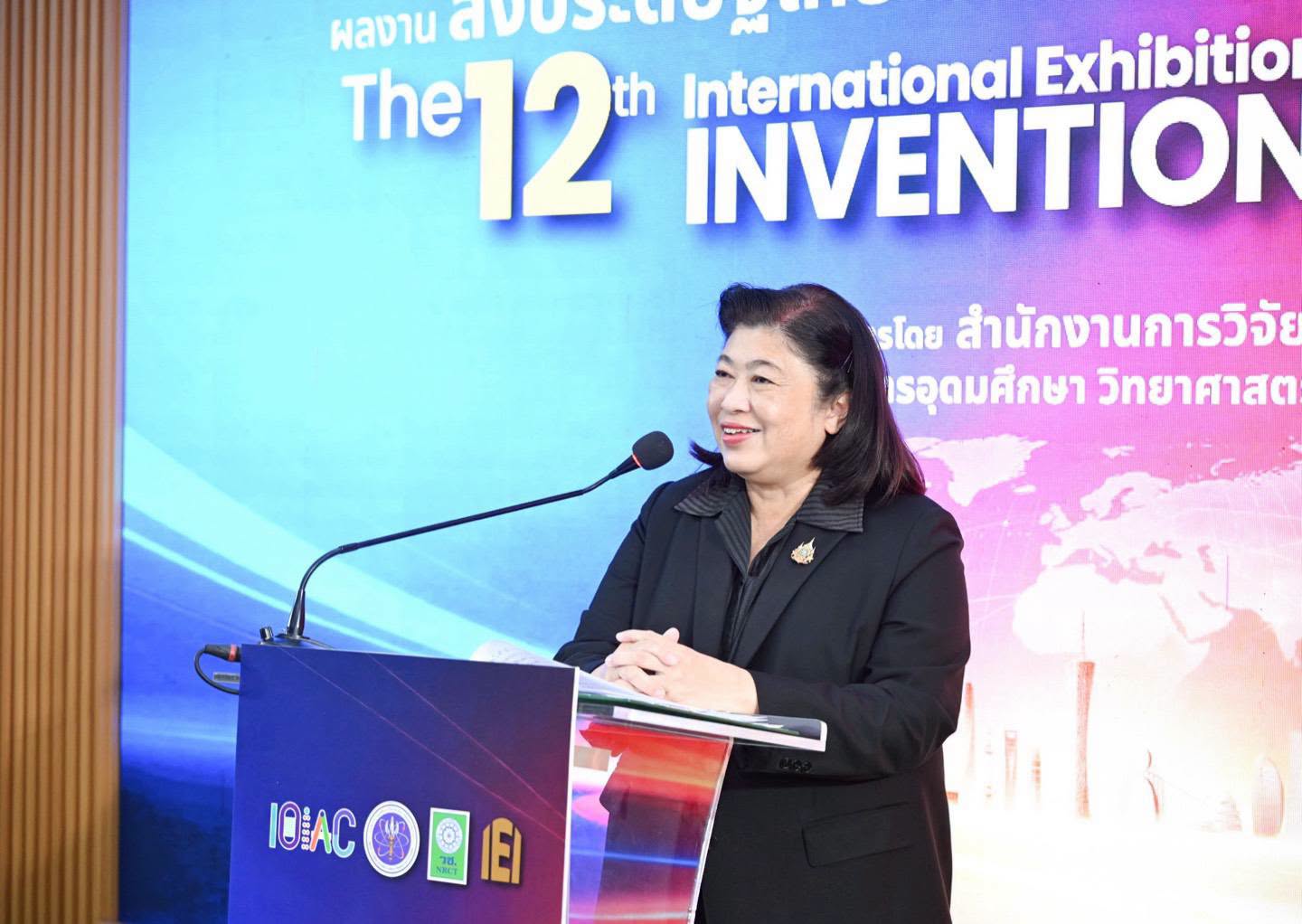
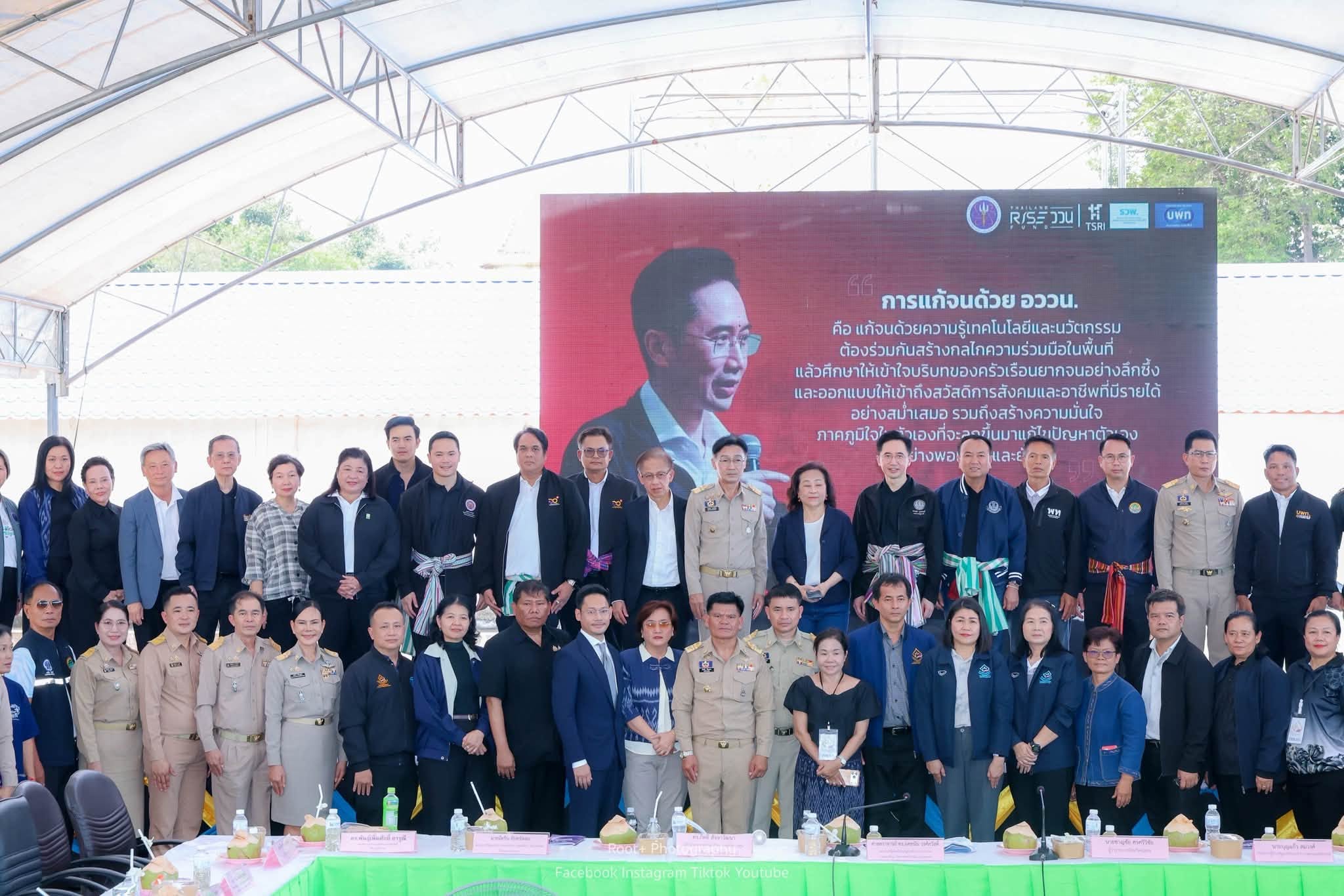
On 2 November 2026, Professor Dr. Yodchanan Wongsawat, Deputy Prime Minister and Minister of Higher Education, Science, Research and Innovation, together with Mr. Watcharaphon Khawkhum, Deputy Minister of Agriculture and Cooperatives, visited Ban Phue Industrial and Community Education College in Udon Thani Province to follow up on research and innovation initiatives aimed at addressing drug-related problems. The visit included policy guidance on applying research findings and innovations to drug treatment, rehabilitation, and prevention, as well as a ceremony to present the “Sustainable Drug-Free Community” symbol and herbal innovations for addressing drug-related problems to participating networks and communities. The event was organized by the National Research Council of Thailand (NRCT), under the Ministry of Higher Education, Science, Research and Innovation (MHESI).
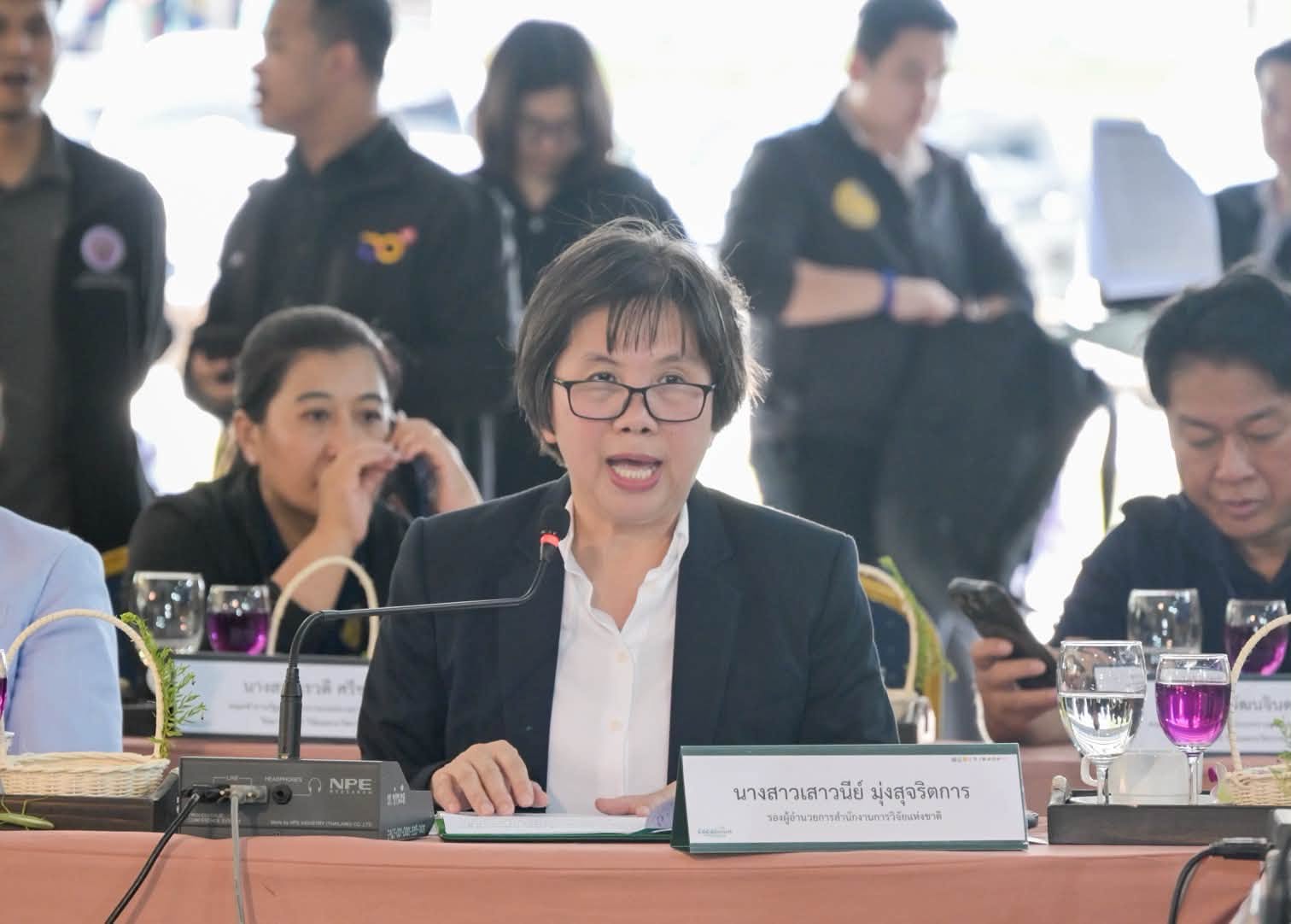
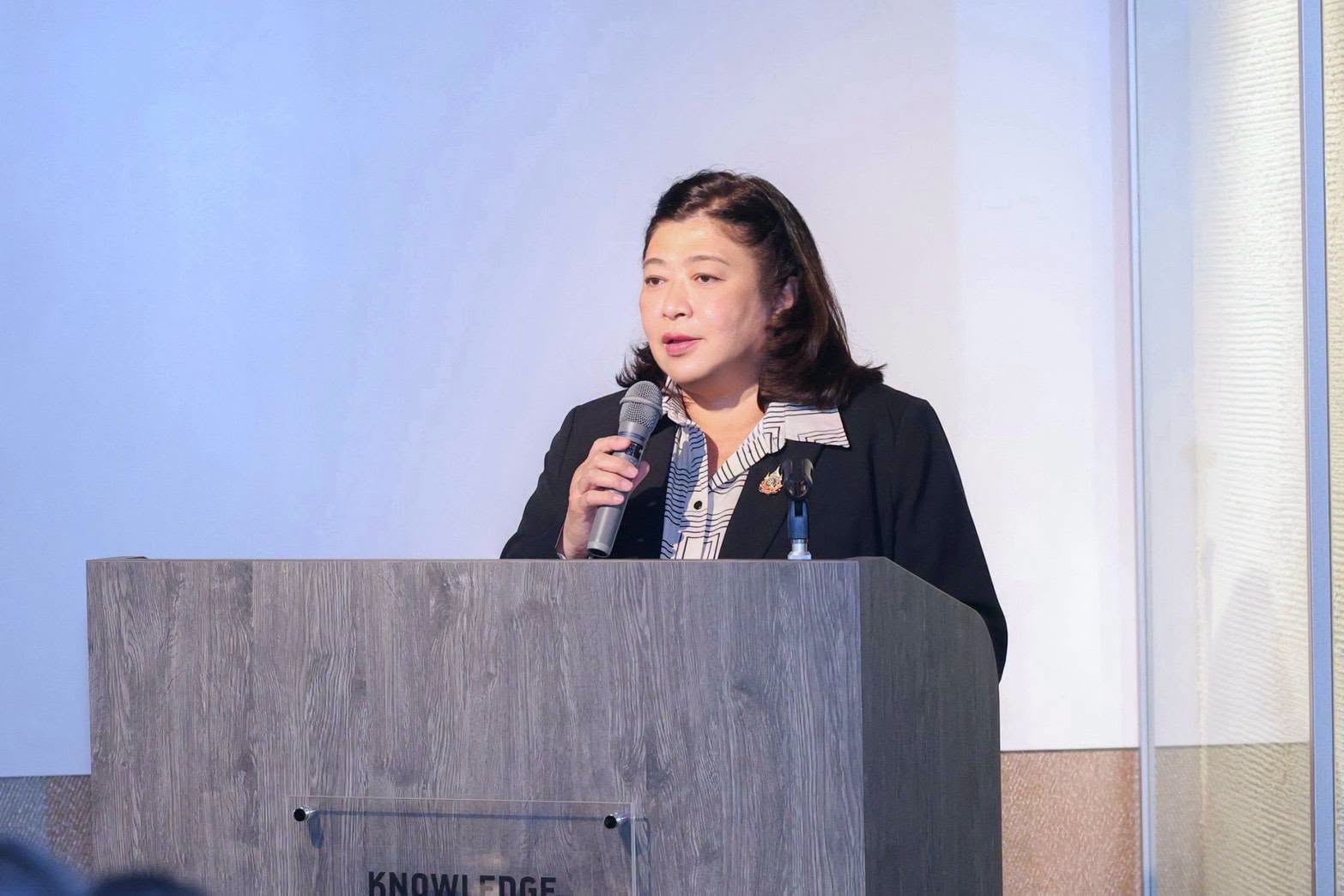
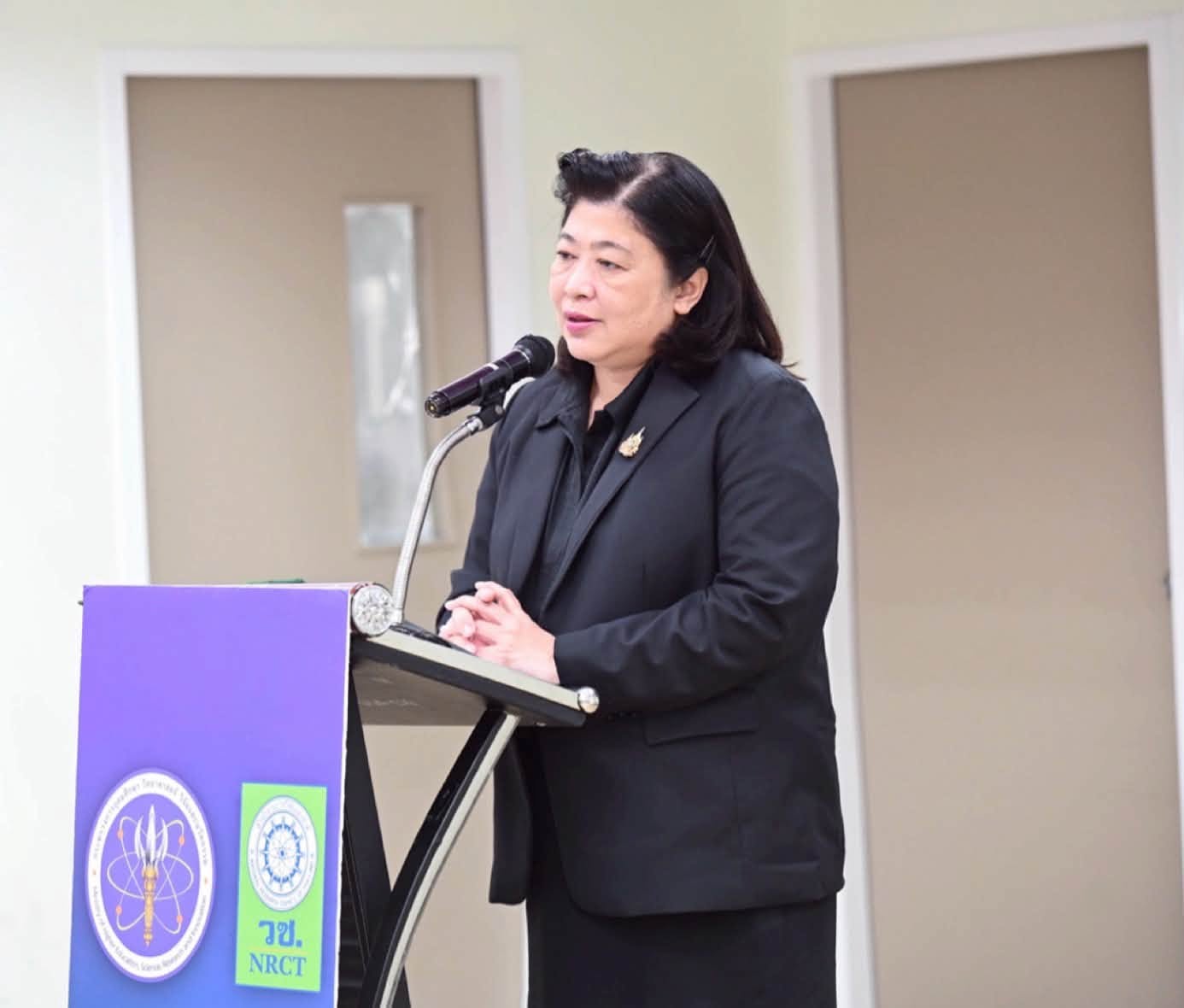
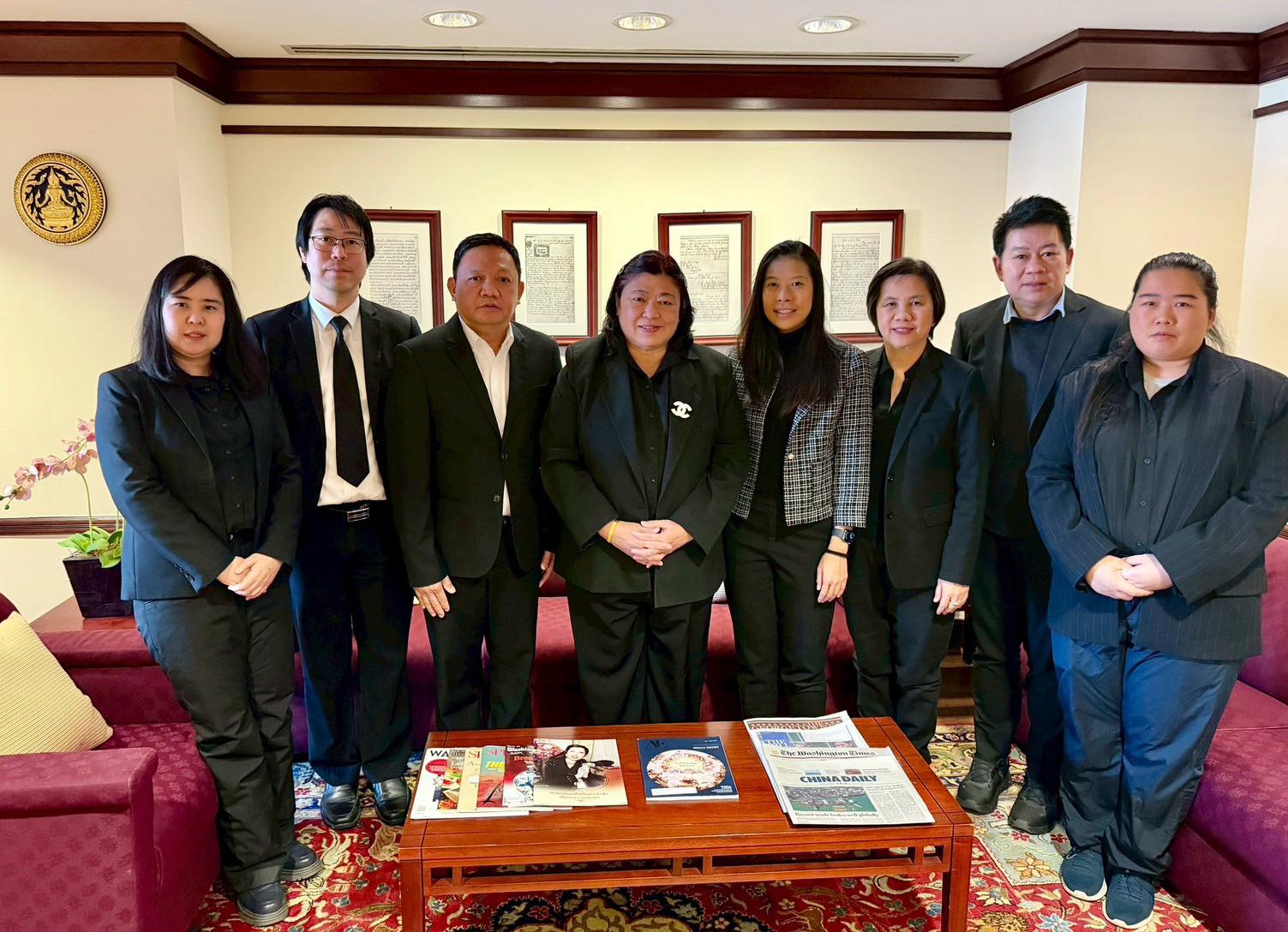
Dr. Wiparat De-ong, Executive Director of the National Research Council of Thailand (NRCT), assigned Ms. Saowanee Mungsujaritkarn, Deputy Executive Director of NRCT, to welcome the delegation alongside representatives of the college and present an overview of NRCT’s support for research and innovation aimed at addressing national challenges, particularly drug-related problems.
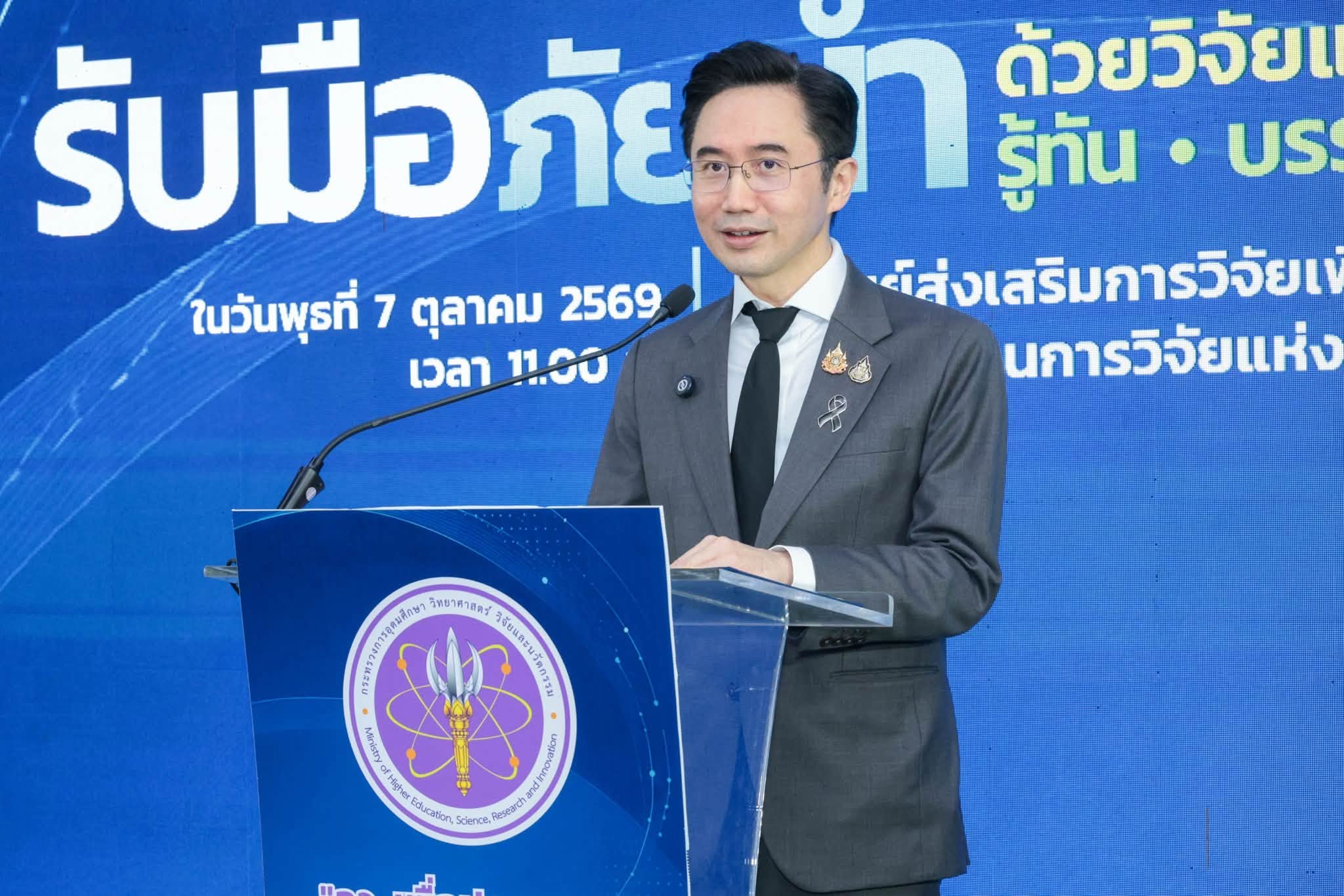
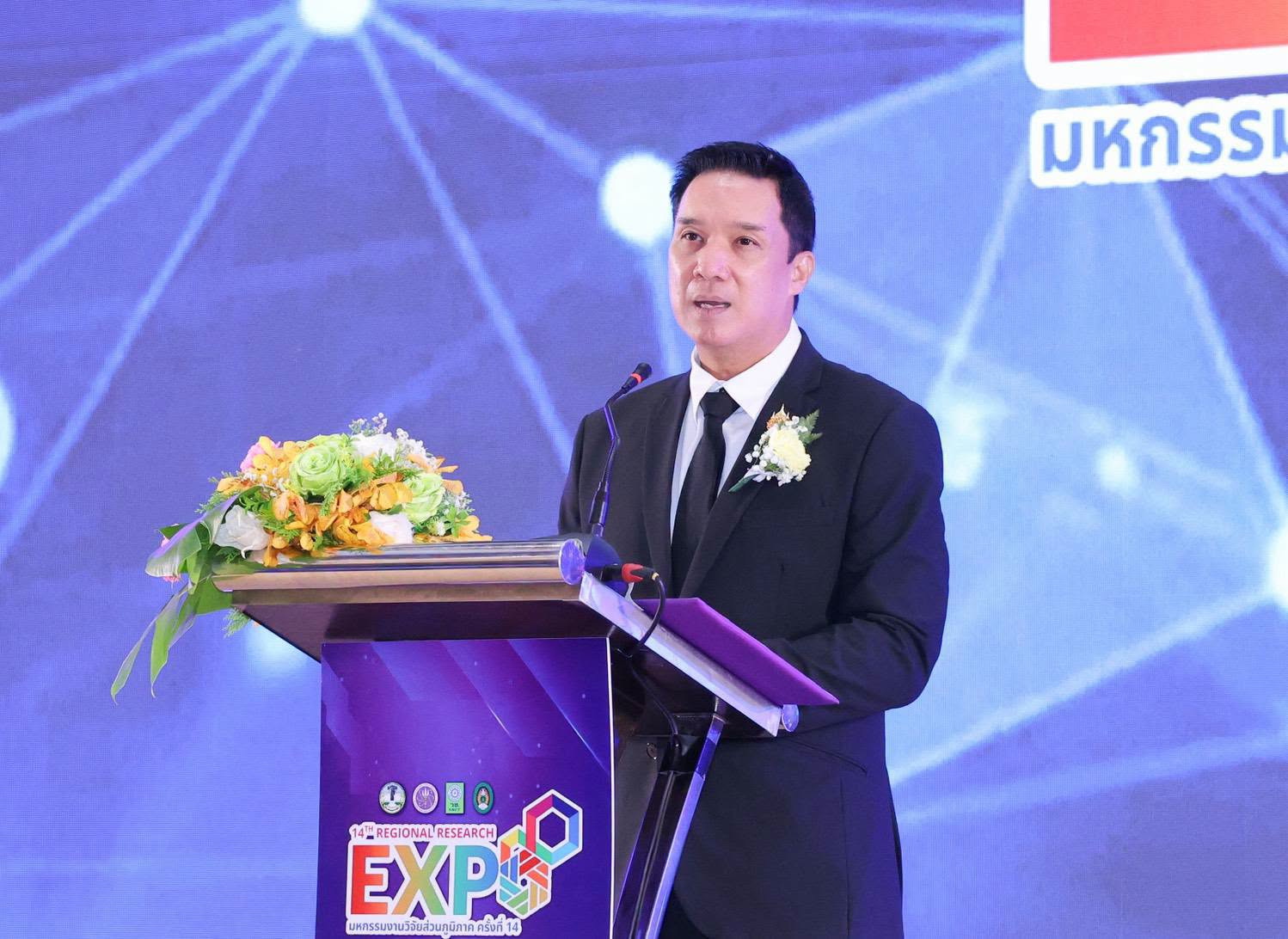
Professor Dr. Yodchanan emphasized that addressing drug-related problems requires coordinated efforts among relevant ministries and agencies, including MHESI, the Ministry of Public Health, security agencies, the police, the military, provincial authorities, and local communities. Communities and local networks should play a central role in identifying individuals at risk, supporting treatment and rehabilitation, and helping individuals reintegrate into society. As the circumstances and needs of each community differ, solutions should be tailored to local contexts and individual circumstances. Efforts must also address related social and economic factors, including income opportunities, family support, and mental well-being.
He also highlighted the role of vocational education institutions in equipping individuals with practical skills and creating employment opportunities. By connecting research and innovation with community-based initiatives and vocational training, successful approaches can be expanded to other areas, helping to strengthen communities and support sustainable solutions to drug-related problems.
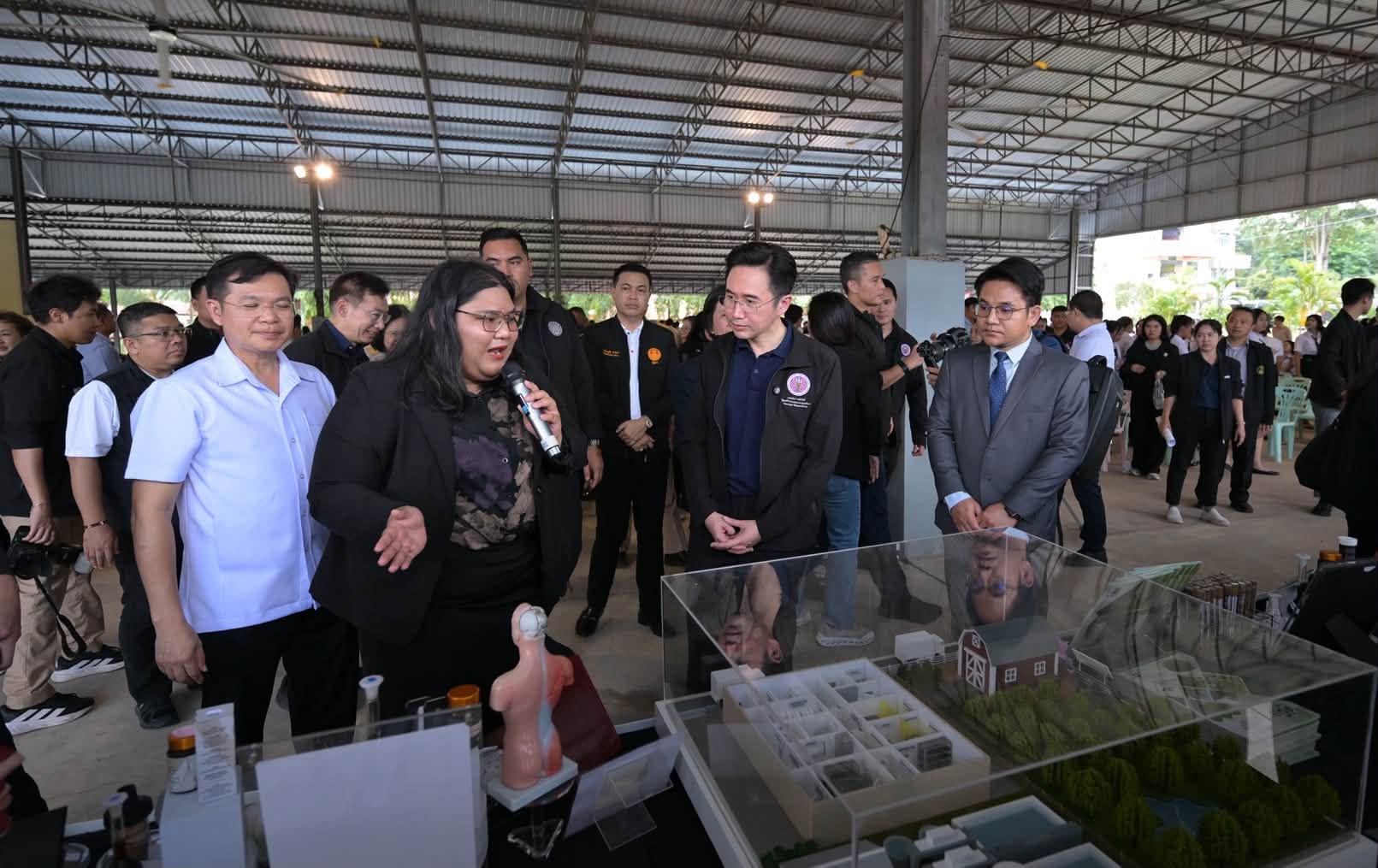
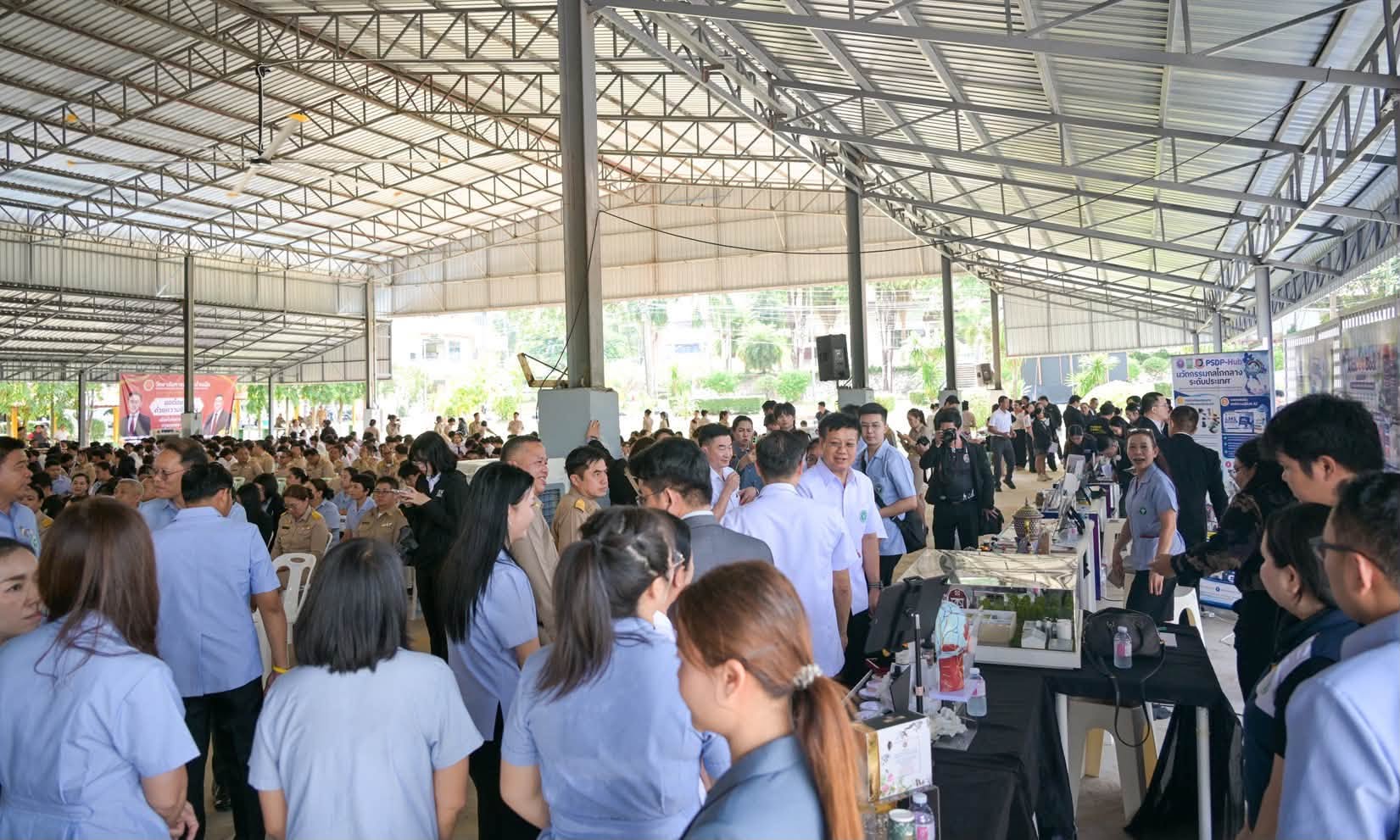
Ms. Saowanee explained that NRCT places great importance on supporting research and innovation that address major national challenges and ensuring that research findings are translated into practical applications. The event showcased research and innovations involving herbal products and Thai traditional medicine, together with knowledge and mechanisms for drug prevention and rehabilitation. These initiatives aim to connect research expertise with practical implementation at the community level.
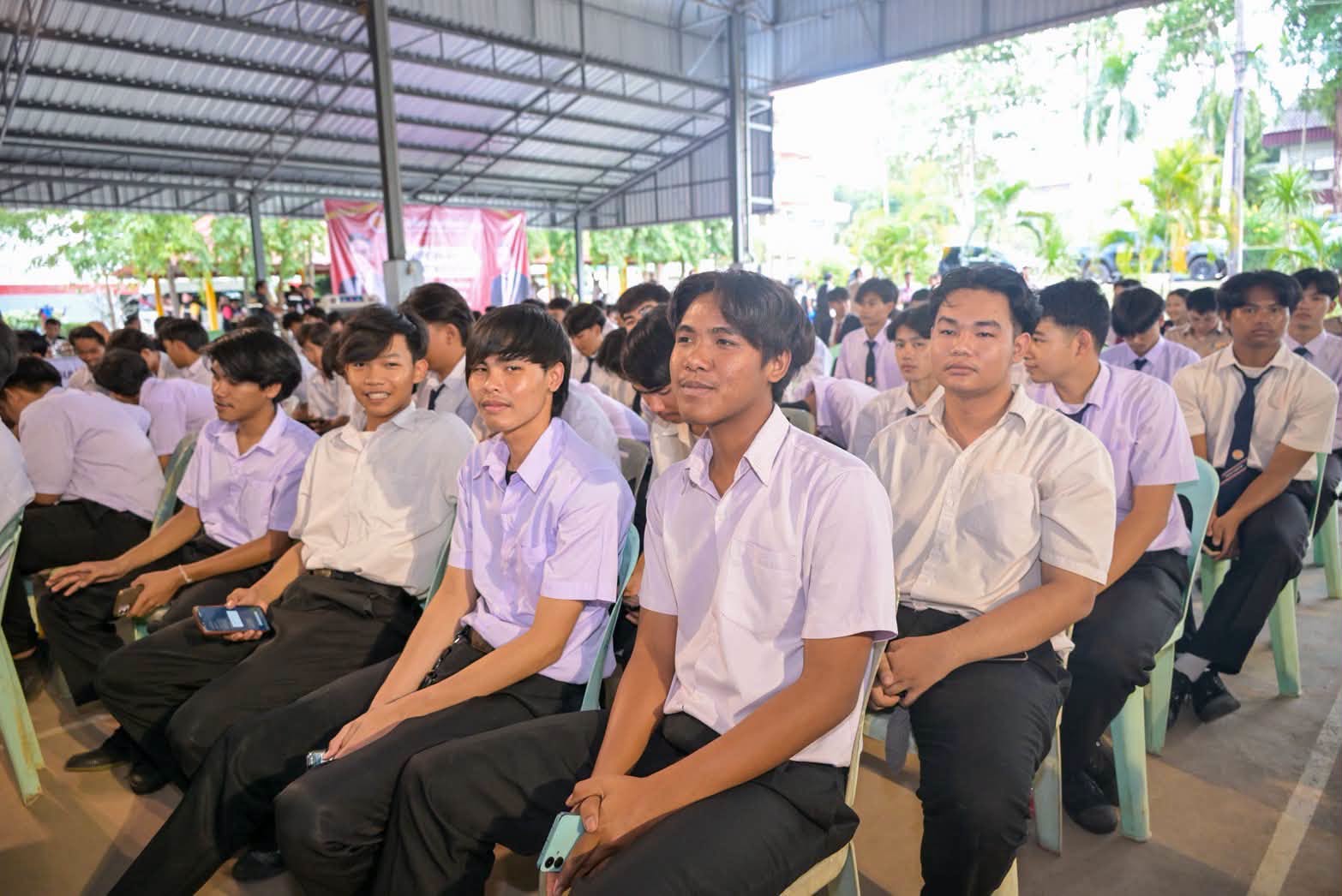
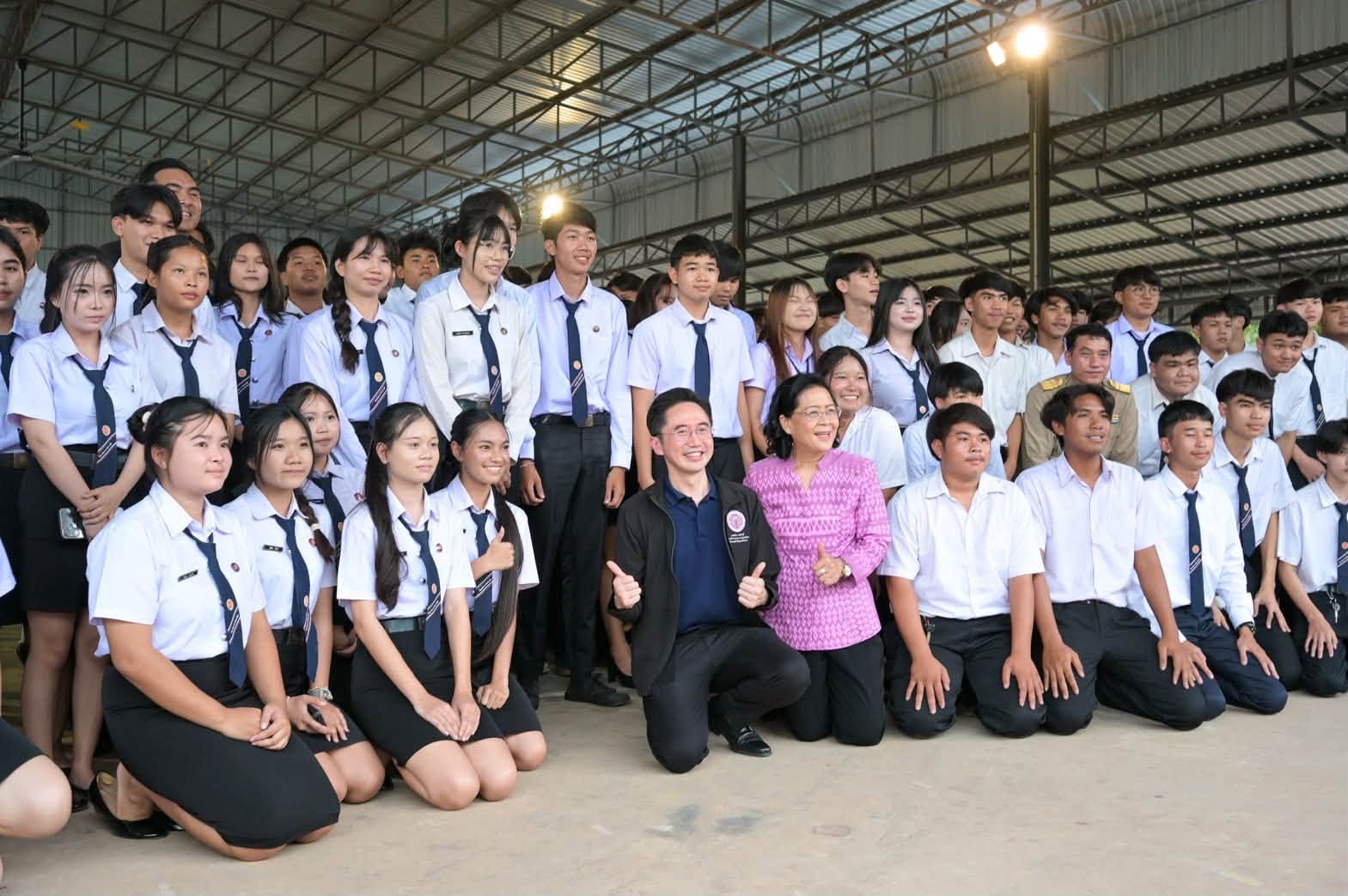
Ban Phue Industrial and Community Education College offers 12 vocational programmes at the certificate and diploma levels, with a total enrolment of 1,765 students. The college is also developing a hotel studies programme in connection with Phu Phrabat Historical Park, a UNESCO World Heritage site. The programme aims to equip students with practical skills and provide employment opportunities during their studies, while supporting local tourism and income generation.
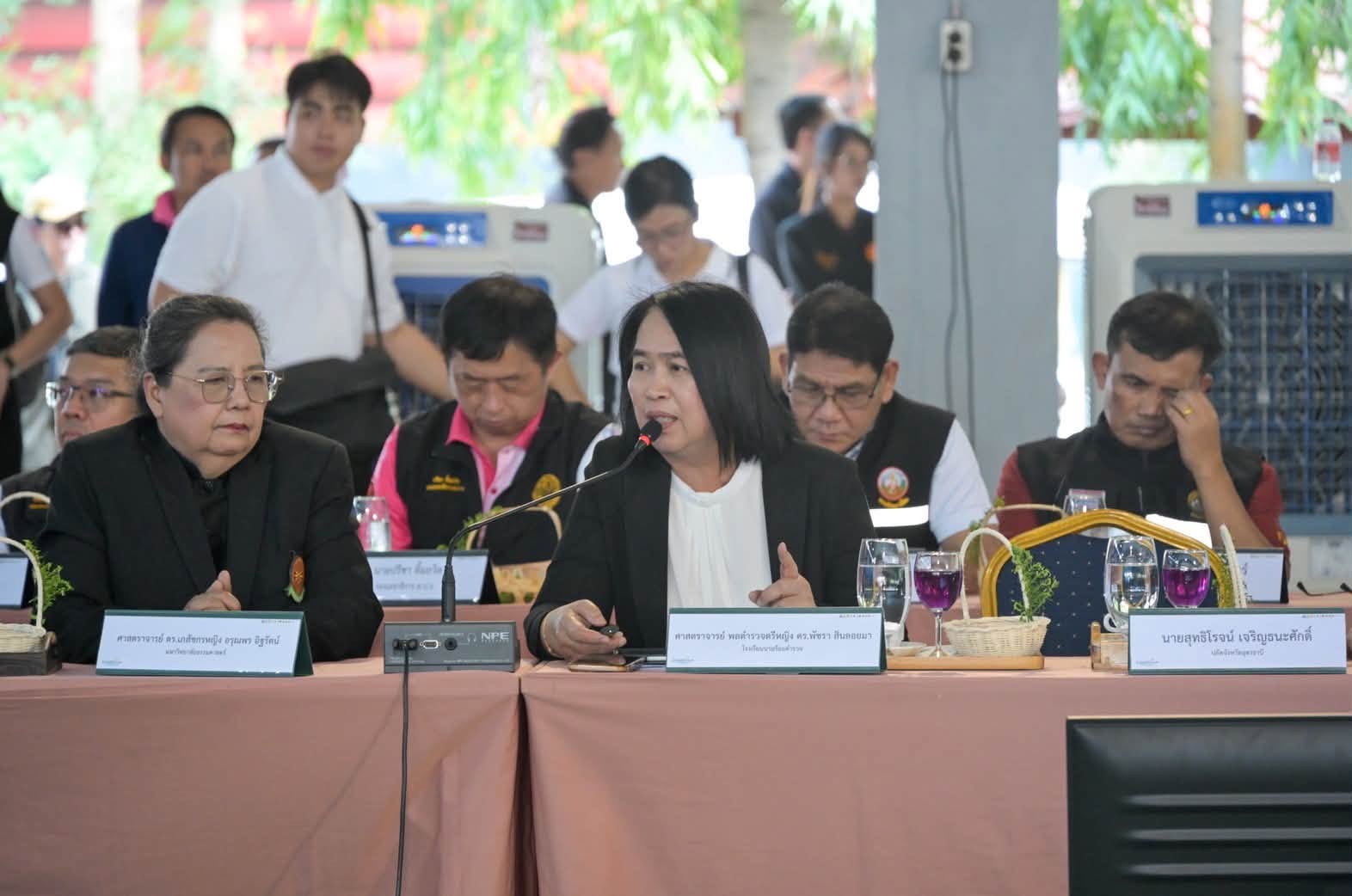
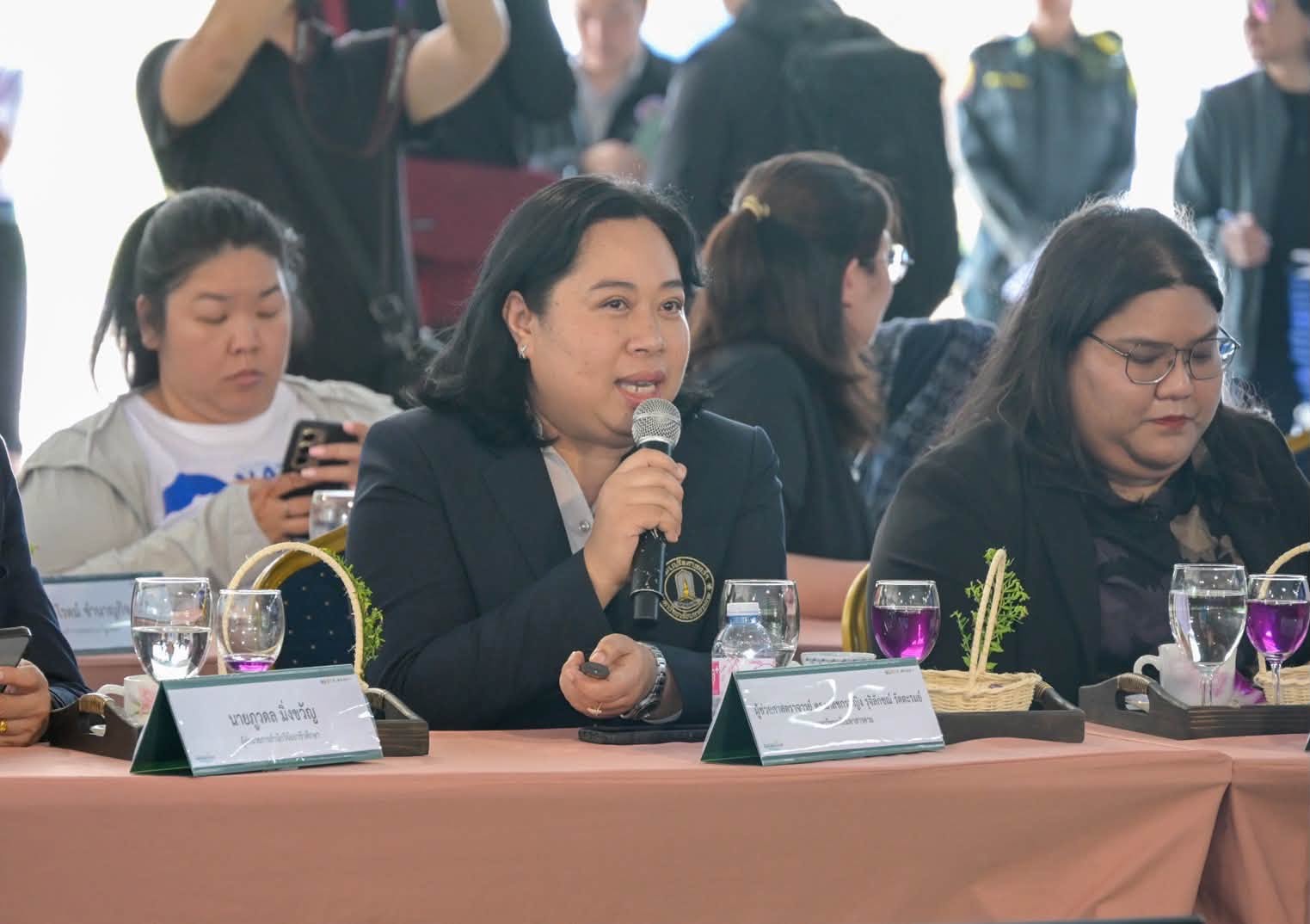
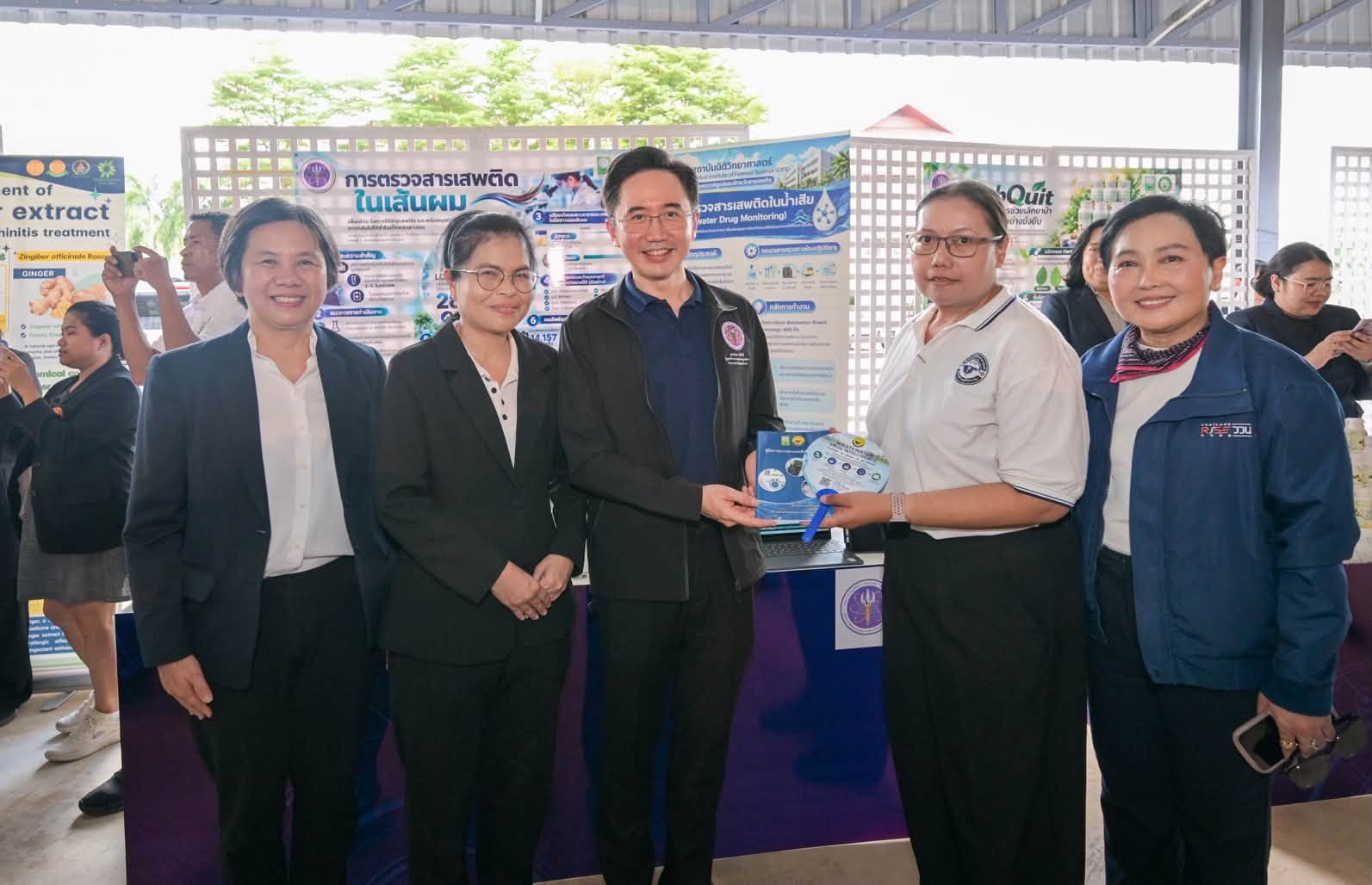
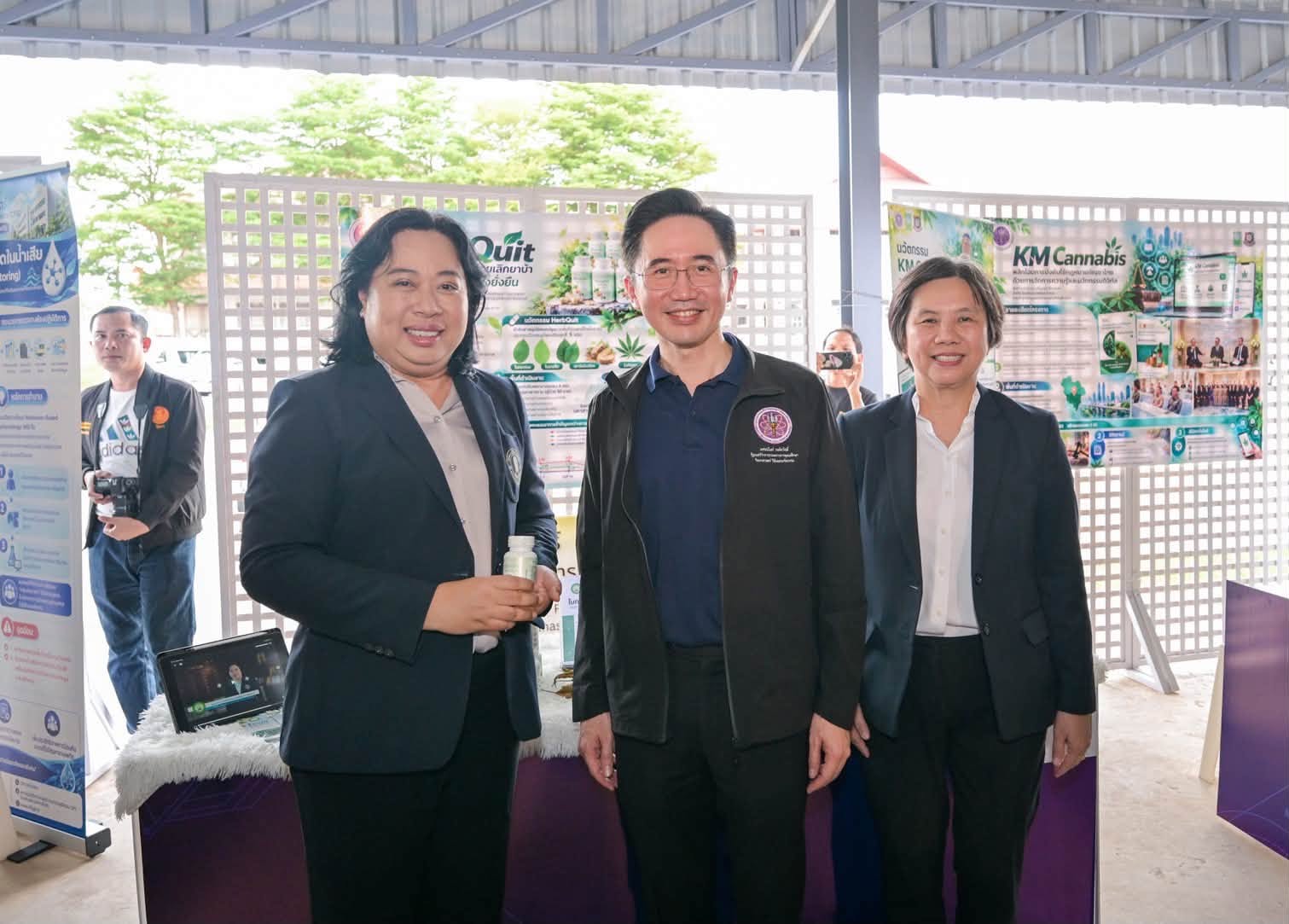
During the visit, the delegation viewed research and innovations developed to support drug treatment and rehabilitation, including applications of herbal knowledge and related scientific approaches. The showcased works included:
1. “Effervescent Methamphetamine Cessation Innovation” and “AlcoDeltaBlock Effervescent Tablets” from the Department of Thai Traditional and Alternative Medicine.
2. “PSDP-Hub: Knowledge-to-Action Drug Prevention System” from the Royal Police Cadet Academy.
3. “Restoring the Body and Strengthening the Mind to Break the Cycle of Relapse: An Integrated Community-Based Treatment and Rehabilitation Innovation for Sustainable Social Development in Thailand” from the Royal Police Cadet Academy.
4. “KM Cannabis: Transforming the Enforcement of Thai Cannabis Laws through Knowledge Management and Digital Innovation” from the Royal Police Cadet Academy.
5. “An Innovation for the Treatment and Rehabilitation of People with Amphetamine Dependence Using Herbal Medicine and Traditional Thai Medicine” from Thammasat University.
6. “HerbQuit: A Herbal Innovation to Support Methamphetamine Cessation and Sustainable Patient Recovery” from Mahasarakham University.
7.“Hair Drug Testing for Monitoring Substance Use and Supporting Relapse Prevention among Children and Youth” from the Central Institute of Forensic Science, Ministry of Justice.
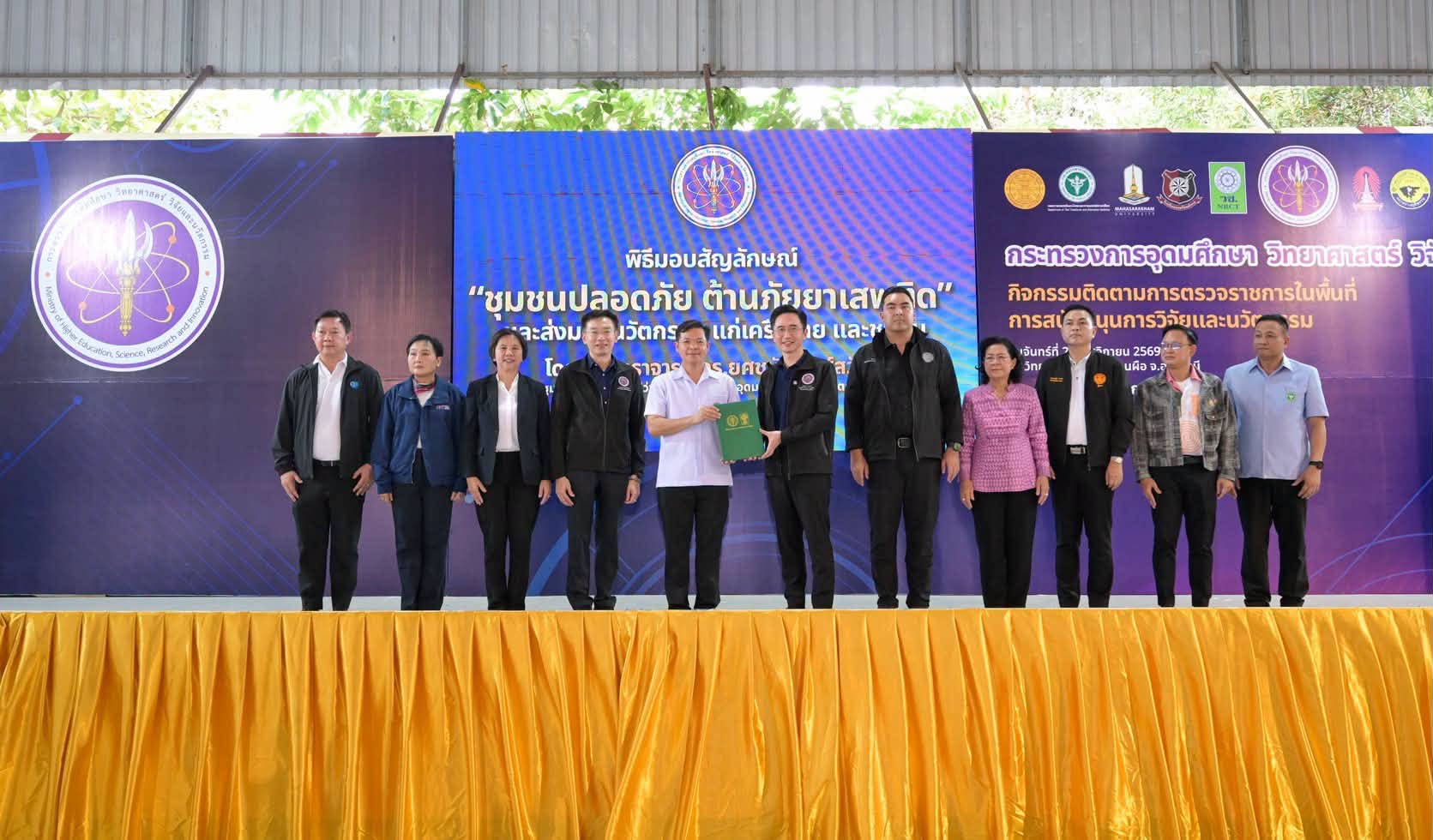
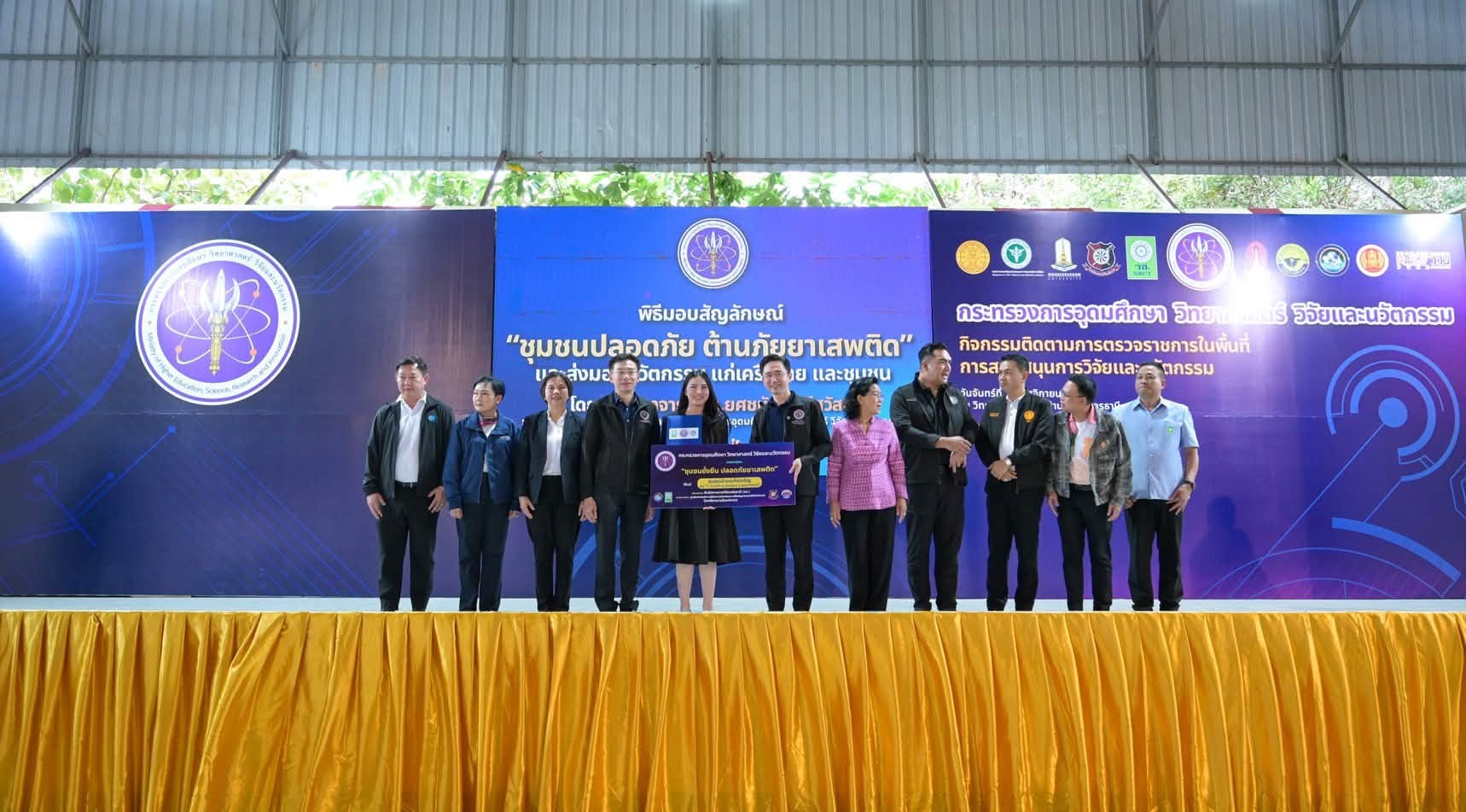
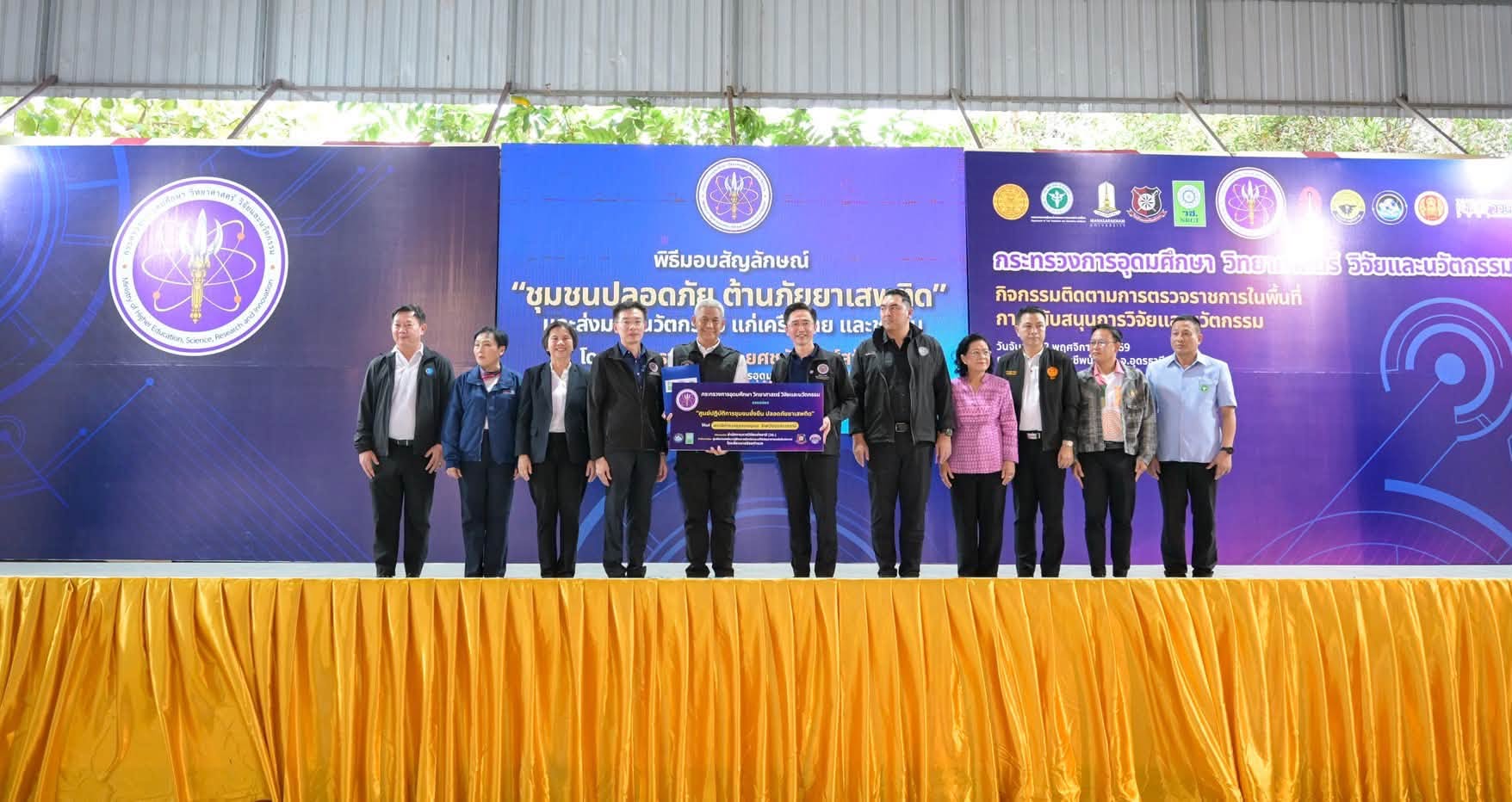
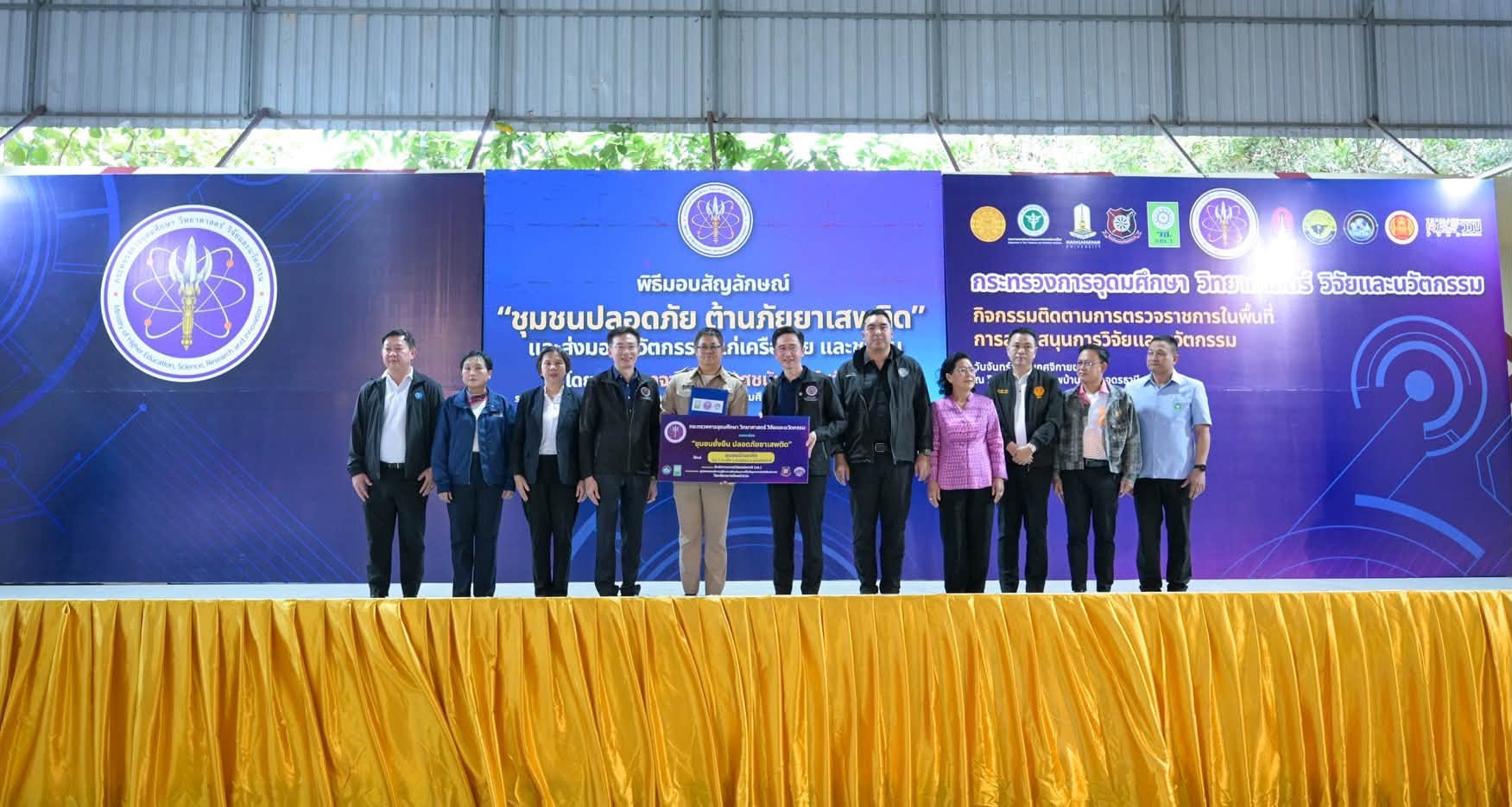
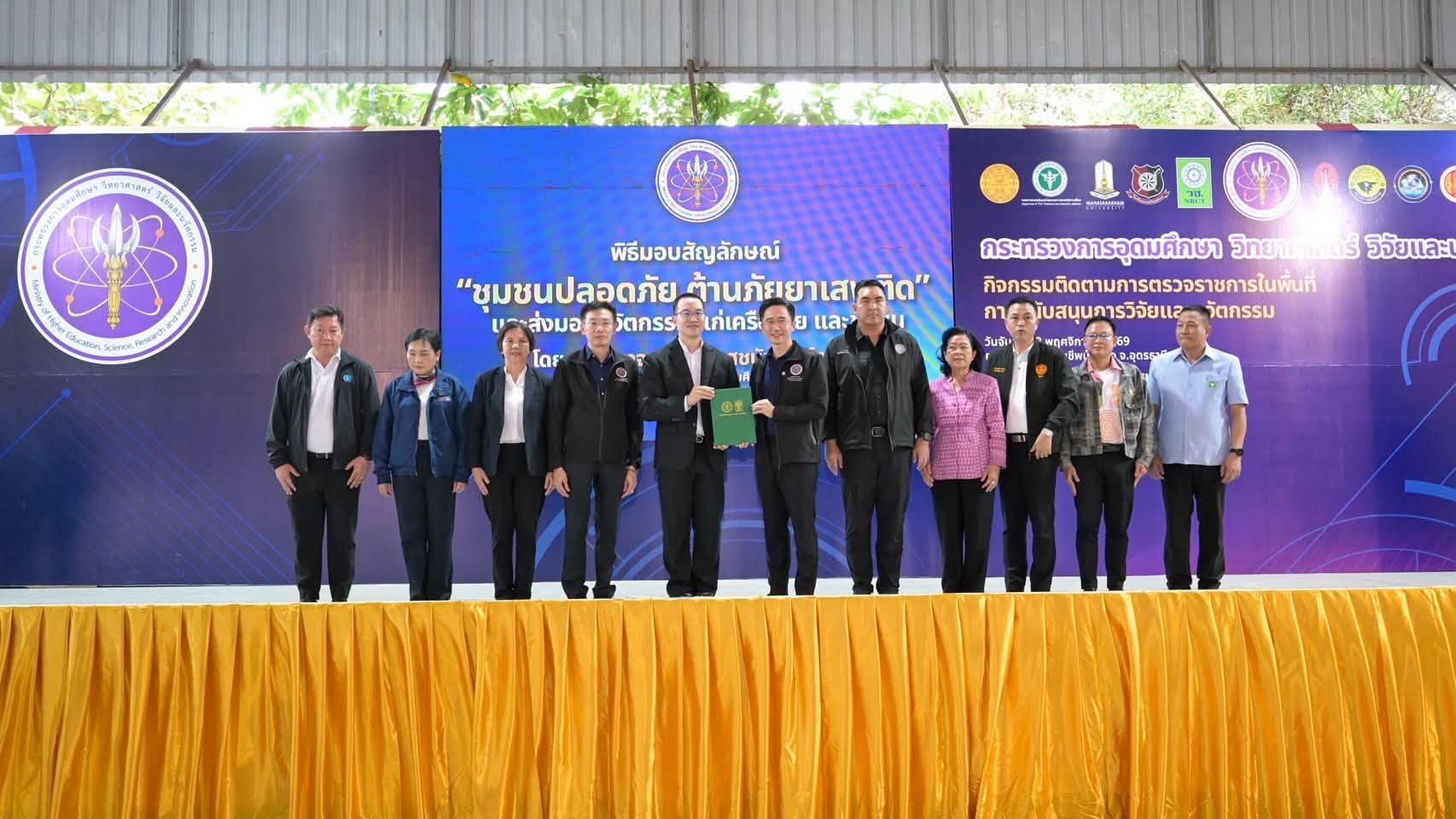
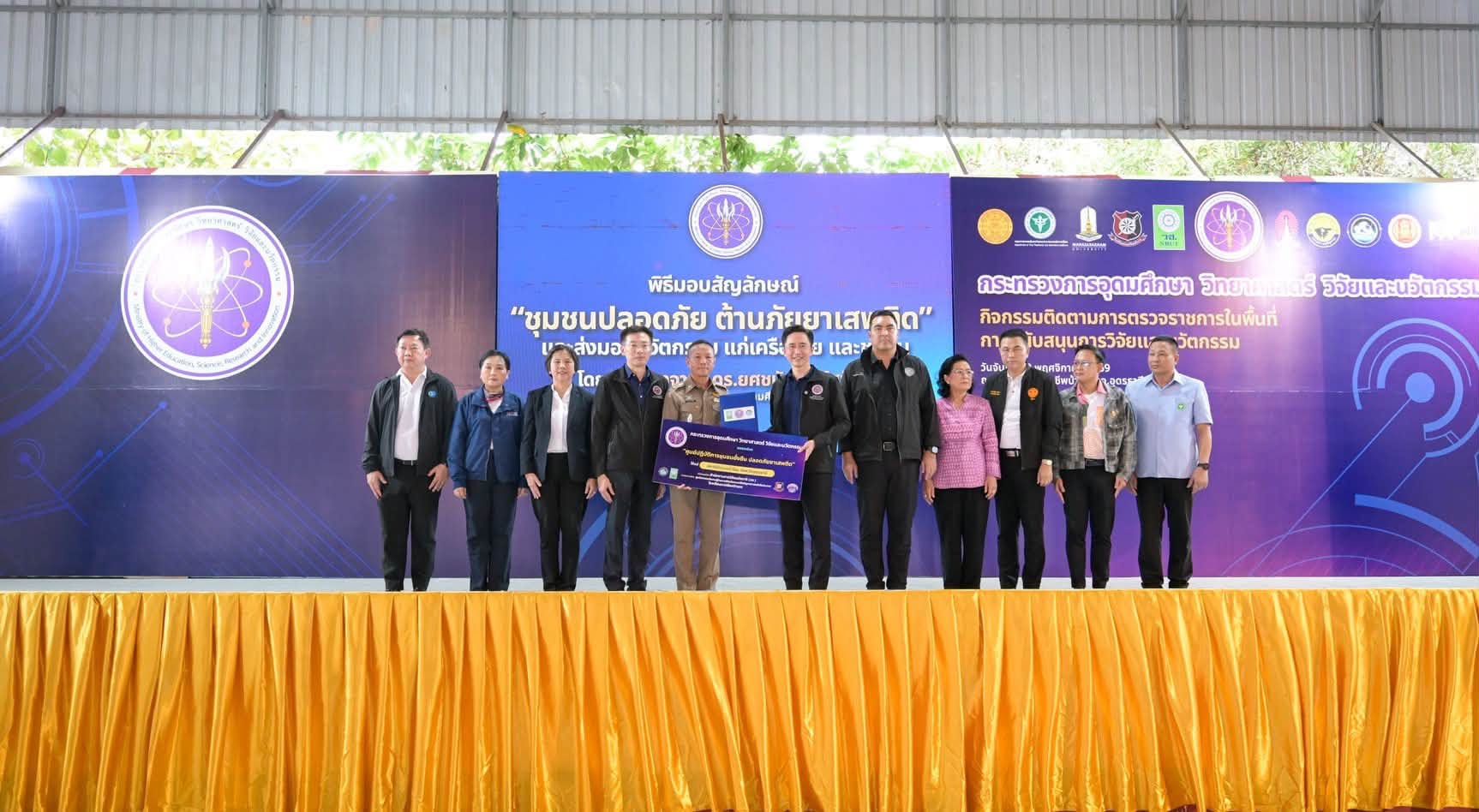
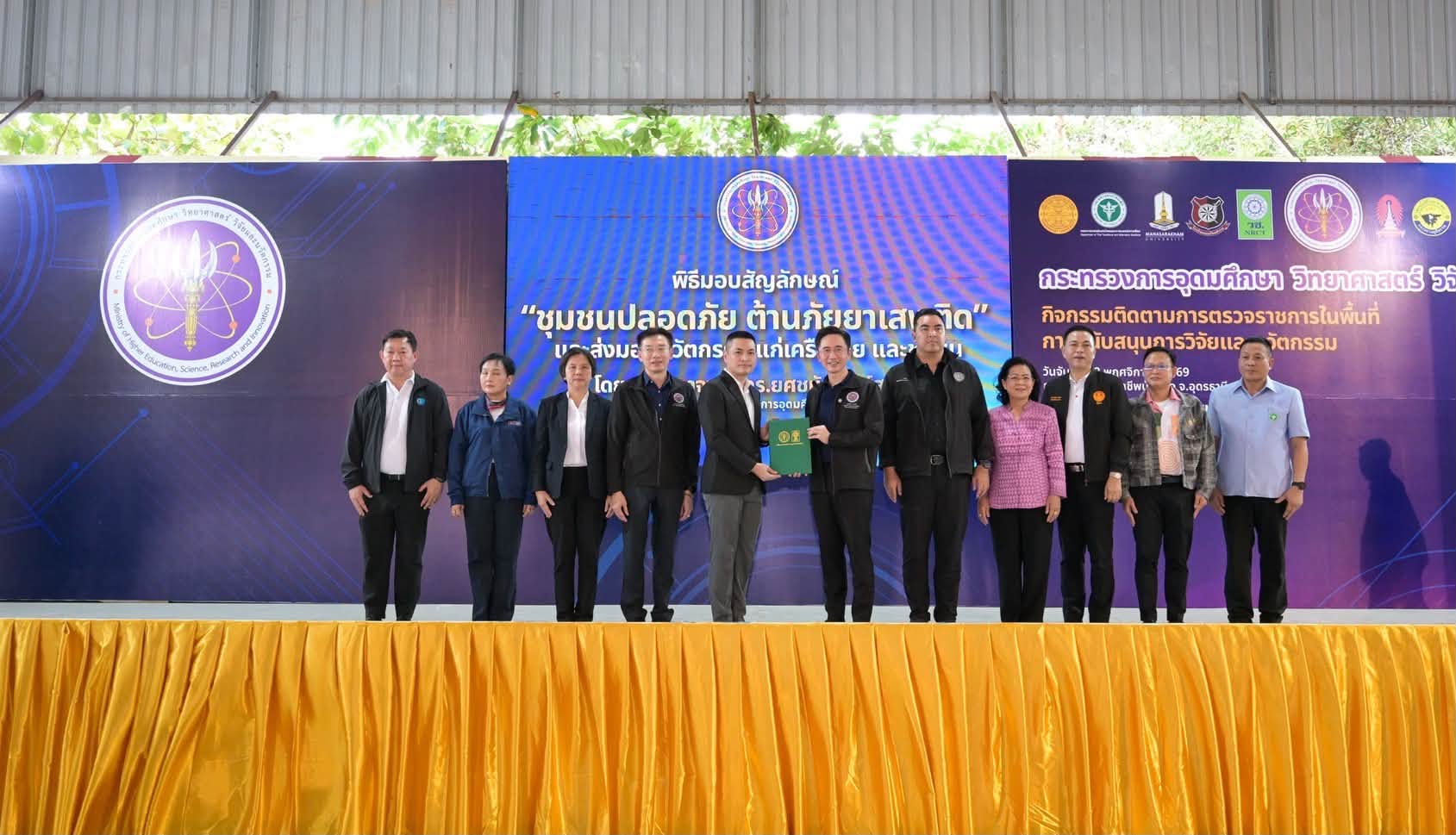
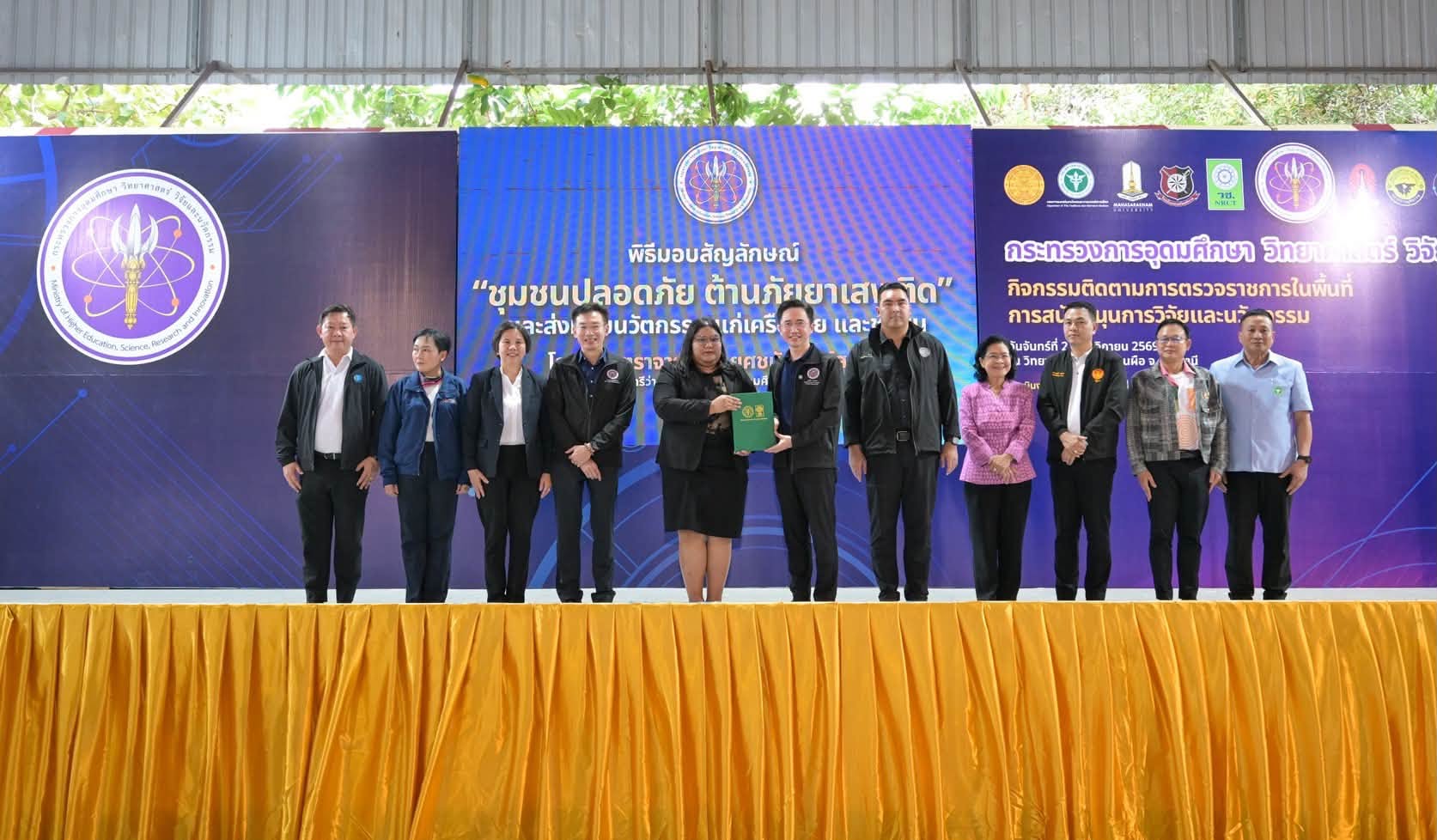
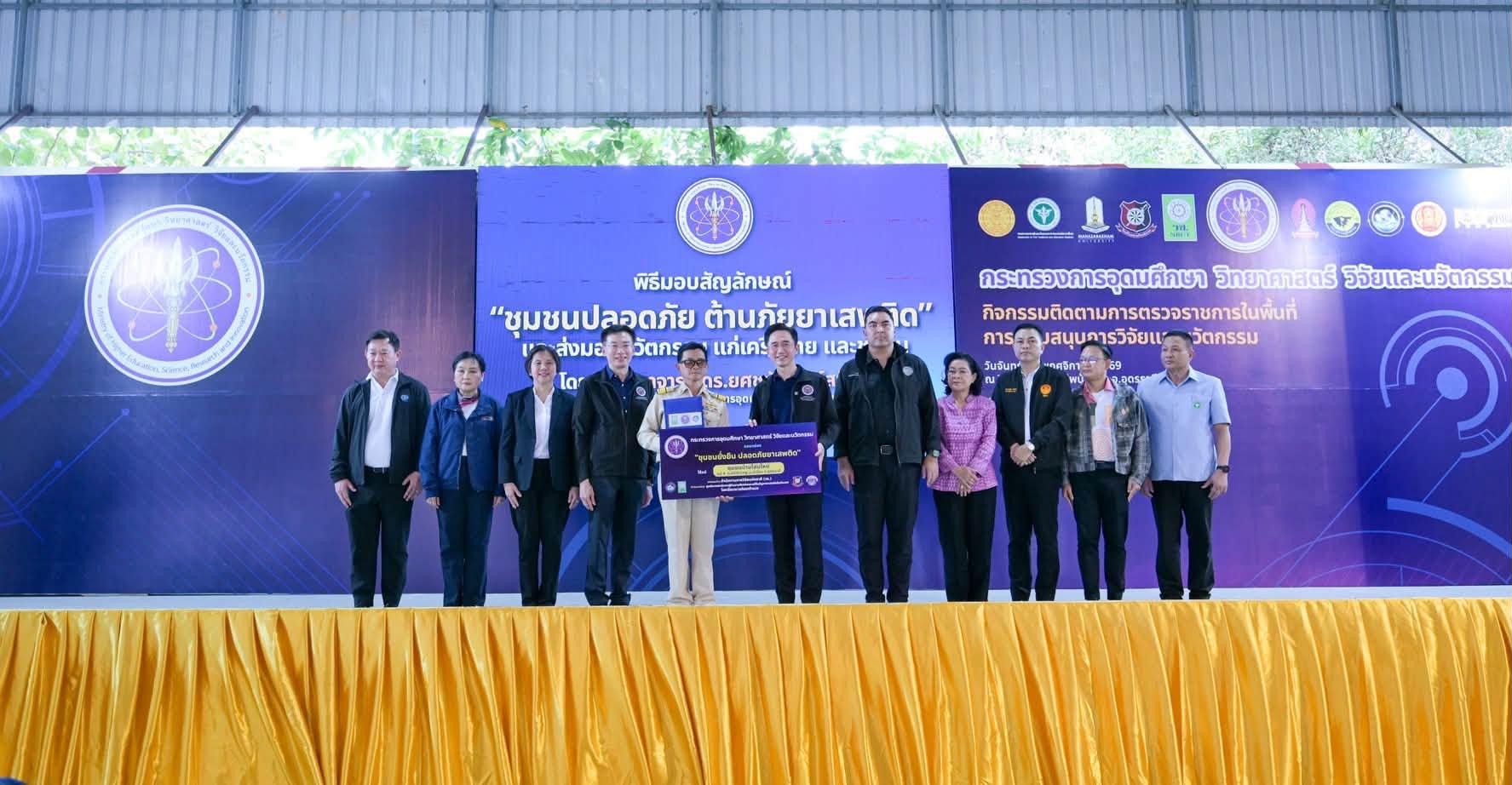
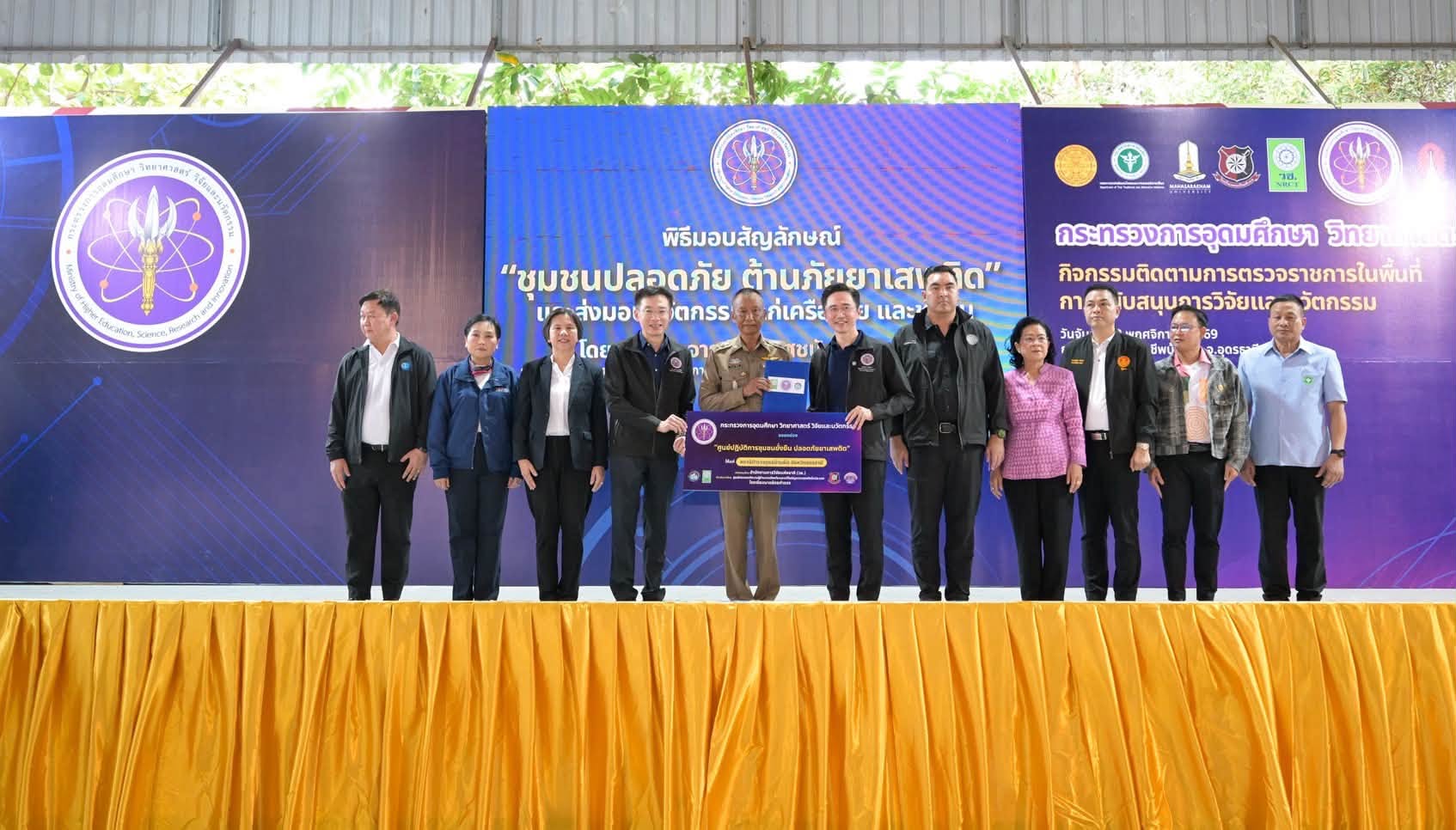
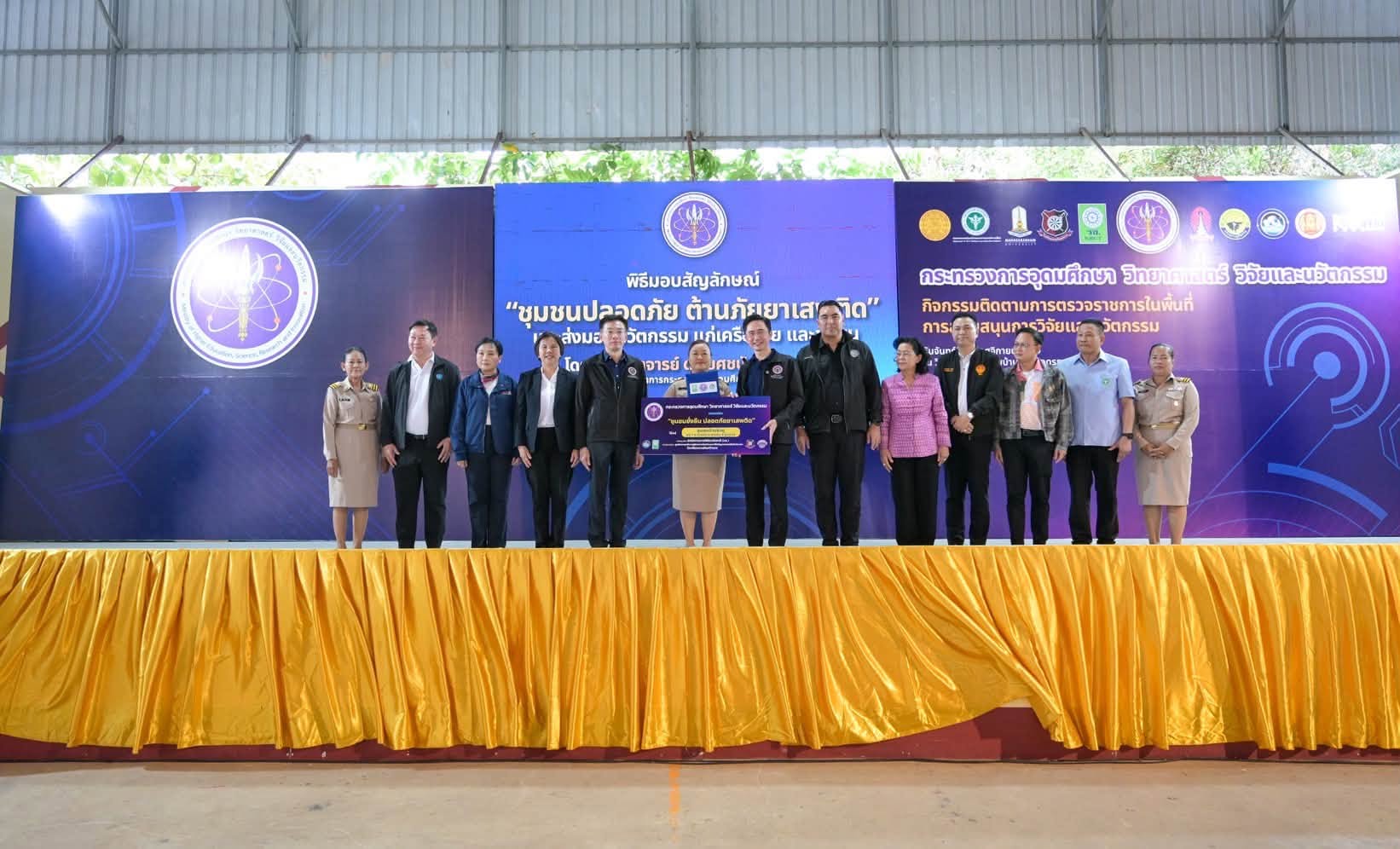
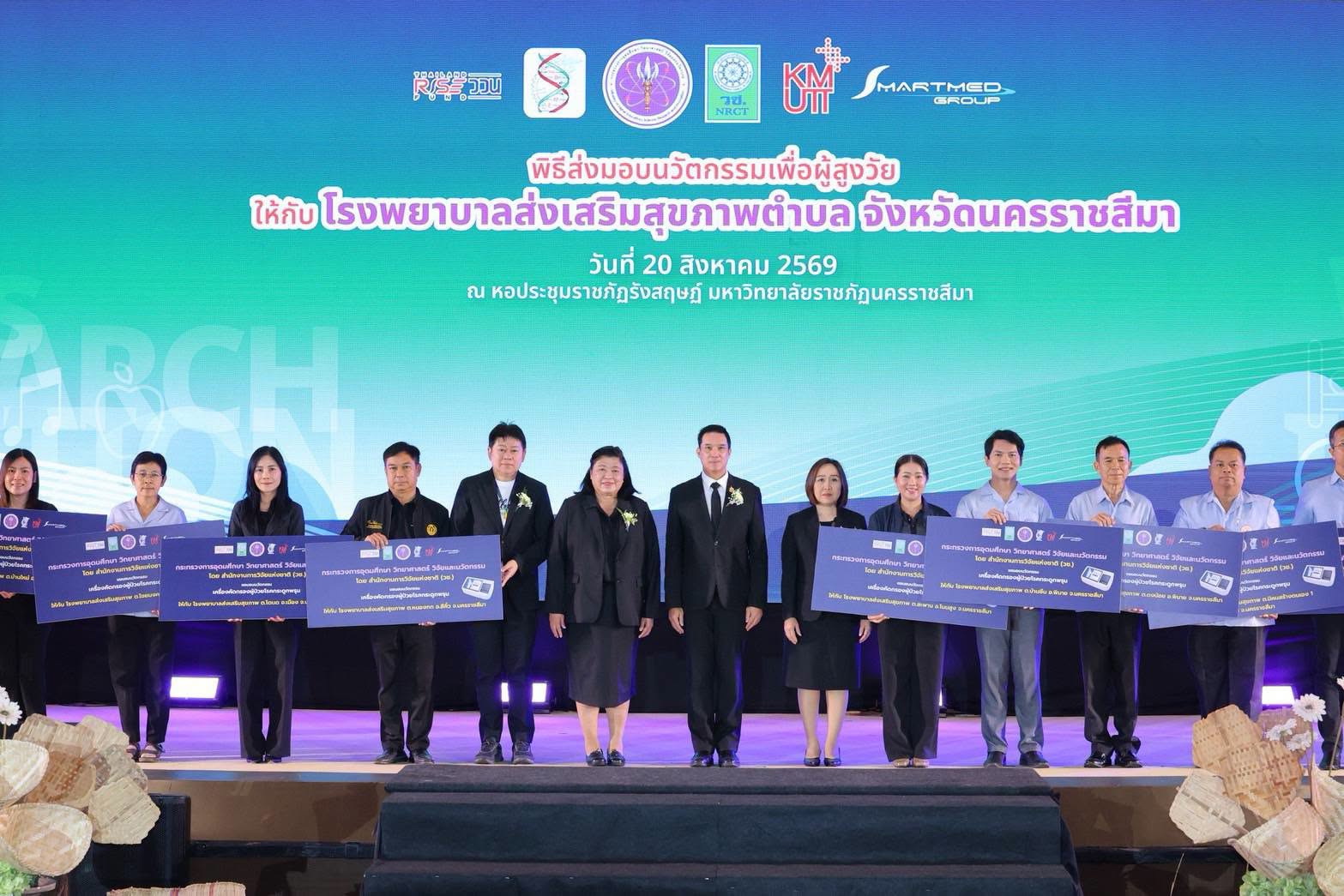
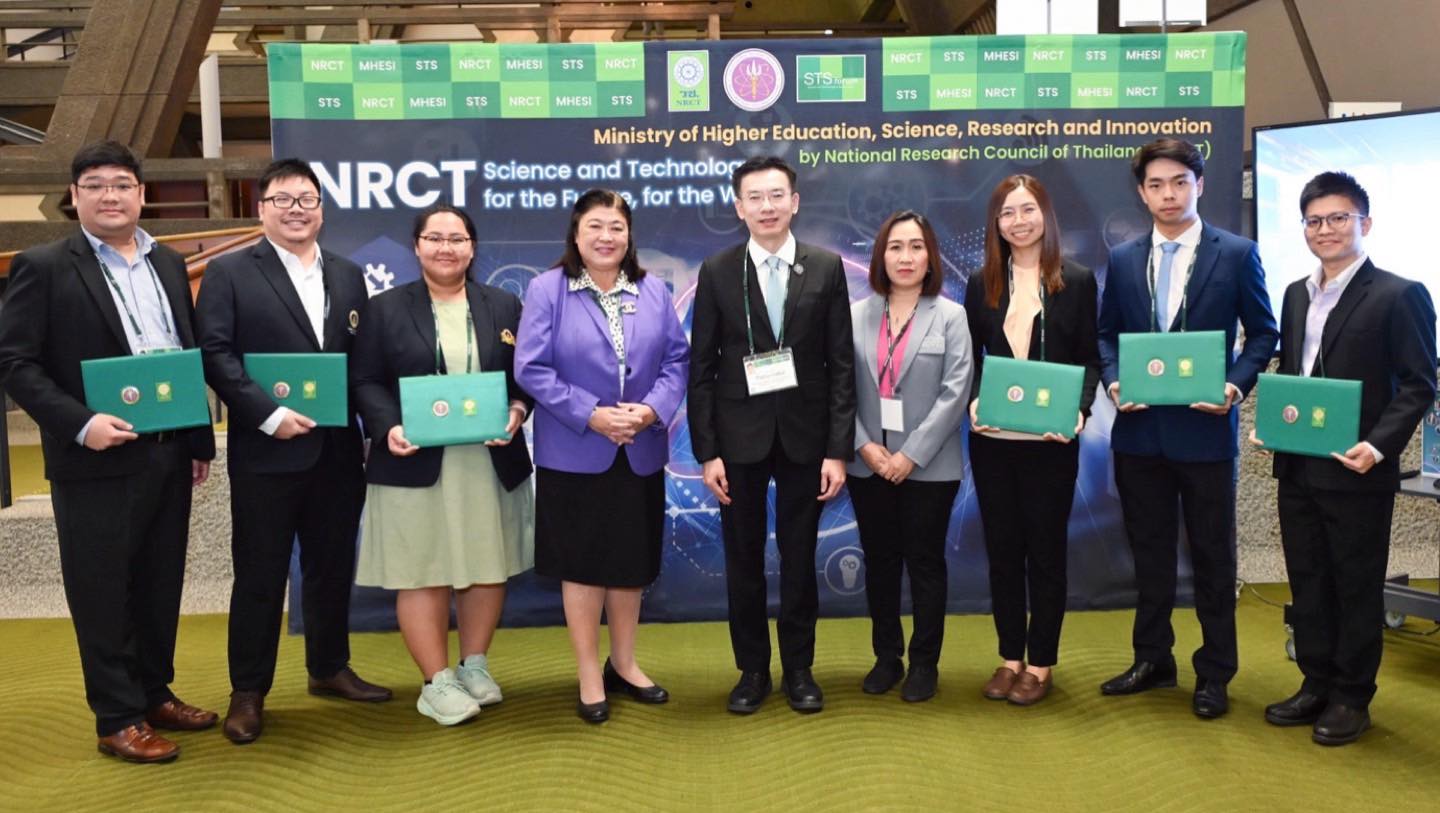
The visit concluded with a ceremony during which the “Sustainable Drug-Free Community” symbol was presented to 14 communities in recognition of their collaborative efforts to prevent and address drug-related problems. Herbal innovations for addressing drug-related problems were also presented to 19 agencies and community networks for further application in their respective areas. Certificates were awarded to organizations participating in the research and innovation exhibition.
Through this initiative, MHESI and NRCT continue to support the application of research and innovation to address drug-related problems, with an emphasis on prevention, treatment, rehabilitation, and community participation. The collaboration aims to improve quality of life, strengthen local capacity, and promote sustainable solutions that can be adapted and expanded to other communities across the country.