1. Thailand Builds an Intelligent Knowledge Infrastructure as NRCT Advances AI-Powered Research Intelligence for Research, Innovation and Public Services
Artificial intelligence (AI) is rapidly transforming the world. No longer limited to specialized technical applications, AI is becoming a strategic technology with growing influence across economies, societies, education, public administration, research and innovation.
For countries seeking to strengthen their competitiveness, access to AI technologies alone is not enough. The greater challenge lies in building the capacity to connect AI with data, knowledge, language and national context in order to create new capabilities and deliver tangible value to society.
Thailand is advancing its national AI capabilities through a coordinated approach that positions AI as a strategic technology for national development. The country is working to build an AI ecosystem that encompasses infrastructure, technology and innovation, talent development, research and development, adoption and responsible governance.
One of the key areas in which AI can create new capabilities for the country is the science, research and innovation system. Research generates knowledge, technologies and innovations that underpin national development. Yet the value of this knowledge depends increasingly on how effectively it can be discovered, understood, connected and put to use.
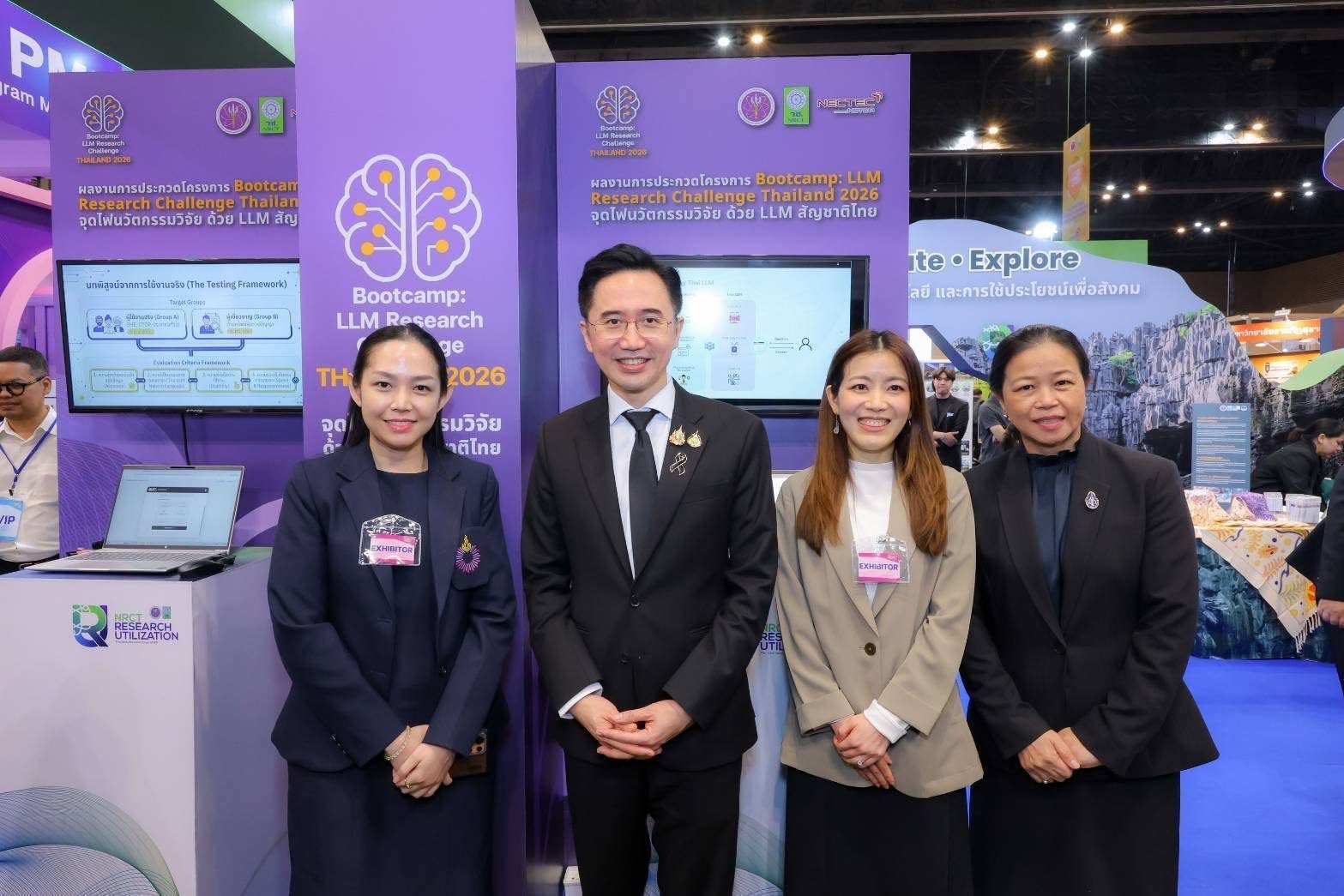
Against this backdrop, the National Research Council of Thailand (NRCT), under the Ministry of Higher Education, Science, Research and Innovation (MHESI), is advancing the use of AI and Thai Large Language Models (ThaiLLMs) to strengthen Thailand’s research system.
The goal is to build a research ecosystem that can better understand, connect and unlock the value of knowledge.
This is the vision behind:
- AI-Powered Research Intelligence
- Building intelligent capabilities for Thailand’s research and innovation system through artificial intelligence.
2. DOI: Infrastructure Digital for Connecting Data Globally
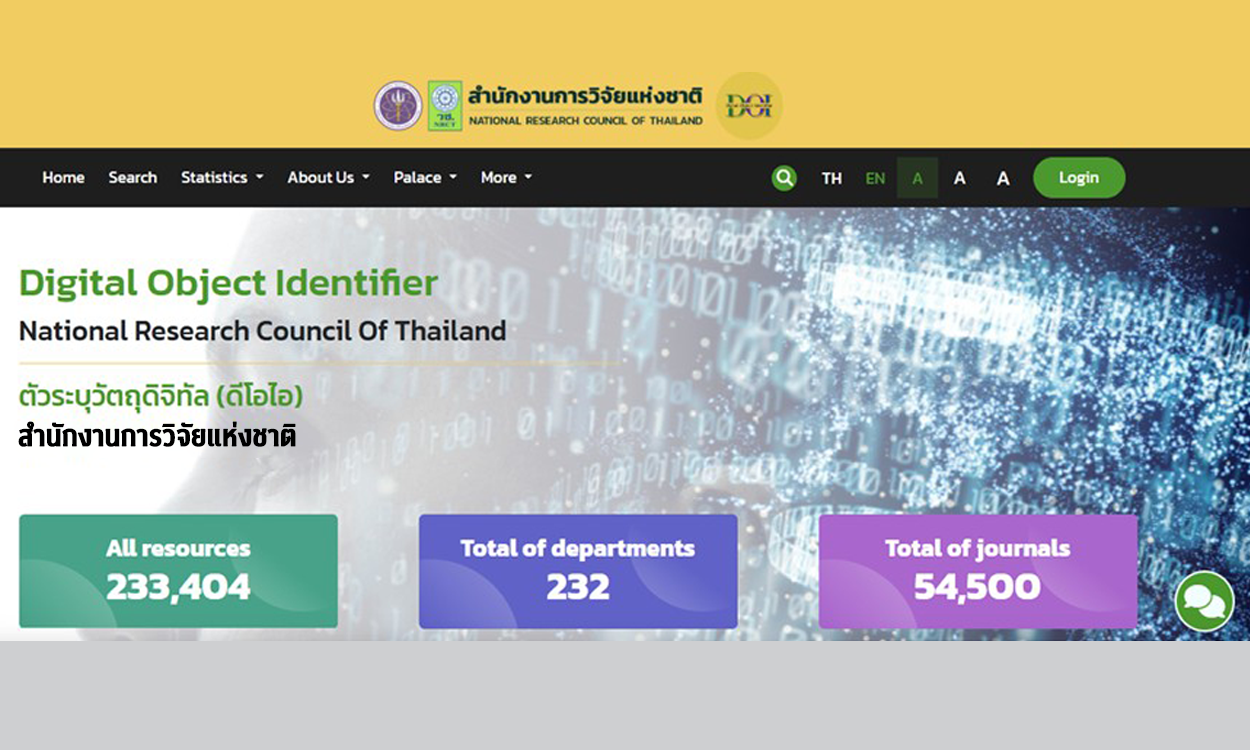
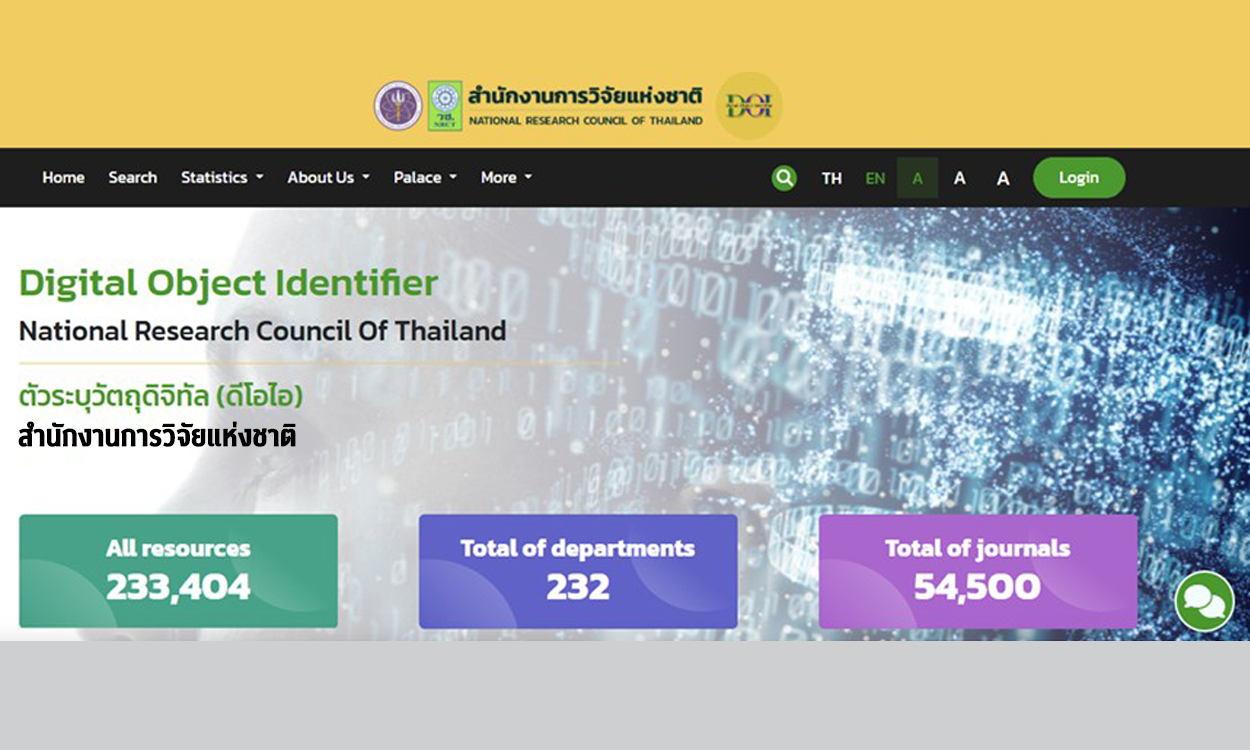
The National Research Council of Thailand (NRCT) is an agency under the Ministry of Higher Education, Science, Research and Innovation (MHESI). It drives the national research and innovation system to become robust by providing research grants, developing human resources, and building a research and innovation ecosystem in alignment with the National Strategic Goals. Empowered by Section 13 of the Ministry of Higher Education, Science, Research and Innovation Administration Act, B.E. 2562 (2019), NRCT is tasked with integrating the science, research, and innovation data systems from various agencies within the research and innovation ecosystem, pursuant to the Science, Research and Innovation Promotion Act, B.E. 2562 (2019). This is achieved by developing a database linkage system and serving as the central information center providing research and innovation data services to relevant agencies, ensuring the effective utilization of research, innovation, and technological data stored within the country’s science, research, and innovation databases. Therefore, to maintain accurate, comprehensive, and up-to-date research information within the national databases, and to implement an information service policy that aligns with modern international standards, NRCT assigns Digital Object Identifier (DOI) to digital information resources for both public and private sectors. This initiative supports Open Science, a crucial component of the country's research infrastructure, as it promotes transparency, reproducibility, and collaboration. The DOI serves as an essential tool that enables Open Science by creating persistent links to research data and other digital objects, making them easily accessible and citable. Furthermore, DOIs help track changes and updates to datasets, which is beneficial for ensuring the accuracy and credibility of research. They also prevent issues related to data deletion or modification, which could otherwise impact bibliographies and access to academic content.
Read More
3. From Information Retrieval to Knowledge Discovery
One of the key directions in transforming Thailand’s research information infrastructure is to move beyond conventional document search towards knowledge discovery.
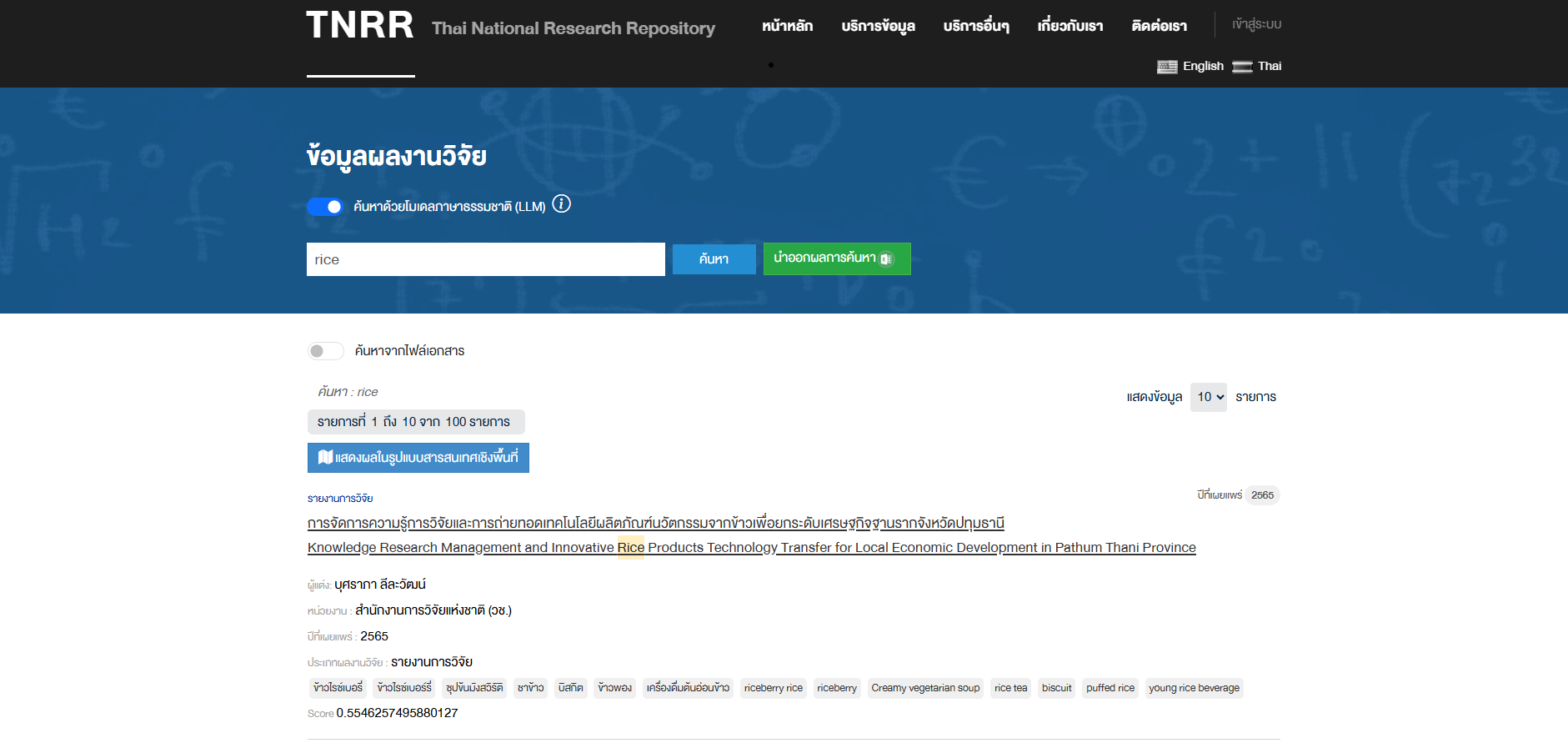
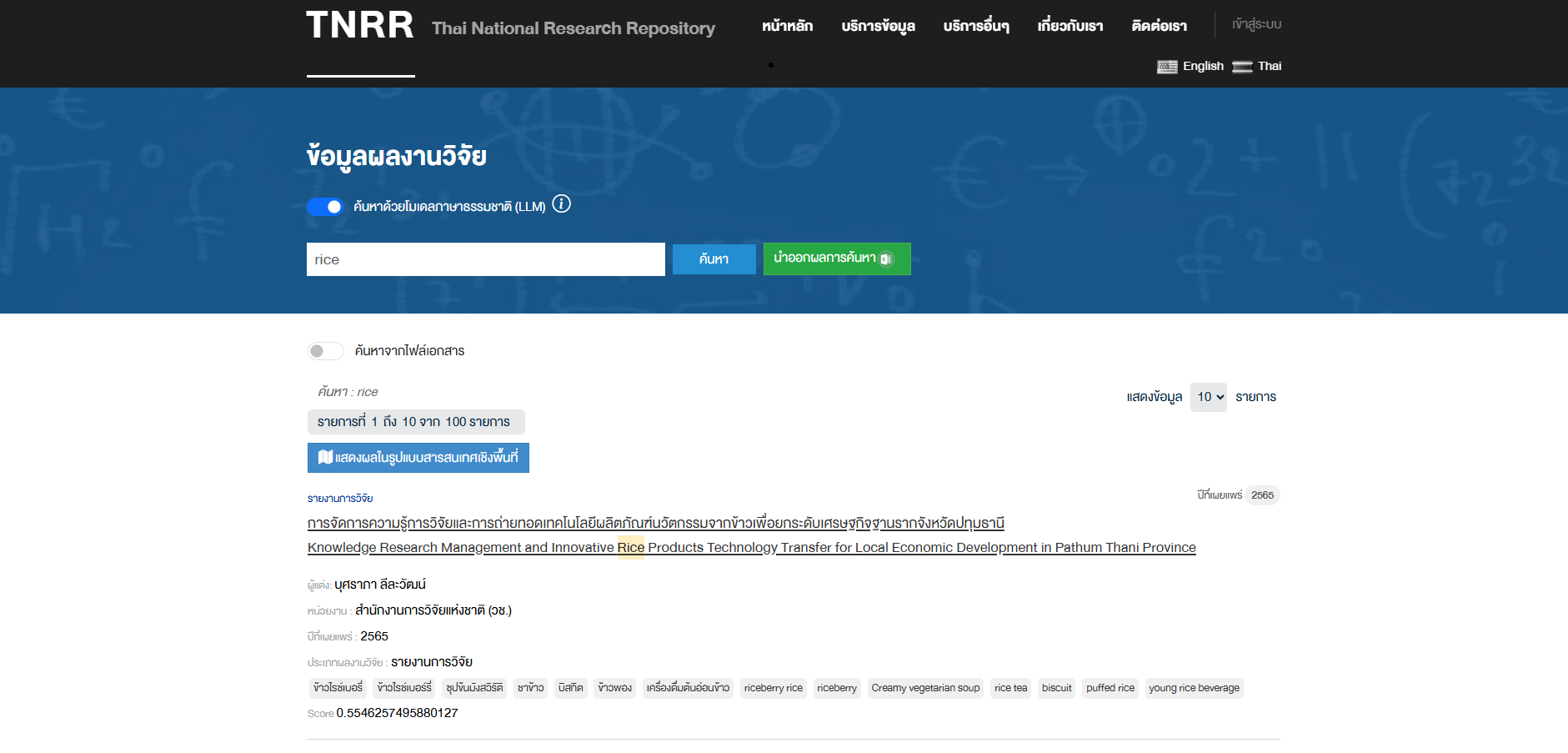
The Thai National Research Repository (TNRR) is being enhanced through AI and natural language processing to support the discovery of research knowledge based not only on keywords, but also on meaning, context and relationships between information.
Through TNRR Smart Search, users can move beyond traditional keyword matching and discover relevant information even when different terms or expressions are used.
Users do not always need to know which system contains the information they are looking for or which exact keywords to enter. Instead, they can express their needs in natural language, while AI helps interpret the context, connect related information and surface relevant knowledge.
This represents a shift:
From Information Retrieval
to Knowledge Discovery
The objective is to make research knowledge more discoverable and accessible based on what users are trying to understand, explore or solve.
“ Making Research Knowledge Conversational ”
AI is also changing the way people interact with research information.
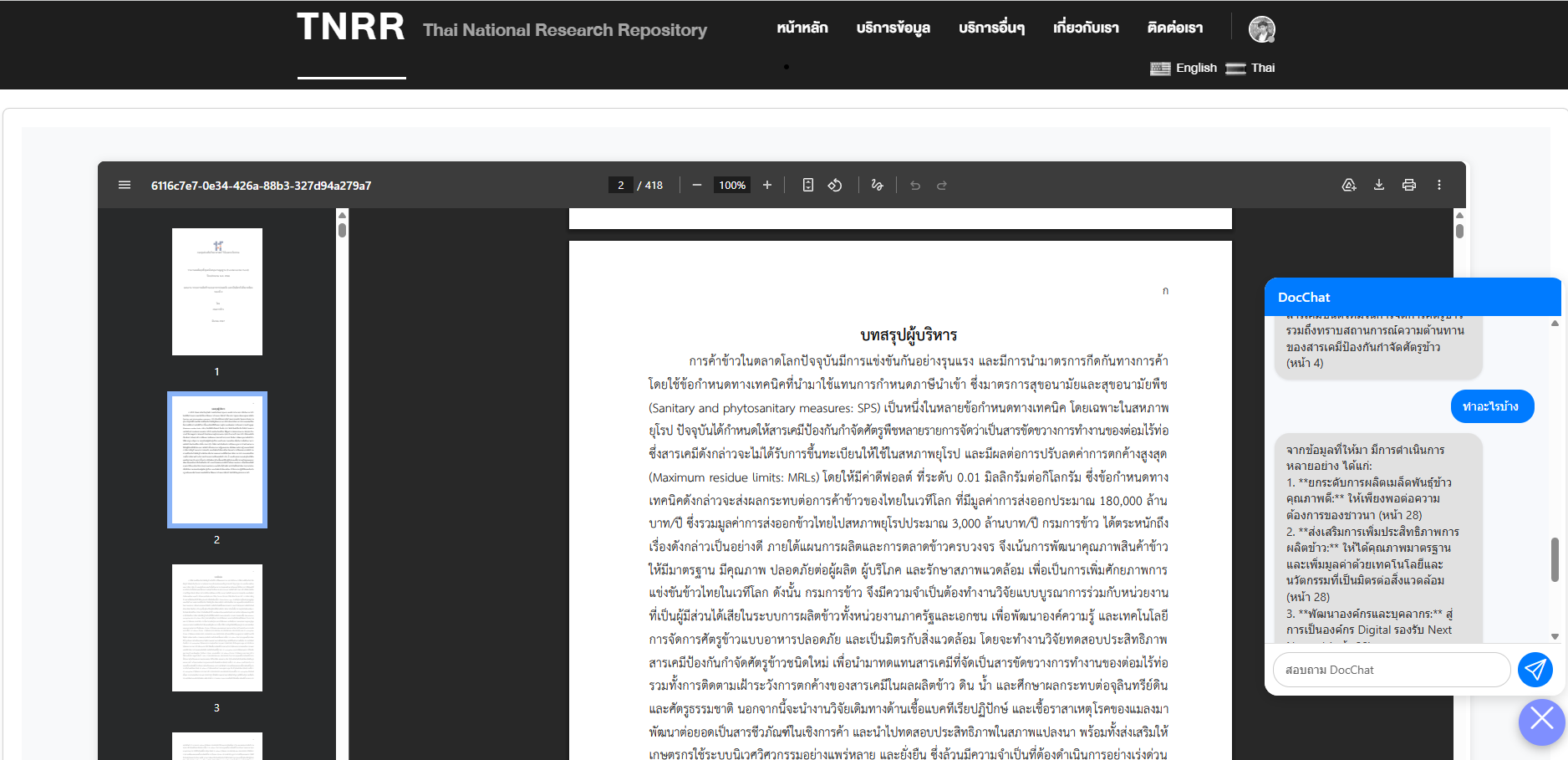
Through TNRR DocChat, users can interact with research documents through natural-language questions and answers. Meanwhile, the NRIIS Chatbot helps users access information and services related to Thailand’s national research and innovation management system more conveniently.
These capabilities reduce the need for users to read large volumes of documents or navigate multiple systems manually at every stage.
Users can begin with a question or a need, and AI can help them search, analyse and connect relevant information.
Research information systems are therefore evolving beyond simply storing and displaying data. They are becoming more capable of supporting understanding and knowledge access through natural-language interaction.