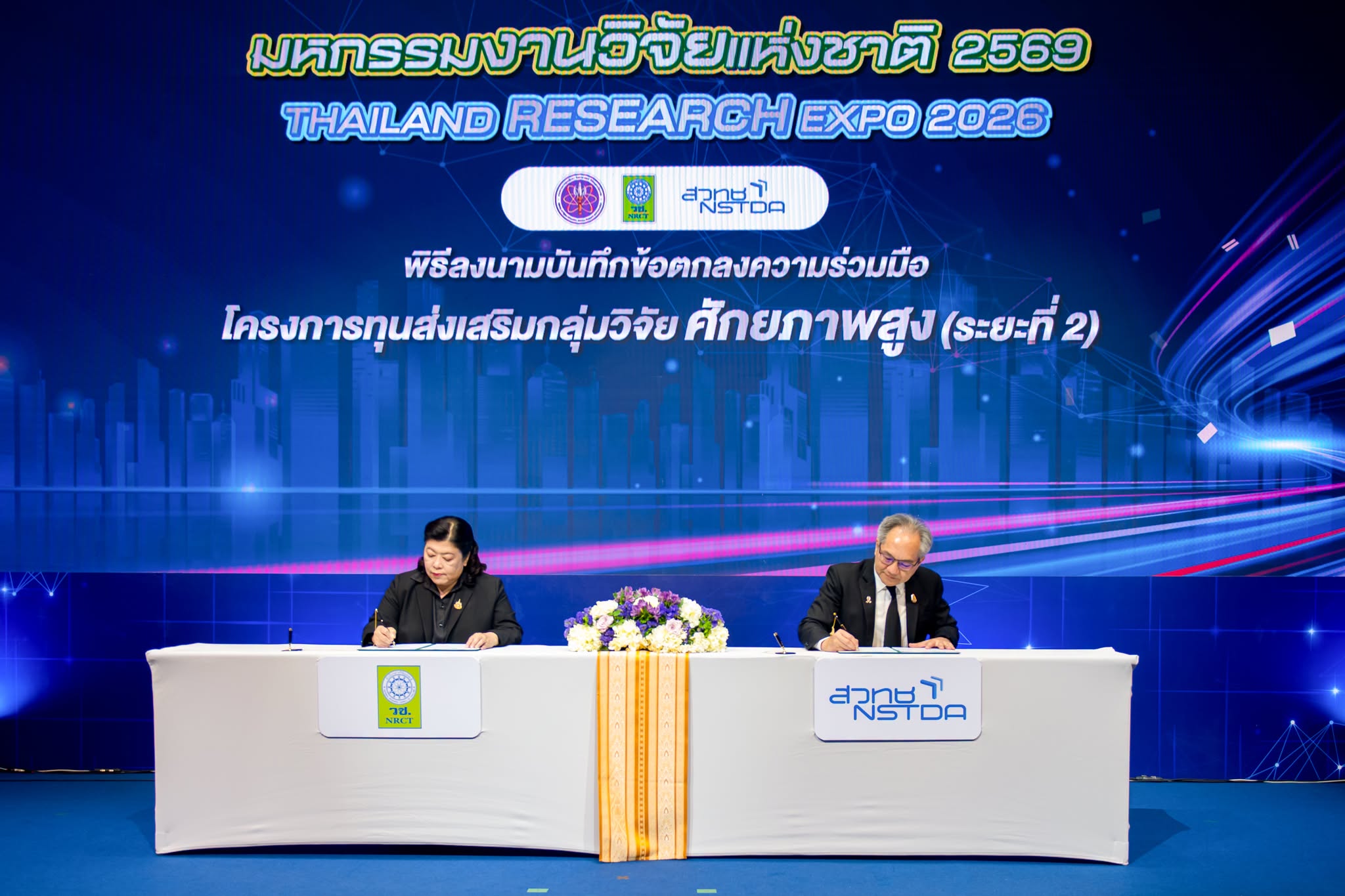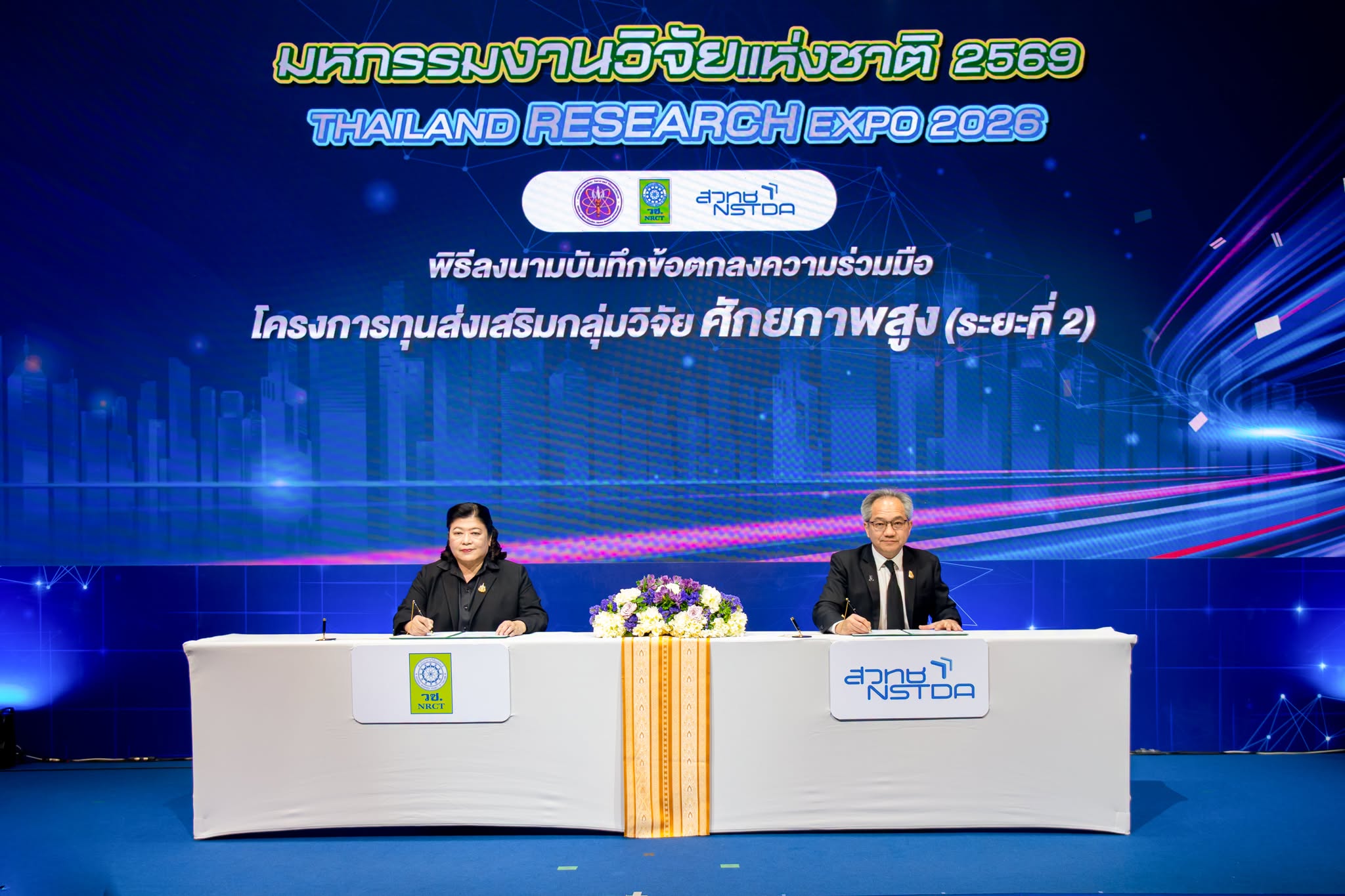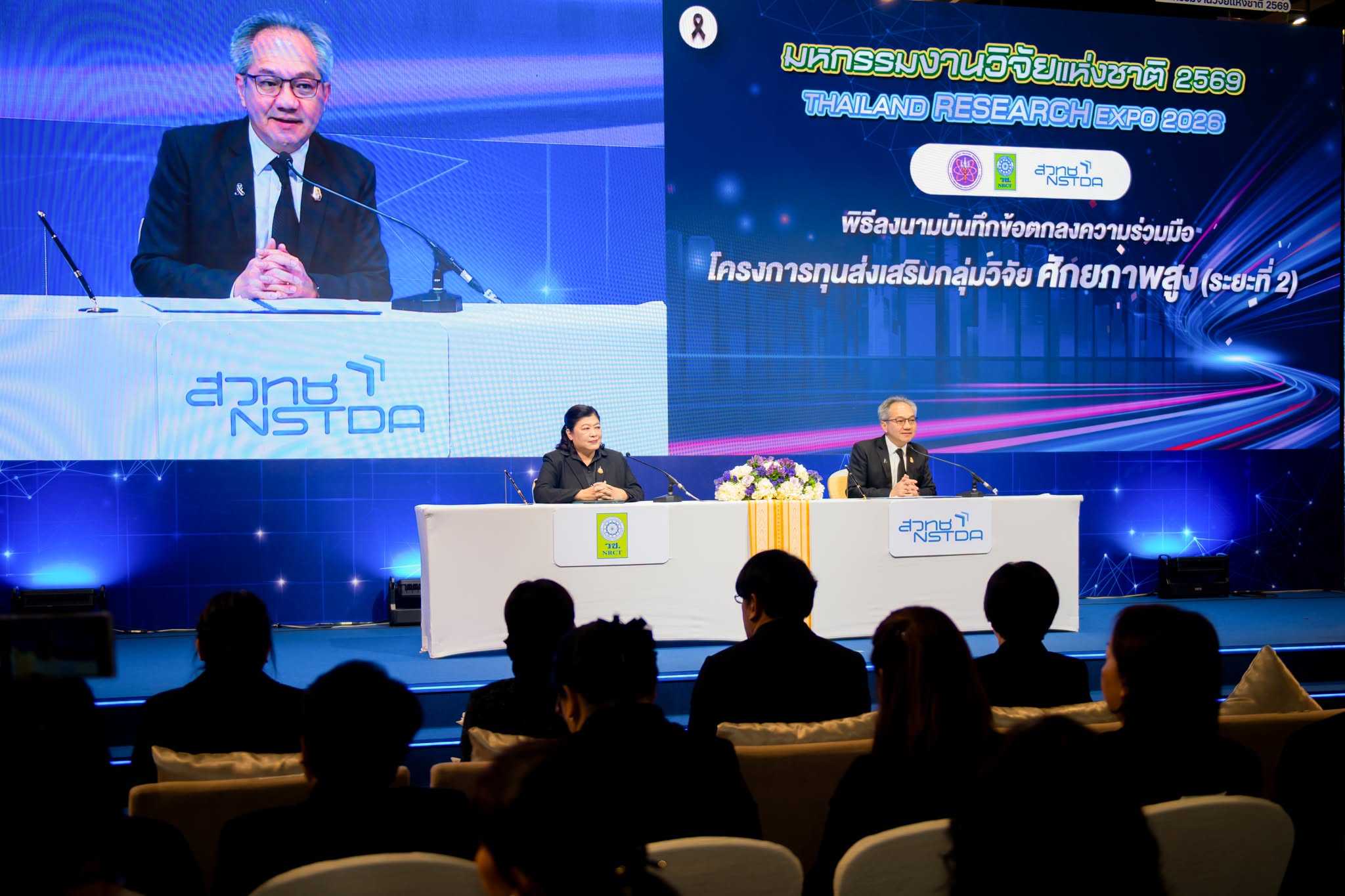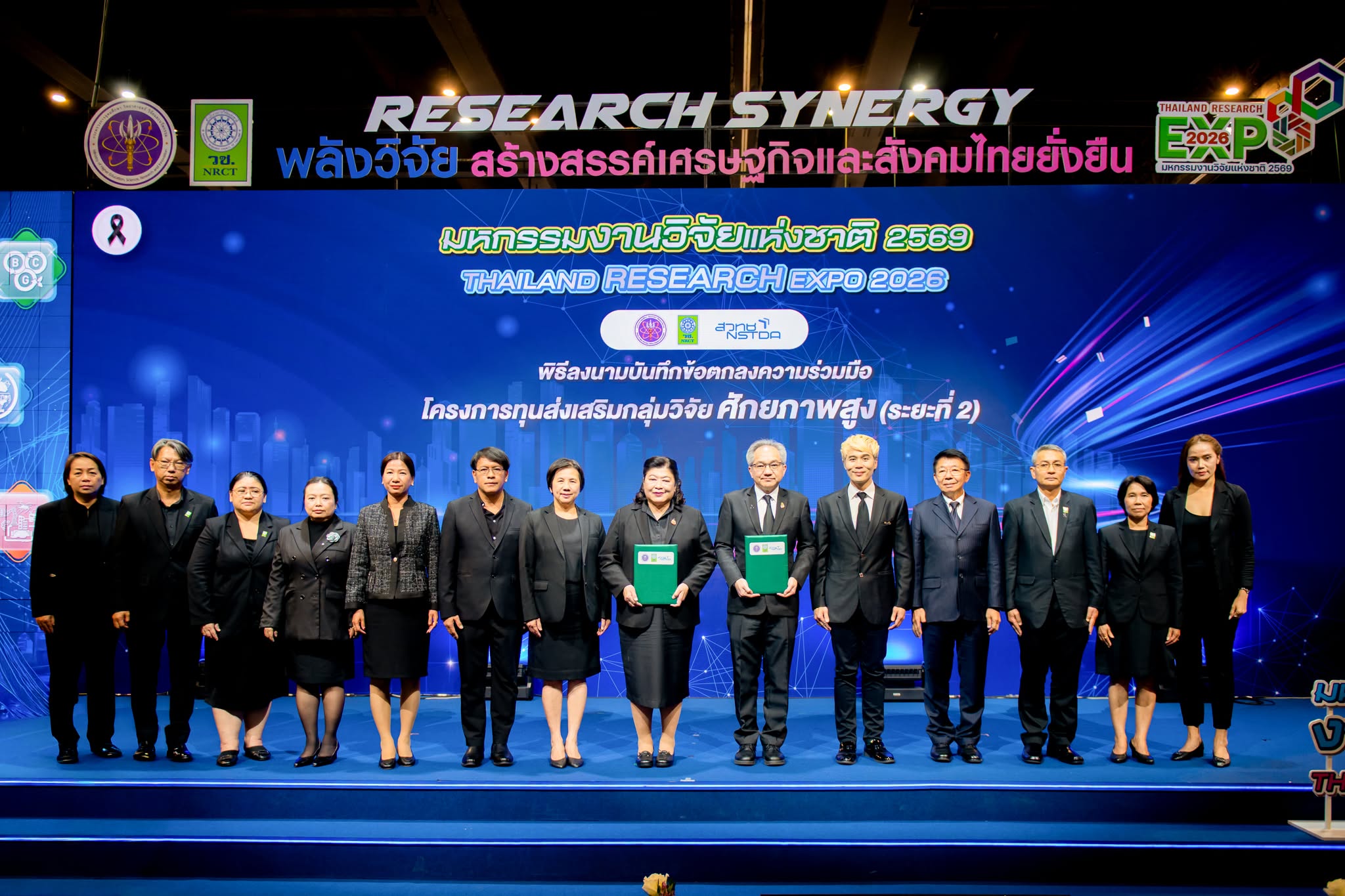
Collaboration on the "High-Potential Research Group Grant" between the National Research Council of Thailand (NRCT) and the National Science and Technology Development Agency (NSTDA)
16 July 2026


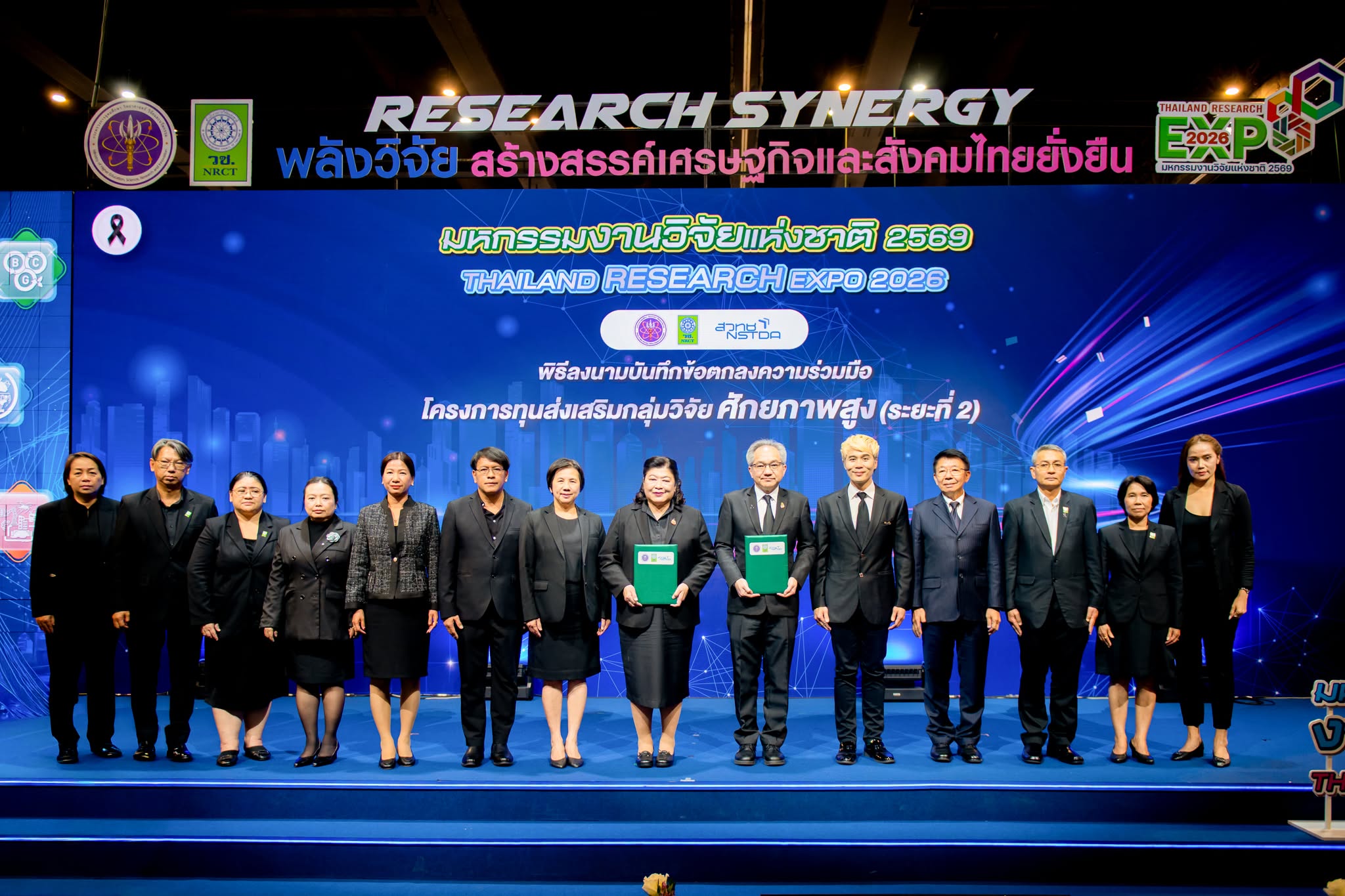
The Ministry of Higher Education, Science, Research and Innovation (MHESI) has recognised and responded to national policies and the Science, Research and Innovation Plan (2023–2027). This plan sets a target for the development and demand of research and innovation personnel in line with the 13th National Economic and Social Development Plan: aiming for 40 research and innovation personnel per 10,000 population, an increase from the current ratio of approximately 27 per 10,000.
In addition to quantitative targets, the plan emphasises qualitative development:
1. Equipping personnel with advanced skills to support the growth of the country's industries.
2. Producing and developing personnel in accordance with societal, regional and local needs.
3. Enhancing capacity and development to elevate academic excellence across disciplines.
With limited resources, it remains a management challenge to develop researchers who meet the country’s needs in science, research, and innovation. The goal is to increase both the quantity and quality of researchers, instilling strong morals and ethics, so they can generate academic knowledge, enhance competitiveness, and use this knowledge to drive the nation forward.
Guided by the concept that “Research with national impact is not created by a single researcher, but through human capacity building, teamwork, and strong research networks spanning from new-generation to senior researchers”, MHESI initiated a collaborative effort. The National Research Council of Thailand (NRCT), as the principal agency for national research and innovation funding management, and the National Science and Technology Development Agency (NSTDA), which plays a pivotal role in promoting and developing the nation’s science, technology, and innovation, jointly established the “High-Potential Research Group Grant” in 2022.
Target Recipients and Scope
The grant supports National Outstanding Researchers, highly experienced researchers with capabilities equivalent to the professorial level, and highly competent researchers with widely recognised academic achievements. Candidates must have professional experience that demonstrates active collaboration within domestic and international networks.
The grant is open to a wide range of disciplines – including Science and Technology, Social Sciences, and Humanities – to foster multidimensional knowledge integration. It supports a research group approach that brings together the essential expertise and technologies needed to develop the research ecosystem and produce high-potential outputs that meet the country’s needs.
Key Performance Indicators (KPIs) and Impact
The primary KPIs focus on advancing research towards practical application, including the creation of new knowledge, the development of innovation, and the generation of broad impact. The grant gives each group the flexibility to manage their plans and resources, while NRCT and NSTDA jointly support, monitor, and drive operations to deliver tangible results.
Between 2022 and 2026, the programme supported 15 research groups across a range of fields, including medical and health sciences, agriculture and food, space technology, materials science, energy and biorefinery, construction technology, and social sciences. This highlights the diverse capabilities of Thai research groups and the many opportunities for research expansion.
“The High-Potential Research Group Grant is more than just research funding; it is a mechanism for building leaders, teams, and robust research networks to transform knowledge into practical application and generate long-term national impact.”
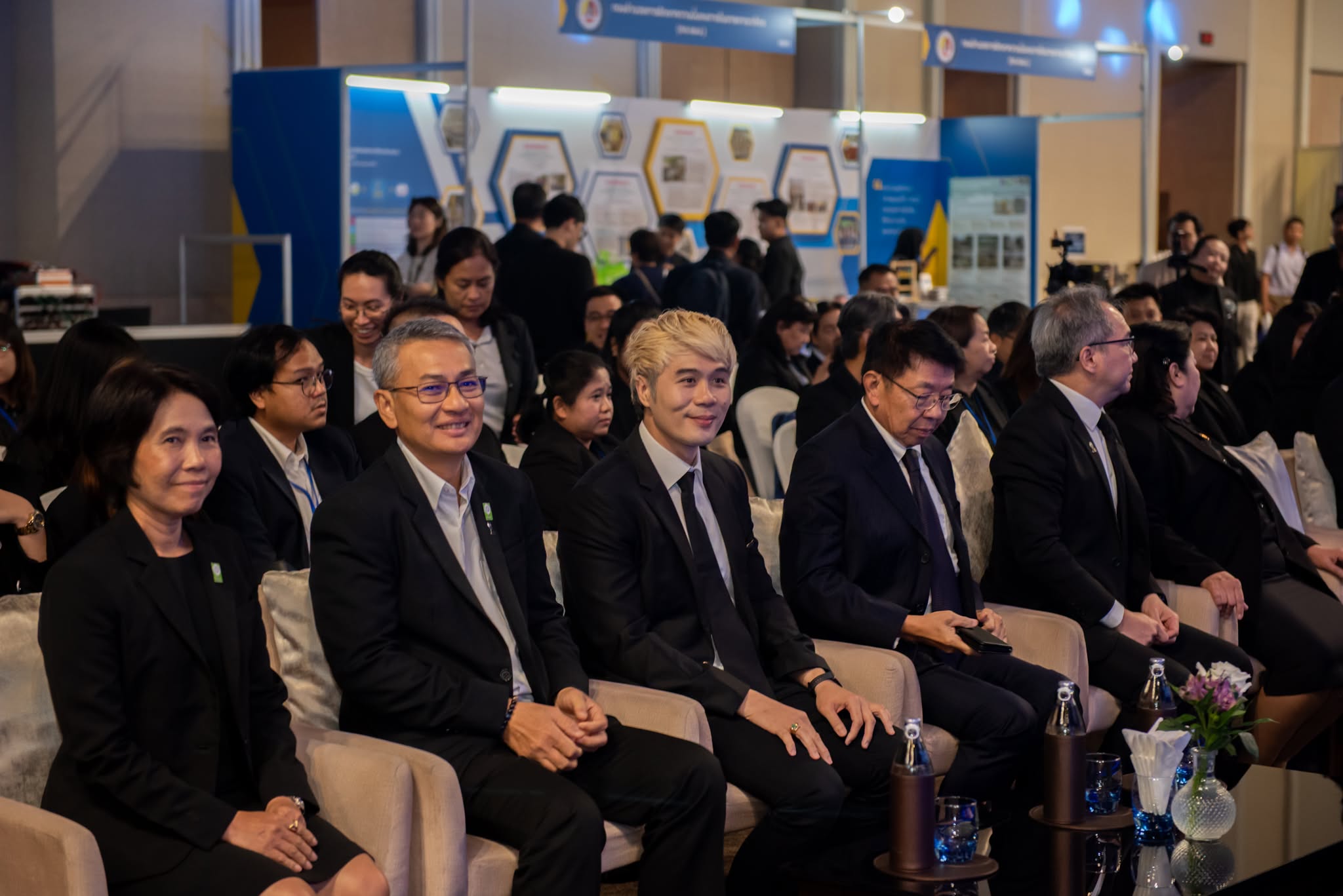
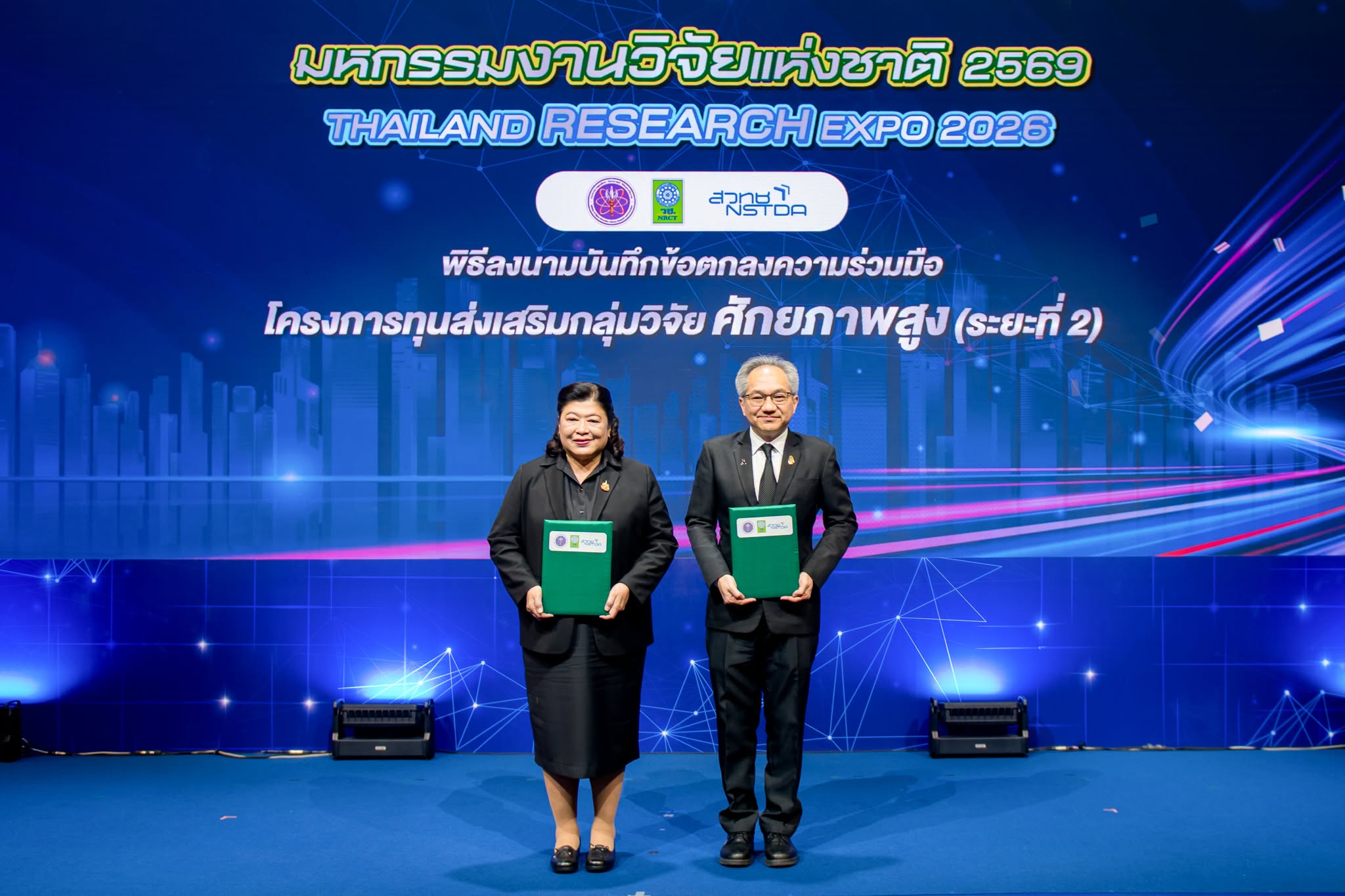
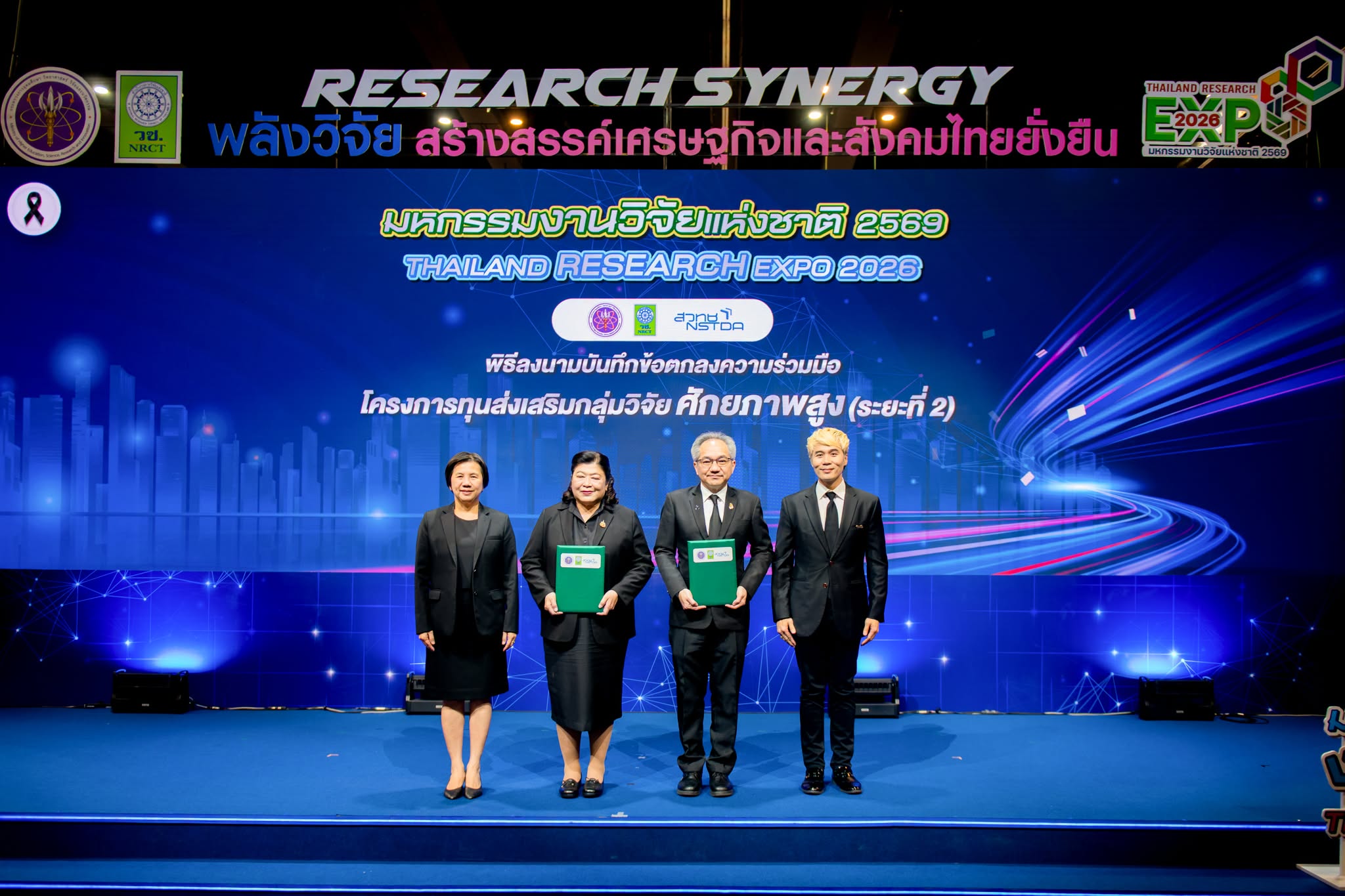
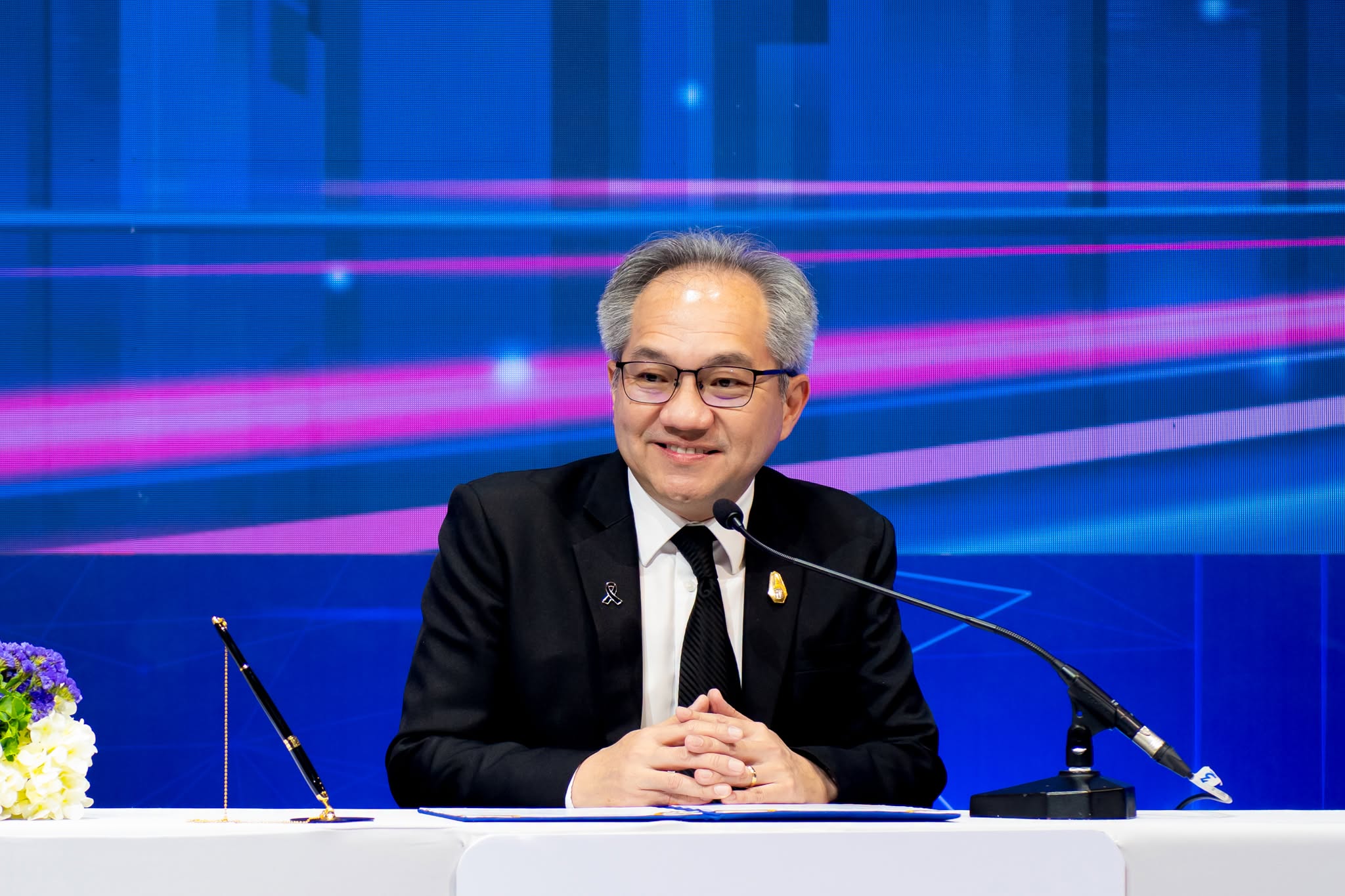
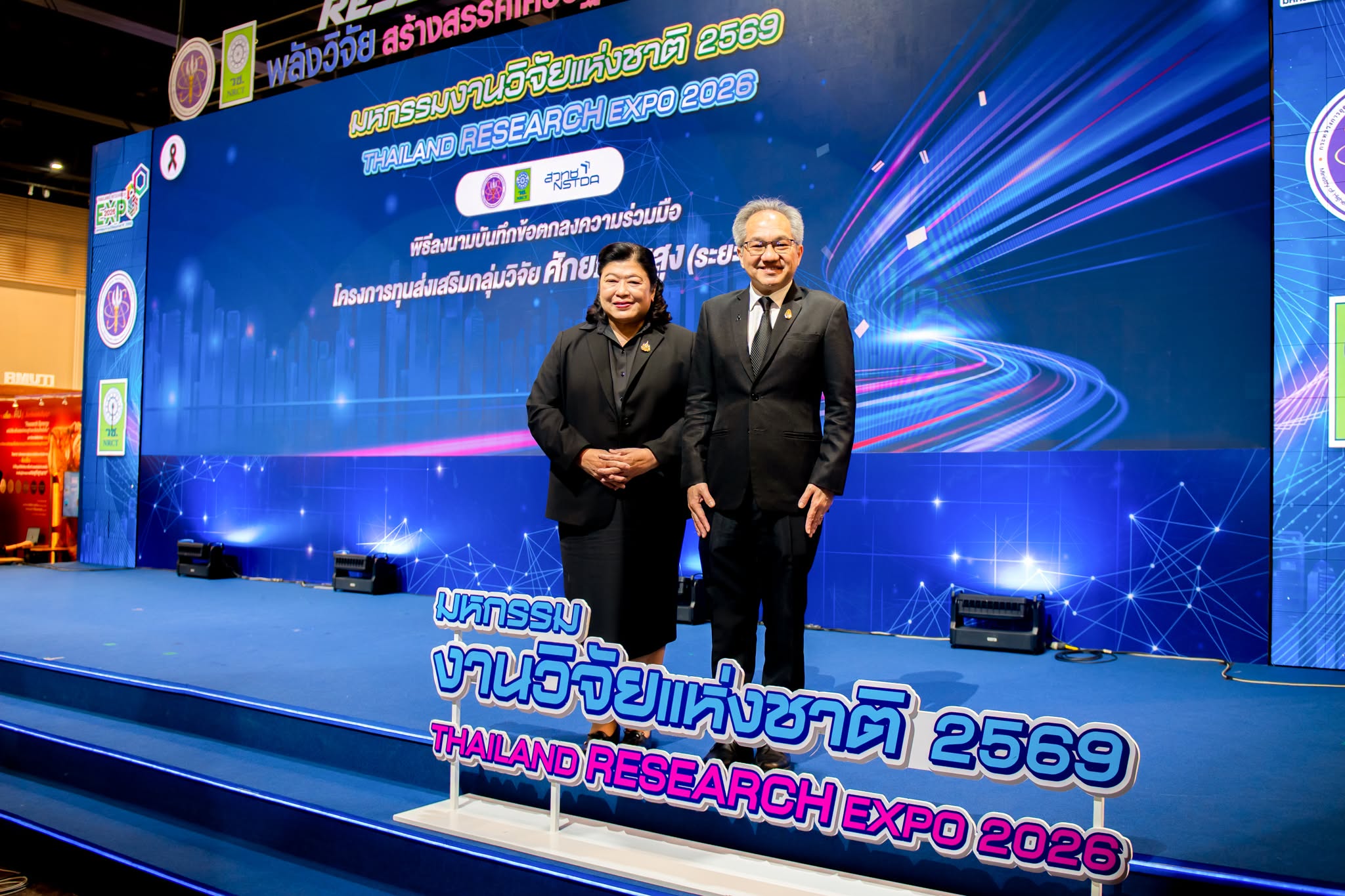
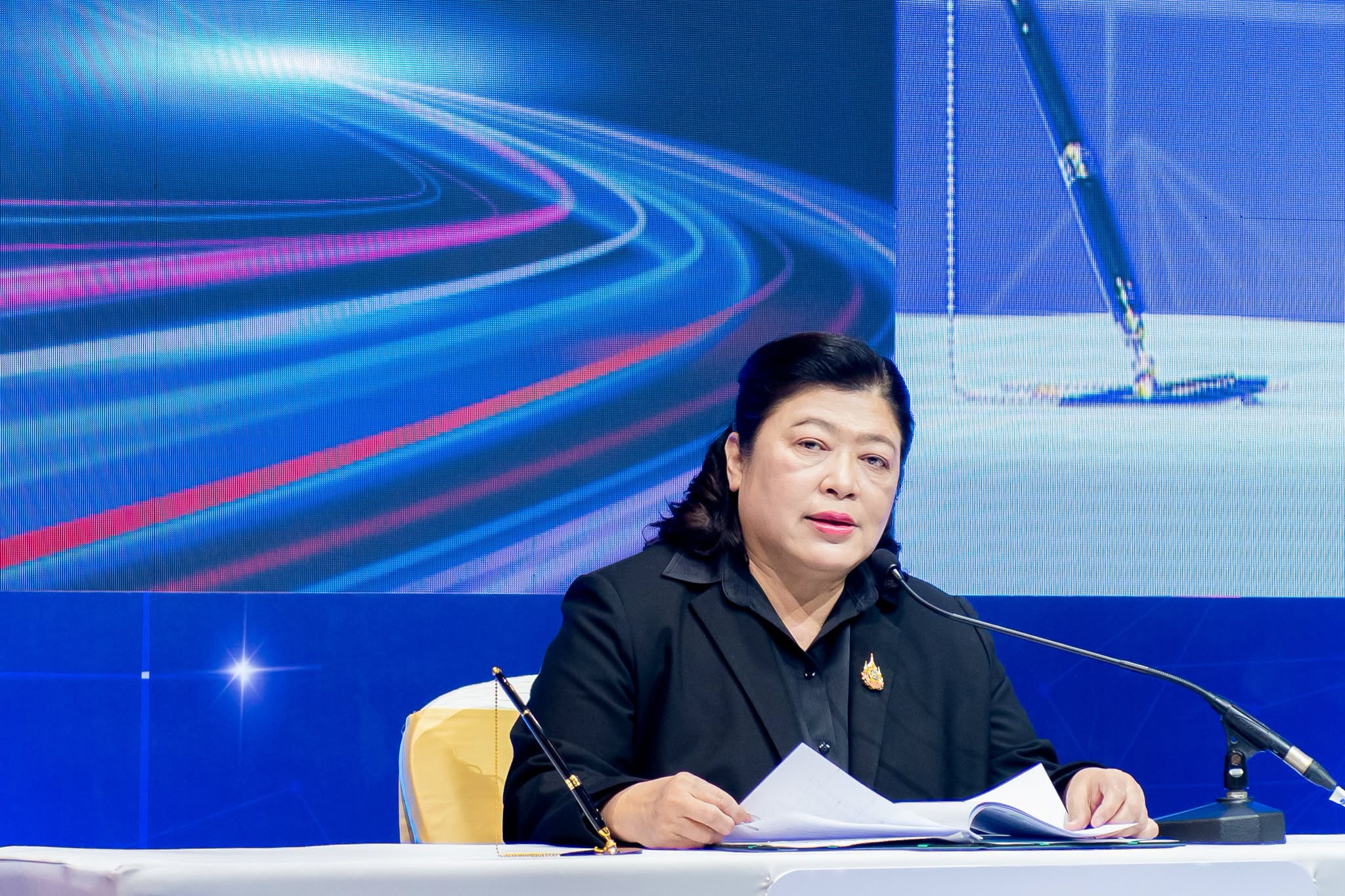
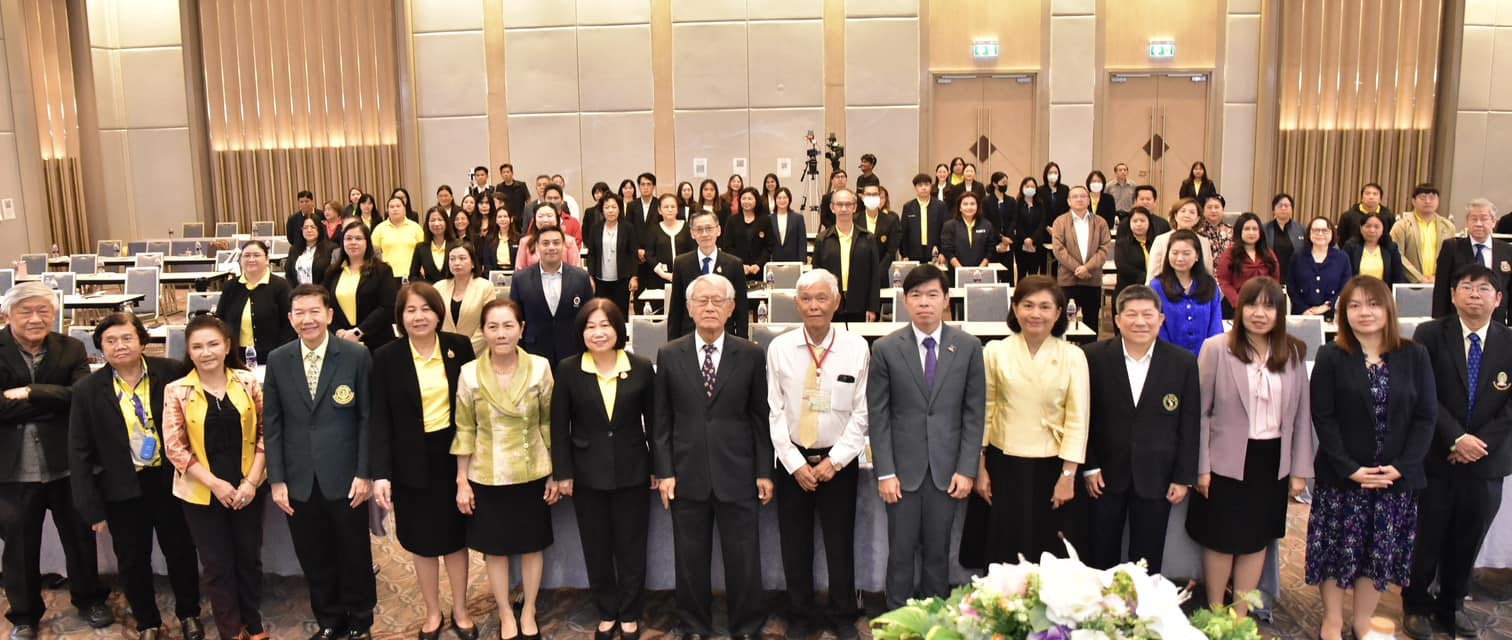
To build on this success, NRCT and NSTDA officially continued their collaboration under the “High-Potential Research Group Grant (Phase 2)” on 25 June 2026 at the Centara Grand & Bangkok Convention Centre at CentralWorld, Bangkok. This event demonstrated their shared commitment to integrating research funding management, consistently supporting high-potential research groups, and promoting the creation of knowledge, technology, and innovation. Ultimately, this contributes to academic strength and tangible national development.
Background: "High-Potential Research Group Grant"
The National Research Council of Thailand (NRCT) prioritizes the promotion and support of human resources and knowledge institution development to sustainably enhance the country's long-term competitiveness. This is achieved by equipping personnel with the necessary knowledge and skills, creating research-based knowledge in fields where Thailand has strong potential, and producing and transferring research outputs that offer economic, social, and academic benefits. The NRCT also supports Thai researchers at the master's and doctoral levels to enter the research and innovation system, fostering collaborative networks among researchers, educational institutions, and public/private agencies both domestically and internationally.
In 2022, NRCT and NSTDA under MHESI established the "High-Potential Research Group Grant" project with four primary objectives:
Objective 1: To promote the capacity building of Thai researchers, fostering strong, team-oriented research groups with a continuous development structure that links students, early-career, mid-career, and senior researchers.
Objective 2: To create and integrate knowledge that drives concrete impact and change, directly responding to the country's necessities and demands.
Objective 3: To create research and utilization opportunities across various dimensions, including academic, economic, social/community, and policy areas.
Objective 4: To establish national and international research networks to push research outputs forward, communicate academic findings to society and communities, and respond to urgent national crises.
Honoring Excellence
The High-Potential Research Group Grant supports outstanding researchers across Science and Technology, Social Sciences, and Humanities who demonstrate distinguished academic achievement, collaborative network experience, and research leadership. These researchers must be able to connect their work with the country's scientific and technological research infrastructure to achieve sustainable national R&D excellence. The program creates opportunities and fosters the growth of Thai researcher groups to consistently produce internationally recognized research and drive innovation that addresses national needs or manages environmental, social, and economic challenges.